
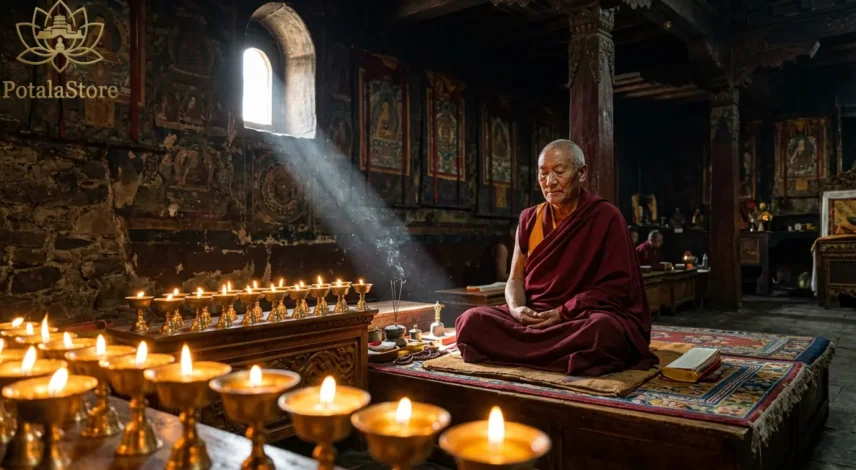

Buddhism is simultaneously a religion and a philosophy — and which lens you bring to it will shape every aspect of how you practice. The question is not purely academic. It determines whether you sit on a cushion counting breaths or bow before a shrine with incense smoke curling upward. It determines whether mala beads are tactile meditation tools or sacred objects blessed by a lineage of monks.
At PotalaStore, we work directly with Tibetan Buddhist monasteries and artisan workshops in the Himalayas. Over the years, we have heard this question asked by thousands of practitioners — from curious beginners to devoted students who have been practicing for decades. This guide offers something most articles on this topic do not: a clear account of how different Buddhist traditions answer the question from the inside, and a practical path forward for your own practice.
⚠️ Note on Spiritual Claims: Information about the spiritual significance of Buddhist practices is based on traditional beliefs held within living Buddhist communities. These are not scientific claims. We present them to faithfully represent the tradition, not as verified therapeutic or medical advice.
Is Buddhism a Religion or a Philosophy? The Short Answer
Buddhism is both a religion and a philosophy — a distinction that varies significantly depending on which Buddhist tradition you look at and how you engage with it personally.As a religion, Buddhism encompasses ritual, devotion, moral precepts, clergy, and a cosmology of rebirth and liberation. As a philosophy, it offers a rigorous logical framework for understanding the nature of mind, suffering, and reality that can be practiced entirely without belief in the supernatural.
The question itself is relatively modern. For most of Buddhism’s roughly 2,500-year history — dating from the teachings of Siddhartha Gautama in the 5th century BCE — practitioners in Asia did not experience it as a binary choice. The word “Buddhism” is itself a 19th-century Western coinage. In Pali, the language of the oldest scriptures, practitioners spoke of the Dhamma (Sanskrit: Dharma), which translates more accurately as “the nature of things” or “the teaching” — a term that deliberately resists classification as either religion or philosophy in the Western sense.
The honest answer, therefore, is that the question reveals more about Western categories than it does about Buddhism. What matters more — as the title of this article promises — is what the answer means for you.
The Philosophical Core: What Makes Buddhism a Philosophy
Buddhism’s philosophical credentials are substantial and have been recognized by Western thinkers from Schopenhauer to contemporary cognitive scientists. The Buddha’s core teachings rest not on revelation or faith in a creator god, but on direct observation, logical analysis, and verifiable personal experience.
The foundational teaching — the Four Noble Truths — is structured as a medical diagnosis. First: suffering (dukkha) exists. Second: suffering has a cause (craving and aversion). Third: the cessation of suffering is possible. Fourth: there is a path to that cessation. This is not a creed to be believed; it is a hypothesis to be tested through practice. The Kalama Sutta, one of the Buddha’s most celebrated discourses, explicitly teaches practitioners not to accept anything on authority — including the Buddha’s own words — until they have verified it through personal experience. The Pali phrase is ehipassiko: “come and see for yourself.”
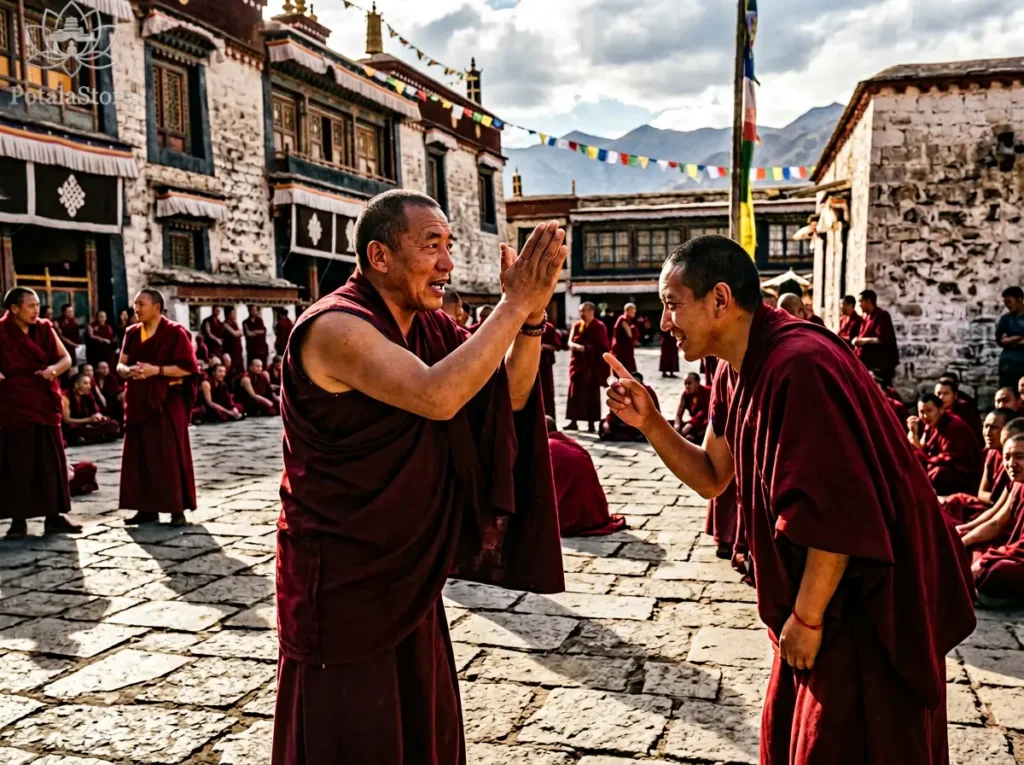
从这些种子发展而来的哲学传统极其复杂。 长州, 公元 2 世纪的印度哲学家,发展 中央 — 对空虚的严格逻辑分析(顺性) 这比现代现象学的各个方面早了近两千年。修道院的辩论传统,例如 西藏色拉杰寺僧侣们每天进行数小时的激烈哲学辩论,其水平可与西方哲学学院的任何作品相媲美。
For practitioners who identify as secular, atheist, or already rooted in another faith, Buddhism’s philosophical dimension offers a complete and internally consistent path. Jon Kabat-Zinn’s Mindfulness-Based Stress Reduction (MBSR), now used in over 200 hospitals across the United States, is drawn almost entirely from Buddhist meditative philosophy with the explicitly religious elements removed.
The Religious Dimensions: What Makes Buddhism a Religion
By virtually every sociological definition of religion, Buddhism qualifies. It has a founder regarded as a transcendent being, sacred texts, ordained clergy, ritual practice, a cosmology that extends beyond the material world, and institutions — monasteries, temples, and lay organizations — that have shaped entire civilizations.
The act of “taking refuge in the Triple Gem” is the formal entry point into Buddhist practice as a religion. A practitioner takes refuge in the Buddha (the teacher), the Dharma (the teaching), and the Sangha (the community of practitioners). This is not a philosophical position. It is a vow, witnessed by a teacher, made before an altar, often accompanied by prostrations and offerings of light, water, and incense.
Buddhist religious practice — across all traditions — includes:
- Ritual and ceremony: Puja (devotional offerings), fire pujas, lunar observances, and life-cycle ceremonies
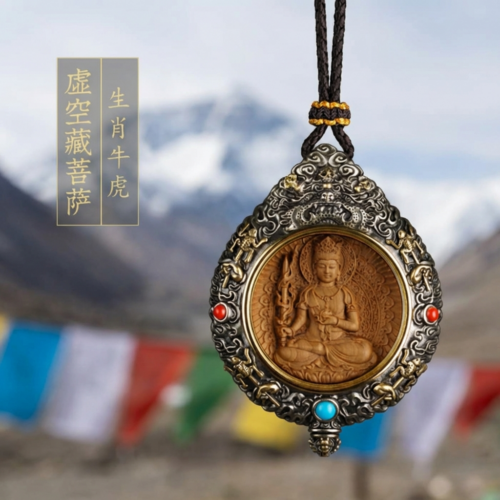
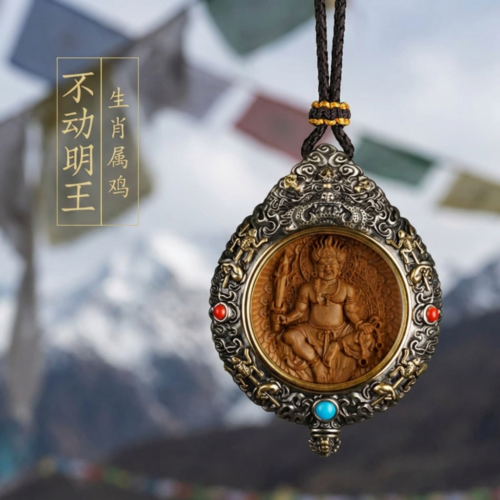
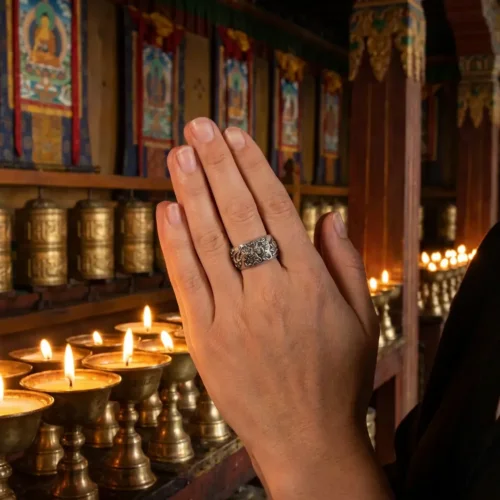
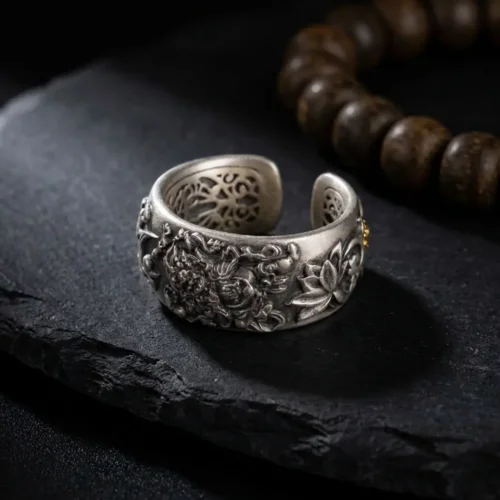
- Sacred objects: Mala beads, prayer wheels, butter lamps, statues, and thangka paintings used in daily devotion
- Ordained clergy: Monks and nuns who observe 227 to 348 precepts depending on the tradition
- Belief in rebirth: The understanding that consciousness continues after death, shaped by karma
- Cosmological beings: In Mahayana and Vajrayana, bodhisattvas such as Avalokiteshvara (Chenrezig) are not merely philosophical ideals — they are invoked, prayed to, and experienced as responsive presences
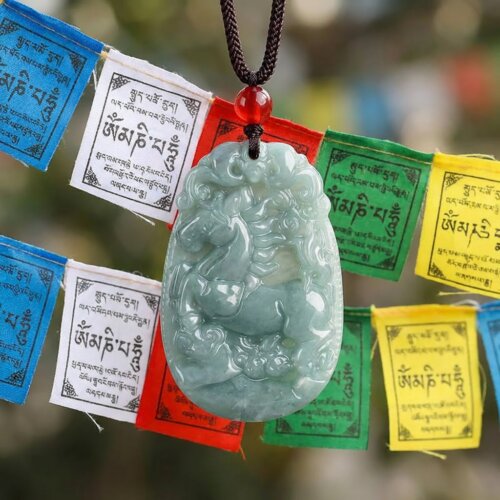
In Tibetan Buddhism specifically, the religious dimensions are particularly vivid. The mantra Om Mani Padme Hum — the six-syllable invocation of Avalokiteshvara — is inscribed on prayer wheels, carved into mountain stones, and recited using 108-bead mala strings. Each rotation of a prayer wheel is traditionally understood to send the mantra outward into the world, accumulating merit for all sentient beings. This is devotional religion in the fullest sense.
💡 In Tibetan Buddhist practice, the mala is simultaneously a philosophical tool (an anchor for meditative attention) and a religious instrument (a sacred object blessed by a lama). Explore PotalaStore’s handcrafted mala collection, sourced from monastery-partnered workshops in the Himalayas.
How the Three Main Buddhist Traditions Answer This Question
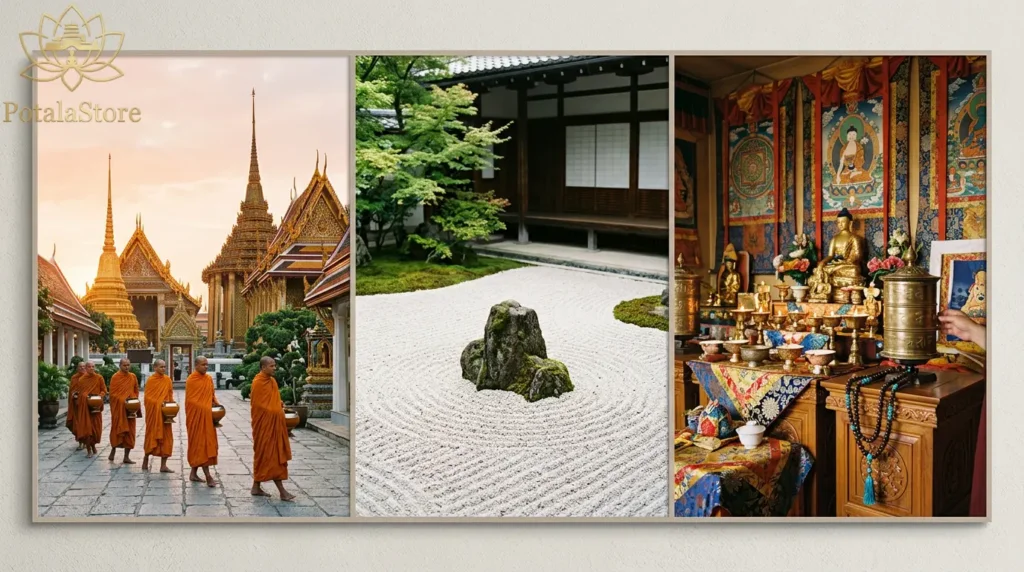
The most accurate answer to “religion or philosophy?” depends entirely on which Buddhist tradition you are asking about. The three major vehicles — Theravada, Mahayana, and Vajrayana — sit at very different points on the religion-to-philosophy spectrum. No competitor article in this space presents this comparison systematically; here it is.
| Tradition | Geographic Centers | Religion–Philosophy Balance | Signature Practice | Typical Entry Point for Westerners |
|---|---|---|---|---|
| Theravada | Thailand, Sri Lanka, Myanmar, Cambodia | Most philosophical of the three; emphasis on the Pali Canon and individual liberation (nibbana) through direct practice | Vipassana (insight) meditation; following the 5 precepts | 10-day silent retreat (e.g., Goenka centers); meditation apps |
| Mahayana | China, Japan, Korea, Vietnam | Strong philosophical tradition (Madhyamaka, Yogacara); also deeply religious — devotion to bodhisattvas, elaborate temple ritual | Bodhisattva vow; Pure Land recitation; Zen koan practice | Zen sitting groups; Japanese tea ceremony lineages; Thich Nhat Hanh communities |
| Vajrayana (Tibetan) | Tibet, Nepal, Bhutan, Mongolia | The most visibly religious — elaborate ritual, deity yoga, tulku reincarnation system — yet simultaneously the most philosophically demanding, with debate as a monastic discipline | Ngondro (foundational practices); mantra recitation; deity visualization; mala practice | Tibetan meditation centers (e.g., Shambhala, FPMT); cultural and spiritual jewelry |
This is the context that most Western introductions to this debate miss entirely. When someone says “Buddhism is just a philosophy,” they are usually describing Theravada or secular Buddhism. When someone says “Buddhism is definitely a religion,” they are usually looking at Mahayana or Vajrayana. Both are correct descriptions of real Buddhist communities. The disagreement is often a matter of which tradition is being described.
In our experience working with Tibetan monasteries, the religion-versus-philosophy question can genuinely puzzle Tibetan teachers when it is posed to them. The assumption that these two things must be in tension is not part of traditional Buddhist intellectual culture. One senior Geshe from Sera Jhe told us simply: “The philosophy is the practice. The practice is the religion.” For Tibetan practitioners, the meticulous logical training in emptiness and the daily recitation of refuge prayers are not separate tracks — they are one integrated path.
Why the Answer Matters for Your Practice
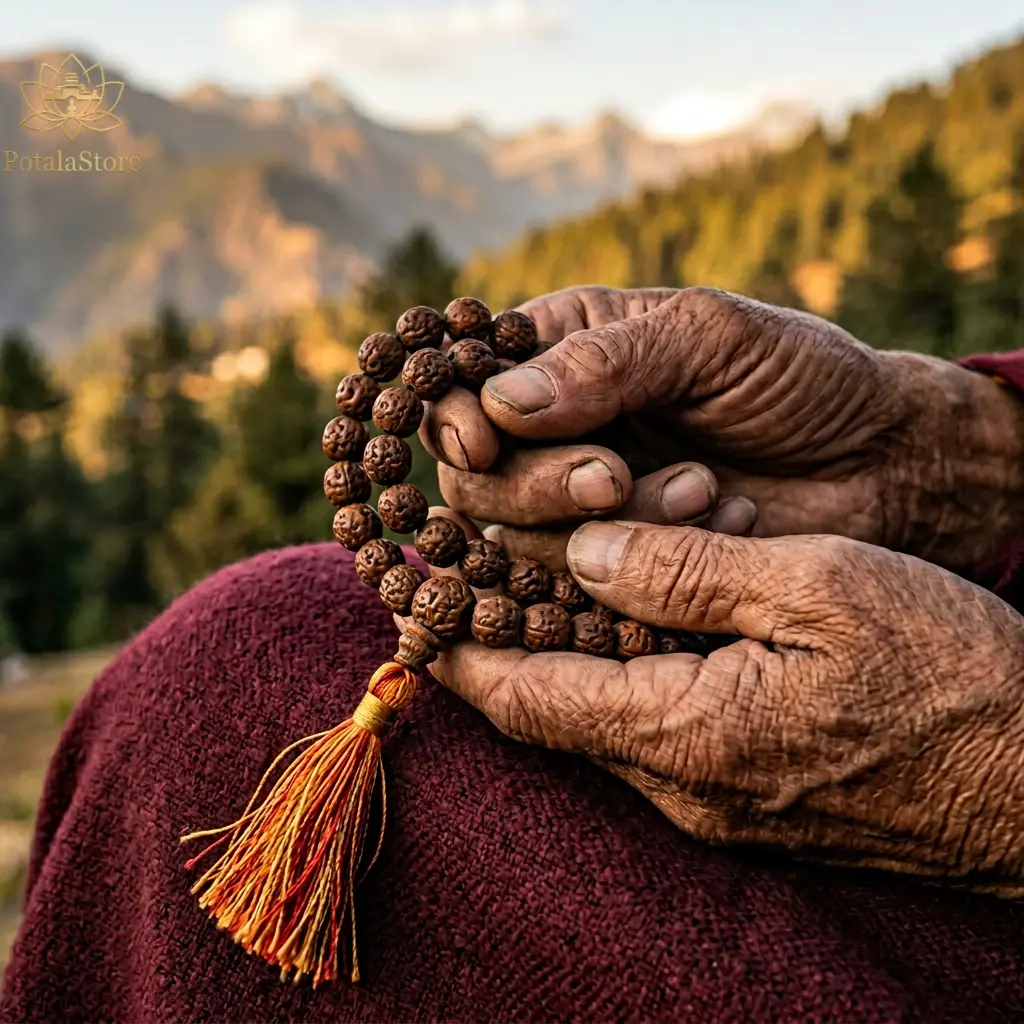
The religion-or-philosophy question is not just academic — how you frame Buddhism shapes which doors open for you and which stay closed. Here is a practical guide based on how different practitioners typically engage with the tradition.
🧘 If you approach Buddhism as a Philosophy
- Start with meditation — shamatha (calm-abiding) or vipassana
- Study the Four Noble Truths and the Noble Eightfold Path as ethical and psychological frameworks
- Use a wrist mala (21 or 27 beads) as a tactile attention anchor — no religious obligation required
- Explore secular offerings: MBSR courses, Insight Timer, Plum Village app
- Read: the Dhammapada, Thich Nhat Hanh’s The Heart of the Buddha’s Teaching
🙏 If you approach Buddhism as a Religion
- Seek a qualified teacher and take refuge in the Triple Gem
- Observe the 5 Precepts (non-harming, truthfulness, non-stealing, right conduct, sobriety)
- Use a full 108-bead mala for mantra recitation — ideally blessed by your lama
- Join a local sangha or Buddhist center
- Read: The Words of My Perfect Teacher (Patrul Rinpoche) for Tibetan; the Heart Sutra for Mahayana
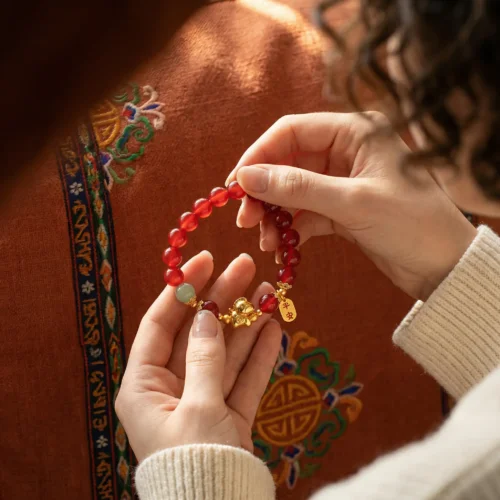
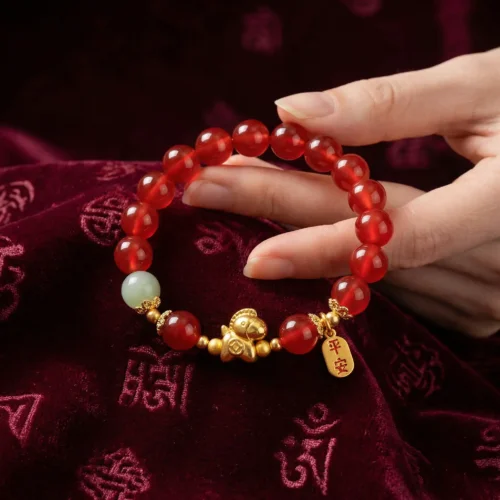
There is also a third path — the one most practitioners who engage deeply with Tibetan Buddhism eventually find themselves on. They arrive for the philosophy and the meditation. They stay because the ritual, the objects, and the community give the philosophy a living form. A monastery-blessed bracelet is not merely decorative. It is a daily reminder of the bodhisattva vow, a tactile anchor that holds the philosophical intention in the body.
Our observation at PotalaStore: The practitioners who find the deepest satisfaction tend to be those who stay curious about both dimensions. They don’t force Buddhism into one category. They let the tradition reveal itself at its own pace — sometimes as a rigorous intellectual challenge, sometimes as a devotional refuge, often as both at once.
Approximately 3.9 million Americans identify as Buddhist, according to Pew Research Center data — and a significant portion of those arrived through secular mindfulness before encountering the religious tradition. There is no wrong starting point. The tradition is large enough to hold both.
If you are new to Buddhist practice and looking for a tangible first step, exploring mala beads as a meditation tool is an accessible, non-committal entry. Whether you use them to count breaths (purely philosophical) or to count Om Mani Padme Hum recitations (religious), the physical practice of returning your attention bead by bead is the same — and it works either way.
Explore Authentic Tibetan Practice Tools
Whether your path is philosophical, devotional, or both — PotalaStore offers mala beads, mantra jewelry, and sacred objects sourced directly from Himalayan monastery workshops and shipped worldwide.Shop Mala Beads →
Frequently Asked Questions
Yes. Theravada and secular Buddhist traditions offer complete meditative and ethical frameworks that require no devotional belief. Mindfulness-Based Stress Reduction (MBSR), used in over 200 U.S. hospitals, is derived from Buddhist meditation practice with the religious elements deliberately set aside. Many practitioners engage exclusively with the philosophical and psychological dimensions for years — or indefinitely — and consider themselves fully Buddhist.
Buddhism is non-theistic, meaning it does not center on belief in a creator God. The Buddha explicitly avoided metaphysical questions about the existence or non-existence of God, calling them “unanswered questions” that do not contribute to liberation. However, Mahayana and Vajrayana traditions do include powerful beings — bodhisattvas such as Avalokiteshvara and Tara — who are venerated and prayed to. These beings are not omnipotent creators, but they occupy a functionally devotional role in daily religious life.
In terms of visible religious structure — elaborate ritual, deity practices, tulku (reincarnate lama) system, extensive clergy, and sacred objects — Tibetan Buddhism (Vajrayana) is the most recognizably “religious” of the three main traditions. Yet it is simultaneously the most philosophically demanding, with monastic debate as a core practice and a rich tradition of logical analysis of emptiness (shunyata). Tibetan Buddhism does not experience philosophy and religion as opposites; they are understood as mutually reinforcing dimensions of a single path.
The three main vehicles are Theravada (Southeast Asia — emphasizes individual liberation through direct meditation practice and the Pali Canon), Mahayana (East Asia — emphasizes universal liberation through the bodhisattva ideal, and includes Zen and Pure Land traditions), and Vajrayana (Tibet, Nepal, and Mongolia — emphasizes rapid liberation through tantric practices, mantra, and visualization, under the guidance of a qualified teacher). All three share the foundational teachings of the Buddha; they differ in method, cosmology, and cultural expression.
📚 References
- Buddhist Studies at Britannica: Comprehensive overview of Buddhist history, doctrine, and traditions across Asia. Encyclopædia Britannica — Buddhism
- Pew Research Center — Religious Landscape Study: Data on the number of Buddhist Americans and their demographic patterns, including the 3.9 million estimate. Pew Research Center
- Dharma Realm Buddhist University — Is Buddhism a Religion or a Philosophy? Academic perspective from a Buddhist university exploring the tensions between Western categories and Buddhist self-understanding. DRBU
- Lion’s Roar — Is Buddhism a Religion? Three Buddhist teachers offer first-person perspectives on how they personally relate to the religion question. Lion’s Roar
Last reviewed and updated: February 2026 by the PotalaStore Editorial Team.
PotalaStore collaborates directly with artisan workshops and monastic communities in the Himalayan region. Our editorial team has visited partner monasteries in Nepal and engaged with resident teachers to ensure the accuracy of our cultural and religious content.