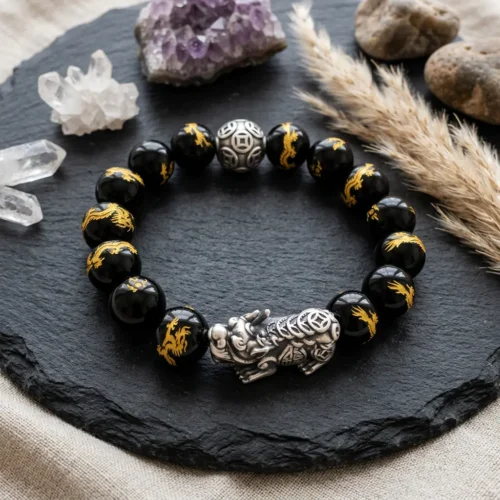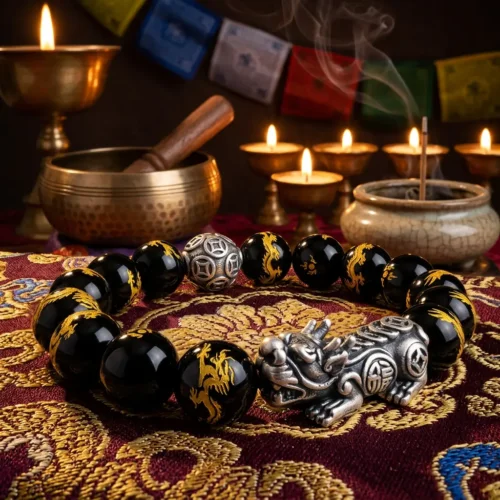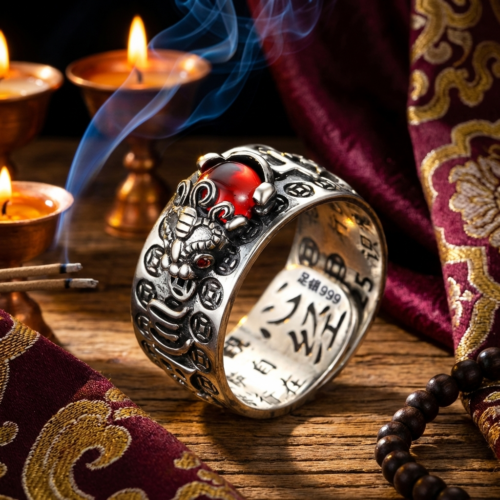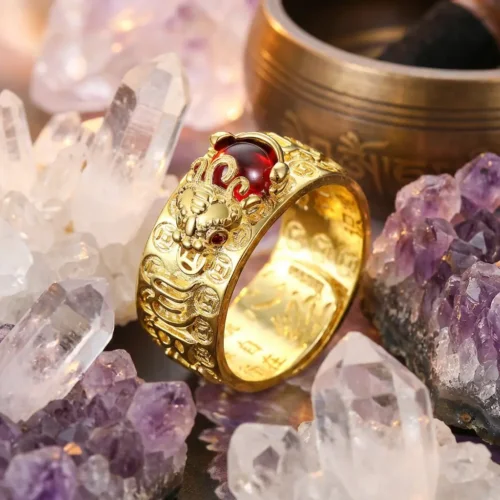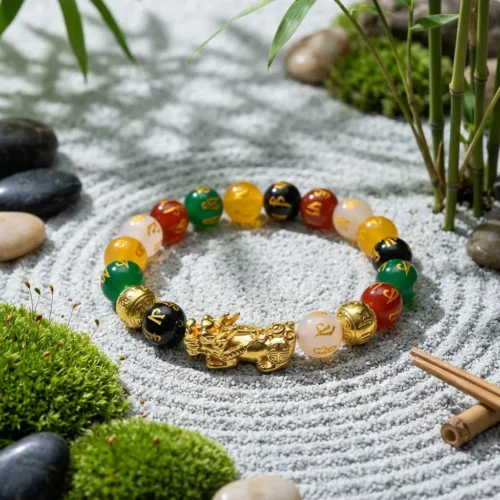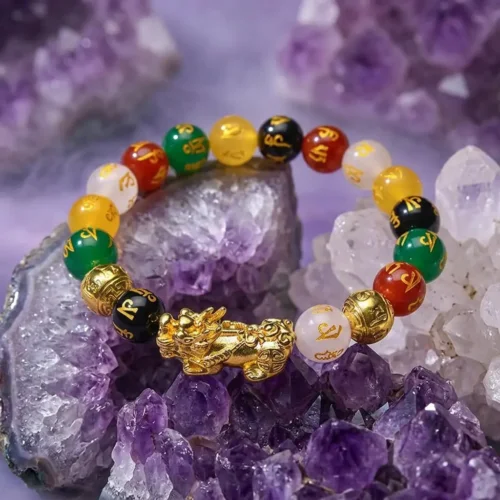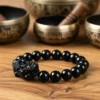

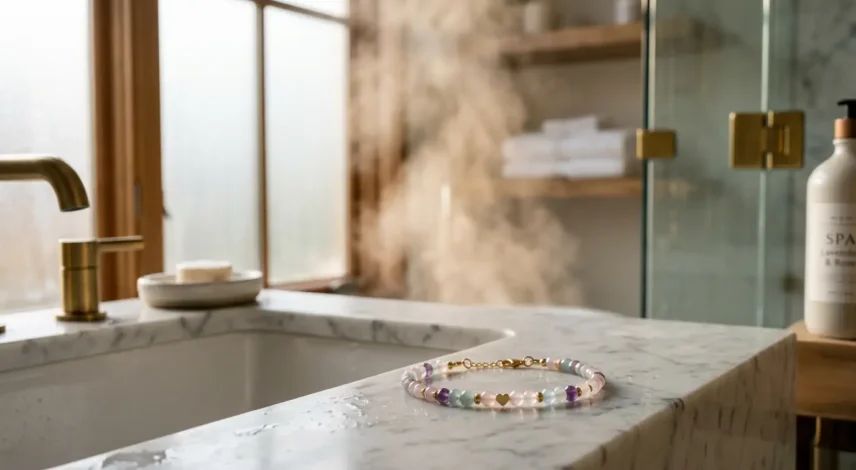

Using the wrong method — even something as routine as a shower — can permanently ruin your crystal bracelet. Water that feels harmless to you can dissolve, rust, or even make certain stones chemically toxic within hours.
At PotalaStore, we’ve sourced and shipped thousands of crystal bracelets made from stones that span the full range of water sensitivity. Over the years, we’ve seen the damage that happens when people don’t know the difference — cloudy surfaces, rusted metal components, brittle elastic, and in the worst cases, completely crumbled stones.
🔑 Short Answer
No — remove your crystal bracelet before showering.Even water-resistant stones like amethyst and rose quartz face damage from soap chemicals, hot water, and elastic cord degradation over time. Crystals rated below 6 on the Mohs hardness scale — including selenite, malachite, and fluorite — can dissolve, rust, or leach toxic compounds when wet.
Below you’ll find a full crystal-by-crystal reference table, an easy 3-factor safety test, and safe alternatives for cleaning your bracelet without water.
Why Shower Water Is More Dangerous Than You Think
Plain water isn’t the only threat to your bracelet in the shower. Four separate factors combine to accelerate damage — and most crystal care guides only warn you about one of them.
Heat (38–42°C / 100–108°F): Shower water temperature causes thermal shock in feldspars like moonstone and labradorite, creating microscopic fractures that worsen with every wash. Heat also weakens the adhesive bonding elastic cord ends, which is the most common reason bracelets break unexpectedly.
Soap and shampoo: Surfactants leave a dulling film on crystal surfaces. Conditioner oils coat stones with a cloudy residue that’s difficult to remove without risking further damage. The pH shifts caused by shampoo accelerate erosion in softer stones.
Chlorine in tap water: Even standard municipal tap water contains chlorine levels that corrode metal spacers, clasps, and wire findings over time. Jade is particularly sensitive to chlorinated water.
Elastic cord degradation: Repeated water-and-soap exposure weakens elastic cord measurably. With daily wear and daily showering, most elastic bracelets need restringing within 12 months. Warning signs: white fibers visible between beads, or a bracelet that feels “stretched out” even without breaking.
💡 One thing we’ve learned from restoring customer bracelets: Most elastic breakages we see aren’t from a single snap — they’re from months of shower exposure quietly degrading the cord until it finally gives out. The crystal is fine; the cord is the hidden vulnerability.
Which Crystal Bracelets Are Shower-Safe? Full Reference Table
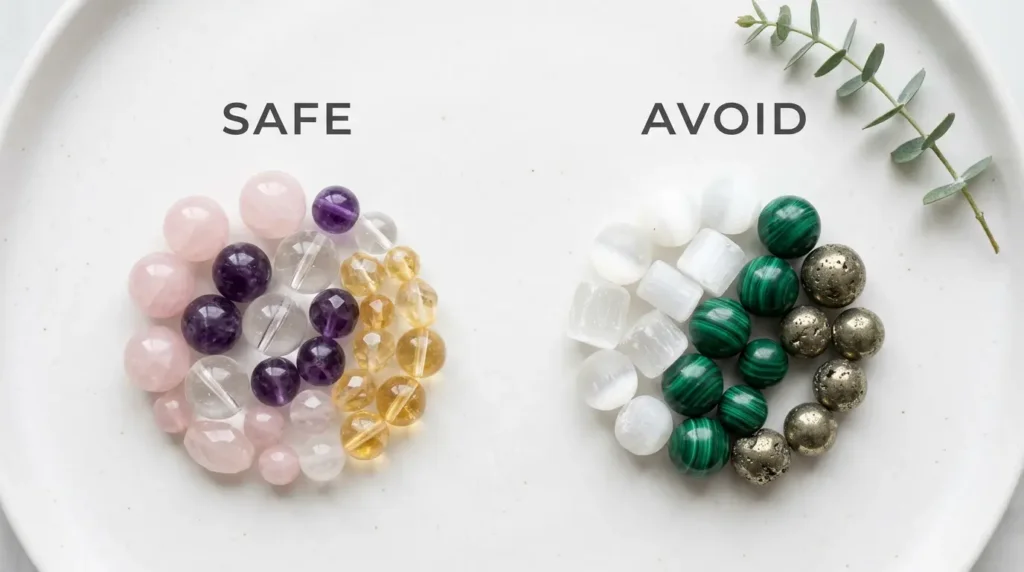
Use this table to quickly check your specific stone. The key rule: Mohs hardness ≥ 6 is a starting point — but not the whole story. See the 3-factor test below the table for a more accurate assessment.
| Crystal | Mohs | Water Safe? | Shower Safe? | Why / Risk |
|---|---|---|---|---|
| Clear Quartz | 7 | ✓ Yes | ⚠ Brief only | Water-safe, but soap dulls surface over time |
| Rose Quartz | 7 | ✓ Yes | ⚠ Brief only | Water-safe; avoid prolonged soap contact |
| Amethyst | 7 | ✓ Yes | ⚠ Brief only | Color fades with heat + UV, not water |
| Citrine | 7 | ✓ Yes | ⚠ Brief only | Quartz family; heat-sensitive to color change |
| Tiger’s Eye | 6.5–7 | ✓ Yes | ⚠ Brief only | Contains trace iron; avoid prolonged soaking |
| Black Tourmaline | 7–7.5 | ✓ Yes | ⚠ Brief only | Hard and durable; soap residue is main risk |
| Obsidian | 5–5.5 | ⚠ Brief | ✗ Avoid | Volcanic glass; non-porous but below Mohs 6 |
| Moonstone | 6–6.5 | ⚠ Brief | ✗ Avoid | Thermal shock causes fractures in hot showers |
| Labradorite | 6–6.5 | ⚠ Brief | ✗ Avoid | Temperature changes crack the feldspar layers |
| Hematite | 5.5–6.5 | ✗ No | ✗ Avoid | High iron content → rusts when wet |
| Turquoise | 5–6 | ✗ No | ✗ Avoid | Porous — absorbs water, cracks and discolors |
| Lapis Lazuli | 3–5 | ✗ No | ✗ Avoid | Contains calcite (dissolves) + pyrite (rusts) |
| Malachite | 3.5–4 | ✗ No | ✗ Avoid | ⚠ Releases toxic copper compounds in water |
| Pyrite | 6–6.5 | ✗ No | ✗ Avoid | Rusts + produces sulfuric acid; permanent damage |
| Selenite | 2 | ✗ No | ✗ Avoid | Water-soluble — visibly dissolves within 1 hour |
| Fluorite | 4 | ✗ No | ✗ Avoid | Soft; dissolves especially in chlorinated water |
Note: “Brief only” means a very short rinse (under 30 seconds in cool water) is unlikely to cause immediate damage — but regular shower exposure over weeks and months will still degrade the surface and elastic cord. The safest habit is always to remove your bracelet before showering.
🔬 The 3-Factor Water Safety Test
Mohs hardness alone doesn’t tell the whole story. A crystal only passes if it clears all three conditions:
- Mohs hardness ≥ 6 — Below this threshold, water physically erodes the surface
- Non-porous structure — Porous stones (turquoise, howlite) absorb water and swell, crack, or discolor regardless of hardness
- No iron or copper content — Iron causes rust (hematite, pyrite); copper leaches toxic compounds (malachite, azurite)
A crystal must pass all three checks to be considered water-safe. This is why pyrite (Mohs 6–6.5, which passes check 1) still fails — it contains iron and rusts within hours of water contact.
What Actually Happens When Sensitive Crystals Get Wet
It’s not abstract — the damage is chemical and structural, and it happens faster than most people expect.
Selenite (Mohs 2): Selenite is composed of calcium sulfate dihydrate (CaSO₄·2H₂O), a naturally water-soluble compound. Submerge a selenite bracelet and you’ll see a white, chalky residue forming on the stone’s surface within one hour. The surface becomes rough and pitted; there’s no reversing this.
Pyrite (Mohs 6–6.5): Here’s the one that surprises people most. Pyrite looks metallic and tough, so customers often assume it’s water-safe — especially since its Mohs rating clears the common 6-point threshold. But pyrite (iron sulfide, FeS₂) oxidizes on contact with water and oxygen, forming iron oxide (rust) and sulfuric acid. You’ll see orange-brown staining within hours of exposure. The damage is permanent.
Malachite (Mohs 3.5–4): This one goes beyond cosmetic damage. Malachite contains copper carbonate, and dissolved copper compounds are toxic to humans. Don’t wear malachite bracelets in the shower or swimming pool — and if you make crystal-infused water, malachite should never be used directly in drinking water.
⚠ Important safety note: The spiritual and energy properties associated with crystals are based on traditional beliefs and user experience, not scientific evidence. This article addresses the very real physical and chemical effects of water on minerals — a matter of material science, not metaphysics.
How to Care for Crystal Bracelets the Right Way
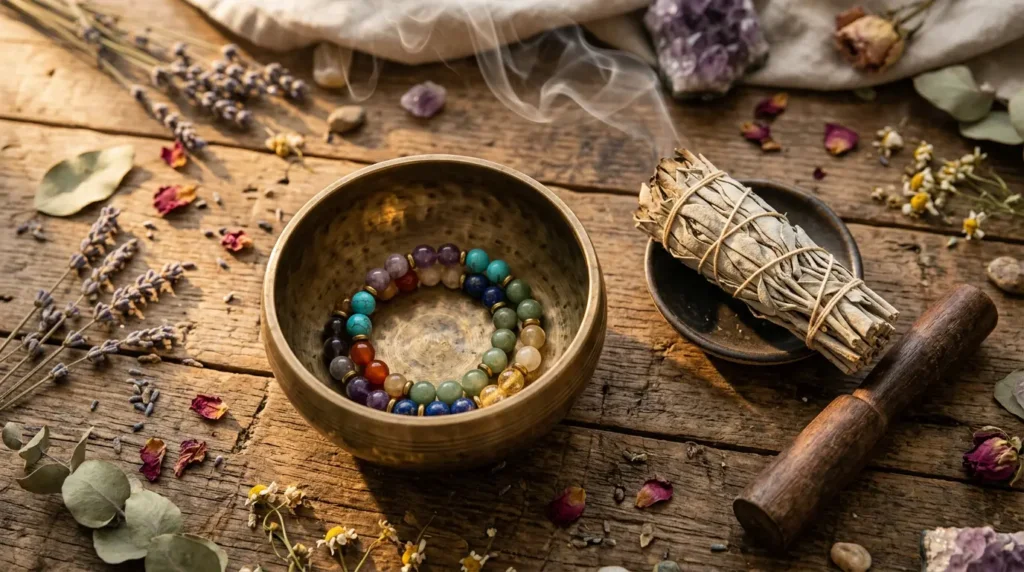
Avoiding water doesn’t mean your bracelet goes without care. In Tibetan Buddhist tradition — where crystal and gemstone malas have been used for centuries of daily practice — water was almost never used for cleansing. Instead, practitioners relied on methods that preserve both the physical integrity and the energetic quality of the stone.
These aren’t just spiritual rituals — they’re genuinely safer for the materials, and they work.
🔔
Singing Bowl Sound
Place your bracelet inside or beside a Tibetan singing bowl and strike it for 1–2 minutes. The vibrations clear residual energy and require no water contact whatsoever. Safe for every crystal type.
🌿
Sage or Palo Santo
Pass the bracelet through white sage or palo santo smoke for 20–30 seconds. Traditional in both Tibetan and Native American cleansing practices. Completely water-free and safe for all stones including selenite.
🌕
Moonlight Charging
Leave your bracelet on a windowsill during a full moon for 3–4 hours. No chemicals, no heat, no water. Gentle on elastic cord and safe for even the most sensitive stones.
🧹
Dry Cloth Wipe
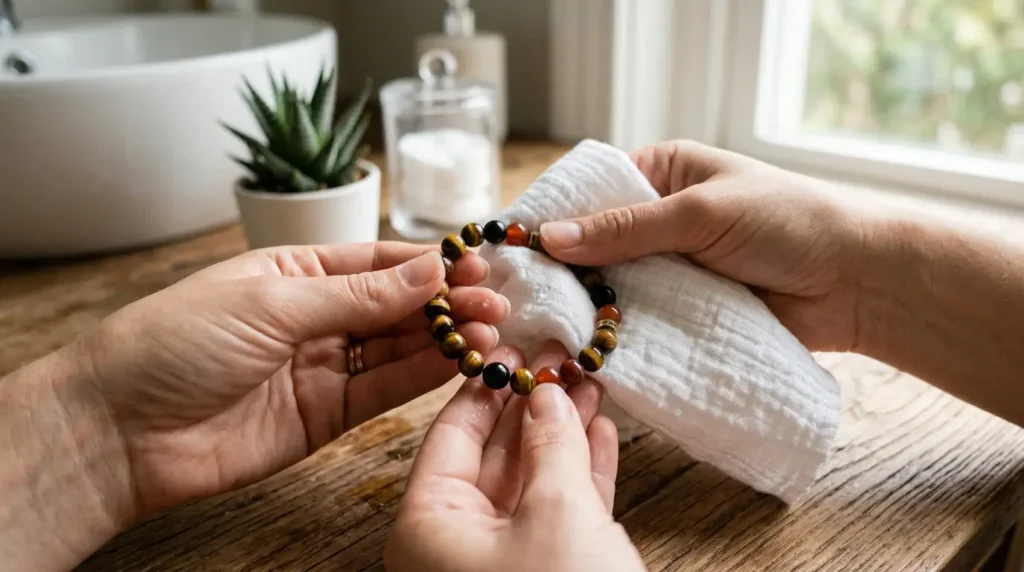
For physical surface dust, a soft dry cloth (microfiber or cotton) is all you need. For water-safe quartz-family stones only, a barely damp cloth is acceptable — pat dry immediately after.
Storage and Everyday Habits
Keep crystal bracelets in a dry pouch or jewelry box — not in a bathroom drawer where humidity from daily showers accumulates. Even if you never shower with your bracelet, prolonged exposure to bathroom steam can degrade sensitive stones like pyrite over time.
Inspect the elastic cord every few months. If you see white fibers between beads or feel the bracelet stretch before snapping back, it’s time for restringing. With daily wear, plan to restring approximately every 12 months as a preventative measure.
Browse PotalaStore’s crystal bracelet collection — each piece comes with a care card detailing the specific needs of its stone type.
🚨 If Your Bracelet Already Got Wet
- Remove immediately— don’t wait for the shower to finish
- Pat dry gentlywith a soft cotton cloth; do not rub
- No heat drying— hair dryers cause thermal shock; air dry only
- Lay flat to dry completelybefore storing — trapped moisture in the stringing degrades elastic from the inside out
- Check for damage over the next 24–48 hours— iron-bearing stones (hematite, pyrite, tiger’s eye) may show rust spots developing even after they appear dry
Frequently Asked Questions
Rose quartz rates Mohs 7, making it one of the more water-resistant crystals — a brief accidental rinse won’t cause immediate damage. That said, regular shower exposure degrades the elastic cord, leaves soap film on the stone’s surface, and subjects it to thermal shock from hot water. The recommendation is the same as for all crystal bracelets: remove it before showering as a consistent habit.
Selenite, malachite, pyrite, fluorite, calcite, celestite, angelite, and lepidolite should never be submerged or directly exposed to running water. Selenite dissolves visibly within an hour. Pyrite rusts and produces sulfuric acid. Malachite releases toxic copper compounds. These are not guidelines — they’re the physical and chemical behavior of the minerals themselves.
The most effective and universally safe options are: (1) a soft dry cloth wipe for dust and surface oils, (2) sage or palo santo smoke for energetic cleansing, and (3) sound from a Tibetan singing bowl, which is safe for every crystal type including the most water-sensitive stones like selenite. Moonlight charging is another fully safe method that also serves to re-energize the stone according to traditional practice.
Find Your Crystal Bracelet at PotalaStore
Every bracelet in our collection comes with a stone-specific care card — so you always know exactly how to protect your piece. Sourced through our monastery partnerships in the Himalayas.Shop Crystal Bracelets →
📚 References
- Mohs Hardness Scale — Mineral Identification: Overview of Friedrich Mohs’ mineral hardness classification system and its applications in gemology. Minerals.net — The Mineral and Gemstone Kingdom
- Gemstone Identification and Properties: Educational resource on physical and chemical properties of gemstones including porosity, hardness, and chemical composition. Gemological Institute of America (GIA) — Gem Encyclopedia
- Malachite Safety and Copper Toxicity: Information on copper carbonate compounds and safe handling of copper-bearing minerals. Source: Mindat.org Mineralogy Database (Readers may search mindat.org for the malachite mineral profile)
Last updated: March 2026 · Written by the PotalaStore team based on gemological reference data and over a decade of crystal jewelry sourcing experience. This article will be updated as new information becomes available.