

Green aventurine is not just the luckiest crystal — it is one of the oldest prosperity tools in the Himalayan world. Long before Western crystal culture gave it the label “Stone of Opportunity,” Tibetan artisans were setting it into sacred statues and meditation objects as a conduit for the Heart Chakra’s most expansive energy: compassionate abundance. If you have been drawn to this shimmering green quartz without quite knowing why, this guide will explain what it is, why it genuinely earns its reputation, and how to work with it in a way that honors that tradition.
At PotalaStore, we source spiritual jewelry directly from verified craftspeople connected to monasteries in Nepal and Tibet. Over the years, we have had many conversations with monks and lay practitioners about which stones carry what the tradition calls lungta — wind-horse energy, the vitality that propels fortune. Green aventurine comes up again and again. That is not marketing language; it is what the lineage actually teaches.
Green Aventurine — Quick Reference
| Mineral Family | Quartz (SiO₂ — Silicon Dioxide) |
| Color Agent | Fuchsite (chromium-rich muscovite mica) |
| Mohs Hardness | 6.5–7 |
| Primary Chakra | Heart Chakra (Anahata) |
| Key Associations | Luck, prosperity, opportunity, emotional balance |
| Primary Source Regions | India, Brazil, Nepal, Tibet |
| Zodiac Affinity | Aries, Libra |
⚠️ Please note: The spiritual and energetic properties described in this article reflect traditional beliefs and the experiences of practitioners across many cultures. They are not scientifically verified claims. Green aventurine is a beautiful stone — it should complement your well-being practices, not replace professional medical or financial advice.
What Is Green Aventurine? The Stone of Opportunity Explained
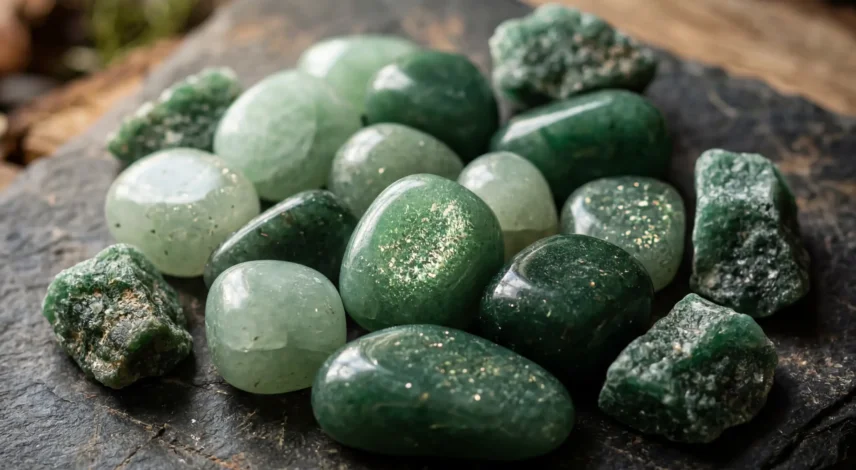
Green aventurine is a translucent to opaque variety of quartz (SiO₂) whose distinctive sparkle — called aventurescence — comes from microscopic plates of fuchsite, a chromium-rich muscovite mica embedded within the stone. That inner shimmer is not a surface treatment or dye; it is a structural feature of the mineral itself, which is part of why traditional cultures across Asia and the Mediterranean recognized it as something set apart from ordinary green stones.
On the Mohs hardness scale, green aventurine sits at 6.5–7, making it durable enough for everyday jewelry while remaining softer than topaz or sapphire. Its color ranges from pale mint to a deep forest green, with the intensity of the green tied directly to the concentration of fuchsite inclusions. The richest, most saturated specimens tend to come from southern India, although notable deposits also exist in Brazil, Russia, and — importantly for our work — the Himalayan regions of Nepal and Tibet.
The name itself comes from the Italian a ventura, meaning “by chance” — a reference to the accidental 18th-century discovery of aventurine glass by Venetian glassmakers. The natural stone inherited the name, and with it, the association with luck and the unexpected gift of fortune.
Green Aventurine vs. Jade: Key Differences at a Glance
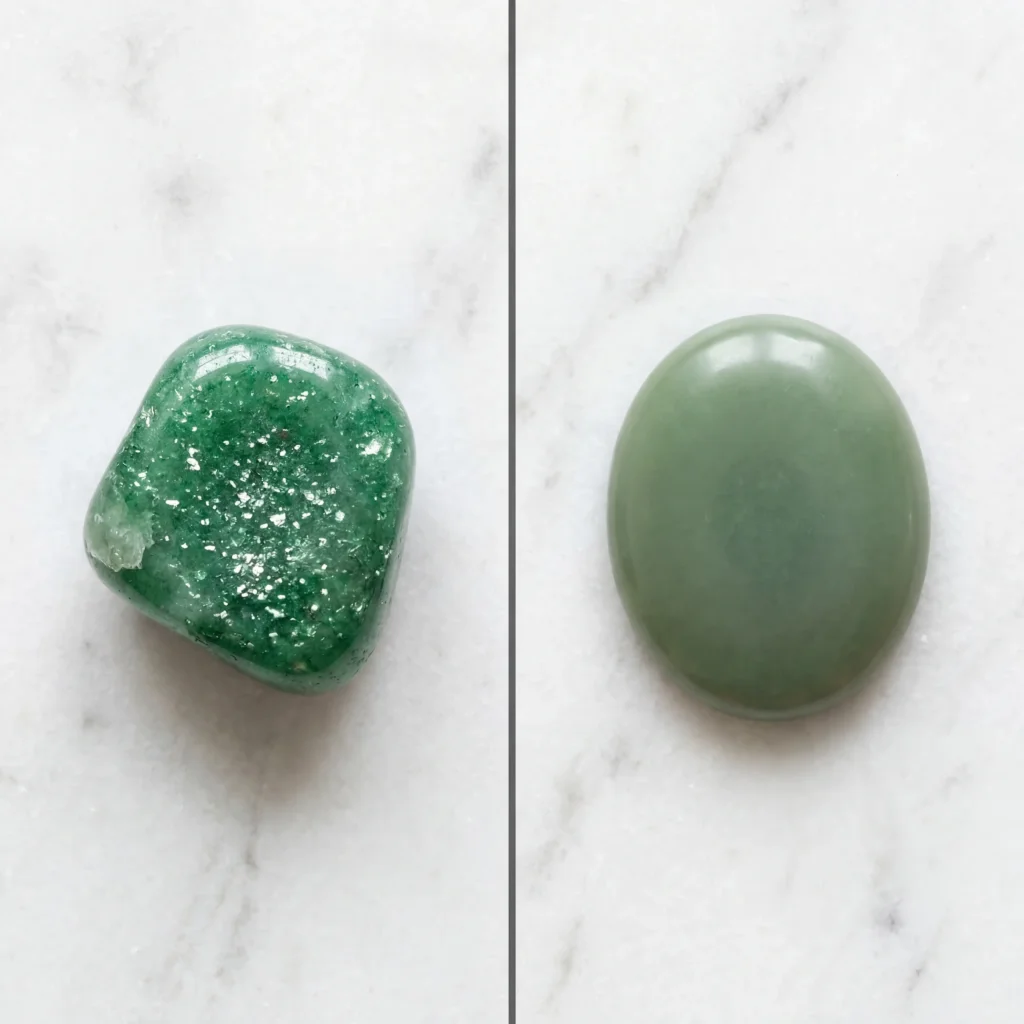
This is one of the most common points of confusion, and it matters when you are shopping for authentic pieces:
| Feature | Green Aventurine | Nephrite Jade |
|---|---|---|
| Mineral Family | Quartz (SiO₂) | Actinolite-Tremolite series |
| Mohs Hardness | 6.5–7 | 6–6.5 |
| Visual Signature | Glittery aventurescence (inner sparkle) | Smooth, waxy, no sparkle |
| Typical Price Range | $10–$60 USD (per jewelry piece) | $30–$300+ USD |
| Cultural Context | Buddhist, Vedic, Western crystal healing | Predominantly East Asian (China, Korea) |
Why Green Aventurine Is Believed to Attract Wealth and Opportunity
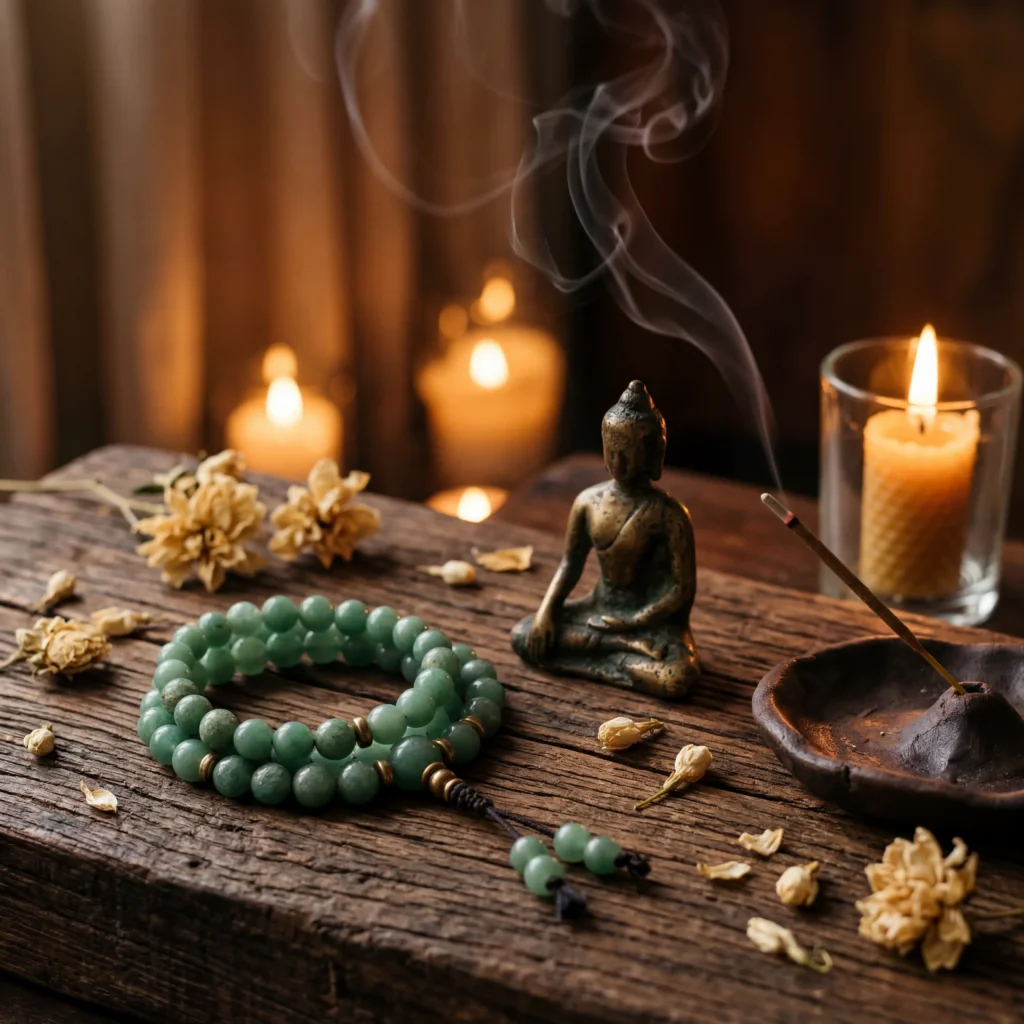
Green aventurine is traditionally associated with prosperity because it activates the Heart Chakra (Anahata) — the energetic center that governs not only love, but also generosity, receptivity, and the capacity to receive good fortune without resistance. Most Western crystal guides stop at “it’s lucky.” The Tibetan Buddhist framework goes considerably deeper, and that depth is what makes the stone so compelling.
In Buddhist teachings, what we call “luck” is understood as punya — merit accumulated through virtuous intention and generous action. The Heart Chakra is precisely where that merit takes root. When Tibetan craftspeople set green aventurine into sacred objects, they were not simply decorating; they were using the stone’s resonance with the heart center to amplify the practitioner’s capacity for dāna (generosity) and, by extension, to invite the reciprocal flow of abundance. The stone associated with this Heart-Chakra current was green — the color of renewal, growth, and the Wood element in Feng Shui’s wealth sector.
This also explains the strong connection between green aventurine and Green Tara, the Tibetan Buddhist goddess of compassionate action. Tara is revered as the one who removes obstacles and opens doors — precisely what practitioners mean when they say this stone creates opportunity. In that tradition, “opportunity” is not a random windfall; it is what arrives when internal obstacles to abundance — fear, contraction, a closed heart — are cleared.
On a more practical energetic level, the crystal’s fuchsite inclusions resonate with the Heart Chakra’s green ray, which practitioners report creates a quiet confidence and emotional steadiness — the inner state from which decisive, opportunity-seizing action tends to emerge. What begins as calm becomes momentum.
💚 PotalaStore’s green aventurine pieces are sourced from craftspeople with direct ties to Himalayan monastic traditions. Browse our green aventurine collection →
How to Use Green Aventurine for Luck, Wealth, and Daily Practice
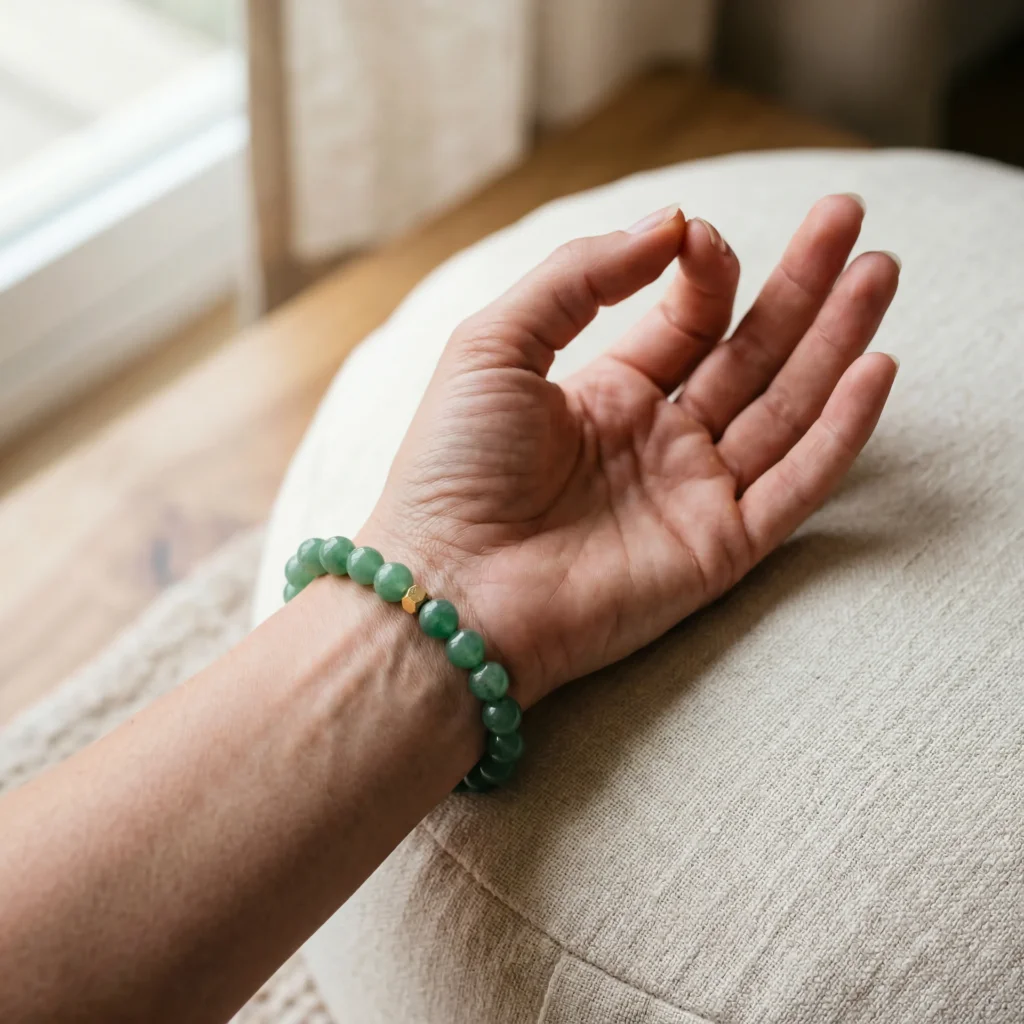
The most effective way to work with green aventurine is to keep it within your energy field consistently — worn as jewelry, carried in a pocket, or placed intentionally in spaces connected to your work, finances, or meditation practice. Below are the most time-tested approaches, drawn from both Western crystal practice and the Himalayan traditions we work closely with.
- Wear it against your skin: A green aventurine bracelet worn on the left wrist (the receptive side in many traditions) is the most direct way to keep its Heart Chakra resonance active throughout the day. Bracelets with 8mm beads are the standard size in Tibetan practice.
- Place it in your wealth corner: In Feng Shui, the southeast sector of a room or home corresponds to financial flow. A green aventurine tumble stone or small figurine placed here is believed to amplify prosperity energy in that space.
- Keep it near your workspace or wallet: Many practitioners tuck a small aventurine piece inside a wallet or on a desk where financial decisions are made — less as a magic charm and more as a tactile reminder to remain open and confident.
- Use it in Heart Chakra meditation: Lie down, place green aventurine on your chest (at the sternum), and rest with slow, deep breaths for 10–15 minutes. Set an intention around abundance before beginning. This practice is particularly effective during new moon or full moon cycles.
- Combine with citrine or pyrite: For a more focused wealth manifestation practice, pair green aventurine (Heart Chakra, receptivity) with citrine (Solar Plexus, action) or pyrite (grounding, material prosperity). These three crystals create a complementary triad that addresses multiple energy centers simultaneously.
How to Cleanse and Charge Your Green Aventurine
We recommend cleansing your green aventurine every 2–4 weeks during regular use, or immediately after it has absorbed particularly heavy or stressful energy. At Mohs 6.5–7, it is durable enough for most cleansing methods, but there is one exception to know: extended water soaking can eventually affect the stone’s polish, so keep water-based cleansing brief (under 5 minutes) if you use it at all.
The gentlest and most traditional methods include smoke cleansing with white sage or palo santo, placing the stone in dry sea salt for 1–2 hours, or leaving it under full moonlight for 3–4 hours. Moonlight charging is particularly aligned with the stone’s receptive, Heart Chakra energy.
One thing we have noticed over years of working with these stones: green aventurine tends to accumulate energy from high-emotion environments more quickly than harder gems like amethyst. If you wear it through a difficult workday or a stressful conversation, cleanse it that evening rather than waiting for the monthly cycle. You will notice a difference in how it feels.
Frequently Asked Questions
Is green aventurine actually lucky, or is it just a beautiful stone?
It is genuinely both. The “luck” aspect is best understood through the Buddhist concept of punya (merit): the stone resonates with the Heart Chakra and is believed to clear internal obstacles — fear, closed-heartedness, self-doubt — that block opportunity from arriving or being recognized. Whether you frame that as “luck” or “improved receptivity,” the practical result practitioners report is the same: more doors seem to open.
What chakra does green aventurine work with?
Green aventurine primarily activates the Heart Chakra (Anahata), the fourth energy center in the body, located at the sternum. This chakra governs love, compassion, generosity, and — critically — our capacity to receive. Its color is green, which is why green stones like aventurine, malachite, and emerald are so strongly associated with it.
Can green aventurine go in water?
Brief water exposure is generally fine given green aventurine’s Mohs hardness of 6.5–7 — a quick rinse under cool running water poses no risk. However, prolonged soaking (hours) is not recommended, as it can gradually affect the stone’s surface finish. For cleansing purposes, moonlight, sage smoke, or dry salt are safer long-term alternatives.
Carry the Stone of Opportunity with You
Explore PotalaStore’s collection of authentic green aventurine bracelets and mala beads, hand-sourced from Himalayan craftspeople with verified monastery connections. Blessed and shipped worldwide.Shop Green Aventurine →
📚 References
- Aventurine Mineralogy and Optical Properties: Overview of quartz variety classification, aventurescence, and fuchsite inclusions. Mindat.org — Aventurine (mineralogical database maintained by Hudson Institute of Mineralogy).
- Heart Chakra (Anahata) in Classical Yoga Tradition: Historical and philosophical background on the Anahata energy center. Source: Yoga Journal Editorial — Anahata Chakra Overview. (Readers may search yogajournal.com for current resources.)
- Green Tara in Tibetan Buddhist Practice: Scholarly overview of Tara’s role in Vajrayana Buddhism and her connection to compassionate action and obstacle removal. Rigpa Wiki — Tara (maintained by Rigpa, a network of Tibetan Buddhist study centers).