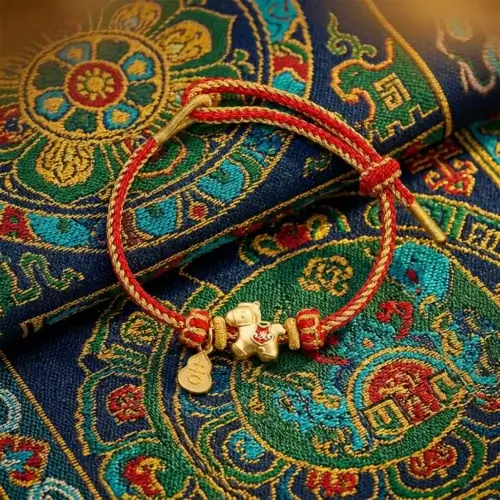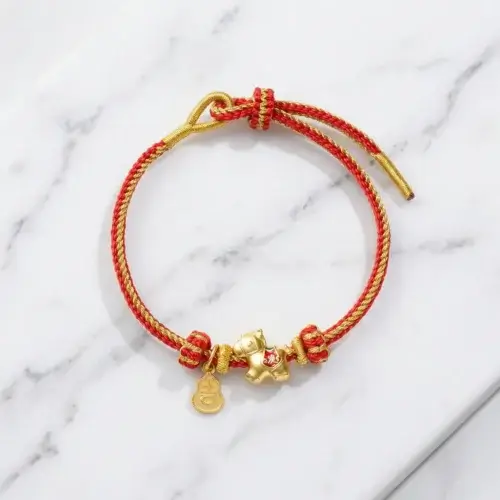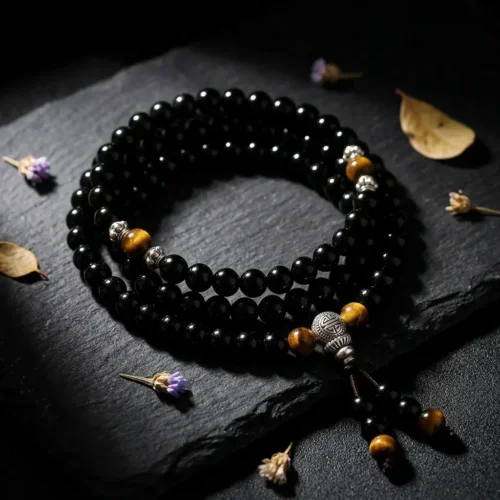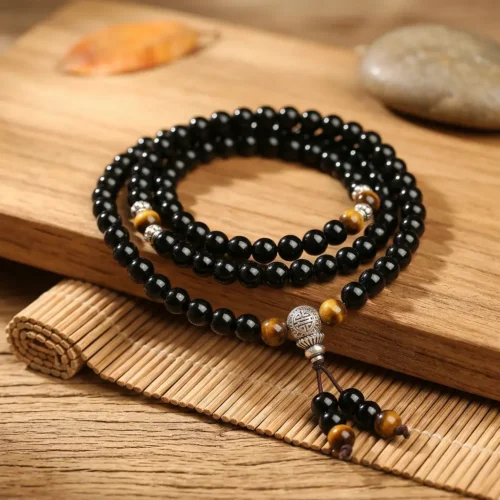

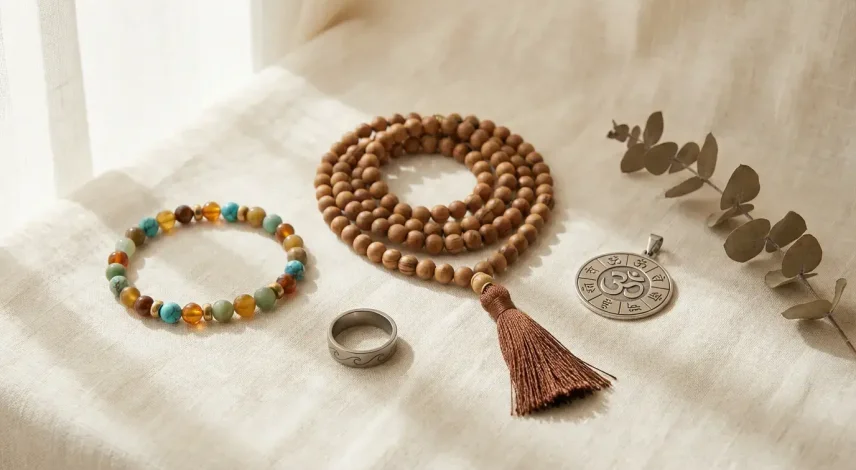

If your goal is steady attention, the right piece of spiritual jewelry can act like a tactile metronome for the mind—one bead, one breath, one mantra at a time. But here’s the deal: meaning and motivation deepen when your item is truly authentic and respectfully made. This guide leads with authenticity and then compares materials and forms so you can match your practice style, comfort, and budget without guesswork.
Why jewelry at all? In mindfulness, simple sensory anchors are used to steady attention. Tactile anchors—such as beads you count or a ring you gently turn—fit cleanly within that approach. Contemporary guidance shows that returning to uncomplicated sensations supports sustained focus, even though specific randomized trials on malas are limited. See mainstream mindfulness overviews on simple sensory anchors and everyday cueing in the Mindful organization’s resources, including their practical pieces on daily practices and dual-anchor exercises: the 2024–2025 articles on five simple practices for daily life and a neurodiversity-informed dual anchor practice provide accessible context on how touch-based anchors can help attention (Mindful.org practice guidance; dual-anchor guidance).
How to choose spiritual jewelry for meditation: authenticity first
An authenticity-first approach honors culture and protects your practice from distractions.
- Intention and use. Decide if you want a formal counting tool for seated practice or a discreet cue for daily refocus. Your choice drives form and material.
- Comfort and skin sensitivity. Metals can irritate some skin types; stones, seeds, and woods feel different in temperature and texture. Nickel allergies are common; titanium is generally considered low-allergy, while sterling silver may contain nickel in its alloy (review of contact allergy and jewelry exposure, 2023; titanium hypersensitivity overview).
- Craftsmanship and durability. Look for hand-knotting between beads, smooth centered drill holes, strong cord, and a reinforced guru bead junction. These details directly affect longevity and ease of counting.
- Provenance and blessings. Ask who made it, where, and whether there was a consecration or monk blessing, and in what ritual context. Authentic blessing relates to lineage and practice, not just paperwork. Museums describe consecrations as established rites performed by qualified clergy within tradition (British Museum context on ritual objects).
- Value and ethics. Prices vary by bead size, origin, knotting, and materials. If charity or sustainable sourcing matters to you, include that in your criteria.
How to verify quickly
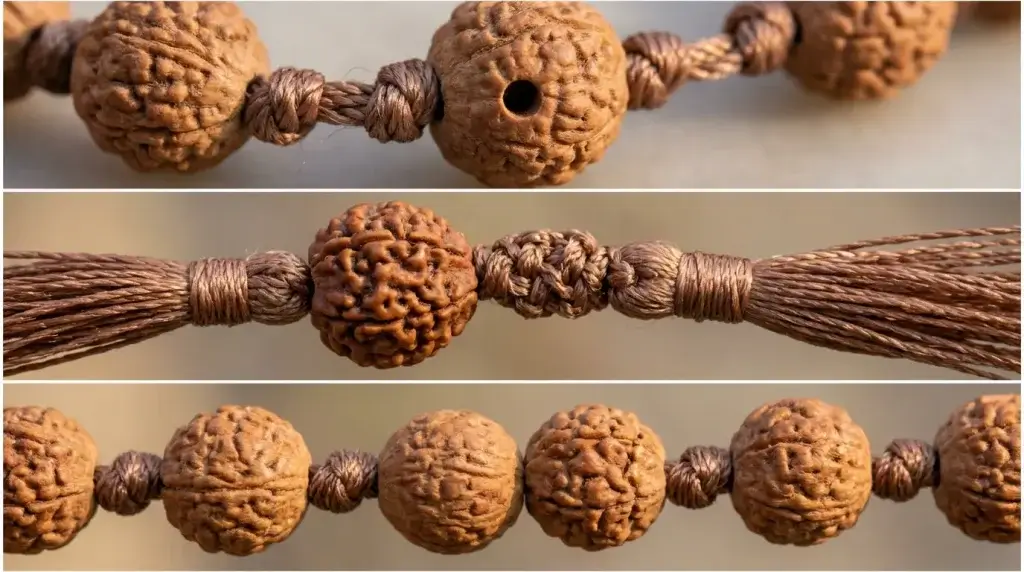
- Ask for maker and origin in writing. “Who crafted it? Where? How were materials sourced?”
- If advertised as monk-blessed, ask when, where, by whom, and what documentation (receipt, event note, or letter) accompanies it.
- Inspect photos for hand-knotting, consistent drilling, and a distinct guru bead. Avoid sloppy glue and unknotted 108-bead strands with heavy stones.
- Be cautious with grand “antique” claims without provenance.
Quick comparison matrix: metals, stones, seeds and wood, talismans
Below is a single-glance matrix to narrow your options. “Verification” refers to how easy it is to confirm origin and craftsmanship; prices are indicative and subject to change.
| Form and material | Best for focus style | Tactile feel | Hypoallergenic note | Verification difficulty | Typical price band |
|---|---|---|---|---|---|
| Rudraksha mala (108) | Breath or mantra counting | Light, textured, warm | Metal-free beads | Moderate (origin claims vary) | Entry to mid |
| Sandalwood or wood mala (108) | Gentle counting, sensory calm | Smooth, slightly scented | Metal-free beads | Moderate (wood species claims) | Entry to mid |
| Bodhi or lotus seed mala (108) | Traditional Tibetan counting | Matte, slightly pitted | Metal-free beads | Moderate | Entry to mid |
| Gemstone mala (108) | Weighted, deliberate counting | Cool, heavier, smooth | Metal accents vary | Easier if hand-knotted artisan | Mid to premium |
| Wrist mala (18–27) | Discreet micro-practice | Compact, pocketable | Usually bead-only | Easier with artisan story | Entry to mid |
| Mantra pendant | Touch cue plus meaning | Flat, cool metal | Check alloys | Easier with maker marks | Entry to mid |
| Meditation cue ring | Subtle fidget-free turn | Smooth or spinner | Titanium is safer | Easier with metal standard | Entry to mid |
| Stainless steel bracelet/pendant | Durable daily wear | Cool, smooth | Depends on nickel release | Easier with grade listed | Entry |
| Titanium ring/pendant | Hypoallergenic daily cue | Lightweight, cool | Low allergy profile | Easier (material spec) | Mid |
| Monk-blessed, documented mala | Motivation and meaning | As per material | Bead materials vary | Harder (ask for context) | Mid to premium |
| Travel or mini mala | Counting on the go | Smaller, lighter | Bead-only | Easier | Entry |
Best options by use case
Below, each option is presented as an “item card” with best-for guidance, traits, practical pros and cons, rough price ranges, and how to verify authenticity. Metaphysical attributions to stones and metals are cultural or symbolic; use them as intention reminders rather than clinical claims.
Rudraksha mala
Best for: A traditional, tactile counting tool that stays light in the hand.
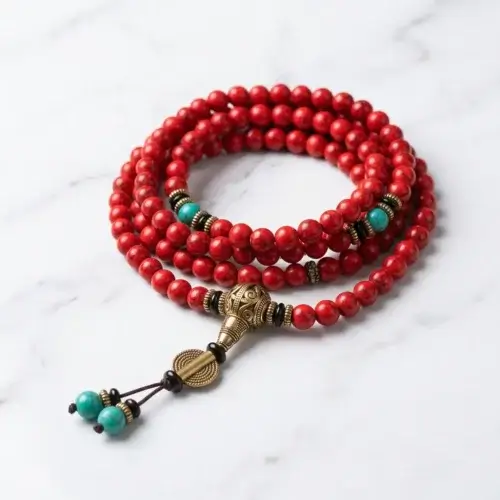
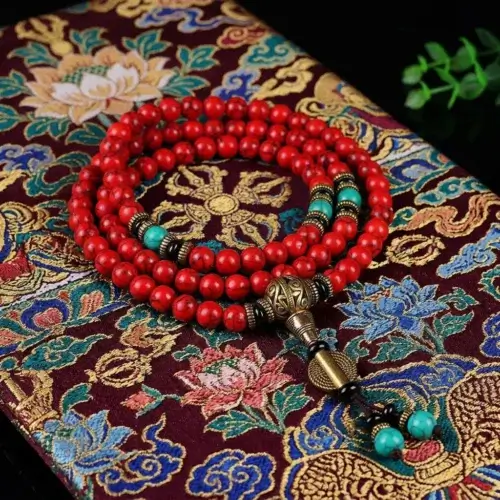
Traits and feel: Typically 108 beads plus a distinct guru bead; 6–8 mm beads are common. Light, gently textured surface offers grip for counting.
Pros and cons: Easy to count without slipping; stays warm and quiet. Texture can snag on loose fibers; very large beads may feel bulky.
Price and value: Roughly entry to mid, often US$10–35 for 6–8 mm depending on knotting and origin; larger Nepal beads can rise higher. Hand-knotting raises cost but improves durability.
How to verify: Ask whether beads are Indian or Nepal origin; confirm hand-knotting and cord type. Look for consistent drilling and a clean guru junction. A maker or workshop name helps.
Sandalwood or wood mala
Best for: Calming sensory feel and gentle scent for breath-paced practice.
Traits and feel: Smooth wood—often sandalwood, rosewood, or ebony—keeps a steady temperature; subtle aroma can cue presence.
Pros and cons: Lightweight and quiet; scent can be soothing. Scented woods vary widely in quality and authenticity; very soft woods dent over time.
Price and value: Entry to mid. True sandalwood usually sits higher due to scarcity; basic woods are affordable.
How to verify: Request wood species and origin; look for hand-knotting. Beware of heavily perfumed “sandalwood” that smells synthetic.
Bodhi or lotus seed mala
Best for: Traditional Tibetan-style counting with an earthy, matte texture.
Traits and feel: Slightly pitted seeds provide clear tactile feedback; classic in Himalayan practice.
Pros and cons: Excellent grip; quiet in use. Some seed types dry out if not cared for; color can darken with oils—many practitioners like the patina.
Price and value: Entry to mid, influenced by seed type and craftsmanship.
How to verify: Ask about seed species and harvest region; inspect drilling and knotting. A distinct guru bead and neat tassel are good signs.
Gemstone mala (amethyst, quartz, onyx)
Best for: Weighted, deliberate counting with a crisp, cool feel.
Traits and feel: Smooth stones glide under the fingers; heavier mass slows the pace, which some practitioners prefer for mantra repetition.
Pros and cons: Durable and visually consistent; weight adds presence. Heavier strands can fatigue the hand; poorly knotted gemstone malas can snap.
Price and value: Mid to premium. 6–8 mm hand-knotted strands commonly range around US$40–80, higher for larger beads or designer work.
How to verify: Favor hand-knotting, strong cord, and clear artisan attribution. Treat stone meanings as symbolic; choose by feel and practice fit.
Wrist mala (18–27 beads)
Best for: Discreet micro-practice and on-the-go resets.
Traits and feel: Compact bead loops enable breath or mantra counts in short sets. Easy to pocket or wear under a sleeve.
Pros and cons: Convenient daily cue; low-profile. Not ideal for full 108-count sessions; elastics fatigue more quickly than cords.
Price and value: Entry to mid depending on materials and closure type.
How to verify: Check elastic quality or cord-and-knot closures; look for secure knots and comfortable fit. Ask about bead origin if important to you.
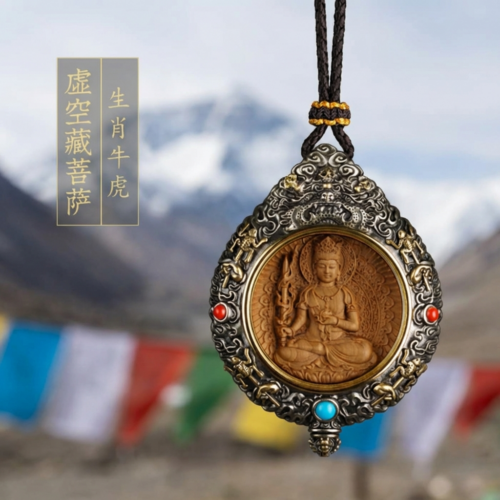
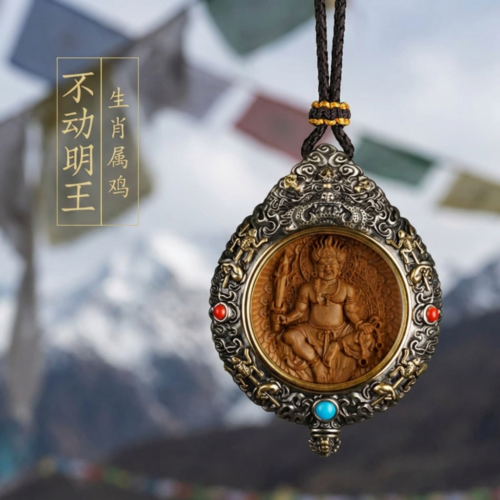
Mantra pendant
Best for: A simple touchpoint that pairs meaning with a tactile cue.
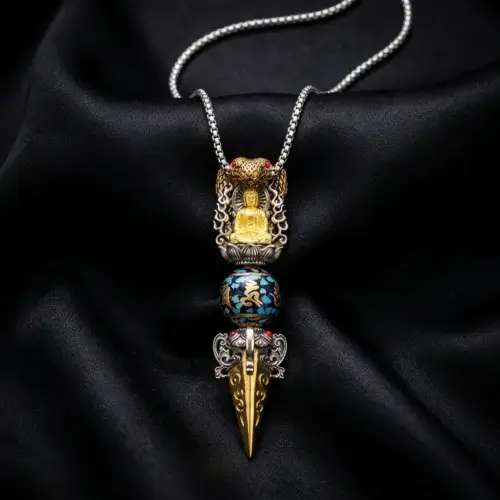
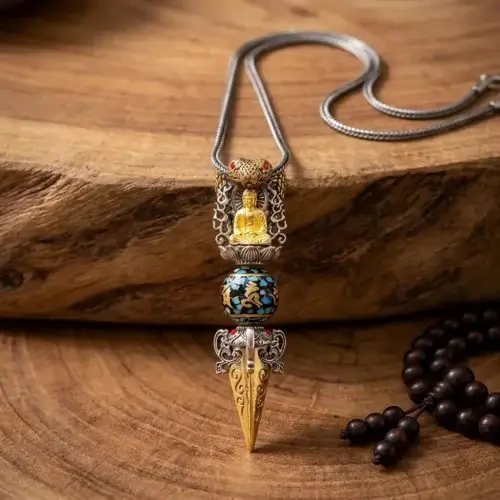
Traits and feel: Flat metal or carved pendant engraved with a mantra or symbol. You touch the edge or face to reset attention.
Pros and cons: Minimal, wearable with any outfit; adds a meaningful reminder. Engraving quality and alloys vary; edges should be smooth.
Price and value: Entry to mid depending on metal and engraving depth.
How to verify: Confirm metal composition, maker marks, and engraving method. If it references a sacred script, ensure correct iconography and respectful use.
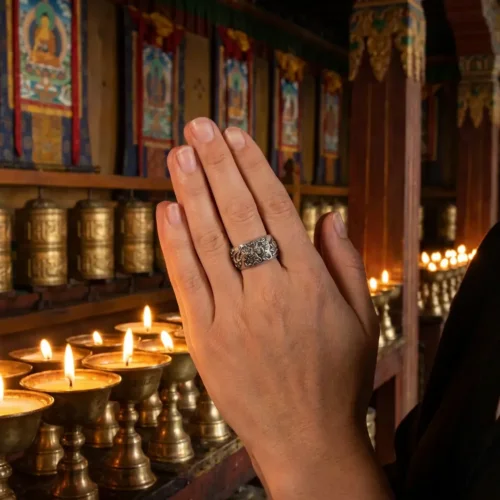
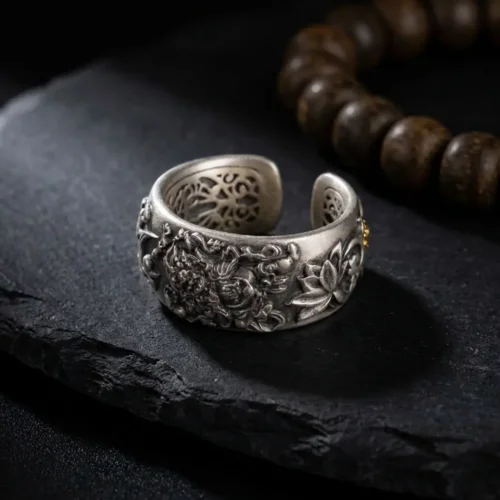
Minimalist meditation cue ring
Best for: Subtle, fidget-free turning to come back to the breath.
Traits and feel: Smooth band or spinner ring; you roll it lightly with the thumb as a micro-anchor during pauses.
Pros and cons: Highly discreet; pairs well with desk or travel life. Spinners with loose fittings can rattle; choose a snug, quiet mechanism.
Price and value: Entry to mid; titanium often sits mid due to material cost.
How to verify: Select known materials and sizes; if nickel-sensitive, prioritize titanium or certified nickel-free alloys. See clinical discussions of nickel allergy and titanium’s low-allergy profile (contact dermatitis review, 2023; titanium overview).
Stainless steel bracelet or pendant
Best for: Durable daily wear with a cool, smooth feel.
Traits and feel: Corrosion-resistant, holds engravings cleanly.
Pros and cons: Tough and affordable; finish stays crisp. Not all stainless grades are nickel-safe for sensitive skin; check specs.
Price and value: Entry.
How to verify: Ask for the steel grade and any nickel-release testing. If you’ve had reactions, consider safer alternatives.
Titanium ring or pendant
Best for: Hypoallergenic daily cue with lightweight comfort.
Traits and feel: Light, cool metal; excellent for sensitive skin.
Pros and cons: Comfortable for all-day wear; won’t tarnish easily. Color options are limited compared with plated metals.
Price and value: Mid.
How to verify: Look for titanium grade in the listing and a reputable maker. Titanium’s low sensitization rate is widely noted in clinical literature (overview of titanium hypersensitivity).
Monk-blessed, provenance-documented mala
Best for: Practitioners who want the motivational meaning of known origin and blessing context alongside a functional counting tool.
Traits and feel: Any of the above bead types; what distinguishes this category is transparent provenance and an explained consecration context.
Pros and cons: The story and ritual context can deepen commitment. Documentation varies and can be confusing; focus on clear artisan origin and a respectful description of blessings.
How to verify: Ask for maker info, location, and how the blessing occurred (ritual name, location, date if available). Expect simple documentation such as an event card or written note; beware of extravagant certificates without context.
Example for readers who value Tibetan lineage
- Disclosure: PotalaStore is our product.
- PotalaStore offers authentic Tibetan spiritual items with monk blessings noted within its materials. You can review language about blessings and sourcing on their site’s article that references Tibetan Buddhist blessing practices in Nepal (PotalaStore monk blessing statement). The brand also contributes a small donation per order to charitable causes aligned with generosity.
Travel or mini mala
Best for: Portable counting when you can’t carry a full 108-bead strand.
Traits and feel: Compact 18–36 bead loops or segmented counters that fit in a pocket.
Pros and cons: Always available; ideal for commute or walks. Shorter loops require multiple cycles to reach 108; elastics are more failure-prone.
Price and value: Entry.
How to verify: Favor sturdy cord over thin elastic if you plan frequent use. Inspect bead finish and hole smoothness.
Step-by-step checklist to pick the right piece
- Name your primary intention. Meditation focus, micro-resets, or both? Let this guide form factor.
- Choose your tactile feel. Warm seeds/wood for grip; cool gemstones for weight; sleek metal if you prefer minimalism.
- Screen for comfort and skin safety. If you’ve reacted to jewelry, prefer titanium or nickel-free alloys; avoid questionable sterling mixes.
- Inspect construction. Look for hand-knotting between beads, strong cord, centered holes, and a reinforced guru bead junction.
- Verify provenance and any blessings. Ask for maker, place, sourcing, and blessing context; treat documentation as contextual, not magical. Then set a budget aligned with materials and craft.
Cultural respect and mindful etiquette
Malas are first and foremost practice tools. Traditional Tibetan and Buddhist etiquette treats them with care: start counting at the bead next to the guru bead, reverse direction at the guru bead rather than crossing it, and keep the mala clean and off the ground. These details are commonly taught across contemporary Buddhist education and practice resources; for example, one Tricycle explainer notes the 108-bead structure and distinct guru bead within a broader practice context (Tricycle’s explanation of mala structure and practice etiquette).
If you aren’t Buddhist, it’s respectful to wear and use a mala primarily for sincere practice, avoid trivializing sacred script, and be modest in overtly sacred spaces. If your focus tool is a mantra pendant or ring, ensure designs are accurate and not parody. Think of it this way: the item serves your attention and kindness training; your conduct should honor the traditions that preserved it.
FAQ
Do malas actually help with focus?
- They function as tactile anchors, organizing attention one bead per breath or mantra. Evidence supports sensory anchoring in mindfulness; however, malas themselves have not been isolated in randomized trials. That’s okay—choose based on practice fit and comfort, not magic.
How can I tell if a mala is authentic?
- Ask for maker and origin, inspect hand-knotting, bead drilling, and a distinct guru bead. If a blessing is claimed, request simple context (where, by whom, when). Museums and practitioners emphasize that the meaning of consecration lies in lineage and ritual, not ornate certificates.
What material works best for anxiety?
- Rather than medical claims, use tactile preference: warm textures like wood or seeds can feel soothing; cool, heavier stones slow the pace. If skin is sensitive, prefer titanium or tested nickel-free metals.
Can I wear spiritual jewelry for meditation daily?
- Yes—many pieces are designed for all-day cues. For formal seated practice, a 108-bead mala excels; for discreet daily resets, a wrist mala, pendant, or meditation cue ring is convenient.
Gentle next steps
If you’re choosing spiritual jewelry for meditation, start with intention and authenticity, then match the tactile feel to your practice. When a piece is well made and respectfully sourced, it becomes a steady companion rather than a distraction.
If you’re exploring monk-blessed items within Tibetan tradition, review the contextual statements on our site about blessings and sourcing to decide if that aligns with your values (PotalaStore blessing context). If social impact matters to you, note that the brand donates a portion from each purchase to charitable causes (PotalaStore charity commitment). Choose deliberately, care for your tool, and let each touch bring you back to the breath.