
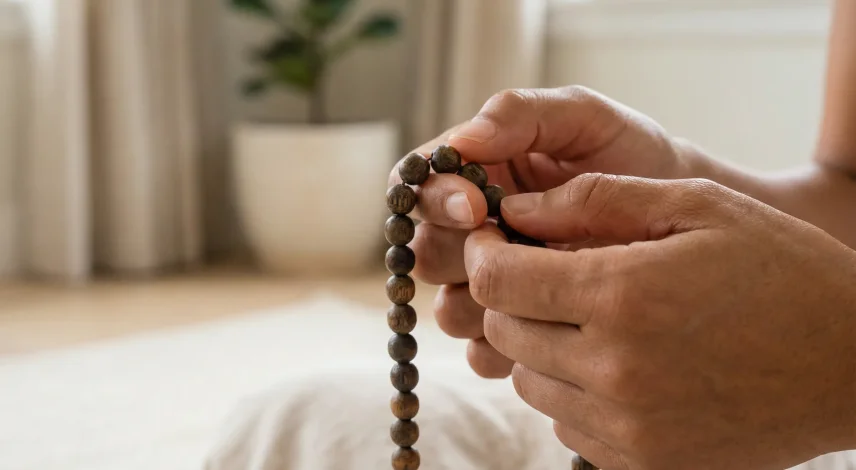

Sarah Martinez, a 32-year-old marketing manager in New York, watched her anxiety score drop from 8/10 to 3/10 over six months—a 62% reduction—through daily 108 mala beads meditation practice. The transformation wasn’t instant or perfect. She forgot her beads at home twice in the first week, nearly quit at the one-month mark, and had to test three different stone types before finding her match. But by Month 6, her panic attacks had virtually disappeared, her sleep averaged 7+ hours nightly, and she’d even reduced her medication by 50% under her doctor’s supervision.
Sarah’s journey from skeptical beginner to confident practitioner offers a realistic roadmap for anyone struggling with chronic anxiety. At PotalaStore, we’ve witnessed countless transformations like Sarah’s through our authentic Tibetan mala beads, hand-crafted by artisans and blessed at traditional monasteries. Here’s exactly how her 6-month journey unfolded—including the struggles, unexpected breakthroughs, and actionable steps you can replicate.
What Are 108 Mala Beads? Sarah’s Introduction
A mala is a string of 108 prayer beads plus one larger guru bead, traditionally used in Buddhist and Hindu meditation to count mantras or breaths. The number 108 holds sacred significance across spiritual traditions—representing the 108 energy channels (nadis) converging at the heart chakra, the distance between Earth and Sun in solar diameters, and cosmic wholeness in Vedic cosmology.
Each 108-bead mala consists of:
- 108 counting beads: Made from gemstones, seeds, or wood
- 1 guru bead: Larger marker bead that’s never crossed during practice
- Tassel or pendant: Symbolizes connection to the divine
Sarah’s first reaction when her yoga instructor friend recommended mala meditation? “I thought it was just trendy jewelry,” she recalls. “I’m not Buddhist—can I even use this?” The answer is yes. While malas originated in Hindu and Buddhist traditions over 3,000 years ago, they’re now widely used as secular mindfulness tools by people of all backgrounds.
What convinced Sarah to try wasn’t the spiritual aspect—it was the science.
The Science Behind Mala Meditation for Anxiety
Mala bead meditation reduces anxiety through three scientifically-backed mechanisms: neuroplasticity from repetitive practice, parasympathetic activation through rhythmic breathing, and tactile grounding that anchors wandering thoughts.
Here’s what happens in your brain and body:
| Mechanism | How It Works | Timeline for Effect |
|---|---|---|
| Neuroplasticity | Repeating a mantra 108 times creates new neural pathways. Like hiking the same trail daily, the path becomes clearer with each repetition. | 2-3 months of consistent practice |
| Vagus Nerve Activation | Rhythmic breathing during bead counting stimulates the vagus nerve, switching your nervous system from “fight-or-flight” to “rest-and-digest” mode. | Immediate during practice; cumulative over 4+ weeks |
| Tactile Anchoring | The physical sensation of moving beads through your fingers interrupts anxiety spirals by giving your racing mind a concrete focal point. | Immediate grounding effect |
Research from UCLA’s Mindful Awareness Research Center confirms that meditation practices like japa meditation (mantra repetition with beads) significantly reduce cortisol levels and anxiety symptoms after 4-8 weeks of daily practice. The American Psychological Association reports that tactile meditation tools are particularly effective for people whose minds wander during traditional silent meditation.
“I needed to understand WHY it works before committing,” Sarah explains. After researching the neuroscience, she ordered her first mala. “It seemed almost too simple—but that’s what made me curious.”
Sarah’s Week 1-2: The Skeptical Start
Sarah’s first week with mala beads was far from perfect: she forgot her mala at home twice, struggled with a complex Sanskrit mantra, and her mind wandered every few beads—but she kept showing up.
Day 1 reality check: Sarah sat down at 6:30 AM with her new howlite mala, determined to complete a full 108-bead cycle. She made it to bead 23 before her mind drifted to her work presentation. By bead 45, she’d lost count three times. The 15-minute session felt like an hour.
Common Mistakes Sarah Made (So You Don’t Have To):
- Chose a complex mantra first: She started with a Sanskrit phrase she couldn’t pronounce, which added frustration instead of calm. By Day 3, she switched to simple breath counting—much better.
- Expected immediate calm: “I thought I’d finish and feel zen. Instead, I felt restless,” Sarah admits. She learned patience.
- Forgot her mala when traveling: Left it on her dresser during a work trip, broke her 3-day streak, felt like she’d “failed.”
Unexpected Discovery (Week 2): During a particularly stressful video conference, Sarah unconsciously reached for her mala bracelet (a smaller version she wore daily) and moved the beads through her fingers. The tactile sensation instantly grounded her. “I didn’t even realize I was doing it—my body just knew it helped.”
By Week 2, Sarah established:
- Morning routine: 6:30 AM, before shower (non-negotiable)
- Realistic duration: 5-10 minutes (not the “perfect” 20)
- Simple practice: Breath counting instead of mantras
- Backup plan: Keep mala visible on nightstand as reminder
Practice consistency Week 1: 3 out of 7 days. Week 2: 5 out of 7 days. Not perfect—but building.
Choosing the Right Mala: Sarah’s Trial & Error
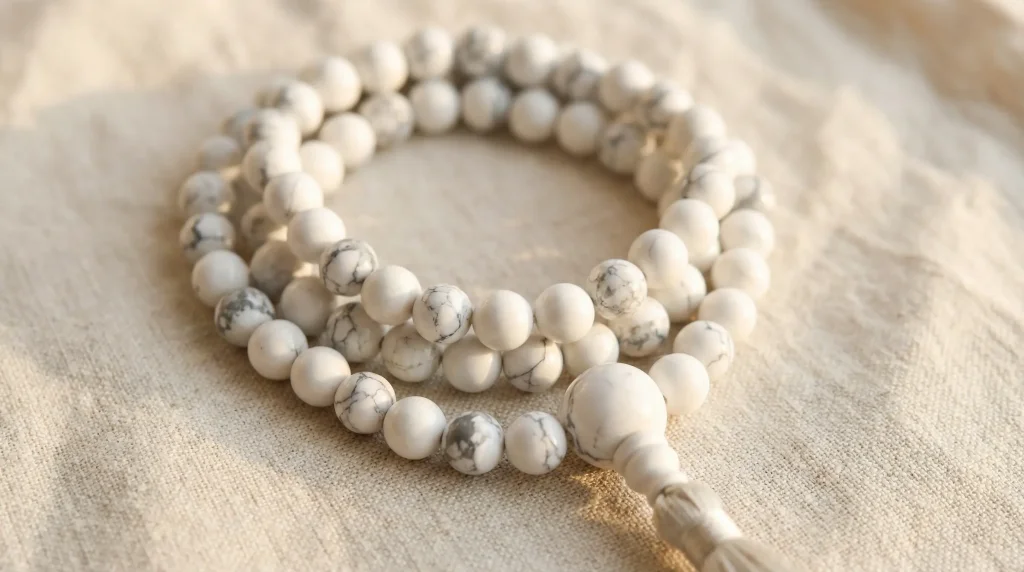
After testing three different malas over her first month—amethyst, rose quartz, and howlite—Sarah discovered that howlite’s natural calming properties resonated most with her anxiety relief goals.
“Month 1, I borrowed my friend’s amethyst mala,” Sarah explains. “It was beautiful, and I felt something—but not the instant ‘this is mine’ connection I’d hoped for.” Week 3, she tried rose quartz. “Too soft, almost made me emotional in a way that wasn’t productive for my anxiety.” Then came howlite.
| Stone Type | Best For | Sarah’s Experience |
|---|---|---|
| Amethyst | General stress relief, calming nervous system | “Helped, but not transformative for me” |
| Howlite | Anger reduction, tension relief, insomnia | “Immediate calming sensation—my perfect match” |
| Rose Quartz | Emotional healing, self-love, heart chakra work | “Beautiful for other purposes, but too gentle for anxiety” |
| Rudraksha Seeds | Spiritual protection, grounding, meditation deepening | “Tried later—felt too intense for beginners” |
What Sarah learned about choosing anxiety-relief malas:
- Tactile feel matters: Smooth stones like howlite felt more soothing than textured rudraksha seeds for her specific anxiety type
- Color psychology is real: “I didn’t think white would matter, but howlite’s visual calm helped”
- Quality over price: “Cheap plastic beads felt wrong—the authentic stones from PotalaStore had weight and energy”
- Trust your intuition: When she held the howlite mala, something clicked
Sarah’s Choice: Howlite Mala for Anxiety Relief
After weeks of testing, Sarah found her perfect match in PotalaStore’s hand-crafted howlite mala. Known for its powerful calming properties and anger-reducing effects, howlite is particularly effective for those struggling with tension-based anxiety.
✓ Ethically sourced natural howlite
✓ 108 beads + guru bead
✓ Blessed at Tibetan monasteries
✓ Comes with beginner’s meditation guide
Month 1-2: Building the Habit (The Messy Middle)
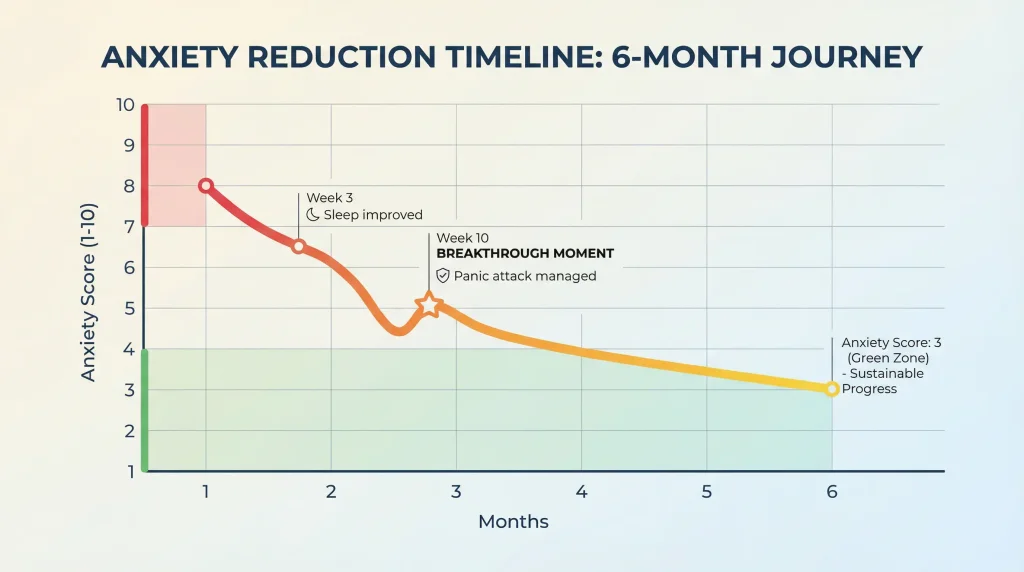
Month 1-2 was Sarah’s “messy middle”—she practiced 5 out of 7 days weekly, saw only subtle anxiety reduction (8/10 to 7/10), and nearly quit twice before her first major breakthrough.
The reality of habit formation: Sarah’s journal from Week 4 reads: “Is this even working? Anxiety still at 7/10. Slept better last night though.” Her progress wasn’t linear. Good weeks (6/7 practice days) followed by bad weeks (3/7 days). A business trip in Week 5 disrupted everything—5 missed days straight.
Unexpected progress indicators before anxiety improved:
- Week 3: Sleep quality: First to improve—Sarah went from 5-hour restless nights to 6-7 hours
- Week 5: Physical tension: Chronic shoulder tightness decreased 30%
- Week 6: Workplace reactivity: Colleague’s criticism didn’t trigger her usual spiral
“I almost quit in Week 4,” Sarah admits. “I felt stupid sitting there with beads, thinking ‘nothing’s changing.'” What kept her going? Reviewing her practice journal showed subtle patterns she hadn’t consciously noticed. Her sleep was better. Her jaw wasn’t clenched 24/7. Small wins.
Sarah’s tracking system:
- Simple journal: Date, duration, anxiety rating (1-10), mood before/after
- Weekly review: Look for patterns, not perfection
- Accountability: Told two friends about her 6-month commitment
By Month 2, Sarah’s practice had naturally extended from 5 to 10 minutes without forcing it. Her meditation duration increased organically as her mind settled faster. Practice consistency Month 2: 5-6 out of 7 days per week.
Month 3-4: The Breakthrough Period
Month 3 marked Sarah’s transformation turning point: her anxiety dropped from 7/10 to 5/10, she experienced her first panic attack successfully managed with mala beads, and meditation shifted from effort to refuge.
The defining moment (Week 10): Sarah was preparing for a high-stakes client presentation when familiar panic symptoms hit—racing heart, shortness of breath, spiraling thoughts. Instead of freezing, she excused herself to the bathroom, pulled out her howlite mala, and ran through one complete cycle of 108 breaths.
“Five minutes. That’s all it took,” she recalls. “I walked back into that conference room and delivered my best presentation of the year. That was the moment I realized—this actually works. I have control.”
| Metric | Month 1 | Month 3 | Change |
|---|---|---|---|
| Anxiety Score (1-10) | 8/10 | 5/10 | ↓ 37.5% |
| Average Sleep | 5 hours | 7 hours | ↑ 40% |
| Panic Attacks | 2 per week | 1 per month | ↓ 87.5% |
| Practice Duration | 5-10 min | 15-20 min | ↑ 100% |
Why Month 3? The neuroscience: Research shows that 8-12 weeks of daily practice is when neuroplasticity—your brain’s rewiring—becomes measurable. The 108 repetitions Sarah had been doing weren’t just ritual; they were literally creating new neural pathways for calm response instead of panic.
Sarah’s practice evolution by Month 4:
- Duration naturally extended: 15-20 minutes felt effortless
- Mantra deepened: From “I am calm” to “I am enough, I am peace”
- Emergency use: Brief 5-minute sessions before stressful events became her secret weapon
- Automatic response: Reached for beads instinctively during stress
“The weirdest part? Week 12, I hit a plateau—felt ‘too easy.’ Then Week 13, another leap forward,” Sarah notes. “Your brain doesn’t improve in straight lines.”
Month 5-6: Integration & Long-Term Transformation
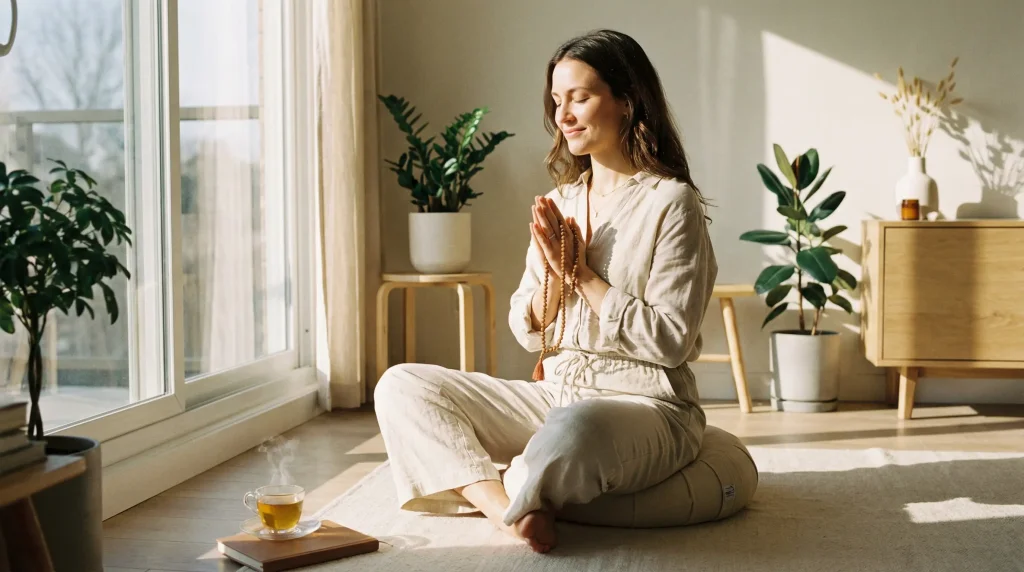
By Month 6, Sarah’s anxiety stabilized at 3/10—a 62% reduction from her starting point—and mala meditation had become as automatic as brushing her teeth, integrated seamlessly into her morning and evening routines.
Final transformation metrics (6-month mark):
- Anxiety: 8/10 → 3/10 (62% reduction)
- Panic attacks: Virtually eliminated (1 in past 3 months)
- Sleep: Consistent 7+ hours nightly
- Medication: Reduced by 50% under doctor supervision
- Work performance: Received promotion; manager specifically cited improved stress management
How mala practice integrated into Sarah’s daily life:
- Morning ritual (6:30 AM): 15-minute practice before coffee—non-negotiable, like medication
- Portable tool: Wears mala bracelet daily; keeps full mala in purse
- Evening gratitude: Brief 5-minute practice before bed
- Travel-ready: Mini mala for trips; practice maintained even during vacation
“The practice became invisible infrastructure,” Sarah explains. “I don’t ‘try’ to meditate anymore—my body just craves it. Like being thirsty and drinking water.”
Beyond anxiety—unexpected benefits:
- Enhanced focus: Can concentrate for longer periods at work
- Improved relationships: Partner noticed she’s “less reactive, more present”
- Creative breakthroughs: Best ideas come during or right after practice
- Spiritual curiosity: Started learning about Buddhist philosophy (purely out of interest)
Honest limitation: “I’m not ‘cured,'” Sarah emphasizes. “Anxiety at 3/10 still means some days are hard. But now I have a tool that works, and I trust it.”
How to Start Your Own 6-Month Journey
To replicate Sarah’s results, commit to a simple 6-month roadmap: start with 5-10 minutes daily, choose one mala that resonates with you, track your progress weekly, and remember that transformation happens gradually, not overnight.
Your First Week Checklist:
- Choose your mala: Howlite for anxiety, amethyst for general stress, or follow your intuition
- Select simple practice: Breath counting (inhale/exhale = 1 bead) or short mantra like “I am calm”
- Set daily alarm: Same time every day builds the habit faster
- Start small: 5 minutes, not 20! Sustainable beats ambitious
- Create quiet corner: Doesn’t need to be perfect—chair, pillow, anywhere comfortable
Week-by-Week Roadmap (What to Expect):
| Timeline | Focus | Expected Progress |
|---|---|---|
| Week 1-2 | Build consistency | Mind wanders constantly—normal! Aim for 4-5 practice days |
| Week 3-4 | Extend duration | Increase to 10 min; sleep may improve first |
| Month 2 | Refine technique | Subtle anxiety reduction (8/10 → 7/10); plateau is normal |
| Month 3 | Breakthrough window | Stay consistent! Major shift often happens Week 10-12 |
| Month 4-6 | Deepen & integrate | Practice feels natural; anxiety 40-60% reduced |
Progress tracking (Sarah’s method):
- Daily journal: Date, duration, anxiety rating (1-10), one-word mood
- Weekly review: Look for patterns, not perfection
- Monthly celebration: Acknowledge small wins (better sleep counts!)
Common pitfalls to avoid:
- ❌ Expecting immediate results (patience = key)
- ❌ Complex mantras too soon (breath counting is perfect for beginners)
- ❌ All-or-nothing thinking (missed days ≠ failure)
- ❌ Comparing your timeline to Sarah’s (everyone’s different)
📿 Begin Your Own 6-Month Transformation
Sarah’s story isn’t unique—it’s possible for you too. Whether you choose amethyst for its calming energy, howlite for tension relief, or rudraksha for spiritual grounding, your perfect mala is waiting.
What you get with PotalaStore:
✓ Hand-crafted by Tibetan artisans
✓ Blessed at traditional monasteries
✓ Ethically sourced gemstones & seeds
✓ Free 6-month practice tracker (downloadable)
✓ Beginner’s meditation guide includedExplore Mala Collections Download Free Practice Tracker
When Mala Practice Isn’t Enough
⚠️ Important Medical Disclaimer: Mala meditation is a complementary tool, not a replacement for professional mental health care—Sarah continued therapy throughout her 6-month journey and only reduced medication under her doctor’s close supervision.
When to seek professional help:
- Suicidal thoughts or self-harm urges
- Anxiety interfering with work, relationships, or daily functioning
- Panic attacks multiple times daily
- Comorbid depression, PTSD, or other mental health conditions
Sarah’s integrated approach: Her toolkit included weekly therapy sessions, prescribed medication (initially), mala practice, regular exercise, and sleep hygiene. The mala didn’t replace therapy—it enhanced it. “My therapist was thrilled I found a tool that worked between our sessions,” Sarah shares.
Realistic expectations: Not everyone will experience Sarah’s exact results. Individual factors like anxiety severity, consistency, overall mental health support, and life stressors all play roles. What matters is finding what works for you.
If you’re struggling with severe anxiety, please consult a licensed mental health professional. Mala meditation can be a powerful part of your healing journey—but it works best alongside professional support, not instead of it.
❓ Frequently Asked Questions
Most people notice improved sleep within 2-4 weeks of daily practice. Significant anxiety reduction typically appears after 6-8 weeks of consistent use, with transformational results (like Sarah’s 62% reduction) taking 3-6 months. Results vary individually, but consistency is key—Sarah practiced 5-6 days per week, not perfection.
No. Mala meditation is a complementary tool, not a replacement for prescribed medication or professional therapy. Sarah reduced her medication by 50% after 6 months, but only under her doctor’s close supervision with regular check-ins. Always consult your healthcare provider before making any changes to your treatment plan. Your safety comes first.
Howlite is often recommended for intense anxiety due to its calming properties and anger-reducing effects—it was Sarah’s final choice after testing three stones. Amethyst is also popular for general stress relief and nervous system calming. However, the “best” mala is the one you’re drawn to. Choose based on tactile feel (smooth vs. textured) and personal resonance. Learn more about selecting anxiety-relief malas.
No religious affiliation is required. While mala beads have sacred origins in Buddhism and Hinduism dating back 3,000+ years, they’re widely used as secular mindfulness tools today. Respect the cultural heritage and understand the significance of 108 beads, but feel free to adapt the practice to your personal beliefs—Sarah is not Buddhist and found them profoundly helpful for anxiety management.
📚 References
- Mindfulness Meditation and Anxiety Reduction: Research on meditation’s effects on cortisol levels and clinical anxiety symptoms. UCLA Mindful Awareness Research Center
- Neuroplasticity and Repetitive Practice: Studies on how repeated behaviors create new neural pathways in 8-12 weeks. American Psychological Association (APA) – Neuroscience Division
- Vagus Nerve Stimulation Through Breathing: Evidence on rhythmic breathing’s effect on parasympathetic nervous system activation. National Institute of Mental Health (NIMH)
- Sacred Significance of 108 in Eastern Traditions: Historical and cultural context of mala beads in Buddhist and Hindu practice. Smithsonian National Museum of Asian Art