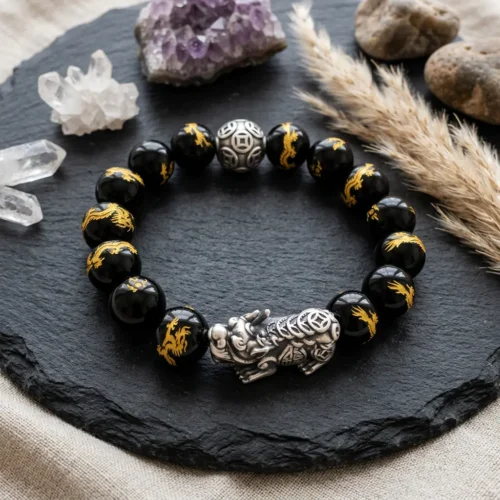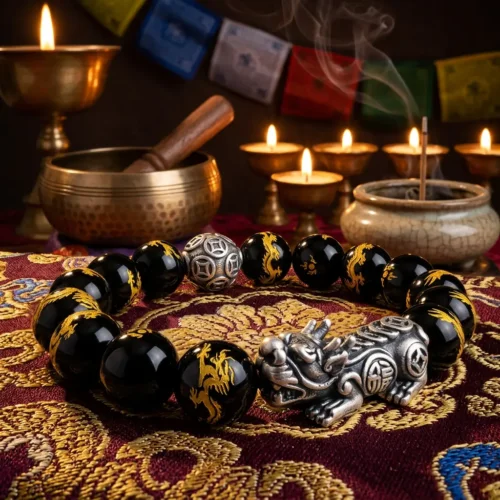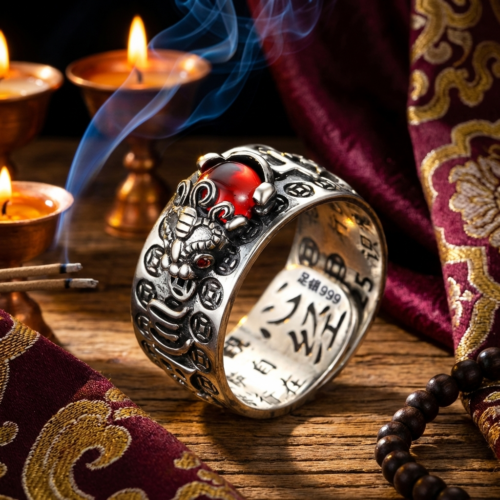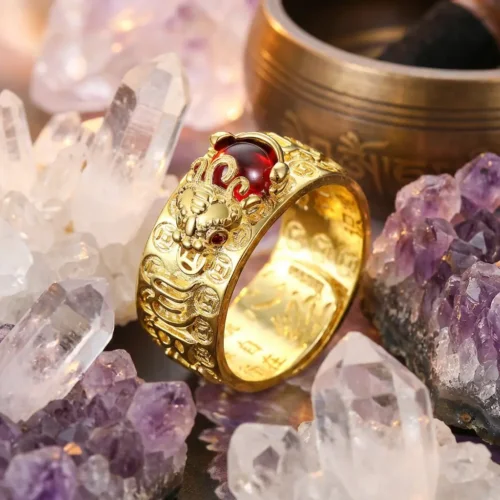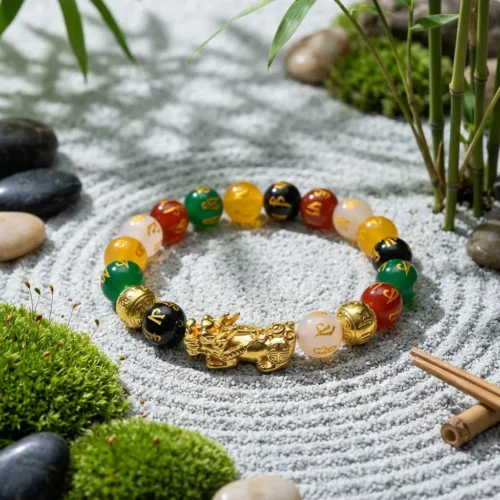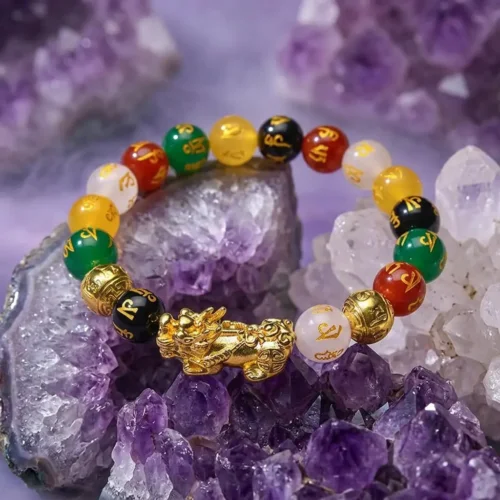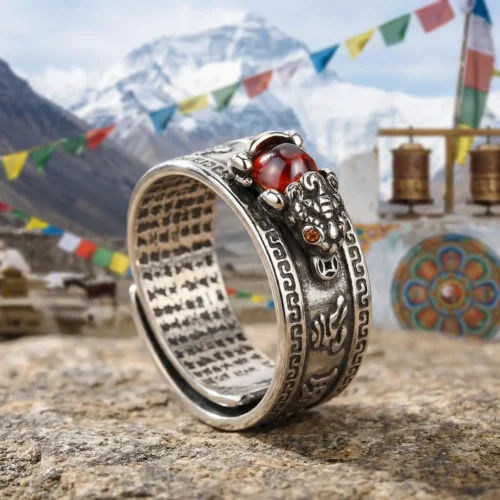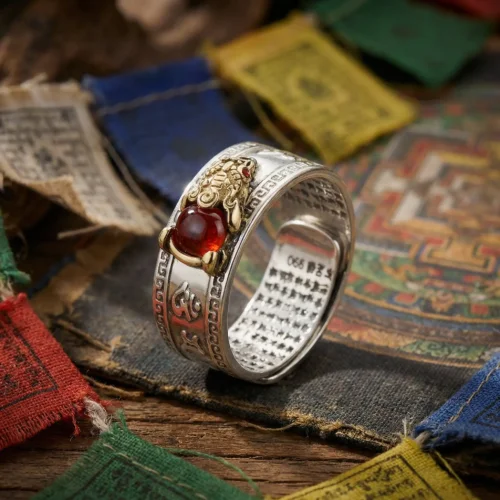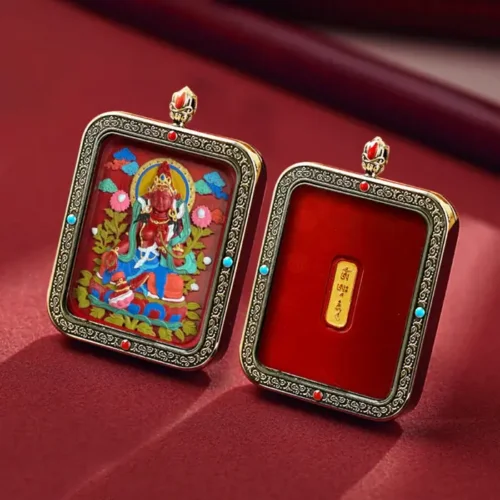



Mantra jewelry encompasses sacred Buddhist pieces—bracelets, pendants, mala beads, and rings—inscribed or blessed with powerful Sanskrit mantras like Om Mani Padme Hum that Tibetan Buddhist tradition holds provide protection from negative energy, karmic obstacles, and spiritual harm while promoting inner peace and mindful awareness. At PotalaStore, we’ve worked with Tibetan artisans for over a decade, helping thousands of practitioners find authentic prayer jewelry that serves both as daily meditation tools and protective talismans.
In 2026, as more people seek meaningful alternatives to fast fashion, mantra jewelry bridges ancient Buddhist wisdom with modern mindfulness practice. Unlike ordinary accessories, each piece carries specific intentions through sacred syllables—six-syllable mantras invoking compassion, eight-syllable protection chants for swift help, or healing invocations that practitioners have recited for over 2,500 years. Whether you’re drawn to spiritual protection, meditation practice, or simply want jewelry with deeper significance, understanding how these sacred pieces work transforms them from beautiful objects into powerful daily companions.
What mantra jewelry means for spiritual protection
Mantra jewelry refers to sacred Buddhist adornments—including bracelets, pendants, 108-bead malas, and rings—that feature powerful Sanskrit mantras either engraved on metal surfaces, inscribed on prayer wheels, or energetically blessed into the materials themselves. The concept of “protection” in Buddhist tradition operates on spiritual and energetic levels rather than physical defense—these pieces are designed to purify negative karma, shield practitioners from harmful mental states, and create a protective field of positive intention around the wearer.
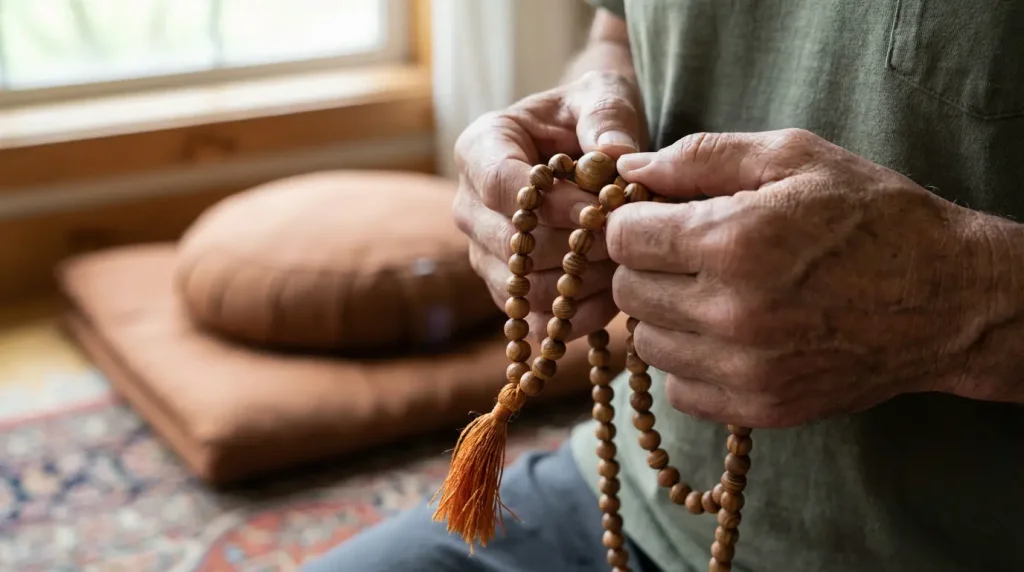
The practice of wearing sacred mantras dates back to Buddhism’s earliest days in India, where monks first developed mala beads (prayer bead necklaces) to count the 108 repetitions of mantras during meditation. This number holds deep significance: it represents the 108 mortal desires or afflictions (kleshas) that Buddhist teachings encourage us to overcome. Wearing these mantras keeps sacred syllables close to your body, creating what Tibetan tradition describes as a continuous blessing—the mantra’s vibration works on subtle energy levels even when you’re not actively meditating.
In modern practice, mantra jewelry serves three primary protective functions. First, it acts as an energetic shield, absorbing and deflecting negative energy from environments or difficult interactions. Second, it functions as a karmic purification tool—the proximity of sacred syllables gradually purifies accumulated negative karma from past actions. Third, and perhaps most practically, it serves as a mindfulness anchor, redirecting attention back to positive intentions during stressful moments.
The 2026 spiritual wellness movement has brought renewed interest in these ancient practices. Unlike trendy crystals or vague “good vibes” jewelry, Buddhist mantra pieces rest on documented traditions with clear lineages, specific deities, and precise syllable combinations that have remained unchanged for centuries. When blessed by ordained monks in traditional ceremonies—as PotalaStore’s collection pieces are—the jewelry becomes more than symbolic; it carries genuine spiritual potency recognized across Tibetan, Nepalese, and Himalayan Buddhist communities.
Five powerful benefits of wearing sacred mantra pieces
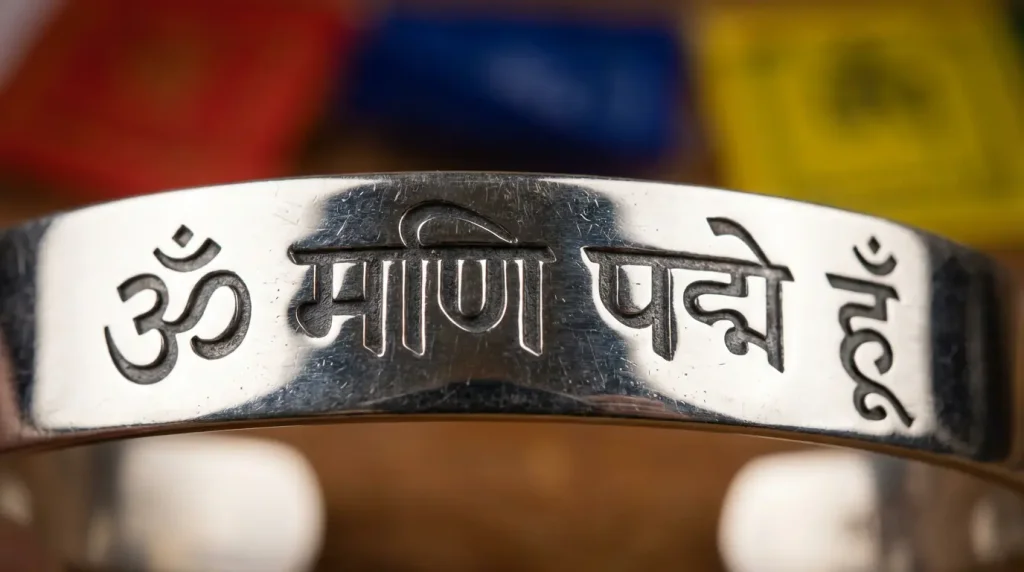
Wearing sacred mantra jewelry delivers five transformative spiritual benefits: protection from negative energy and karmic obstacles, enhanced meditation focus through tactile anchoring, daily mindfulness reminders that redirect attention to intentions, gradual karmic purification through mantra proximity, and measurable anxiety reduction through grounding rituals—benefits practitioners have experienced for over 2,500 years across Buddhist cultures worldwide.
1. Protection from negative energy and karmic obstacles
Buddhist tradition teaches that mantras create a protective field around the practitioner. When you wear a piece inscribed with Om Mani Padme Hum or Green Tara’s mantra, you carry a continuous blessing that deflects harmful energies and negative intentions from others. Think of it as spiritual armor—not preventing physical events, but shielding your mental state and karmic field from accumulating new negative patterns. Many practitioners report feeling less affected by toxic work environments or difficult family dynamics after beginning to wear blessed mantra jewelry.
2. Enhanced meditation focus through tactile anchoring
Mantra bracelets and mala beads provide a physical touchpoint during meditation practice. When your mind wanders (as all minds do), gently touching or counting beads brings attention back to the present moment. This tactile feedback loop creates what meditation research calls “embodied mindfulness”—your body helps anchor your awareness. During traditional japa practice (mantra repetition), practitioners count each of the 108 beads, completing one full round that typically takes 10-15 minutes of focused recitation.
3. Daily mindfulness reminders that redirect attention
Simply wearing sacred jewelry throughout your day creates automatic mindfulness cues. Each time you notice your bracelet or feel your pendant against your skin, it serves as a gentle reminder to return to your intentions—breathe deeply, release tension, or silently repeat your chosen mantra. This is particularly valuable for those new to meditation who struggle with sitting practice but want to integrate spiritual awareness into daily life.
4. Gradual karmic purification through mantra proximity
Tibetan Buddhist teachings hold that mantras possess inherent purifying power. Having sacred syllables near your body—especially over your heart center when wearing pendants—creates a continuous subtle purification of negative karma accumulated from past actions. While dramatic transformation requires active practice, this passive purification acts like spiritual maintenance, gradually clearing obstacles to inner peace and positive life circumstances.
5. Measurable anxiety reduction through grounding rituals
Modern psychology recognizes that intentional objects serve as powerful anchoring tools for stress reduction. When anxiety rises, touching your mantra bracelet while taking three deep breaths creates a grounding ritual that interrupts the stress response. Over time, this conditioned association between your jewelry and calm states makes the calming effect more immediate and reliable—a technique that complements traditional Buddhist teachings with contemporary mindfulness research.
Ready to experience these benefits yourself?
Explore PotalaStore’s collection of authentic Tibetan mantra bracelets, each handcrafted by traditional artisans and blessed in Buddhist monasteries for your spiritual protection and meditation practice.Shop Blessed Mantra Jewelry →
Essential mantra meanings and their protection powers
Three mantras dominate sacred Buddhist protection jewelry: Om Mani Padme Hum invokes Avalokiteshvara’s boundless compassion for karmic purification and all-purpose protection, Green Tara’s mantra (Om Tare Tuttare Ture Soha) calls swift help in times of fear or danger, and the Medicine Buddha mantra channels healing energy for physical and mental wellness—each serving distinct protective functions aligned with specific life challenges.
Om Mani Padme Hum for compassionate protection
Om Mani Padme Hum stands as Buddhism’s most recognized and widely practiced mantra. These six sacred syllables connect to Avalokiteshvara (known as Chenrezig in Tibetan), the bodhisattva of infinite compassion who hears the cries of all suffering beings. First appearing in the Kāraṇḍavyūha Sūtra during the 4th-5th century CE, this mantra has been recited billions of times across centuries of Buddhist practice.
Each of the six syllables corresponds to one of the six paramitas (perfections): Om represents generosity, Ma represents ethics, Ni represents patience, Pad represents perseverance, Me represents concentration, and Hum represents wisdom. Together, they purify the karma accumulated across Buddhism’s six realms of existence—from hell realms to god realms—making this an all-purpose protective mantra suitable for any life situation.
Pronunciation guide: Om MAH-nee PAD-may HUM. Traditional practitioners recommend completing 10 full malas (1,080 recitations) daily for sustained benefits, though even occasional recitation while wearing your jewelry maintains the protective blessing.
Green Tara’s mantra for swift help in difficulties
Om Tare Tuttare Ture Soha (pronounced: Om TAH-ray TOO-tah-ray TOO-ray SO-ha) invokes Green Tara, known as “She Who Saves” in Tibetan tradition. This eight-syllable mantra specializes in swift protection, making it ideal for those facing immediate dangers, urgent obstacles, or sudden life challenges. Tara’s energy moves faster than other deities—she’s depicted in a posture of springing into action, one leg extended ready to leap to practitioners’ aid.
Green Tara specifically protects against what Buddhist texts call the eight great fears: lions (pride), wild elephants (delusion/ignorance), fire (hatred), snakes (jealousy), robbers (false views), bondage (avarice), floods (attachment/desire), and demons (doubt). In modern interpretation, these translate to protection from ego, confusion, anger, envy, destructive beliefs, greed, overwhelming emotions, and self-sabotage.
Wearing Green Tara mantra jewelry proves particularly beneficial during life transitions—career changes, relationship challenges, health scares, or any situation requiring courage and swift resolution. Many practitioners report feeling a sense of protection and confidence when wearing Tara’s mantra during difficult conversations or nerve-wracking events.
Medicine Buddha mantra for healing energy
The Medicine Buddha mantra—Tayata Om Bekandze Bekandze Maha Bekandze Radza Samudgate Soha—channels the healing power of Bhaisajyaguru, the Medicine Buddha. This longer mantra specifically addresses physical illness, mental suffering, and the healing of both body and mind. The word “Bekandze” means “eliminating pain,” repeated twice for emphasis before “Maha Bekandze” (eliminating great pain).
Unlike general protection mantras, Medicine Buddha’s blessing targets health obstacles specifically. Practitioners wear this mantra during illness recovery, chronic pain management, or when supporting loved ones through health challenges. The tradition recommends reciting the mantra 108 times while visualizing healing blue light radiating from the syllables into affected areas of the body.
| Mantra | Syllable Count | Primary Protection | Best For |
|---|---|---|---|
| Om Mani Padme Hum | 6 syllables | Karmic purification, compassion | All-purpose daily protection |
| Green Tara Mantra | 8 syllables | Swift help, fear removal | Urgent challenges, transitions |
| Medicine Buddha Mantra | 12+ syllables | Physical & mental healing | Health issues, recovery |
How to choose and activate your mantra jewelry
Choosing mantra jewelry requires matching your core intention to the right mantra and form—bracelets for daily protection reminders worn on the left wrist, pendants for heart-centered energy close to your body, mala beads for active meditation practice with tactile counting—then activating your piece through traditional blessing rituals that Tibetan Buddhist monks have used for centuries to awaken the spiritual power within sacred objects.
Matching intentions to mantra jewelry types
Start by identifying your primary intention. Are you seeking general protection and peace of mind? Choose Om Mani Padme Hum jewelry—it’s the most versatile mantra for everyday spiritual support. Facing a challenging life transition or needing courage? Green Tara pieces provide that swift protective energy. Dealing with health concerns or supporting someone through illness? Medicine Buddha jewelry channels healing intentions.
Next, select the appropriate form. Bracelets work beautifully for constant wear and mindfulness reminders throughout daily activities—you’ll notice them during work, exercise, and daily tasks. Pendants position mantras over your heart center, making them powerful for emotional healing and relationship intentions. Full 108-bead malas serve serious meditation practitioners who want a dedicated practice tool, while 27-bead wrist malas offer a compromise—wearable like a bracelet but functional for brief meditation sessions.
Material selection adds another layer of intention. Sandalwood carries naturally calming properties and connects to Buddhist tradition (the Buddha achieved enlightenment under a bodhi tree). Turquoise holds special significance in Tibetan culture, believed to absorb negative energy and strengthen the immune system. Sterling silver or copper conduct energy effectively and last for decades with proper care. At PotalaStore, we guide customers through these choices based on both spiritual intentions and practical lifestyle needs.
Traditional activation and blessing practices
While the mantra jewelry sold at PotalaStore arrives pre-blessed by monks in Nepal, personalizing the blessing to your specific intentions strengthens your connection to the piece. This activation ritual takes 10-15 minutes and should be performed when you first receive your jewelry.
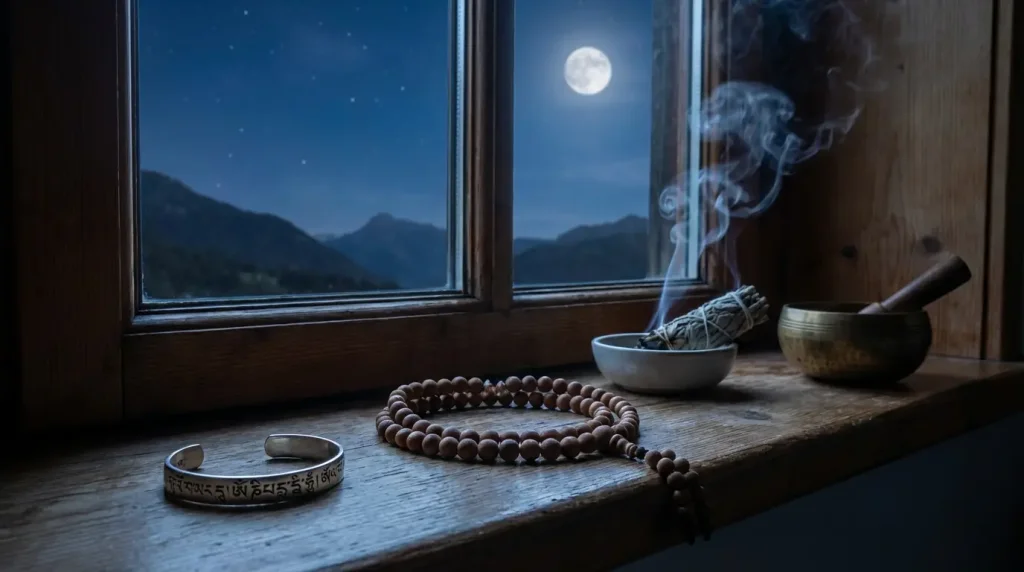
Step 1: Cleanse the piece to remove any accumulated energy from handling and shipping. Hold your jewelry in white sage smoke for 3-5 minutes, or place it under moonlight for 4-6 hours during a full moon. For a quicker option, ring a Tibetan singing bowl while holding the piece for 5-10 minutes.
Step 2: Set your intention clearly and specifically. Hold the jewelry in both hands at heart level. Close your eyes and state (aloud or silently) your purpose for wearing this piece. Be specific: “May this mala support my daily meditation practice and help me cultivate compassion” works better than vague wishes for “good things.”
Step 3: Recite the mantra inscribed on your jewelry at least 108 times (one full mala round). This charges the piece with your energy and creates the initial connection between you and the sacred syllables. If you have mala beads, count on them. Otherwise, use your fingers to count in sets of 27 (4 sets = 108).
Step 4: Wear on the left hand (for bracelets). Tibetan tradition considers the left hand the “receiving” side that absorbs beneficial energy, while the right hand “gives” energy outward. Pendant placement over the heart center doesn’t require specific positioning.
📋 Activation Note: This ritual was developed based on traditional Tibetan Buddhist practices we’ve learned from monastery partnerships in Nepal. Individual results and experiences may vary. The key is sincere intention rather than perfect execution.
Find the perfect mantra match for your intentions
Browse our curated selection of Om Mani Padme Hum bracelets, Green Tara pendants, and authentic 108-bead malas—each piece handcrafted and pre-blessed for your spiritual journey.
Caring for your sacred jewelry and daily practice
Maintaining your mantra jewelry’s protective power requires both physical care—cleaning sterling silver with a soft polishing cloth, storing pieces separately to prevent scratching—and energetic maintenance through monthly cleansing rituals using moonlight, sage, or singing bowls to refresh the spiritual charge that gradually absorbs environmental energies and emotional residue from daily wear.
Physical care by material type
Sterling silver and copper naturally oxidize over time, developing a darker patina. Polish gently with a jewelry cloth once per week if you prefer bright silver, or embrace the aged look as many traditional pieces develop. Avoid harsh chemical cleaners—they damage both metal and any gemstone settings.
Natural materials like sandalwood, bodhi seeds, and rudraksha beads need gentler care. Wipe with a soft, dry cloth only. Never submerge wood or seed beads in water—they’ll swell, crack, or develop mold. If beads feel dry after months of wear, you can very lightly oil them with sandalwood oil on a cloth (not directly on beads), but this should only be done 2-3 times per year maximum.
Gemstones like turquoise, amethyst, or crystal require specific handling. Turquoise is porous and can absorb oils, perfumes, and chemicals—remove turquoise jewelry before applying lotions or working with cleaning products. Most crystals can handle brief water exposure for cleaning, but prolonged soaking may damage them.
What to avoid: Don’t wear your mantra jewelry in the shower (soap residue dulls materials), while swimming (chlorine damages metals and stones), during intense exercise (sweat and impact wear down materials), or while sleeping (pressure can break strands). This extends your jewelry’s lifespan from 2-3 years to 10+ years with natural materials, or indefinitely with proper metal care.
Monthly energetic cleansing ritual
Even blessed jewelry gradually absorbs energies from environments and interactions. Cleanse your mantra pieces every 2-4 weeks for daily wearers, or monthly for occasional wearers. You’ll notice it’s time when your jewelry feels energetically “heavy” or when you’ve been through particularly emotional or stressful situations.
Moonlight charging method: Place your jewelry on a natural surface (windowsill, outdoor altar, or wooden plate) during a full moon. Leave for 4-6 hours overnight. This gentle method works for all materials and recharges the piece with clear, balanced energy.
Sage smudging method: Light a white sage bundle or sage stick, let it produce steady smoke, then hold your jewelry in the smoke for 3-5 minutes while rotating slowly. This method quickly clears heavy energies but should be done in well-ventilated spaces.
Sound cleansing method: Ring a Tibetan singing bowl while holding your jewelry inside or near the bowl for 5-10 minutes. The vibrations shake loose energetic debris. This method is excellent for delicate pieces that shouldn’t be exposed to smoke or moisture.
After cleansing, briefly recite your mantra (even just 21 times) to reactivate your original intention. This completes the energetic reset and strengthens your connection to the piece.
Integrating mantra jewelry into daily practice
Transform your jewelry from passive accessory to active spiritual tool with these simple daily rituals. Each morning when putting on your mantra bracelet or pendant, take 30 seconds to set an intention: “Today, may I embody the compassion of this mantra” or “May this piece protect me from negativity and guide me toward kindness.”
During stressful moments, touch your jewelry and take three conscious breaths while silently reciting your mantra. This trains your nervous system to associate the piece with calm states, making the calming effect increasingly automatic over time.
Each evening when removing your jewelry, spend 1 minute in gratitude—acknowledge one moment from your day when you felt the mantra’s guidance or protection. This reflection practice deepens your spiritual connection and helps you notice subtle shifts in consciousness that mantra practice brings.
Note: Spiritual jewelry is intended for meditation and personal practice. The benefits described are based on traditional Buddhist beliefs and personal experiences, not medical claims. This information is not a substitute for professional medical or mental health advice. Always consult qualified healthcare providers for health concerns.
❓ Frequently Asked Questions
Yes, anyone can wear Buddhist mantra jewelry when approached with genuine respect and sincere intention rather than purely as fashion. Buddhist teachings emphasize compassion for all beings, and wearing mantra jewelry with authentic appreciation—regardless of religious background—honors that universal message. The key is understanding the meaning behind your piece and treating it as a sacred object rather than just an accessory. If you’re drawn to the spiritual principles of compassion, mindfulness, and protection that these mantras represent, wearing them can support your practice even outside formal Buddhist tradition.
Tibetan Buddhist tradition recommends wearing mantra bracelets on your left hand, which is considered the “receiving” hand that absorbs beneficial energy and blessings. The right hand is traditionally associated with giving energy outward into the world. For meditation practice specifically, hold your mala at heart level for peaceful deity mantras like Om Mani Padme Hum, or at navel level for practices focused on increasing abundance or longevity. These positioning guidelines come from centuries of tantric practice, though the most important factor is wearing your jewelry consistently with sincere intention.
Cleanse your mantra jewelry energetically every 2-4 weeks if you wear it daily, or monthly for occasional wear. You should also cleanse after emotionally intense situations where you feel the piece may have absorbed heavy energy—arguments, stressful work periods, or exposure to negative environments. Signs that cleansing is needed include the jewelry feeling energetically “heavy,” losing its luster, or you feeling less connected to it. Physical cleaning depends on materials: sterling silver benefits from gentle polishing weekly, while natural beads like bodhi seeds or sandalwood only need wiping with a soft dry cloth as needed.
Mantra jewelry’s protective effects operate on spiritual, energetic, and psychological levels rather than physical ones. Buddhist tradition teaches that mantras purify karma and create positive mental states that naturally deflect negativity—this isn’t magical force fields, but rather how cultivating compassion and mindfulness through mantra practice makes you less vulnerable to mental afflictions. Modern psychology recognizes that intentional objects serve as powerful anchoring tools for mindfulness, stress reduction, and emotional regulation—benefits increasingly supported by meditation research. The “effectiveness” depends on approaching your jewelry as a spiritual practice tool with sincere intention rather than as a passive good luck charm.
📚 References
- Om Mani Padme Hum Origins and Significance: Historical and spiritual background of Buddhism’s most widely practiced six-syllable mantra, including its appearance in the Kāraṇḍavyūha Sūtra and associations with Avalokiteshvara. Wikipedia: Om Mani Padme Hum
- Mala Bead Traditions and 108 Significance: Comprehensive overview of Buddhist and Hindu prayer bead practices, explaining the spiritual mathematics behind 108 beads and their role in japa meditation. Wikipedia: Japamala
- Eight Auspicious Symbols in Buddhist Art: Detailed exploration of traditional Tibetan Buddhist symbols commonly featured in spiritual jewelry, including their meanings and cultural significance. Lackore Couture: Buddhist Symbols Guide