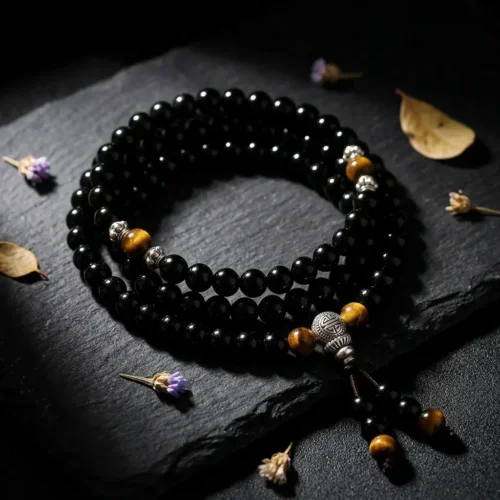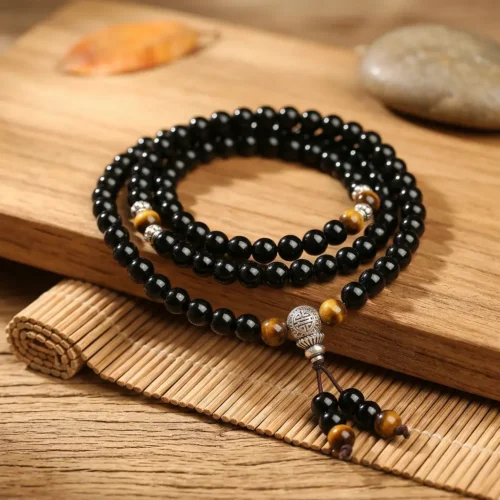

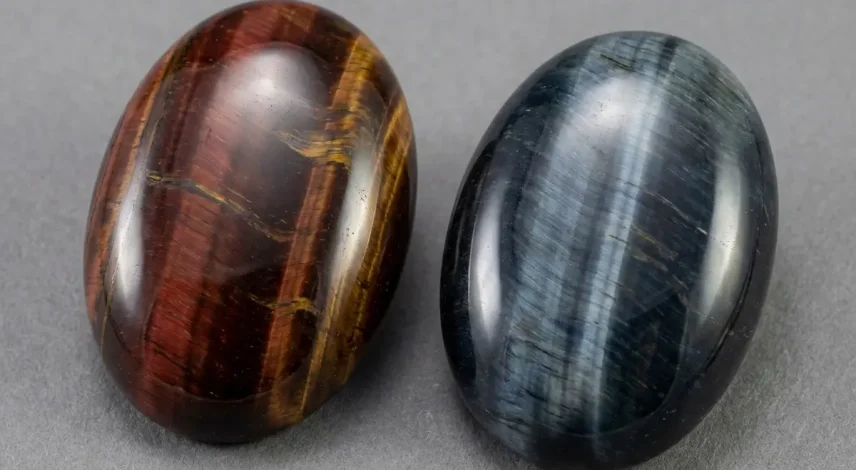

Red tiger eye and blue tiger eye are two stunning varieties of the tiger eye family, each offering distinct colors, energies, and healing properties that serve different spiritual needs. Whether you’re drawn to the deep mahogany tones of red tiger eye or the calming blue-gray shades of blue tiger eye, understanding their differences will help you choose the right stone for your practice.
Many crystal enthusiasts struggle to decide between these two powerful stones—or wonder if the bright colors they see online are authentic. At PotalaStore, we’ve helped thousands of practitioners navigate these questions. After sourcing authentic tiger eye stones directly from South African mines and working with Tibetan artisans for over a decade, we’ve learned what truly matters when choosing between red and blue varieties.
This guide provides a comprehensive comparison based on gemological facts, traditional Buddhist perspectives, and practical experience. You’ll discover how these stones differ in formation, appearance, healing properties, and ideal uses—plus how to spot fake or heavily dyed specimens.
Red vs Blue Tiger Eye: Quick Comparison
The main differences between red and blue tiger eye lie in their color, formation process, chakra associations, and energetic qualities—red is grounding and motivating while blue is calming and clarity-enhancing.
| Feature | Red Tiger Eye | Blue Tiger Eye |
|---|---|---|
| Color | Deep red to mahogany with black bands | Blue-gray to indigo with golden streaks |
| Formation | Heat-treated golden tiger eye (90%+) | Natural blue crocidolite (rare); often dyed |
| Primary Chakra | Root Chakra (grounding) | Throat & Third Eye Chakra |
| Energy Type | Stimulating, action-oriented | Calming, introspective |
| Best For | Motivation, confidence, manifestation | Communication, anxiety relief, clarity |
| Rarity (Natural) | Very rare (most are treated) | Extremely rare (most are dyed) |
| Price Range | $10-30 USD (tumbled stones) | $10-30 USD (tumbled stones) |
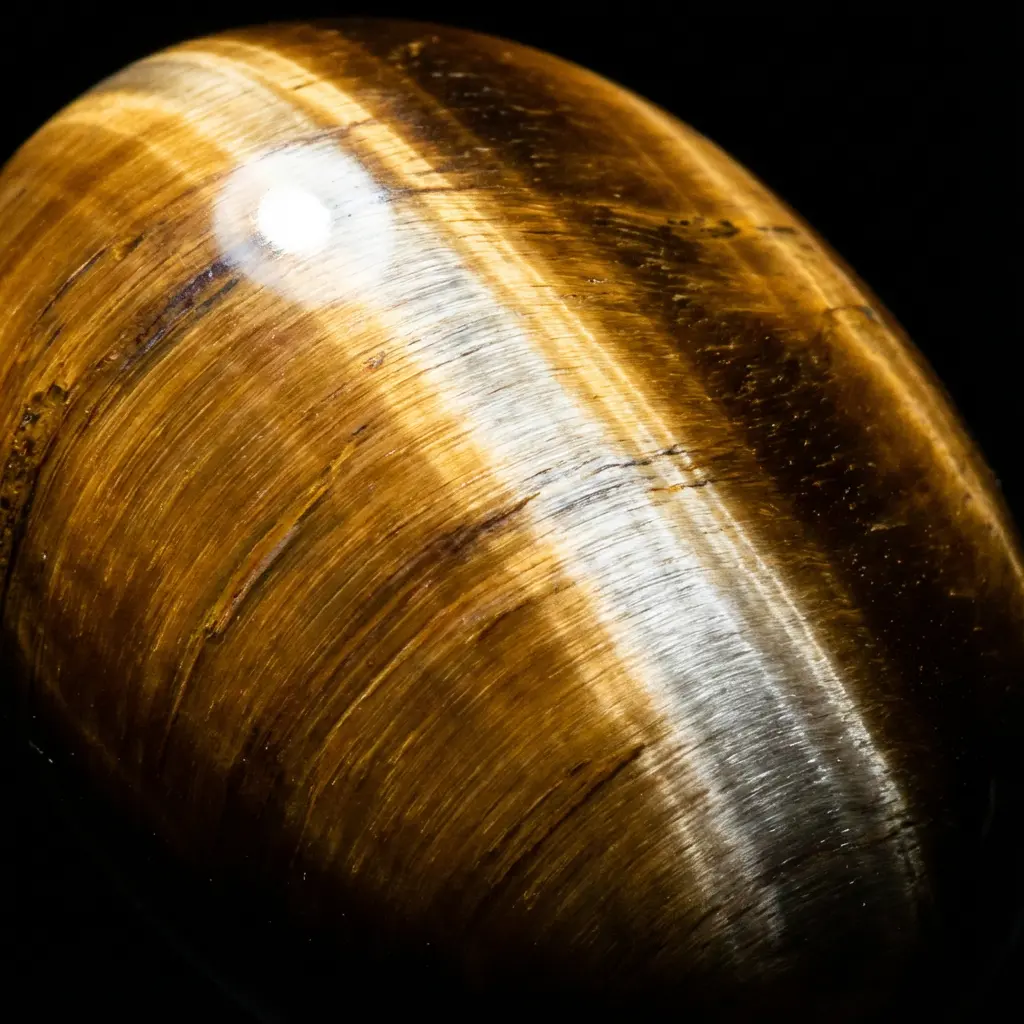
Both varieties share the signature chatoyancy effect—the silky光band that moves across the surface when you tilt the stone, resembling a cat’s eye. This optical phenomenon comes from parallel quartz fibers within the stone. However, their different colors and formation processes give them distinct energetic signatures that suit different purposes.
What Makes Them Different: Formation & Composition
Blue tiger eye forms when blue crocidolite fibers are replaced by quartz while retaining their original color, whereas red tiger eye develops when golden tiger eye is exposed to high heat (usually 300-400°F) or undergoes rare natural oxidation.
Both stones begin their journey as crocidolite, a fibrous blue asbestos mineral. Over millions of years, silica-rich water seeps into cracks containing crocidolite. The quartz gradually replaces the original fibers through a process called pseudomorphism, but crucially preserves their parallel alignment. This preserved fiber structure is what creates the stunning cat’s eye effect.
The color differences arise from what happens next. Blue tiger eye (also called hawk’s eye or falcon’s eye) retains the original blue color of the crocidolite before iron oxidation occurs. This makes natural blue tiger eye extremely rare—the oxidation process usually begins before the quartz replacement is complete.
Red tiger eye (also known as dragon’s eye, ox eye, or bull’s eye) forms through oxidation of iron within the stone. When golden tiger eye is exposed to heat—either naturally from geological processes or artificially in kilns—the iron transforms from yellow-brown goethite to reddish hematite. Over 90% of red tiger eye on the market is heat-treated, which is an accepted enhancement practice in the gemstone industry.
It’s important to understand that heat-treated red tiger eye is still genuine quartz with the same Mohs hardness of 7 and authentic chatoyancy. The treatment doesn’t create a “fake” stone—it simply accelerates a color change that could occur naturally over geological time. Reputable sellers like PotalaStore always disclose treatment status so you know exactly what you’re purchasing.
Color & Appearance: How to Tell Them Apart
Red tiger eye displays deep mahogany to brick red hues with black and golden bands, while blue tiger eye ranges from blue-gray to dark indigo with lighter streaks—both exhibit the signature cat’s eye光effect when moved under light.
Red tiger eye shows a range of warm tones including burgundy, rust, cinnamon, and russet. High-quality specimens often feature alternating ribbons of deep red and golden-brown, creating a rich, layered appearance. The banding follows the original fiber direction, and when cut as a cabochon (smooth, rounded shape), a bright band of light appears to glide across the surface.
Blue tiger eye exhibits cooler shades from pale blue-gray to deep navy. Many specimens retain streaks of golden or brown from incomplete oxidation, creating an intriguing contrast. The blue-gray variety is sometimes called falcon’s eye, while darker specimens with more pronounced banding are called hawk’s eye.
Both varieties share the silky luster characteristic of tiger eye. When you rotate the stone under a single light source, you’ll see the chatoyant band shift position—this moving “eye” is what gives tiger eye its name and mystique.
How to spot fake or heavily dyed stones: Genuine red tiger eye shows multiple color variations within a single piece, not uniform bright red throughout. Real blue tiger eye has natural gray-blue tones, not electric neon blue. If a stone displays perfectly uniform color with no banding variations or natural imperfections, it’s likely dyed or synthetic.
Healing Properties & Metaphysical Meanings
Red tiger eye connects with the root and solar plexus chakras to promote grounding, motivation, and physical vitality, while blue tiger eye resonates with the throat and third eye chakras to enhance communication, calm anxiety, and deepen intuition.
Red Tiger Eye Properties
The root chakra, located at the base of the spine, governs our sense of security, survival instincts, and connection to the physical world. Red tiger eye activates this energy center, providing a solid foundation for personal growth and manifestation work. Many practitioners report feeling more grounded and centered when wearing or meditating with red tiger eye.
The solar plexus chakra, positioned around the navel, relates to personal power, willpower, and self-confidence. Red tiger eye’s stimulating energy helps overcome procrastination, fear, and self-doubt. It’s particularly helpful for those who struggle to take action on their goals or feel stuck in repetitive patterns.
Emotional benefits include boosted confidence, enhanced courage, increased motivation, and improved self-esteem. Physical aspects traditionally associated with red tiger eye include enhanced stamina, increased energy levels, and support for physical vitality. This makes red tiger eye popular among athletes, entrepreneurs, and anyone undertaking challenging projects requiring sustained effort.
In Tibetan Buddhist practice, red tiger eye represents the embodiment of compassion through action—what’s known as active bodhicitta. It supports practitioners in translating spiritual insights into concrete helpful actions in the world.
Blue Tiger Eye Properties
The throat chakra governs communication, self-expression, and speaking one’s truth. Blue tiger eye helps clear blockages in this energy center, supporting honest and effective communication. Many people find it helpful during difficult conversations or when they need to express boundaries.
The third eye chakra, located between the eyebrows, relates to intuition, insight, and spiritual vision. Blue tiger eye’s calming influence helps quiet mental chatter, making it easier to access inner wisdom and develop psychic abilities. It enhances focus and mental clarity while reducing the anxiety that often blocks intuitive insights.
Emotional benefits include reduced anxiety and stress, enhanced patience and tolerance, improved mental organization, and decreased overwhelm. Mental aspects traditionally associated with blue tiger eye include sharper focus, reduced brain fog, better memory recall, and clearer decision-making.
In Tibetan Buddhist tradition, blue tiger eye supports the development of right speech—one of the steps in the Noble Eightfold Path. It encourages mindful communication that is truthful, kind, and beneficial.
Both varieties were valued in ancient cultures. Roman soldiers wore red tiger eye into battle for courage and protection, while ancient Egyptians associated it with the sun god Ra. The stones have been used for over 2,000 years across various spiritual traditions.
Explore Chakra-Aligned Tiger Eye Jewelry
At PotalaStore, our tiger eye pieces are hand-selected for quality and authenticity. Each stone is blessed by Tibetan monks to support your spiritual practice.Browse Tiger Eye Collection →
When to Choose Red vs Blue Tiger Eye
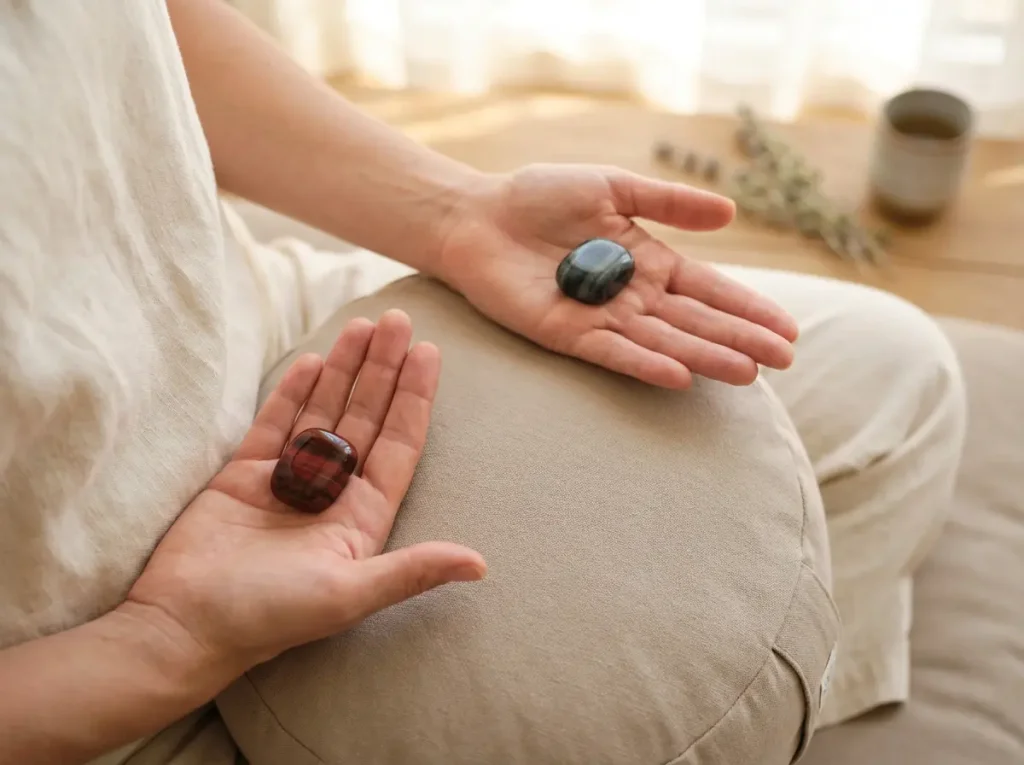
Choose red tiger eye when you need motivation, confidence, and grounding energy to take action on your goals; choose blue tiger eye when you seek calm, clear communication, and mental clarity to navigate stress or develop intuition.
Choose RED Tiger Eye If You:
- Need to overcome procrastination or fear — Red tiger eye’s stimulating energy helps push through resistance and take that first step.
- Want to boost confidence before important events — Job interviews, presentations, or first dates become easier with red tiger eye’s courage-enhancing properties.
- Are working on manifestation or goal-setting — The combination of grounding (root chakra) and willpower (solar plexus) supports turning dreams into reality.
- Feel ungrounded or scattered — Red tiger eye anchors your energy to the present moment and physical body.
- Need physical energy and stamina — Athletes and anyone with demanding physical work appreciate red tiger eye’s vitalizing qualities.
Choose BLUE Tiger Eye If You:
- Struggle with anxiety or overthinking — Blue tiger eye’s calming vibration soothes racing thoughts and nervous energy.
- Need to improve communication skills — Teachers, writers, public speakers, and therapists benefit from enhanced throat chakra energy.
- Want to develop intuition or psychic abilities — The third eye activation supports meditation, dreamwork, and spiritual insight.
- Are working through difficult conversations — Blue tiger eye helps you stay calm and articulate while setting boundaries or resolving conflicts.
- Feel mentally foggy or unfocused — The clarity-enhancing properties support concentration and decision-making.
Specific Scenarios
| Situation | Recommended Stone | Why |
|---|---|---|
| Job interview | Red Tiger Eye | Boosts confidence and courage |
| Difficult conversation | Blue Tiger Eye | Enhances clarity and calm communication |
| Starting a business | Red Tiger Eye | Supports action-taking and manifestation |
| Therapy or shadow work | Blue Tiger Eye | Deepens insight and self-awareness |
| New Year’s resolutions | Red Tiger Eye | Provides motivation to follow through |
| Meditation retreat | Blue Tiger Eye | Supports introspection and spiritual clarity |
Can You Use Both Together?
Absolutely! Red and blue tiger eye create a balanced energy that combines grounding with clarity, action with reflection. Many practitioners wear red tiger eye in the morning for motivation and switch to blue in the evening for calm introspection. You can also wear both simultaneously on different wrists or as layered bracelets to maintain equilibrium throughout the day.
This combination is particularly powerful for those who tend toward extremes—either too much action without reflection, or too much contemplation without follow-through. Together, the stones encourage balanced living.
For beginners: If you’re unsure which to start with, red tiger eye is often recommended because its grounding energy is more tangible and easier to perceive. However, if anxiety or communication challenges are your primary concern, blue tiger eye may be the better entry point despite being more subtle in its effects.
Find Your Perfect Tiger Eye
Shop our curated selection of authentic red and blue tiger eye pieces, each sourced from ethical mines and blessed for your spiritual journey.Shop Red Tiger Eye → Shop Blue Tiger Eye →
How to Spot Fake or Dyed Tiger Eye
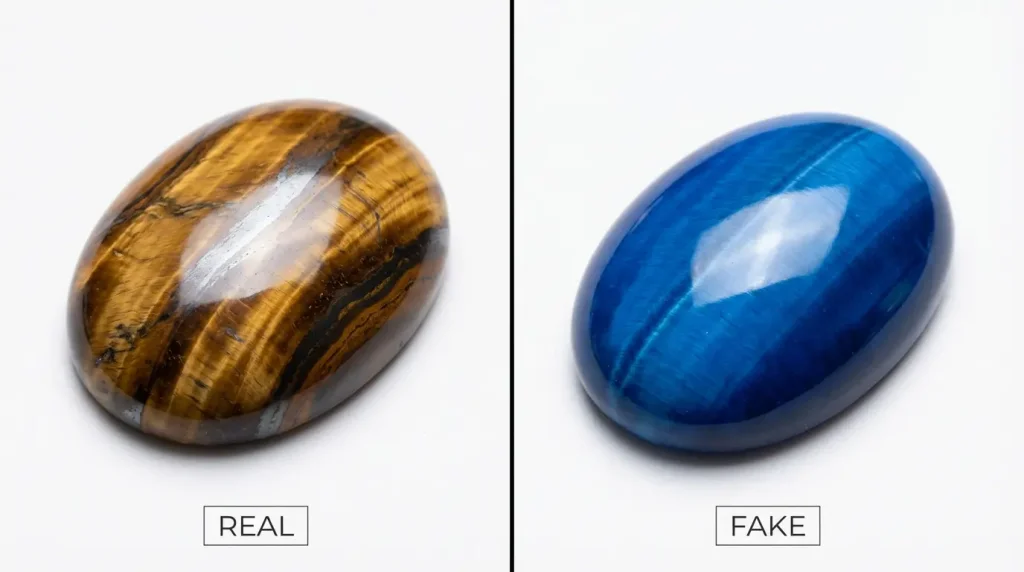
To spot fake or heavily dyed tiger eye, look for unnaturally uniform colors without banding variations, overly bright neon hues, or a perfectly centered cat’s eye effect that doesn’t shift naturally with movement.
Red Tiger Eye Authenticity Checks
Genuine red tiger eye displays multiple shades within a single piece—burgundy transitions to rust, with streaks of golden-brown and black banding. The color variation reflects the natural oxidation process. High-quality specimens show rich depth rather than flat, uniform color.
Warning signs of fake red tiger eye: Uniform bright red throughout with no variation, unnaturally vivid “cherry red” color, lack of visible banding, surface feels plastic-smooth rather than glassy, unusually lightweight for its size.
Remember that heat-treated red tiger eye is still genuine—it’s enhanced golden tiger eye, not a fake stone. The quartz structure remains authentic with a Mohs hardness of 7. What matters is honest disclosure about the treatment, which reputable sellers always provide.
Blue Tiger Eye Authenticity Checks
Genuine blue tiger eye shows subtle blue-gray to navy tones, often with golden or brown streaks from incomplete oxidation. Natural blue tiger eye is rare, so most affordable “blue” tiger eye is actually dyed golden tiger eye—which isn’t fake, just enhanced.
Warning signs of heavily dyed blue tiger eye: Electric or neon blue color (unnatural), perfectly uniform blue with no variations, no visible fiber structure or banding, color that’s too “perfect” or bright, suspiciously low price for claimed natural blue tiger eye.
General Tiger Eye Authentication
The chatoyancy test: Genuine tiger eye’s光band should move smoothly across the surface when you tilt it under a single light source. If the band jumps, breaks, or doesn’t appear at all, the stone may be fake or poorly cut.
The hardness test: Tiger eye scores 7 on the Mohs scale, meaning it cannot be scratched by a steel knife (5.5 on Mohs). If a knife easily scratches the surface, it’s not tiger eye. However, don’t test valuable pieces this way—use it only on inexpensive specimens you’re unsure about.
Weight and feel: Genuine tiger eye has substantial weight due to its quartz composition. Plastic or resin imitations feel lighter and warm up quickly in your hand, while real quartz stays cool.
Price reality check: If a piece is suspiciously cheap, investigate further. Natural blue tiger eye is rare and commands higher prices. If you’re seeing “natural blue tiger eye” for $5, it’s almost certainly dyed. Quality red tiger eye ranges from $10-30 USD for tumbled stones, with larger cabochons or jewelry pieces costing more.
Buying Authentic Tiger Eye
At PotalaStore, we source tiger eye directly from certified mines in South Africa and work only with suppliers who provide full treatment disclosure. Each piece is hand-selected for quality chatoyancy and natural banding. We clearly label whether stones are heat-treated, dyed, or natural, so you always know exactly what you’re purchasing.
Our tiger eye jewelry is blessed by Tibetan monks, adding spiritual intention to the stone’s inherent properties. When you invest in authentic, ethically sourced tiger eye, you’re not just buying a beautiful stone—you’re acquiring a genuine spiritual tool with verifiable provenance.
Caring for Your Red & Blue Tiger Eye
Both red and blue tiger eye can be cleansed with running water for 1-2 minutes or by smudging with sage, and charged by placing them in moonlight overnight or brief sunlight (2-3 hours maximum to prevent color fading).
Cleansing Methods (Suitable for Both Varieties)
- Running water: Hold under cool tap water for 1-2 minutes while visualizing negative energy washing away. Pat dry with a soft cloth.
- Sage smudging: Pass the stone through white sage smoke for 30-60 seconds, focusing on your intention to cleanse.
- Sound cleansing: Use a singing bowl or tingsha bells for 3-5 minutes. The vibrations clear stagnant energy.
- Selenite plate: Place your tiger eye on a selenite charging plate overnight. Selenite continuously cleanses other crystals.
Charging Methods
- Moonlight: Place outside or on a windowsill during a full moon. Any moon phase works, but full moon energy is strongest. Leave for 4-6 hours or overnight.
- Sunlight: Limited exposure of 2-3 hours is safe. Prolonged sun exposure may fade colors, especially in heat-treated red tiger eye. Morning sun is gentler than afternoon.
- Earth burial: Bury in soil for 24 hours (wrap in natural cloth first). This deeply grounds the stone’s energy.
What to Avoid
Tiger eye has a Mohs hardness of 7, making it relatively durable, but some precautions ensure longevity:
- Harsh chemicals: Avoid jewelry cleaners, bleach, or household cleaners. They can dull the surface or affect treatments.
- Prolonged water soaking: Brief water exposure is fine, but don’t leave tiger eye submerged for hours.
- Extreme heat: While red tiger eye is created through heat treatment, avoid exposing natural specimens to high temperatures.
- Ultrasonic cleaners: The vibrations can potentially damage the fibrous structure that creates chatoyancy.
Storage Tips
Store tiger eye separately from softer stones (like turquoise or pearl) to prevent scratching them, and away from harder minerals (like diamonds or sapphires) that could scratch the tiger eye. A soft pouch or lined jewelry box works well. Keep away from direct sunlight when not in use to preserve color intensity.
How Often to Cleanse
Cleanse your tiger eye every 2-4 weeks if you wear it daily or use it frequently in meditation or energy work. For occasional or decorative use, monthly cleansing is sufficient. Always cleanse when you first purchase a stone, when it feels energetically “heavy” or dull, or after intense emotional or healing work.
For detailed cleansing techniques and crystal care guidance, explore our complete guide to cleansing tiger eye crystals.
❓ Frequently Asked Questions
Natural blue tiger eye is generally more expensive than red due to its rarity—most “blue” tiger eye on the market is actually dyed golden tiger eye. However, naturally oxidized red tiger eye (not heat-treated) is also extremely rare and can command higher prices. For standard market pieces, both heat-treated red and dyed blue are similarly priced at $10-30 USD for tumbled stones, with larger cabochons or jewelry pieces ranging from $40-100 USD depending on quality and craftsmanship.
Yes, you can absolutely wear red and blue tiger eye together—they create a balanced energy that combines grounding with clarity, action with reflection. Many practitioners wear red tiger eye in the morning for motivation and switch to blue in the evening for calm introspection, or wear both simultaneously on different wrists or as layered bracelets. This pairing is especially helpful for those seeking both action-oriented energy and thoughtful perspective, supporting balanced decision-making throughout the day.
Red tiger eye is often recommended for beginners because its grounding energy is more tangible and easier to feel, making it ideal for those new to crystal work. It connects strongly with the root chakra, providing a solid foundation for exploring energy practices. However, if you specifically struggle with anxiety or communication issues, blue tiger eye might be the better starting point despite being more subtle in its effects. The most important factor is choosing the stone that resonates with your current needs and intentions.
Over 90% of red tiger eye on the market is heat-treated golden tiger eye, which is an accepted and disclosed enhancement in the gemstone industry. Naturally oxidized red tiger eye exists but is extremely rare and significantly more expensive—often $100+ USD for small specimens. Heat-treated red tiger eye still retains the same quartz structure and chatoyancy effect with a Mohs hardness of 7—it’s not “fake,” just color-enhanced through a common industry practice. Reputable sellers like PotalaStore always disclose treatment status so you can make informed purchasing decisions.
Discover Authentic Tiger Eye at PotalaStore
Each piece in our collection is hand-selected for quality, sourced from ethical mines, and blessed by Tibetan monks. We provide full transparency about any treatments, so you always know what you’re getting.Shop Authentic Tiger Eye — Free Shipping→
Final Thoughts: Choosing Your Tiger Eye
Both red and blue tiger eye offer powerful support for different aspects of life and spiritual development. Red tiger eye grounds you in physical reality while igniting motivation and courage—perfect for turning ideas into action. Blue tiger eye calms the mind and opens communication channels—ideal for developing clarity and expressing your truth.
The “better” choice depends entirely on your current needs and intentions. If you’re facing challenges that require action, confidence, or grounding, red tiger eye is your ally. If you’re navigating stress, developing intuition, or improving communication, blue tiger eye will serve you well. Many practitioners eventually work with both, using them at different times or combining them for balanced energy.
When purchasing tiger eye, remember that treatment doesn’t equal fake—what matters is honest disclosure from your seller. At PotalaStore, we believe in transparency, ethical sourcing, and spiritual integrity. Every tiger eye piece in our collection comes with information about its origin and any treatments, plus the blessing of Tibetan monks to support your practice.
Whether you choose red for motivation, blue for clarity, or both for balance, you’re investing in a stone with over 2,000 years of spiritual tradition behind it. Trust your intuition—the right tiger eye will call to you.
Reviewed by Tenzin Dorje, Tibetan Buddhist practitioner with 15+ years of experience in spiritual jewelry and traditional blessing practices.
Note: Tiger eye jewelry is intended for meditation, energy work, and personal spiritual practice. The healing properties and metaphysical benefits described are based on traditional beliefs, historical use, and personal experiences—not medical or scientific claims. This information is not a substitute for professional medical, mental health, or psychological advice. If you are experiencing health concerns, please consult qualified healthcare professionals. Crystal healing is a complementary practice and should not replace conventional medical treatment.
📚 References
- Tiger’s Eye Mineral Composition: Scientific information on quartz pseudomorphs and chatoyancy in tiger eye. Wikipedia – Tiger’s Eye
- Gemstone Enhancement Treatments: Industry standards for heat treatment and dyeing disclosure in colored gemstones. Gemological Institute of America (GIA)
- Mohs Hardness Scale: Reference guide for mineral hardness testing and gemstone durability. Source: International Gem Society (Readers may search their website for current resources)
- Chakra Systems in Buddhist Tradition: Overview of energy centers and their associations with spiritual practice. Source: Academic studies in Tibetan Buddhist practices