

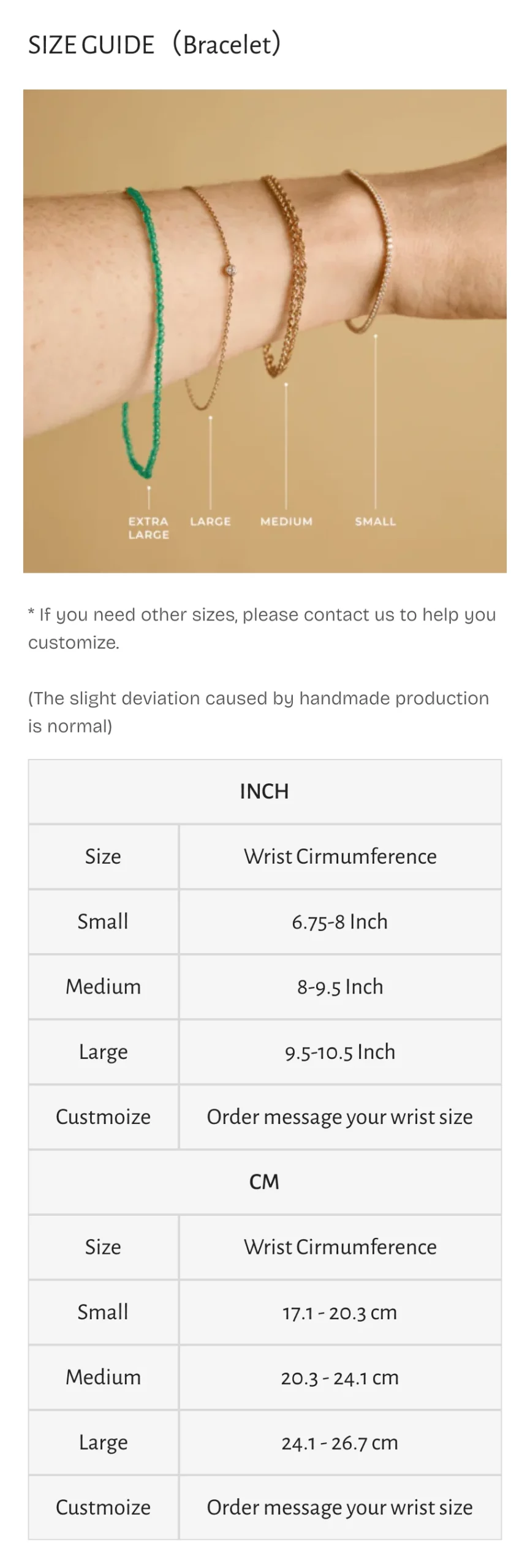
 Bracelet Size Guide Chart - Wrist Measurement in Inches & CM[/caption]
[caption id="attachment_17326" align="aligncenter" width="905"]
Bracelet Size Guide Chart - Wrist Measurement in Inches & CM[/caption]
[caption id="attachment_17326" align="aligncenter" width="905"]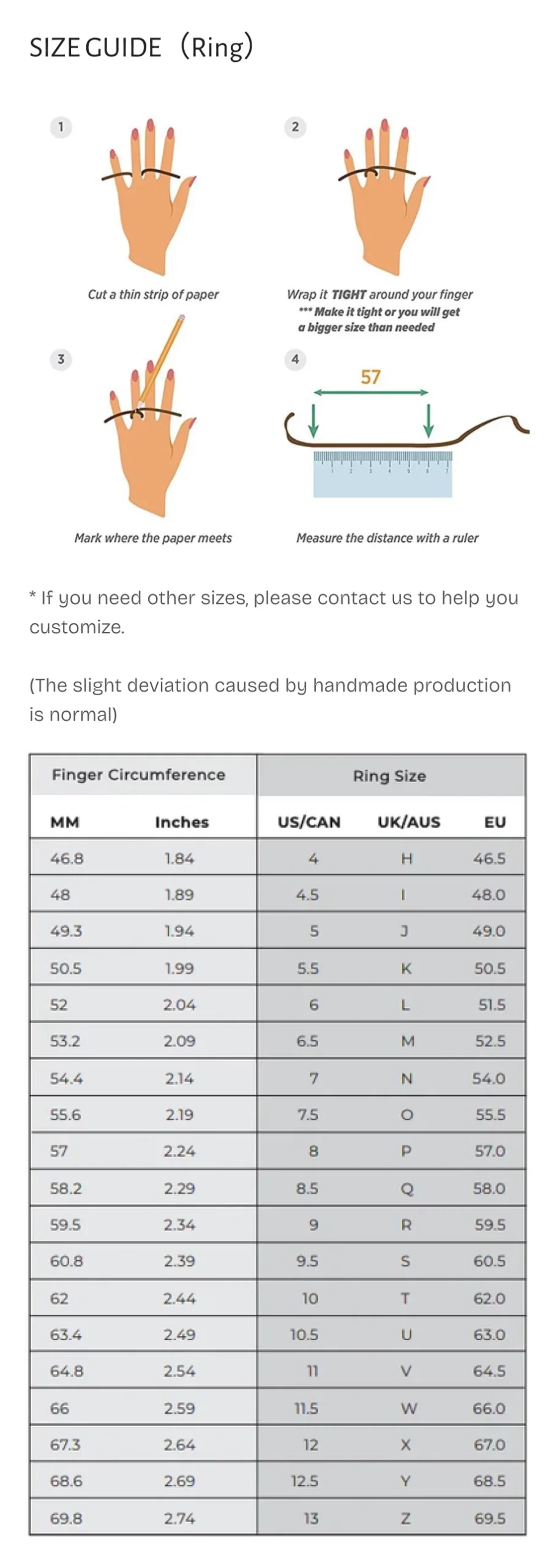 Ring Size Guide - How to Measure Finger Size at Home[/caption]
[caption id="attachment_17325" align="aligncenter" width="912"]
Ring Size Guide - How to Measure Finger Size at Home[/caption]
[caption id="attachment_17325" align="aligncenter" width="912"]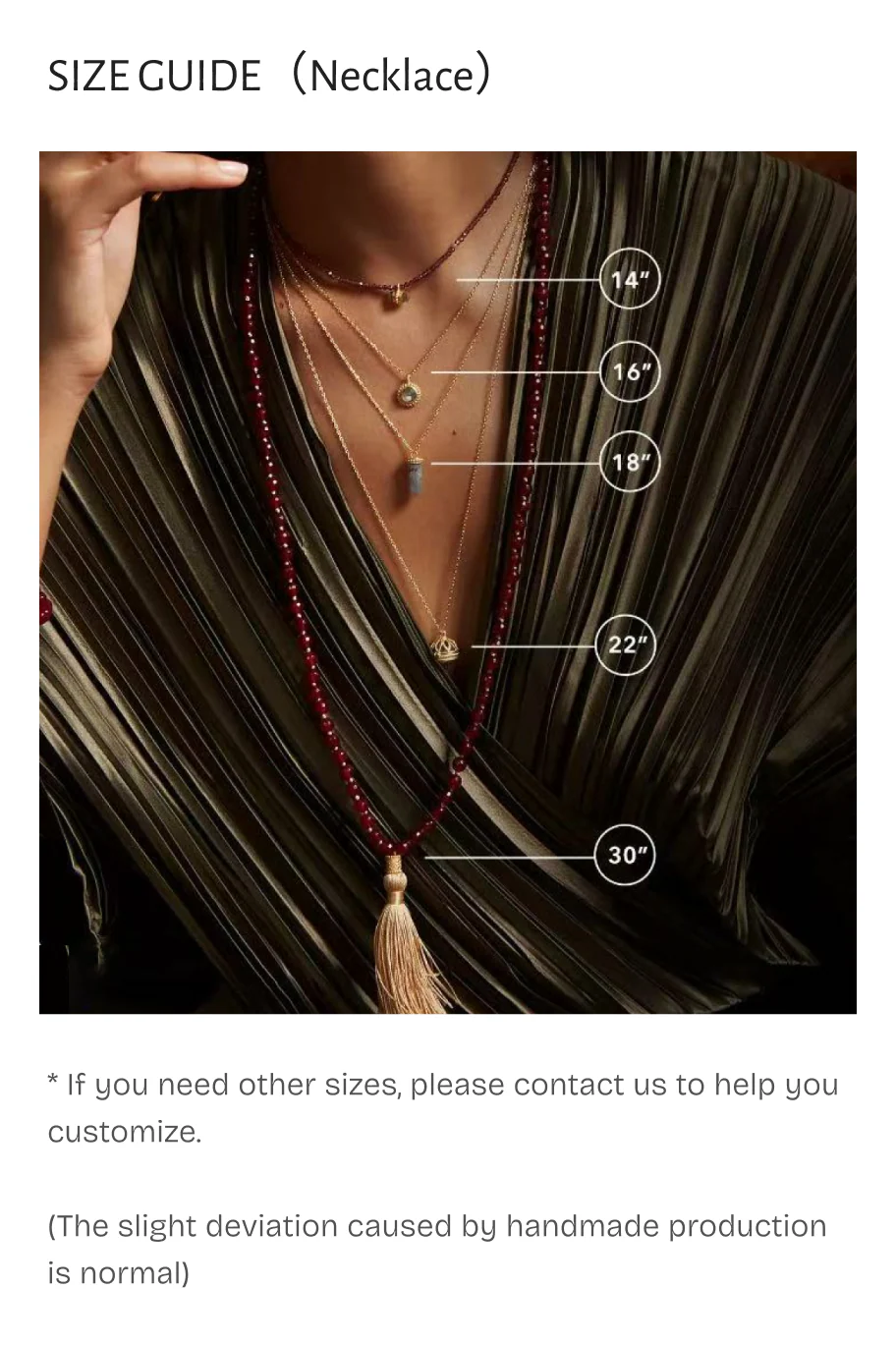 Necklace Length Size Guide Chart - 14 16 18 22 30[/caption]
Strike two copper discs together. Hold the leather strap loosely, let the edges meet, and listen. That clear, sustained tone — ringing for 30 seconds or more — isn’t just sound. It’s centuries of Tibetan Buddhist practice carried in metal.
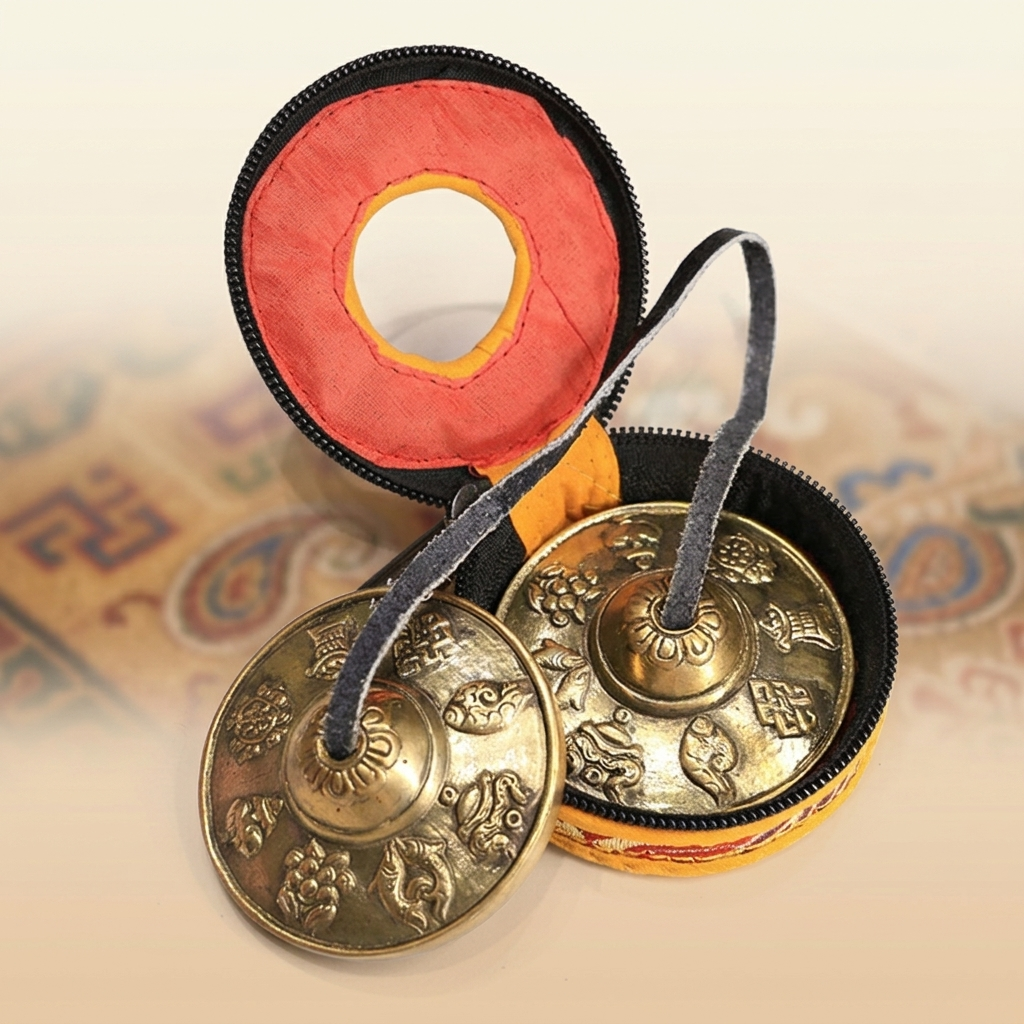
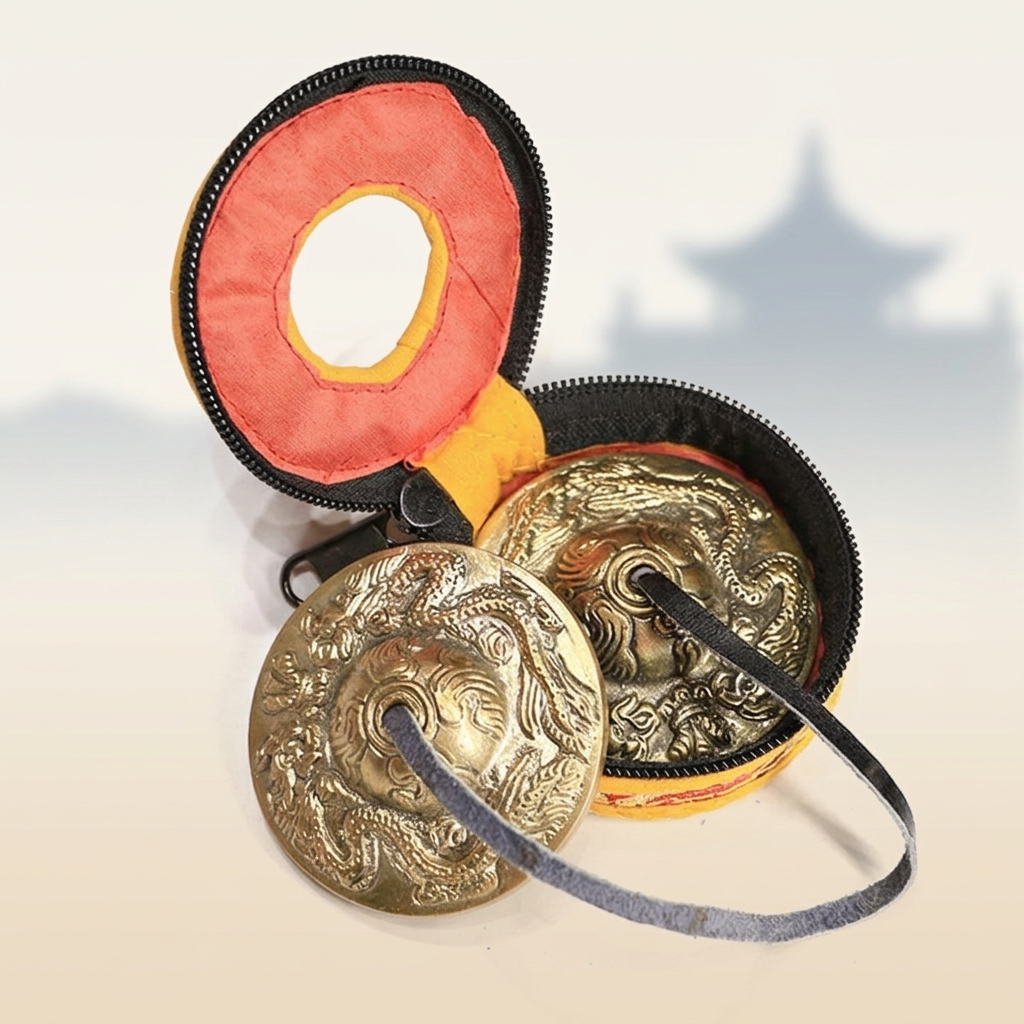
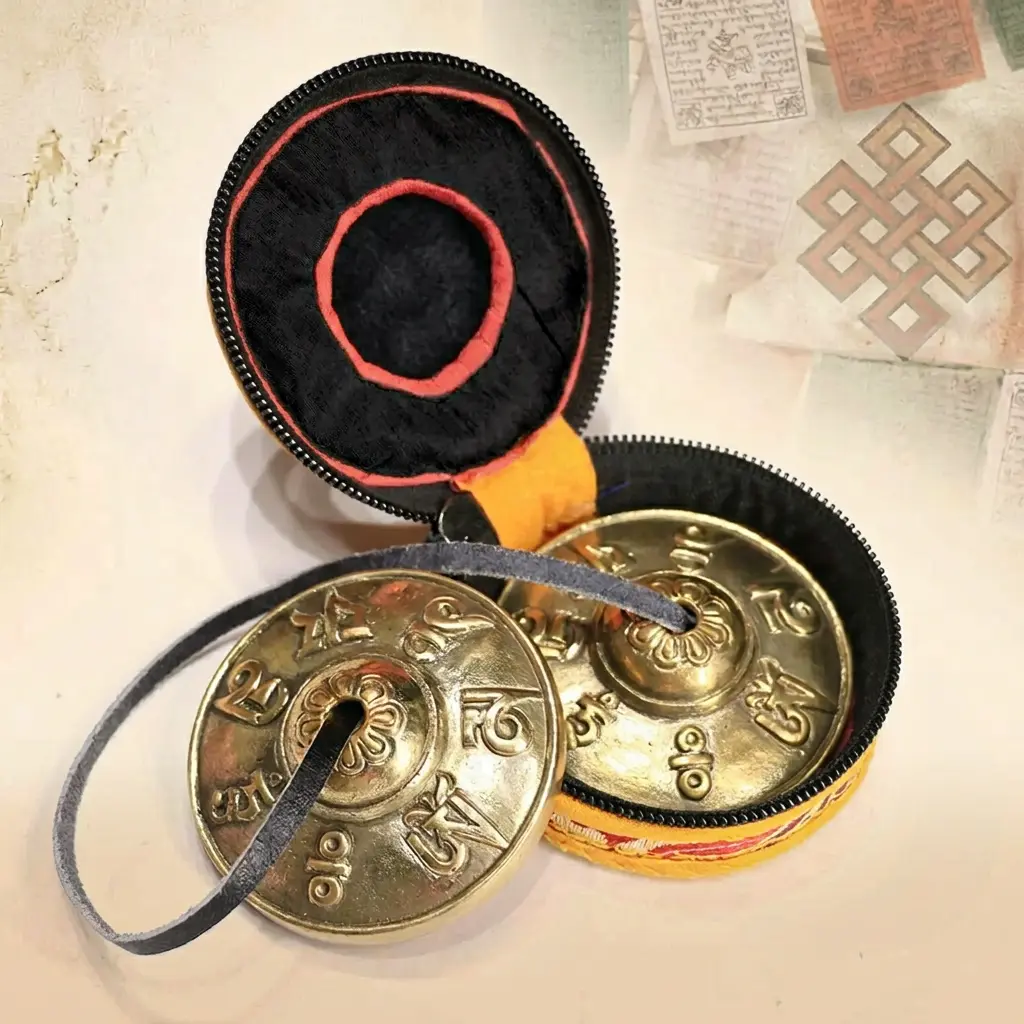
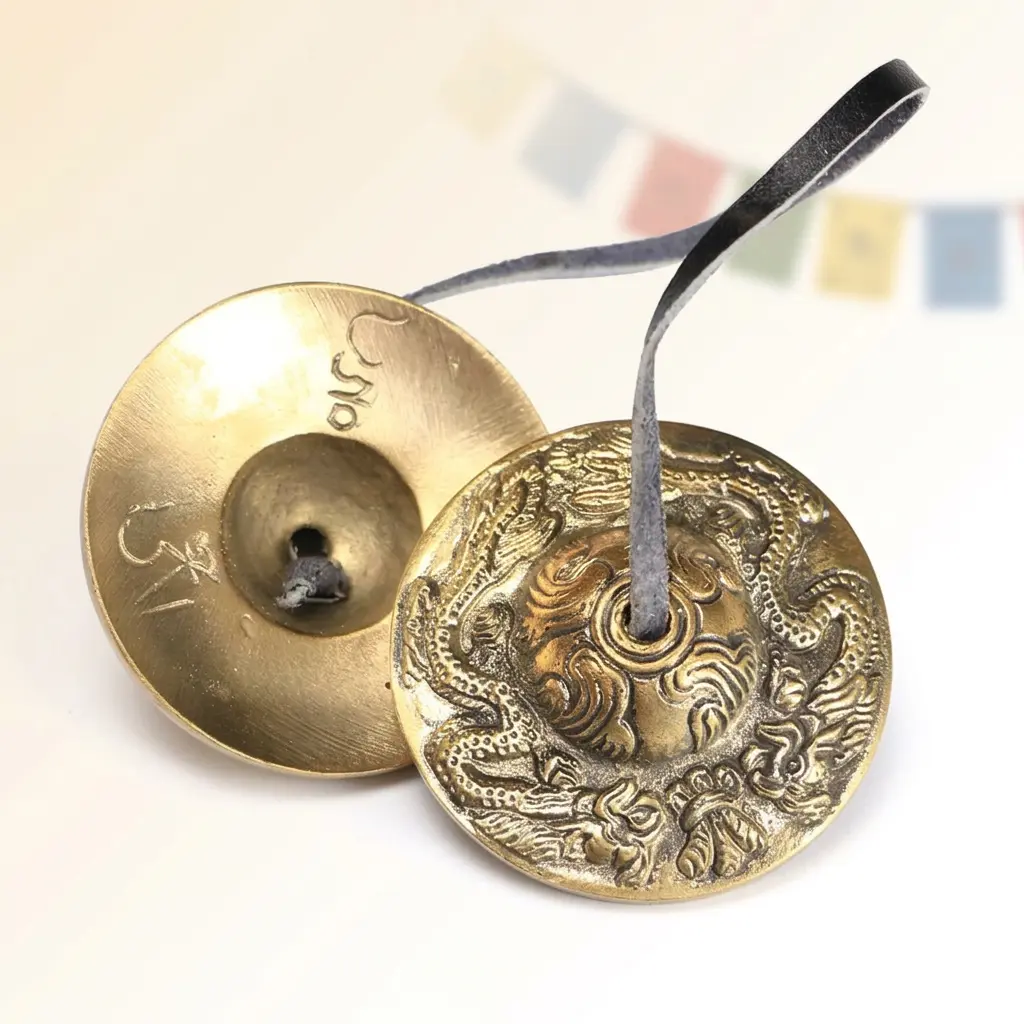
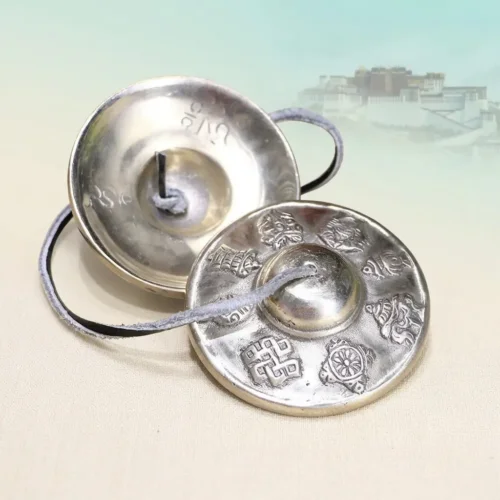
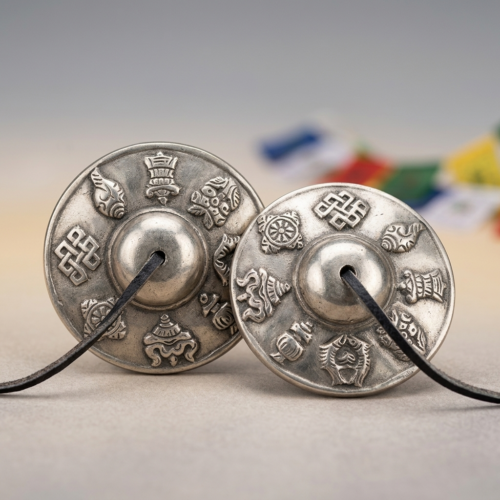
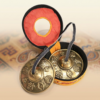
At PotalaStore, we source Tibetan tools made the way they’ve always been made. These Tibetan Tingsha Bells are hand-engraved in pure copper by Himalayan craftsmen, featuring three layers of sacred symbolism — the Six True Words mantra, a protective dragon motif, and the 8 Auspicious Symbols — on a single pair of meditation cymbals. They’re for daily meditators, yoga teachers, sound healers, and anyone who wants something more meaningful than a generic wellness accessory.
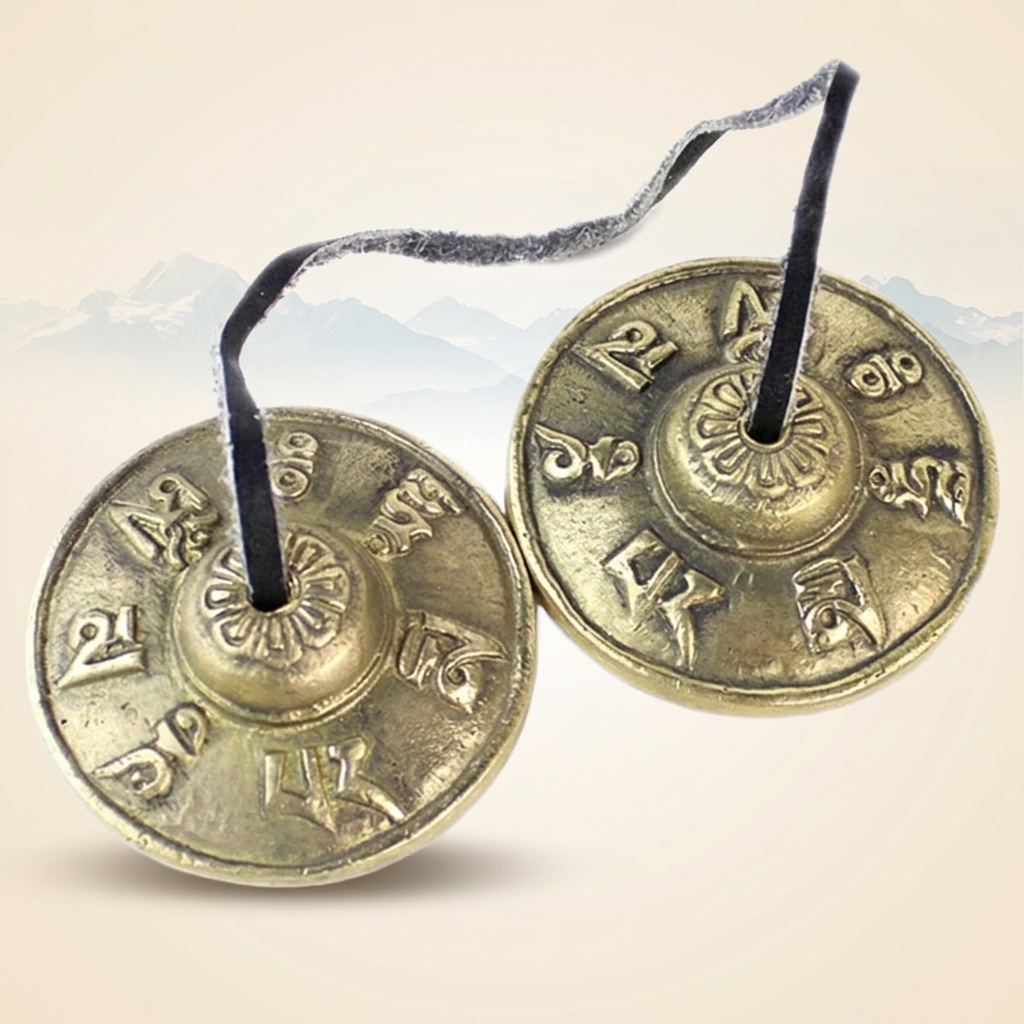
The Six True Words — Om Mani Padme Hum Engraved in Copper
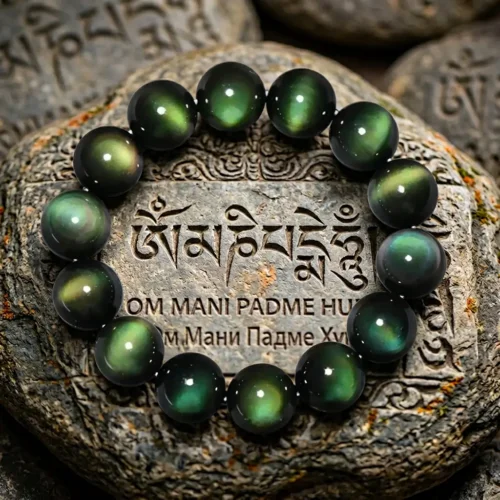
Om Mani Padme Hum is the most recited mantra in Tibetan Buddhism — six syllables that represent the entirety of the Buddhist path. Known in Chinese Buddhist tradition as the 六字真言 (Six True Words), it is considered the “innermost heart” of Avalokiteśvara, the Bodhisattva of Compassion.
“The six syllables purify the six negative emotions. Together, they represent the entire path from suffering to awakening.”— As taught by His Holiness the Dalai Lama
Each syllable transforms one realm of existence — and cultivates one of the six perfections:
- Om — purifies pride — cultivates the wisdom of equanimity
- Ma — purifies jealousy — cultivates ethics
- Ni — purifies attachment — cultivates patience
- Pad — purifies ignorance — cultivates perseverance
- Me — purifies greed — cultivates concentration
- Hum — purifies hatred — cultivates wisdom
When you strike these tingsha bells, the mantra activates as vibration. Every ring carries all six syllables outward into the space around you.
The Dragon — Guardian of the Dharma on Your Tingsha
In Tibetan Buddhist iconography, the dragon (Druk) is not a monster — it’s a protector. Unlike the fire-breathing villains of Western mythology, Tibetan dragons are one of the Four Dignities, representing courage, power, and the fearless guardianship of the Dharma.
“The dragon’s thunderous voice awakens beings from the delusion of ordinary mind.”— Tibetan Buddhist teaching on the Four Dignities
Dragon motifs appear on temple gates, monastery flags, and sacred instruments precisely because they guard what matters. On these tingsha, the dragon pairs intentionally with the Six True Words: the mantra opens the heart toward compassion — the dragon stands watch at the door.
Most tingsha bells on the market carry a single motif. This pair combines dragon, mantra, and the 8 Auspicious Symbols on pure copper — a triple-layer of protective and compassionate energy that is rare in the category.
Why Copper — the Sacred Metal of Himalayan Instruments
Copper is one of the 7 sacred metals in Tibetan instrument-making, corresponding to Venus — the planet of love, inner refinement, and compassion. It isn’t chosen by accident.
Copper produces a warmer, richer, more resonant tone than the thin brass alloys used in mass-produced tingsha. Many practitioners describe copper bells as having a fullness that “carries” further — through the body and through the room. It also develops a natural patina over time, making your pair gradually and uniquely yours.
When you hold these in your hands, you’re holding the weight of real, natural copper — 200 grams of it, hand-forged, hand-engraved. You’ll hear the difference on the first strike.
How to Use Your Tibetan Tingsha Bells
For Meditation & Yoga
Hold one cymbal in each hand by the leather strap, fingers relaxed — let them hang freely. Bring the edges together with a gentle, glancing strike. Let the tone ring to complete silence before striking again. Use to mark the start and end of a session, to signal savasana transitions, or as a focal point: follow the sound as it fades to anchor present-moment awareness.
For Space Clearing & Feng Shui
Walk slowly through a room, striking the bells in each corner and at every doorway. The pure, penetrating tone is traditionally used to dispel stagnant energy, clear a new home, or reset the atmosphere after conflict. An essential practice before dedicated meditation in any space.
For Sound Healing & Chakra Work
At approximately 2,000 Hz, these bells resonate with the upper chakras — throat, third eye, and crown. Hold the bells near each energy center and allow the vibration to settle fully before moving on. Widely used by Reiki practitioners, sound therapists, and holistic healers worldwide.
Product Specifications
| Material | Pure copper, handmade & hand-engraved |
|---|---|
| Diameter | 6.5 cm (approx. 2.6 in) |
| Thickness | 0.3 cm |
| Weight | 200 g (pair) |
| Engravings | Six True Words (Om Mani Padme Hum) + Dragon + 8 Auspicious Symbols |
| Strap | Natural leather cord |
| Package | 1 pair of tingsha bells + 1 carry bag |
| Note on bag | Bag style and color are random; each is unique |
Because each pair is handmade from natural materials, slight variations in tone, patina, and engraving depth are normal — and a mark of authentic craftsmanship. The compact 6.5 cm size fits any yoga bag, travel kit, or desk drawer.
Frequently Asked Questions
What are tingsha bells used for?
Tingsha bells are used in meditation, yoga, sound healing, space clearing, Feng Shui, and Tibetan Buddhist ritual. They mark transitions, clear stagnant energy, and help anchor focused awareness — and they make a powerful home décor piece for a meditation altar or sacred space.
What is the difference between tingsha bells and singing bowls?
Tingsha produce a sharp, high-frequency tone (~2,000 Hz) ideal for signaling, clearing, and transitions. Singing bowls produce deeper harmonic resonance for sustained sound immersion. Many practitioners use both — tingsha to open and close, singing bowls for the session in between.
Do I need to be Buddhist to use these?
Not at all. The tradition is rooted in Tibetan Buddhism, but tingsha bells are used by yoga teachers, therapists, meditators, and mindfulness practitioners of all backgrounds worldwide. No religious practice is required to benefit from their sound.
How do I care for copper tingsha?
Wipe with a dry cloth after use. For deeper cleaning, use mild soap and water — dry immediately to prevent spotting. The natural darkening that develops is patina, not damage; it deepens the tone over time and is considered a sign of authenticity.


































Customer Reviews
Only logged in customers who have purchased this product may leave a review.
Reviews