

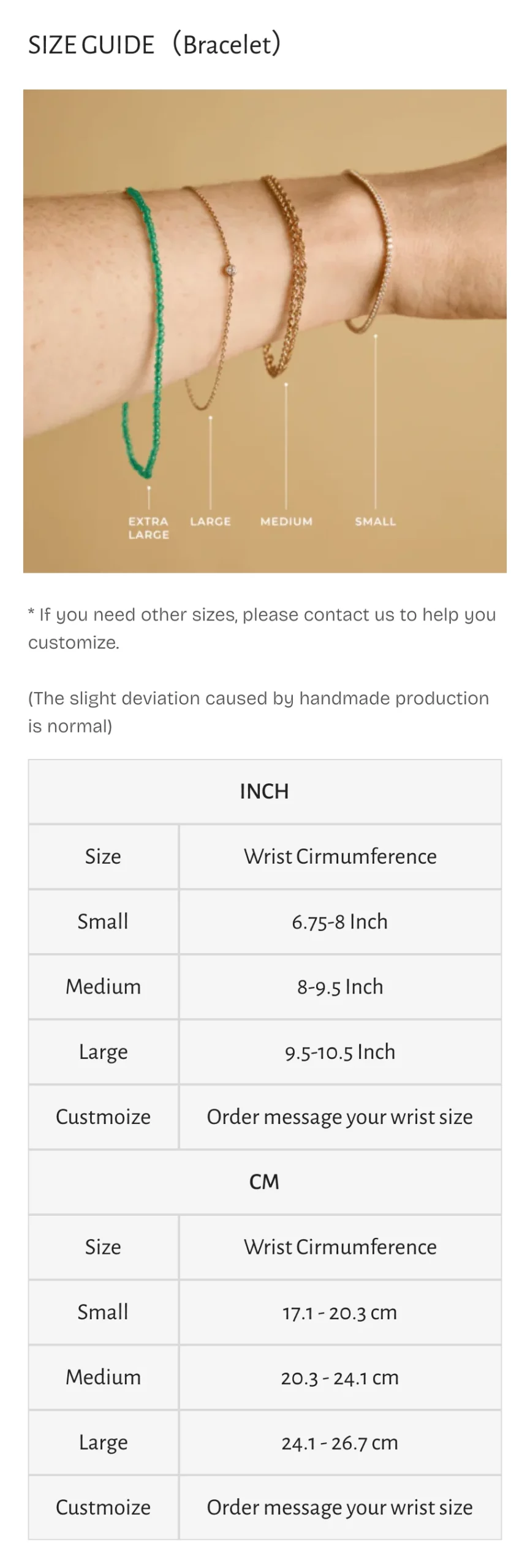
 Bracelet Size Guide Chart - Wrist Measurement in Inches & CM[/caption]
[caption id="attachment_17326" align="aligncenter" width="905"]
Bracelet Size Guide Chart - Wrist Measurement in Inches & CM[/caption]
[caption id="attachment_17326" align="aligncenter" width="905"]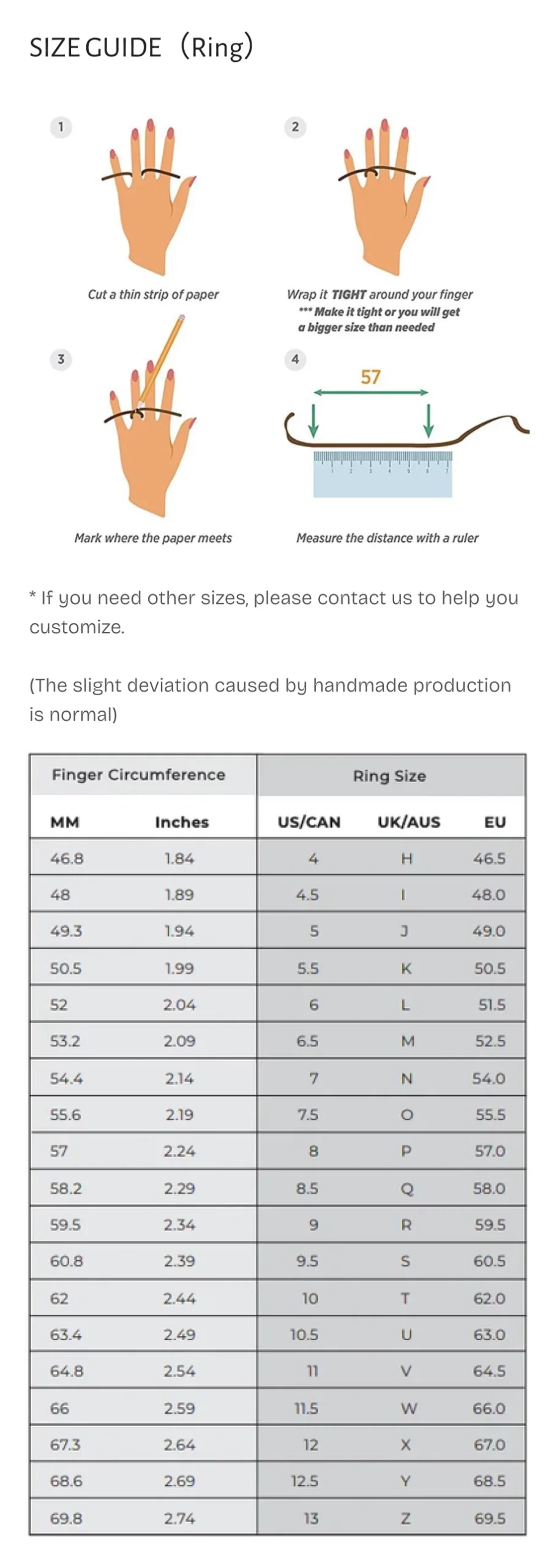 Ring Size Guide - How to Measure Finger Size at Home[/caption]
[caption id="attachment_17325" align="aligncenter" width="912"]
Ring Size Guide - How to Measure Finger Size at Home[/caption]
[caption id="attachment_17325" align="aligncenter" width="912"]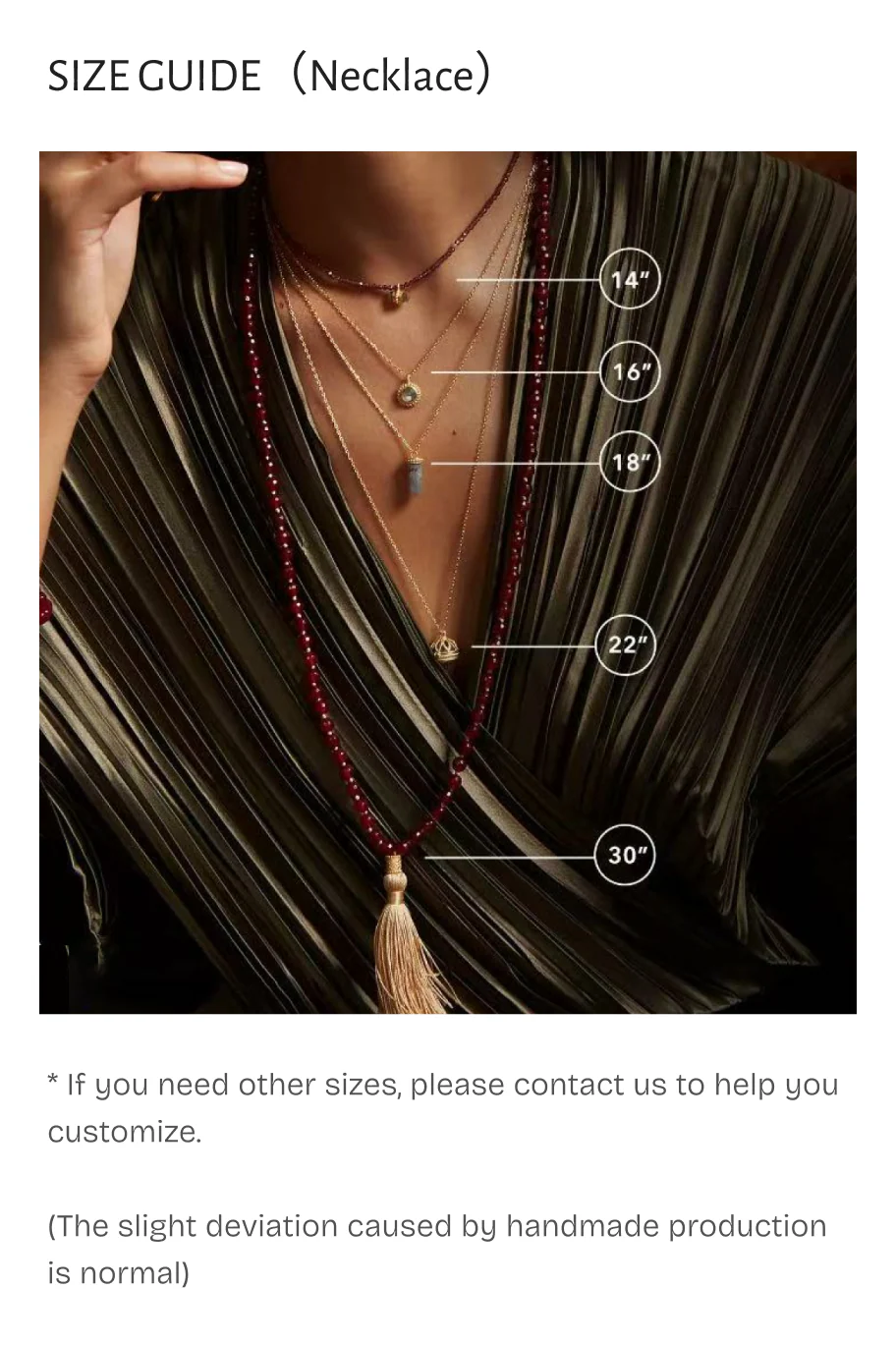 Necklace Length Size Guide Chart - 14 16 18 22 30[/caption]
You’ve probably encountered meditation bells before. But most people have never held a pair cast with every syllable of the most sacred mantra in Tibetan Buddhism — and felt what white copper does to sound the moment the two cymbals meet. These aren’t display props. They’re functional ritual objects carrying 1,400 years of contemplative tradition.
The Sacred Sound of Compassion in Your Hands
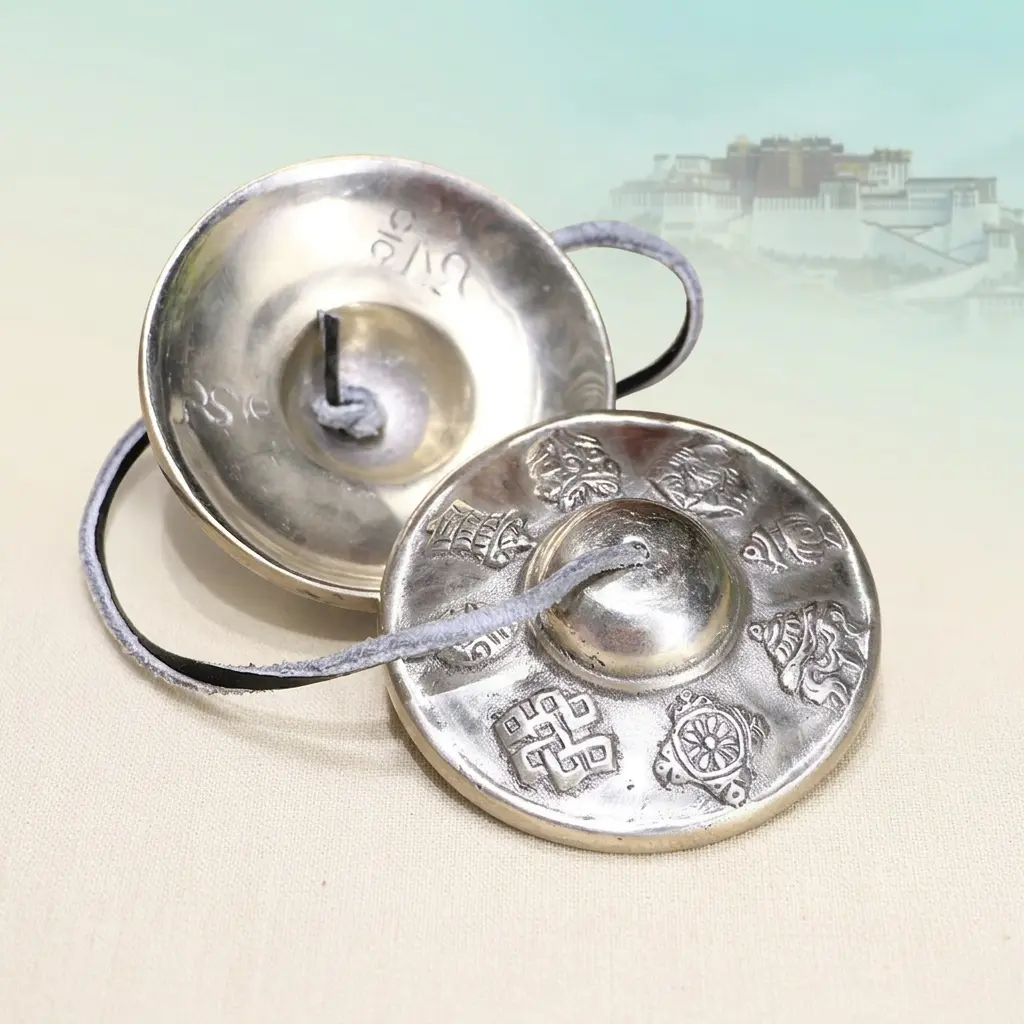
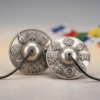
At PotalaStore, every tingsha we offer begins with one commitment: sound quality that honors the tradition it comes from. This pair is cast from white copper — a zinc-copper alloy that produces a brighter, longer-lasting tone than standard brass. Strike the two cymbals together and the resonance continues for several seconds, giving your mind a clean focal point as you settle into stillness.
At 220g and 6.5cm diameter, this pair sits at the exact weight and size that meditators consistently rate as *full-sounding yet portable*. That weight isn’t coincidence — it’s physics. Heavier metal walls mean richer overtones and less dampening after the strike.
“The sound of the tingsha marks the threshold between ordinary mind and meditative awareness.”
Why White Copper Creates Superior Resonance
Most tingshas on the market use standard brass. PotalaStore’s Six True Words bells use white copper — and the difference is immediately audible. White copper (a copper-zinc-nickel alloy, sometimes called Tibetan silver) delivers:
- A brighter, higher-pitched tone with cleaner harmonic overtones — ideal for upper chakra work
- Extended sustain — the ring continues well after the strike, maintaining meditative focus without constant re-striking
- A silver-tone finish that resists tarnishing better than brass, staying beautiful through years of daily practice
- Greater resonant density from the 220g weight — not the thin ping of lightweight alternatives
If you’ve ever been disappointed by hollow-sounding tingshas, material composition is why. White copper is rare in this product category — most sellers don’t disclose their alloy. We do, because it matters.
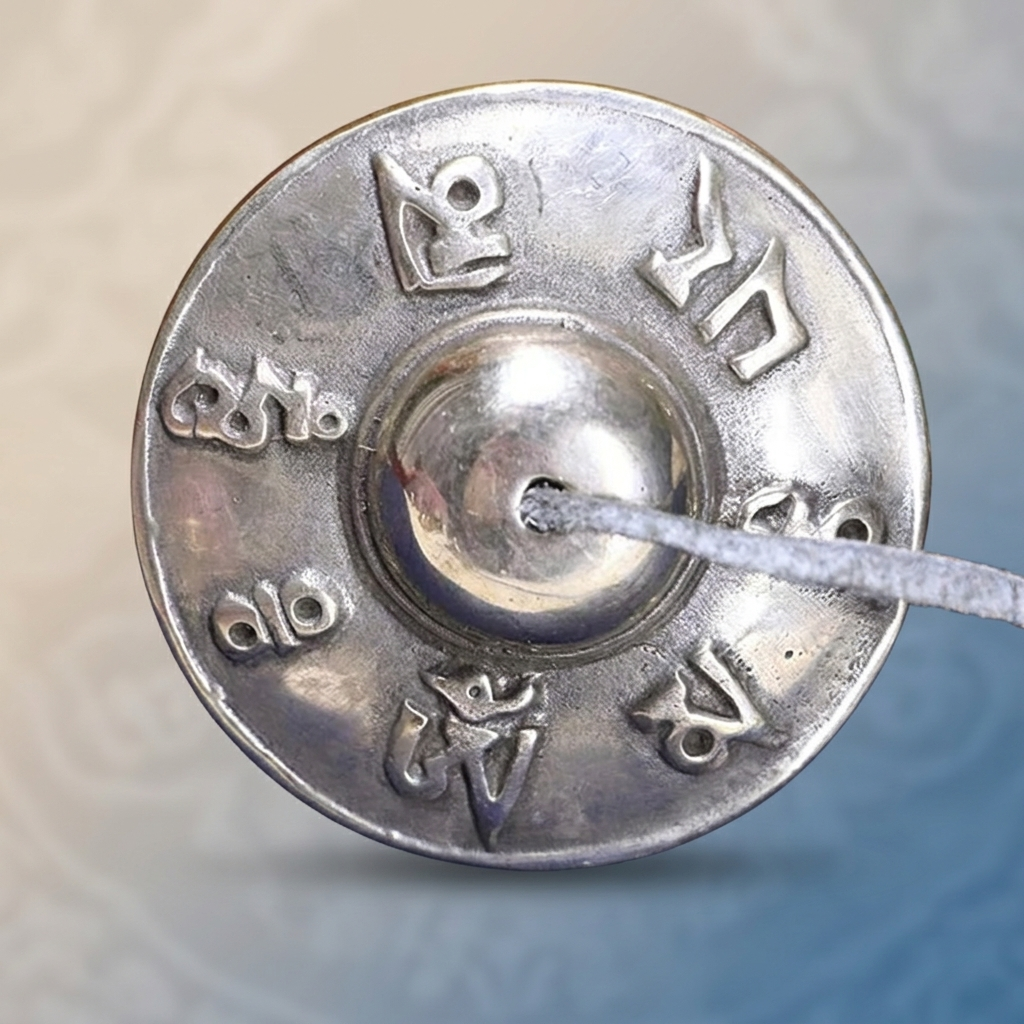
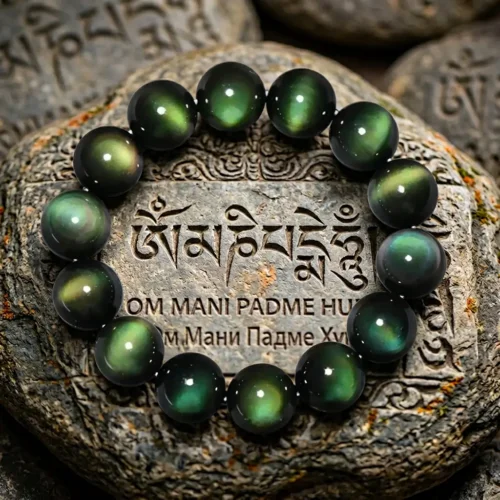
Om Mani Padme Hum — The Six Syllables That Purify Six Realms
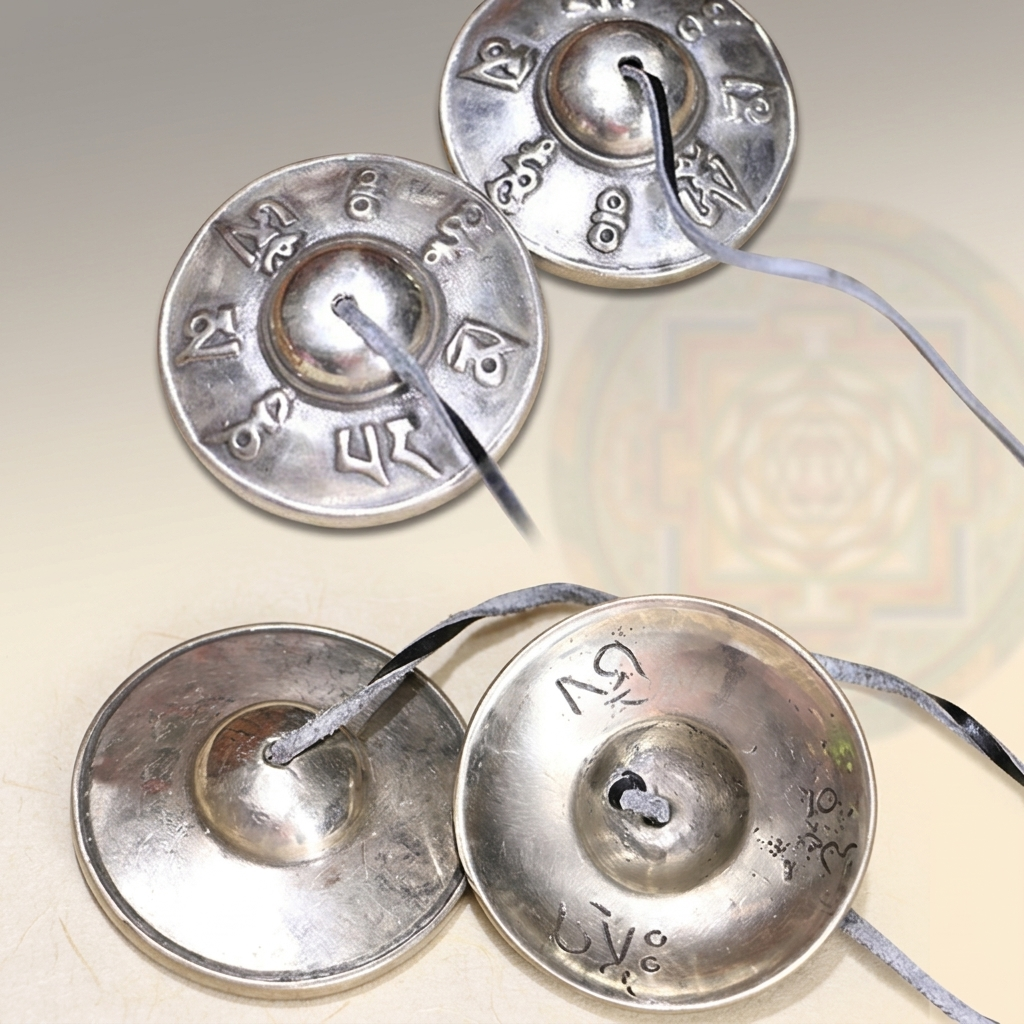
One face of each bell bears the six Tibetan syllables of the most widely recited mantra in all of Buddhism. This is not decorative text. Each syllable purifies one realm of existence and embodies one of the six perfections (paramitas) on the path to awakening:
Known in Chinese Buddhism as the Six True Words (六字真言), this is the mantra of Avalokiteshvara — the Bodhisattva of Compassion. When you strike these bells at the beginning of your practice, you’re doing more than producing sound. You’re invoking a living tradition encoded in six syllables over fourteen centuries.
Eight Auspicious Symbols — Complete Blessings on Every Bell
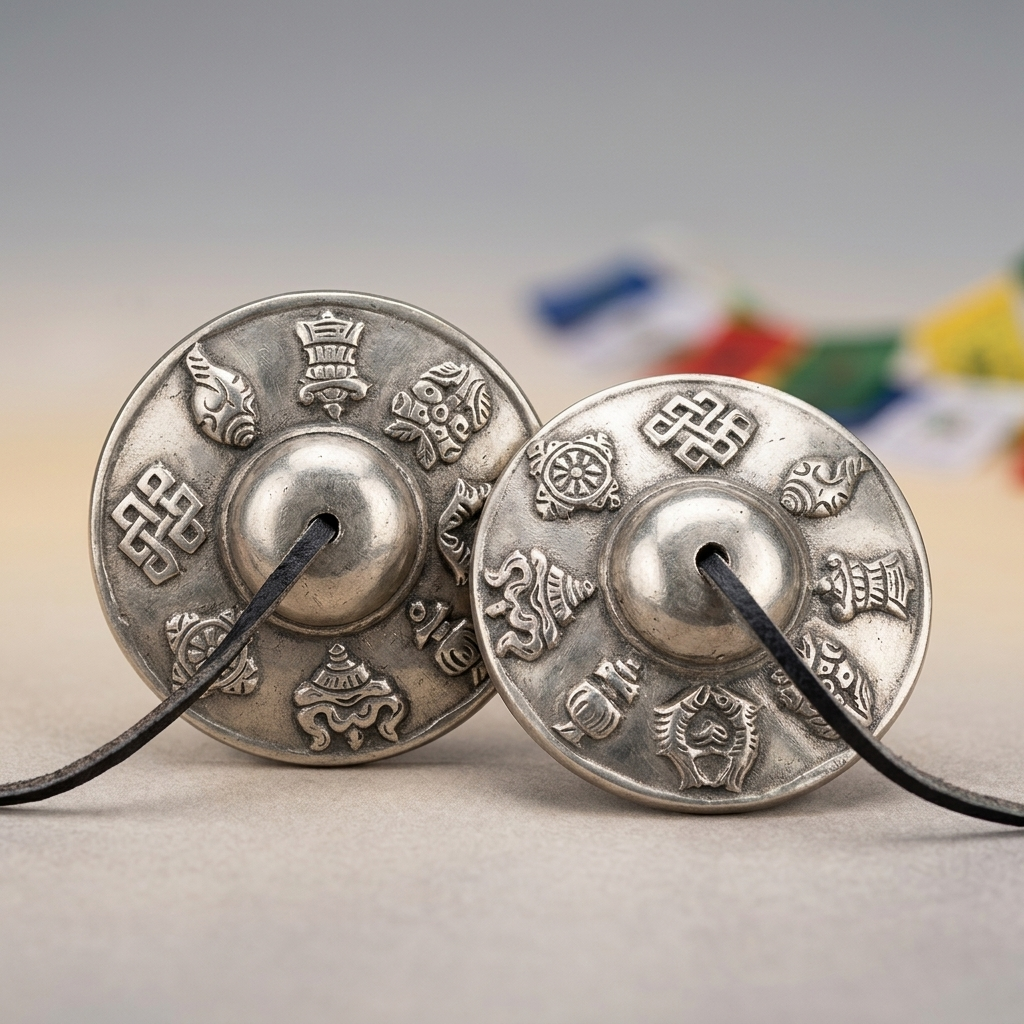
Turn the bell over and you’ll find the Ashtamangala — the Eight Auspicious Symbols of Tibetan Buddhism — arranged around the central dome. Each symbol carries specific protective and aspirational meaning:
- Precious Parasol — protection from harm and the suffering of all living beings
- Pair of Golden Fishes — abundance, fearlessness, and liberation from suffering
- Treasure Vase — inexhaustible wealth, good health, and long life
- Lotus Flower — purity of body, speech, and mind; spiritual awakening
- Right-Turning Conch Shell — the far-reaching sound of Dharma awakening beings from ignorance
- Endless Knot — the interdependence of wisdom and compassion; no beginning, no end
- Victory Banner — triumph over the four maras and all obstacles to practice
- Dharma Wheel — the Buddha’s teaching and the path to liberation
Having both the Six True Words mantra and all Eight Auspicious Symbols on a single pair is uncommon. Most tingshas carry one or the other. This combination makes these bells spiritually complete — covering both mantra recitation and symbol veneration traditions in a single object.
Five Ways to Use Your Tingsha Bells
Open & Close Meditation
Strike once to signal your mind to settle. Strike again to close. This simple ritual trains your nervous system to enter calm states faster over time.
Sound Healing & Chakra Work
White copper’s high, clear frequency corresponds to upper chakra work — throat, third eye, crown. Hold the strap loosely and let the vibration ring freely.
Space Clearing
Walk through each room slowly, striking every few feet. The resonant frequency shifts the atmosphere of any space — practically and intentionally.
Yoga Class Transitions
Used by instructors to signal savasana, transitions between sequences, or attention — without the harshness of verbal interruption.
Crystal & Altar Cleansing
Hold crystals near the vibrating bells. The sound frequencies are traditionally used to refresh the energetic charge of sacred objects on your altar.
Product Specifications
| Material | White Copper (Tibetan Silver tone, zinc-copper-nickel alloy) |
| Design — Face A | Om Mani Padme Hum — Six True Words (Tibetan script) |
| Design — Face B | Eight Auspicious Symbols (Ashtamangala) |
| Diameter | 6.5 cm |
| Thickness | 0.3 cm |
| Weight | 220 g (full pair) |
| Cord / Strap | Included (leather strap) |
| Set Includes | 1 Pair of tingsha bells |
| Brand | PotalaStore |













































Customer Reviews
Only logged in customers who have purchased this product may leave a review.
Reviews