

Curious about feng shui jewelry but running into conflicting advice, vague seller claims, or rules that seem to contradict each other? You’re not alone. After years of sourcing monastery-blessed pieces through active partnerships with Sera Jhe and Kopan monasteries, our team at PotalaStore has fielded thousands of questions from first-time buyers and longtime practitioners alike. Below are direct answers to the 15 most important questions — from which hand to wear your bracelet on, to why a genuine consecration matters more than most sellers will tell you.
⚠️ Important Note: The spiritual and energetic properties described in this guide reflect traditional feng shui beliefs and Buddhist practice, not scientific evidence. This content is for educational and cultural purposes only and should not replace professional medical or psychological advice.
1. What Is Feng Shui Jewelry and How Does It Work?
Feng shui jewelry refers to wearable pieces — bracelets, necklaces, rings, and earrings — intentionally chosen for their stones, symbols, and materials to interact with Qi (氣), the life force energy at the core of feng shui practice. By selecting crystals and symbols that align with the Five Elements (Wood, Fire, Earth, Metal, and Water), this jewelry is traditionally believed to support specific life intentions: wealth, protection, love, or health.
The underlying principle is elemental resonance. Each stone carries a specific energetic signature tied to one of the Five Elements. When you wear a piece that aligns with your personal energy and stated intention, the jewelry acts as a wearable anchor — a daily physical reminder of what you’re cultivating, and traditionally believed to amplify the flow of supportive Qi in your direction.
2. Does Feng Shui Jewelry Really Work?
Whether feng shui jewelry “works” depends on how you define the question. From a scientific standpoint, no peer-reviewed research confirms measurable energetic effects from crystals or amulets. From a cultural, psychological, and traditional perspective, the picture is more nuanced.
Wearing an intentionally chosen piece creates a consistent daily ritual — and ritual is one of the most well-documented mechanisms for reinforcing focus, motivation, and emotional alignment. Centuries of practitioners across China, Tibet, and Southeast Asia have incorporated feng shui accessories into their lives with meaningful results. What the jewelry does with near-certainty: it anchors intention in a physical form you carry with you. What it may or may not do: alter external circumstances independent of your own action and mindset. Treat it as a powerful tool for intentionality, not a replacement for it.
3. How Do Feng Shui Accessories Differ From Regular Crystal Jewelry?
The core difference is intentionality, tradition, and application — not the stones themselves. Regular crystal jewelry might use identical materials (rose quartz, amethyst, black obsidian) but selects them for aesthetic appeal or general “positive energy.” Feng shui jewelry applies a specific analytical framework: elemental theory, bagua (八卦) directional alignment, and often personal birth chart data — BaZi (the Four Pillars of Destiny) — to match a piece to your unique energetic profile and life intention.
A generic rose quartz bracelet is chosen because it “promotes love.” A feng shui rose quartz piece is chosen because rose quartz carries Earth element energy, activates the Southwest bagua sector (the Relationship area), and complements specific birth-year elements. The difference isn’t in the stone — it’s in the depth of the tradition and the precision of the selection.
4. Should Feng Shui Jewelry Be Blessed or Consecrated?
In traditional feng shui and Buddhist practice, yes — formal consecration is what transforms decorative jewelry into an activated spiritual tool, not the stones alone. The Chinese term kai guang (开光), meaning “opening the light,” and the Tibetan Buddhist rab gnas ceremony are structured ritual blessings that go far beyond a seller “charging” a piece with intention in their warehouse.
At PotalaStore, every piece undergoes a 3-day puja ceremony at Sera Jhe Monastery in Bylakuppe, South India — one of Tibet’s Three Great Seats of Gelug Buddhist learning, home to over 4,500 ordained monks. Led by senior Geshes and the Monastery Abbot, the ceremony includes mantra recitation, five traditional offerings, and closes with merit dedication to all sentient beings — a key distinction from self-focused “manifestation blessing” rituals. In Buddhist understanding, this dedication of punya (merit) to all beings is what gives the consecration its full karmic weight.
Our founder Yang Tso, who received her Tibetan name from an elder during her first years working with Himalayan communities, has always been direct about this: un-blessed feng shui jewelry is primarily beautiful jewelry. The consecration is what activates it. Most sellers skip this step entirely. Knowing who didn’t is worth considering before you buy.

🙏 Every piece at PotalaStore carries a verifiable monastery blessing. Browse the monastery-blessed collection →
5. What Are the Best Feng Shui Stones for Attracting Wealth?
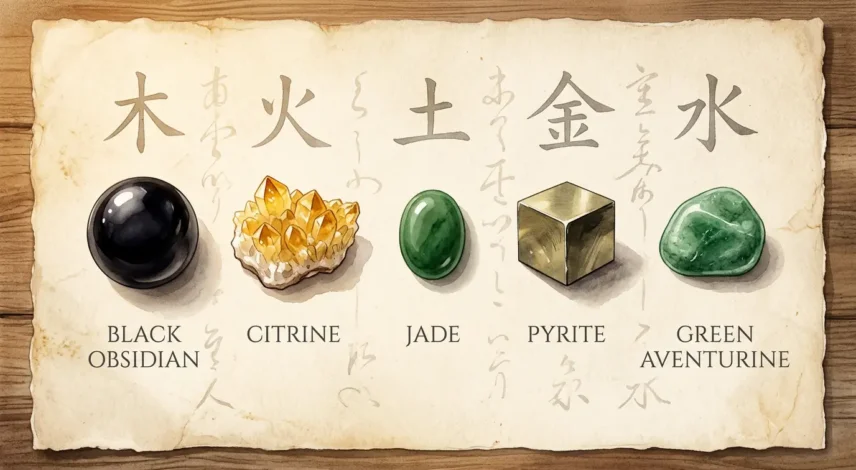
Five stones consistently appear at the center of feng shui wealth practice, each targeting a different dimension of abundance through elemental alignment.
| Stone | Feng Shui Element | Wealth Association |
|---|---|---|
| Black Obsidian | Water | Clears financial blockages; draws wealth Qi while absorbing negative energy — traditionally paired with Pixiu for maximum effect |
| Citrine | Earth | The “Merchant’s Stone” — activates Earth element energy for financial confidence; traditionally placed in cash registers and worn by business owners |
| Jade (nephrite or jadeite) | Wood | The most revered Chinese prosperity talisman; jade activates Wood element growth energy and represents enduring, generational abundance |
| Pyrite | Earth | Known as “Fool’s Gold,” pyrite activates Earth element stability and draws material prosperity; particularly effective for career wealth goals |
| Green Aventurine | Wood | Activates Wood element energy for new financial opportunities and lucky openings; often called the “Stone of Opportunity” in feng shui tradition |
For direct wealth attraction, black obsidian paired with a Pixiu charm is the most widely used combination in Chinese feng shui practice. Citrine works particularly well for entrepreneurs and those in sales or creative business. Both benefit significantly from a formal consecration — their traditional function relies on being properly activated.
6. Which Spiritual Accessories Support Love and Relationships?
Rose quartz is the foundational feng shui love stone, associated with the Southwest bagua sector — the Relationship corner that governs romantic partnerships, marriage, and emotional harmony. Rose quartz (a pink variety of quartz) is traditionally believed to open the Heart area energetically, dissolve emotional barriers, and attract compassionate, balanced connections.
Beyond rose quartz, several feng shui love symbols carry strong tradition behind them:
- Mandarin Duck charm or pendant: In Chinese culture, these birds mate for life. A Mandarin Duck piece is the most auspicious feng shui symbol for romantic partnership and marital fidelity.
- Green Aventurine: Activates Wood element growth energy — which governs the development of relationships alongside career and finances.
- Double Happiness Symbol (囍): Worn as a pendant, this classic Chinese character draws mutual joy and partnership Qi.
- Rhodochrosite: Less common but prized in feng shui practice for attracting a soul-level romantic connection.
Wear love-intention jewelry on your left (receiving) wrist to draw relationship energy inward — consistent with the foundational left/right feng shui wearing principle explained in Question 9.
7. What Does a Pixiu Bracelet Mean and How Does It Attract Wealth?
The Pixiu (貔貅) is a mythical Chinese chimera — part dragon, part lion — traditionally believed to devour wealth from all directions without ever releasing it, making it one of the most powerful feng shui wealth symbols in existence. Western interest in Pixiu bracelets has surged over 210% since early 2024, reflecting rapidly growing awareness of this ancient talisman.
The legend: Pixiu is the ninth son of the Dragon King. After defying the Jade Emperor, he was punished — his bottom was permanently sealed shut. The creature can take in wealth endlessly but cannot let it escape. Feng shui practitioners have worn Pixiu jewelry for centuries precisely because of this mythology: it attracts financial abundance and refuses to let it leave.
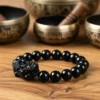
The Pixiu bracelet pairs most powerfully with natural black obsidian beads, which provide protective energy to guard the wealth the Pixiu attracts. This combination — obsidian absorbing negative financial energy while Pixiu draws positive wealth Qi — is the most traditional pairing in the Chinese feng shui canon.
For full activation steps, wearing rules, and common mistakes: How to Wear a Pixiu Bracelet Correctly for Wealth & Protection.
8. How Do I Choose Feng Shui Jewelry for My Zodiac Sign or Birth Element?
In Chinese metaphysics, your birth year determines your dominant element — and the most effective feng shui stones are those that strengthen or harmonize with that element.
| Birth Element | Chinese Zodiac Signs | Recommended Feng Shui Stones |
|---|---|---|
| Wood | Tiger, Rabbit | Green Aventurine, Jade, Malachite |
| Fire | Horse, Snake | Carnelian, Red Jasper, Garnet |
| Earth | Dragon, Dog, Ox, Goat | Citrine, Tiger’s Eye, Yellow Jasper |
| Metal | Monkey, Rooster | Clear Quartz, Hematite, White Jade |
| Water | Rat, Pig | Black Obsidian, Lapis Lazuli, Aquamarine |
For a more precise match, a full BaZi chart (Four Pillars of Destiny) calculates your elemental balance across birth year, month, day, and hour. A BaZi reading reveals which elements are deficient in your chart — and those are the elements your feng shui jewelry should prioritize, not just your zodiac year element alone.
As a starting point, the zodiac table above gives you a reliable foundation. Pair any stone from your element column with a corresponding feng shui intention and you’re working within the tradition correctly.
9. Which Hand Should I Wear My Feng Shui Bracelet On — Left or Right?

The traditional feng shui rule is: left hand to receive, right hand to release. The left hand is considered the “receptive” channel — it draws external energy inward, making it the correct wrist for wealth-attraction bracelets (citrine, jade, Pixiu). The right hand releases energy outward, which is why black obsidian — used to expel and repel negative energy — is traditionally worn on the right wrist.
| Hand | Energy Direction | Wear These Stones Here |
|---|---|---|
| Left (Receiving) | Draws energy inward — attracts wealth, love, blessings | Citrine, Jade, Rose Quartz, Pixiu bracelet, Green Aventurine |
| Right (Releasing) | Expels energy outward — protects, repels negativity | Black Obsidian, Black Tourmaline, Hematite |
If you’re left-handed, some practitioners suggest wearing on the non-dominant hand regardless. In most traditional interpretations, the elemental left/right principle overrides hand dominance. When in doubt, follow the table above — it reflects the majority consensus across Chinese feng shui texts. For a broader guide on selecting your first bracelet: How to Choose and Wear a Feng Shui Bracelet for Good Luck.
10. Can I Wear Multiple Feng Shui Bracelets at the Same Time?
Yes — layering feng shui bracelets, often called “stacking,” is widely practiced and can be effective when the stones carry complementary elemental energies. The key is understanding how the Five Elements interact.
Avoid pairing wealth-attraction stones with protection-expulsion stones on the same wrist: citrine draws energy in while black obsidian pushes it out, creating directional conflict when worn together on the left hand. A well-balanced stack typically pairs 2–3 stones from the same element or adjacent elements in the generative cycle. The classic combination — black obsidian (Water) on the right wrist, citrine (Earth) on the left — works precisely because they serve different functions on different sides. Earth and Water operate sequentially in the elemental cycle, not in opposition. We’ve seen many customers successfully wear a Pixiu bracelet alongside a jade bead bracelet on the left wrist, both aligned to the Wood-Water wealth-attraction direction.
11. Can I Sleep, Shower, or Exercise While Wearing Feng Shui Jewelry?
Traditional feng shui and Buddhist practice both recommend removing your jewelry during sleep, bathing, and sexual activity — for preservation of the piece and respect for the energy it holds.
During sleep, your body enters a deep yin resting state; wearing active feng shui pieces is believed in many traditions to disrupt that restorative cycle. Practically speaking, elastic bands weaken faster when worn 24 hours a day. During showering, water damages softer stones (selenite, pyrite, malachite, amber) and accelerates deterioration of metal findings. Regular sweat exposure — from exercise — creates acidity that erodes stone surfaces over months.
When you remove your jewelry at night, place it in a dedicated pouch or small tray facing your main door. This is believed to keep the piece energetically active and aligned with your home’s wealth-receiving direction while you rest. It’s a small ritual that takes ten seconds and extends the life of your piece considerably.
For a full breakdown of what happens when things go wrong: Feng Shui Bracelet Side Effects: What You Should Know.
12. How Do I Wear a Pixiu Bracelet Correctly?

Five specific wearing rules govern the Pixiu bracelet, each rooted in the creature’s mythology and its role as a dedicated wealth guardian.
- Face the head outward: The Pixiu’s head must point toward your pinky finger (away from your body), so it hunts wealth from the outside world and brings it back to you. A Pixiu facing inward is believed to direct its energy the wrong way.
- Don’t touch its eyes or mouth: The eyes spot wealth opportunities; the mouth devours them. Touching these areas is believed to confuse the creature’s function and dull its effectiveness.
- Stroke the body regularly: Running your thumb across the Pixiu’s back and sides “wakes it up” and strengthens the bond between owner and talisman. This is considered an essential part of keeping it active.
- Keep it personal: Your Pixiu is energetically attuned to you. If someone else handles it, rinse the bracelet briefly under clean running water to re-establish your connection before wearing it again.
- Remove at night: Place it in your living room facing the main entrance, or in the Southeast sector of your home (the traditional feng shui wealth corner), while you sleep.
See our complete guide for activation steps and additional rules: How to Wear and Activate a Pixiu Bracelet.
13. How Do I Activate and Cleanse My Feng Shui Jewelry?
Activation sets your intention into the piece; cleansing removes accumulated energy — both are ongoing practices, not one-time rituals. Cleanse a new piece before wearing it for the first time, then every 2–4 weeks depending on how often you wear it and what environments you move through.
Six effective cleansing methods:
- Full Moonlight: Place your jewelry outside or on a windowsill overnight during the full moon. Suitable for all stones; considered the gentlest and most thorough method.
- White Sage Smudging: Pass the piece through sage smoke for 30 seconds while silently setting your intention. Clears stagnant energy quickly.
- Tibetan Singing Bowl: Rest the piece beside or inside a bowl and play for 1–2 minutes. Sound vibration breaks up accumulated energetic residue — the method most commonly used at our monastery partner sites.
- Selenite Plate: Rest the jewelry on a raw selenite slab overnight. Selenite self-cleanses while simultaneously charging other stones placed on it.
- Running Water: Hold briefly under cool running water for 30 seconds. Avoid for soft or porous stones: selenite, pyrite, malachite, amber, and calcite.
- Morning Sunlight: 15–20 minutes in early morning sun recharges most stones. Avoid for color-sensitive stones: amethyst, citrine, and rose quartz fade with prolonged sun exposure.
To activate a cleansed piece: hold it in both hands, breathe slowly three times, and state your intention aloud or clearly in your mind — specifically and personally (for example: “I wear this to attract financial opportunities aligned with my work and values”). Visualization can strengthen this, but clarity of intention is what matters most.
14. What Does It Mean When My Feng Shui Bracelet Breaks?
In feng shui tradition, a bracelet breaking is widely interpreted as a sign the piece absorbed a significant negative energy event on your behalf — completing its protective cycle rather than letting that energy reach you. This is considered a mark of the bracelet doing its job, not a bad omen.
The Buddhist concept of anicca — impermanence, one of the Three Marks of Existence — provides a deeper frame: all compounded things eventually dissolve. A bracelet that breaks has fulfilled its purpose. The energy it accumulated has been released, and the cycle is complete.
Traditional disposal: wrap the broken pieces in red cloth (red is a protective, auspicious color in Chinese tradition) and bury them in the earth rather than discarding them in the trash. This returns the energy respectfully to the ground. Then begin fresh with a cleansed replacement piece, setting a new intention from a clear starting point.
We’ve written in depth about this experience and what to do next: What It Means When Your Buddhist Bracelet Breaks.
15. Can I Mix Feng Shui Jewelry With Other Spiritual Symbols Like the Evil Eye?
Yes — when you understand what each symbol does and how the traditions relate to each other. The evil eye (Nazar) is a protective talisman from Mediterranean and Middle Eastern tradition, designed to deflect malicious intent directed at you by others. A Pixiu bracelet attracts wealth Qi from external sources. These two functions — deflecting external harm and drawing external abundance — are not contradictory; they operate in different spiritual dimensions.
In practice, many practitioners combine these intentionally: feng shui wealth pieces on the left (receiving) wrist, protective evil eye pieces on the right (releasing) wrist. This keeps intentions clear and directionally aligned. The more important principle is intentional clarity: know what each piece represents and what role you’re asking it to play. Layering traditions without understanding them creates confusion — not in any external force, but in your own intention, which is where all of this begins.
Cross-tradition practice is not only acceptable but historically grounded. The Tibetan Buddhist tradition itself is deeply cross-cultural — and the feng shui tradition has always evolved through the movement of ideas between civilizations. There is no rule that prevents combining a Tibetan Buddhist mala with a Chinese feng shui bracelet and a Mediterranean Nazar charm, provided you carry each with clarity and respect for its origin.
Every PotalaStore Piece Is Monastery-Blessed — Not Just “Charged”
Each bracelet, mala, and pendant in our collection undergoes a formal 3-day puja ceremony at Sera Jhe Monastery, led by ordained monks and senior Geshes — not a warehouse ritual. Founded by Yang Tso through years of direct Himalayan monastery partnerships, PotalaStore was built on a single belief: authentic feng shui jewelry starts with a real blessing.Shop Monastery-Blessed Feng Shui Jewelry →
10% of every purchase supports Sera Jhe Monastery’s community and educational programs.
📚 References
- Feng Shui — History, Philosophy, and Five Elements: Overview of feng shui’s classical origins, directional energy theory, and elemental framework. Encyclopædia Britannica — Feng Shui
- Jade in Chinese Culture and History: Cultural and historical significance of jade as a protective talisman and prosperity symbol across Chinese civilization. The Metropolitan Museum of Art — Jade in Chinese Culture
- Buddhist Puja and Consecration Ceremonies: Overview of Buddhist blessing rituals, their traditional structure, and their role in activating sacred objects. Encyclopædia Britannica — Puja (Hinduism and Buddhism)
- Gemstone Properties and Identification: Reference standards for the natural stones most commonly used in feng shui jewelry, including obsidian, jade, citrine, and quartz varieties. Gemological Institute of America (GIA) — Gem Encyclopedia