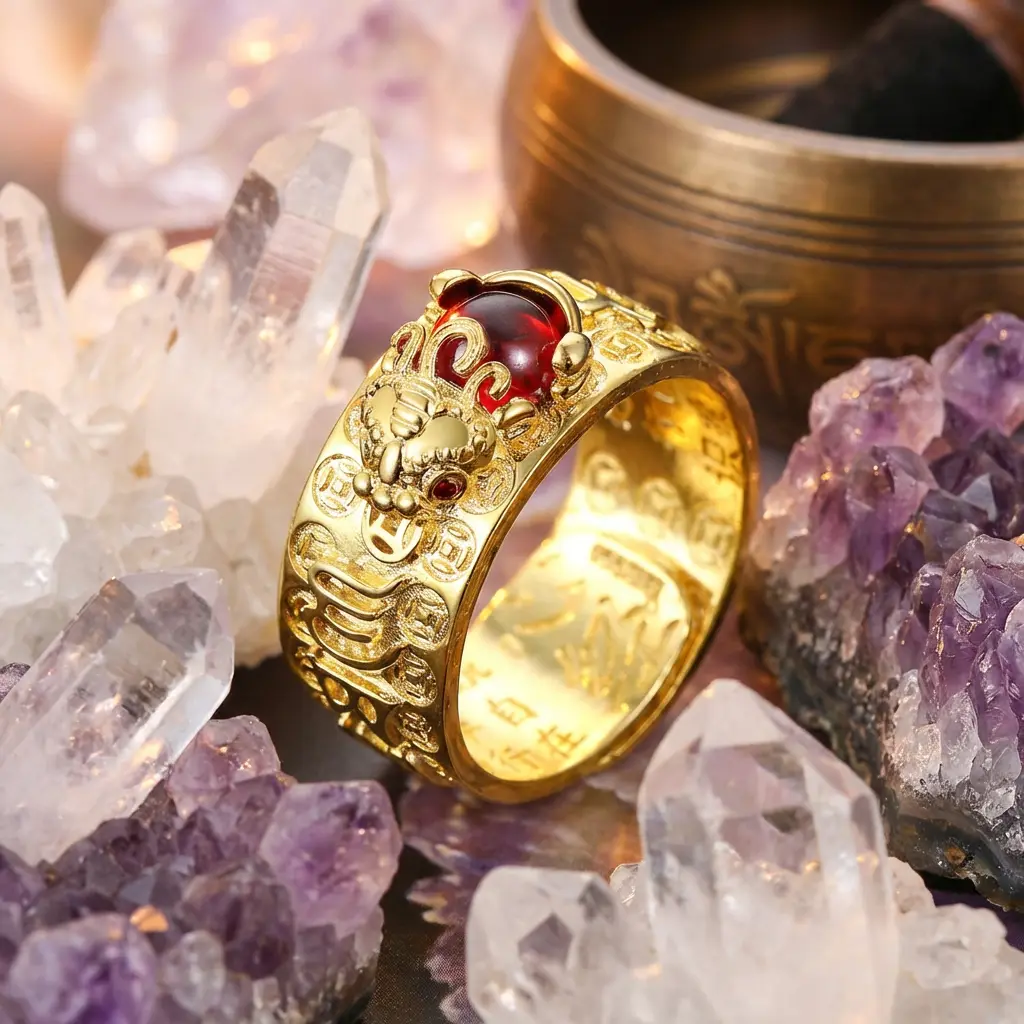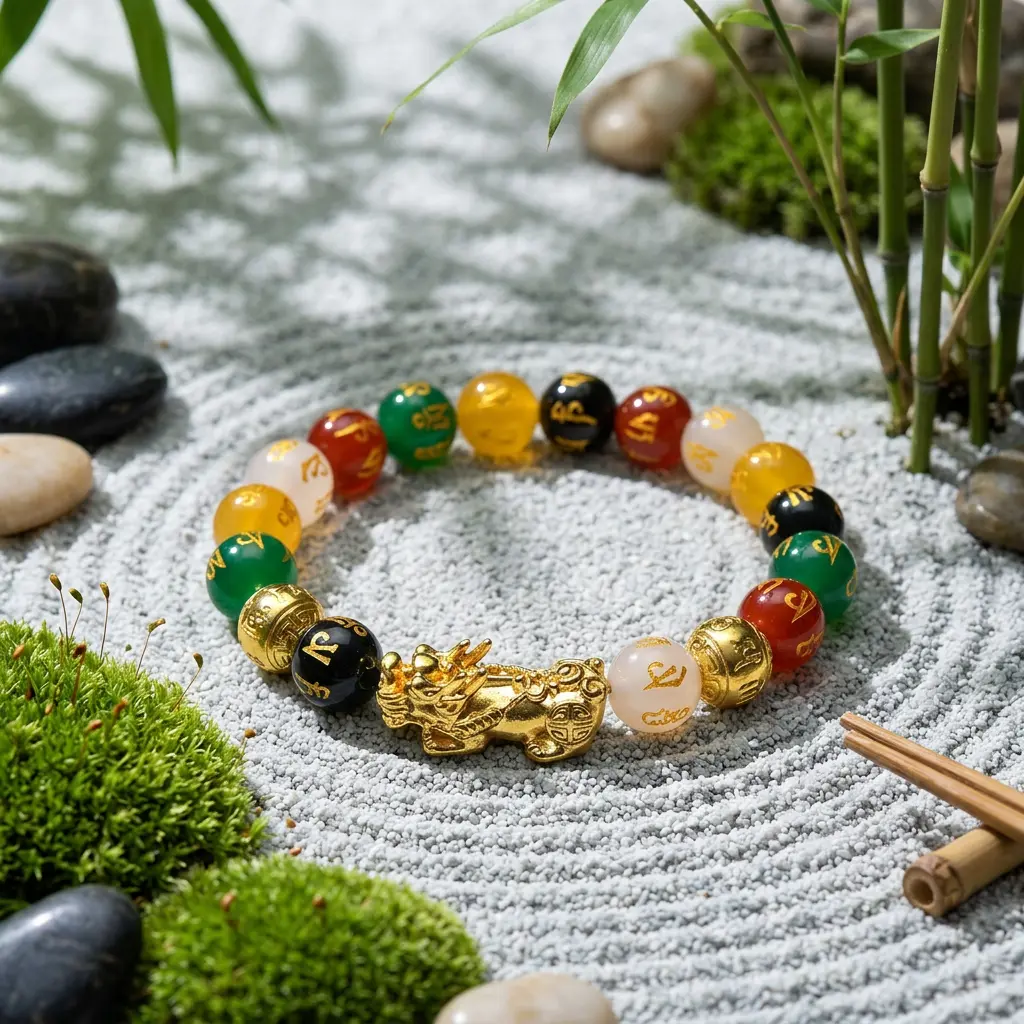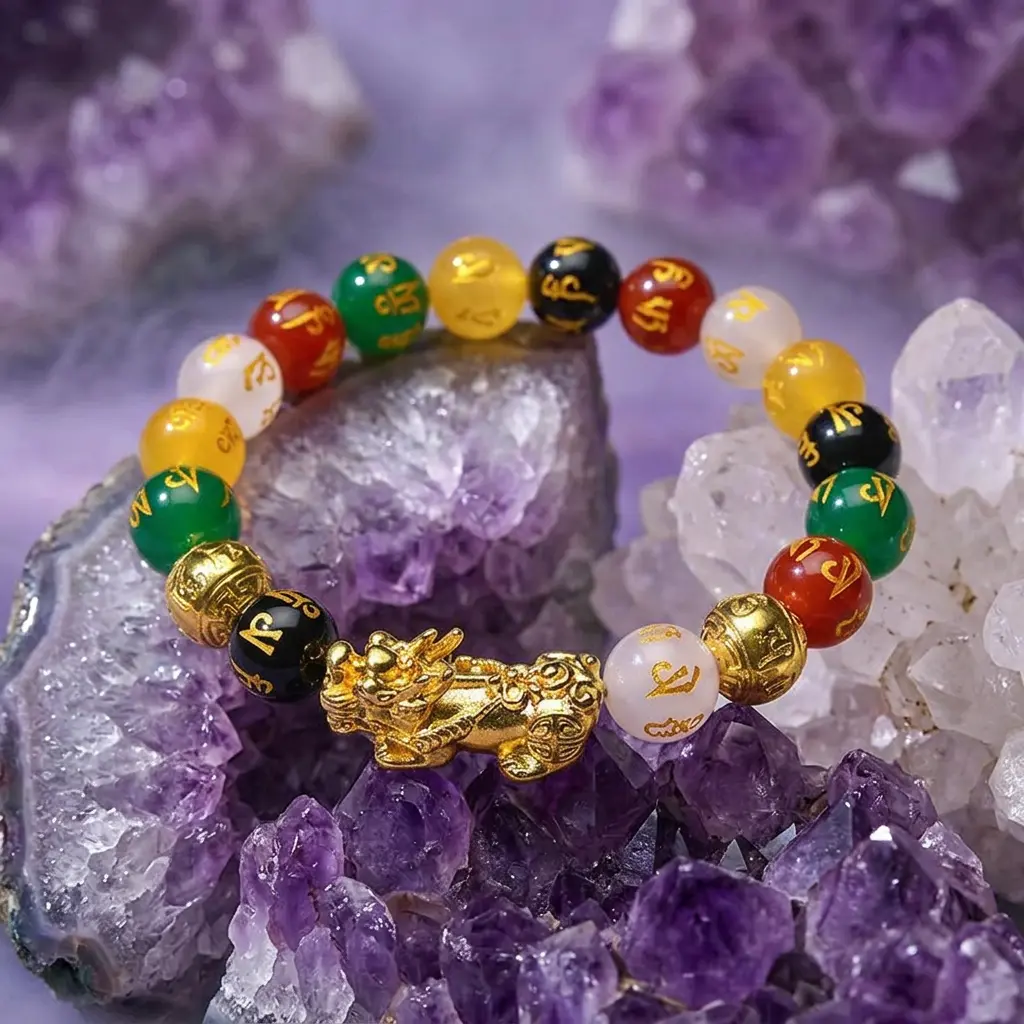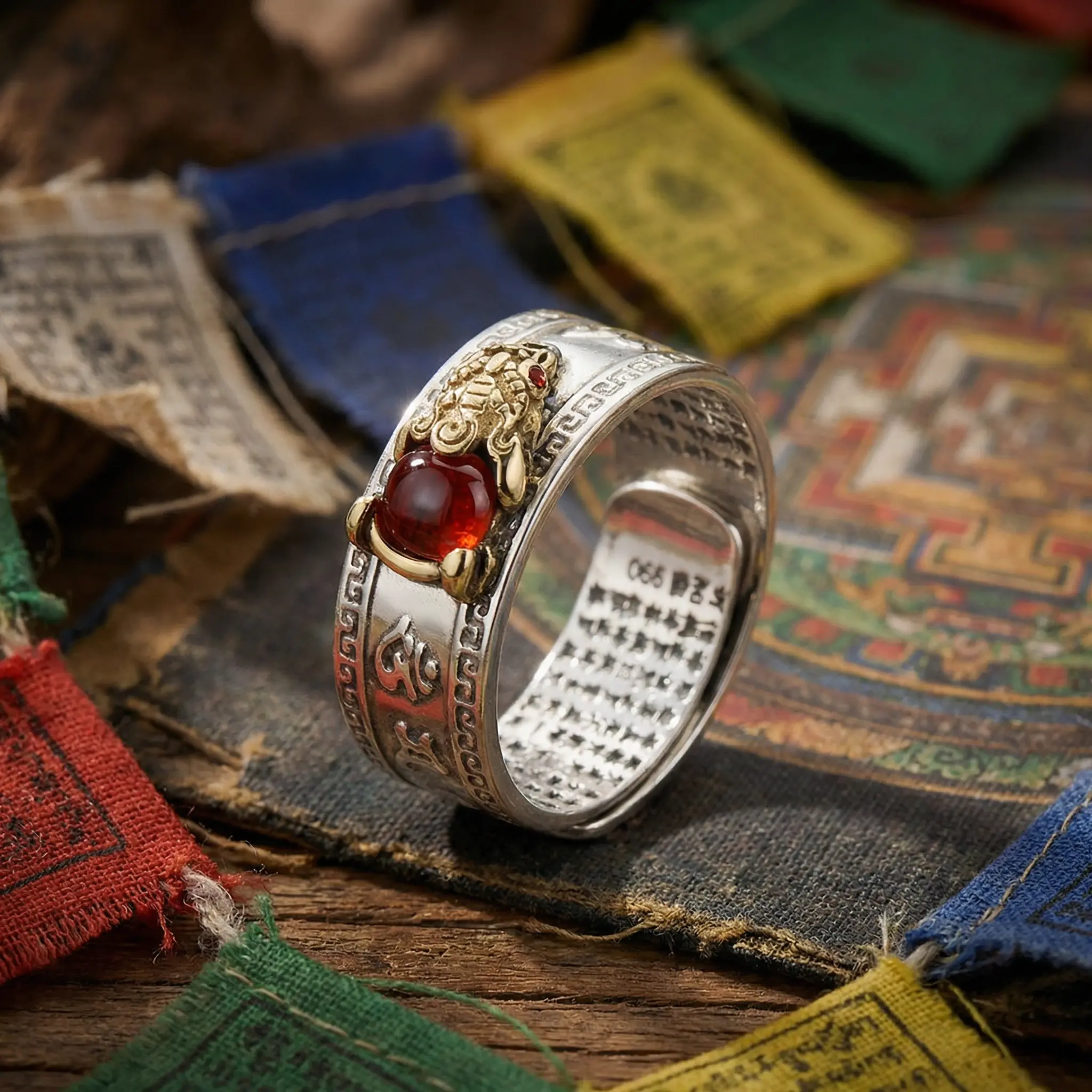

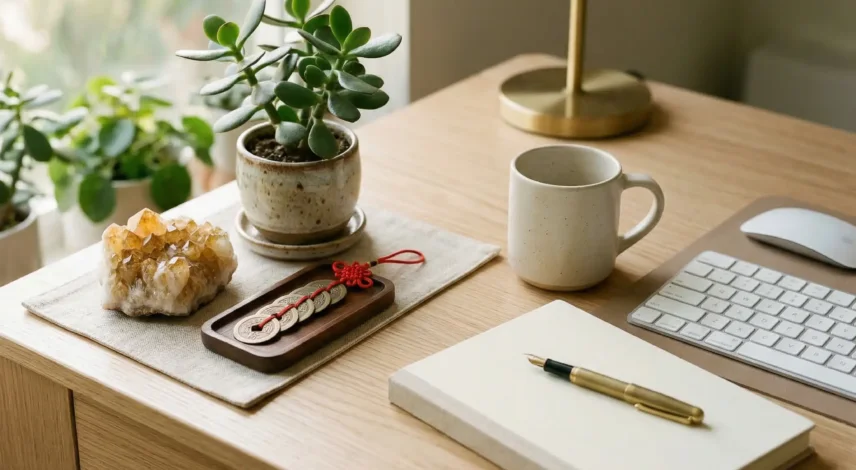

If your office feels stagnant — projects stalling, opportunities slow, or motivation hard to find — a feng shui abundance altar can help redirect energy toward financial flow and professional momentum. You don’t need an entire room, a complete renovation, or even permission from your facilities manager. A 6–12 inch arrangement on your desk, placed in the right position, is all it takes to get started.
At Potala Store, we’ve spent years working directly with Tibetan monasteries — including Sera Jhe and Kopan — to understand how sacred objects interact with intentional space. That knowledge translates directly to desk-level feng shui. In this guide, we’ll walk you through exactly how to find your wealth corner, which items to choose, and how to activate your altar so it actually does something beyond looking decorative.
The core answer: a workspace abundance altar combines five categories of objects — crystals, plants, prosperity symbols, a water element, and an intention anchor — placed in your wealth corner (the southeast area of your room, or the far-left corner when you stand at your door). The whole setup takes about 20 minutes. The daily practice takes 1–3 minutes each morning.
What Is a Feng Shui Abundance Altar — and Can It Work in a Modern Office?
A feng shui abundance altar is a small, intentional arrangement of objects placed in your wealth corner to attract and circulate prosperity energy (chi) — and it works just as well at the office as it does at home. The concept draws from classical feng shui’s understanding that physical objects, placed in alignment with specific energy zones, can amplify the quality of chi in that area of your life.
Most altar guides focus on the home. But the office is actually an ideal location — arguably better. Your workspace is where career energy, financial decisions, and professional relationships are most actively generated. Placing an abundance altar here puts the intention directly in the space where work happens, rather than asking energy to travel from your living room to your job.
There are two schools of thought on how to locate your wealth corner. Classical Feng Shui uses a compass to identify the true southeast sector of your space — this is fixed regardless of where you enter. BTB (Black Tantric Buddhism) Feng Shui, the most widely practiced Western method, uses your entrance as the reference point: stand at the door looking in, and the far-left area is always your wealth zone. Either method works. Classical is more precise; BTB is more practical for most modern offices.
Step 1 — Find Your Wealth Corner at Work
Before placing anything on your altar, you need to identify the exact wealth zone in your workspace.
For your room or office:
- BTB method (recommended for most people): Stand at the main entrance of your office or room, looking inward. The far-left corner — diagonally opposite from where you’re standing — is your wealth corner. In feng shui, this area is associated with the Xun trigram and wood element.
- Classical compass method: Use a compass (your phone’s compass app works). Identify the southeast direction of your room. That sector is your wealth zone under classical feng shui. This is fixed — it doesn’t shift with the door.
- When in doubt, use BTB. It’s more forgiving, easier to apply in irregular spaces, and the method used by most Western practitioners.
For your desk specifically:
If your office layout makes the room-level wealth corner inaccessible (shared space, that corner has a colleague’s desk, etc.), apply the same logic to your desk surface. The upper-left zone of your desk — when you sit facing it — corresponds to the wealth position on the Bagua. A 6–12 inch footprint in that area is enough to establish a functioning desk altar.
| Method | How to Find It | Best For |
|---|---|---|
| BTB (Western) | Stand at entrance → far-left corner | Most modern offices, open plans |
| Classical Compass | Use compass → true southeast sector | Private offices, traditional practice |
| Desk Bagua | Sit at desk → upper-left zone | Cubicles, shared desks, home offices |
Step 2 — Choose Your Altar Items (5 Essential Categories)

A well-balanced abundance altar includes items from five categories: crystals, plants, prosperity symbols, a water element, and a personal intention anchor. You don’t need one of each right away. If you’re just getting started, pick two or three items that feel meaningful to you — that personal resonance matters more than having a complete set on day one.
1. Crystals
Citrine (“the Merchant’s Stone”) in the upper-left desk zone. Also: pyrite, green aventurine, jade.
2. Plants
Jade plant or lucky bamboo. New leaf growth signals active financial energy — a living indicator your corner is working.
3. Prosperity Symbols
Three-legged money frog, Pi Xiu figure, or Chinese coins tied with red string. Choose one to start.
4. Water Element
Small tabletop fountain, a bowl of water with a coin, or an image of flowing water. Water flow should face into the room — not toward a window or wall.
5. Intention Anchor
A handwritten financial goal, a vision card, or a symbol of something you’re working toward. This is the altar’s “why.”
A note on crystals from a sourcing perspective
Not all crystals carry the same energy. Working with Tibetan monasteries for years, we’ve observed that stones sourced with intention and handled respectfully hold a different quality than mass-produced versions. For your wealth corner, we recommend starting with a tumbled or raw citrine — traditionally associated with attracting prosperity and maintaining positive financial flow — or pyrite, believed to strengthen willpower and financial clarity. Explore our feng shui crystal collection for options sourced with this in mind.
Looking for citrine or pyrite to anchor your abundance altar?Browse Prosperity Crystals →
Step 3 — Set Up and Activate Your Abundance Altar (5-Step Process)

Here is the 5-step process to set up and activate your feng shui abundance altar at your office desk:
1
Clear the space first (5–10 minutes). Before placing anything new, clear stagnant energy from your wealth corner. Pass a lit sage bundle or Palo Santo through the area, or ring a singing bowl three times near the corner. If you can’t use smoke at work, a singing bowl or even clapping your hands briskly in the corner breaks up stagnant chi. This step matters — one of the biggest mistakes we’ve seen people make is skipping the clearing and wondering why nothing shifts.
2
Clean and declutter the physical space. Remove anything that doesn’t belong in the wealth corner — old papers, tangled cables, dead plants, or any object associated with stress or past failures. A cluttered altar is a blocked altar. The space should feel open, even if it’s small.
3
Place your items with intention. Arrange your chosen objects in the wealth zone. Put the crystal closest to the center of the arrangement; place the plant toward the back or side so it doesn’t obscure other items; face any symbols (money frog, Pi Xiu) inward toward the room. If using a tabletop fountain, ensure water flows toward the room interior — never facing a wall, window, or door exit.
4
Set your intention (2–3 minutes). Hold your primary crystal or symbol. Take a few slow breaths, then state — silently or aloud — a specific financial or professional intention. The more concrete, the better: “I am open to new client opportunities this quarter” works better than “I want more money.” Write the intention on a small card and place it under the central object.
5
Activate daily (1–3 minutes each morning). Each morning before starting work, take a moment to consciously acknowledge your altar. Touch your crystal, water your plant if it needs it, and briefly re-state your intention. This daily micro-ritual is what separates an active altar from a desk ornament. We initially thought placing the items was enough — it’s not. The daily activation is what keeps the chi circulating.
💡 For space clearing at the office
A Tibetan singing bowl is ideal for workplace clearing — it’s discreet, doesn’t produce smoke, and the resonant tone effectively moves stagnant energy without drawing attention in a shared office.
Adapting Your Altar for Any Workspace: From Cubicle to Corner Office

The most common concern we hear is: “What if I’m in an open office and don’t want this to look unusual to colleagues?” This is a completely valid consideration — and it’s also the gap that most feng shui guides completely ignore. Here’s how to adapt the practice to your actual environment.
| Workspace Type | Recommended Setup | Key Consideration |
|---|---|---|
| Private office | Full altar in wealth corner: plant + crystal + fountain + symbol | Full flexibility — use the room’s wealth corner, not just desk |
| Cubicle or shared desk | Desk-level mini altar (6–12 inches): 1 crystal + 1 small plant | Upper-left desk zone; keep it compact and unobtrusive |
| Open plan / hot desk | Portable kit: 1 tumbled citrine + folded intention card in a small pouch | Take it with you; activate before placing it each time |
| Home office | Full room-level setup with fountain, multiple crystals, and living plant | Most flexibility; apply classical compass for maximum precision |
| Corporate / no-personalization policy | 1 potted succulent + citrine crystal inside a drawer (near the wealth zone) | Internal altar — the intention and placement matter more than visibility |
The professional version of this practice doesn’t require anyone to know what you’re doing. A jade plant in the upper-left corner of your desk, a small polished crystal near your monitor, and a brief morning intention — that’s a fully functional abundance altar that looks like thoughtful desk organization to anyone else.
5 Common Feng Shui Altar Mistakes (and How to Fix Them)
Even a well-intentioned abundance altar can block energy flow if these five mistakes go uncorrected. These are the patterns we see most often:
- Skipping the space clearing before setup. Placing new objects over old, stagnant energy is like painting a wall without primer. Always clear first. If you can’t use sage at work, try sound clearing with a singing bowl or even intentional clapping.
- Using a cluttered or crowded altar space. More objects don’t mean more energy. Three well-chosen items in a clean, open arrangement outperform fifteen cramped symbols on a dusty shelf. If your wealth corner feels chaotic, chi can’t circulate.
- Using artificial or dead plants. Fake plants, dried flowers, and dead succulents carry stagnant or yin energy — the opposite of what you want in a prosperity zone. If you can’t maintain a live plant, use a crystal or symbolic object instead. A dead plant is worse than no plant.
- Placing the altar behind you while you work. Your wealth corner should be visible from your seated position, or at least within your peripheral awareness. An altar you never see is an intention you never reinforce. If your wealth corner happens to be directly behind your chair, use the desk Bagua zone instead.
- Setting it once and forgetting it. A feng shui altar is not a one-time installation. Dust accumulates and represents stagnation. Water in fountains needs refreshing. Plants need care. Crystals benefit from periodic cleansing. Revisit your altar at least once a month — ideally on or near the new moon, which is traditionally associated with setting new intentions in many Tibetan Buddhist traditions.
Ready to Build Your Abundance Altar?
Browse our collection of authentic feng shui crystals, singing bowls, and prosperity symbols — sourced from Tibetan monasteries and crafted to support intentional practice.Shop the Feng Shui Collection →
Frequently Asked Questions
Citrine is traditionally the top choice — known in feng shui as the “Merchant’s Stone,” it is believed to attract financial flow and maintain positive energy without accumulating negative chi. Pyrite is a strong second, traditionally associated with willpower and financial clarity. For a desk-sized altar, one tumbled or raw citrine piece placed in the upper-left zone is a solid starting point.
Yes — especially for crystals and symbols that may have passed through many hands before reaching you. A 5–10 minute sound cleansing with a singing bowl, or leaving items in indirect sunlight for a few hours, is the most practical method for an office environment. This removes accumulated energy and allows the objects to be programmed with your specific intention.
Light maintenance is ideal weekly (wipe down surfaces, water the plant), and a fuller refresh every 4–6 weeks — clearing the objects, re-stating your intention, and replacing anything that feels energetically “flat.” Seasonally, especially at the start of a new quarter or year, is a good time to completely reset the altar with updated goals.
Absolutely. The desk Bagua approach — placing a 6–12 inch arrangement in the upper-left corner of your desk — works perfectly in cubicles. A single citrine crystal and a small succulent or jade plant are enough to establish the intention without drawing attention. In hot-desking situations, a small pouch with a crystal and a folded intention card that you bring with you each day is equally effective.
📚 References
- Feng Shui History and Principles: Background on classical feng shui’s origins, the Bagua system, and the Five Elements framework. Smithsonian Magazine
- International Feng Shui Guild — Professional Standards: Overview of BTB and classical feng shui methodologies, wealth corner application. IFSG.org
- Gemological Institute of America — Crystal Properties: Reference guide for gemstone identification and properties, including citrine and pyrite. GIA.edu
- Harvard Business Review — Workspace Environment and Productivity: Research on how physical workspace design influences focus, mood, and professional performance. HBR.org