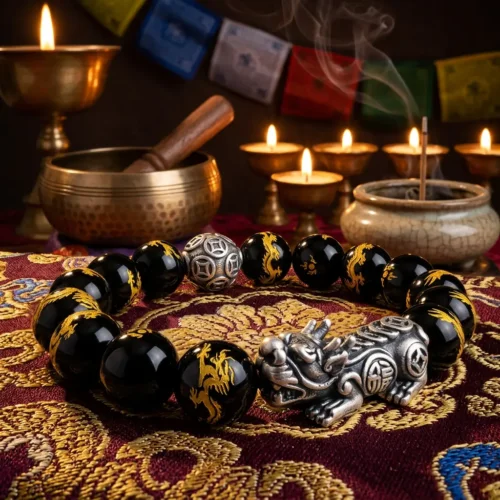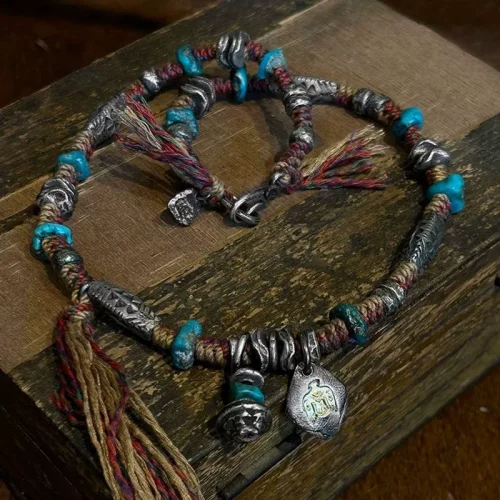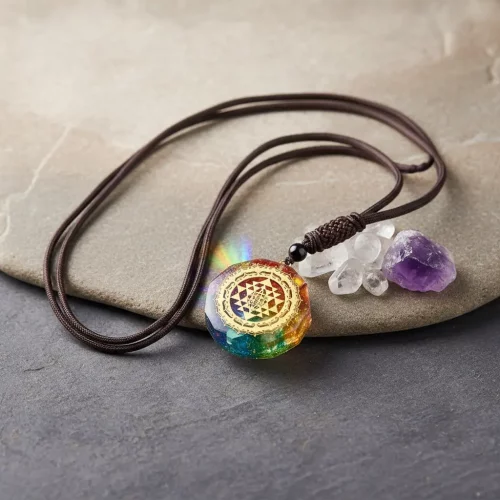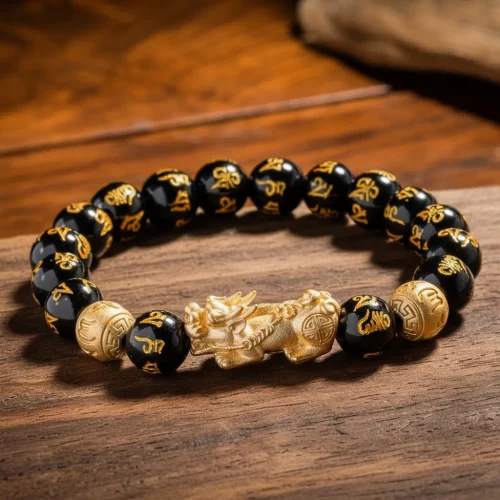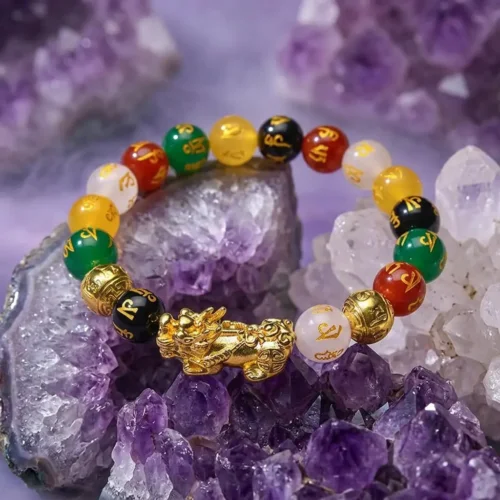


Leo’s birthstone is not just about the color of a gem — it’s about which stone truly resonates with your fire. Most guides name peridot and call it a day, but if you were born in the first week of Leo season, your traditional monthly birthstone is actually a different stone entirely. At PotalaStore, sourcing authentic gemstones from Himalayan artisans for over a decade has given us a deep appreciation for why certain stones have been paired with this sun-ruled sign for centuries.
Peridot — a vivid olive-green gem from the olivine mineral family — is the primary Leo birthstone, connected to Leo’s ruling planet, the Sun, and the sign’s innate drive toward confidence, creativity, and leadership. Leo season runs from July 23 to August 22. Below, you’ll find everything about what these stones mean, what they’re traditionally believed to offer, and how to work with them.
What Is the Leo Birthstone?
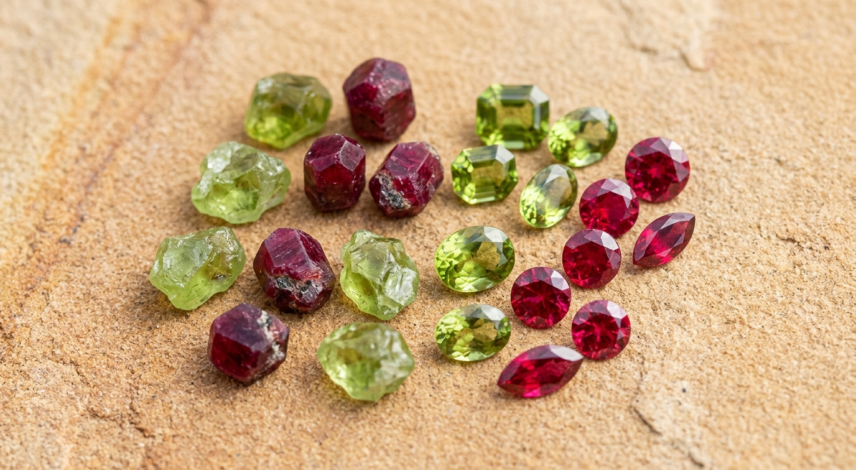
Peridot is the primary Leo birthstone — a yellow-green to olive-green gem formed deep in the Earth’s mantle and brought to the surface by volcanic activity. It belongs to the olivine mineral group (forsterite), and its characteristic color comes from iron within its crystal structure: the higher the iron content, the deeper and more saturated the green.
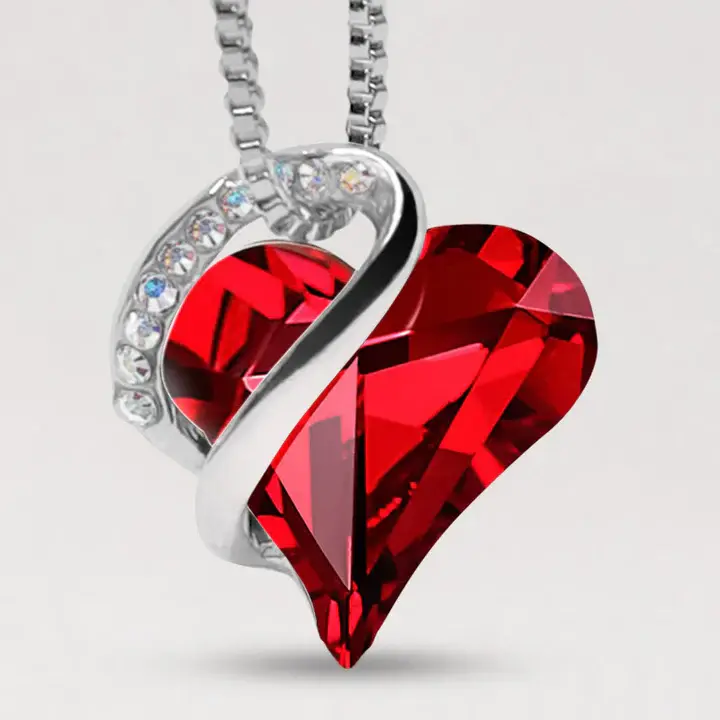
Ruby is recognized as Leo’s secondary birthstone and is especially significant for July-born Leos. As the “King of Gems,” ruby has been associated with the Sun across cultures from ancient India to Renaissance Europe — making it a natural companion for a sign ruled by the Sun itself.
Beyond these two primary stones, the Leo zodiac is associated with a wider family of gemstones, each with its own energetic focus:
| Stone | Color | Primary Association | Best For |
|---|---|---|---|
| Peridot | Olive to yellow-green | Abundance, clarity, renewal | August Leos; daily wear |
| Ruby | Deep red (“pigeon’s blood”) | Passion, courage, vitality | July Leos; confidence work |
| Carnelian | Orange-red to burnt sienna | Creativity, motivation, sacral energy | Artists and performers |
| Citrine | Golden yellow to amber | Joy, prosperity, solar energy | Manifestation and abundance |
| Tiger’s Eye | Golden-brown with chatoyancy | Grounding, willpower, protection | Balancing Leo’s intensity |
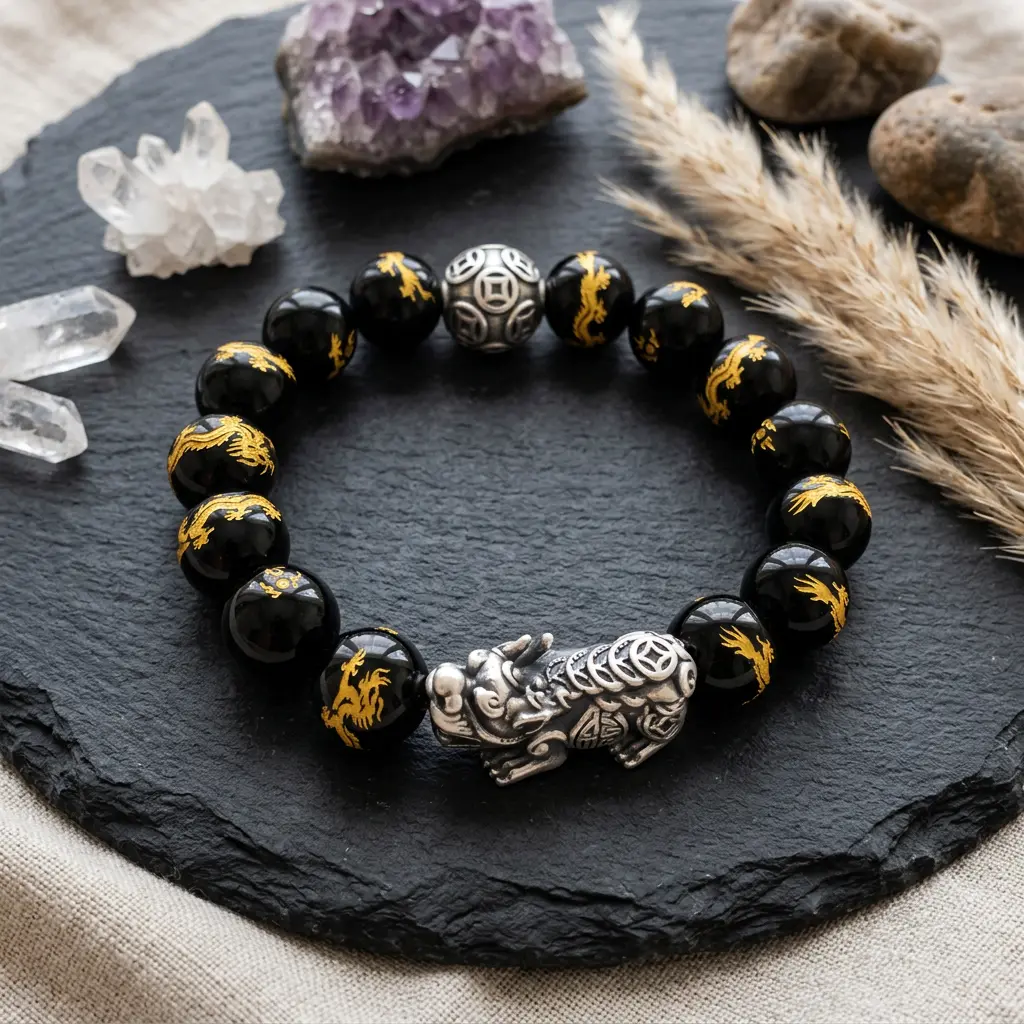
| Black Onyx | Deep black | Strength, self-discipline, inner stability | Cultivating Leo’s quieter power |
| Sardonyx | Red-brown and white banded | Virtue, courage, integrity | August Leos (traditional) |
The Sacred Symbolism Behind Leo’s Gemstones
Peridot’s connection to Leo runs deeper than calendar dates. As a stone formed in volcanic fire and — in rare cases — carried to Earth inside meteorites, peridot mirrors Leo’s fiery, sun-ruled nature in a remarkably literal way. The ancient Egyptians called it the “gem of the sun” and mined it for over 3,500 years on the volcanic Island of Zabargad (also known as St. John’s Island) in the Red Sea. Cleopatra’s famous emerald collection is now believed by historians to have been largely peridot — a stone considered so powerful it was worn to ward off evil and invoke solar protection.
In the symbolic language of astrology, Leo is ruled by the Sun — the only sign with this distinction. The Sun represents the self, identity, and life-force energy. Peridot, with its golden-green warmth, is traditionally understood to amplify these same qualities: the radiance of the self, the clarity of purpose, and the vitality that Leo naturally projects.
In crystal traditions, peridot is closely linked to the solar plexus chakra — the energy center associated with personal power, confidence, and self-determination. This pairing is not incidental: the solar plexus chakra governs exactly the qualities Leo is known for. When peridot activates solar plexus energy, it is traditionally believed to reinforce Leo’s natural leadership while softening tendencies toward pride or emotional reactivity.
Ruby carries its own profound symbolism for Leo. In Vedic astrology — where Leo is known as Simha Rashi — ruby (called Manikya) is the primary Leo stone because it directly represents the Sun’s fiery essence. In the Western tradition, ruby’s deep red associates it with the heart, with passion, and with the courage that Leo expresses so instinctively. The Cologne Cathedral in Germany famously contains 200 carats of peridot embedded in its relics — once mistaken for emeralds — a reminder of how deeply these “Leo stones” have been woven into sacred spaces across cultures.
⚠ A Note on Spiritual Properties: The symbolic and energetic associations described in this article reflect traditional beliefs and centuries of cultural practice. They are not scientifically verified claims. We share them as part of the rich history of gemstone traditions — not as medical or psychological advice.
What Leo Birthstones Are Traditionally Believed to Offer
Leo birthstones are traditionally associated with amplifying the sign’s natural strengths — and gently tempering its shadows. Below are the most commonly cited benefits for each of the core Leo stones.
Peridot is believed to:
- Strengthen confidence and self-worth without tipping into arrogance
- Clear away jealousy, resentment, and emotional baggage — Leo’s quieter struggles
- Attract abundance and support manifestation work aligned with Leo’s solar energy
- Activate the solar plexus chakra, sharpening personal clarity and direction
Ruby is believed to:
- Ignite passion and courage in creative and professional pursuits
- Support the heart chakra while also stimulating the root chakra, giving Leo both warmth and groundedness
- Boost physical vitality and stamina — useful for Leo’s naturally high-energy lifestyle
Carnelian is believed to:
- Fuel creative output, making it particularly useful for Leo artists, performers, and entrepreneurs
- Activate the sacral chakra, supporting bold self-expression
- Provide motivational energy when Leo’s natural enthusiasm needs a spark
💡 For Leo’s Who Want Both Beauty and Meaning: Explore PotalaStore’s handcrafted zodiac crystal jewelry — each piece is ethically sourced and selected for its gemological quality.
July Leo vs. August Leo: Do Your Birthstones Differ?

Yes — if you were born between July 23 and July 31, your traditional monthly birthstone is Ruby, not Peridot. August Leos (August 1–22) are the ones most aligned with Peridot as both their zodiac stone and monthly birthstone. This is one of the most searched but least clearly answered questions in the Leo birthstone space, so it’s worth spelling out the distinction.
There are actually three separate birthstone classification systems that overlap for Leo, and they don’t always agree:
| System | July Leo (Jul 23–31) | August Leo (Aug 1–22) |
|---|---|---|
| Monthly Birthstone (by birth month) | Ruby (July’s stone) | Peridot or Sardonyx (August’s stones) |
| Zodiac Stone (by sun sign) | Peridot (Leo’s stone) | Peridot (Leo’s stone) |
| Vedic Tradition (Simha Rashi) | Ruby (Sun’s stone) | Ruby (Sun’s stone) |
Sardonyx — a banded red-brown and white chalcedony — was designated as the official August birthstone by the National Association of Jewelers in 1912, though it has since been largely overshadowed by Peridot in modern usage. If you’re an August Leo, both Sardonyx and Peridot carry traditional resonance for your birthday.
Which system should you follow? Practically speaking, most people are drawn to one stone over another for personal or aesthetic reasons — and that intuition is worth following. If you’re a July Leo who feels drawn to peridot rather than ruby, there is no tradition that says you cannot work with both. Zodiac stones and monthly stones complement rather than replace each other.
🎁 Gifting for a Leo? Knowing their exact birth month helps you choose between a ruby or peridot piece. Browse PotalaStore’s Leo birthstone jewelry — filtered by stone type for easy gift selection.
How to Work with Your Leo Birthstones

The most accessible way to work with Leo birthstones is to wear them as jewelry close to the body — rings, bracelets, and pendants all maintain consistent energetic contact throughout the day. In traditional crystal practice, placement matters: wearing on the non-dominant hand is associated with receiving energy, while the dominant hand is believed to project it outward.
Here are the five most common methods for working with Leo birthstones:
- Wear as jewelry: A peridot or carnelian bracelet worn daily keeps the stone’s energy field in your personal space. Skin contact is considered the most direct form of interaction in crystal traditions.
- Meditate with intention: Hold the stone in your palm or place it on your solar plexus (just above the navel) during a 10–15 minute meditation. Many practitioners pair this with a simple affirmation aligned with Leo’s themes: clarity of purpose, creative courage, authentic expression.
- Place in your living or workspace: Citrine and tiger’s eye are particularly popular for home placement — a citrine cluster on a desk or in the wealth corner of a room is a common feng shui practice for abundance and solar energy.
- Carry as a pocket stone: Smooth tumbled peridot or carnelian palm stones can be carried throughout the day as tactile reminders of intention — especially useful during high-stakes presentations, performances, or social situations where Leo energy is called upon.
- Give as a meaningful gift: Leo birthstone jewelry makes a deeply personal birthday gift. A piece chosen for its specific meaning — ruby for courage, peridot for clarity, carnelian for creative fire — carries more resonance than a generic token.
Cleansing Your Leo Birthstone
Most Leo birthstones benefit from periodic energetic cleansing. The gentlest and most widely recommended method is moonlight charging: place the stone on a windowsill or outdoors overnight during or near a full moon. Peridot and carnelian also respond well to sage smudging — pass the stone through white sage smoke for approximately 30 seconds while holding a clear intention. We recommend cleansing your Leo birthstones every 2–4 weeks with regular use, or after any particularly intense or emotionally significant period.
One note of caution from practical experience: avoid water cleansing for peridot. With a Mohs hardness of 6.5–7, prolonged water exposure can gradually dull the stone’s surface. Stick to smoke, moonlight, or brief dry salt methods.
Gemstones Leo May Want to Approach Thoughtfully

Not every crystal is considered an energetic ally for Leo. In traditional astrological and crystal healing frameworks, certain stones are believed to create tension with Leo’s fire-element, sun-ruled nature — not because they are “bad” stones, but because their energetic qualities may work against Leo’s natural strengths rather than supporting them.
- Aquamarine — A water-element stone ruled by Neptune, aquamarine’s cooling, deeply introspective energy is considered by many practitioners to be at odds with Leo’s fire element. It may be calming to the point of dampening Leo’s natural radiance and expressive drive. Some crystal healers suggest Leo can work with aquamarine in small doses for emotional regulation, but not as a primary daily stone.
- Blue Sapphire — In Vedic astrology, blue sapphire is associated with Saturn, which is considered a challenging planet for Leo (Sun and Saturn are traditionally considered opposing forces). Some Jyotish practitioners actively caution Leo-born individuals against wearing blue sapphire as a primary stone. If you follow Western crystal traditions, this is less of a concern, but it’s worth knowing.
- Amethyst — A beautiful stone with broad spiritual use, amethyst’s deeply calming and yin-receptive energy may, in some interpretations, suppress Leo’s natural vitality and expressive force. This is less universally agreed upon than the above two — many practitioners do pair amethyst with Leo stones — but if you’re finding your Leo energy unusually muted or withdrawn, it may be worth exploring.
- Moonstone — Associated with lunar, feminine, and receptive energies, moonstone is the energetic opposite of Leo’s solar, expressive nature. While not harmful, it can — for some Leo individuals — amplify emotional sensitivity in ways that pull against the sign’s confident, outward-facing essence.
The key principle: Leo thrives with warm-toned, fire-friendly, solar stones. If you notice a stone leaving you feeling flat, withdrawn, or unusually emotionally volatile, it may simply not be the right energetic match for your chart — regardless of its general reputation.
Find Your Leo Birthstone Jewelry
Authentic peridot, ruby, and carnelian pieces — ethically sourced from Himalayan artisans and crafted with attention to both beauty and spiritual significance.Explore Leo Jewelry →
Frequently Asked Questions
Peridot is the primary Leo birthstone, recognized as the zodiac stone for the sign across most modern Western traditions. Ruby is considered the secondary Leo stone and is particularly significant for those born in July (when ruby is also the monthly birthstone). Both stones are associated with Leo’s ruling planet, the Sun.
Yes, when considering monthly birthstones. July Leos (July 23–31) have Ruby as their traditional monthly birthstone, while August Leos (August 1–22) have Peridot and Sardonyx. As a zodiac stone, Peridot applies to all Leos regardless of whether they were born in July or August. Many Leos choose to work with both their zodiac stone and monthly birthstone.
Peridot is primarily associated with the solar plexus chakra — the energy center linked to personal power, confidence, and self-expression, which aligns closely with Leo’s core traits. Ruby is associated with both the heart chakra and root chakra. Carnelian works with the sacral chakra, supporting creativity and motivation.
Moonlight charging (leaving the stone on a windowsill overnight near a full moon) and sage smudging (passing through white sage smoke for 30 seconds) are both gentle and effective. Avoid extended water exposure for peridot, as its Mohs hardness of 6.5–7 makes it susceptible to surface dulling over time. Cleanse every 2–4 weeks with regular wear, or after intense or emotionally significant events.
📚 References
- Peridot Gem Profile: Gemological overview of peridot’s mineral composition, hardness, origins, and historical significance, including its volcanic and meteoritic sources. Gemological Institute of America (GIA)
- Birthstone History and Modern Standardization: Background on the 1912 National Association of Jewelers’ birthstone list, including the official designation of Sardonyx and Peridot for August. American Gem Society — americangemsociety.org
- Peridot in Ancient Egypt: Historical context on peridot’s use in Egyptian jewelry and religious objects, including the Island of Zabargad mining history. Smithsonian National Museum of Natural History
- Ruby in Vedic Astrology (Manikya): Overview of ruby’s role as the Sun’s representative stone in Jyotish tradition and its significance for Leo (Simha Rashi). Source: Gemological Institute of America — Ruby Guide gia.edu/ruby