
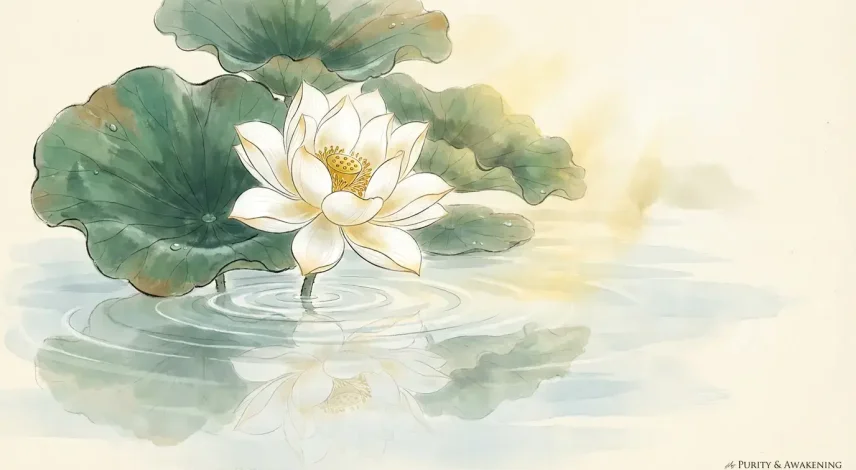

Lotus Flower Symbolism in Buddhism: What This Sacred Flower Really Means
Picture this: a flower growing in muddy, murky water. It pushes through the darkness, breaks the surface, and blooms into something stunningly beautiful. That’s the lotus flower. And in Buddhism, it’s one of the most powerful symbols you’ll ever encounter.
The lotus isn’t just pretty to look at. It tells a story about human potential. It reminds us that no matter how difficult our circumstances, we can rise above them.
Whether you’ve seen it in Buddhist art, noticed it on jewelry, or heard it mentioned in meditation, the lotus carries deep meaning. Let’s explore what makes this flower so special — and why it might matter to you.
Why the Lotus Matters So Much in Buddhism
Walk into any Buddhist temple. You’ll see lotuses everywhere. Carved into walls. Painted on scrolls. Serving as seats for Buddha statues.
The lotus is one of Buddhism’s Eight Auspicious Symbols — a group of sacred images representing good fortune and spiritual truth. But the lotus holds a special place even among these.
According to Buddhist legend, lotus flowers bloomed wherever the baby Buddha walked. His first seven steps each produced a perfect flower. Before his birth, his mother Queen Maya dreamed of a white elephant carrying a white lotus in its trunk.
The Buddha himself used the lotus to describe his awakening. In the ancient Pali texts, he compared himself to a lotus rising from muddy water — unstained by the world, yet very much part of it.
“Just like a lotus — born in water, grown in water, rising up above the water — stands unsmeared by the water, in the same way I — born in the world, grown in the world, having overcome the world — live unsmeared by the world.”
— The Buddha, Anguttara Nikaya
The Core Meaning: Rising Above Suffering

From Mud to Blossom
Here’s what makes the lotus so meaningful. It doesn’t grow in clean, perfect conditions. It grows in mud.
The murky water represents our struggles. Our pain. Our confusion. The challenges we all face in daily life.
But the lotus doesn’t stay stuck in the mud. It grows upward through the water. And when it finally reaches the surface, it opens into a flower that’s completely clean. Not a speck of dirt touches its petals.
This is the Buddhist message in a nutshell: You don’t escape your problems. You grow through them.
Staying Pure in an Impure World
There’s something amazing about lotus leaves. Water simply rolls right off them. Scientists call this the “lotus effect.”
For Buddhists, this represents purity of body, speech, and mind. You can live in the world — with all its mess and difficulty — while keeping your inner self clean and clear.
A famous Zen verse puts it beautifully: “May we exist in muddy water with purity, like a lotus.”
What Different Lotus Colors Mean
Not all lotuses are created equal. In Buddhist art and teaching, each color carries its own special meaning.
| Lotus Color | What It Represents | Associated With |
|---|---|---|
| White | Mental purity, spiritual perfection | Bodhi (awakening) |
| Pink | The supreme lotus, highest enlightenment | The Buddha himself |
| Red | Love, compassion, heart qualities | Avalokiteshvara (Chenrezig) |
| Blue | Wisdom, knowledge, intelligence | Manjushri (bodhisattva of wisdom) |
| Purple | Mystical path, esoteric teachings | The Noble Eightfold Path |
| Gold | Complete enlightenment, Buddhahood | Supreme spiritual achievement |
The pink lotus is considered the most sacred. It’s directly linked to the historical Buddha, Siddhartha Gautama. When you see a Buddha statue seated on a pink lotus, you’re looking at the symbol of supreme awakening.
The blue lotus is interesting — it’s often shown only partially open. Why? Because wisdom unfolds gradually. It’s a process, not a single moment.
The Lotus Stages: From Bud to Full Bloom
Buddhist artists pay close attention to how open a lotus appears. Each stage means something different:
- Closed bud: The time before spiritual awakening. Potential waiting to unfold.
- Partially open flower: The journey on the path. Growth and awareness developing.
- Fully bloomed lotus: Complete enlightenment. Understanding the true nature of reality.
This is encouraging for anyone on a spiritual path. You don’t have to bloom overnight. Every stage of growth has value.

Why Buddhas Sit on Lotus Thrones
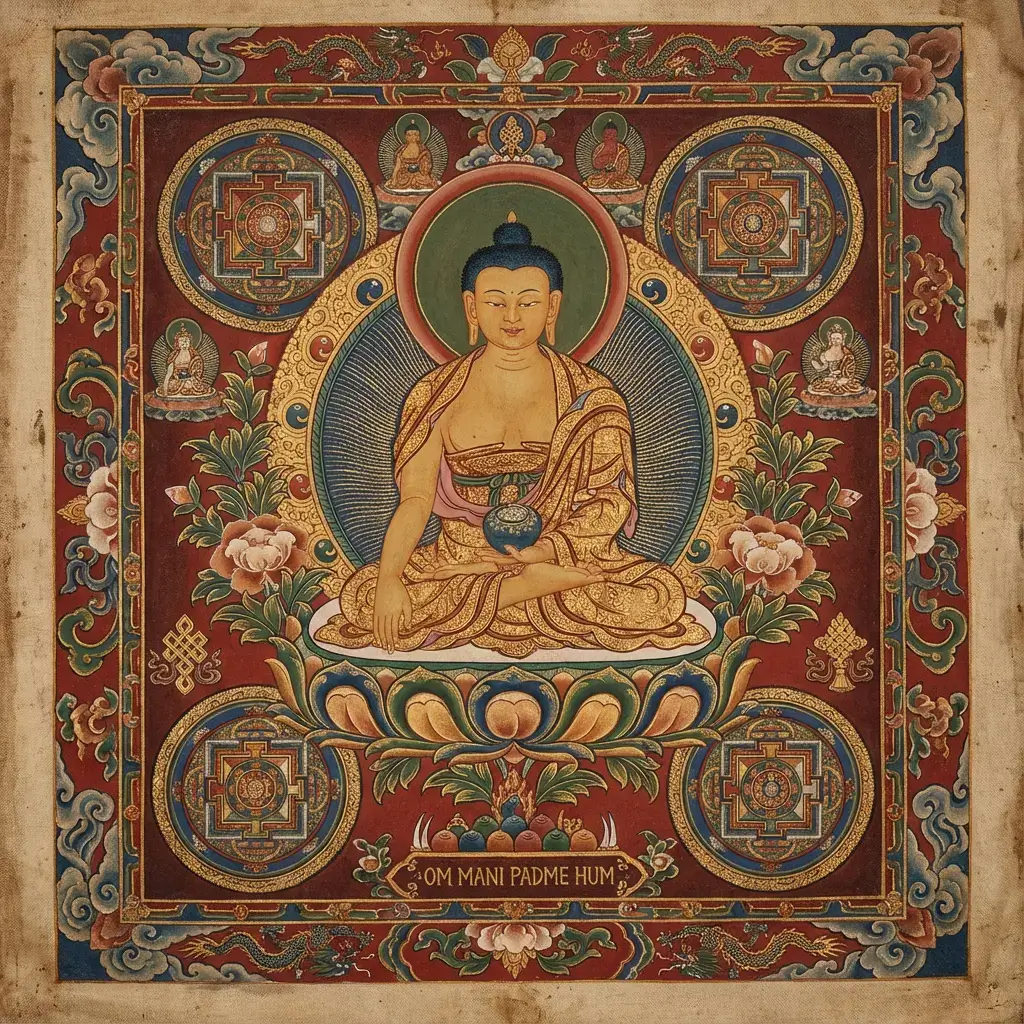
Look at almost any Buddha statue or painting. What’s underneath? A lotus flower.
This is called a lotus throne (or padmasana in Sanskrit). It’s not just decoration. It carries deep meaning.
When a Buddha or bodhisattva sits on a lotus, it shows they’ve transcended worldly suffering. They exist in the world but aren’t touched by its problems — just like the lotus rises from mud without being stained.
The Rubin Museum of Art, which houses one of the world’s finest collections of Himalayan art, notes that “Buddhist artistic traditions often depict the Buddha and bodhisattvas perched upon a lotus-blossom throne, symbolizing their transcendence over worldly suffering.”
Om Mani Padme Hum: The Lotus Mantra
You’ve probably seen these words before. Maybe on jewelry. Maybe on a prayer wheel. Maybe tattooed on someone’s arm.
Om Mani Padme Hum is one of Buddhism’s most famous mantras. And yes, the word “Padme” means lotus.
The whole phrase roughly translates to “The jewel in the lotus” or “Praise to the jewel in the lotus.”
Here’s what it means:
- Mani (jewel) represents compassion
- Padme (lotus) represents wisdom
- Together, they represent the union of compassion and wisdom — the heart of Buddhist practice
His Holiness the Dalai Lama teaches that this mantra contains the essence of all Buddhist teachings. He explains: “The six syllables, om mani padme hum, mean that in dependence on the practice of a path which is an indivisible union of method and wisdom, you can transform your impure body, speech, and mind into the pure exalted body, speech, and mind of a Buddha.”
The Lotus Position in Meditation
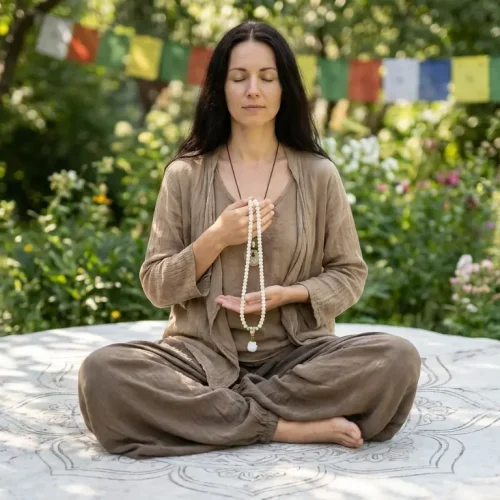
Ever heard of the “lotus position”? It’s the classic cross-legged meditation posture where each foot rests on the opposite thigh.
The Sanskrit name is Padmasana — literally “lotus seat.”
Why is it called that? When you sit in this position, your body resembles a lotus flower. Grounded and stable at the base. Open and reaching upward at the top.
Don’t worry if full lotus isn’t comfortable for you. Half lotus or simple cross-legged sitting works just as well. What matters is the intention: like the lotus, rising above distractions to find clarity.
What Wearing Lotus Jewelry Really Means
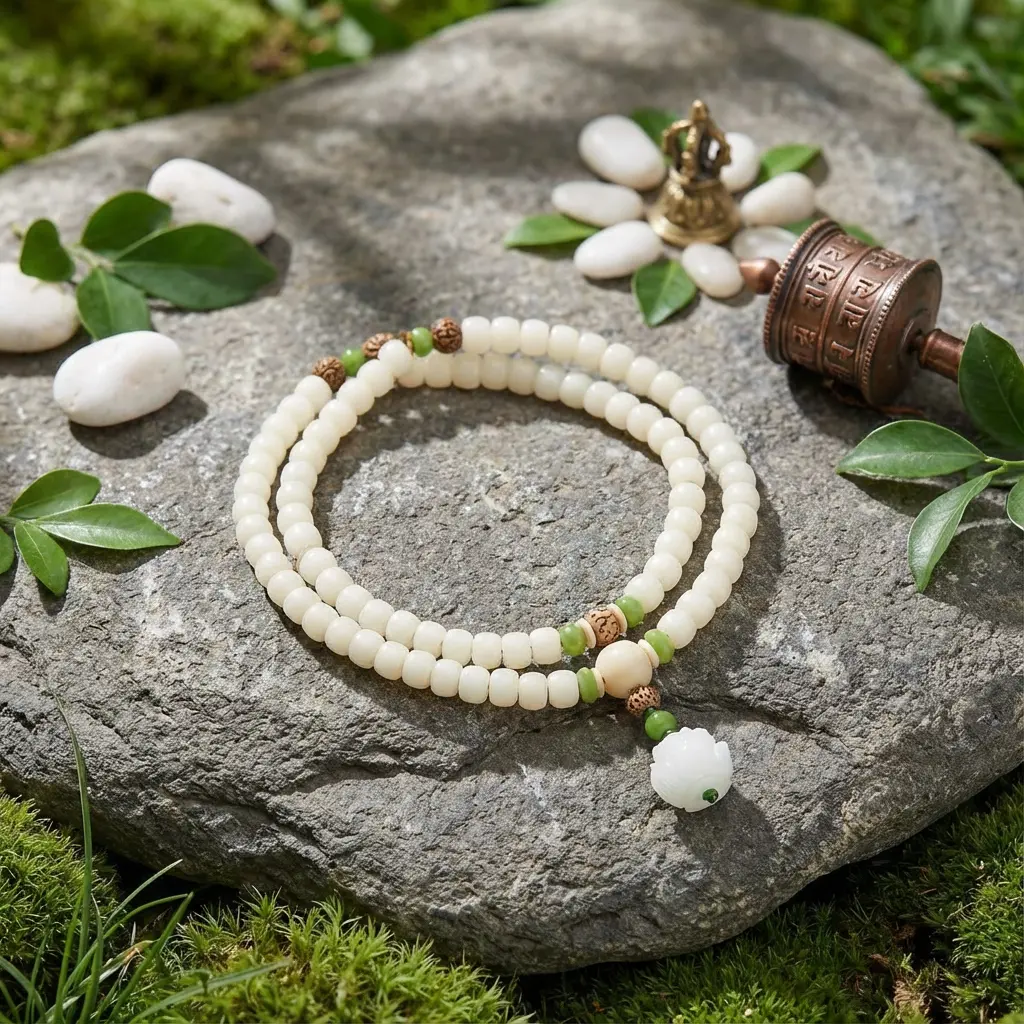
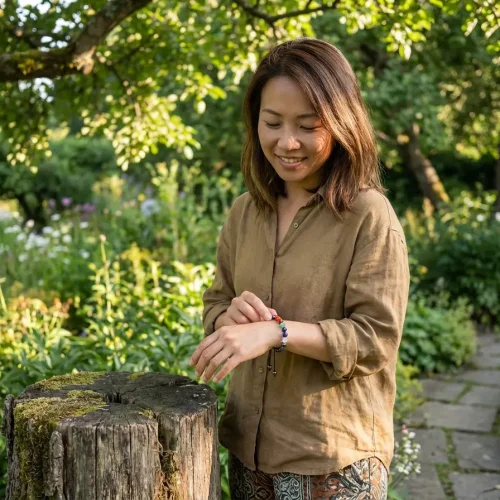
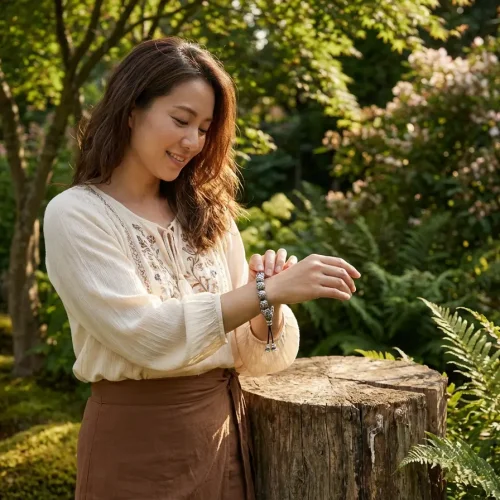
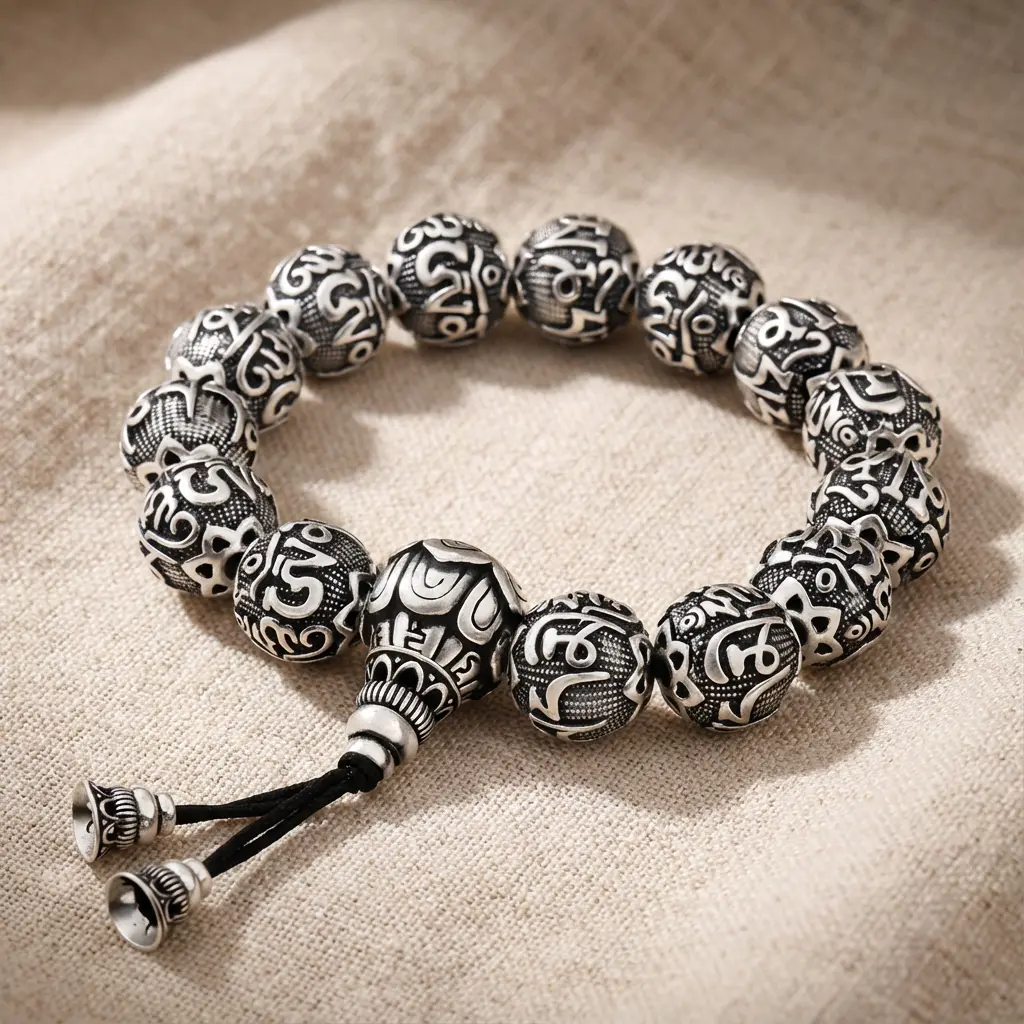
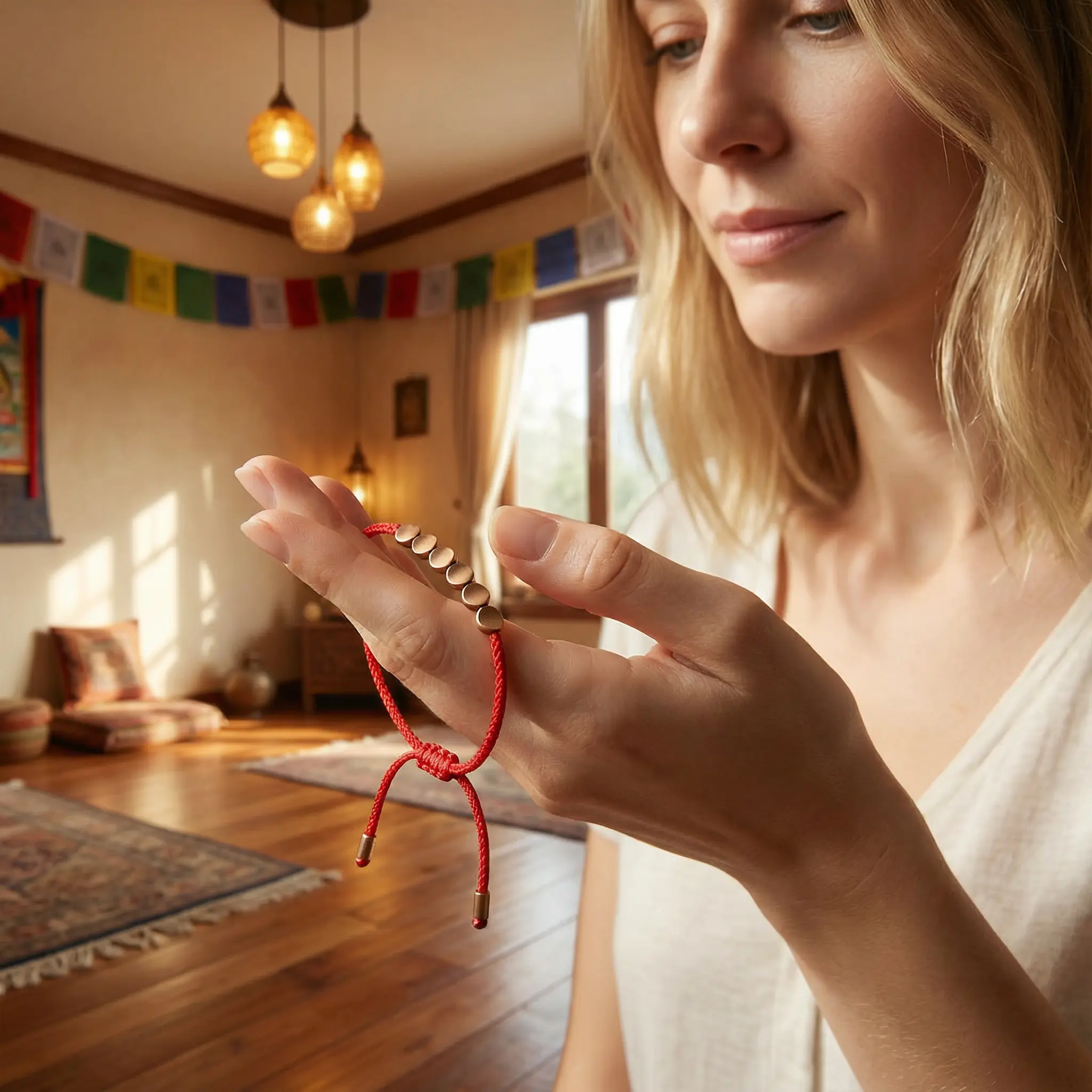
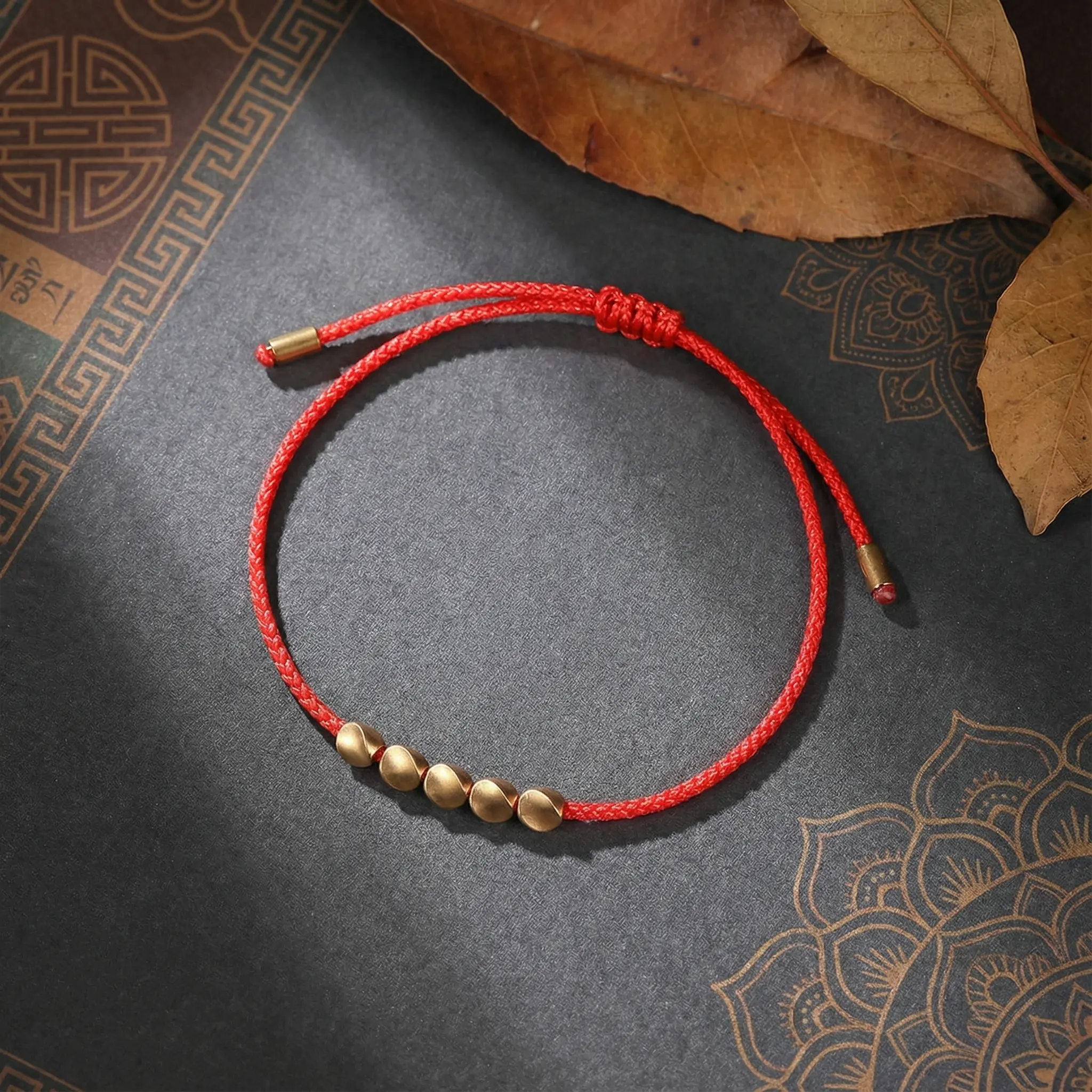
When you wear a lotus pendant, ring, or bracelet, you’re carrying a powerful reminder with you.
Here’s what lotus jewelry symbolizes:
- Inner strength: A reminder that you can grow through difficult times
- New beginnings: The lotus opens fresh each morning — symbolizing renewal and second chances
- Mindfulness: A glance at your jewelry can bring you back to the present moment
- Spiritual connection: Linking you to centuries of Buddhist wisdom and practice
Different lotus colors in jewelry carry different intentions. A white lotus pendant might support your meditation practice. A red lotus bracelet could remind you to lead with compassion. A blue lotus might encourage wisdom in your daily decisions.
Choosing lotus jewelry isn’t just about fashion. It’s about what you want to cultivate in your life.
The Lotus Message: Beauty From Struggle
Here’s the bottom line about the lotus.
It doesn’t bloom despite the mud. It blooms because of the mud. The muddy water provides the nutrients the flower needs to grow.
Your struggles aren’t obstacles to your growth. They’re the very conditions that make growth possible.
Whether you see the lotus in a temple, wear it around your neck, or simply picture it in your mind during meditation, the message stays the same:
You have the potential to rise above difficulty. To stay pure amid chaos. To bloom into something beautiful — no matter where you started.
That’s what makes this simple flower one of the most profound symbols in human history.
📚 References
- Buddhist Iconography & Himalayan Art: The Rubin Museum of Art offers extensive scholarly resources on the lotus flower’s role in Buddhist art, including thangka paintings, sculptures, and mandalas from their world-renowned collection.
- The Meaning of Om Mani Padme Hum: His Holiness the Dalai Lama’s authoritative teaching on this mantra is preserved by Shambhala Publications, explaining how each syllable relates to the path of transformation.
- Buddhist Symbols Overview: Lion’s Roar, a leading Buddhist publication, provides accessible explanations of lotus symbolism in various Buddhist traditions, including color meanings and connections to specific bodhisattvas.
- Original Buddhist Texts: Access to Insight offers free English translations of the Pali Canon, including the Buddha’s original lotus metaphors from the Anguttara Nikaya.
- Sacred Lotus in Religious Art: Wikipedia’s scholarly article provides a comprehensive, cited overview of the lotus’s role across Buddhist, Hindu, and other religious traditions.