

Choosing between a mala necklace and a wrist mala is the single most common question we hear from people starting — or deepening — a meditation practice. It sounds simple, but get it wrong and you end up with a beautiful piece of spiritual jewelry that never quite fits your life. After sourcing malas directly from artisans near Sera Jhe and Kopan Monasteries for over a decade and guiding thousands of practitioners through this exact choice, we’ve learned what really separates these two formats.
Here’s the core answer: a mala necklace holds 108 beads for complete mantra meditation cycles, while a wrist mala holds 27 beads — exactly one-quarter of 108 — for portable, everyday mindfulness. Both are legitimate spiritual tools. Most dedicated practitioners eventually own both. This guide gives you an honest framework to choose where to start.
⚠️ Note: Spiritual and energetic properties described here reflect traditional Buddhist and Hindu beliefs and the experiences of long-term practitioners. These are not medical or scientific claims.
What Sets a 108-Bead Mala Necklace Apart from a Wrist Mala?
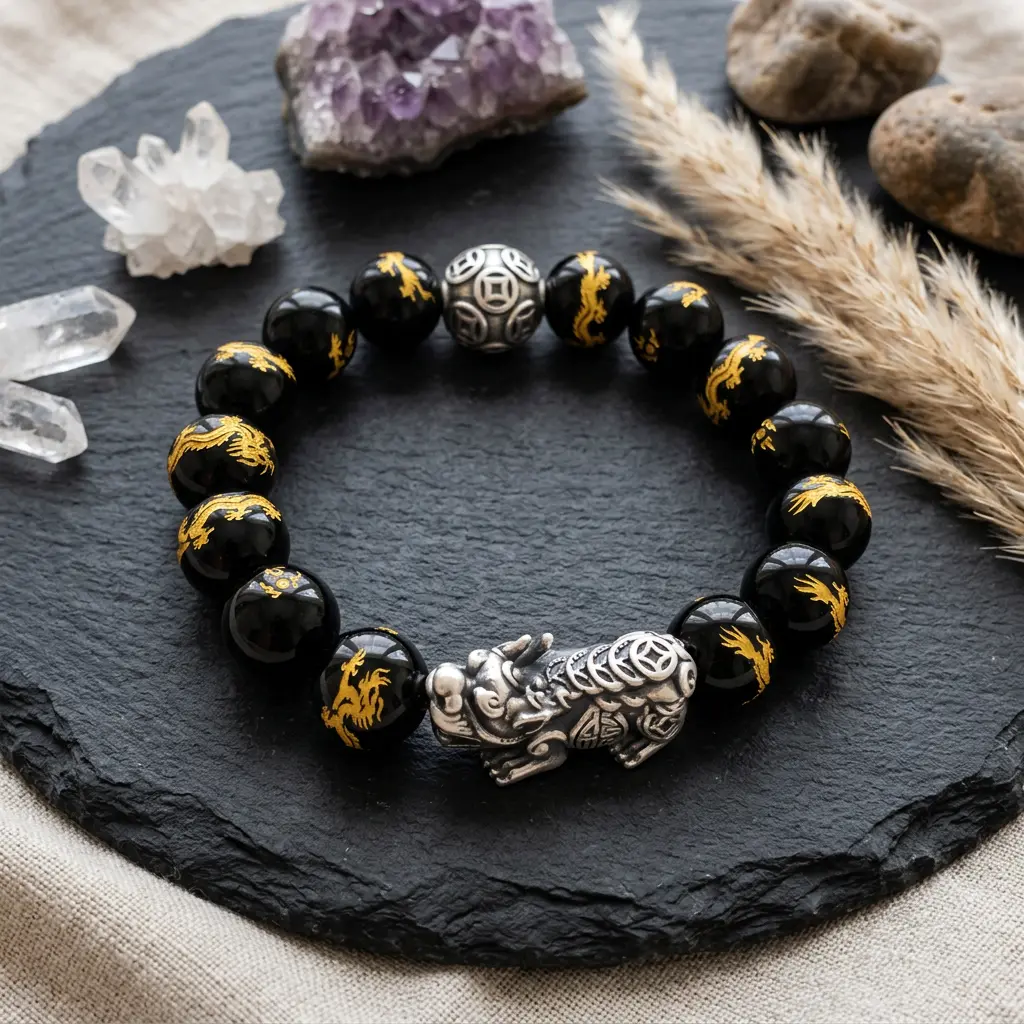
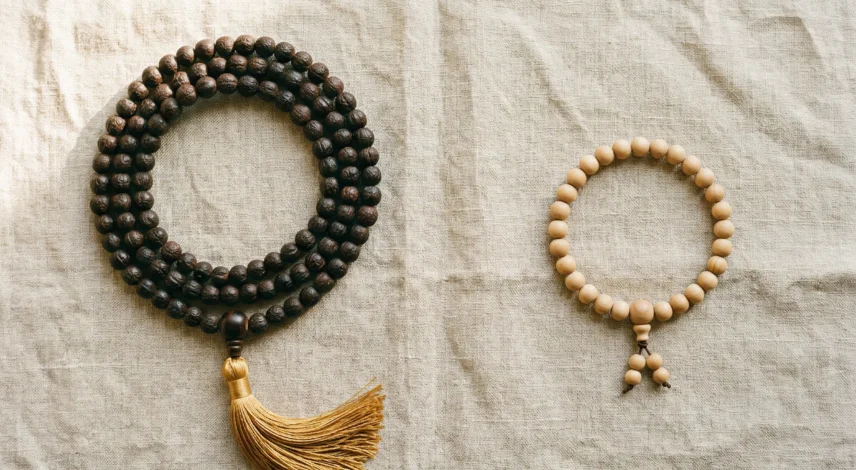
A mala necklace holds 108 beads on a full-length cord for complete japa meditation cycles, while a wrist mala holds 27 beads — exactly one-quarter of 108 — on an elastic band for portable, daily mindfulness. Both formats include a guru bead (also called a meru bead) that marks the start and end of each meditation round. A necklace mala typically adds a decorative tassel below the guru bead; a wrist mala does not.
Here’s a full side-by-side breakdown:
| Feature | Mala Necklace | Wrist Mala |
|---|---|---|
| Bead count | 108 beads + 1 guru bead | 18, 21, or 27 beads + 1 guru bead |
| Length / fit | ~36–42 inches (worn as necklace) | Fits standard wrist, ~7–8 inches |
| Best for | Seated japa meditation, full mantra counting | Daily wear, portable mindfulness anchor |
| Stringing method | Hand-knotted on silk or cotton cord | Elastic stretch cord |
| Components | Beads + guru bead + tassel | Beads + guru bead (no tassel) |
| Typical price range | $35–$95 | $25–$60 |
| Wear versatility | Necklace; can wrap 4x as bracelet | Wrist bracelet; always on |
One practical detail many guides miss: why does a wrist mala have 27 beads specifically? Because 27 is exactly one-quarter of 108 — so four complete rounds through your wrist mala equals a full 108-bead meditation cycle. Other common wrist mala counts — 18 and 21 — are also divisors of 108, all carrying the same sacred significance.
There’s also a third option worth knowing: a 108-bead necklace can wrap around most wrists four times. This works beautifully as occasional jewelry or as a travel option. But for everyday wear on smaller wrists, it can feel cumbersome — which is exactly why purpose-built wrist malas exist.
✨ 在布达拉商店, 每一个 mala — 项链和手腕格式相同 — 都通过 a 获得祝福 为期三天的法会仪式 在船运之前,它位于一座名为喜马拉雅的修道院。 浏览我们的修道院祝福玛拉系列 →
How Each Mala Style Supports Meditation and Mantra Practice

A 108-bead mala necklace enables a complete, uninterrupted japa meditation cycle, while a 27-bead wrist mala gives you a quick, portable practice you can do anywhere in under three minutes. The right choice depends on when and how you meditate.
Using a mala necklace for seated japa
Hold the mala in your right hand, draped over your middle finger. Starting just below the guru bead, move one bead per mantra repetition using your thumb. When you complete 108 repetitions and return to the guru bead, you reverse direction rather than crossing it — this is a deeply intentional ritual that marks the transition between rounds. The hand-knotted cord between each bead creates a natural pause that encourages a steady, contemplative rhythm you simply cannot replicate on an elastic bracelet.
Using a wrist mala for daily mindfulness
A 27-bead wrist mala is always present on your pulse point — a constant, tactile mindfulness anchor that keeps your intention front of mind throughout the day. Four passes through the beads completes a full 108-count meditation, making it ideal for a three-minute morning practice before you pick up your phone, a calming mantra repetition before a difficult conversation, or a grounding ritual on the subway. The elastic cord and shorter bead count make it as natural to wear as a watch.
Research reviewed by WebMD and clinical mindfulness practitioners suggests that rhythmic counting practices — such as bead-based meditation — can meaningfully reduce cortisol levels and improve sustained focus. Both mala formats support this; the necklace enables deep, extended practice, while the wrist mala supports the frequent, shorter sessions that build lasting habit.
On mornings when I can’t sit for a full 108-bead session, I count 27 mantras on my wrist mala while coffee brews. It takes less than three minutes and resets my mindset completely. After years of working directly with monks at Kopan Monastery, I believe daily repetition — even brief — matters more than occasional long sessions.— Yang Tso, Potala Store founder
Bodhi Seed, Sandalwood, or Gemstone — Which Material Fits Your Mala?

Bodhi seeds connect your practice to the tree under which the Buddha attained enlightenment. Sandalwood brings a calming, earthy fragrance to every meditation session. Gemstones like amethyst or rose quartz add chakra-aligned intentions. The right material depends on what you need from your practice — and the format you choose influences which materials work best.
- Bodhi seeds: Harvested from sacred Ficus religiosa trees across India and Nepal, these are traditionally the most spiritually significant material for Buddhist prayer beads. Their naturally rough, textured surface provides excellent grip during japa counting. Best suited for necklace-format malas due to their weight and the silk knotting that protects them from contact damage. Our Bodhi Seed Mala 108 Beads with Lotus ($48.95) is hand-knotted by artisans in Boudhanath and blessed at Kopan Monastery.
- Sandalwood: Lightweight, aromatic, and gentle on skin. Sandalwood beads release a subtle woody fragrance during meditation that many practitioners find grounding. The scent itself has been used in Buddhist ceremonial contexts for centuries. Available in both necklace and wrist mala formats — the lighter weight means it works well on elastic cord for wrist malas without feeling loose.
- Rudraksha seeds: Known as “tears of Shiva” in Hindu tradition and embraced throughout Tibetan Buddhism, rudraksha beads have a distinctive ridged surface and a deep, grounding energy. These are heavier than bodhi seeds and almost exclusively used in necklace-format malas with heavy-duty cotton cord. Best for: dedicated practitioners of mantra yoga or anyone drawn to the Hindu-Buddhist syncretic tradition.
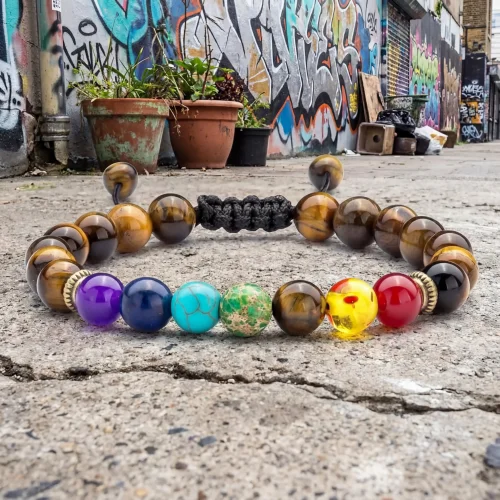
- Gemstones (amethyst, rose quartz, lava stone, tiger’s eye): Gemstone malas are especially popular as wrist malas because the visual appeal translates naturally into everyday jewelry. Each stone aligns with a specific chakra: amethyst for the crown and clarity, rose quartz for the heart and compassion, lava stone for root grounding, tiger’s eye for solar plexus confidence. Our 7 Chakra Lava Stone Bracelet ($38.95) makes an excellent first wrist mala for this reason. For a full gemstone necklace experience, our Tibetan Mala Red Turquoise 108 Beads Necklace ($53.95) shows how gemstones translate beautifully into the traditional 108-bead format.
A practical note on material-to-format pairing: heavier beads — rudraksha, bone, large gemstones — work best on necklace malas with hand-knotted cord, which distributes weight evenly across the strand. Lighter materials like sandalwood, small gemstones, and lava stone suit wrist malas well, where elastic cord needs enough flexibility to fit comfortably on a moving wrist.
For more on how specific crystal materials affect your practice, see our full guide to the healing properties of crystal bracelets.
Which Mala Matches Your Life — A Practitioner’s Decision Guide
If you meditate daily and want a dedicated practice tool, choose a 108-bead mala necklace. If you want a portable mindfulness anchor for daily wear that’s always on your wrist, start with a wrist mala. If you’re still not sure, use these five scenarios:
- You’re new to mala meditation. Start with a wrist mala. It’s lower investment ($25–$40 for an authentic piece), less intimidating than a 108-bead strand, and serves as a constant mindfulness reminder as you build your practice. Our most common pattern: customers who start with a wrist mala return within six months for a full necklace mala — not because the wrist mala failed them, but because their practice deepened and they wanted the tool for it.
- You have an established sitting practice. A 108-bead necklace is the right tool. Complete japa cycles are most efficient and meditative on a full-length mala — the hand-knotted cord and natural pause between beads create a rhythm that an elastic wrist mala simply can’t replicate.
- You practice yoga. Wrist mala, clearly. It stays secure during asanas, adds a grounding spiritual practice intention to your session, and doesn’t interfere with inversions or forward folds the way a 40-inch necklace would.
- You’re buying a gift. Go with a wrist mala. It fits virtually any wrist, typically costs less ($25–$60), and works as both a spiritual tool and an everyday accessory. Guessing the right necklace length for someone else is an unnecessary risk — and you definitely don’t want to send the wrong gift. For detailed guidance, see our full article on how to choose spiritual jewelry for meditation.
- You want the full experience. Own both. A wrist mala for everyday mindfulness and a 108-bead necklace for dedicated sessions is the natural progression of a deepening practice. Start with whichever fits your life right now — the other will find its place.
The key takeaway: No format is superior — they serve different purposes. A wrist mala is your daily companion; a mala necklace is your dedicated meditation tool. Many practitioners eventually need both.
🧘 Ready to find your match? Browse our collection filtered by practice style and material — explore Potala Store’s mala selection →
Why Monastery-Blessed Craftsmanship Makes a Difference

Every Potala Store mala passes through a 3-day traditional puja ceremony at either Sera Jhe Monastery in South India or Kopan Monastery in Nepal before it reaches you. This is not a marketing phrase — it’s a verifiable relationship with two of the most respected institutions in Tibetan Buddhism.
Sera Jhe Monastery belongs to the Gelugpa lineage — the tradition of the Dalai Lama — and was reestablished in Bylakuppe, Karnataka after the Tibetan exile. Kopan Monastery in the Kathmandu Valley has been affiliated with the FPMT (Foundation for the Preservation of the Mahayana Tradition) since 1969 and has guided Western practitioners for over fifty years. When we say monastery-blessed, we mean monks from these named, historically significant institutions performed traditional consecration rites over our malas during the ceremony — not a vague “Himalayan blessing” with no verifiable source.
Our malas are also hand-knotted between every single bead by Himalayan artisans based in Nepal and Tibet. We source directly from established workshops — the kind where a craftsman selects each bodhi seed individually, rolling it between his fingers to check for hairline cracks before it’s strung. That level of craftsmanship can’t exist at $8. The cost of fair artisan wages, premium natural materials, and the 3-day ceremony itself sets a real price floor — and it’s why we stand behind every piece we sell.
Every purchase also contributes 10% back to Tibetan monasteries and refugee artisan communities — a commitment that no factory-produced alternative can match.
If you’re wondering whether wearing mala beads is culturally appropriate, we’ve written a full, honest guide: Can Anyone Wear Mala Beads? The Honest Answer. The short version: respectful intention and authentic sourcing matter far more than religious affiliation.
Frequently Asked Questions
Yes — a 108-bead mala necklace wraps around most wrists four times, functioning as a stacked bracelet. However, the fit can feel bulky on smaller wrists, and the longer cord is more prone to snagging during active wear. Many practitioners keep their 108-bead necklace for seated meditation and use a purpose-built 27-bead wrist mala for everything else.
Traditional wrist malas have 27 beads — exactly one-quarter of the sacred 108. You’ll also find 18-bead and 21-bead versions; both are divisors of 108 and carry equal spiritual significance. The 27-bead format is the most common because four complete rounds equal a full 108-mantra meditation cycle, making it easy to track practice time.
Mala beads have been worn as both sacred tools and personal adornments across Buddhist and Hindu traditions for centuries. What matters most is respectful intention: understand the cultural roots of your mala, source it from authentic artisans, and wear it mindfully. Our full guide addresses this question honestly: Can Anyone Wear Mala Beads? The Honest Answer.
For most beginners, a wrist mala is the better starting point. It’s lower cost ($25–$40 for an authentic piece), easier to wear all day, and serves as a constant mindfulness reminder as you build a practice. As your meditation deepens, adding a 108-bead necklace for full japa sessions becomes the natural next step.
Ready to Begin Your Practice?
Every Potala Store mala is handcrafted by Himalayan artisans and blessed through a 3-day puja ceremony at Sera Jhe or Kopan Monastery — then shipped directly to your door.Shop Monastery-Blessed Malas →
📚 References
- Mala Beads in Tibetan Buddhist Practice: Overview of prayer bead traditions, bead counts, and correct usage across Tibetan and Sanskrit lineages. Tibetan Nuns Project — tnp.org
- Meditation and Mental Health: Clinical review of mindfulness meditation’s effects on stress, cortisol reduction, and sustained focus. WebMD Health Reference — webmd.com
- Kopan Monastery — History and Tradition: Background on Kopan Monastery’s Gelugpa lineage and its role in bringing Tibetan Buddhist teaching to Western practitioners since 1969. Kopan Monastery Official Site — kopanmonastery.com
- Sacred Number 108 in Buddhist and Hindu Tradition: Academic overview of the numerological and cosmological significance of 108 across South and East Asian spiritual traditions. Encyclopedia Britannica — Prayer Beads — britannica.com