
Best Crystals and Bracelets to Wear During Travel for Protection and Calm — PotalaStore
 by Yang Tso
0 comments
by Yang Tso
0 comments
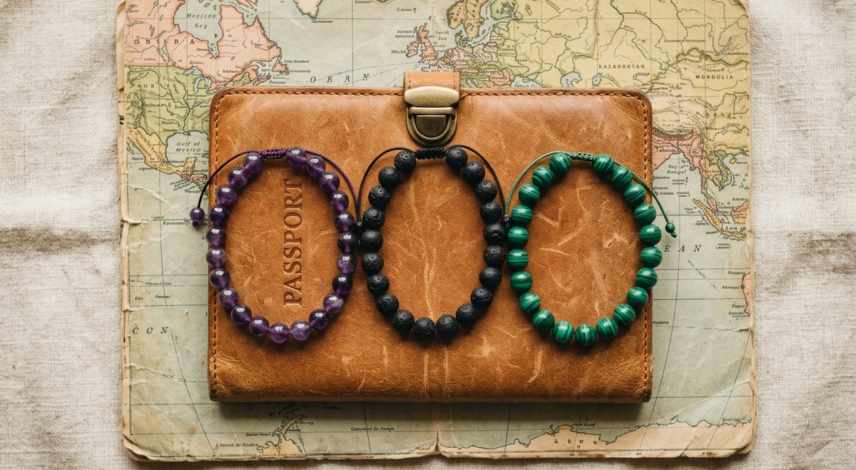
If you’re preparing for a trip and want to know which crystal bracelet is actually worth packing, here’s the honest answer: Amethyst, Black Tourmaline, and Malachite are the three you shouldn’t leave home without. Each addresses a different type of travel stress — flying anxiety, electromagnetic interference at airports, and the general unsettled energy that comes with being far from home. Wearing them together on your left wrist is one of the most time-tested ways to carry both spiritual protection and genuine calm through any journey.
At PotalaStore, we’ve spent years sourcing crystal jewelry directly from verified Himalayan monasteries — including Sera Jhe and Kopan — and we’ve fielded thousands of questions from travelers about which protective stones actually hold up on the road. What we’ve learned is that the “right” travel crystal isn’t universal. The best choice depends on whether your concern is flight anxiety, long-haul fatigue, solo travel in unfamiliar territory, or simply arriving somewhere new and feeling spiritually grounded.
This guide covers the five most trusted travel protection crystals, how to build the right bracelet combination for your specific trip type, and what separates a monastery-blessed travel bracelet from a generic crystal shop purchase.
⚠️ Important Note: The spiritual and energetic properties described in this article reflect traditional beliefs and user experiences, not scientific evidence. Crystal jewelry is intended as a complementary practice — it is not a substitute for medical advice, practical travel safety measures, or professional health guidance.
Which Crystals Actually Work for Travel Protection and Calm?

The five most trusted crystals for travel protection are Amethyst, Black Tourmaline, Malachite, Moonstone, and Labradorite — and each serves a distinct function. Here’s a breakdown you can actually use before your next trip:
- Amethyst — The standard for travel anxiety and mental overwhelm. Amethyst is traditionally believed to calm the nervous system during high-stress transit situations: crowded departure halls, red-eye flights, last-minute gate changes. Many frequent flyers describe wearing an amethyst bracelet as a consistent anchor when travel plans go sideways. It works with the crown chakra and is associated with clear-headed calm under pressure. (Root property: calming anxiety; widely present across all competing articles.)
- Black Tourmaline — The most specific crystal for EMF protection during air travel. Airports concentrate an unusual density of electronic equipment — scanners, radar, communications systems — and black tourmaline is the crystal most practitioners turn to in high-interference environments. It is believed to absorb electromagnetic radiation and neutralize negative energy within a close radius, creating a personal protective field during transit. (Rare property: specific EMF absorption association; found in fewer than half of competing articles.)
- Malachite — Known across multiple cultures as “The Traveler’s Stone” and one of the oldest protective talismans in human history. Malachite has documented use by ancient Egyptian sailors, medieval European merchants, and Tibetan Buddhist pilgrims across more than 3,000 years of overland and sea travel. It’s traditionally associated with safe transitions, protection during physical movement, and warding off accident energy on the road. This is the crystal that keeps appearing in every major travel protection tradition, regardless of culture. (Rare property: 3,000+ years of cross-cultural documentation as a travel stone.)
- Moonstone — Called “The Traveler’s Stone” in Tibetan Buddhist tradition, moonstone is associated with safe passage, new beginnings, and intuitive guidance in unfamiliar environments. It is particularly recommended for international travel, night flights, and transitions into entirely new cultural contexts. Many practitioners consider it the ideal stone for arriving somewhere unknown and needing to navigate with clarity. (Root property: new beginnings, lunar energy, intuition.)
- Labradorite — The most recommended crystal for solo travelers and anyone navigating unfamiliar cultural territory without a safety net. Labradorite is traditionally believed to sharpen intuition and create a protective auric shield — qualities that matter most when you’re making judgment calls alone in a new place. Solo female travelers, in particular, describe consistent reliance on it as a confidence anchor.
💡 Can’t decide? If you’re buying just one crystal for your next trip, choose Amethyst for flights or Malachite for any journey involving significant physical movement. Both pair naturally with virtually any other protective stone.
Browse PotalaStore’s travel crystal bracelet collection — each piece is selected to work as both a standalone wear and a layering companion.
Build Your Travel Bracelet: Crystal Combinations by Trip Type

Different trips call for different crystal energy — here’s how to build the right combination for your travel bracelet based on where you’re actually going. In our experience helping customers select pieces for everything from domestic weekend trips to multi-month backpacking routes across Southeast Asia, a two-bracelet combination — one stone for protection, one for calm — consistently outperforms a single-crystal approach.
For daily wear travel bracelets, 8mm beads are the sweet spot: substantial enough to feel grounding throughout a long travel day, light enough to wear through airport security and city walks without discomfort. Smaller 6mm beads work well as a second layering piece.
| Trip Type | Recommended Crystal Combination | Primary Focus |
|---|---|---|
| ✈️ Flying / Air Travel | Amethyst + Black Tourmaline + Lepidolite | Flight anxiety, EMF shielding, turbulence calm |
| 🚗 Road Trip | Tiger’s Eye + Smoky Quartz + Citrine | Driver alertness, grounding, sustained positive energy |
| 🌍 International / Long-Haul | Malachite + Moonstone + Labradorite | Safe transitions, cultural adaptation, intuitive navigation |
| 🏖️ Beach / Relaxation Travel | Aquamarine + Rose Quartz + Selenite | Open emotional energy, calm, cleansing environment |
| 🎒 Solo Travel | Labradorite + Black Tourmaline + Amethyst | Intuitive protection, energy shielding, grounded confidence |
One crystal that consistently gets overlooked in these guides: Lepidolite. Unlike most calming stones that work through energetic tradition alone, lepidolite contains trace amounts of naturally occurring lithium — the same mineral found in many anxiety-related medications. Practitioners specifically seek it out for flight anxiety and turbulence-induced panic responses, and it has become one of our most-requested flying companions. If anxiety (rather than general protection) is your primary concern, add it to your flying combination without hesitation.
We’ve also found that layering two bracelets — one on the left wrist, one on the right — works particularly well for long-haul travel, with the left bracelet carrying protection stones (black tourmaline, malachite) and the right carrying grounding or energizing stones (tiger’s eye, citrine). It creates a more balanced energetic circuit for multi-day journeys.
Why Monastery-Blessed Bracelets Offer a Different Kind of Protection

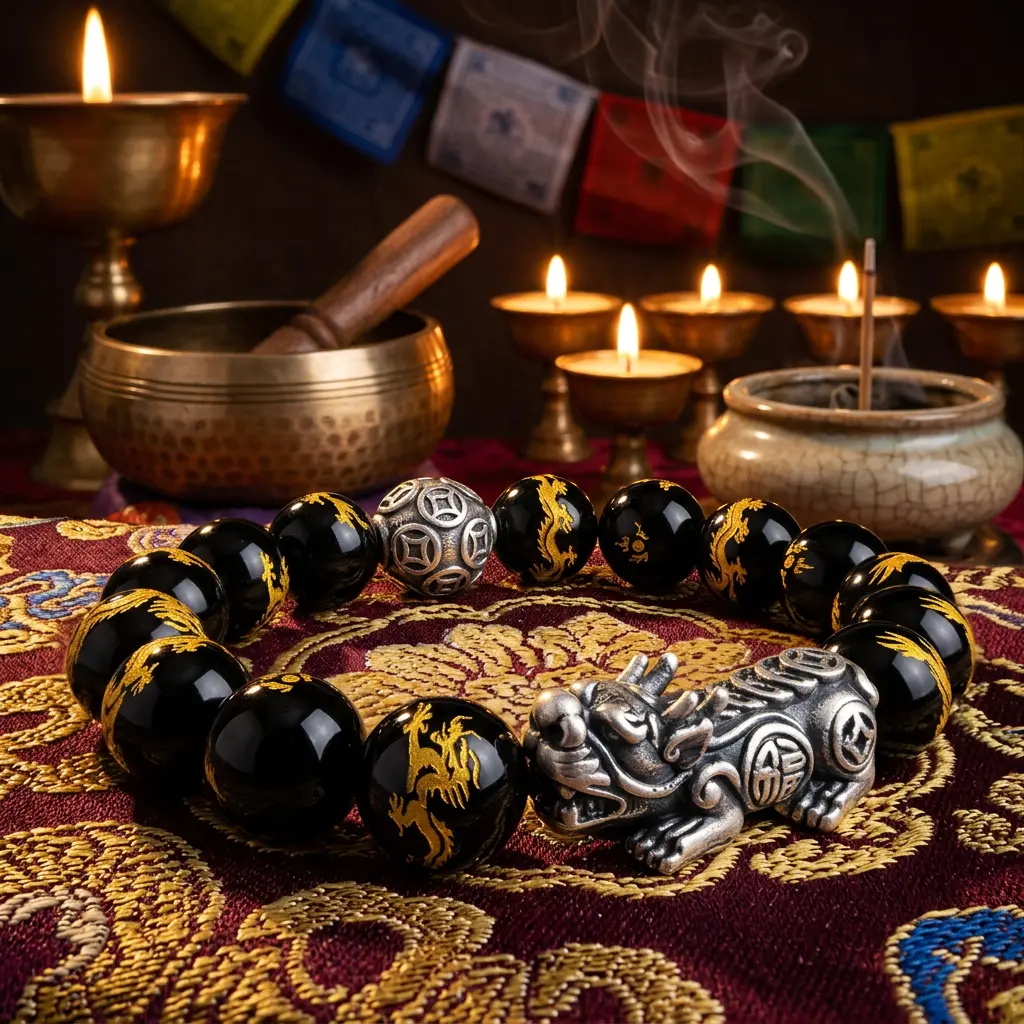
In Tibetan Buddhist tradition, a travel protection bracelet isn’t simply a decorative accessory with good intentions attached to it — it’s a consecrated tool that carries the active force of specific protective prayers performed by practitioners who’ve spent decades in dedicated practice. That’s a meaningful distinction from crystals sold as “energetically charged” with no documented ritual behind them.
Our founder, Yang Tso, witnessed a 3-day Winter Solstice consecration ceremony firsthand during her first visit to Sera Jhe Monastery in Lhasa. The ritual — performed over 72 continuous hours at the winter solstice, when Tibetan Buddhist tradition holds protective energy to be at its annual peak — involves unbroken mantra recitation by senior monks over each item being blessed. The specific protective mantras used are drawn from the Vajrayana tradition and are directed at warding off travel obstacles, illness on the road, and interference from harmful forces during transit.
It isn’t a brief ceremony with a general blessing. It is an intensive, specific ritual performed by people who have dedicated their lives to this practice. Yang Tso described arriving expecting something ceremonial and straightforward — and leaving having watched monks work through the night in cycles, in temperatures near freezing, without interruption. The care involved changed how we source entirely.
Since then, PotalaStore’s verified partnerships with Sera Jhe and Kopan monasteries have been the foundation of how we source blessed pieces — each item accompanied by monastery-issued documentation confirming the ceremony type, date, and officiating tradition. This documentation is available with every purchase.
What to ask when shopping “blessed” crystal jewelry: Any reputable source should be able to tell you — specifically — which monastery, which Buddhist tradition, and when the blessing was performed. “Charged with positive energy” is marketing language. A documented Vajrayana consecration ceremony is a verifiable event. The difference matters if spiritual protection is the goal.
Note: The protective properties described above reflect Tibetan Buddhist traditional beliefs. This content is presented for educational purposes. Spiritual practice is deeply personal — we respect that every traveler approaches this from their own background and tradition.
Explore PotalaStore’s monastery-blessed travel jewelry — certification details provided with each purchase.
How to Wear and Carry Your Travel Crystals on the Road
Wearing your crystal bracelet on your left wrist is the traditional approach for receiving protective and calming energy. In both Tibetan Buddhist practice and most Western crystal traditions, the left side of the body is considered the receptive channel — it takes energy in. The right wrist is for projecting energy outward. For travel protection specifically, left wrist is the placement that matters.
On airport security: natural gemstone crystal bracelets pass through TSA checkpoints and international security screening without issue. Crystal beads are non-metallic and don’t register on metal detectors. You won’t be asked to remove them at the checkpoint. Customers regularly travel through major international hubs with three to five stacked bracelets without a second look from security staff.
A few practical recommendations for traveling with crystals:
- Two bracelets on your wrist plus one tumbled stone in your carry-on bag is the optimal travel setup. The bracelets provide continuous energetic contact; a loose tumbled black tourmaline in your bag adds a secondary layer of protection specifically around your belongings during the flight.
- Avoid putting crystal bracelets in checked luggage if their energetic integrity matters to you. Checked bags pass through sustained high-intensity scanning equipment that many crystal practitioners prefer to avoid for their pieces.
- A quick cleanse before departure and after arrival takes about five minutes and is worth making a habit. The simplest method: hold the bracelet under cool running water for 30 seconds, then set it in direct sunlight or moonlight for 10–15 minutes to recharge. For malachite specifically, skip the water — it’s a softer stone (Mohs hardness 3.5–4) and extended water contact can damage the surface over time. Sunlight or moonlight only.
- Don’t layer energetically incompatible stones without intention. Black tourmaline and selenite, for example, are generally kept separate — selenite is highly sensitive to outside energies and can become energetically overwhelmed. When in doubt, simpler combinations hold their integrity better across multi-day travel.
One thing we didn’t fully anticipate when we started gathering feedback from traveling customers: the most consistent reports weren’t about dramatic protective moments. They were about clearer decision-making under pressure — choosing correctly in a confusing transit situation, staying composed when a connection falls apart, sensing something was off before a situation became a problem. Whether that’s the crystal doing its work or simply the effect of intentional practice is a genuine question — but the pattern shows up repeatedly enough that it’s worth naming.
Choosing the Right Travel Crystal Bracelet for Your Journey
The right travel crystal bracelet comes down to your biggest challenge on the road. Here’s a practical decision guide:
| Your Main Travel Challenge | Best Crystal Choice | Why It Fits |
|---|---|---|
| Flying anxiety / fear of turbulence | Amethyst + Lepidolite bracelet | Calms the nervous system; lepidolite specifically associated with anxiety relief via natural lithium content |
| General protection while traveling | Malachite + Black Tourmaline | The classic pairing — 3,000 years of tradition + modern EMF shielding for airport environments |
| Long-haul / international travel | Moonstone + Labradorite bracelet | Intuition, safe transitions, and energy for navigating unfamiliar cultural terrain |
| Gift for a frequent traveler | Malachite bracelet (solo) or curated 3-stone set | The most universally recognized travel protection stone — rarely the wrong choice as a gift |
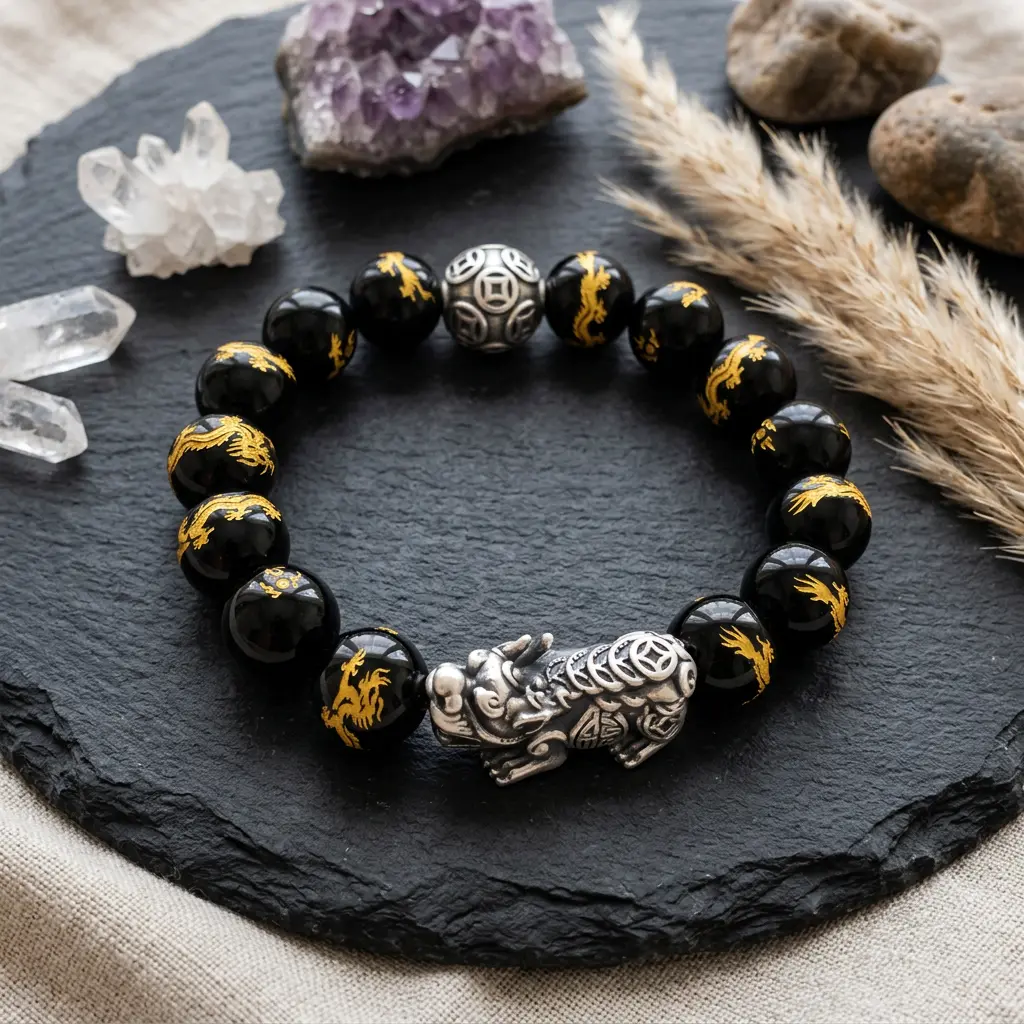
| Spiritual connection + traditional protection | Monastery-blessed Tibetan bracelet | Carries documented Vajrayana consecration blessing — different category from standard crystal jewelry |
If this is your first time buying crystal jewelry for travel, don’t overthink the combination. Start with a single amethyst or malachite bracelet — both are versatile, widely compatible with other stones, and appropriate across every trip type. First-time wearers consistently report that the most important factor isn’t the crystal selection — it’s setting a clear intention before travel and wearing the piece with actual awareness, not as passive decoration. Build your combination from there once you’ve experienced what intentional crystal wear feels like in practice.
For those buying as a gift: a malachite bracelet is the most universally appropriate travel protection stone, and it travels well as an explanation — “the Traveler’s Stone used for 3,000 years” is a story any recipient can connect with, regardless of their existing relationship to crystal practice.
Ready to Travel with Intention?
Explore PotalaStore’s collection of authentic crystal travel bracelets — each piece sourced from verified Himalayan monasteries and selected for both beauty and protective tradition. Free shipping.Shop Travel Crystal Bracelets →
Frequently Asked Questions
Malachite is the most universally recognized travel protection stone, with documented use spanning ancient Egyptian sailors, medieval European merchants, and Tibetan Buddhist pilgrims across more than 3,000 years. It’s called “The Traveler’s Stone” across multiple independent traditions — a consistency that reflects something genuine. If you want one crystal that covers the broadest range of travel protection associations, malachite is it. For anxiety-specific concerns — particularly flying — amethyst is the stronger individual choice.
Yes — natural gemstone crystal bracelets pass through TSA and international airport security checkpoints without issue. Crystal beads are non-metallic and don’t trigger metal detectors. You don’t need to remove them at the screening checkpoint. The exception: bracelets with metal clasps, metal spacer beads, or decorative metal accents may trigger detectors and could require removal, depending on the setup at that particular airport.
Malachite holds the “Guardian Stone for travelers” designation most consistently across historical and traditional sources, associated specifically with protection during physical movement and transit. Moonstone shares the “Traveler’s Stone” title in Tibetan Buddhist tradition, with a focus on safe passage and intuitive guidance rather than physical hazard protection. Both earn the name — they address different aspects of travel risk. Malachite for physical safety, moonstone for navigating the unknown.
The simplest method: rinse under cool running water for 30 seconds, then place in sunlight or moonlight for 10–15 minutes to recharge. Travel exposes your crystals to high-energy environments — airports, crowded transit hubs, unfamiliar energy fields — so a post-trip cleanse restores their energetic integrity before the next use. Important exception: malachite should not be soaked in water. It is a soft stone (Mohs 3.5–4) and sustained water contact can pit or damage the surface. Use sunlight or dry moonlight cleansing only for malachite pieces. The cleansing and energy relationship is worth maintaining as a regular practice — not just after major trips.
📚 Further Reading & References
- Malachite — Gem Description, History, and Lore: Geological overview and historical documentation of malachite’s use as a protective talisman across ancient Mediterranean and Egyptian cultures. Gemological Institute of America (GIA)
- Amethyst — Gem Properties and Historical Use: Comprehensive description of amethyst varieties, hardness (Mohs 7), and historical associations with clarity and calm. Gemological Institute of America (GIA)
- Lepidolite Mineral Data — Lithium Content: Technical mineral classification and chemical composition data, including lithium content of lepidolite specimens. Mindat.org — Mineralogical Database
- Tibetan Buddhist Protective Amulets and Consecration Traditions: Overview of Vajrayana blessing practices and the role of consecrated objects in Tibetan Buddhist daily and travel practice. Source: Smithsonian National Museum of Asian Art — readers may search the institution’s digital collections for current resources on Tibetan Buddhist material culture.