
What Your Birthstone Says About You: Personality & Spiritual Meaning by Month
 by Yang Tso
0 comments
by Yang Tso
0 comments
Your birthstone reflects more than the month you were born — it mirrors the core traits, emotional strengths, and spiritual path that define who you are. Whether you wear yours daily or have never given it much thought, the personality insights tied to each gem are consistent across traditions that span thousands of years. At Potala Store, our work sourcing sacred gemstones from Himalayan monasteries has given us a window into something most birthstone guides never cover: the 1,000-year-old Tibetan Buddhist understanding of these stones — one that reframes each gem not as a symbol of birth month, but as a mirror of the soul’s deeper work.
Here is what your birthstone says about you, from personality traits to the spiritual energy it is believed to carry.
⚠️ Important note: The spiritual and energy properties described in this article draw from traditional beliefs, Tibetan Buddhist teachings, and centuries of gemstone lore — not scientific evidence. This content is intended for educational and inspirational purposes only, and should not replace professional guidance of any kind.

What Each Birthstone Reveals About Your Personality
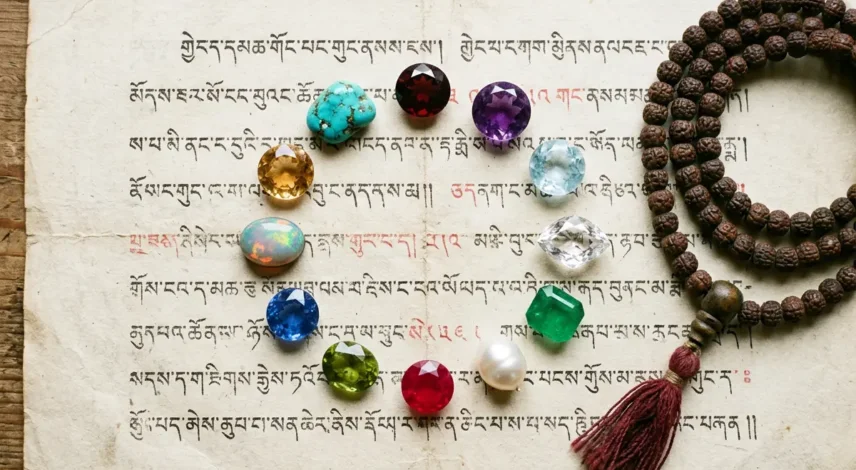
Each of the 12 birthstones corresponds to a distinct set of personality traits and spiritual qualities, recognized consistently across Western gemology, Vedic astrology, and Tibetan tradition. The table below covers all 12 months:
| Month | Birthstone | Core Personality Traits | Spiritual Quality |
|---|---|---|---|
| January | Garnet | Loyal, fiercely protective, fearless, deeply devoted | Root chakra grounding; believed to shield against negative influences |
| February | Amethyst | Intuitive, wise, spiritually curious, calm under pressure | Third Eye clarity; used in Buddhist mala beads for over 1,000 years to deepen meditation focus |
| March | Aquamarine | Serene, empathetic, clear-headed, diplomatically gifted | Throat chakra expression; traditionally associated with honest, compassionate speech |
| April | Diamond | Courageous, resilient, bold, committed to truth | In Tibetan Buddhism, the diamond is the vajra — a symbol of indestructible wisdom and compassionate action |
| May | Emerald | Patient, compassionate, loyal, deeply nurturing | Heart chakra activation; historically used in Tibetan ritual jewelry and prayer beads to cultivate deep meditation states |
| June | Pearl / Moonstone | Gentle, adaptable, sincere, emotionally perceptive | Pearl carries Buddhist symbolism of purity and compassion; moonstone is associated with inner wisdom and the crown chakra |
| July | Ruby | Passionate, natural leader, courageous, magnetically confident | One of Buddhism’s most revered stones — historical records describe Chinese offerings of ruby to honor the Buddha; believed to enhance compassion and generosity |
| August | Peridot | Optimistic, radiant, emotionally stable, protective | Solar Plexus and Heart chakra; traditionally believed to dispel negative thoughts and lighten emotional heaviness |
| September | Sapphire | Wise, honest, calm, analytical, humbly industrious | Associated with the Medicine Buddha in Tibetan tradition; believed to promote devotion, tranquility, and the pursuit of enlightenment |
| October | Opal / Tourmaline | Creative, imaginative, emotionally rich, free-spirited | Sacral chakra and creative flow; heightened sensitivity to beauty and meaning in everyday life |
| November | Topaz / Citrine | Generous, joyful, socially magnetic, naturally manifesting | Solar Plexus abundance; believed to amplify intention and attract positive outcomes through clarity of purpose |
| December | Turquoise / Tanzanite | Wise beyond their years, protective, compassionate, deeply honest | Sacred in Tibet since at least 127 BC — turquoise was set in the crown of King Nyatri Tsenpo, Tibet’s first king, as a symbol of spiritual protection |
The Ancient Spiritual Depth Behind Your Stone

Most birthstone guides tell you what your gem says about your personality — almost none explain what it has meant across the oldest unbroken gemstone traditions on earth. In Tibetan Buddhism and Sowa Rigpa (traditional Tibetan medicine), gemstones were never ornamental. Each stone was believed to carry a life force and karmic memory — assigned to individuals not because of birth month, but because of what the soul needed for its particular path of growth.
Several stones carry a spiritual legacy that speaks directly to the personality traits they are said to reveal:
- Turquoise (December): Turquoise holds a uniquely documented place in Himalayan spiritual history. Records trace its ceremonial use to the crowning of King Nyatri Tsenpo — Tibet’s first king — in 127 BC, where turquoise was placed in the crown as a symbol of protection and divine favor. Tibetan amulets incorporating turquoise remain common throughout the Himalayas to this day. People born in December are said to share this stone’s defining quality: the capacity to protect others while remaining spiritually grounded themselves.
- Amethyst (February): Amethyst has been threaded into Buddhist mala beads used for mantra recitation for over 1,000 years. Its resonance with the Third Eye chakra makes it a traditional choice for deepening meditation and cultivating the kind of clear, unhurried wisdom that is the hallmark of the February personality.
- Ruby (July): Among all gemstones, ruby holds a uniquely honored place in Buddhist history. Ancient Chinese texts record offerings of rubies made to honor the Buddha, and Vajrayana teachings associate ruby with the qualities of unity, compassion, and courageous generosity — the very traits that mark the July-born as natural leaders who lead from the heart, not the ego.
- Sapphire (September): In Tibetan tradition, sapphire is connected to the Medicine Buddha — the Buddha of healing and wisdom — and is believed to promote devotion, tranquility, and the path toward enlightenment. The deep, steady blue of sapphire mirrors the calm of an undisturbed mind: exactly the quality others most rely on in the September personality.
- Diamond (April): The Sanskrit word vajra — the Tibetan dorje — translates literally as “diamond” or “thunderbolt.” In Tibetan Buddhism, the dorje represents indestructible wisdom: the clarity that cuts through confusion without force. April-born individuals carry this same quality — a resilience that doesn’t break others but illuminates what is true.
The key takeaway: the personality traits associated with each birthstone are not arbitrary. They reflect the energetic qualities that independent traditions — from Himalayan Buddhism to ancient Greece — recognized in these stones over centuries of direct experience and observation.

How to Work With Your Birth Month Gem
Wearing your birthstone is the simplest starting point — but intention transforms it from jewelry into practice. Three approaches, drawn from both contemporary crystal work and Tibetan spiritual tradition, can deepen the connection:
- Wear it during seated meditation. Hold your birthstone in your left hand (the receiving hand in many traditions) or incorporate it into a mala bracelet for mantra practice. Physical contact during meditation is believed to strengthen the stone’s resonance with your energy field over time.
- Set a monthly intention with your stone. On the first of each month, hold your birthstone and state one clear intention aloud. Tibetan practitioners have long used gemstones as intention anchors — physical reminders of the specific quality you are actively cultivating.
- Pair it with complementary stones. Birthstones work well alongside gems that address your known challenges. A July-born (Ruby) who tends toward impulsiveness, for example, might balance ruby’s passionate energy with grounding garnet or calming aquamarine. The pairing is personal, not prescriptive.
We’ve written a longer guide to choosing birthstone-inspired spiritual jewelry for daily practice — including how to select pieces that combine traditional birthstones with Himalayan-sourced sacred materials for wear that is intentional rather than decorative.
Frequently Asked Questions
Your birthstone doesn’t create your personality — but it has consistently been used as a symbolic map of the traits associated with your birth month. In traditions from Tibetan Buddhism to ancient Greek culture, specific gemstones were connected to specific energetic qualities based on centuries of accumulated observation. Whether you approach this as metaphor or as lived practice, the personality associations are remarkably consistent across independent traditions.
That pull is considered meaningful in Tibetan Buddhist tradition. The stone you are energetically drawn to often reflects what your spirit currently needs — not simply what month you were born in. Sowa Rigpa (Tibetan traditional medicine) approached gemstone assignment this way: based on spiritual need, not birth date. Trust the attraction as information worth paying attention to.
Yes — there is no rule against wearing another month’s stone. Tibetan practice actively encourages choosing gemstones based on your current spiritual needs and the qualities you are working to cultivate. A February-born person navigating a period of intense change might reach for turquoise’s protective and grounding qualities, not just their traditional amethyst. The stone that serves your growth is always the right stone.
Explore Birthstone-Inspired Spiritual Jewelry
At Potala Store, our pieces are sourced directly from Himalayan artisans and monastery workshops — combining traditional birthstone meanings with sacred materials chosen for intention, not just aesthetics.Browse the Collection →
📚 References
- Birthstone History and Gemological Standards: Authoritative guide to birthstone origins, the 1912 standardization by the American National Association of Jewelers, and individual stone properties. Gemological Institute of America (GIA) — gia.edu/birthstones
- Gemstones in Tibetan Buddhist and Himalayan Traditions: Historical and cultural overview of sacred gemstone use in Tibetan Buddhist ceremony, Sowa Rigpa traditional medicine, and Himalayan amulet practice. Source: Rubin Museum of Art, New York — Himalayan Art Resources. (Readers may search the museum’s website for current resources on Himalayan material culture and sacred objects.)
- Birthstones by Month — Colors and Meanings: Comprehensive reference for monthly birthstone assignments, including traditional and modern variations. The Old Farmer’s Almanac — almanac.com/birthstones