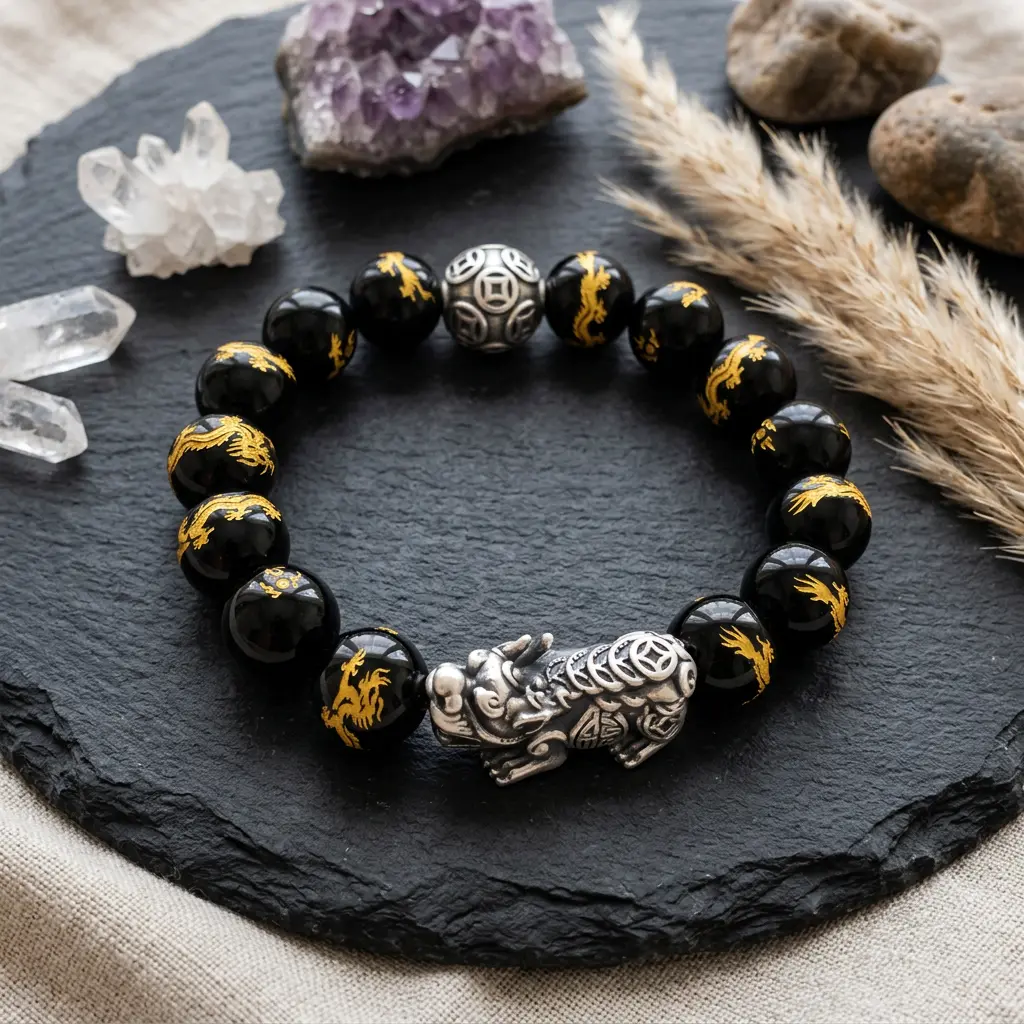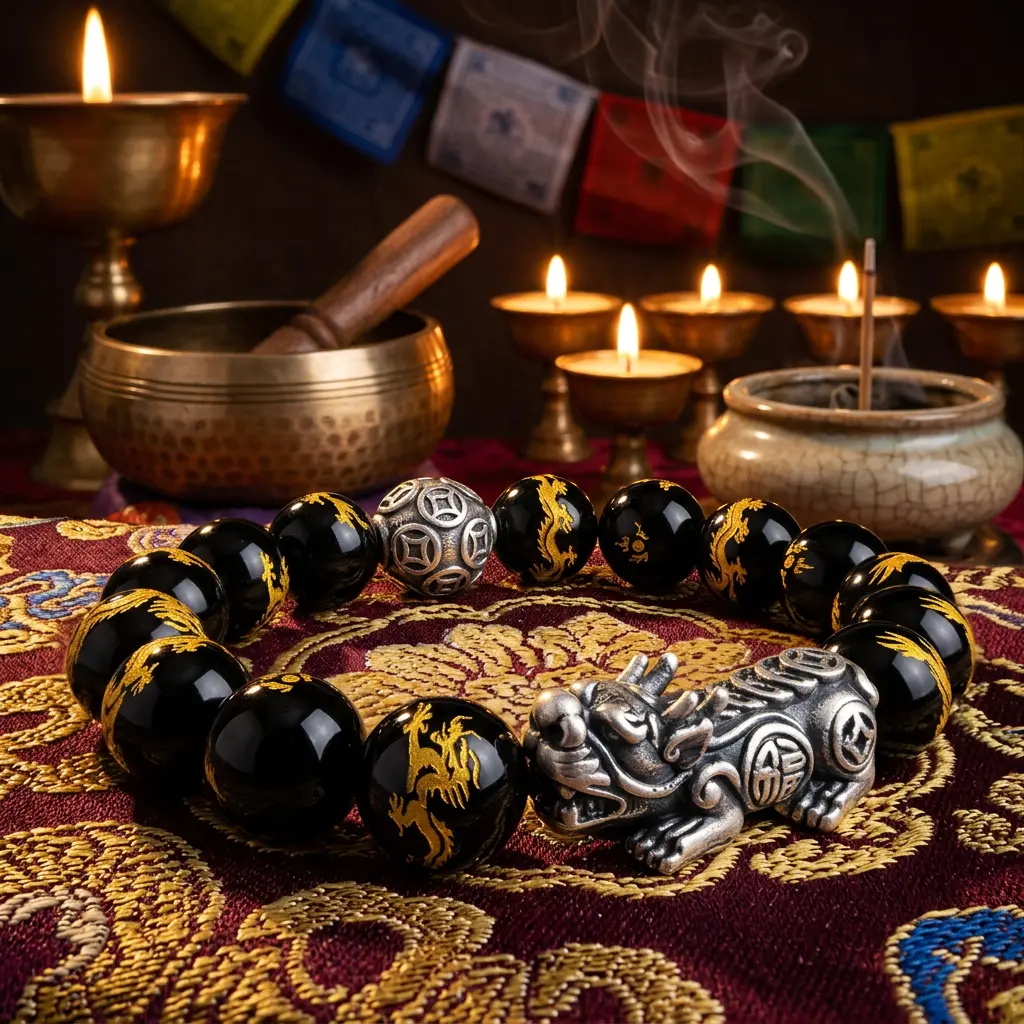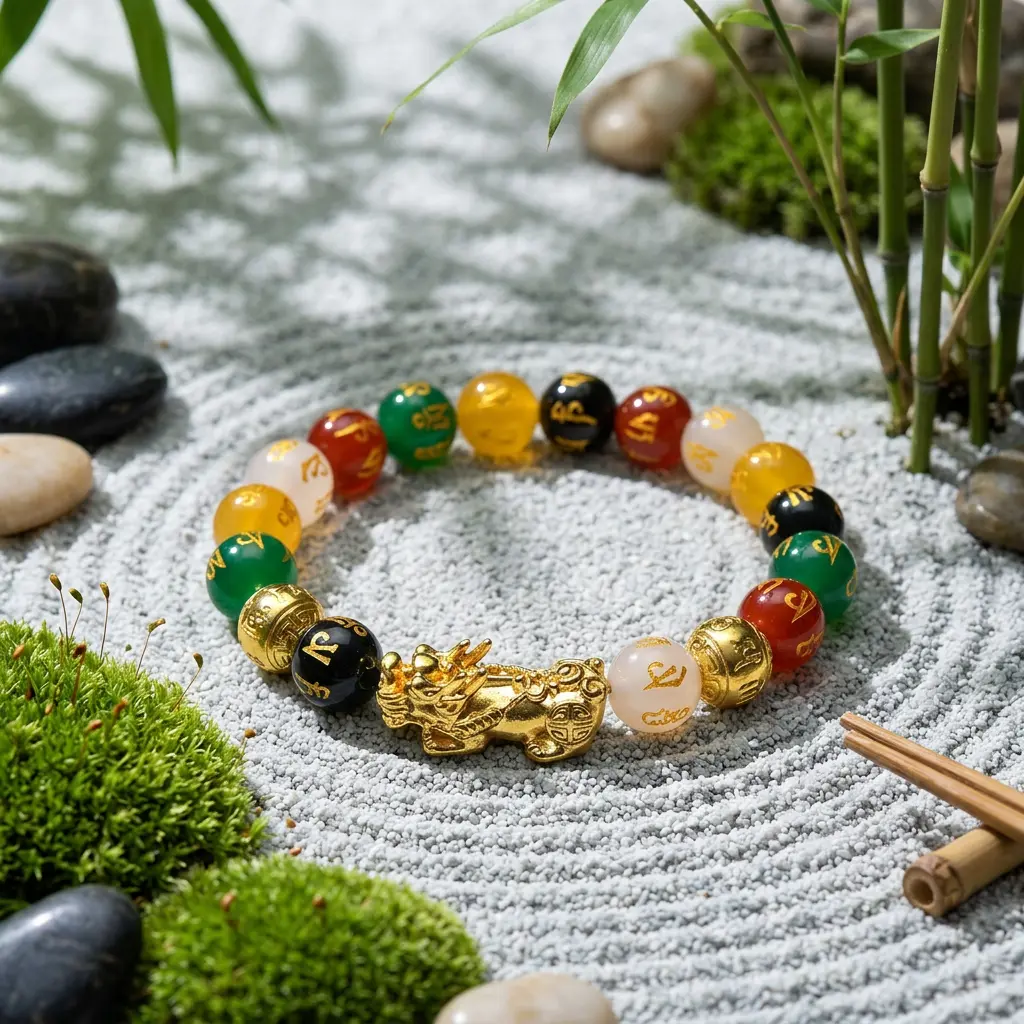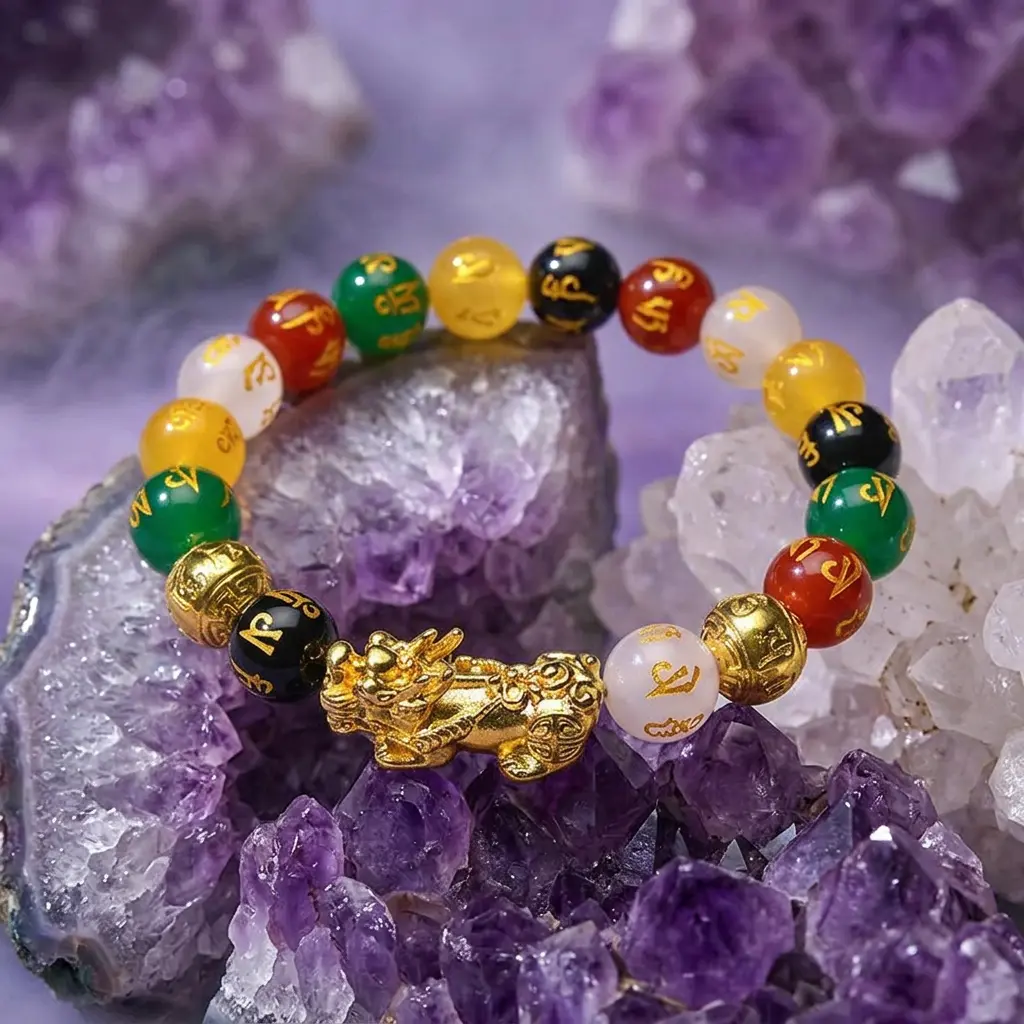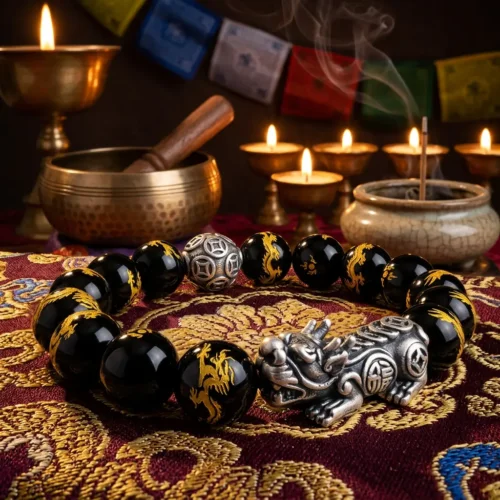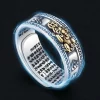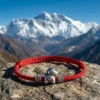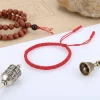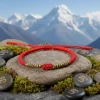

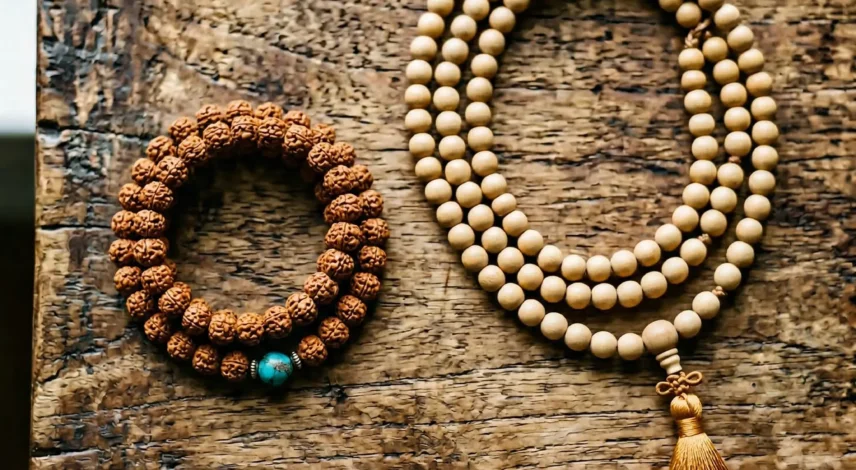

Still deciding between a wrist mala and a full 108-bead mala? The choice comes down to three things: how you practice, how you live, and where you are in your journey. A wrist mala is a bracelet of 18, 21, or 27 beads — portable, wearable, and ideal for daily mindfulness. A full mala is a 108-bead necklace designed for complete mantra cycles and formal sitting practice.
Both are legitimate spiritual tools with deep roots in Tibetan Buddhism. At Potala Store, we work directly with Sera Jhe Monastery and Kopan Monastery — and after years of conversations with monks and practitioners at every level, we’ve seen how each type serves a different purpose at different stages of practice. This guide gives you the full picture so you can choose with confidence.
Wrist Mala vs Full Mala: The Core Differences at a Glance
The most direct answer: a full mala gives you one complete meditation cycle per round, while a wrist mala requires multiple rounds to reach 108 recitations. Here’s the full comparison:
| Feature | Wrist Mala (Bracelet) | Full Mala (Necklace) |
|---|---|---|
| Bead Count | 18, 21, or 27 beads | 108 beads + 1 guru bead |
| Physical Size | 6.5–8.5 in. circumference | ~36 in. circumference (8mm beads) |
| Rounds to Reach 108 | 4–6 rounds (varies by count) | 1 round = complete cycle |
| Best For | Daily wear, short practices, travel | Formal sessions, mantra accumulation |
| Portability | Excellent — stays on wrist | Good — worn as necklace or in bag |
| Authentic Price Range | $25–$55 | $45–$120 |
| Tradition | Tibetan Buddhism, Hinduism, Yoga | Universal across all Buddhist traditions |
| Best for Gifting | Beginners & casual practitioners | Dedicated practitioners |
One detail that surprises most first-time buyers: in Tibetan Buddhist tradition, a full mala round of 108 beads officially counts as 100 completed mantras. The remaining 8 beads serve as a buffer for recitations where your attention lapsed — a compassionate accounting system built into the practice by teachers at monasteries like Sera Jhe. No Western wellness guide mentions this, but it’s the standard in Gelugpa practice.
How Many Beads Should a Wrist Mala Have — and Why Does It Matter?

Wrist malas come in three standard counts — 18, 21, and 27 beads — and each is tied to specific practices, not chosen at random.
- 21-bead wrist mala — The most traditional Tibetan count. It mirrors the 21 Taras, the 21 emanations of Tara in Tibetan Buddhism. A 21-bead mala is the standard tool for the Green Tara mantra (Oṃ Tāre Tuttāre Ture Svāhā) and for prostration practice, where one round equals 21 prostrations. Monks at Sera Jhe carry 21-bead wrist malas daily precisely because this count matches the most commonly practiced short sadhanas.
- 27-bead wrist mala — Exactly one quarter of 108. Four complete rounds on a 27-bead mala equals one full cycle of 108 recitations. This makes it the most versatile option for general mantra practice — you count four rounds, and you’ve done a full 108. It’s the recommended starting count if you don’t yet have a specific practice assigned by a teacher.
- 18-bead wrist mala — One sixth of 108. Six rounds equal a full cycle. Typically strung with smaller 6mm beads for a more discreet, compact bracelet. Popular for practitioners who want something low-profile that won’t draw attention at work.
📐 Sizing Note
Standard wrist mala sizes are Small (wrist 6.3–6.7 in., 21 beads at 8mm), Medium (6.7–7.5 in., 18–23 beads), and Large/XL (7.9–8.7 in., 21–27 beads). Slide-knot designs add 2–3 in. of adjustability, making them a safe gift choice when you don’t know the recipient’s exact wrist size.
Which Is Better for Meditation and Mantra Practice?

For japa meditation — the practice of counting mantra recitations — a full 108-bead mala is the more precise tool. One round takes approximately 12–15 minutes at a moderate recitation pace, and because you never have to count rounds, your mental focus stays entirely on the mantra.
A wrist mala requires tracking rounds alongside individual beads, which adds a small but real cognitive load. This is manageable once it becomes habit, but for beginners or during intensive retreat practice, the extra tracking can disrupt concentration.
That said, wrist malas win in several specific practice contexts:
| Practice Type | Better Tool | Why |
|---|---|---|
| Full 108-mantra cycle | Full mala | One round = complete cycle; no round-counting needed |
| Short daily practice (5–10 min) | 27-bead wrist mala | 1–2 rounds, compact, easy anywhere |
| Green Tara or 21-Tara practice | 21-bead wrist mala | Bead count directly mirrors the tradition |
| Prostration practice | 21-bead wrist mala | 21 beads = 21 prostrations per round |
| Extended retreat accumulation | Full mala | Precise counting for 100,000-recitation practices |
| Mindfulness anchor (non-counting) | Either | Wearing any mala cues presence throughout the day |
We’ve noticed a consistent pattern among customers: people who start with a wrist mala often return within a year to add a full mala. The wrist mala becomes an always-on companion; the full mala lives on the altar for formal sessions. This is genuinely the most common dual-mala approach we see.
When to Choose a Wrist Mala
A wrist mala is the right starting point if any of these fit your situation:
- You’re new to mala practice. The bracelet format is familiar territory for Western practitioners, and the learning curve is low. You can begin using a wrist mala the same day it arrives — no technique to master, no hand-rolling position to learn.
- Your life is mobile. Wrist malas travel invisibly. They stay on your wrist during flights, commutes, yoga sessions, or workdays. Full malas need more careful handling to avoid tangling or bead damage.
- You want a daily mindfulness anchor, not just a meditation tool. Wearing a wrist mala throughout the day creates a continuous thread of intention — a quiet reminder even when you’re not actively meditating.
- You practice Green Tara or short mantra cycles. If a teacher has given you a practice involving the 21 Taras, a 21-bead wrist mala is purpose-built for it. One round of the bracelet is one complete circuit of 21 recitations — no counting required.
- You’re choosing a gift. A wrist mala is accessible for someone who may not have an established practice, while still carrying genuine spiritual significance. It’s a safer choice than a full mala for someone whose practice depth you’re unsure of.
From Potala Store: Our hand-knotted wrist mala bracelets are sourced through our monastery partnerships and individually blessed at Kopan Monastery. Each arrives with a certificate of blessing and a card explaining the tradition and bead count behind your specific piece.
When to Choose a Full 108-Bead Mala
A full mala is the appropriate step when your practice moves from casual mindfulness into structured mantra accumulation and formal sitting sessions.
- You’ve committed to a specific mantra practice. Whether it’s Om Mani Padme Hum, the Vajrasattva 100-syllable mantra, or any practice where you’re building toward accumulation goals — a full mala gives you the precision that round-counting on a wrist mala simply can’t match.
- You’ve received teachings or empowerments. In Tibetan Buddhism, receiving a mantra practice from a qualified lama traditionally comes with instruction on how to use a full mala properly. If you’ve received lung (reading transmission) or wang (empowerment), a full mala is the expected tool.
- You want to follow classical Gelugpa form. The authentic Tibetan full mala includes 108 beads, one guru bead, and three spacer beads at positions 27, 54, and 81. The spacers represent the Three Jewels — Buddha, Dharma, and Sangha — and mark each quarter of the cycle. This is the format used by monks at Sera Jhe and Kopan in their daily practice.
- You sit for longer dedicated sessions. If you regularly meditate for 20 minutes or more, the full mala’s single-round structure keeps your mental bandwidth free for the practice itself.
- You want a mala that deepens with use. Full malas — especially sandalwood, rudraksha, and bodhi seed — absorb the energy and scent of practice over time. Many practitioners report that a mala used for years in sincere practice holds a quality that a new one doesn’t yet have.
“At Sera Jhe, every monk carries a full mala for daily formal practice. The wrist mala is worn throughout the day as a mindfulness reminder — but when you sit down on the cushion, you use the full mala.”— As shared by a resident monk during our sourcing visit, Bylakuppe, India
Looking for an authentic full mala? Our monastery-sourced 108-bead malas come blessed with ceremony seals from Sera Jhe and Kopan — the real thing, not decorative replicas.Browse Full Malas →
Do You Have to Choose? How Most Practitioners Use Both

In practice, most dedicated meditators own both — and use each for a different context. This is actually the most natural progression we’ve observed among customers who come back to Potala Store after their first purchase.
A typical dual-mala approach looks like this:
- Wrist mala: Worn daily as a mindfulness anchor. Used for short, informal recitations — a few rounds during lunch, a minute of counting before a difficult meeting, or simply as a silent reminder to stay present.
- Full mala: Reserved for formal sitting practice. Kept on an altar or in a cloth bag. Used for complete 108-recitation cycles and any high-accumulation practice.
If you can only start with one and have no specific practice yet: choose a 27-bead wrist mala in a material that genuinely resonates with you. Four rounds equals 108 recitations — a complete cycle — while remaining practical for daily life. When your practice becomes consistent and you begin working with a teacher or specific sadhana, add a full mala at that point.
If you have a specific practice assigned by a teacher — especially a mantra practice — start with the tool your teacher recommends. In most Tibetan Buddhist contexts, that will be a full mala.
🙏 Find Your Perfect Mala at Potala Store
Every mala we carry is sourced directly through our Tibetan monastery partnerships at Sera Jhe and Kopan — hand-knotted by Tibetan artisan refugees, blessed in ceremony, and shipped with a certificate of authenticity. These are real spiritual tools, not decorative jewelry.
Shop Wrist MalasShop Full Malas
Frequently Asked Questions
Yes, with one adjustment: you need to track rounds instead of individual beads. A 27-bead wrist mala used for four complete rounds equals one full cycle of 108 recitations. For most daily mantra practices, this is functionally equivalent to a full mala. However, for high-accumulation practices — such as Vajrasattva’s 100-syllable mantra toward 100,000 recitations — most Tibetan Buddhist teachers recommend a full mala for precision. When in doubt, follow your teacher’s guidance.
In Hindu tradition, the right wrist is traditional for active or manifesting energy, while the left wrist is associated with receptive energy. In Tibetan Buddhist practice, there is no universal rule — both wrists are acceptable, and the choice is often personal or guided by a teacher. Most practitioners simply wear it on whichever wrist feels natural and doesn’t interfere with their watch or other jewelry.
Hold the mala between your thumb and ring finger — the index finger is traditionally avoided in Tibetan Buddhist japa practice. Begin at the bead adjacent to the guru bead or the main marker bead on your wrist mala. Move one bead per recitation, pulling each toward you with the thumb. When you return to the starting bead, that is one complete round. For a 27-bead mala, use a counter clip or track rounds on your free hand — four rounds equals 108 recitations.
In Tibetan Buddhism, a mala blessed by a qualified monk or lama is traditionally believed to be more energetically potent as a practice tool. That said, many practitioners also perform their own intention-setting and cleansing when they first receive a new mala — this is fully accepted and encouraged. The sincerity and consistency of your practice ultimately matters more than the object itself. Malas sourced through monastery partnerships, as ours are, typically arrive with blessings already given.
📚 References
- Japamala — Buddhist Prayer Beads: Historical and cultural overview of mala traditions across Hinduism, Tibetan Buddhism, and other lineages, including bead count symbolism and mantra counting conventions. Wikipedia — Japamala
- The 21 Taras Praise (Lobzang Chödrak translation): Canonical Tibetan text detailing the 21 emanations of Tara and the practice associated with the 21-bead mala count. Lotsawa House — Praises to the 21 Taras
- What Are Mala Beads? — Tricycle: The Buddhist Review: Overview of mala bead use in Buddhist practice traditions, including the significance of 108 in Buddhist cosmology. Tricycle — What Are Mala Beads?
- Sera Jhe Monastic University — Gelugpa Practice Standards: Monastic source for Gelugpa tradition guidelines on mala use in formal practice, including the 100-recitations-per-108-bead convention. Source: Sera Jhe Monastic University, Bylakuppe, Karnataka, India (Readers may contact the monastery directly at serajemonastery.org for educational resources.)