

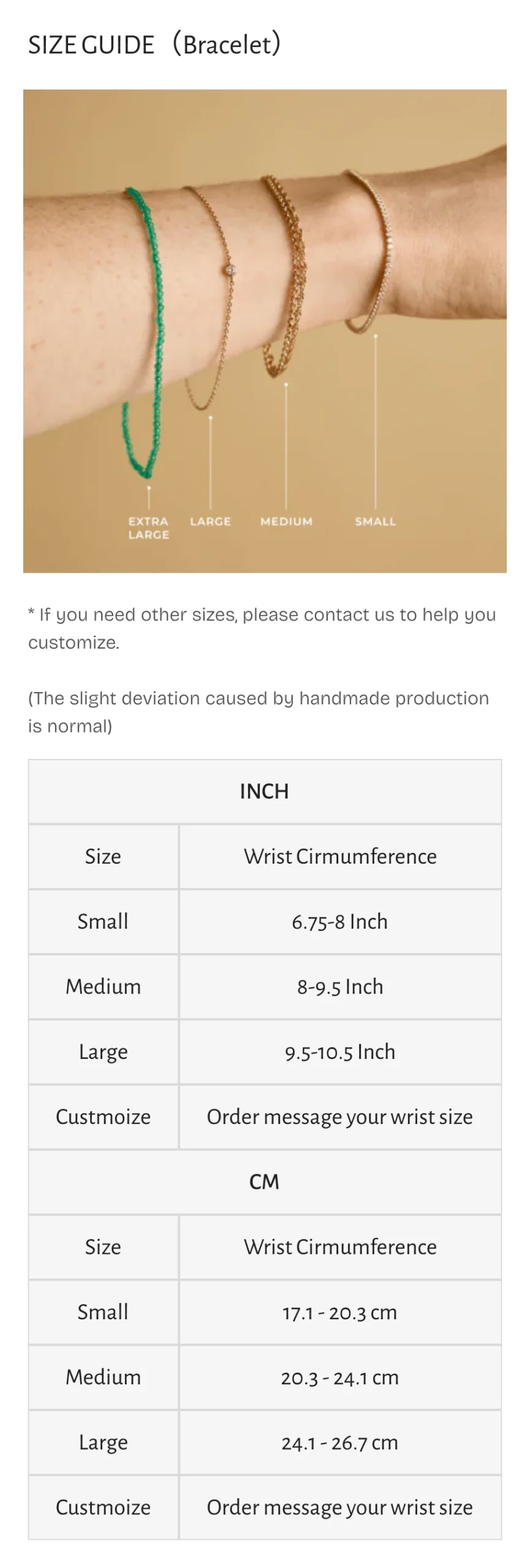
 Bracelet Size Guide Chart - Wrist Measurement in Inches & CM[/caption]
[caption id="attachment_17326" align="aligncenter" width="905"]
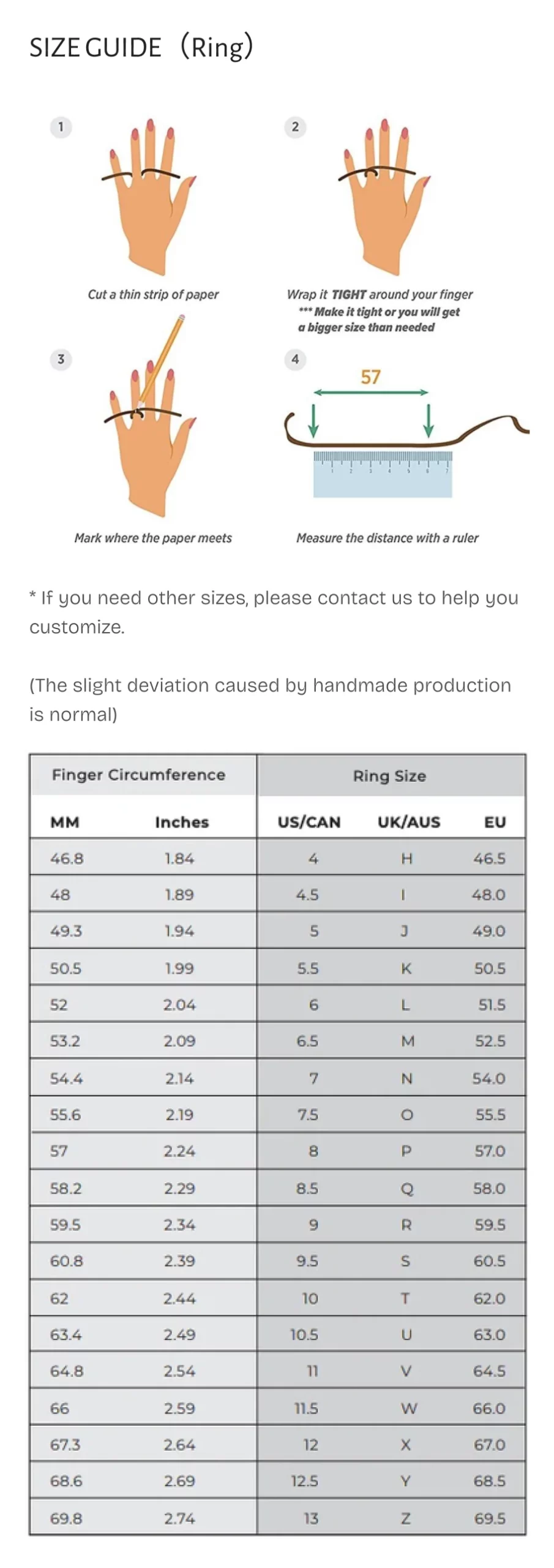 Ring Size Guide - How to Measure Finger Size at Home[/caption]
[caption id="attachment_17325" align="aligncenter" width="912"]
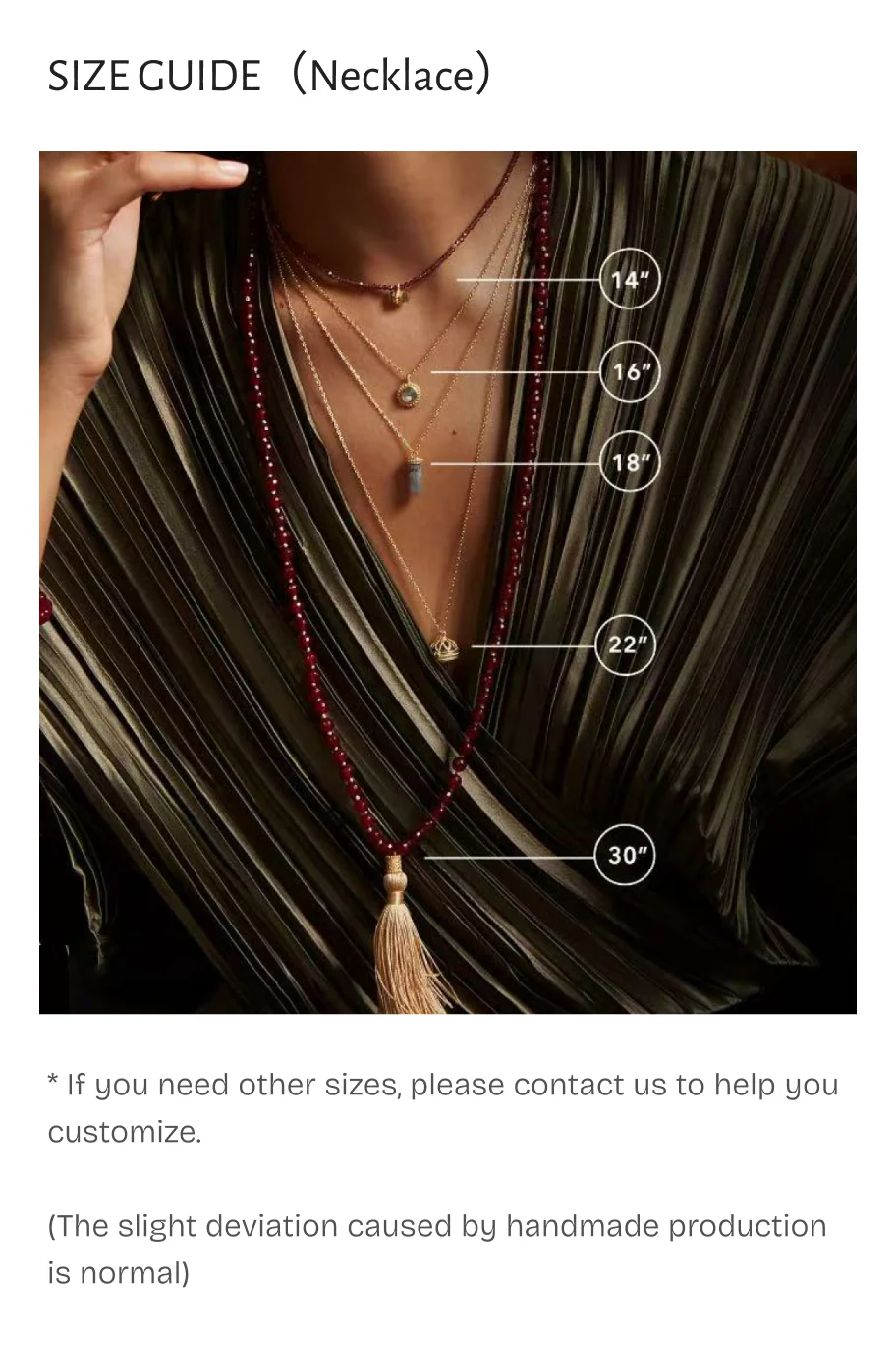 Necklace Length Size Guide Chart - 14 16 18 22 30[/caption]
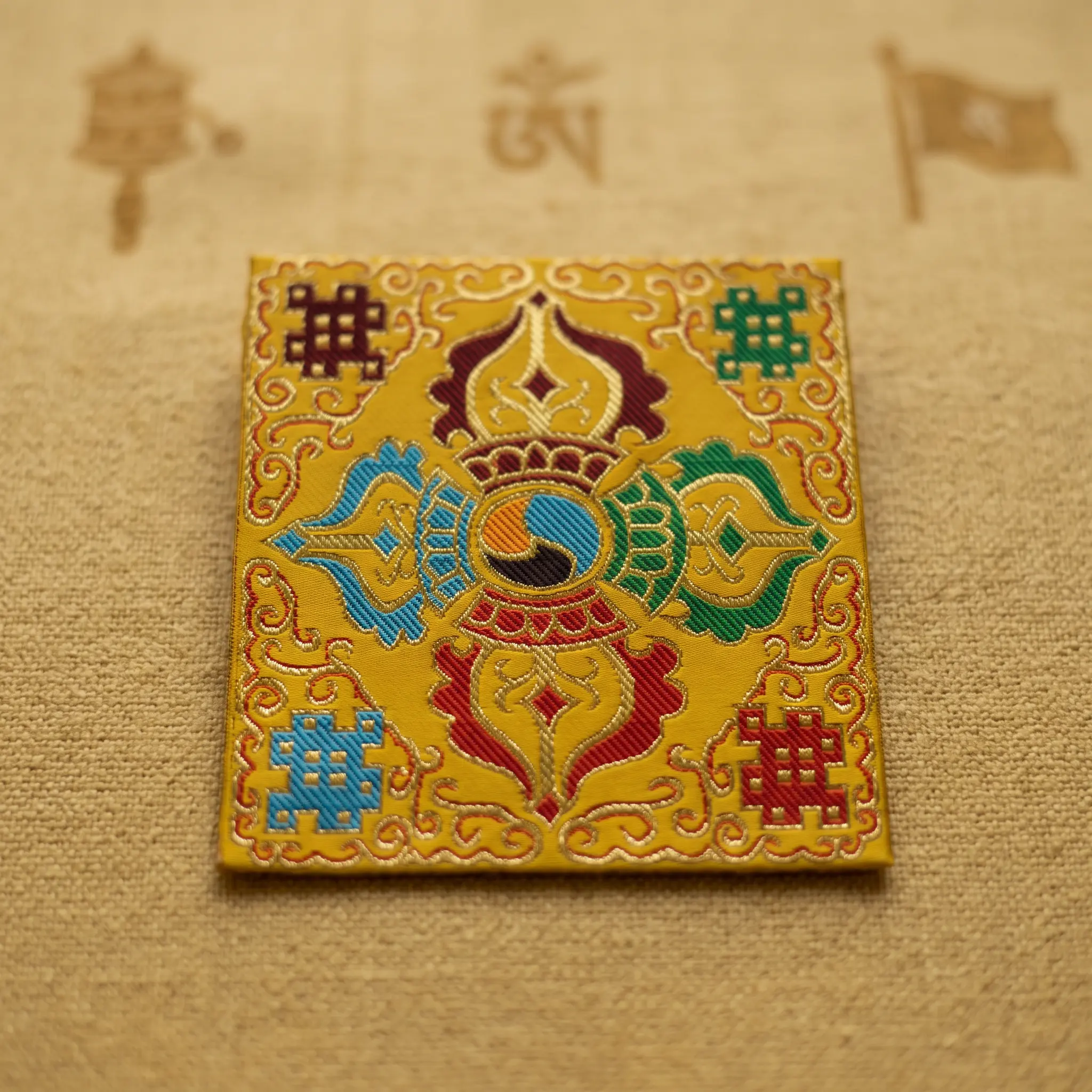
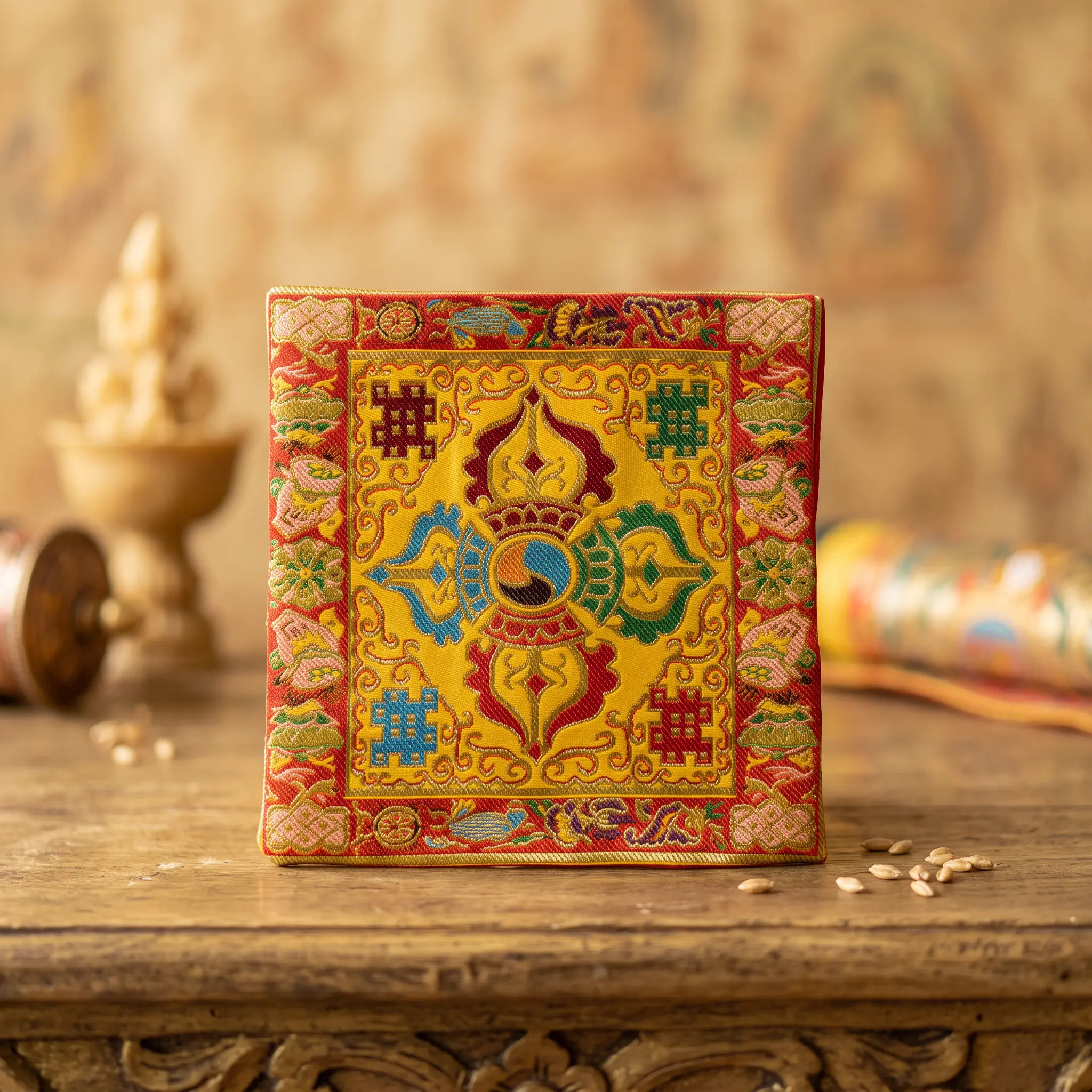
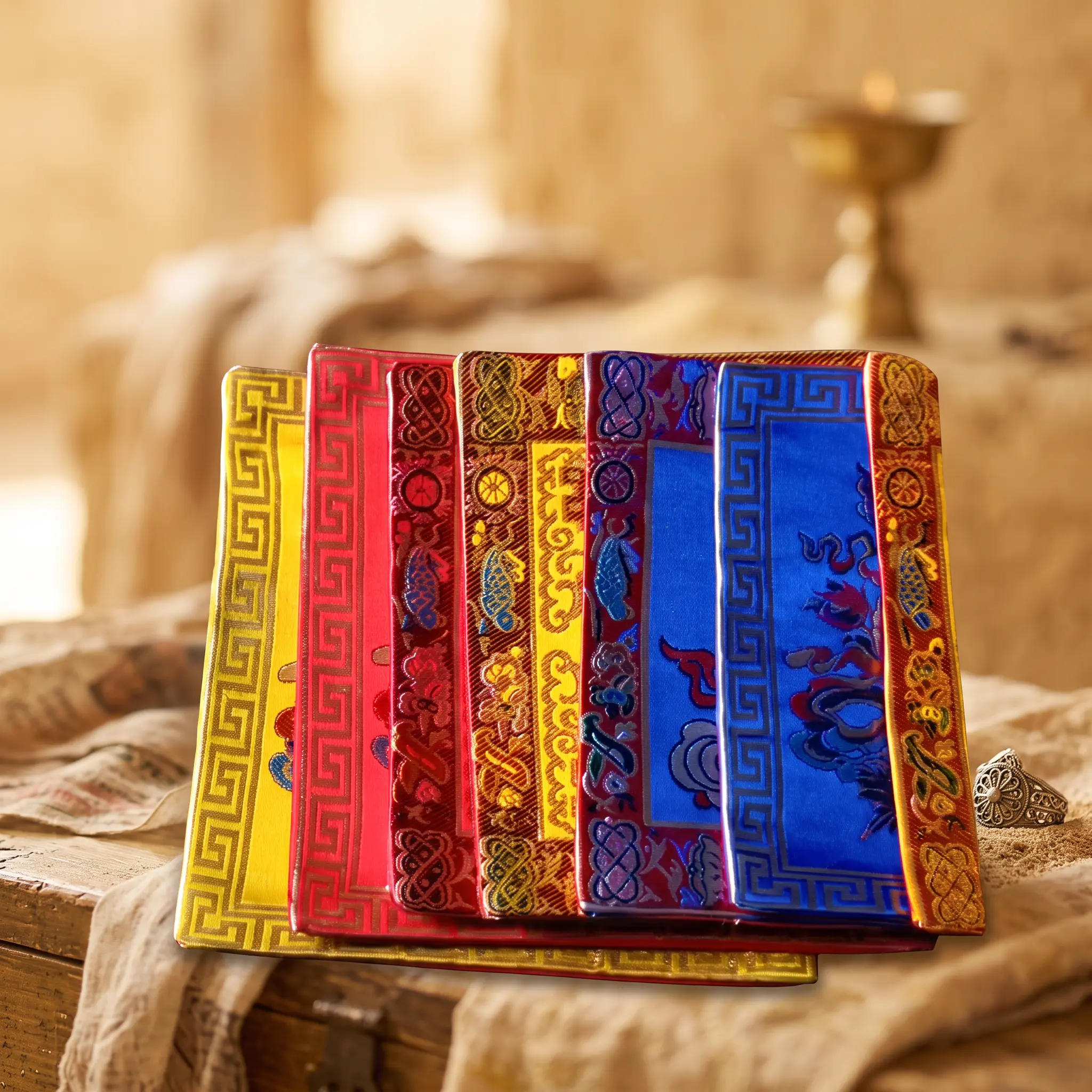
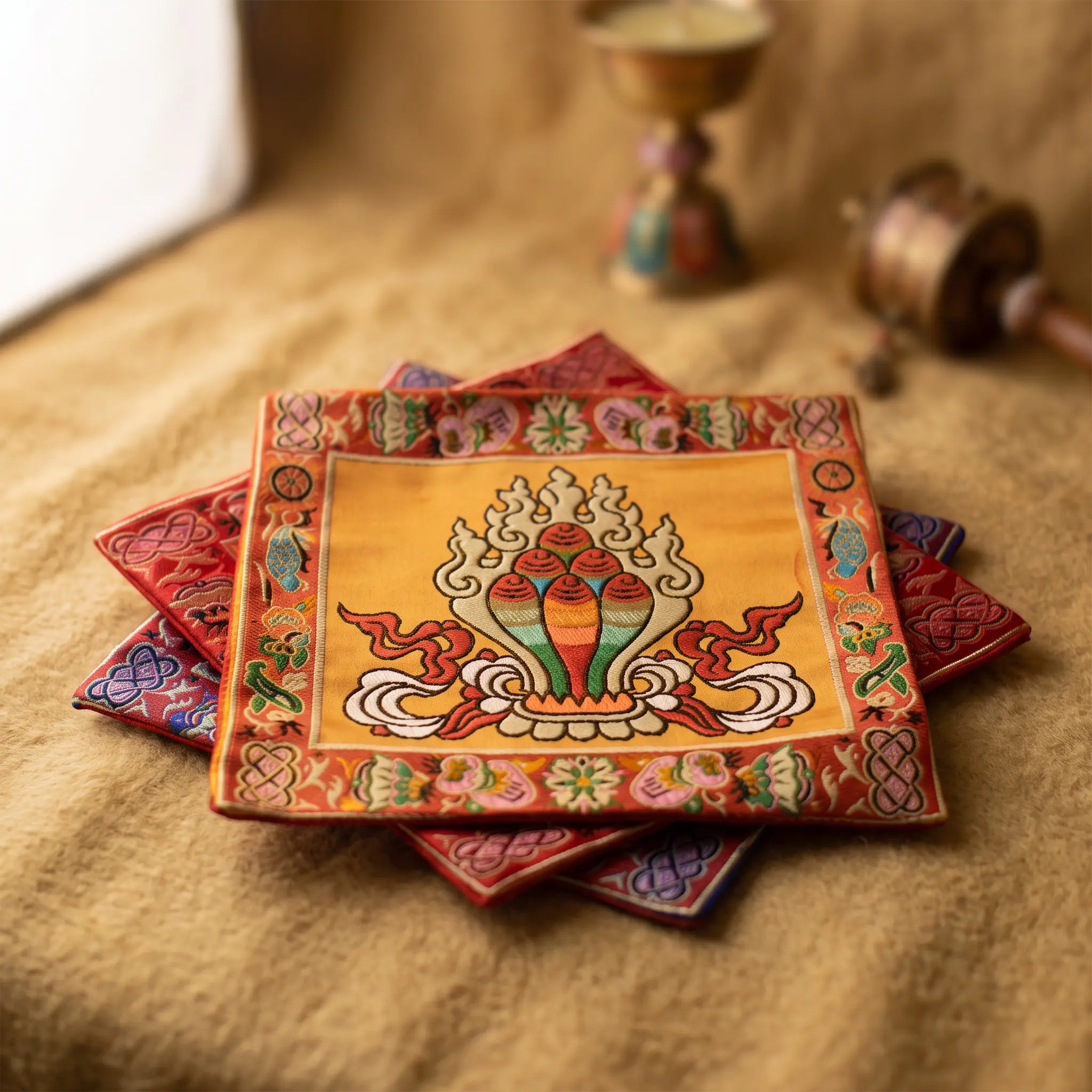
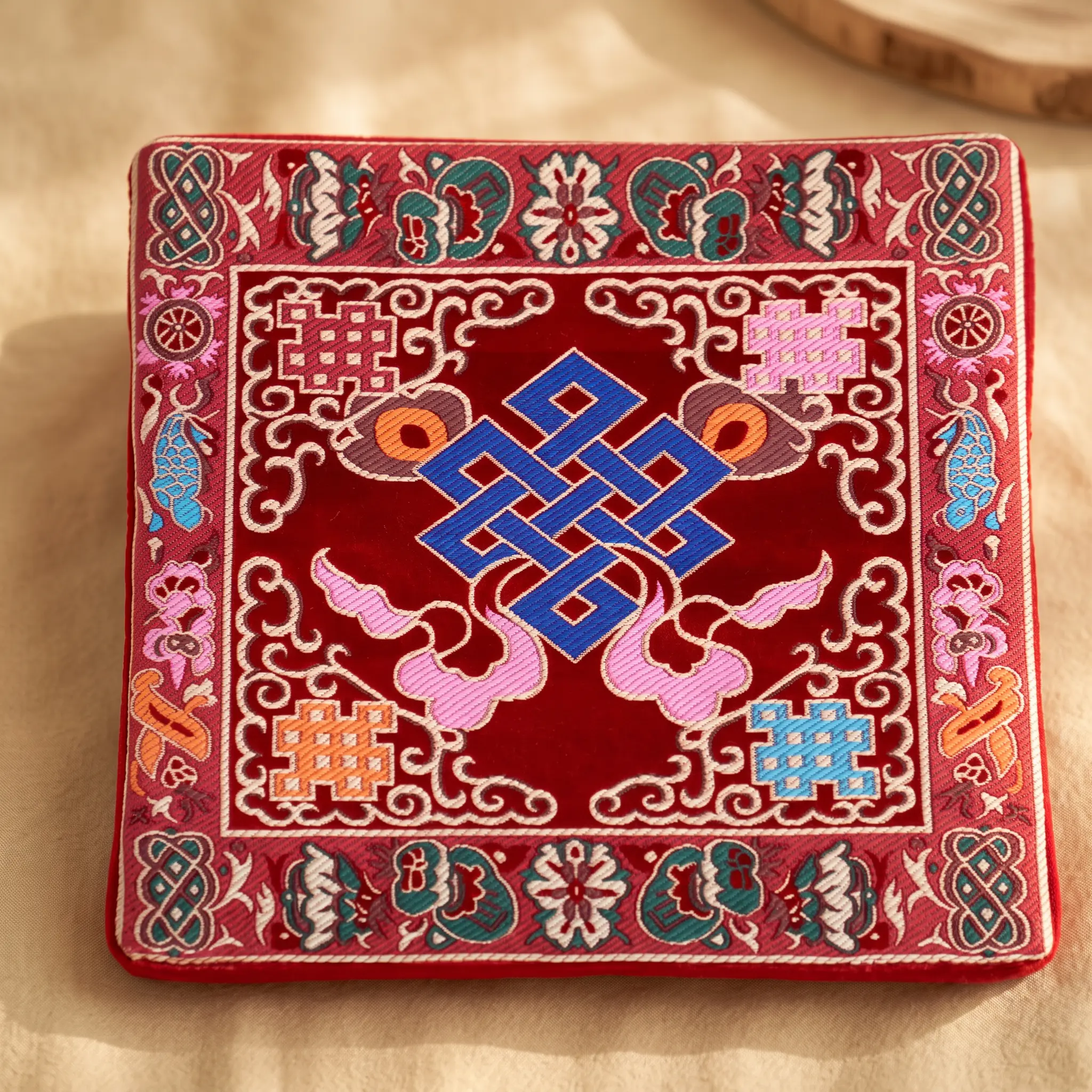
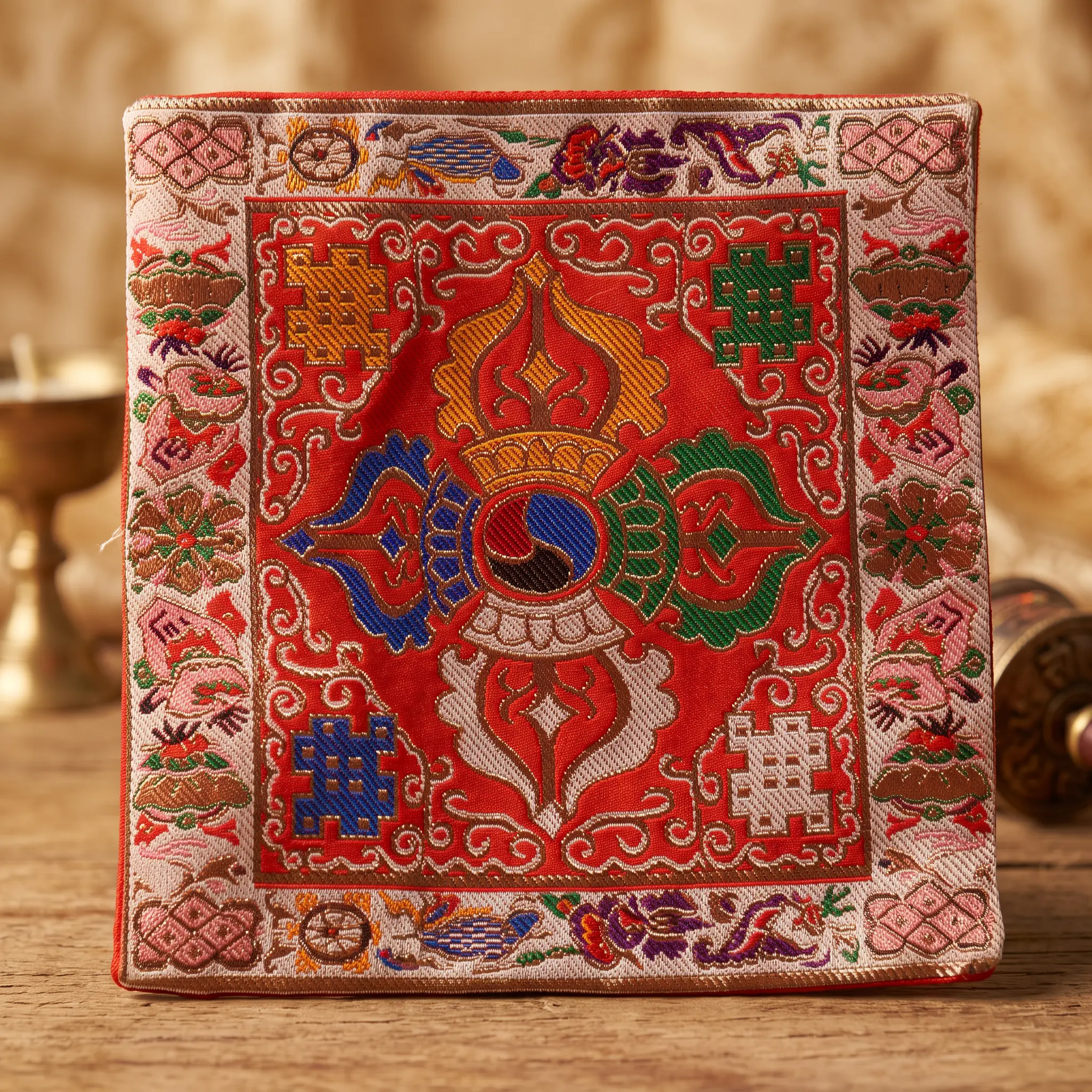
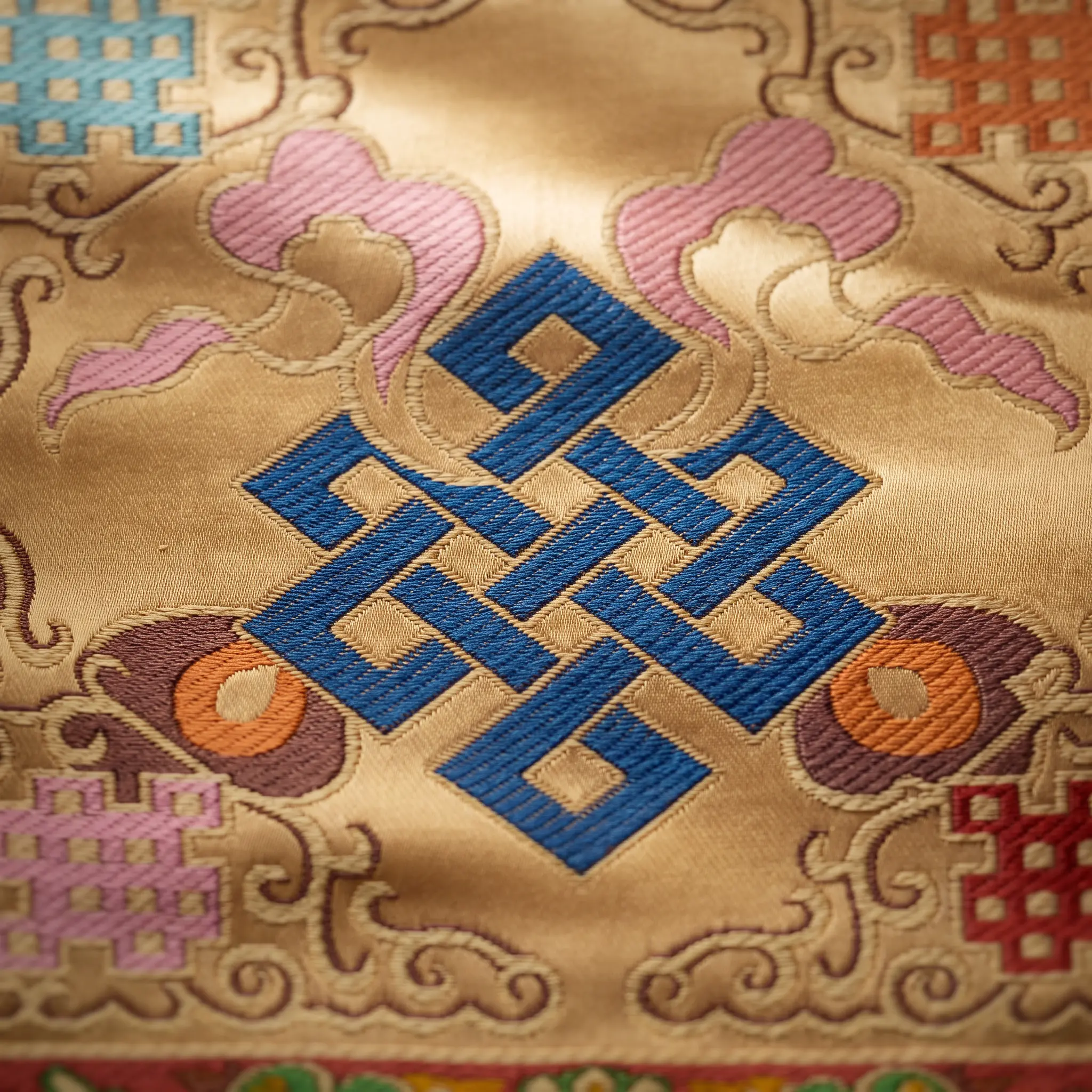
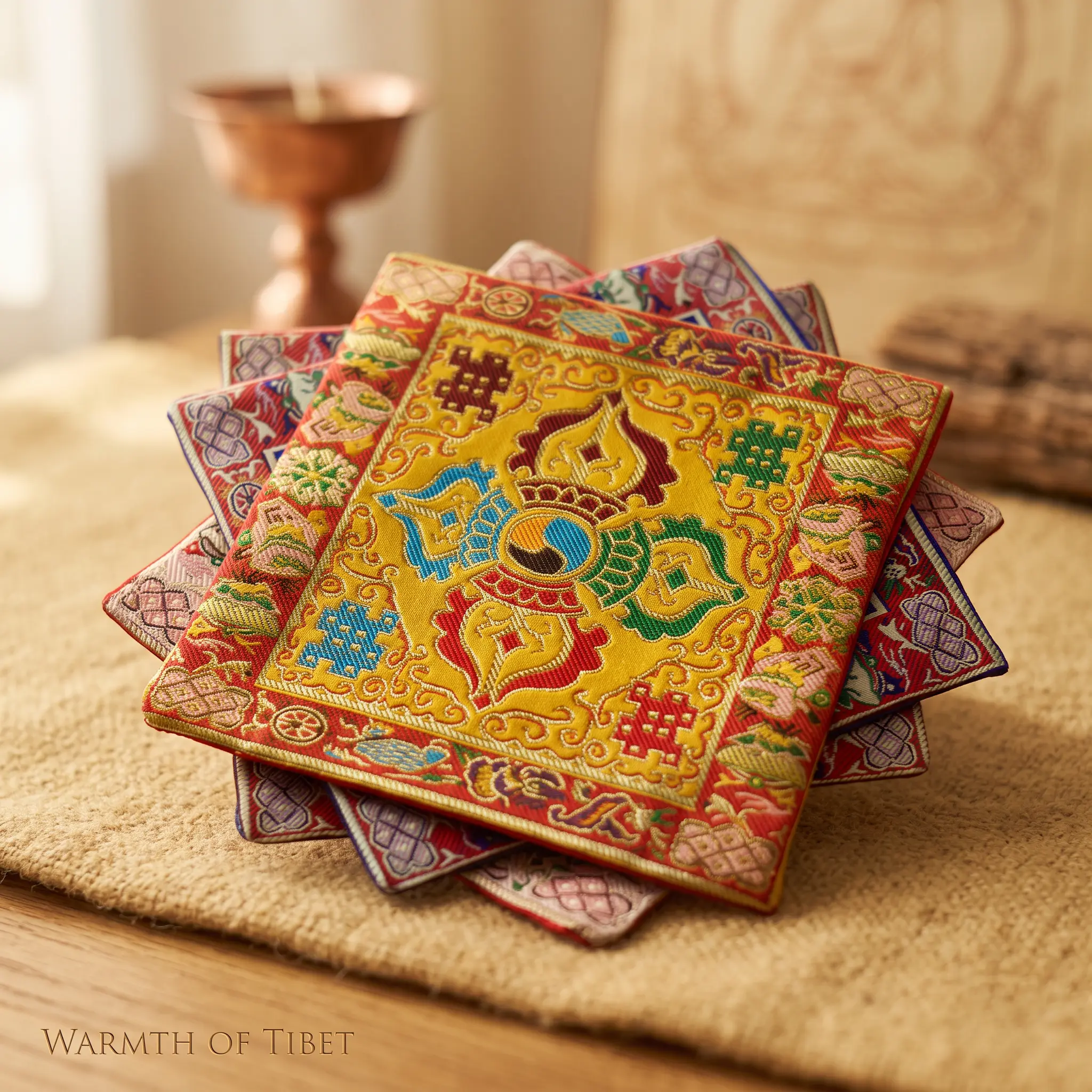
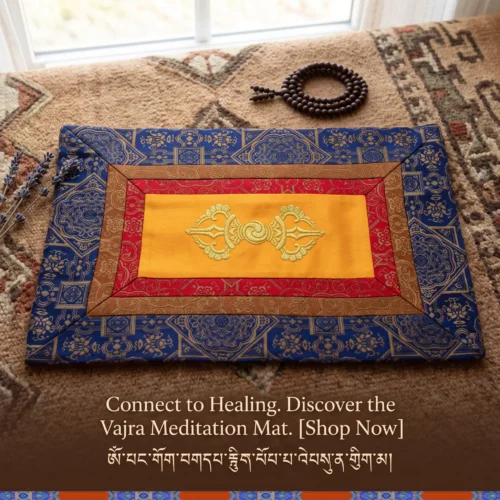
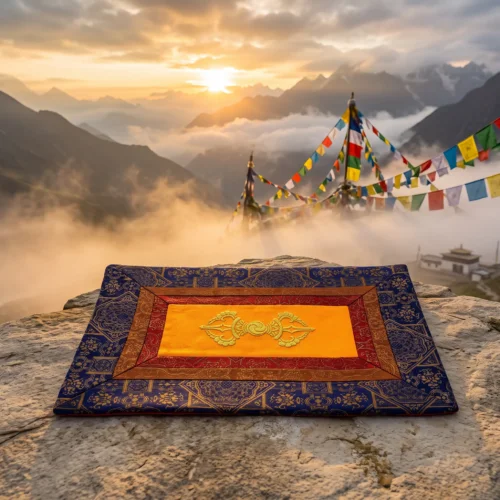
Your bell, dorje or small statue needs a clean, defined place to rest. This double vajra altar mat gives it one. It is woven in gold-yellow Tibetan brocade, with a crossed vajra at the center and an endless knot in each corner.
At PotalaStore, we choose Tibetan pieces that are made to be used, not just admired. This mat is small enough for a desk or shelf shrine, and rich enough to anchor a larger one.
At a Glance
- Size: 20 × 22 cm (about 7.9 × 8.7 in)
- Material: woven synthetic (chemical-fiber) brocade with a silk-like sheen
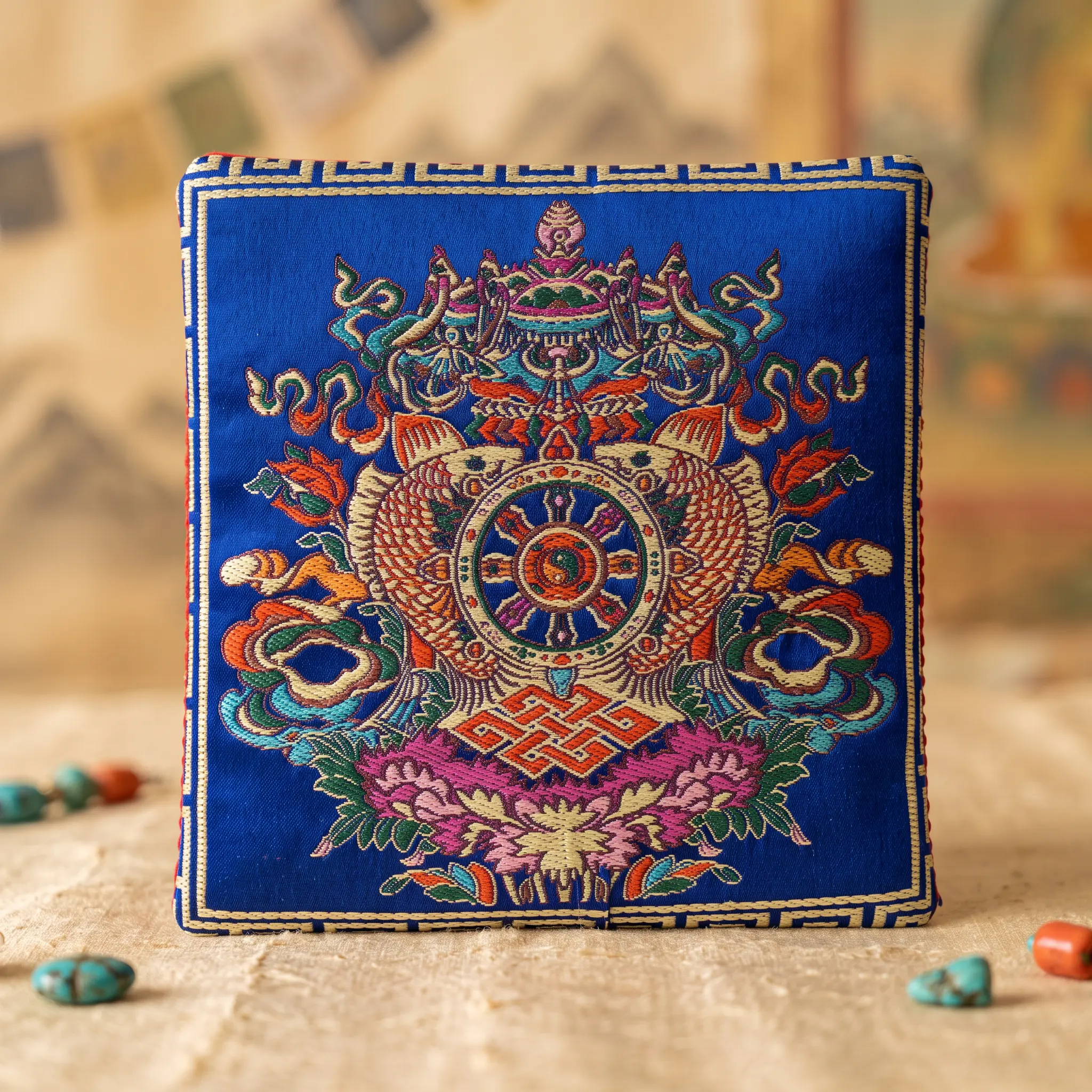
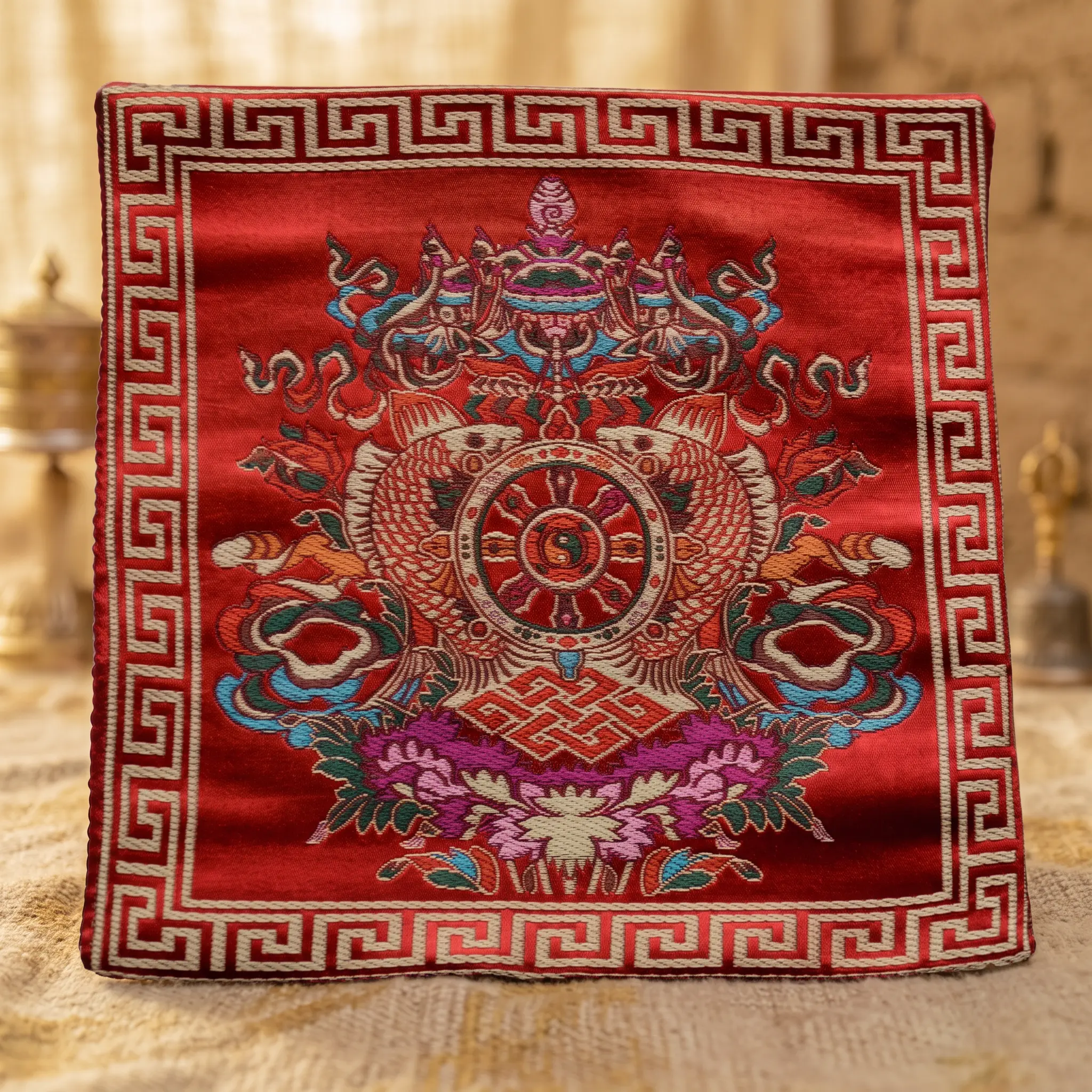
- Design: central double vajra, swirling gankyil hub, four colored endless knots, scroll border
- Best for: bell and dorje, small statue, singing bowl, offering bowls, mala
- Item type: altar cloth / shrine mat
The Symbols on This Mat, and What They Mean
Every motif here has a job. Here is what you are looking at.
Double Vajra (Crossed Dorje) in the Center
The large cross shape is a double vajra, also called a vishvavajra. Four vajra heads point to the four directions from one central hub. In Tibetan Buddhism, this form stands for unshakable stability.
The word vajra joins two images. One is a diamond, which cannot be broken. The other is a thunderbolt, which cuts through ignorance.
Here is a detail worth knowing. The Rigpa Wiki notes that teaching thrones are traditionally decorated with a brocade square showing a crossed vajra. Your mat carries that same image, scaled down for a home shrine.
The Swirling Hub: Gankyil, the “Wheel of Joy”
At the heart of the vajra sits a three-part swirl of orange, blue and deep brown. Some listings call it yin and yang. It is actually a gankyil, a Tibetan symbol that looks similar but has its own meaning. Robert Beer points out that its hub usually has three or four sections.
Endless Knot in Each Corner
The four corner motifs are endless knots (shrivatsa), woven in blue, green, red and maroon. The knot has no beginning and no end. It points to interdependence: everything is linked, and wisdom and compassion work together.
Part of the Eight Auspicious Symbols
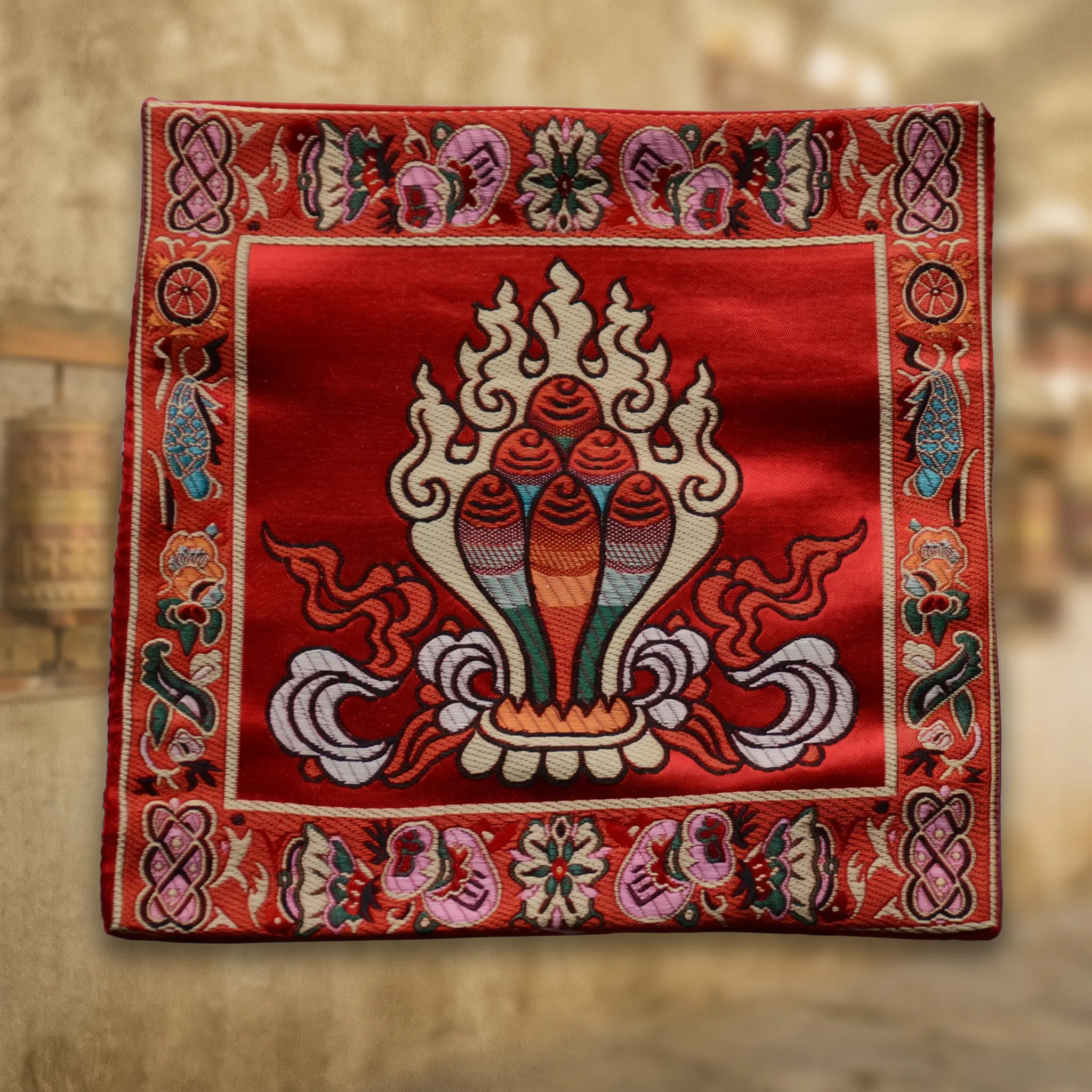
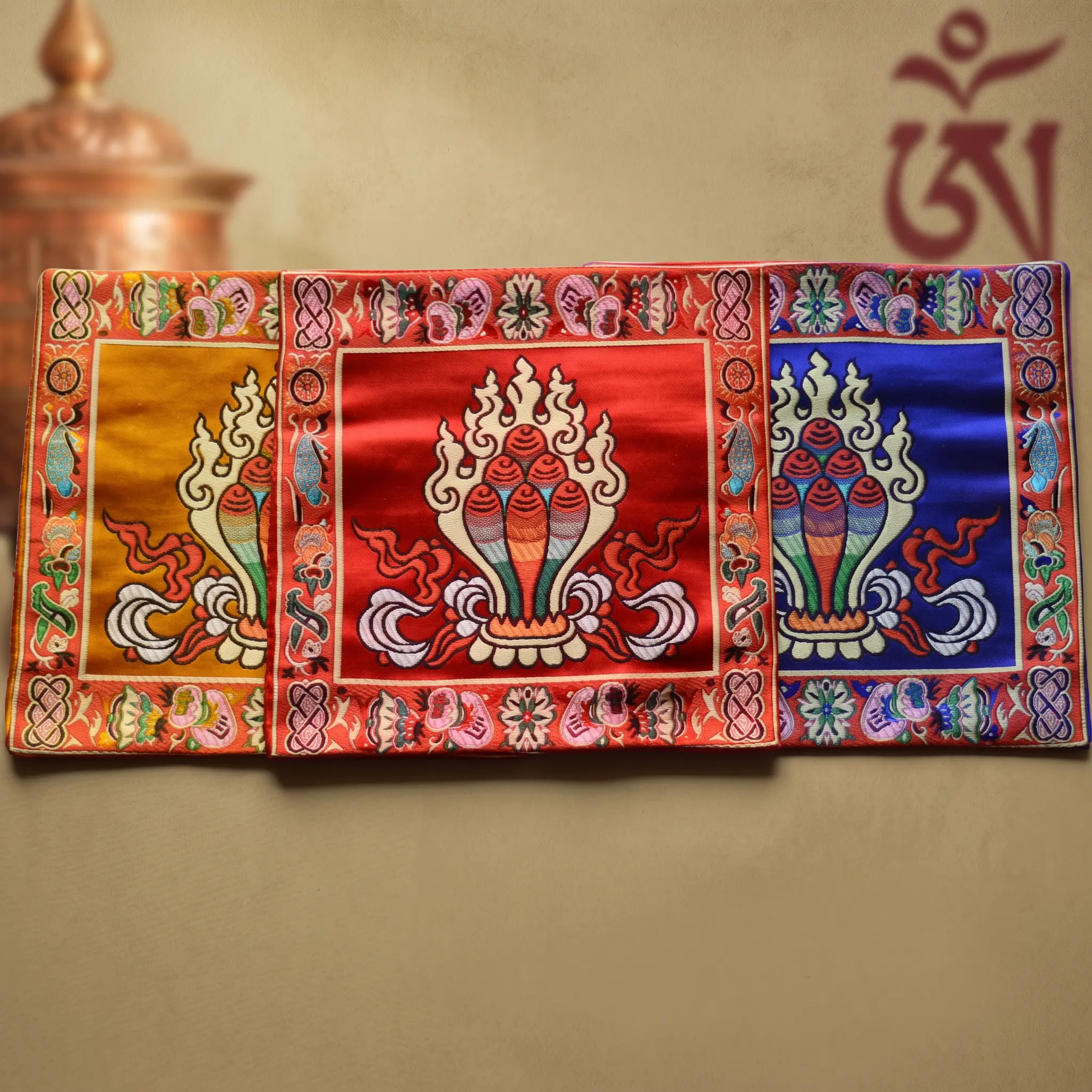
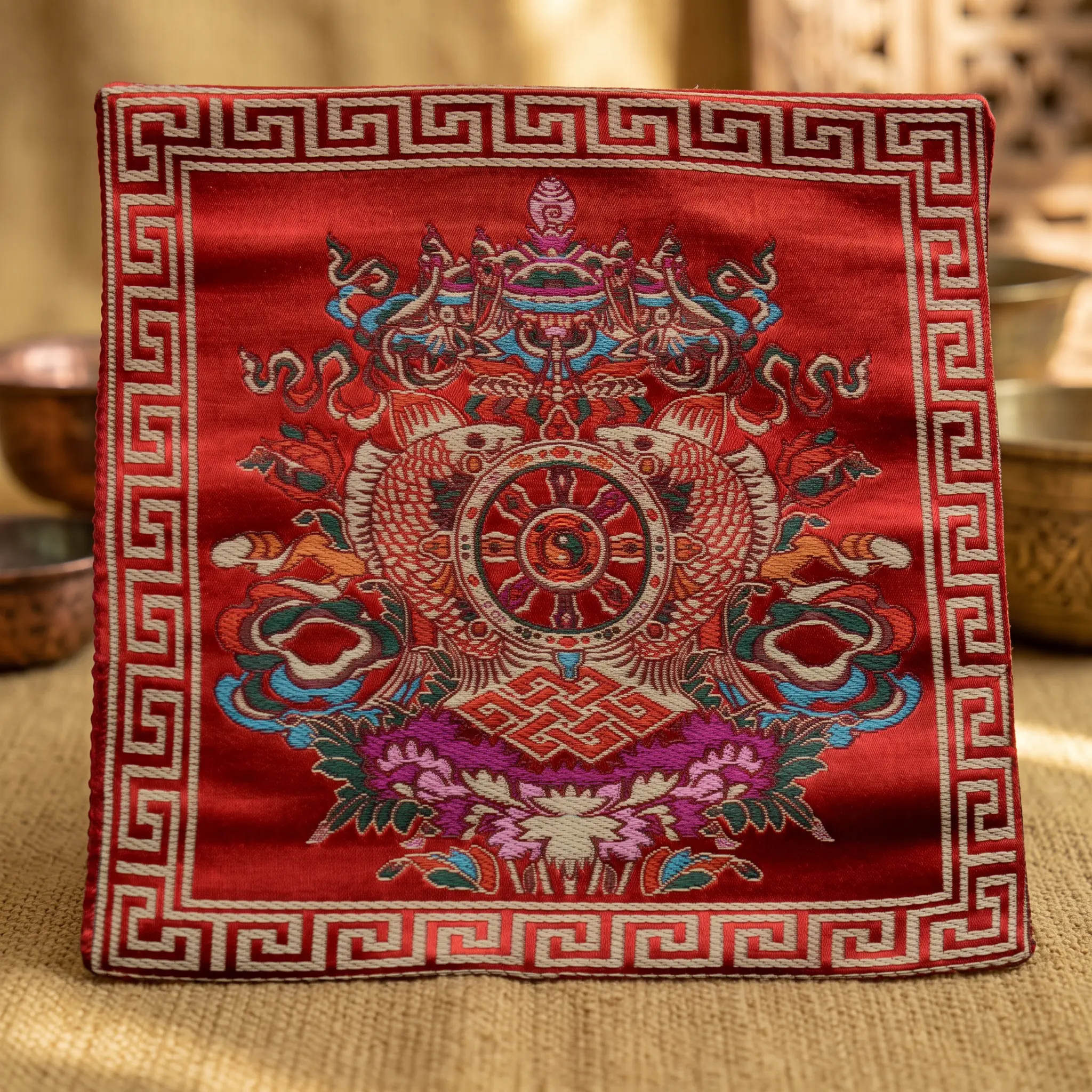
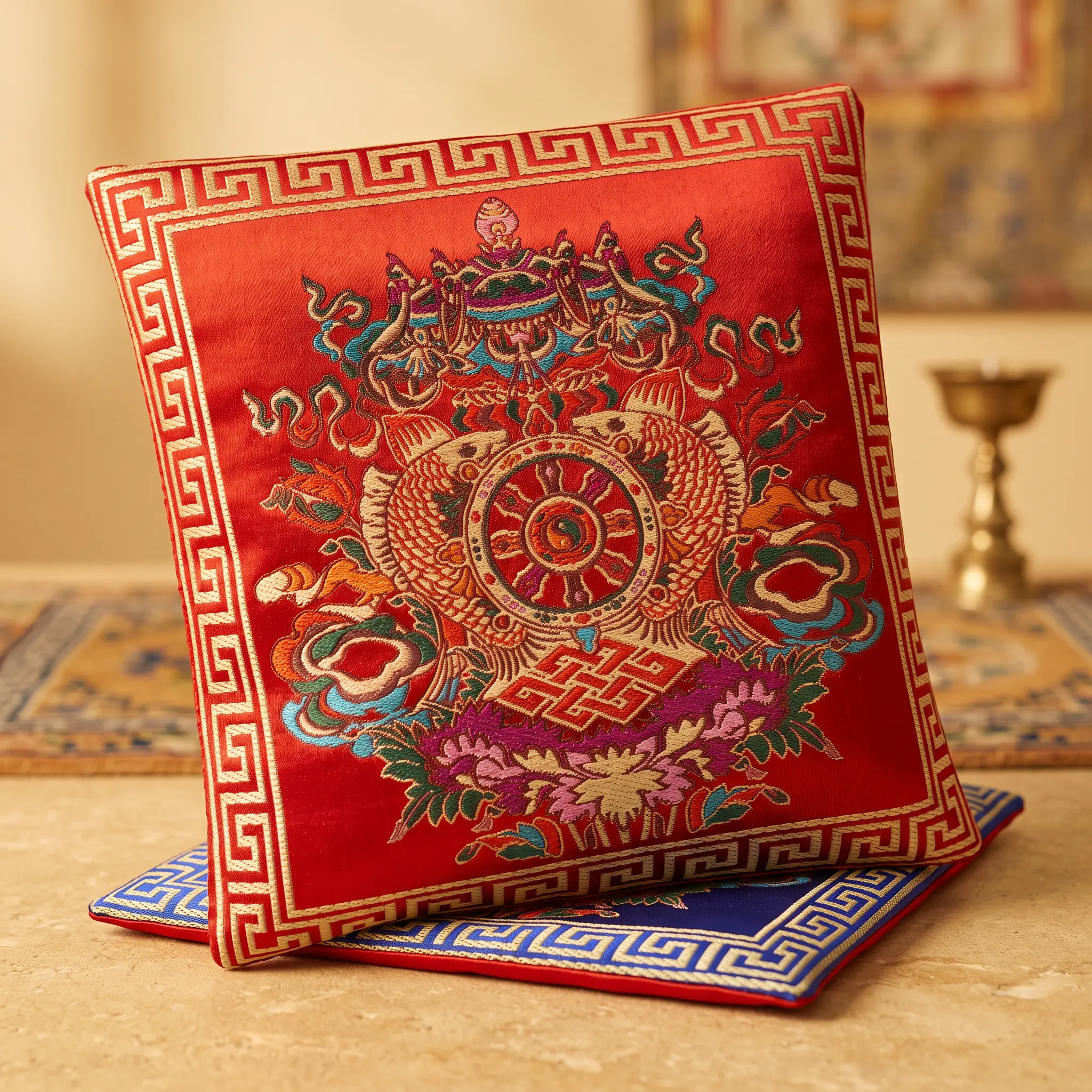
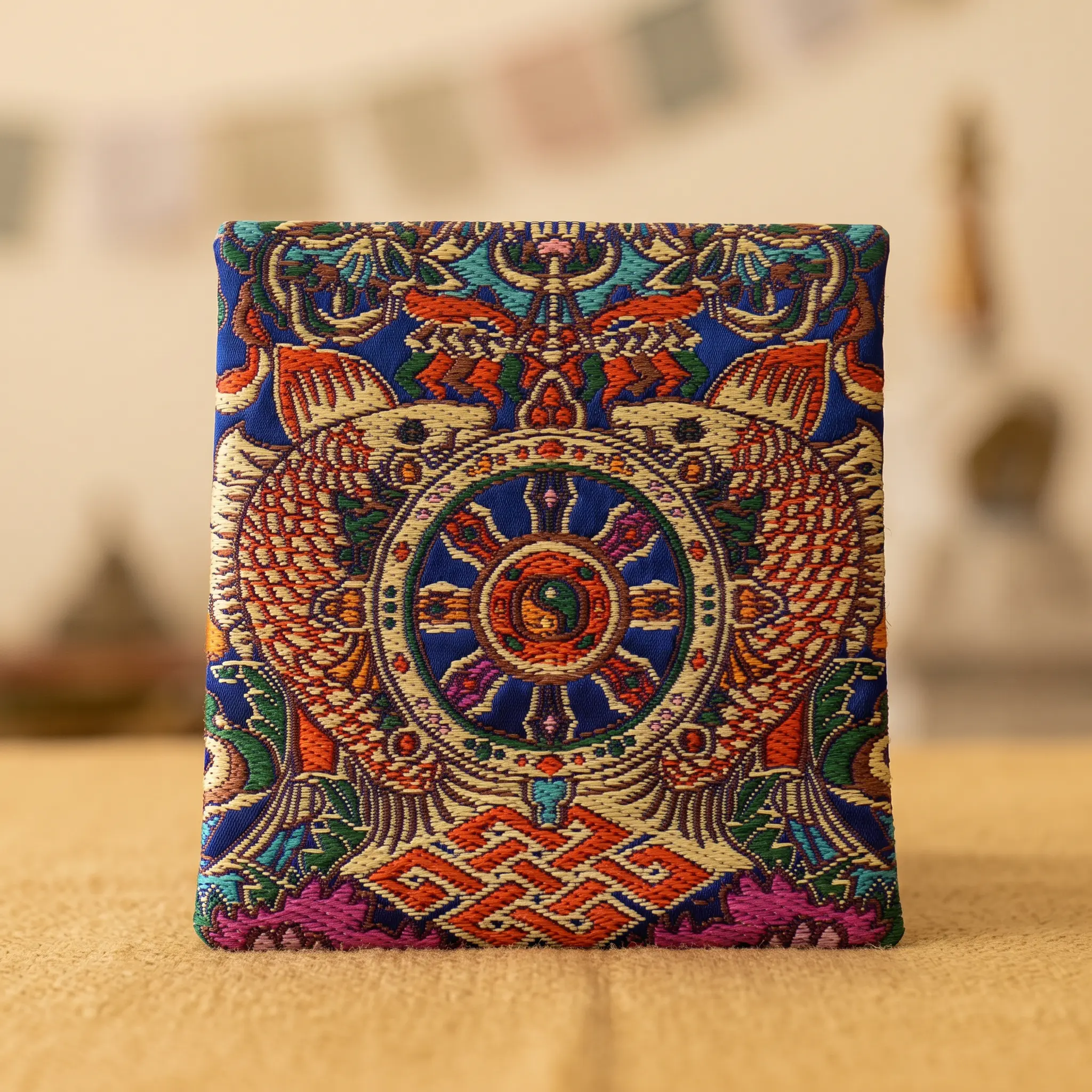
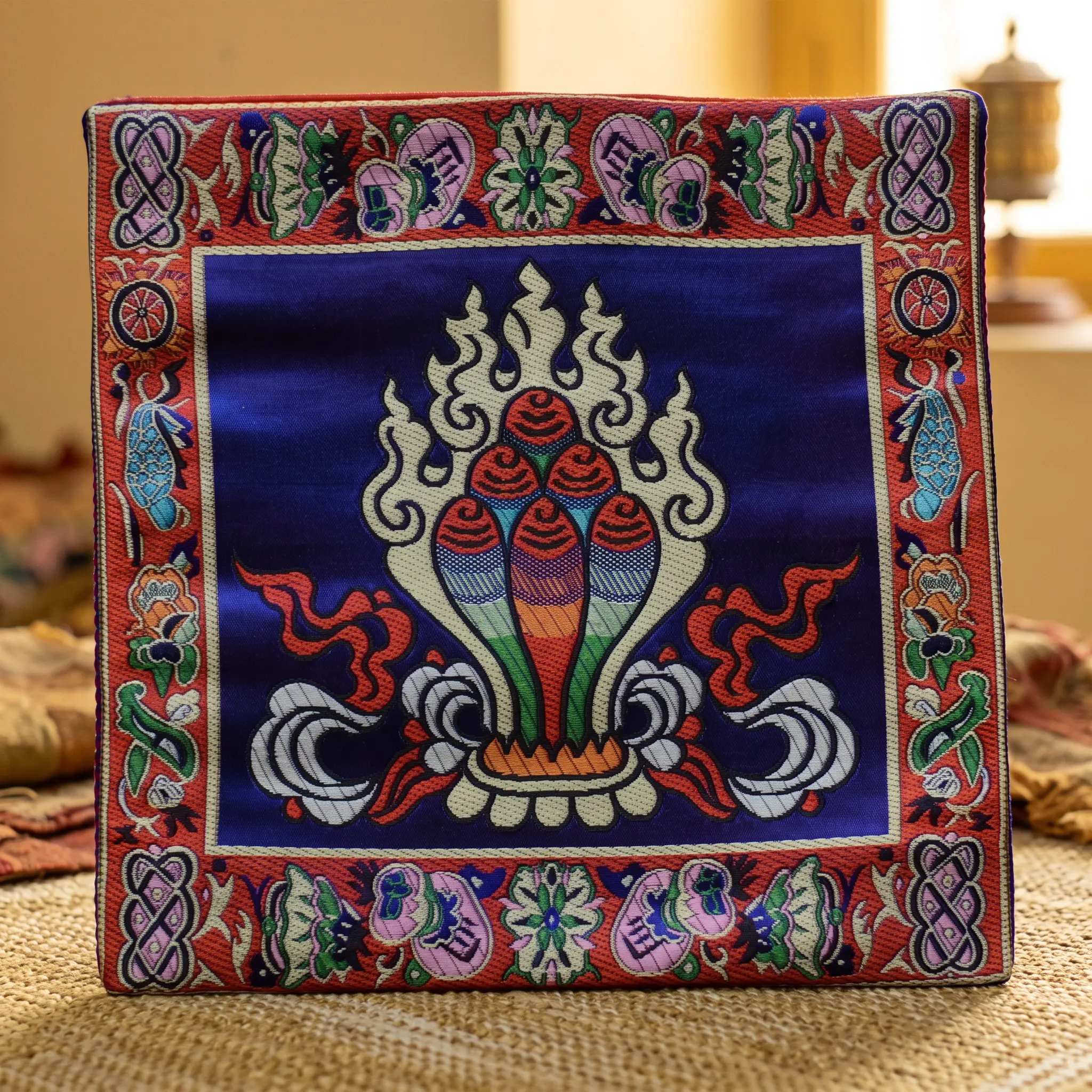
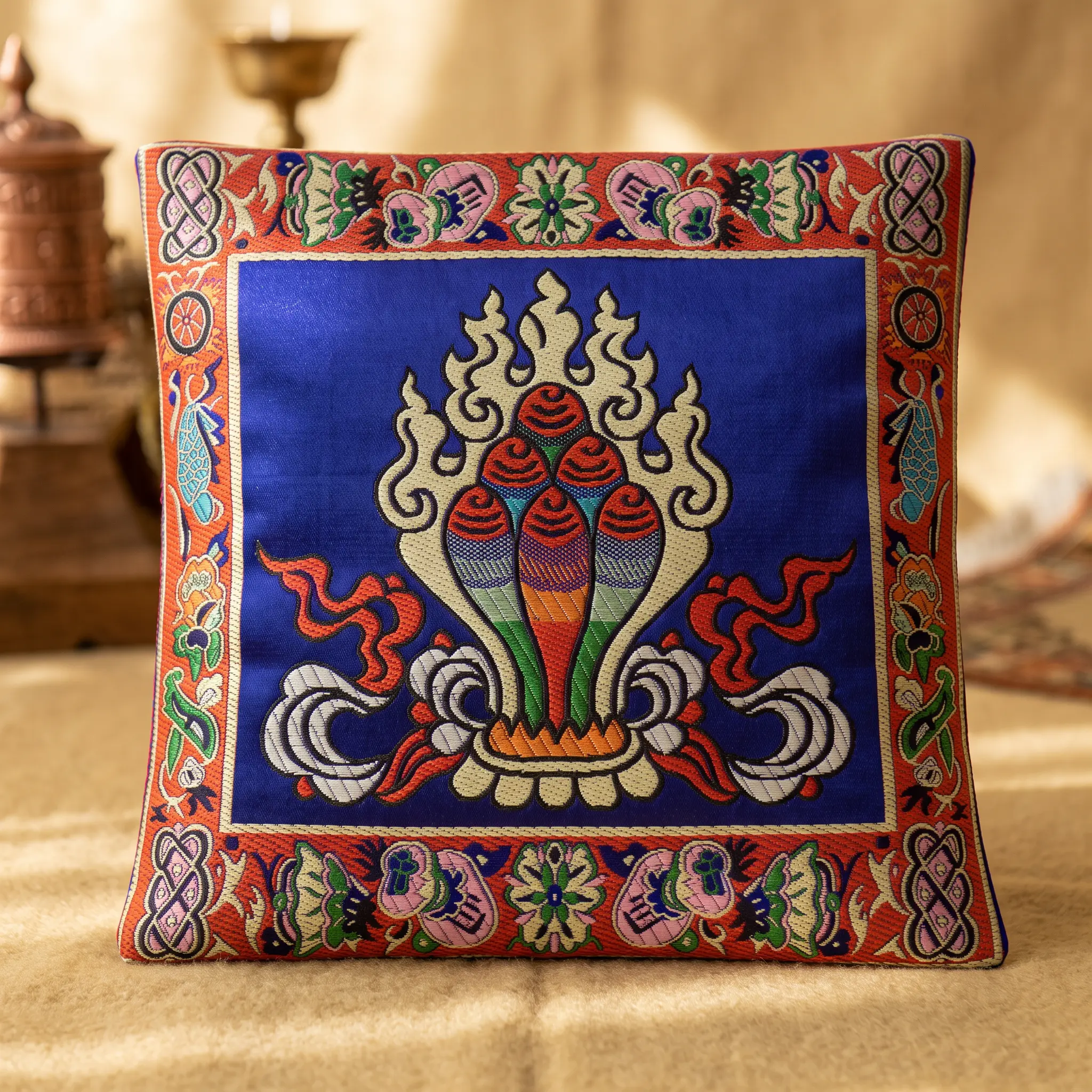
The endless knot is one of the Eight Auspicious Symbols (Ashtamangala). The full set is the parasol, golden fish, treasure vase, lotus, conch, endless knot, victory banner and Dharma wheel. This mat features the knot. Matching designs in our collection show the golden fish, Dharma wheel and conch.
Vajra and Bell: Method and Wisdom
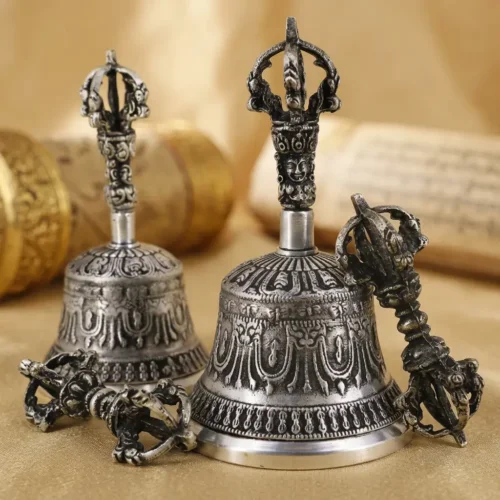
If you practice with a bell and dorje, this mat is their natural home. The Cleveland Museum of Art explains that the vajra is held in the right hand and stands for skillful method. The bell is held in the left hand and stands for wisdom.
A mat does not make a shrine. It marks the place where you decide to pause.
How to Use Your Altar Mat
As a Bell and Dorje Mat
Lay it flat on a clean, raised surface. Rest the bell and dorje on top between sessions. The cloth protects them from scratches and gives them a place of their own.
Under a Statue, Singing Bowl or Offerings
The mat lifts small objects off bare wood or glass and frames them as one group. You can also rest a mala or a favorite piece of Tibetan jewelry here when you take it off. It then sits on cloth, not on a bare desk.
Respectful Placement Tips
- Place it on a raised, clean surface, never on the floor.
- Keep the bell and dorje together on the mat.
- Do not use it as a coaster, or under food and drinks.
Not Buddhist? You are welcome to use it. Treat it as a sacred support, not everyday tableware. Traditions differ on who may use a bell and dorje in practice, so ask your teacher if you are unsure.
Size Guide: Is 20 × 22 cm Right for You?
At about 7.9 × 8.7 inches, this is a small mat by design. It suits a desk, bookshelf or windowsill shrine. Leave roughly 2 cm of margin so the border stays visible.
It comfortably holds:
- A bell and dorje set, laid side by side
- A statue with a base up to about 15 cm
- A singing bowl or offering bowl up to about 15 cm across
Need more room? Choose a larger altar cloth or runner for a full table.
Care Instructions
- Shake out the mat, or dust it gently with a soft brush.
- Spot clean with a damp cloth and a drop of mild soap.
- If needed, hand wash in cold water. Do not wring or twist.
- Lay flat to dry, away from direct sun.
- Press on low heat from the back, with a cotton cloth in between.
Frequently Asked Questions
What is the symbol in the center of this altar mat?
A double vajra (vishvavajra), which stands for unshakable stability. Its hub shows a swirling gankyil, or “wheel of joy.”
Is a double vajra the same as a five-pronged vajra?
No. The handheld ritual dorje is often five-pronged. The double vajra crosses four vajra heads over one hub.
What does the endless knot mean?
Interdependence. All things are connected, and wisdom and compassion cannot be separated.
Which hand holds the vajra, and which holds the bell?
The vajra goes in the right hand and the bell in the left. They stand for method and wisdom.
Is this mat made of silk?
No. It is a synthetic brocade with a silk-like sheen.
Can I use it if I am not Buddhist?
Yes. Keep it raised and clean, and treat it with respect rather than as an everyday placemat.
How do I clean it?
Spot clean with a damp cloth, or hand wash in cold water. Lay it flat to dry. See the care steps above.
What color should an altar cloth be?
Gold-yellow and red are common in Tibetan shrines, but no single color is required. Choose the one that feels right for your space.
Reviews