

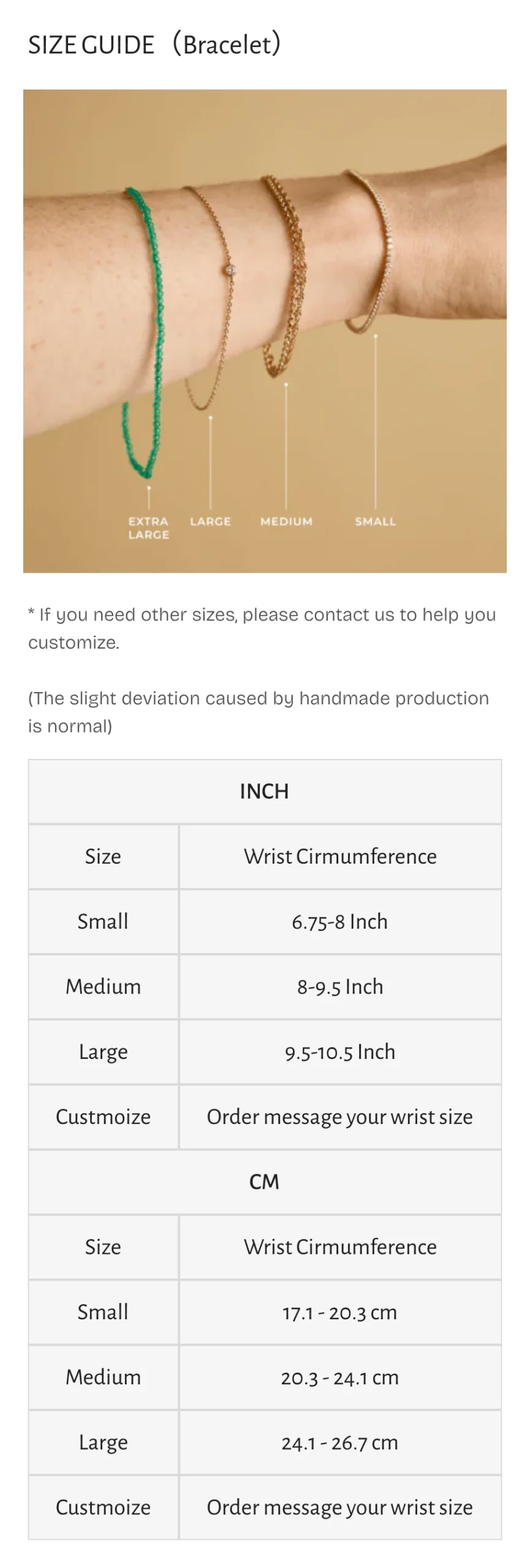
 Bracelet Size Guide Chart - Wrist Measurement in Inches & CM[/caption]
[caption id="attachment_17326" align="aligncenter" width="905"]
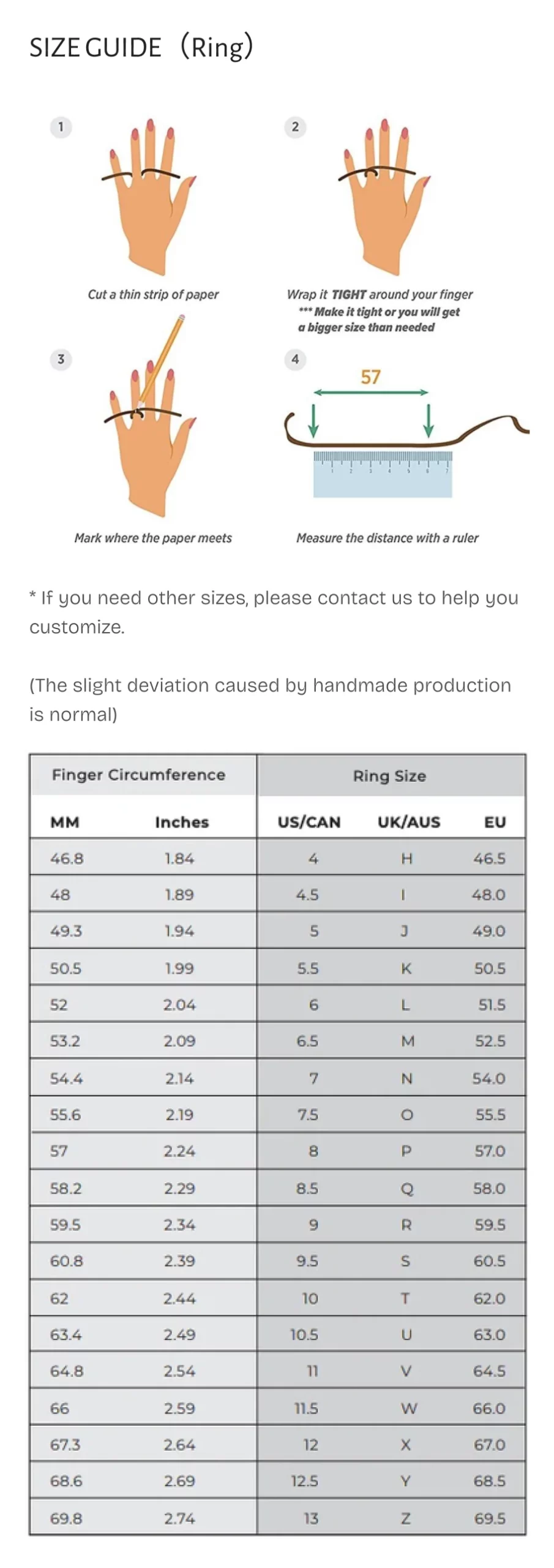 Ring Size Guide - How to Measure Finger Size at Home[/caption]
[caption id="attachment_17325" align="aligncenter" width="912"]
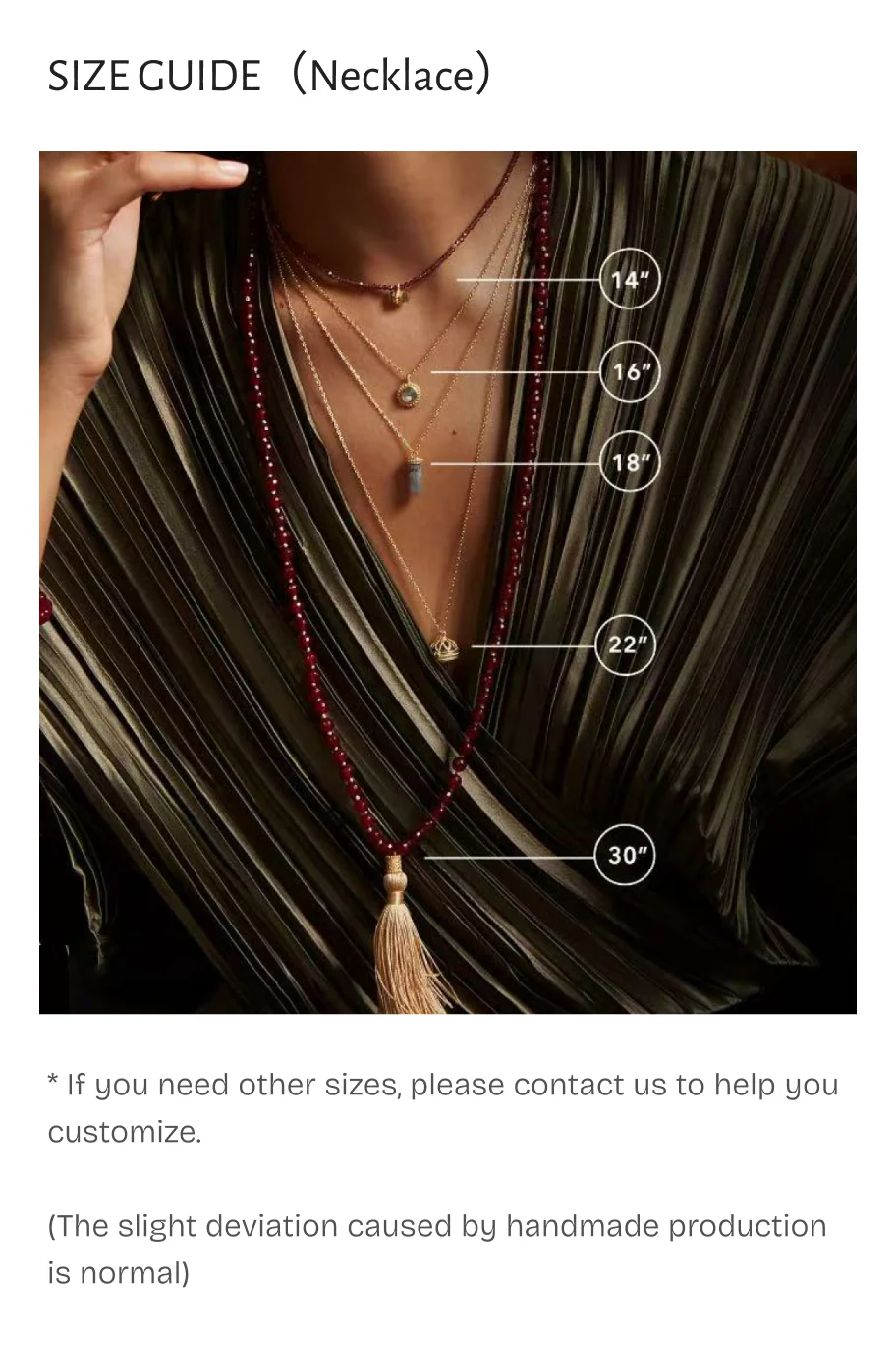 Necklace Length Size Guide Chart - 14 16 18 22 30[/caption]
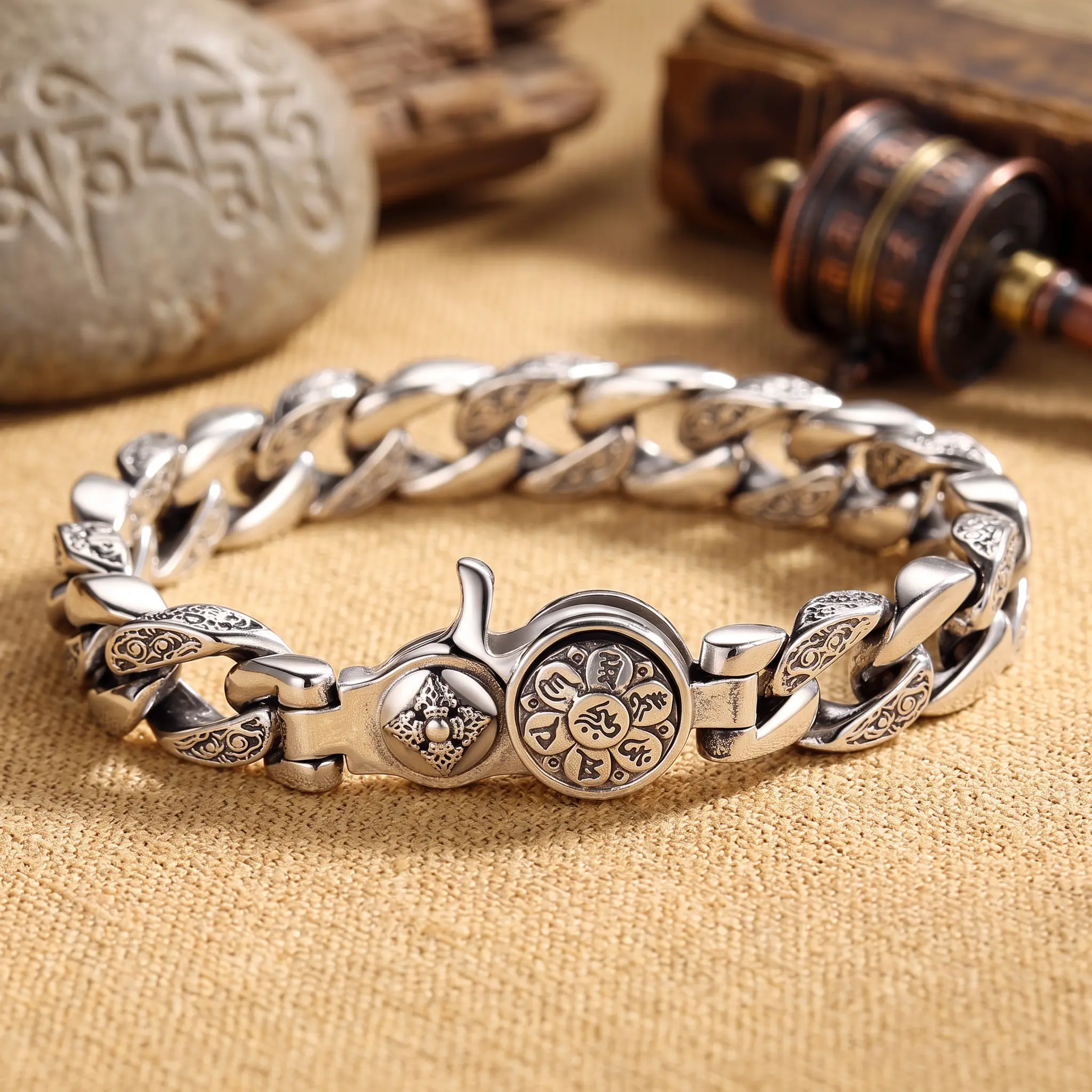
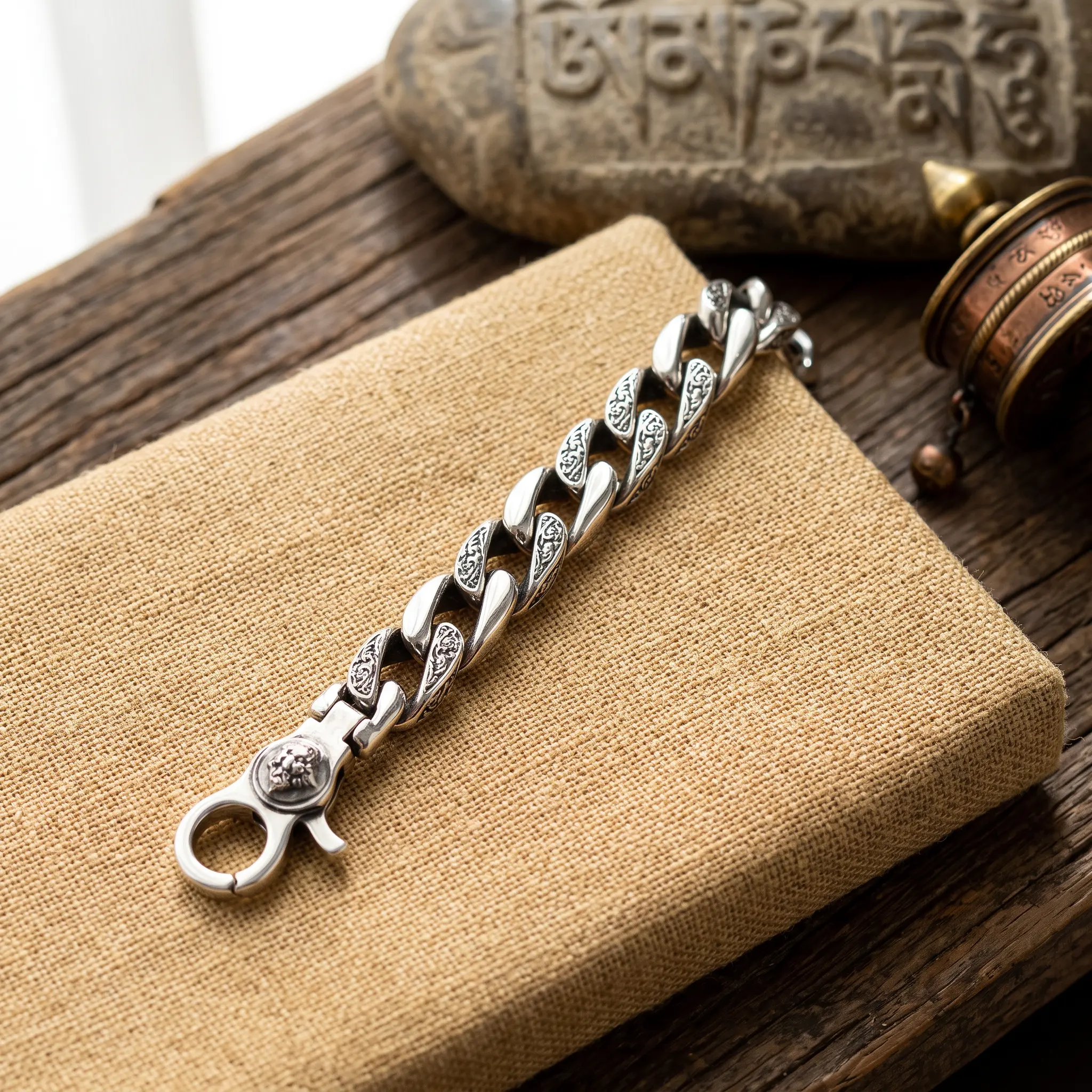
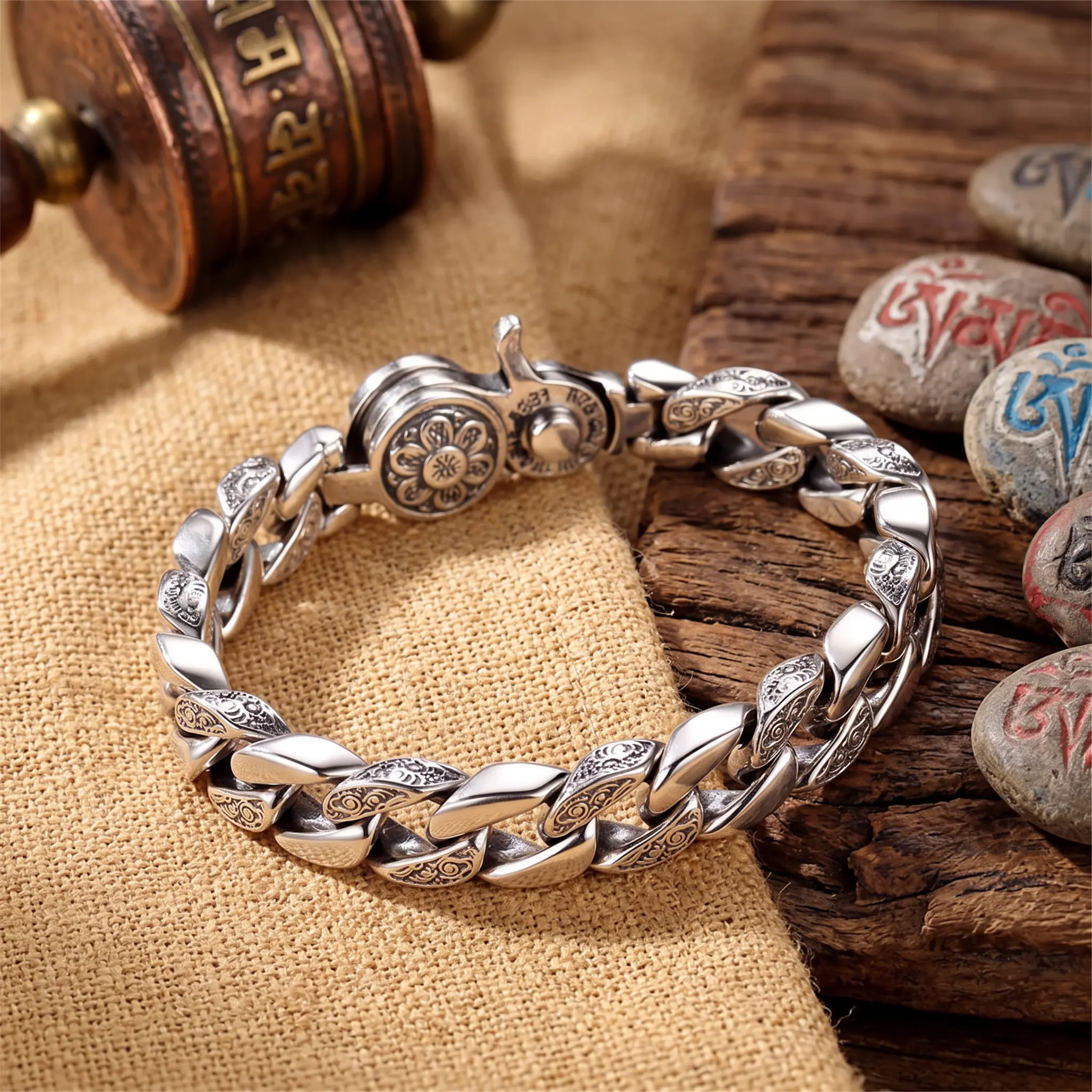
A heavy Tibetan-style chain bracelet with a lotus mantra disc that turns under your thumb, and a double vajra medallion for steady focus.
You want jewelry that means something, not a logo on a chain. This bracelet carries the six-syllable mantra Om Mani Padme Hum on a clasp disc you can spin, with a double vajra medallion right beside it. It is bold, weighty, and built for daily wear. At PotalaStore, we love it because the symbolism is part of the design, not a sticker on top.
Design Details: What You’re Looking At
Cloud-Scroll Links
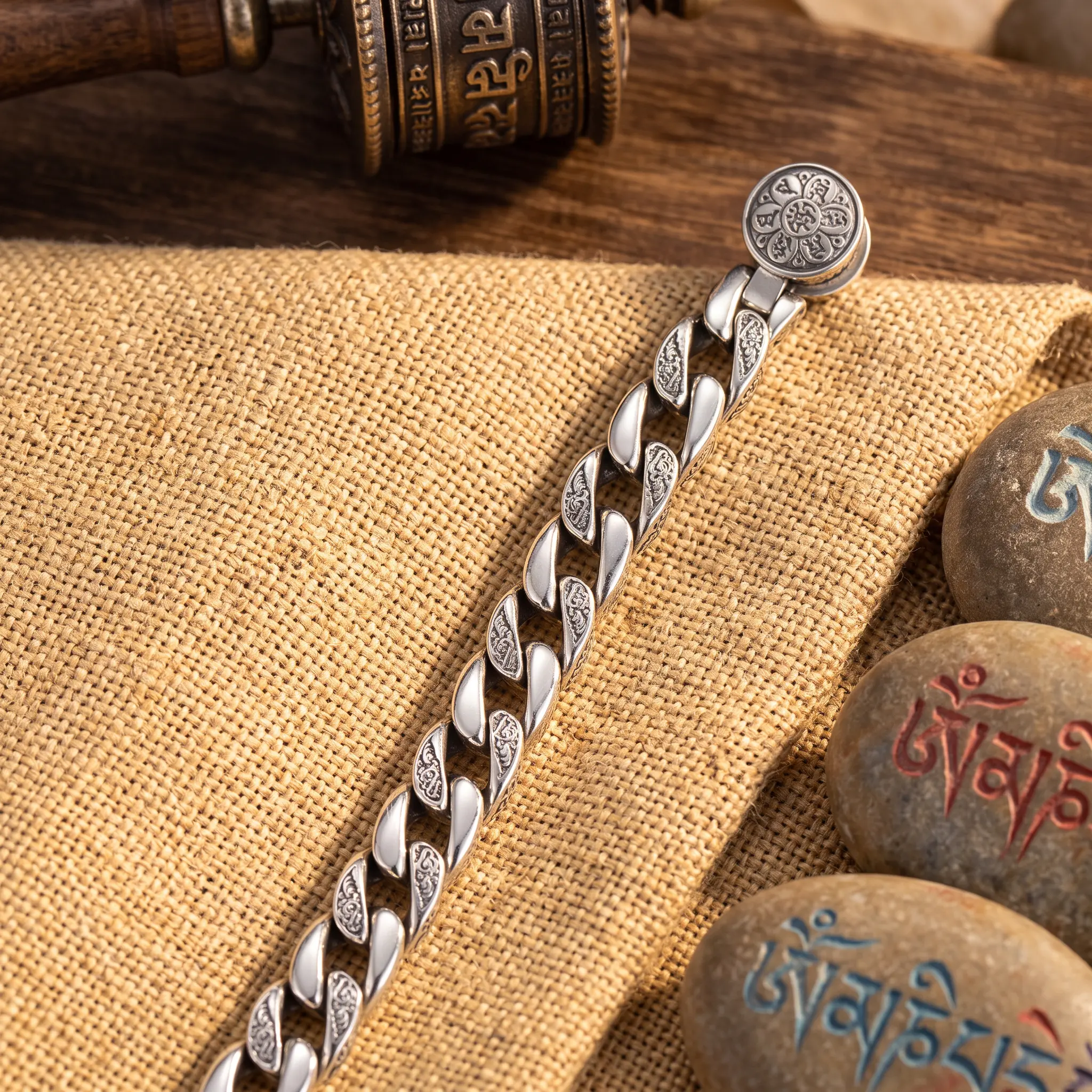
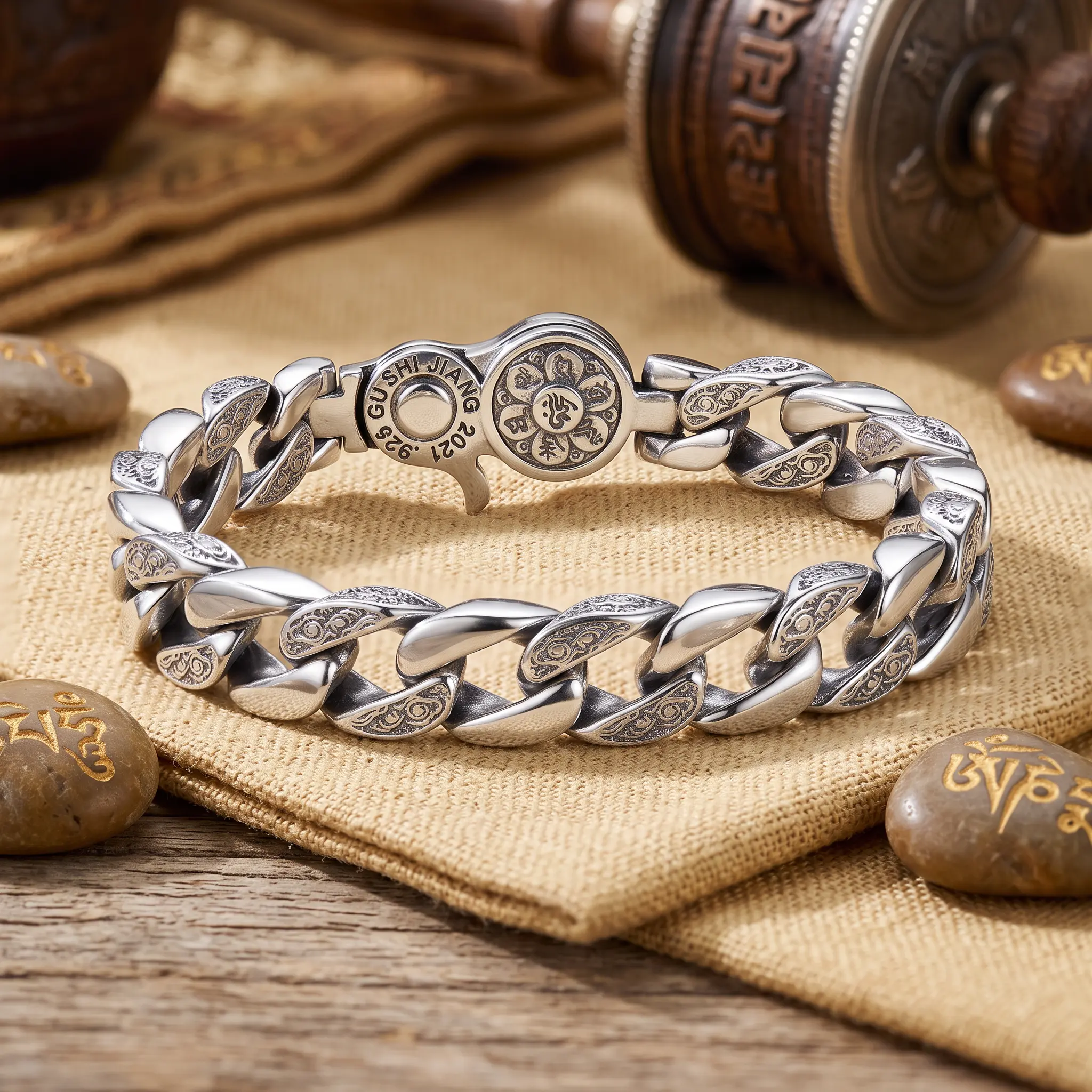
Look closely at the chain. Mirror-bright links alternate with links engraved in swirling scrolls that echo the cloud patterns found throughout Tibetan art. Dark, antiqued recesses sit behind the polish, so the bracelet reads as sculpted metal rather than a flat strip.
The Lotus Mantra Disc
The round disc on the clasp shows an eight-petal lotus. Mantra syllables sit in the center and around the petals, written in Lantsa-style lettering, the ornamental script traditionally used on mani wheels. It is the first thing people notice when you fasten the bracelet.
The Double Vajra Medallion
Beside the disc sits a second round medallion with a crossed vajra. Its meaning has its own section below.
Why the Clasp Spins: A Wearable Nod to the Prayer Wheel
In Tibetan practice, a mani wheel is a cylinder inscribed with Om Mani Padme Hum, turned clockwise by hand. Tradition holds that each turn carries the merit of reciting the mantra as many times as it is written on the wheel.
Here is the honest part: this disc is a decorative, hand-turned piece inspired by that tradition. It is not a consecrated prayer wheel with a scroll inside. Think of it as a tactile cue. One small turn to pause, breathe, and reset between meetings or messages.
A spinning clasp won’t do the practice for you. It will remind you to.
Om Mani Padme Hum Meaning
The Short Answer
This is the six-syllable mantra of Avalokiteshvara, known in Tibetan as Chenrezig, the bodhisattva of compassion. Scholars still debate its literal translation, so “jewel in the lotus” is only one popular reading.
Syllable by Syllable
This is how the Dalai Lama explains the mantra:
- Om: body, speech and mind, and the aim of transforming them into a Buddha’s pure body, speech and mind.
- Mani: the jewel, standing for method: compassion and love.
- Padme: the lotus, standing for wisdom.
- Hum: indivisibility, the union of method and wisdom.
Many wearers link the mantra with compassion, focus and calm. We see this piece as a creative-focus reminder you carry on your wrist.
Double Vajra (Dorje) Meaning: Why It’s on the Clasp
Vajra vs. Dorje
Same object, two languages. Vajra is Sanskrit. Dorje is Tibetan. The symbol blends two ideas: a diamond (indestructible) and a thunderbolt (irresistible force).
Single vs. Double Vajra
A double vajra, or vishvavajra, is two vajras crossed, so four heads point to the four directions. Traditionally it stands for absolute stability and is the emblem of the Buddha Amoghasiddhi. On a clasp, that fits: it is the part that holds everything together.
The Vajra and the Bell
In Vajrayana ritual, the vajra (method, or compassion) is held in the right hand and the bell (wisdom) in the left. Their union points to awakening. Your bracelet is a reminder of that pairing, not a ritual tool.
Who It’s For
- You want a bold chain with real symbolism behind the detail.
- You meditate or chant, and want a daily reminder on your wrist.
- You’re shopping for someone who loves Tibetan culture: a birthday, Losar, or a milestone.
Fit & Sizing for a Chunky Chain
How to Measure
Wrap a soft tape just above your wrist bone and note the number in centimeters. No tape? Use a strip of paper, mark where it meets, then measure it flat against a ruler.
Choose Your Length
| Bracelet length | Fits wrist |
|---|---|
| 18 cm | 16–17 cm |
| 20 cm | 18–19 cm |
| 22 cm | 20–21 cm |
Each size adds about 1–2 cm to your wrist. A heavy chain needs that room to sit properly and slide a little. Between sizes? Size up, especially if you wear a watch. Still unsure? Contact PotalaStore with your wrist measurement and we’ll help you choose.
Wearing Mantra Jewelry Respectfully
Anyone can wear it. Respect simply means knowing what it says.
- Wear it above the waist and keep it off the floor.
- Many people take it off for the bathroom and for sleep.
- Treat it as meaningful, not as a costume piece.
Which wrist? The popular “left hand receives” idea is a modern jewelry convention, not Buddhist doctrine. Wear it where it feels comfortable.
Frequently Asked Questions
What does Om Mani Padme Hum mean?
It is the mantra of Chenrezig, the bodhisattva of compassion. Om is body, speech and mind. Mani is the jewel of method and compassion. Padme is the lotus of wisdom. Hum is their indivisible union.
Does the clasp really spin, and is it a real prayer wheel?
Yes, the lotus disc turns freely under your thumb. It is a decorative piece inspired by mani wheels, not a consecrated prayer wheel.
Which size should I choose?
Pick 18 cm for a 16–17 cm wrist, 20 cm for 18–19 cm, or 22 cm for 20–21 cm. Between sizes, go up.
Can non-Buddhists wear Om Mani Padme Hum jewelry?
Yes. Learn what the mantra means, wear it above the waist, and treat it with care.
Can I wear it every day?
Yes. Wipe it dry after water or sweat, and remove it for swimming and heavy workouts to protect the antiqued finish.
Specifications
| Item type | Chain bracelet |
|---|---|
| Material | Copper |
| Finish | Antiqued silver-tone, polished and engraved links |
| Chain style | Curb link with cloud-scroll engraving |
| Clasp | Hook clasp, spinning lotus mantra disc, double vajra medallion |
| Lengths | 18 cm, 20 cm, 22 cm |
| Wrist fit | 16–17 cm, 18–19 cm, 20–21 cm |




Reviews