

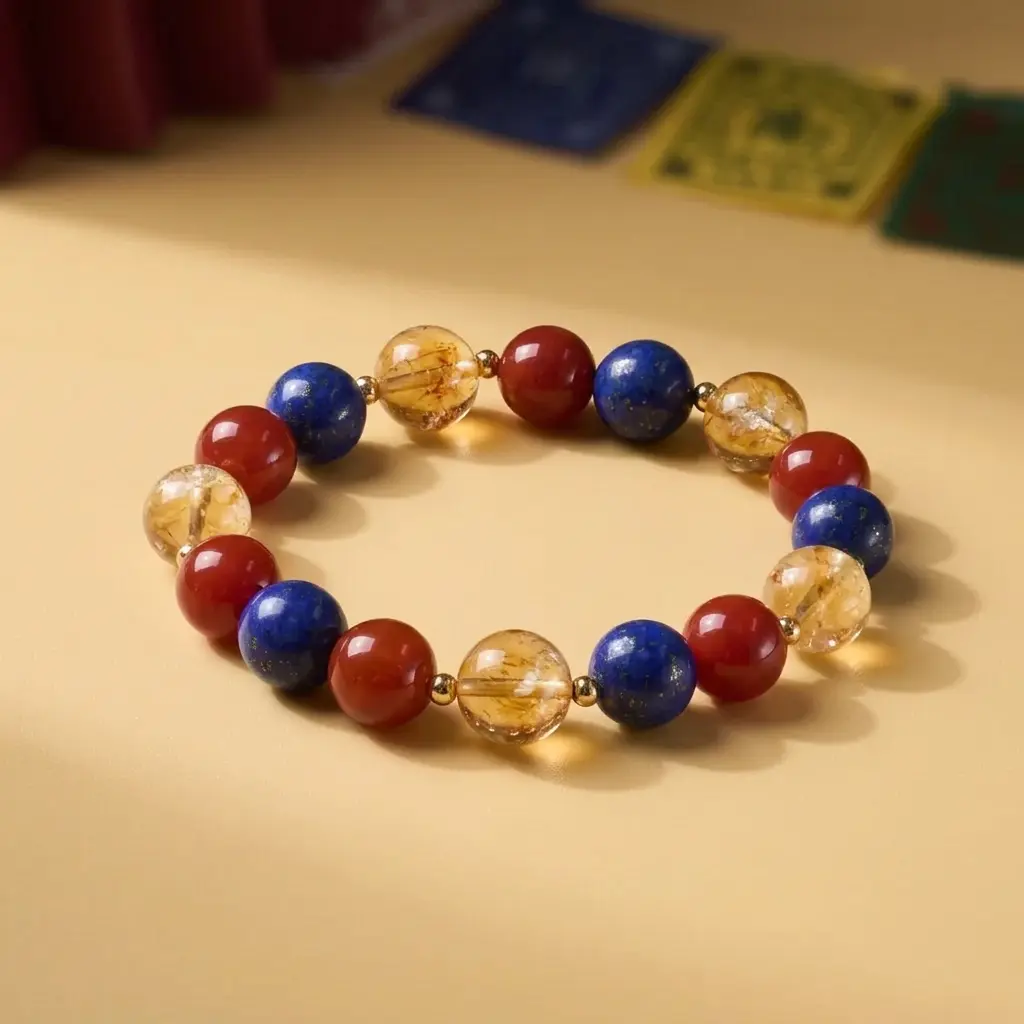
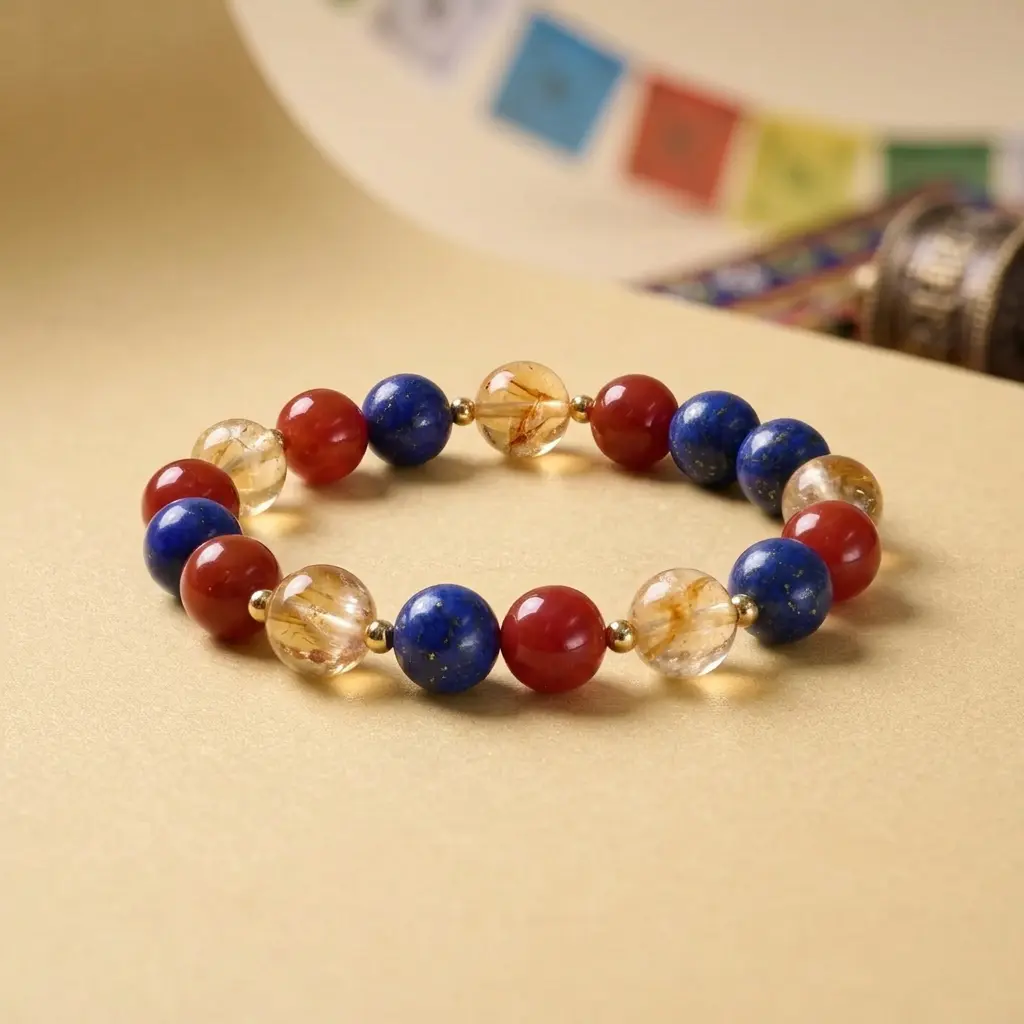
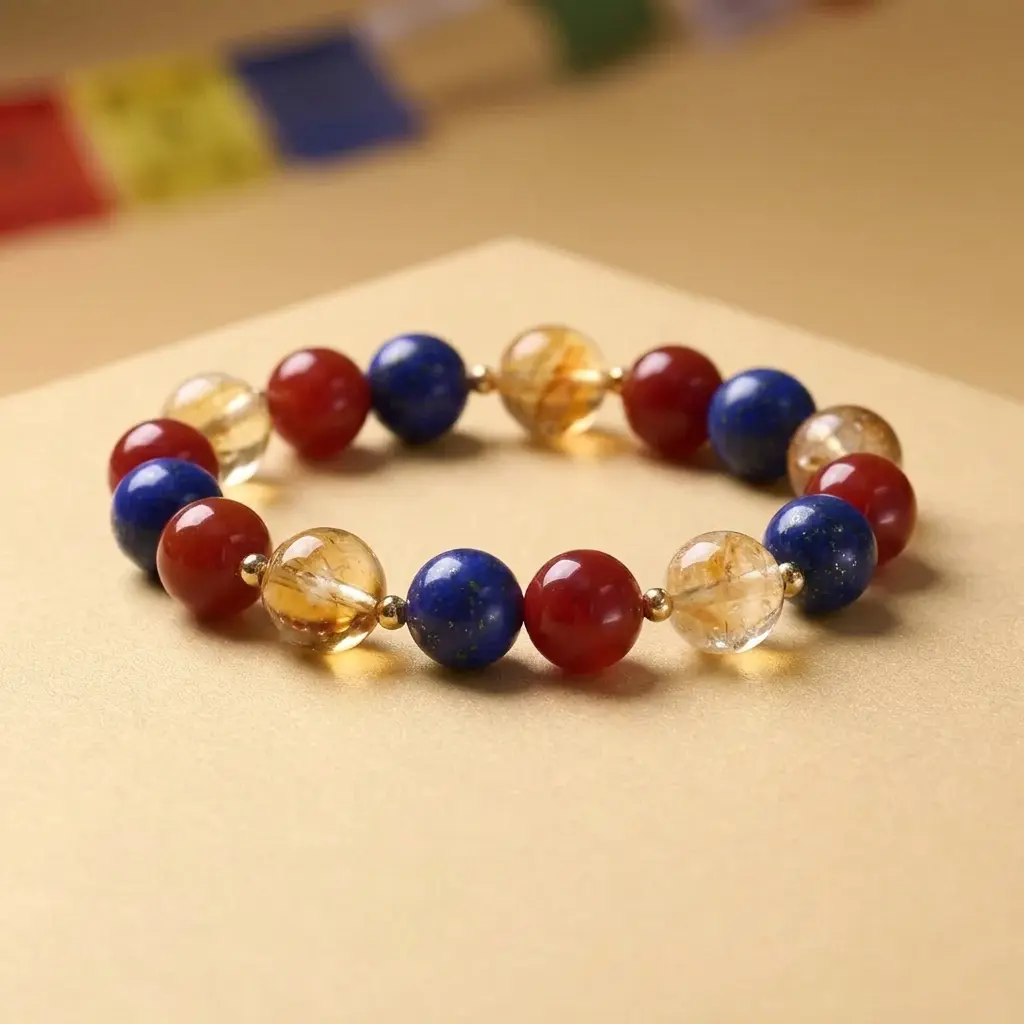
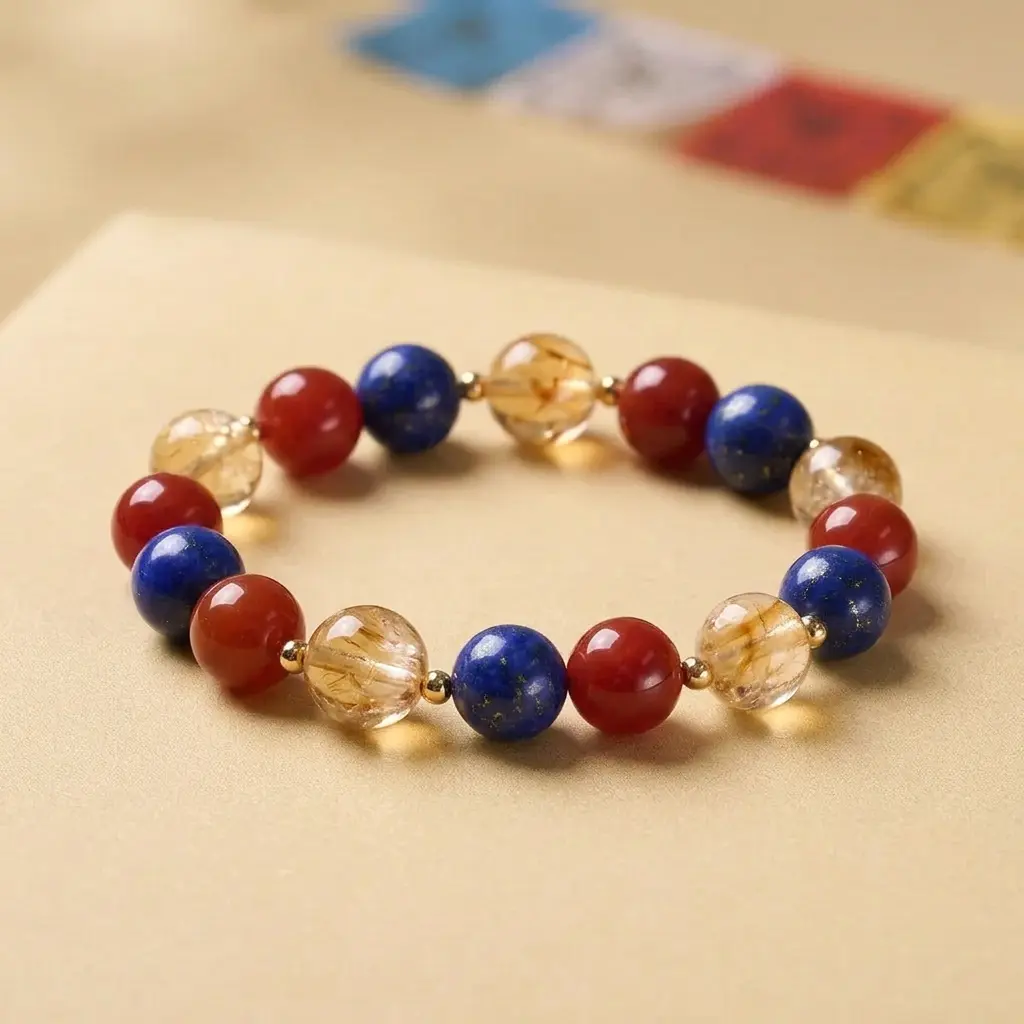
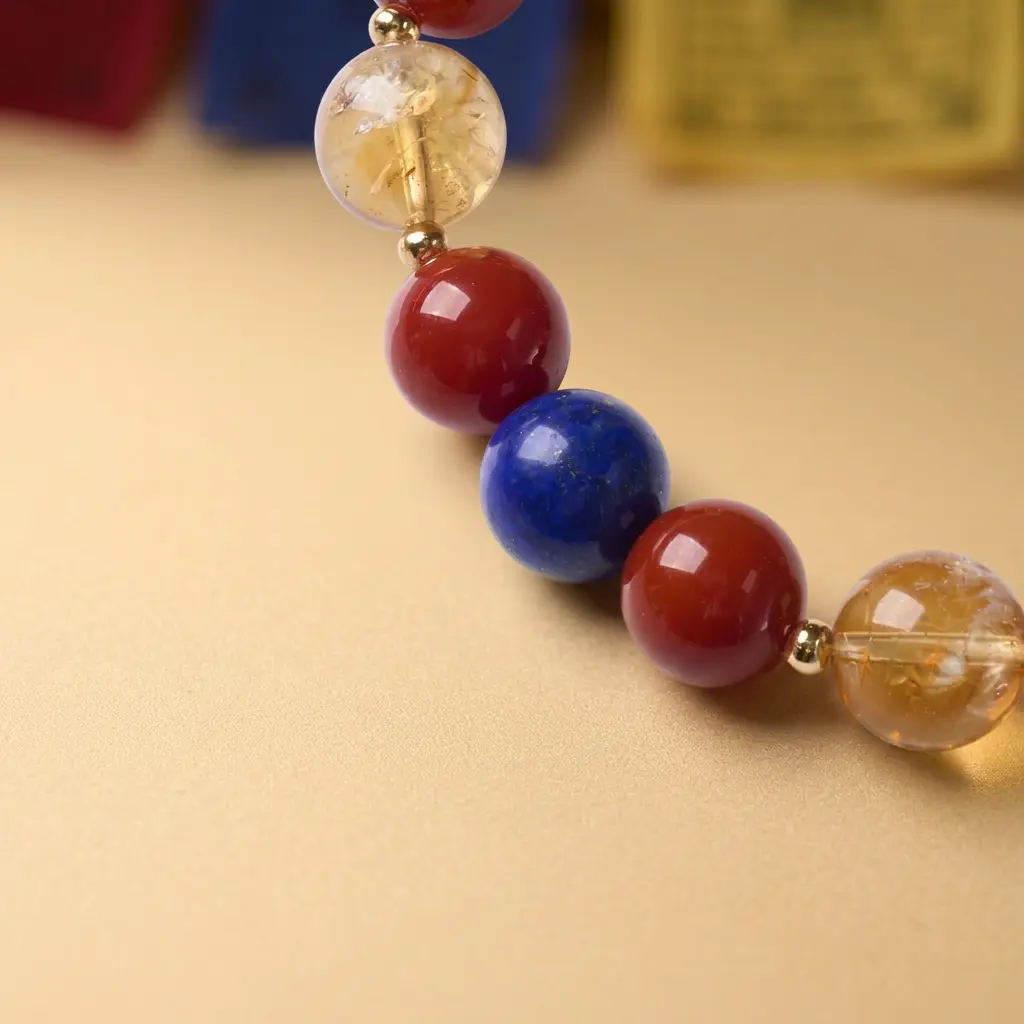
The Southern Red Agate Lapis Lazuli Bracelet puts vitality, wealth, and clarity on one wrist — three sacred Tibetan colors, chosen to work as one system, not a random mix.
- Rooted in real Tibetan symbolism: red, gold, and blue echo three of the Five Buddha Families.
- Genuine gemstone beads: Southern Red Agate, golden citrine, and pyrite-flecked lapis lazuli.
- Bold 10mm beads with warm gold-tone spacers make an instant statement.
- Honestly described materials — natural variation and all, no dressed-up claims.
- Adjustable fit that slips on for daily wear and dresses up or down.
Reach for it on the mornings you want to feel grounded and clear — at your desk, in meditation, or as a meaningful gift for someone starting a new chapter.
What You’ll See on the Wrist
Up close, this is a study in contrast. Deep crimson agate sits beside warm, glowing citrine and midnight-blue lapis lit with tiny gold sparks. The look is bold, but never loud.
Because these are natural stones, every bead is a little different — a shade here, a soft inclusion there. No two bracelets are quite alike. You’re wearing earth, not plastic, and that is the whole point.
The Tibetan Meaning of Red, Gold, and Blue
In Tibetan Buddhist art, color is never just decoration. It carries meaning. Red, gold, and blue map onto three of the Five Buddha Families — each one a facet of awakened mind.
In Tibetan tradition, the Medicine Buddha, Sangye Menla, is shown in the deep blue of lapis lazuli — the color of healing and clear seeing.
Red belongs to Amitabha, tied to warmth and discerning awareness. Gold belongs to Ratnasambhava, the “jewel” family of richness. Blue belongs to Akshobhya and his mirror-like wisdom. Worn together, the three gather vitality, prosperity, and clarity into one quiet circle.
Three Stones, One System — Vitality, Wealth, and Wisdom
Southern Red Agate — Grounding and Drive
Southern Red Agate, known in China as Nanhong, is a prized red chalcedony long treasured across Tibetan and Himalayan adornment. Red is an auspicious, protective color in Tibetan Buddhism. This warm stone is traditionally revered for courage and steady energy, and many wearers find it grounding when the day speeds up.
Golden Citrine — the Stone of Abundance
Citrine is the sunny, golden member of the quartz family, often called the “merchant’s stone.” Gold and yellow are the colors of prosperity in Tibetan practice, carried by wealth figures like Dzambhala. Citrine is believed to invite confidence and opportunity, which is why it suits anyone setting intentions around work and money.
Lapis Lazuli — Clarity and the Medicine Buddha’s Blue
Lapis lazuli has been revered for thousands of years as a stone of wisdom and truth. Its gold flecks are natural pyrite, not paint — a hallmark of the real material. In Tibetan tradition it shares the deep blue of the Medicine Buddha, and is traditionally linked to a calm, clear mind and honest words.
If a piece with real meaning is what you’re after, read on — then picture it on your own wrist.
Honestly Made, Honestly Described
We hand-string each bracelet, choosing lapis with visible pyrite and citrine with a warm, even glow. We would rather be straight with you than oversell.
Most citrine on the market is heat-treated amethyst — and both are genuine quartz that carry the same traditional meaning.
Southern Red Agate should look deep and natural, never neon. When you know exactly what you’re wearing, you can trust it — and trust matters more than hype.
Caring for Your Southern Red Agate Lapis Lazuli Bracelet
Treat it gently and it will last. Keep it away from water, sweat, perfume, and harsh cleaners — lapis is a little porous, and the elastic wears faster when it stays wet. Take it off for showers, swimming, and workouts.
To refresh its energy, many people rest it in soft moonlight or simply set a quiet intention as they put it on each day.
Ready to wear vitality, wealth, and wisdom in one piece? Add the Southern Red Agate Lapis Lazuli Bracelet to your cart today — and begin your own auspicious start.
Frequently Asked Questions
Which hand should I wear my crystal bracelet on?
Most people wear it on the left. In feng shui and Tibetan-influenced tradition, the left hand is the receiving side, so it is the usual choice for drawing in wealth and calm. Wear it on the right if you would rather project confidence outward. Above all, your intention matters most.
How can I tell if Southern Red Agate is real or dyed?
Look at the color and the light. Genuine Southern Red Agate shows deep, natural color that shifts softly through the bead. Dyed stone often pools color along cracks and looks flat or too bright. Real agate feels dense and cool, and a chemical smell is a clear warning sign.
Is the citrine natural or heat-treated?
Here is the honest answer: most citrine sold worldwide is heat-treated amethyst, since natural citrine is rare. Both are real quartz, and both carry the same traditional “abundance” meaning, so the treatment does not lessen its use. What matters is a seller who describes their stones plainly.
Are the gold flecks in the lapis lazuli real?
Yes — those tiny gold sparks are natural pyrite, formed inside the stone. Genuine lapis lazuli shows deep blue with pyrite shimmer and sometimes soft white veining. Dyed imitations look flat and uniform, and can rub color onto a cloth. Natural variation is a good sign, not a flaw.
Can I wear red agate, citrine, and lapis lazuli together?
Absolutely. These three stones are chosen to complement, not compete. Red agate is traditionally linked to vitality, citrine to abundance, and lapis to clarity — different intentions that sit naturally together. That balance is exactly why this triad works so well as an everyday piece.



Reviews