

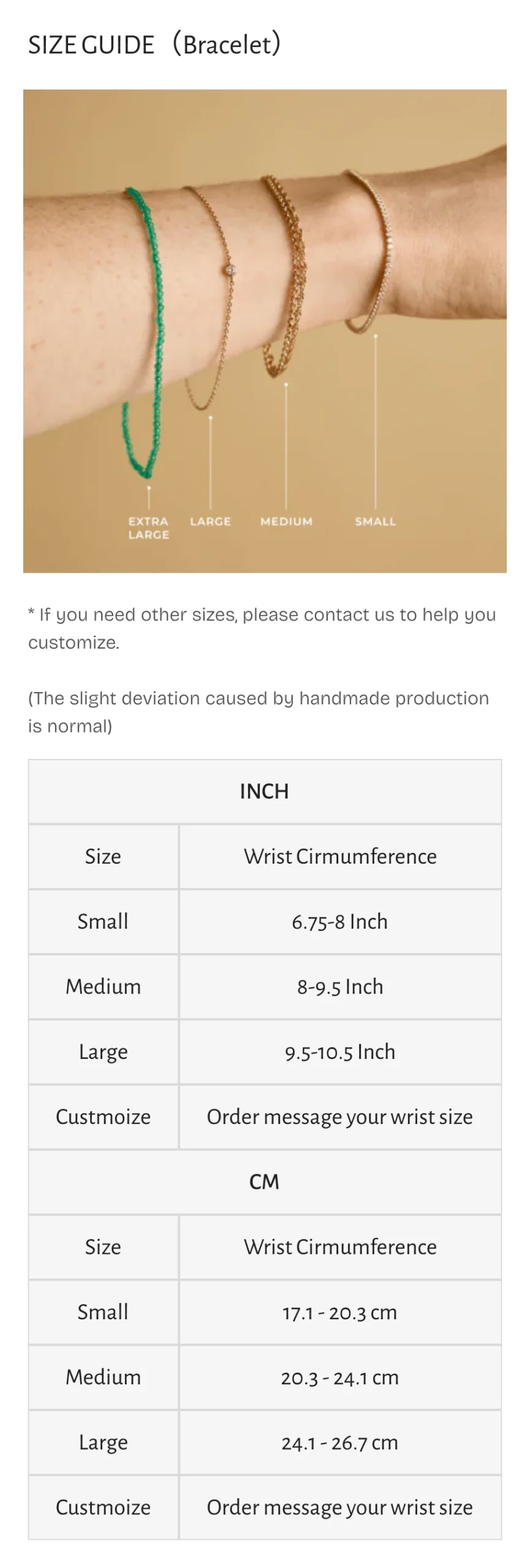
 Bracelet Size Guide Chart - Wrist Measurement in Inches & CM[/caption]
[caption id="attachment_17326" align="aligncenter" width="905"]
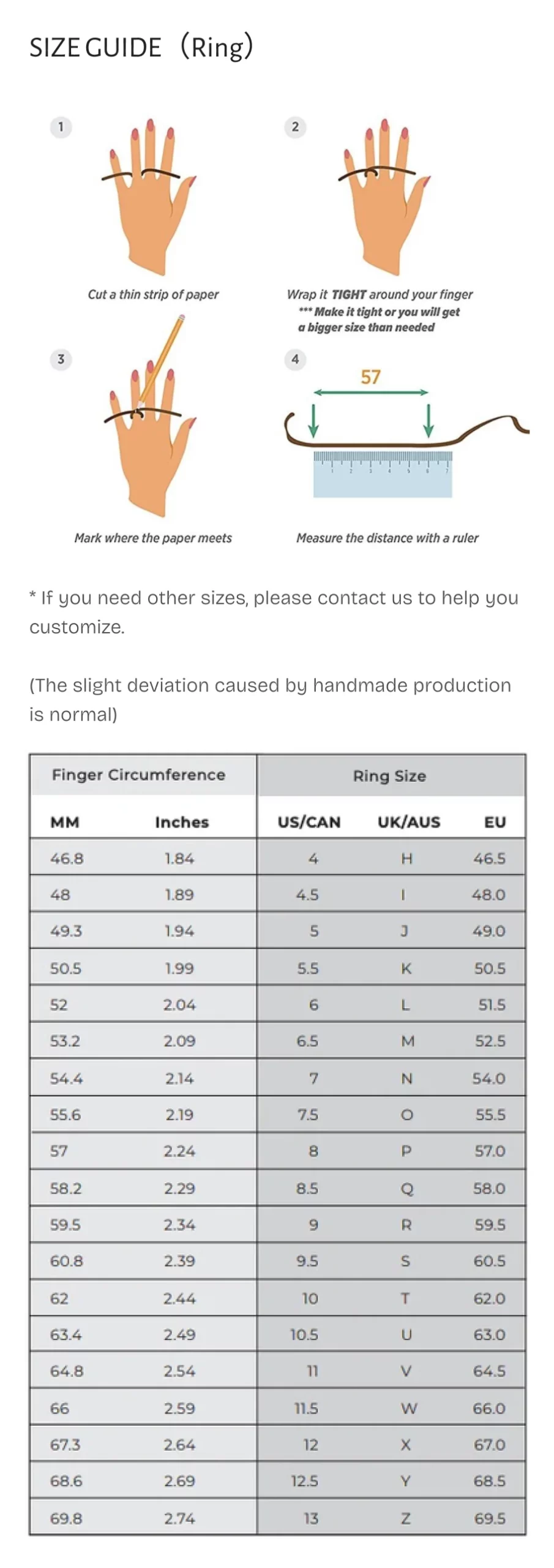 Ring Size Guide - How to Measure Finger Size at Home[/caption]
[caption id="attachment_17325" align="aligncenter" width="912"]
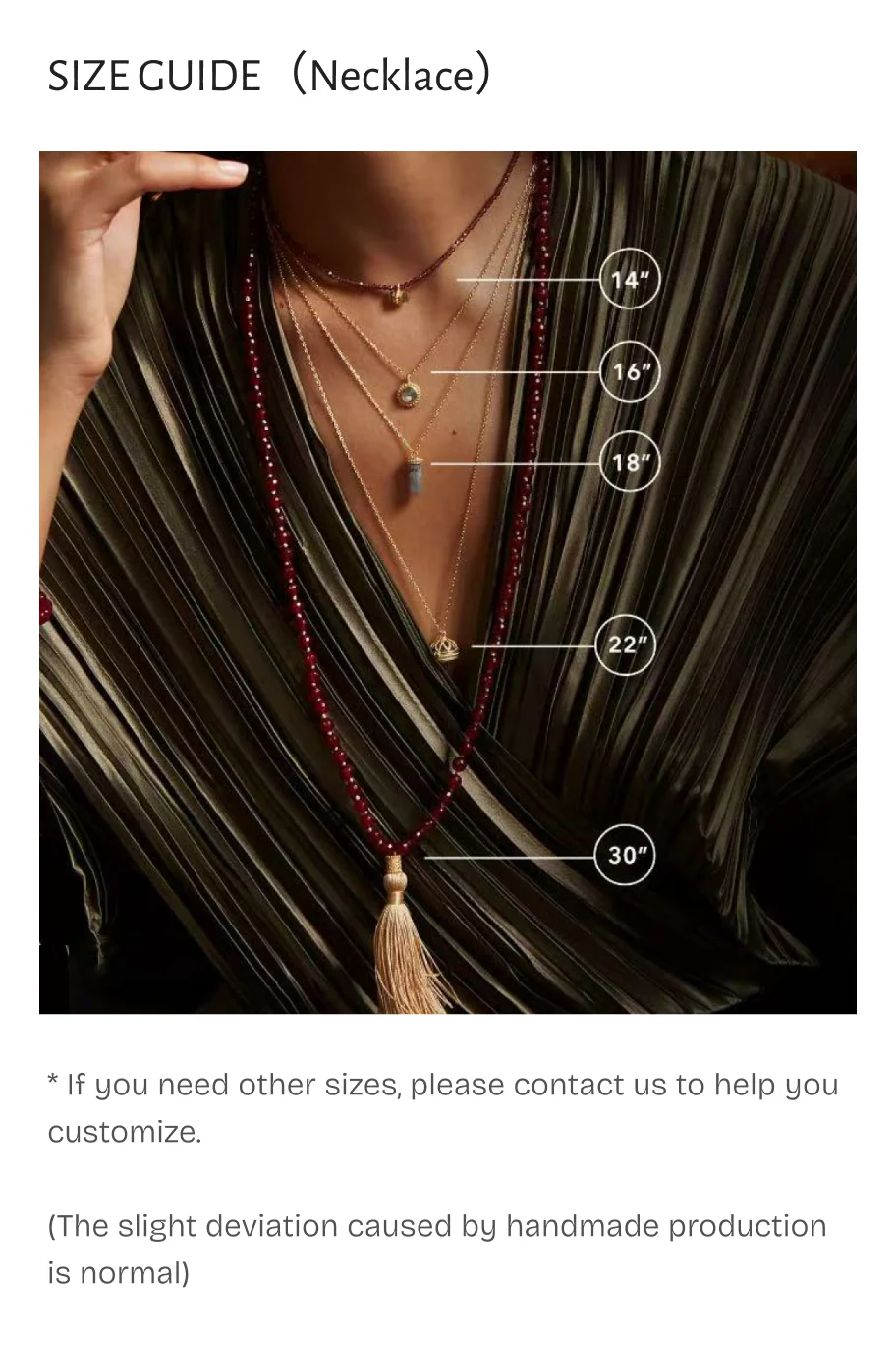 Necklace Length Size Guide Chart - 14 16 18 22 30[/caption]
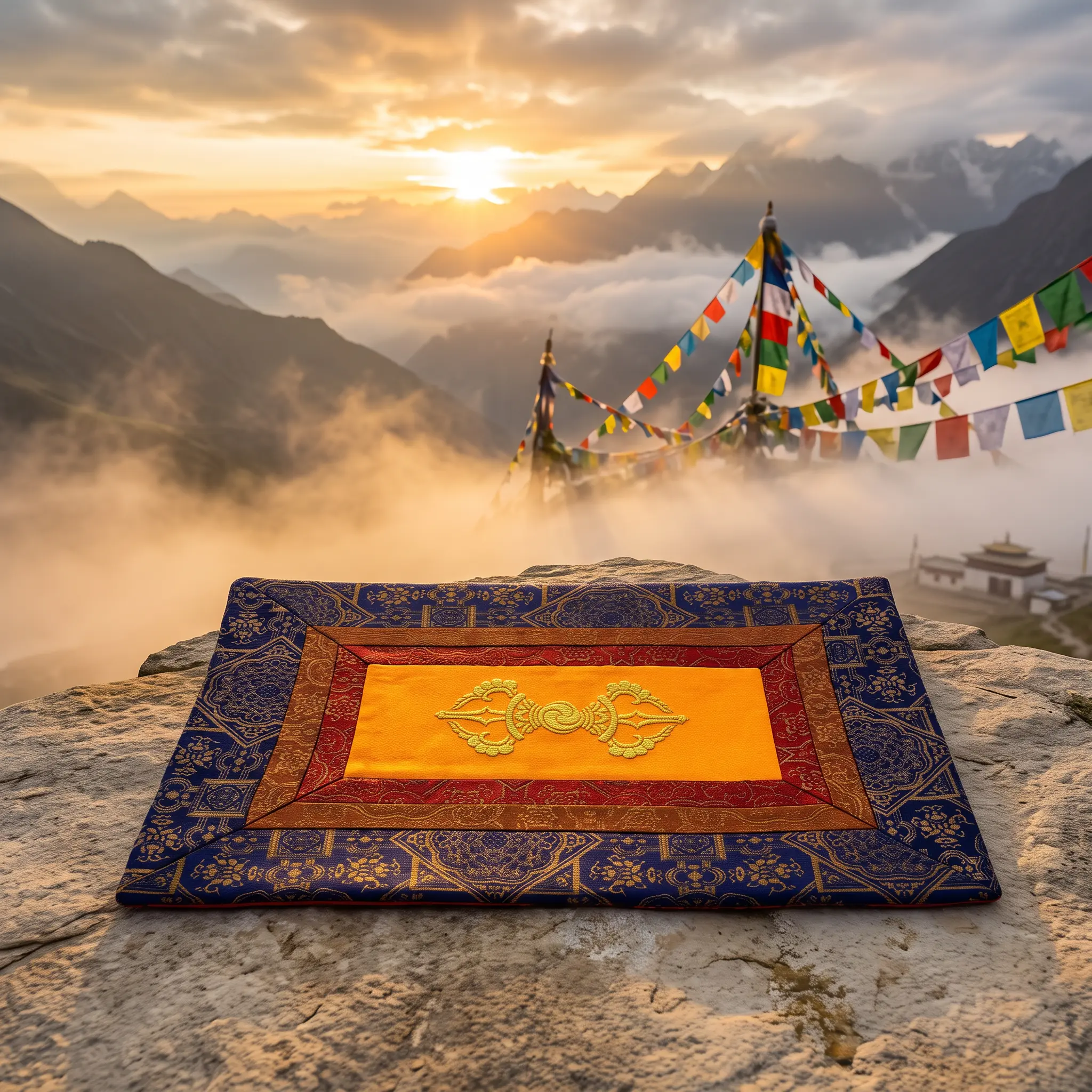
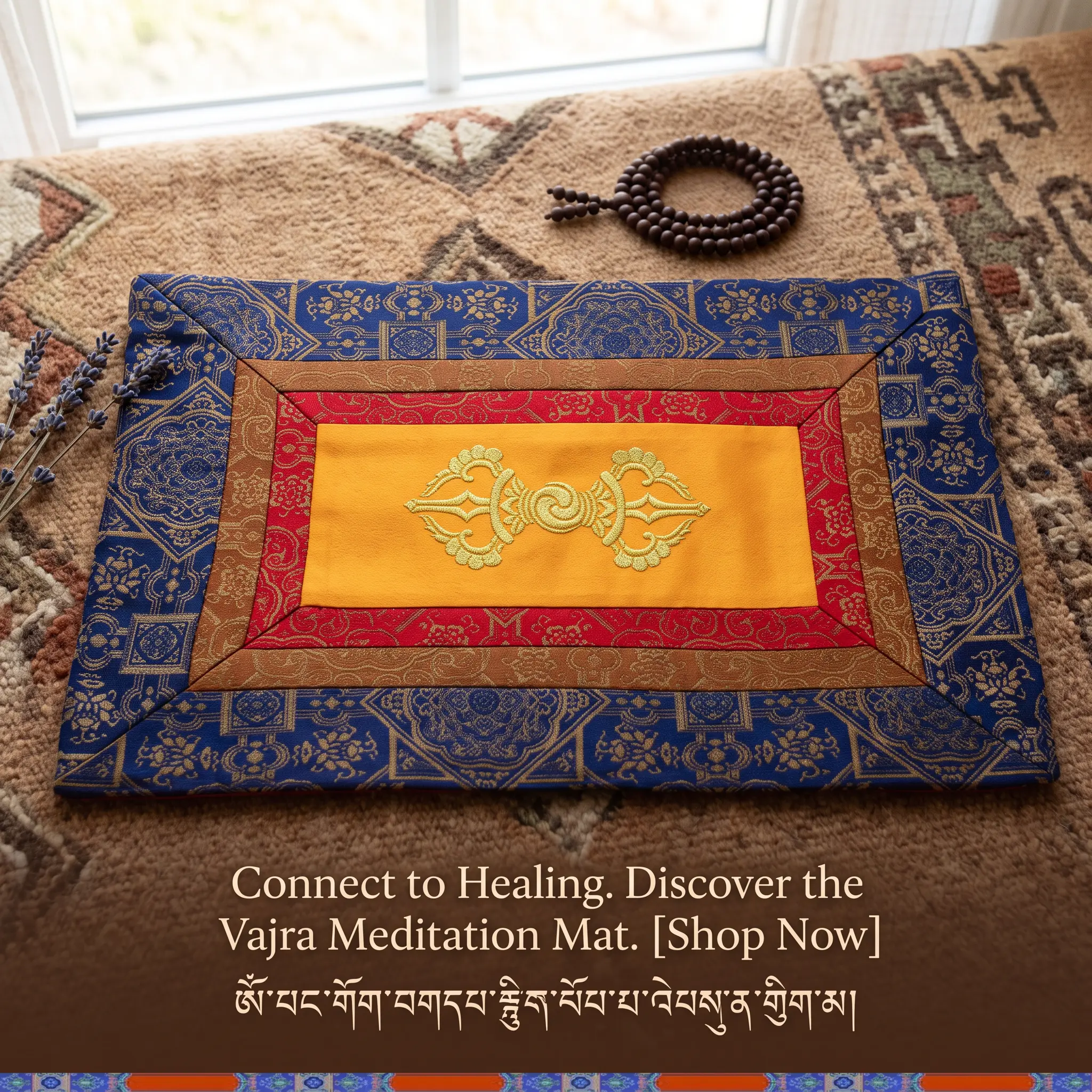
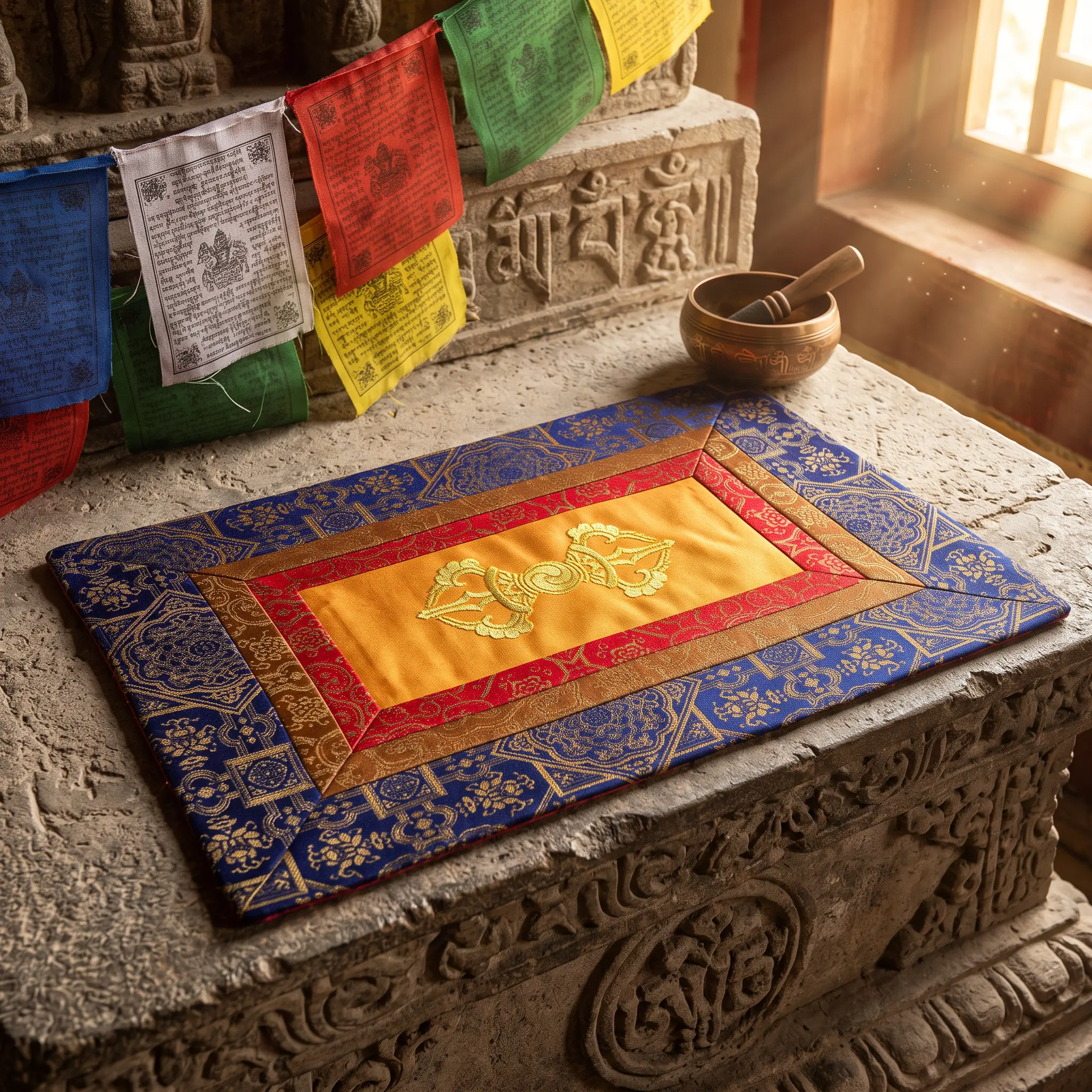
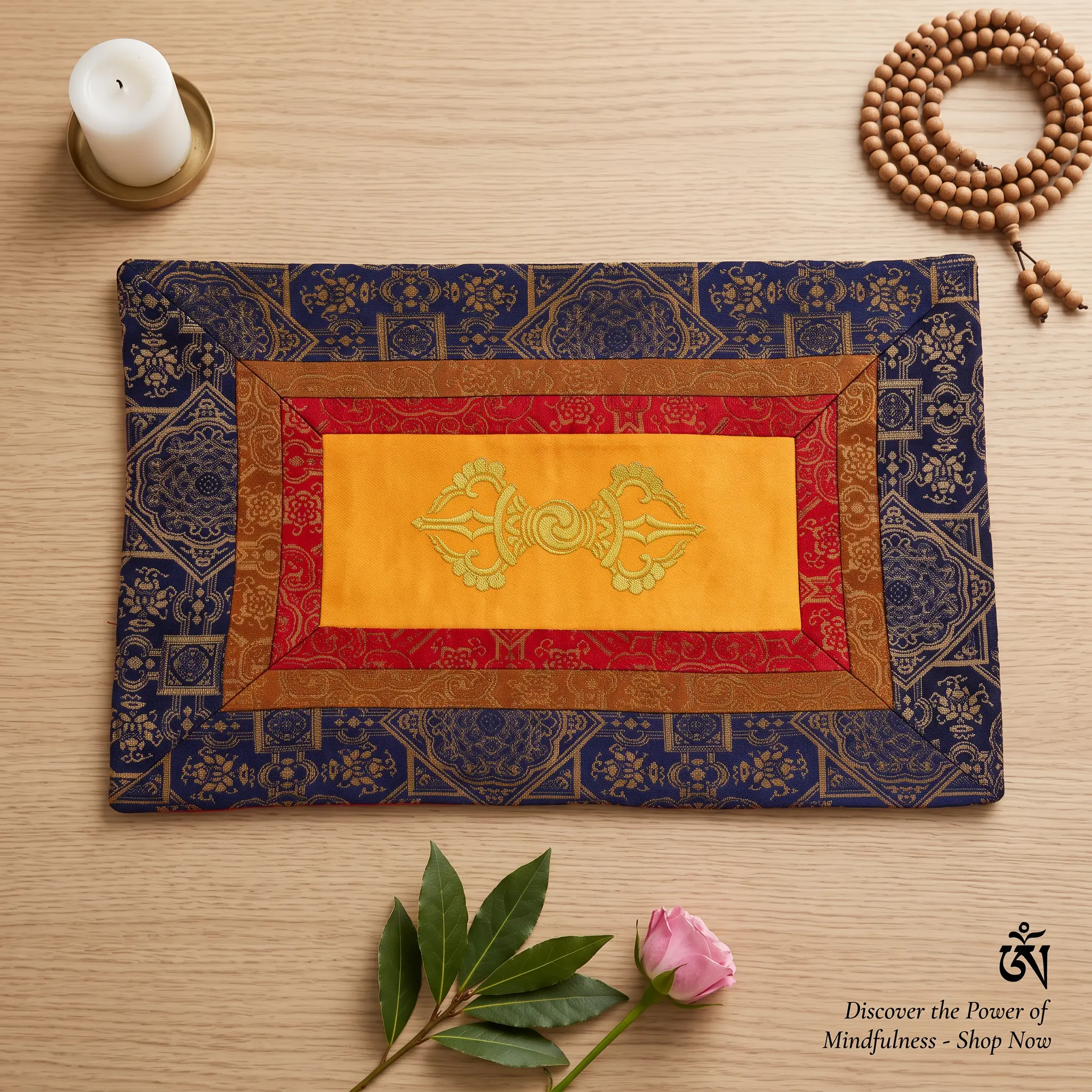
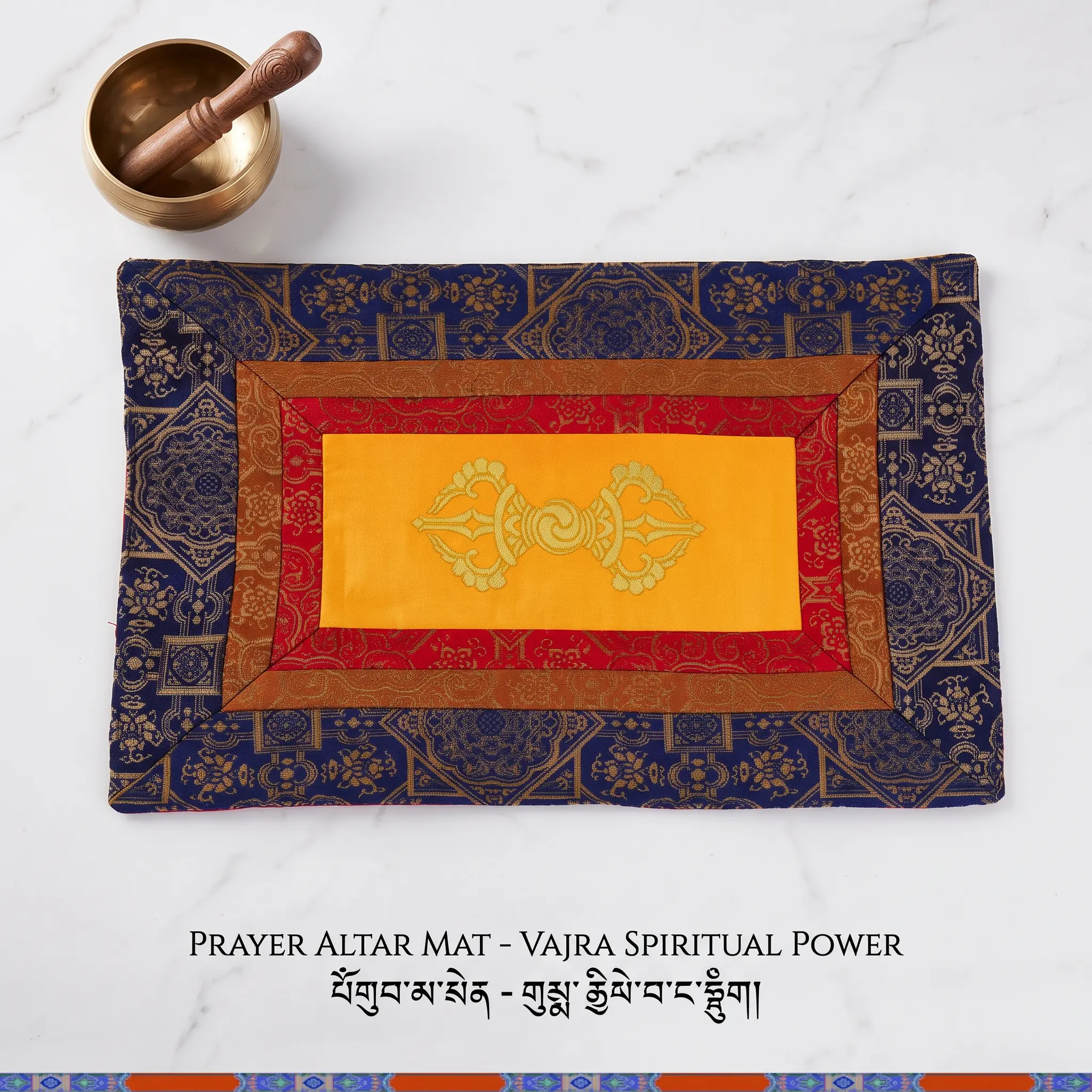
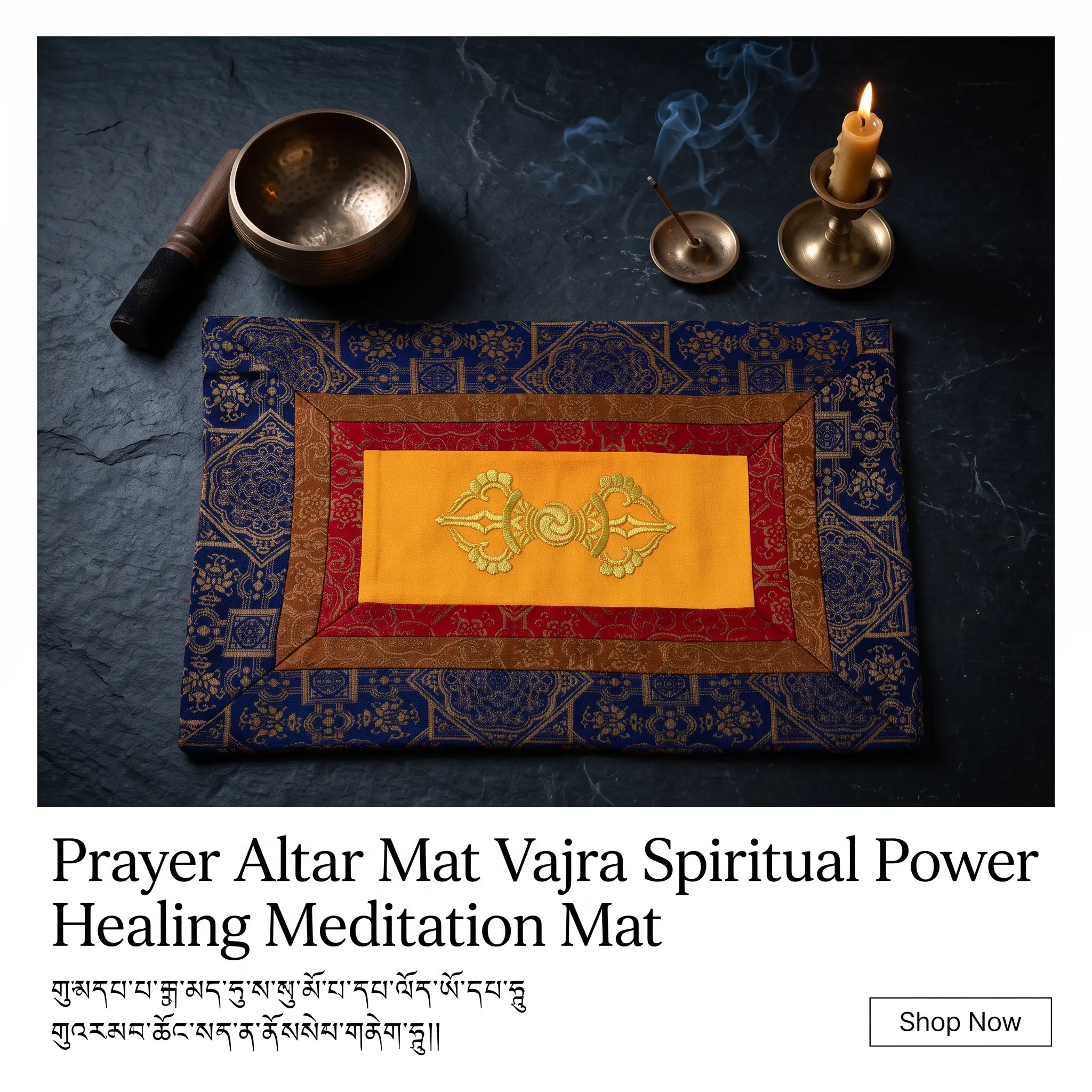
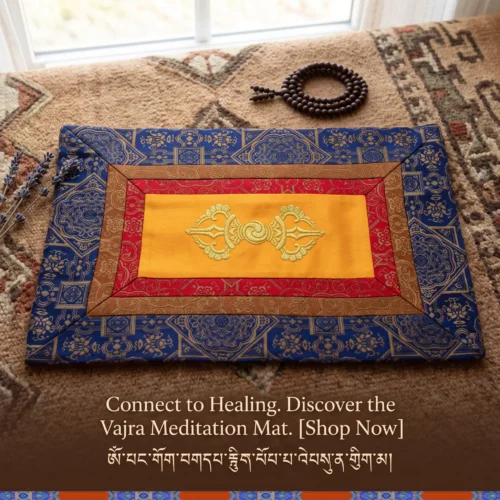
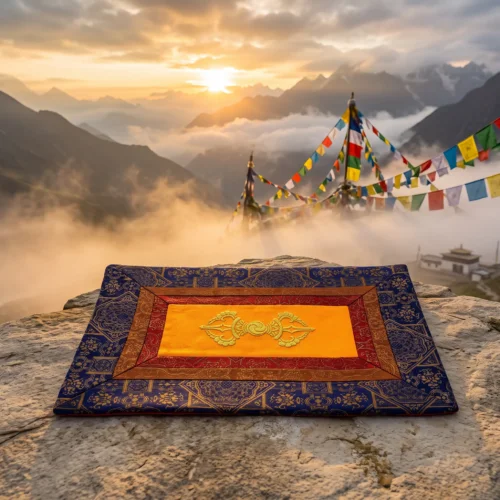
Give your bell, bowl or small statue a base that feels worthy of it. This Tibetan vajra altar mat is a compact 40 × 28 cm cloth with a woven gold vajra (dorje) on a golden-yellow center. Red, bronze and navy borders frame it, each woven with gold auspicious patterns. It is made for small altars, shelves and meditation corners.
At PotalaStore, we focus on Tibetan Buddhist ritual items and Tibetan jewelry. So we describe each piece the way a practitioner would want to know it: what it means, how big it really is, and what actually fits on it.
At a Glance
- Design: a single gold vajra (dorje) centered on a golden-yellow panel
- Size: 40 × 28 cm (about 15.7 × 11 in)
- Look: navy outer border, bronze inner band and red frame, all with gold-toned woven motifs
- Fabric: woven, lustrous brocade-style cloth
- Best for: bell and dorje sets, small singing bowls, offering bowls and small statues
- Tradition: Tibetan Buddhist (Vajrayana) symbolism
What the Vajra (Dorje) Symbol Means
Vajra is Sanskrit for both “thunderbolt” and “diamond.” In Tibetan, the same symbol is called dorje. It stands for what cannot be broken, and for the clarity that cuts through confusion.
A diamond cannot be scratched. A thunderbolt cannot be stopped. The vajra holds both ideas in one shape.
Diamond and Thunderbolt: Strength and Clarity
Like a diamond, the vajra stands for something indestructible. It is often linked to śūnyatā (emptiness), the Buddhist teaching on the true nature of things. Like a thunderbolt, it stands for sudden insight that cuts through ignorance.
The classic ritual vajra is often shown with five prongs at each end. According to the Rubin Museum of Art, these prongs relate to the five Buddha families and the five wisdoms.
Why the Vajra Is Paired With a Bell
In Vajrayana practice, the vajra is held in the right hand and the bell in the left. Britannica explains that the vajra stands for skillful action and the bell for wisdom. Together, they point toward awakening. That is why this mat makes such a natural base for a bell and dorje set.
Single Vajra vs. Double Vajra
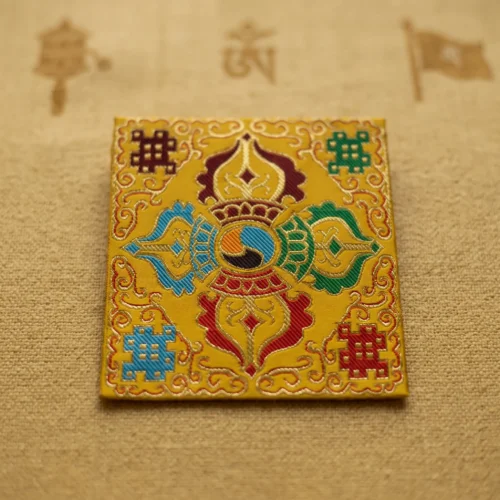
Many altar cloths show a crossed double vajra (vishvavajra), a symbol of stability and foundation. This mat shows a single vajra, the hand-held symbol of indestructible, skillful method. Choose it if you want the same vajra you see in a ritual set.
Design Details: Colors, Borders and Patterns
Look closely and you will see the care in the weave. The center panel is a warm golden yellow. The gold vajra sits in the middle, with fine scrollwork on its prongs and a spiral at its core.
A red band surrounds the panel, then a bronze band, then a deep navy border woven with gold geometric and floral motifs. The corners meet in clean diagonals. The fabric has a lustrous sheen that adds color even to a dim shelf.
A note on color meaning: teachers and lineages read colors differently, so we won’t guess at them for you. We describe the vajra, because that symbol is clear and well documented.
What Fits on a 40 × 28 cm Altar Mat
Small is the point. This mat suits a home altar where space is limited. Here are four layouts that work:
- Bell and dorje set. A 5–6 inch set, the common home-practice size, lies comfortably side by side.
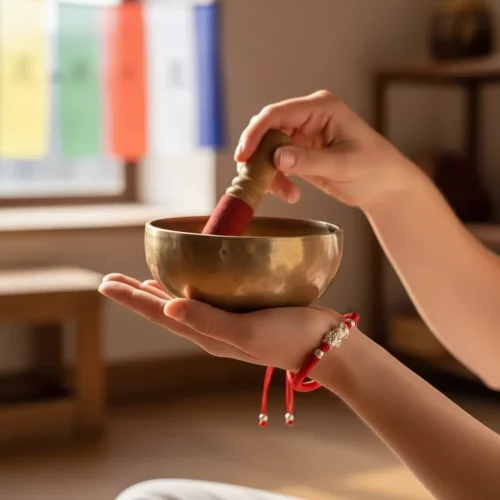
- Singing bowl. Place a small bowl on its cushion with the striker beside it.
- Small statue with offering bowls. Set the statue at the back of the mat and one or two bowls in front.
- Mala, candle and incense. Keep any flame at a safe distance, and never leave it unattended.
It is too small for a full row of seven water bowls. For that, choose a larger altar cloth or runner.
How to Use Your Altar Mat Respectfully
You do not need to be Buddhist to use this mat. You do need to treat it as a sacred cultural object. These habits follow common Tibetan altar guidance, such as the setup advice published by Shambhala:
- Use a clean, dedicated surface, not a table you also eat or work on.
- Keep it raised, ideally above your seated head height. Never place it on the floor.
- Put sacred images and the bell and dorje on the mat first. Place offerings slightly lower.
- Keep it away from shoes, bathrooms and clutter.
Size and Specifications
| Item type | Prayer altar mat / altar cloth |
|---|---|
| Dimensions | 40 × 28 cm (about 15.7 × 11 in) |
| Material | Woven cloth, brocade style |
| Central motif | Single vajra (dorje), gold |
| Colors | Navy, bronze, red, golden yellow |
| Tradition | Tibetan Buddhist |
Care and Storage
- Spot-clean only. Blot gently with a damp cloth. Don’t wring, soak or machine-wash.
- Iron on low heat from the reverse, through a cotton cloth. No steam on gold thread.
- Store loosely folded or rolled in a breathable cotton bag, away from damp. Avoid sealed plastic.
Frequently Asked Questions
What does the vajra on this altar mat mean?
Vajra means both thunderbolt and diamond. It stands for indestructible strength and the clarity that cuts through ignorance. It is a core symbol of Vajrayana Buddhism.
Is a vajra the same as a dorje?
Yes. Vajra is the Sanskrit name. Dorje is the Tibetan name for the same symbol.
Will a bell and dorje set fit on a 40 × 28 cm mat?
Yes. A standard 5–6 inch home-practice set lies comfortably side by side.
Can I use it if I’m not Buddhist?
Yes. Use it with respect: keep it clean, raised and off the floor.
How do I clean it?
Spot-clean gently with a damp cloth. Do not wring, soak or machine-wash it.



Reviews