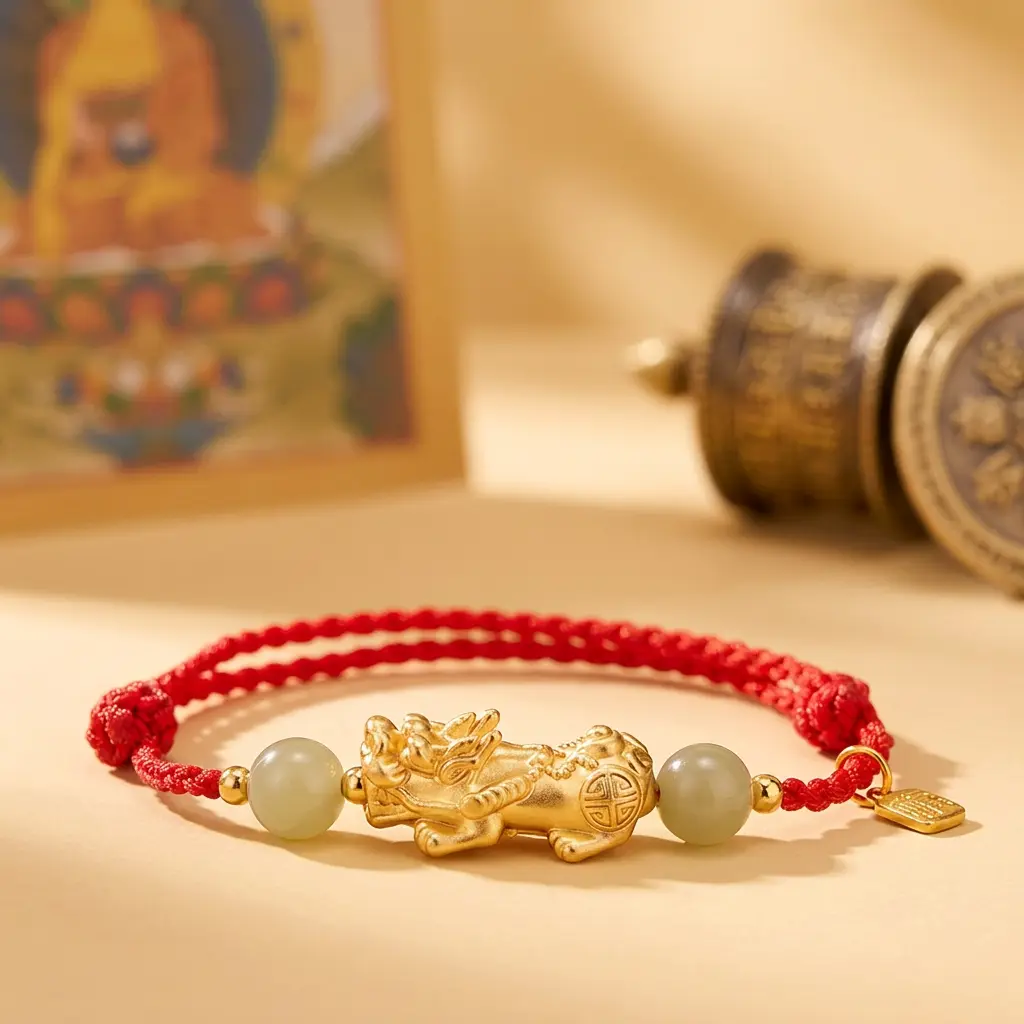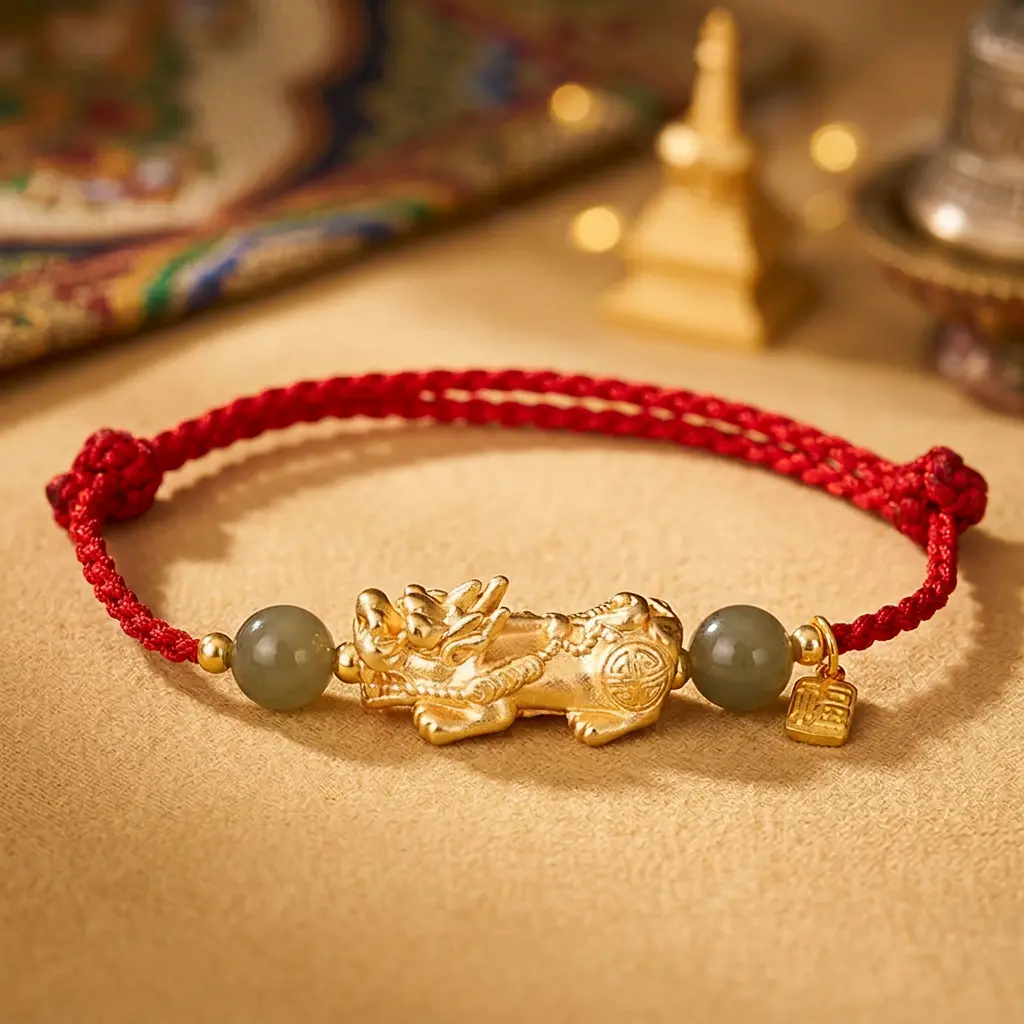

Gabay sa Pagbili ng Tibetan Bracelet: Mga Uri, Kahulugan, at Paano Matukoy ang Tunay na Pulseras
 by Yang Tso
0 komento
by Yang Tso
0 komento
Want a Tibetan bracelet that actually means something, not a machine-made cord with a story printed on the box? This guide shows you how to pick the right style, read its knots and colors, and skip the fakes that fill online marketplaces.
At Tindahan ng Potala, we sell handmade Tibetan Buddhist jewelry and answer buyer questions every day. The two mistakes we see most are paying extra for a “blessed” protection cord with no traceable blessing, and buying copper expecting a medical cure.
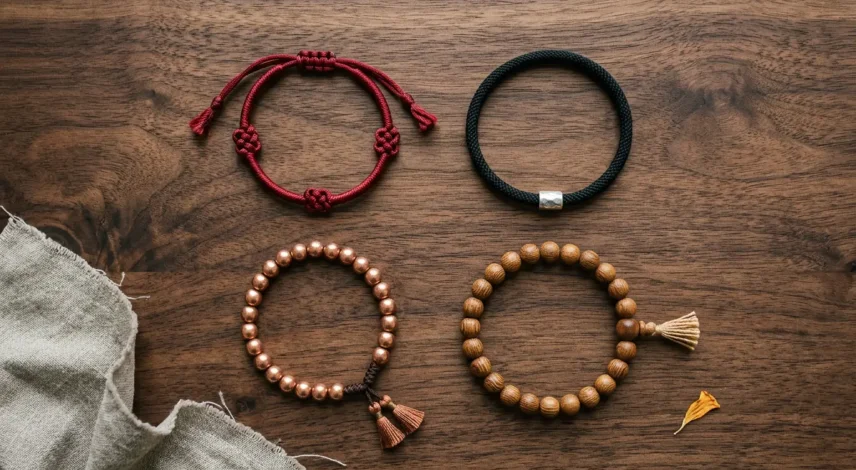
A Tibetan bracelet is a handmade Buddhist wrist piece, usually knotted cord, copper beads, or a short prayer-bead mala, worn for protection, mindfulness, and good fortune. For most first-time buyers, a hand-knotted cord is the best start. It is the most traditional form, it adjusts to any wrist, and it costs the least. You can compare every style in Koleksyon ng pulseras na Tibetan ng PotalaStore, but read the checks below first.
Talaan ng nilalaman
What Is a Tibetan Bracelet?
A Tibetan bracelet is a wrist piece made in the Tibetan Buddhist tradition, usually from knotted cord, copper, prayer beads, or etched agate. People wear it as a protection amulet, a mindfulness reminder, or a sign of blessing. Its meaning comes from three layers: the knot or mantra, the color, and the material.
In short, it is a religious object before it is jewelry. That changes how you should shop for one.
The sungdü: Tibet’s original protection cord
The oldest form is the sungdü (nakasulat din sungkü), a protection cord that a lama knots and consecrates with mantras. Bhutanese historian Karma Phuntsho describes lamas blowing on the cords after their recitation to pass on the blessing, which earned them the nickname “tongue cords.”
Phuntsho also notes a condition that most sellers skip. The cord is believed to help its wearer fully only when it is treated with faith and respect. So in the tradition, the blessing and your intention carry the meaning, not the thread.
Where the Om Mani Padme Hum mantra comes from
Om Mani Padme Hum is the six-syllable mantra of Avalokiteśvara (Chenrezig in Tibetan), the bodhisattva of compassion. It first appears in the Kāraṇḍavyūha Sūtra, a text scholars place in Kashmir around the late fourth or early fifth century CE.
Mantra bracelets carry this phrase on carved beads, metal plates, or woven thread. If you want the meaning of each syllable before you wear it, read our guide to the Om Mani Padme Hum mantra’s meaning and benefits.
4 Main Styles Compared: Cords, Mantras, Copper, and Malas
Here is how the four common styles compare on purpose, fit, and upkeep:
| estilo | Traditional role | Pinakamahusay para sa | Karaniwang materyal | Pagpapanatili |
|---|---|---|---|---|
| Knotted protection cord | Blessing and protection, often given by a lama | Everyday wear, first-time buyers, gifts | Red or five-color cord | Low; cord wears out in 6 to 12 months |
| Mantra bracelet | Carrying the compassion mantra on your body | Daily reminder, meditators | Cord, metal, or carved beads | Mababa hanggang katamtaman |
| Copper bead bracelet | Good fortune and grounding symbolism | A sturdier, metal look | Copper beads on cord | Medium; copper oxidizes |
| Mala sa pulso | Counting mantras in 18, 21, or 27 beads | Starting a mantra or meditation practice | Wood, seed, or stone beads | Medium; wood and seeds dislike water |
Knotted cords and mantra bracelets: the everyday choice
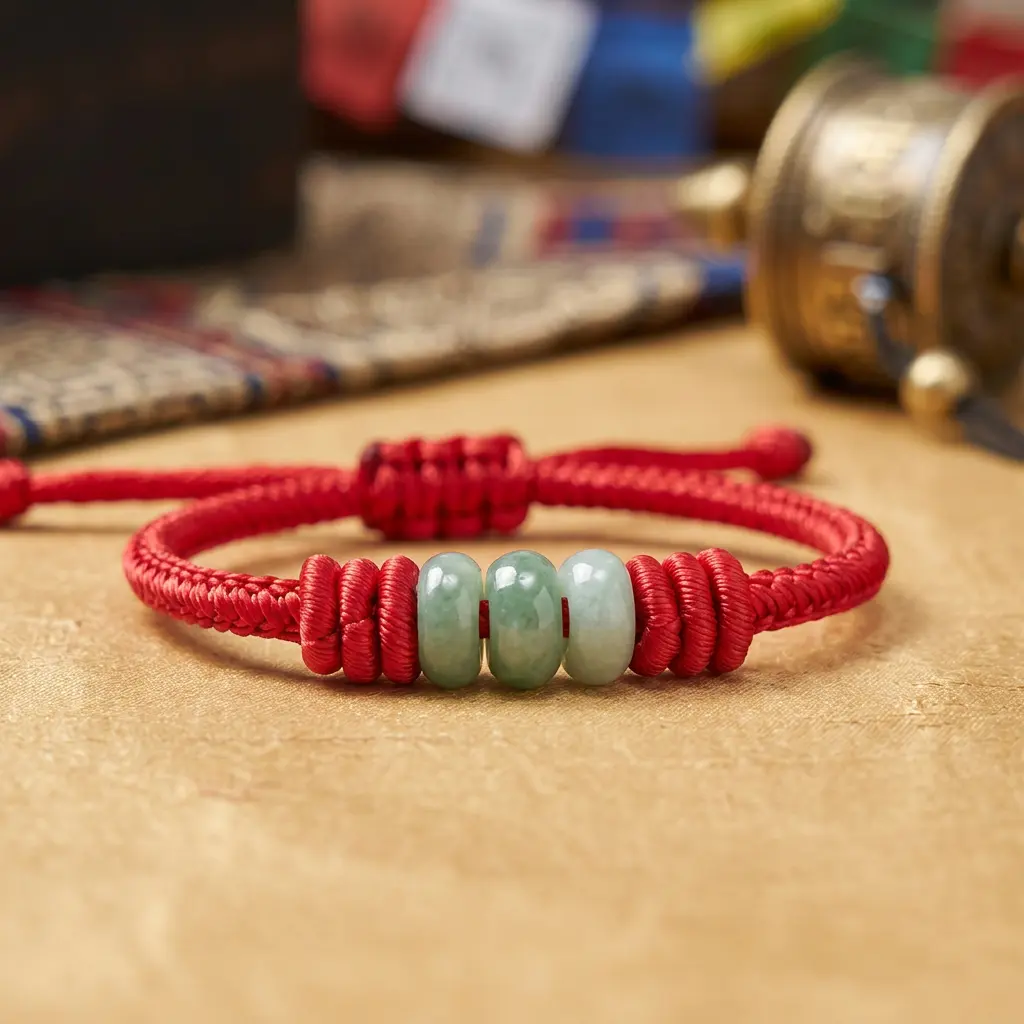
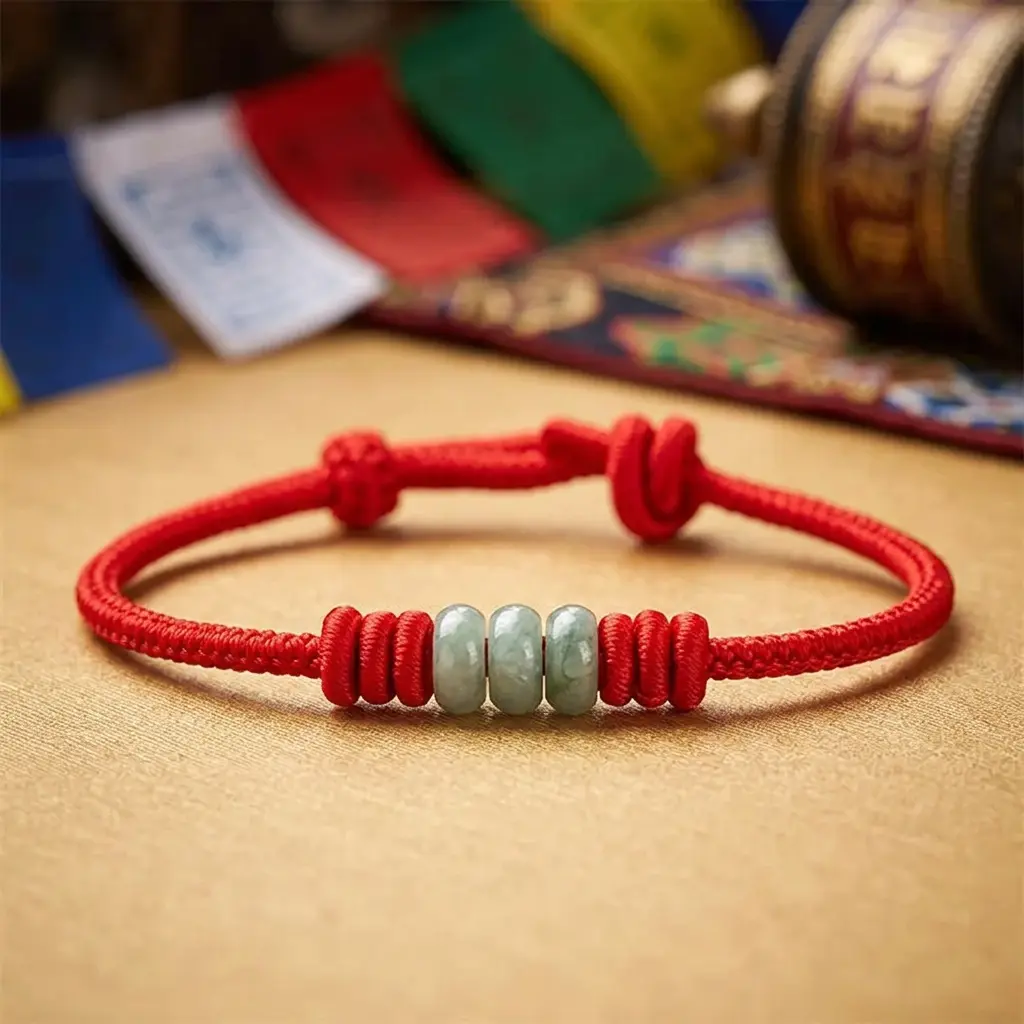
Knotted cords are the lightest and most adjustable style. Our hand-tied Buddhist monk protection bracelet uses a sliding closure that fits wrists from 6.69 to 7.48 inches (17 to 19 cm). You can wear it snug or loose without a jeweler, and it stays comfortable enough to forget until you want the reminder.
Hand-tying is slow work. Our artisans spend 30 to 50 minutes on each knotted bracelet, which is why the knots look slightly uneven up close. That irregularity is the mark of a human hand, and it is one of the easiest authenticity signals you can check.
Copper beads and wrist malas: sturdier and more tactile
A copper bead bracelet trades the softness of cord for weight and a warm metal look. Copper oxidizes naturally, and some wearers see a faint green tint on their skin. It is harmless and washes off. Our handmade Tibetan copper beads bracelet is woven while artisans recite Om Mani Padme Hum, so it combines metal and mantra in one piece.
A mala sa pulso is a short string of Buddhist prayer beads, usually 18, 21, or 27 beads, each a division of the full 108. Because you can count mantras on it, it works as a meditation tool you carry everywhere. Still weighing the two formats? Our breakdown of a wrist mala vs a full 108-bead mala helps you decide by practice style.
Dzi bead bracelets: the collector tier
Dzi (pronounced “zee”) are etched agate beads with “eye” patterns, prized in Tibet as protective talismans. They are also the most faked item in this category. Genuine dzi are natural agate rated 6.5 to 7 on the Mohs hardness scale, and the etched pattern sits inside the stone, not on its surface.
New handcrafted agate dzi typically cost about $80 to $300, while antique beads sell for far more. Before you spend that kind of money, read our sourcing guide on how to tell real dzi beads from fakes.
Ang aming rekomendasyon: For everyday protection, start with a knotted cord. If you already meditate, choose a wrist mala, because you will use it for counting instead of only wearing it. Save dzi for when you know exactly which pattern you want.
What Do the Knots and Five Colors Symbolize?
Knots and colors are the symbolic core of a Tibetan protection bracelet. The knot tells you what kind of blessing the piece represents, and the colors map to the five elements.
The endless knot and the vajra knot
Ang walang katapusang buhol (palbeu in Tibetan) is one of the Eight Auspicious Symbols of Tibetan Buddhism, the Ashtamangala. Because it has no beginning and no end, it stands for the endless wisdom and compassion of the Buddha. Many teachers also read it as a picture of interdependence.
On protection cords, the most common knot resembles a vajra, the ritual thunderbolt that represents the indestructible nature of reality. According to Karma Phuntsho, cords may carry a single knot or three, five, nine, or as many as twenty-one knots.
The five colors and their elements
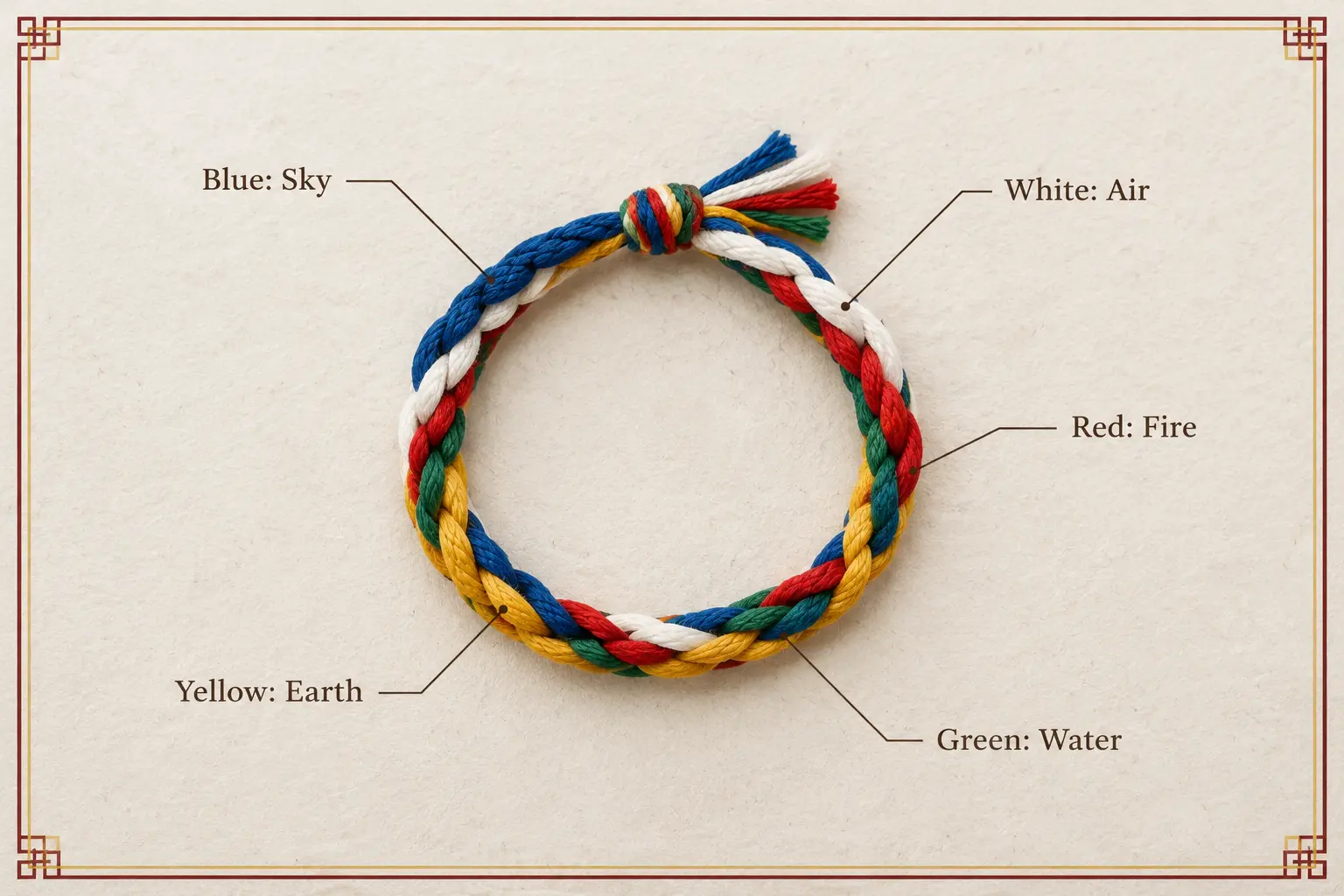
Five-color bracelets use the same palette as Tibetan prayer flags. Each color represents one element:
- Bughaw: sky and space
- White: air and wind
- Pula: apoy
- Berde: tubig
- Dilaw: lupa
Single-color cords are linked to specific deities. Phuntsho gives red as the color of Amitayus, the Buddha of Longevity, which helps explain why the red string is the style most people recognize. Multicolor cords, by contrast, represent the five wisdoms. For a deeper color-by-color reading, see our guide to Tibetan bracelet colors and symbols.
Which Wrist Should You Wear a Tibetan Bracelet On?
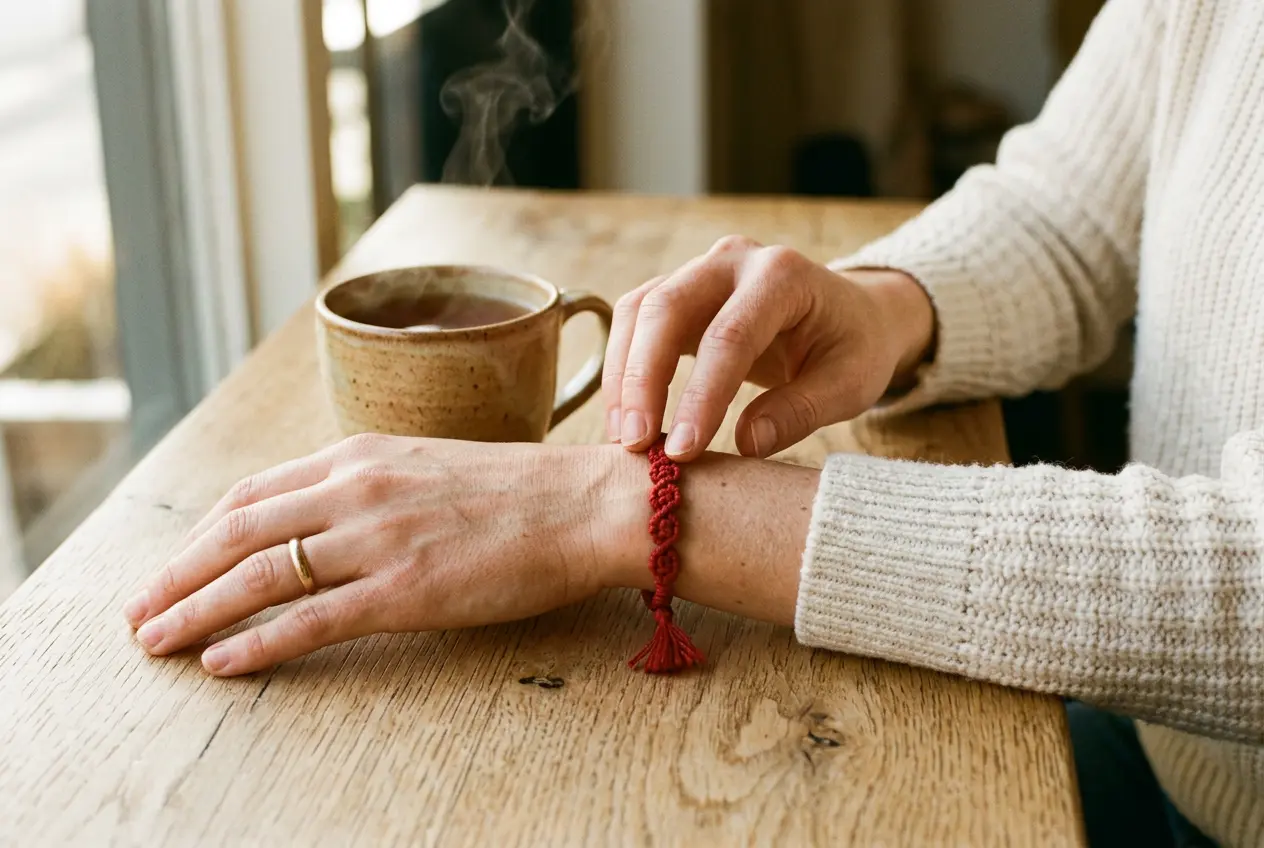
Most practitioners wear a Tibetan bracelet on the left wrist, the side traditionally associated with receiving blessings and protection. The right wrist is a sound choice when the bracelet stands for a vow or an intention you want to send outward.
Left wrist: the receiving side
The left-wrist habit has a real precedent. Karma Phuntsho describes five-color empowerment cords that are normally worn on the left arm. If your main goal is protection, the left wrist follows the tradition most closely.
Right wrist: the giving side
Some wearers choose the right wrist when the bracelet represents dedication, such as sharing merit with others or keeping a promise. It is also practical if you are left-handed and want the cord away from your writing hand.
Either way, Tibetan practice cares more about respect than about which side you choose. Keep the bracelet clean, and take it off in places you would not bring a prayer book.
Does a Protection Amulet Really Work? What the Evidence Says
It depends on what you expect. A Tibetan protection bracelet works well as a mindfulness anchor, has no proven medical effect, and its spiritual value rests on your own faith.
As a mindfulness anchor: yes
A cord or bead on your wrist gives you a physical cue to pause. When you feel it during a stressful call, you get a moment to breathe and reset. That is the same principle malas use for counting mantras, and it needs no belief to function.
As a health treatment: the copper study says no
Many copper bracelet listings hint at pain relief. The best evidence disagrees. In a 2013 randomized, double-blind crossover trial from the University of York, 70 rheumatoid arthritis patients aged 33 to 79 each wore four devices, including a copper bracelet, for five weeks at a time.
The researchers found that neither the copper bracelet nor the magnetic wrist strap gave any meaningful therapeutic benefit beyond a placebo. So wear copper for its look and meaning, not as treatment.
As a spiritual object: a matter of faith
In the tradition, a blessed cord at minimum serves as a reminder of the Buddhas and their compassion. Whether it protects you in a deeper sense is a question of belief, not measurement. Be wary of any seller who guarantees money, love, or healing.
Mahalagang paalaala: The spiritual and protective properties described in this article reflect traditional Tibetan Buddhist beliefs and practitioner experience, not scientific evidence. This content is for educational purposes and does not replace professional medical advice.
How to Spot a Fake: A 6-Point Authenticity Check
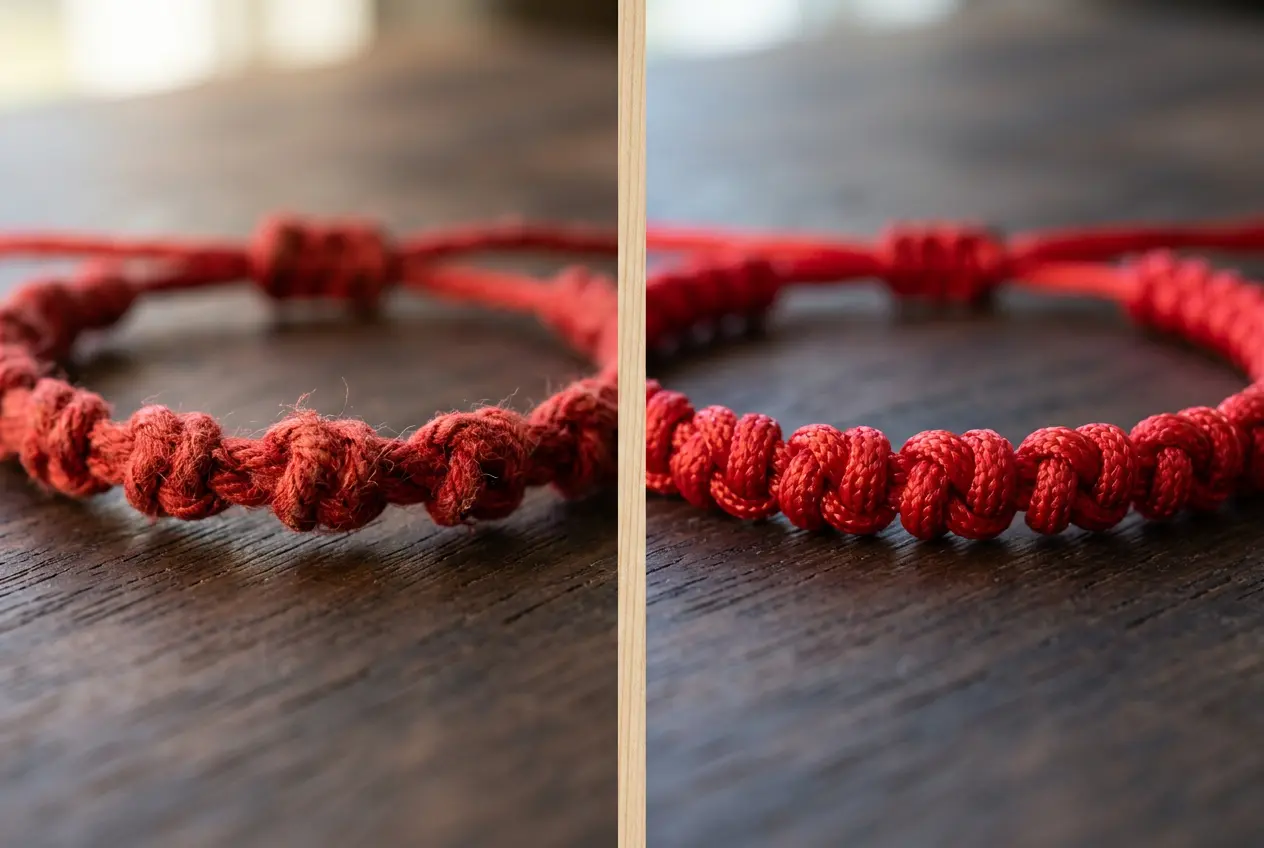
Run these six checks before you buy any handmade Buddhist bracelet online:
- Named materials: The listing says “waxed cotton cord” or “copper beads, 8 mm,” not just “sacred energy stones.”
- Handmade irregularity: Knots look slightly uneven and bead tones vary a little. A perfectly uniform finish usually means a machine.
- Specific blessing details: The seller explains who blessed the piece, where, and how. Vague words like “energized” or “charged” tell you nothing.
- Realistic price: Genuine handmade cords and bead bracelets generally start around $25 to $30. Far below that is almost always mass-produced.
- Original photos: Stock images that appear in dozens of stores are a warning sign.
- A readable returns policy: Check it before you pay, not after the package arrives.
What fakes get wrong most often
The most common mistake we see from customers is trusting the word “blessed” on its own. A listing that never names a practitioner, a monastery, or a ceremony gives you nothing to verify. The second giveaway is the price: a “hand-tied” cord selling for a few dollars cannot cover 30 minutes of skilled labor.
How PotalaStore handles the same checklist
We hold our own listings to these six points. Product pages state the cord type, closure size, and hand-tying time, and in-stock orders ship within 24 to 48 hours, Monday through Friday. One honest limitation: a hand-tied cord is not permanent, so plan on replacing a daily-wear piece about once a year.
Care Tips That Keep Cord and Copper Looking New Longer
Keep your bracelet dry, away from lotions, and stored flat, and a quality knotted cord typically lasts 6 to 12 months of daily wear.
Daily care habits
- Remove it for showers and swimming: Water weakens cord fibers, and soap speeds up copper oxidation.
- Keep lotions and perfume away: They stain cord and dull metal within weeks.
- Store it coiled in a dry spot: Direct sun fades red and five-color dyes.
- Wipe copper with a dry cloth: This slows the green tint on skin and keeps the shine.
What to do when your bracelet breaks
Many practitioners read a broken cord as a sign that it has done its job and absorbed misfortune for you. Retire it respectfully. Burying it or placing it somewhere clean in nature is common. Then tie on a replacement with a fresh intention.
Tibetan Bracelet FAQ
Can non-Buddhists wear a Tibetan bracelet?
Yes. Tibetan teachers often hand out protection cords at public teachings to anyone who attends. Wearing one with respect matters more than your religion.
Can I shower or sleep with a Tibetan bracelet on?
Sleeping in a cord bracelet is generally fine. Take it off before showering or swimming, because water and soap weaken the cord and tarnish copper.
Magkano dapat ang halaga ng isang tunay na Tibetan bracelet?
Handmade cords and bead bracelets generally start around $25 to $30. New agate dzi pieces run about $80 to $300. Prices far below these ranges usually mean mass production.
What is the difference between a red string and a five-color bracelet?
A red string links to a single deity, most often Amitayus, the Buddha of Longevity, and is the classic protection cord. A five-color bracelet represents all five elements and the five wisdoms in one braid.
Is a Tibetan bracelet a good gift?
Yes, and it is one of the safest spiritual gifts because knotted cords adjust to almost any wrist. A classic Tibetan lucky red string bracelet suits most people who are new to the tradition.
Ang Ika-Line
The key takeaway: the right Tibetan bracelet is the one whose meaning you understand and whose origin you can verify. Start with a knotted cord for everyday protection, choose a wrist mala if you meditate, and run the 6-point check before any purchase.
For everyday protection
Choose a red or five-color knotted cord on your left wrist. It is light, adjustable, and closest to the sungdü tradition.
For meditation practice
Choose a wrist mala of 18, 21, or 27 beads so you can count mantras anywhere, then move to a full 108-bead mala when you sit longer.
Find a Tibetan bracelet you can trust
Browse hand-tied cords, mantra bracelets, copper pieces, and wrist malas from PotalaStore, each listed with its materials, size, and making process.Browse Tibetan bracelets
📚 Mga sanggunian
- Tibetan protection cords (sungkü): Karma Phuntsho’s account of how lamas bless protection cords, their knots, colors, and how they are worn. Mandala Collections, University of Virginia
- Prayer flag colors and the five elements: Explains the element each of the five sacred colors represents in Tibetan Buddhism. Proyekto ng mga Madre ng Tibet
- Origins of Om Mani Padme Hum: Covers the mantra’s source in the Kāraṇḍavyūha Sūtra and its link to Avalokiteśvara. Ensiklopedya ng Budismo
- Copper bracelet clinical trial: Richmond SJ et al. (2013), randomized double-blind placebo-controlled crossover trial of copper bracelets and magnetic wrist straps in rheumatoid arthritis. PLoS ONE 8 (9): e71529. PLoS ONE
- Study summary from the research team: The University of York’s plain-language summary of the copper bracelet findings. University of York