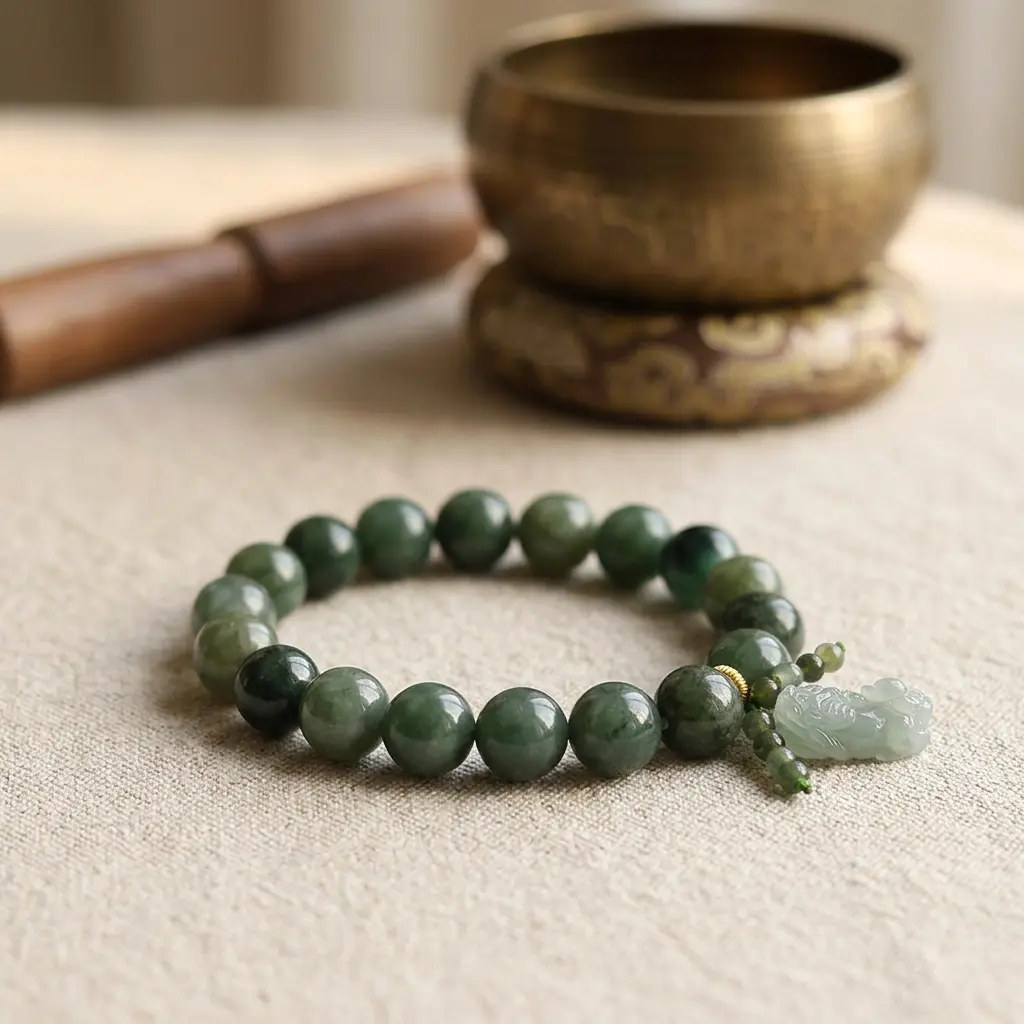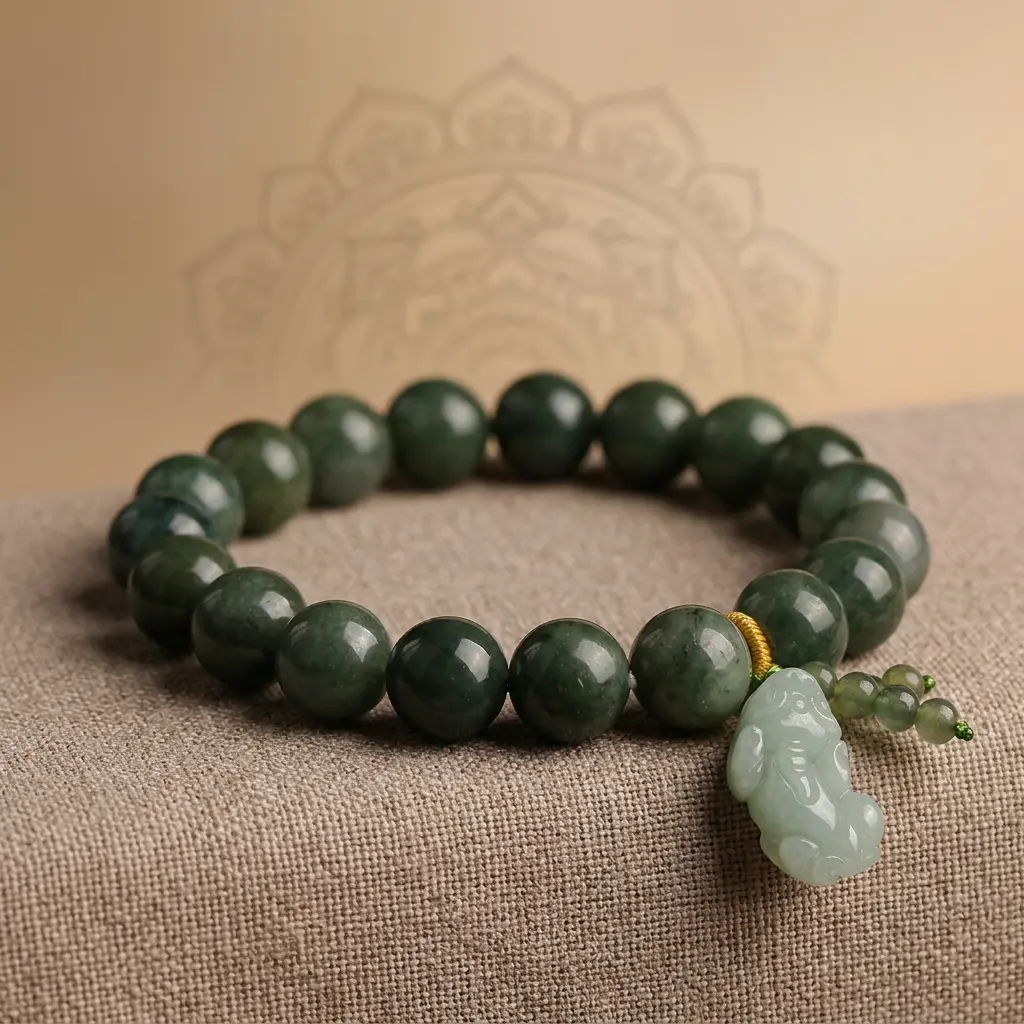

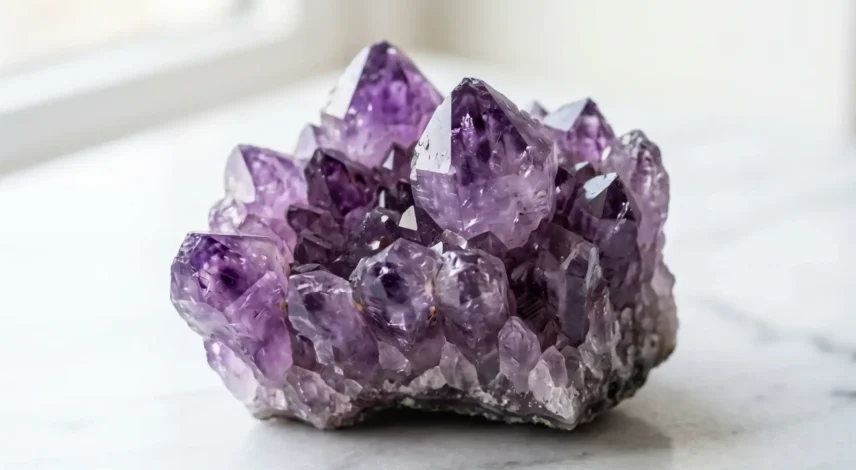

Amethyst is a violet variety of quartz, prized for over 2,000 years as a stone of spiritual protection, mental clarity, and emotional calm. Believed to activate the crown and third eye chakras, this purple gemstone is February’s birthstone — and one of the most widely used crystals in meditation, sleep support, and stress relief practices worldwide.
Two thousand years. That’s how long people across Greece, Egypt, Tibet, and Rome have worn a single purple stone for the same core reasons: to quiet anxiety, sharpen intuition, and feel spiritually grounded.
If you’ve been drawn to amethyst but aren’t quite sure what it does, which chakra it connects to, or whether the healing properties are real — you’re in the right place. At Potala Store, we work directly with monks at Sera Jhe Monastery in South India and Kopan Monastery in Kathmandu. That hands-on relationship with living Buddhist tradition shapes how we understand every crystal we carry — including amethyst, which Tibetan practitioners have called “the Buddha’s stone” for centuries.
In this guide you’ll learn:
- What amethyst actually is (geology, chemistry, and why it’s purple)
- Its spiritual meaning across Greek, Christian, and Tibetan Buddhist traditions
- What practitioners say — and what a 2025 clinical study found
- Three practical ways to use it daily
- How to tell real amethyst from fake in five simple tests
✨ Browse our monastery-blessed amethyst collection → Every piece is blessed during a 3-day puja ceremony at Sera Jhe or Kopan Monastery.
⚠️ A note on healing claims: The properties described in this article reflect traditional beliefs and practitioner experiences. They are not scientifically verified medical claims. Amethyst is best used as a complementary mindfulness tool, not a substitute for professional healthcare. If you are experiencing severe anxiety, insomnia, or mental health challenges, please consult a qualified professional.
What Is Amethyst — The Purple Quartz With a 2,000-Year Story?
Amethyst (SiO₂) is a violet variety of quartz that forms when trace amounts of iron (Fe³⁺) substitute for silicon in the crystal lattice and are activated by natural gamma irradiation over millions of years. The result is a stable color center that produces the gemstone’s signature hue — ranging from light rose lavender all the way to deep Siberian violet.
| Property | Value |
|---|---|
| Mineral Family | Quartz (silicon dioxide, SiO₂) |
| Chemical Composition | SiO₂ + trace Fe³⁺ iron impurities |
| Mohs Hardness | 7 — harder than steel, durable for daily wear |
| Crystal System | Trigonal (six-sided prism) |
| Color Range | Pale lavender → deep purple (Siberian grade) |
| Major Sources | Brazil, Uruguay, Zambia, Madagascar, Siberia (Russia) |
| Birthstone | February + 6th Wedding Anniversary |
Its durability — a Mohs hardness of 7 — means it’s sturdy enough for bracelets, rings, and mala beads worn every day. It ranks above glass (5.5) and most metals, so it won’t scratch easily from ordinary daily contact.
The name comes from the ancient Greek amethystos, meaning “not intoxicated.” Greek soldiers and merchants wore it believing it would keep them clear-headed. Roman wine goblets were sometimes carved from it. Medieval Catholic bishops wore amethyst rings as the “Bishop’s Stone,” representing spiritual sobriety — a tradition still maintained in some sees today. Catherine the Great of Russia famously collected Siberian amethysts; her collection remains one of the finest ever assembled.
During a visit to a remote village near Lhasa, I watched an elderly nomadic herder carefully counting prayers on a strand of small purple beads. It wasn’t decoration — it was his daily practice tool, worn smooth by decades of use. That moment stayed with me long after I returned home.— Yang Tso, Founder, Potala Store
As a February birthstone, amethyst also marks the 6th wedding anniversary. If you’re searching for a meaningful gift for a February birthday or a milestone anniversary, it carries centuries of symbolic weight before you even add the personal significance.
What Does Amethyst Symbolize? Spiritual Meaning Across Cultures

Amethyst symbolizes spiritual clarity, sober wisdom, and divine connection — qualities that have made it sacred in Greek mythology, Christian liturgy, and Tibetan Buddhist mala practice alike.
The Greek Origin Story
According to a popular myth (embellished by French poet Rémy Belleau in 1576), the goddess Artemis transformed a young woman named Amethystos into white quartz to protect her from Dionysus, the god of wine. Overcome with remorse, Dionysus poured grape juice over the stone — staining it purple forever. Whether historical or purely literary, the myth embedded two meanings that stuck: protection and sobriety of mind.
Crown Chakra and Third Eye Chakra
In yogic and Ayurvedic traditions, amethyst is most strongly linked to two chakras:
- Crown Chakra (Sahasrara) — the energy center at the top of the head, associated with spiritual connection, higher consciousness, and unity. Amethyst’s deep violet hue is said to resonate with its frequency.
- Third Eye Chakra (Ajna) — located at the brow, governing intuition, insight, and inner vision. Practitioners use amethyst near the third eye during meditation to support focus and mental clarity.
The dual chakra association — both crown and third eye — is what makes amethyst unique among purple crystals. It’s believed to bridge earthly awareness with spiritual perception simultaneously.
The Tibetan Buddhist Perspective — A View No One Else Is Sharing
Here’s what almost every Western crystal guide misses: in Tibetan Buddhist tradition, amethyst has been called “the Buddha’s stone” — considered one of the sacred gemstones used in prayer bead (mala) making and in temple offerings.
Within the concept of Saptaratna (the Seven Precious Jewels referenced in Buddhist texts), purple quartz held symbolic importance as a stone that helped practitioners maintain mental stillness during extended mantra recitation. It wasn’t used for decoration. It was used because the stone was believed to anchor a wandering mind.
“At Sera Jhe Monastery, I watched the senior teaching lama lead 3,500 monks in the Tara puja just before dawn. He was holding an amethyst mala — not a rosewood one, not a bone one. When I asked about it afterward, he simply said: ‘It helps the mind stay still.’ That practical answer from a man with 40 years of monastic practice said more to me than any crystal healing guide ever has.”— Yang Tso, Founder, Potala Store
This living tradition — not mythology — is why Potala Store specifically partners with Sera Jhe Monastery and Kopan Monastery to perform a 3-day rab gnas (consecration) puja on every piece we sell. The blessing isn’t a marketing phrase; it’s a documented liturgical ceremony, performed by resident monks, intended to activate the stone’s spiritual qualities according to Gelugpa Buddhist lineage.
Healing Properties of Purple Quartz — What Practitioners Believe & What Research Says
Amethyst is traditionally used to ease stress, support restful sleep, and quiet an overactive mind. Here’s an honest breakdown of what practitioners consistently report — and what science actually says.
What Practitioners Report
- Stress and anxiety: Many practitioners report that holding or wearing amethyst during stressful periods helps them feel calmer and more centered. The prevailing belief is that the stone’s energy attunes to the nervous system.
- Sleep support: Placing amethyst on the nightstand or under the pillow is one of the most common recommendations in crystal healing. Practitioners suggest it quiets mental chatter that interferes with falling asleep.
- Meditation focus: When amethyst is held or placed at the third eye during meditation, many practitioners report deeper focus and reduced mind-wandering — particularly during longer sits.
- Emotional balance: It is traditionally used to ease grief, sadness, and mood swings, believed to stabilize emotional energy rather than suppress it.
- Intuition and clarity: Long associated with the third eye chakra, amethyst is said to sharpen instinct and decision-making — particularly useful during periods of uncertainty.
What Research Actually Shows
We won’t pretend the science backs up everything crystal enthusiasts claim. A 2025 randomized controlled trial published in Cambridge’s CNS Spectrums (PMID 40855750) tested whether crystals — including rose quartz — reduced anxiety beyond placebo in 138 participants. The results found no effects beyond placebo. The same conclusion applies logically to amethyst.
However, placebo effects are real, measurable, and clinically meaningful. If a 30-second intention-setting ritual with a purple stone you love reduces your anxiety response before a stressful meeting, that benefit is genuine — even if the mechanism isn’t mystical. Mindfulness tools work because they create behavioral anchors. Amethyst can function as one of those anchors.
The honest takeaway: Amethyst is not a treatment. It won’t cure insomnia or anxiety. But for many of our customers, it becomes a daily touchstone — a 30-second morning ritual that signals “I’m taking care of my mind today.” That small act, practiced consistently, is worth more than the bracelet itself.
One customer who had been meditating for two years shared: “I know it’s probably just me building a habit, but I started sleeping through the night within three weeks of keeping amethyst on my nightstand. I’m not ready to rule anything out.” We’re not either.
How to Use This Violet Gemstone in Daily Practice

Amethyst works best when it’s part of a consistent routine — worn on your left wrist to draw calming energy inward, held during 10 minutes of morning meditation, or placed on your nightstand to ease the transition into sleep.
1. Wear It as a Bracelet or Pendant
Most practitioners wear amethyst on the left wrist — considered the “receiving” (yin) side in Tibetan energy philosophy. This is thought to draw amethyst’s calming, intuitive qualities inward. If you want its protective quality to project outward (for example, before a difficult conversation or a stressful event), switching it to the right wrist is the alternative. Neither is wrong. Let your intention guide the choice.
Monastery-Blessed
Amethyst Bracelet Natural Stone — Peace & Clarity
Natural amethyst beads, blessed during a 3-day rab gnas puja at Sera Jhe Monastery. Adjustable fit, 6.5–8 in wrist size.$43.95$48.95
View bracelet →
2. Use It During Meditation
For deeper meditation sessions, amethyst can be used as a focal point in two ways:
- Hold a tumbled stone or bracelet in both palms with hands in your lap. Focus on its weight and texture as an anchor for your attention.
- Place a small point or cluster at brow height (third eye position) if lying down. This is traditionally said to support inner vision and deeper stillness.
- Use an amethyst mala (108 beads) to count mantra repetitions. The tactile sensation of moving each bead keeps wandering minds on track. At Kopan Monastery, monks specifically recommend this method for practitioners who struggle to sustain 20-minute sits.
- Set a 10-minute timer before picking up the stone. The intention of a fixed time, combined with the physical anchor of the crystal, reinforces the habit loop that makes meditation consistent.
- Close with gratitude. After your session, place the stone back on your altar or nightstand intentionally rather than just setting it down. This small ritual reinforces that the practice was meaningful.
3. Place It in Your Home
Amethyst clusters or geodes are excellent for shared spaces because their multiple crystal points are thought to radiate energy outward in all directions. The most common placements:
- Bedroom nightstand — to support calmer sleep and gentler waking.
- Home office desk — to maintain focus and reduce reactive emotions during work.
- Southeast corner of a room — in feng shui, the wealth and abundance sector of the Bagua; amethyst is often paired here with citrine.
Feng Shui
Amethyst Crystal Tree — Feng Shui Wealth & Clarity
Natural amethyst chips on a copper wire tree base. Ideal for desk or wealth corner placement.$53.95
View crystal tree →
One thing we’ve noticed across hundreds of customer conversations: the most common mistake isn’t wearing amethyst incorrectly — it’s wearing it 24/7 without any intentional moment attached to it. Treating it purely as jewelry, with no associated pause for intention or awareness, tends to produce little. A stone worn with 30 seconds of conscious attention each morning consistently outperforms one worn passively for 16 hours.
Every Potala Store amethyst piece is blessed during a 3-day rab gnas puja at Sera Jhe Monastery (South India) or Kopan Monastery (Kathmandu) — not a brief ceremony, but a full three-day liturgical ritual performed by resident monks.Shop Monastery-Blessed Amethyst →
How to Tell Real Amethyst From Fake — and How to Care for It

Real amethyst registers a 7 on the Mohs hardness scale, feels cool to the touch at room temperature, and shows natural color zoning — telltale signs you’re holding genuine purple quartz rather than dyed glass or synthetic stone.
5 At-Home Tests for Authenticity
- Scratch a glass surface. Natural amethyst (Mohs 7) will scratch glass (Mohs 5.5). If the stone scratches easily itself or leaves no mark on glass, it’s likely glass or low-grade synthetic quartz.
- Check the temperature. Genuine quartz feels noticeably cool even in a warm room. Glass and plastic warm up to body temperature within 30 seconds; real amethyst takes significantly longer.
- Look for natural color zoning. Authentic amethyst rarely has perfectly uniform color. You should see subtle gradients — transitions between purple, white, and sometimes a faint blue-grey. Perfect, flawless purple throughout is a red flag.
- Look for internal bubbles. Glass imitations almost always contain tiny air bubbles visible under magnification. Real quartz contains mineral inclusions (small wispy lines or needles) but not round bubbles.
- Specific gravity test (advanced). Real amethyst has a specific gravity of approximately 2.65. Suspend it in a liquid density scale — glass fakes read closer to 2.4 to 2.5. Most people don’t have lab equipment, but this is the definitive professional test.
Professional-grade authentication: Genuine amethyst also shows Brazil Law polysynthetic twinning — a distinctive fingerprint visible under polarized light microscopy. This twinning pattern cannot be replicated in synthetic glass and is the gold standard test used by gemologists. If you’re purchasing a high-value piece, ask for GIA documentation or request polarized light testing at a local gem lab.
How to Cleanse and Care for Amethyst
Amethyst is one of the easier crystals to care for — but it does have one critical vulnerability: prolonged direct sunlight. UV exposure can permanently fade its color over time. Keep it away from windowsills and outdoor displays.
| Method | How | Notes |
|---|---|---|
| Moonlight charging | Place outside or on a windowsill overnight during a full or new moon | ✅ Safest method — no risk of fading or damage |
| Selenite plate | Rest amethyst on a selenite slab for 4–6 hours | ✅ No water, no risk; selenite is self-cleansing |
| Sage or palo santo smoke | Pass the stone through the smoke for 30–60 seconds | ✅ Traditional smudging method; ensure good ventilation |
| Sound bath | Place near a singing bowl during use or a tuning fork session | ✅ Gentle and effective for clusters or larger pieces |
| Salt water | — | ❌ Avoid — prolonged salt exposure can damage the surface |
| Direct sunlight | — | ❌ Avoid — UV will permanently fade the purple color |
For bracelets worn daily, expect a lifespan of 6–18 months before the elastic stretches or the beads show wear. In Tibetan tradition, when a blessed mala or bracelet breaks after heavy use, it’s understood that the piece has “completed its work.” Whether you share that belief or not, it reframes the end of a piece’s life as something other than failure.
For more about wearing and caring for healing crystal jewelry, see our guide on healing properties and benefits of wearing crystal bracelets.
Frequently Asked Questions About Amethyst
Yes — amethyst’s Mohs hardness of 7 makes it durable enough for daily-wear jewelry like bracelets and pendants. Just avoid prolonged direct sunlight, which can permanently fade the color over months of exposure. Rinse off sweat and lotion after wearing, and store it away from harder stones like diamonds or sapphires (Mohs 9–10) that could scratch it. For bracelets, expect a typical lifespan of 6–18 months under daily wear conditions.
Most practitioners wear amethyst on the left wrist — the “receiving” (yin) side in Tibetan energy philosophy — to draw its calming, intuitive energy inward. If you want to project its protective energy outward into your environment (for example, before a stressful meeting), the right wrist is the traditional alternative. There is no universally “wrong” answer; intention matters more than the specific hand.
Learn more about choosing the right crystal tools in our guide to mala beads and meditation practice.
Real amethyst is harder than glass (Mohs 7 — it should scratch a glass slide without leaving a mark on itself), feels cool to the touch even at room temperature, and shows natural color zoning rather than a perfectly uniform purple. Fakes — usually dyed glass or synthetic quartz — often have internal round air bubbles, warm up quickly to body temperature, and show suspiciously perfect, uniform color.
For high-value pieces, look for GIA certification or request a polarized light test from a gem lab to check for Brazil Law polysynthetic twinning, which cannot be replicated in glass.
Many practitioners report that placing amethyst on a nightstand supports calmer sleep and a quieter mind. However, a 2025 randomized controlled trial published in Cambridge’s CNS Spectrums found that crystal effects on anxiety did not exceed placebo in 138 participants. The honest answer: amethyst is best used as a mindfulness anchor — a tangible reminder of your intention to rest and slow down — alongside (never instead of) professional care if you’re experiencing severe insomnia or clinical anxiety.
If anxiety or sleep issues are significantly affecting your quality of life, please speak with a healthcare provider. Amethyst can be a meaningful complement to professional support, not a replacement for it. Ready to incorporate amethyst into your daily ritual? Explore our monastery-blessed collection →
Find Your Amethyst — Blessed by Tibetan Monks
Every Potala Store amethyst piece goes through a genuine 3-day rab gnas puja performed by resident monks at Sera Jhe or Kopan Monastery. Not a ceremony for show — a full liturgical blessing rooted in Gelugpa Buddhist tradition.
10% of every purchase goes directly to support the monasteries. When you buy, monks benefit.Shop Amethyst Collection →
Free shipping over $49 | 30-day returns | Secure checkout
Also on Potala Store: If you’re exploring amethyst as a February birthstone, see our deeper guide on amethyst as the February birthstone for 2026 — including its meaning for Aquarius and Pisces.
📚 References
- Gemological Institute of America (GIA) — Amethyst Description: Authoritative gemological information on amethyst’s chemical composition, Mohs hardness, color origins, and care guidelines. gia.edu
- Amethyst — Wikipedia (Gemology & History): Overview of amethyst’s mineralogy, history, cultural significance, and crystal structure including Brazil Law twinning. en.wikipedia.org/wiki/Amethyst
- Northoff, G. et al. (2025). “Crystal Healing and Anxiety: A Randomized Controlled Trial.” CNS Spectrums, Cambridge University Press. 138-participant RCT examining whether crystals (including rose quartz) reduced anxiety beyond placebo effects. Results showed no statistically significant effects beyond placebo. PMID: 40855750. Source: Cambridge University Press / PubMed (Readers may search PMID 40855750 on PubMed for the current publication.)
- Smithsonian National Museum of Natural History — Mineral Sciences: Reference data on quartz varieties, crystal systems, and gemstone classification standards. naturalhistory.si.edu