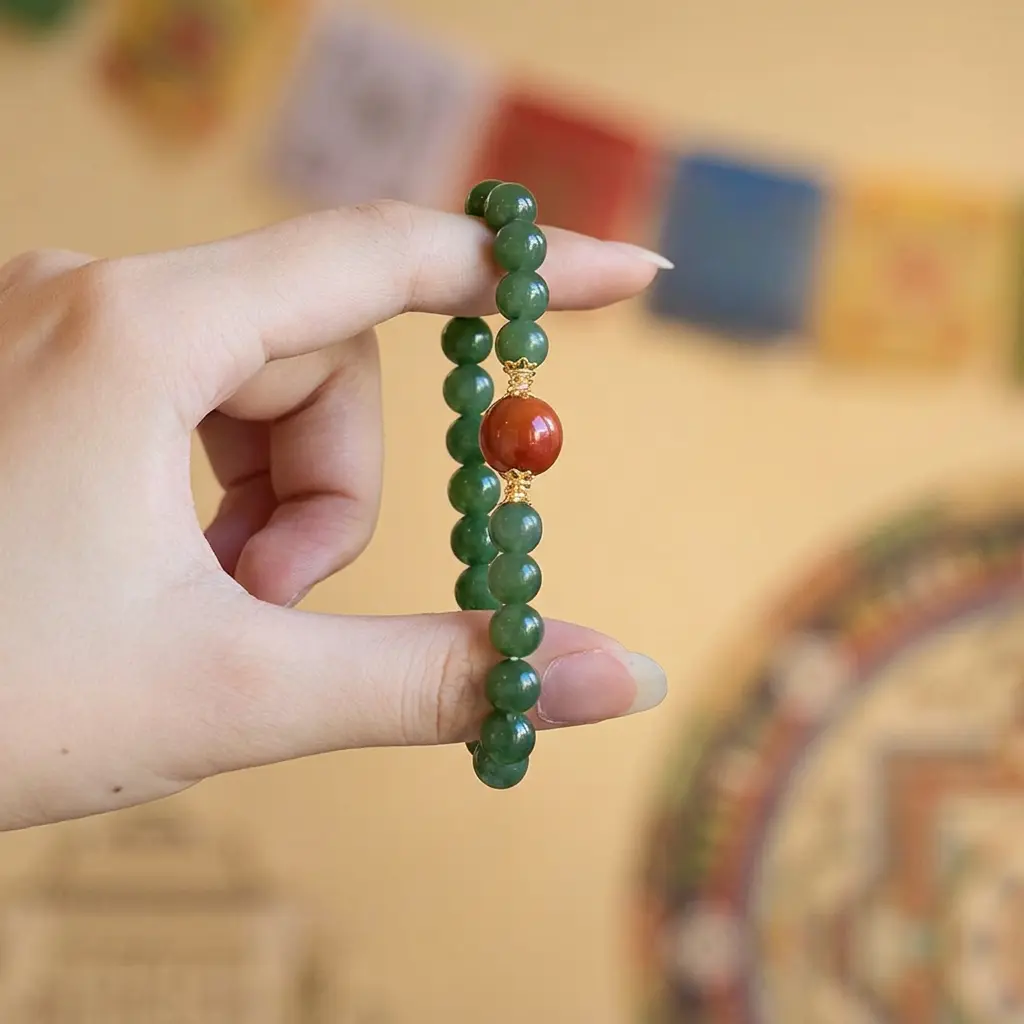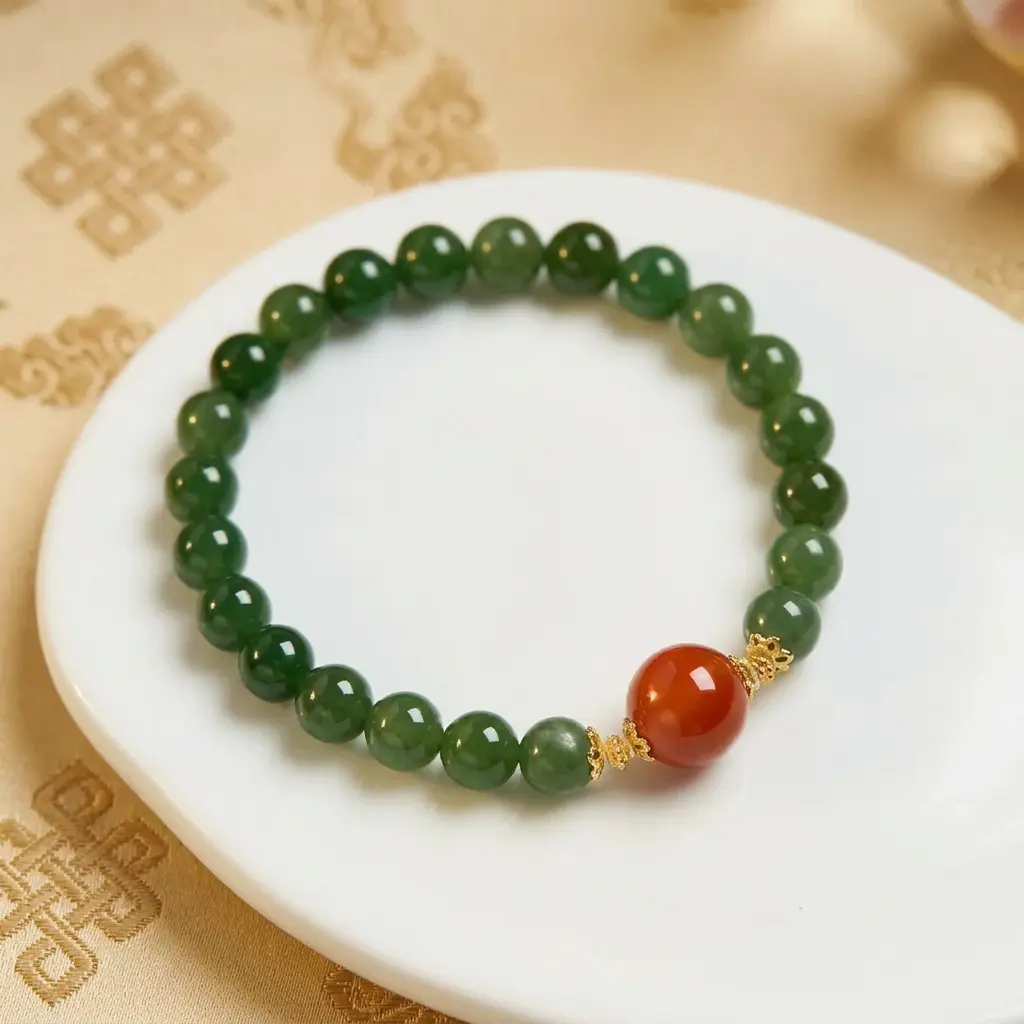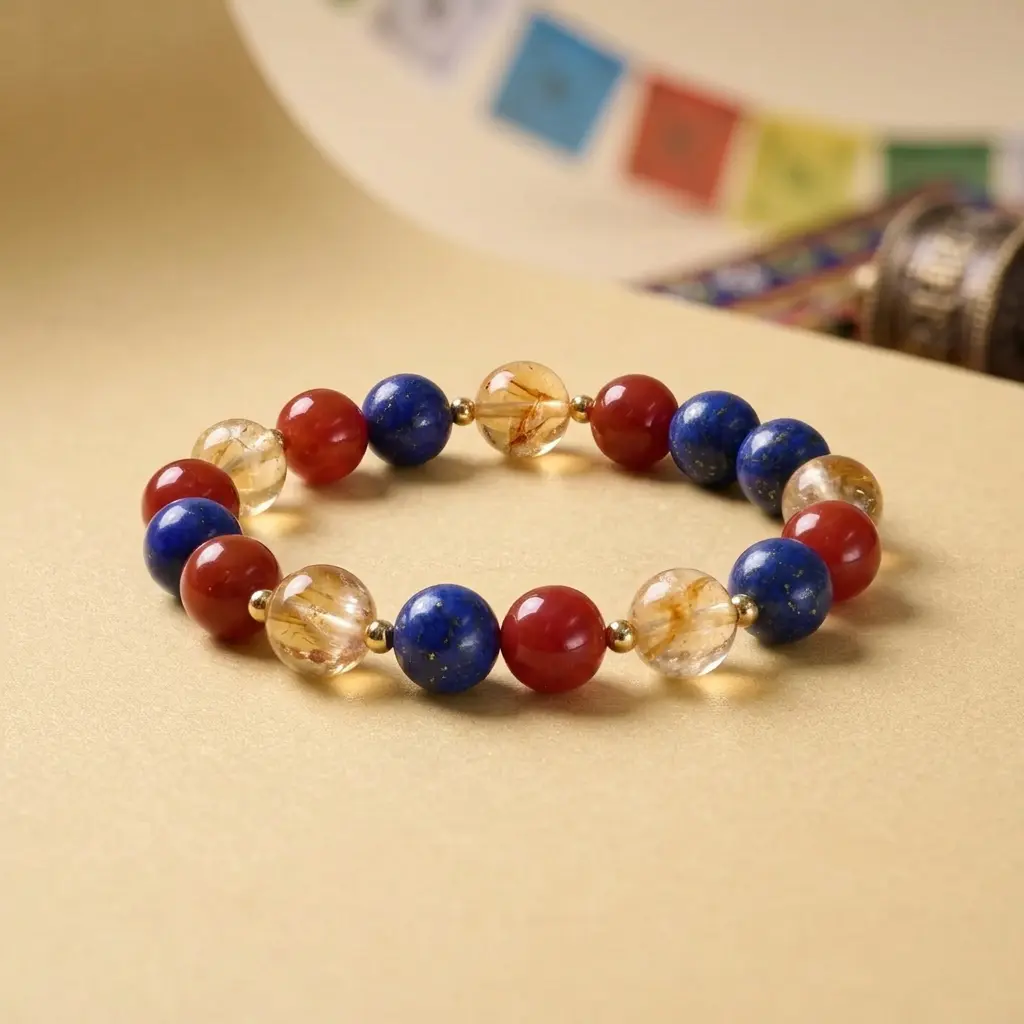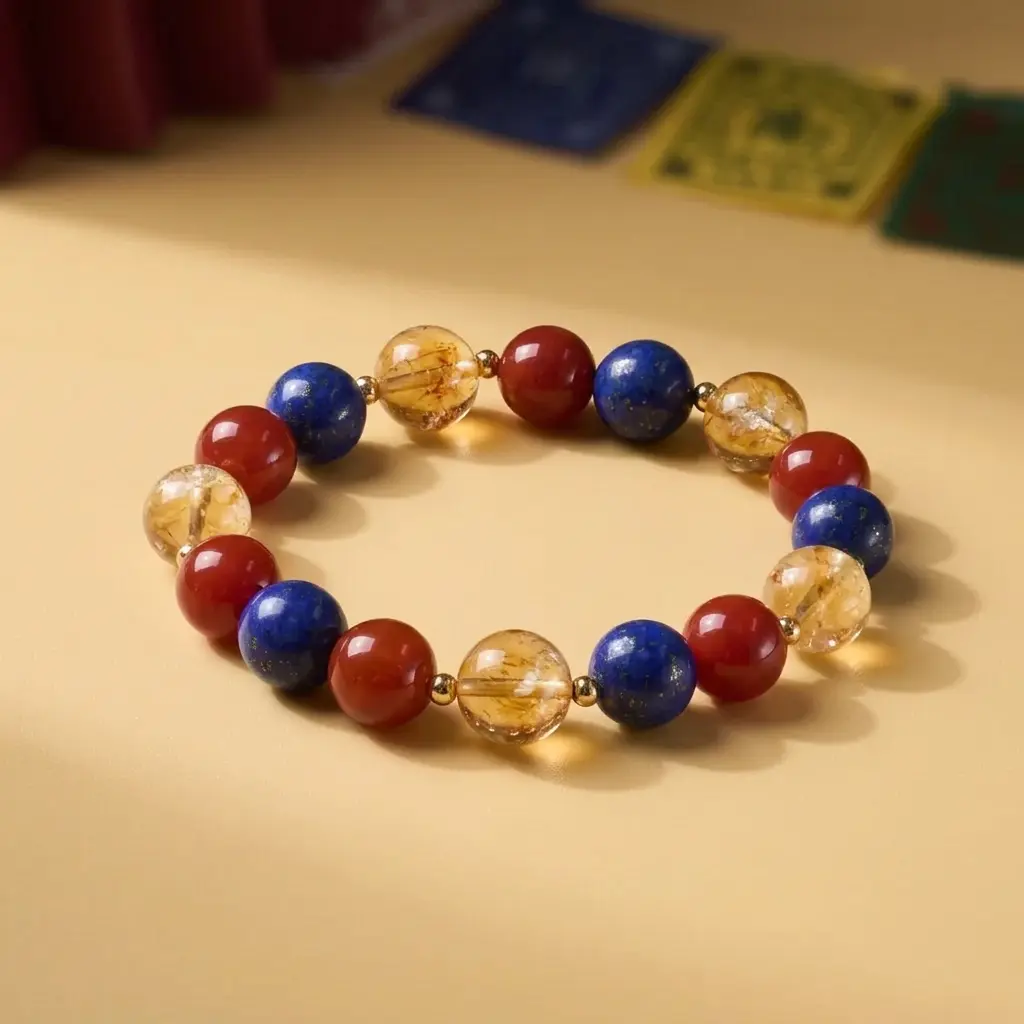


You’re standing at a threshold. Something in your life is shifting — a job, a relationship, a version of yourself you’ve outgrown — and you can feel it before you can name it. That’s exactly the moment labradorite is made for.
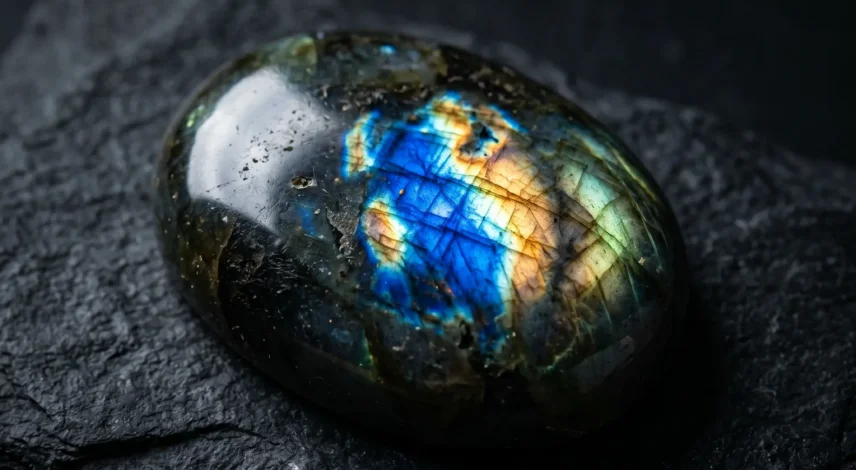
Labradorite is a plagioclase feldspar crystal celebrated for labradorescence — a shimmering flash of blue, green, and gold caused by light refracting through microscopic internal twinned layers. Spiritually, it’s known as the Stone of Transformation: believed to strengthen intuition, shield the aura from negative energy, and guide the wearer through periods of deep change by activating the third eye, throat, and crown chakras.
At PotalaStore, we’ve sourced labradorite alongside our monastery partners at Sera Jhe and Kopan for years. What keeps drawing us back to this stone isn’t just its beauty — it’s how often customers reach for it during the exact moments they feel most unsteady. This guide covers everything you need: its science, Inuit legend, metaphysical properties, chakra and zodiac associations, an exclusive Tibetan Buddhist perspective you won’t find anywhere else, and how to use and care for it daily.
⚠️ Important Note: The spiritual and metaphysical properties described in this article are based on traditional beliefs and practitioner experience, not scientific evidence. This content is for educational purposes only and should not replace professional medical advice.
Table of Contents
What Is Labradorite — and Why Is It Called the Stone of Transformation?
Labradorite is a plagioclase feldspar mineral with a Mohs hardness of 6.0–6.5, famous for labradorescence — an optical phenomenon where internal microscopic layers diffract light into flashes of blue, green, gold, orange, and red. This color-shifting quality earned it the name “Stone of Transformation”: just as the stone holds hidden light that only reveals itself at certain angles, many wearers describe it as a mirror for their own unrealized potential.
Labradorescence (also called the Schiller effect) happens because labradorite contains thin, alternating layers of two feldspar compositions — anorthite and albite — that form during slow crystal cooling. When light enters the stone, it bounces between these layers and scatters as spectral color. No two stones flash exactly the same way. That’s not a flaw; it’s a feature.
The Finnish variety, spectrolite, displays the full visible spectrum and is considered the most prized. Standard labradorite from Madagascar and Canada shows a narrower but still captivating blue-to-green flash.
I remember the first time I placed a labradorite cabochon on the altar at Sera Jhe during preparations for a rab gnas ceremony. In the candlelight, it did something the other stones didn’t — it seemed to pulse. The lamas smiled like it was entirely expected.
The Inuit Legend and History Behind Labradorescence

The oldest story about labradorite comes from the Inuit people of the Labrador coast in northeastern Canada. According to legend, the Northern Lights — the Aurora Borealis — once lay trapped inside the rocks along the shoreline. An Inuit warrior, seeing the frozen lights, struck the cliffs with his spear and released most of them back into the sky. The lights that remained in the stone became labradorite: the Aurora preserved in mineral form.
The Western scientific record begins in 1770, when Moravian missionaries documented the stone on Isle of Paul, Labrador, Canada — giving it the name we use today. By the late 19th century, European jewelers were incorporating it into Art Nouveau pieces, and designers like Georg Jensen helped make its iridescent surface fashionable among collectors.
Today, labradorite is sourced from several locations worldwide:
- Labrador, Canada — the original source; typical blue-green flash
- Finland — spectrolite variety; full-spectrum display, highest value
- Madagascar — most commonly available; reliable blue flash at accessible price points
- Norway, Russia, Mexico — smaller deposits; regional variation in flash intensity
At PotalaStore, we source primarily from Madagascar for our mala and bracelet pieces — the stones show consistent flash, are ethically extracted, and travel a short supply chain before reaching us.
What Is Labradorite Good For? Spiritual, Emotional & Physical Properties
Labradorite is traditionally used as a stone of transformation, psychic protection, and intuition — believed to shield the aura from negativity while awakening the wearer’s own inner magic. Here are the key ways practitioners work with it:
- Aura protection: Labradorite is believed to form an energetic shield around the body’s aura, deflecting unwanted energy from other people — especially useful for empaths and highly sensitive individuals.
- Intuition and psychic awareness: Known as the “magician’s stone,” it is said to amplify clairvoyance, clairsentience, and general intuitive perception.
- Support during transformation: Many practitioners reach for this crystal during major life transitions — career changes, grief, divorce, spiritual awakening — reporting a clearer sense of direction and inner trust.
- Creativity and mental clarity: Said to dissolve mental fog and stimulate imaginative thinking, making it popular with artists, writers, and anyone doing creative problem-solving.
- Emotional steadiness: Traditionally used to reduce anxiety and self-doubt, particularly when navigating uncertainty.
Physical Properties (Traditional Belief)
In crystal healing tradition, labradorite is associated with respiratory health and stress reduction — some practitioners place it on the chest during breathwork. These are traditional, not medically verified claims. We always recommend working with labradorite as a complement to professional healthcare, never as a substitute.
In our experience stocking labradorite at PotalaStore, customers most often reach for this stone during divorces, job pivots, and grief — not with the expectation of being “healed,” but because it becomes a meaningful anchor during meditation and reflection. One longtime customer told us: “I don’t know what it does scientifically. I just know that holding it while I breathe helps me think more clearly.”
💜 Looking for a labradorite piece to carry through your next transition? Browse PotalaStore’s consecrated labradorite malas and bracelets — each blessed in a 3-day rab gnas ceremony at Sera Jhe Monastery.
Which Chakras and Zodiac Signs Does This Crystal Resonate With?
Labradorite works most powerfully with the third eye chakra — the intuition center between your brows — while also clearing the throat and crown chakras to align inner knowing with outer truth.
| Chakra | Sanskrit Name | Location | How Labradorite Helps |
|---|---|---|---|
| Third Eye | Ajna | Between the brows | Believed to open psychic perception, intuition, and inner vision |
| Throat | Vishuddha | Center of throat | Said to help express authentic truth and overcome fear of speaking |
| Crown | Sahasrara | Top of head | Traditionally used to connect to higher consciousness and spiritual guidance |
Zodiac Compatibility
Labradorite is not a traditional birthstone in the classical gemological sense, but it has strong affinity with several signs:
- Leo — supports courage and authentic self-expression during periods of change
- Scorpio — amplifies Scorpio’s natural intuition and transformative energy
- Sagittarius — enhances the archer’s visionary nature and philosophical openness
- Cancer — provides protective energetic shielding for this emotionally sensitive sign
- Pisces — deepens Pisces’ connection to intuition and spiritual awareness
That said, any sign can work with labradorite. Zodiac affinity is a starting point — not a barrier. If you’re drawn to this stone, that instinct is worth trusting regardless of when you were born.
For a deeper look at stones that activate the third eye, see our guide on third eye chakra crystals and how to use them.
Labradorite in Tibetan Buddhism — A Visual Teacher of Impermanence

This section is something you won’t find in any other labradorite guide — and it’s one of the reasons we feel such a strong connection to this stone at PotalaStore.
In Tibetan Buddhist thought, one of the most fundamental teachings is mi rtag pa — impermanence (Sanskrit: anicca). Nothing lasts in its current form. Every phenomenon, every self, every experience is in continuous transformation. Far from being a depressing idea, this teaching is considered liberating: if nothing is fixed, then change is always possible.
Labradorite embodies this teaching visually. The same stone shifts from gray to electric blue to gold depending on how you hold it. Its meaning doesn’t change — but its expression does. For practitioners who work with Ajna (the third eye chakra) in Vajrayana meditation, labradorite serves as a physical anchor for this contemplation: What you see depends on where you stand. The stone hasn’t changed. You have.
Our founder, Yang Tso, first encountered labradorite during a visit to Kopan Monastery near Kathmandu. “The lamas used it during thangka-painting meditations,” she recalls. “Not as a decorative piece — as a focal point. They said it helped practitioners stay anchored in the present moment precisely because it keeps changing.”
What a Rab Gnas Consecration Ceremony Does for a Labradorite Piece
Every labradorite mala and jewelry piece at PotalaStore goes through a 3-day rab gnas puja at either Sera Jhe or Kopan Monastery before it reaches you. A rab gnas is a consecration ceremony in which trained lamas recite specific mantras, perform ritual purification, and invoke the presence of Buddhas and Bodhisattvas into the object — transforming it from an ornament into a vehicle for spiritual practice.
This is not a marketing claim. It’s a lineage practice that has existed for centuries. What it means practically: the piece you receive has been held in sacred space, infused with intentional prayer, and dispatched with a specific spiritual purpose. Whether or not you hold Buddhist beliefs, the intentionality of that process is real and traceable.
We also donate 10% of every purchase back to the monastic communities that perform these ceremonies. When you buy a labradorite mala from PotalaStore, you’re supporting a living lineage, not just buying a stone.
To learn more about how our consecration process works, read about the rab gnas ceremony at PotalaStore.
🙏 Ready to experience a consecrated labradorite mala? Our 108-bead labradorite malas are blessed by the lamas of Sera Jhe Monastery and support monastic communities with every purchase.
How to Use, Wear, and Care for Your Stone

The simplest way to work with labradorite is to keep it close to your skin — a mala, bracelet, or pendant lets its energy stay in your field throughout the day. Here are three practical ways to incorporate it into your practice:
- Wear it daily: A bracelet or pendant keeps the stone in your energy field continuously. For protection work, wear on the left wrist (receiving side in many traditions).
- Meditation with mala japa: Hold your labradorite mala during mantra recitation. Many practitioners place a labradorite cabochon directly on the Ajna point (between the brows) during seated meditation to stimulate the third eye.
- Workspace anchor: Place a polished labradorite palm stone on your desk in the southwest corner (feng shui placement for intuition and creativity). It doubles as a visual reset — the color shift reminds you to pause and breathe when work feels overwhelming.
How to Cleanse and Charge Labradorite
Labradorite absorbs and holds energy from its environment and from you. Regular cleansing maintains its clarity. Here are four reliable methods:
- Full moonlight bath: Place your labradorite on a windowsill or outside under a full moon overnight. This is the gentlest and most effective method. Moonlight charging is especially appropriate for this stone given its connection to the Aurora Borealis.
- Sage or palo santo smudging: Pass the stone through the smoke of white sage or palo santo for 20–30 seconds with the intention of releasing stagnant energy. Safe for all labradorite varieties.
- Sound cleansing: Hold the stone near a singing bowl and strike for 60–90 seconds. The vibration resonates through the stone’s internal layers. This works especially well for pieces that feel “heavy” after emotional use.
- Lukewarm water rinse: A gentle 30-second rinse under lukewarm water with a small amount of mild soap removes physical residue. Dry immediately with a soft cloth.
What to avoid: Ultrasonic cleaners, steam cleaners, and prolonged direct sunlight. Labradorite’s lamellar internal structure can fracture under pressure waves, and extended sun exposure may dull the stone’s color over time. Store in a soft pouch away from harder gemstones that could scratch its surface (Mohs 6.0–6.5 means it scratches more easily than quartz).
We recommend a monthly cleansing ritual even for our pre-consecrated pieces. Treat it as a relationship — the stone works best when you maintain it with intention. For a complete mala care routine, see our guide on how to use a mala for meditation and mantra practice.
Frequently Asked Questions About Labradorite
Yes, briefly. Labradorite is safe for a quick rinse under lukewarm water with mild soap, but avoid prolonged soaking, salt water, ultrasonic cleaners, or steam. Its layered internal structure can be damaged by pressure waves, and salt water may eventually dull the polish. For energetic cleansing, moonlight or smudging are safer long-term options.
Labradorite is more commonly described as a stone of transformation and psychic protection than a conventional “lucky” charm. Many wearers use it during times of uncertainty to access clearer intuition and stronger inner confidence — a shift that often feels like luck. Whether its effects are metaphysical or psychological doesn’t change their practical value for most people.
Anyone navigating a major life transition, empaths who absorb the energy of people around them, creatives seeking inspiration, and meditators working with the third eye chakra. It’s particularly resonant for Leo, Scorpio, Sagittarius, Cancer, and Pisces — though any sign can benefit. If you’re drawn to it, that’s usually a good enough reason to try it.
PotalaStore offers labradorite malas, bracelets, and pendants blessed in a 3-day rab gnas puja at Sera Jhe and Kopan Monasteries. Each piece is sourced ethically and 10% of every purchase supports the monastic communities that perform the ceremonies. Browse our labradorite collection to find pieces available for immediate shipping to the US and worldwide.
Carry the Stone of Transformation With You
Every labradorite piece at PotalaStore is blessed in a 3-day rab gnas ceremony by the lamas of Sera Jhe and Kopan Monasteries — and 10% of your purchase supports these monastic communities directly.Shop Consecrated Labradorite →
📚 References
- Labradorite Mineralogy & Optical Properties: Detailed scientific overview of plagioclase feldspar, labradorescence, and the Schiller effect across feldspar varieties. Gemological Institute of America (GIA)
- Feldspar Group Minerals — Crystallographic Data: Peer-reviewed data on plagioclase series compositions including anorthite-albite twinning responsible for labradorescence. Mineralogical Society of America, Reviews in Mineralogy & Geochemistry, Vol. 76 (Search “plagioclase feldspar labradorescence” on minsocam.org for the current resource.)
- Tibetan Buddhist Consecration Ceremonies (Rab gnas): Academic discussion of rab gnas ritual structure, purpose, and role of consecrated objects in Vajrayana Buddhist practice. Tibetan & Himalayan Library (THDL), University of Virginia
- Labradorite Care and Gemstone Properties: Practical gemstone care guidance for labradorite including hardness, cleaning methods, and storage recommendations. GIA Gems & Gemology