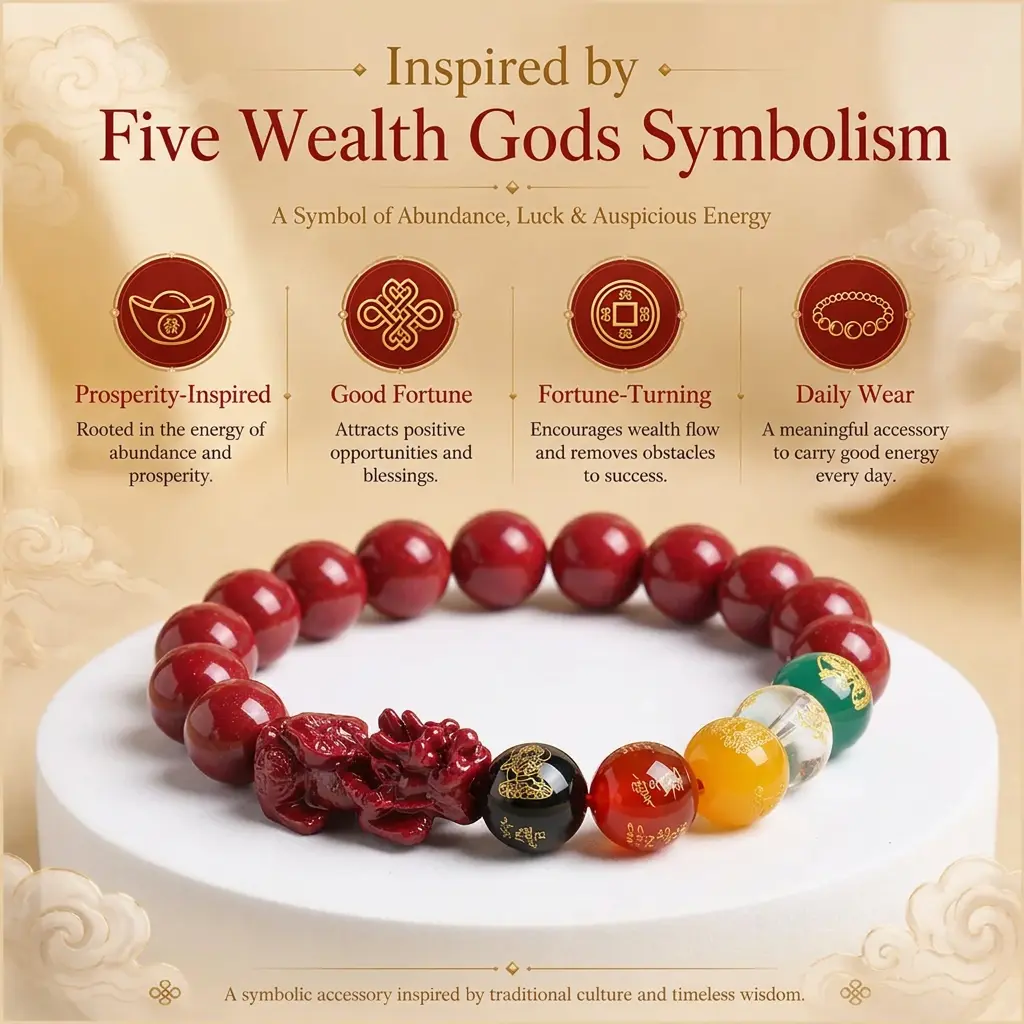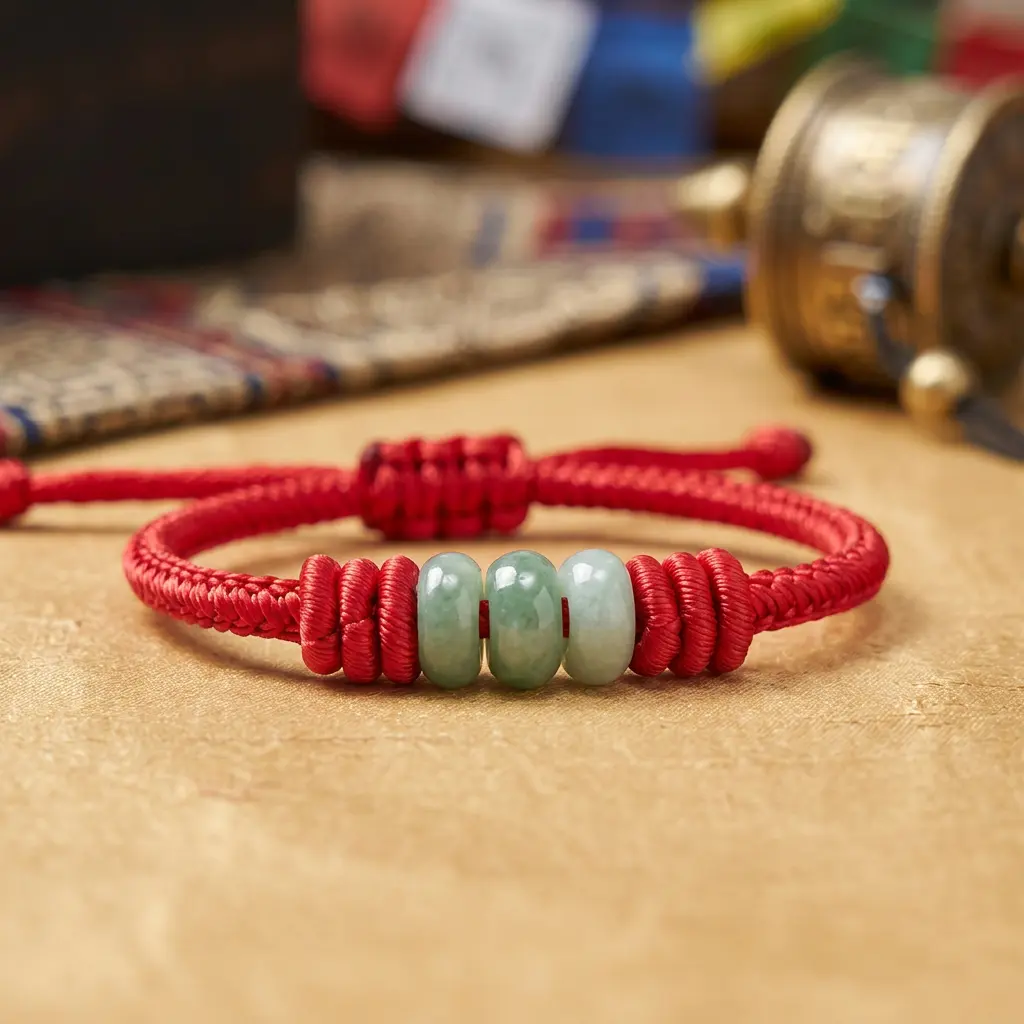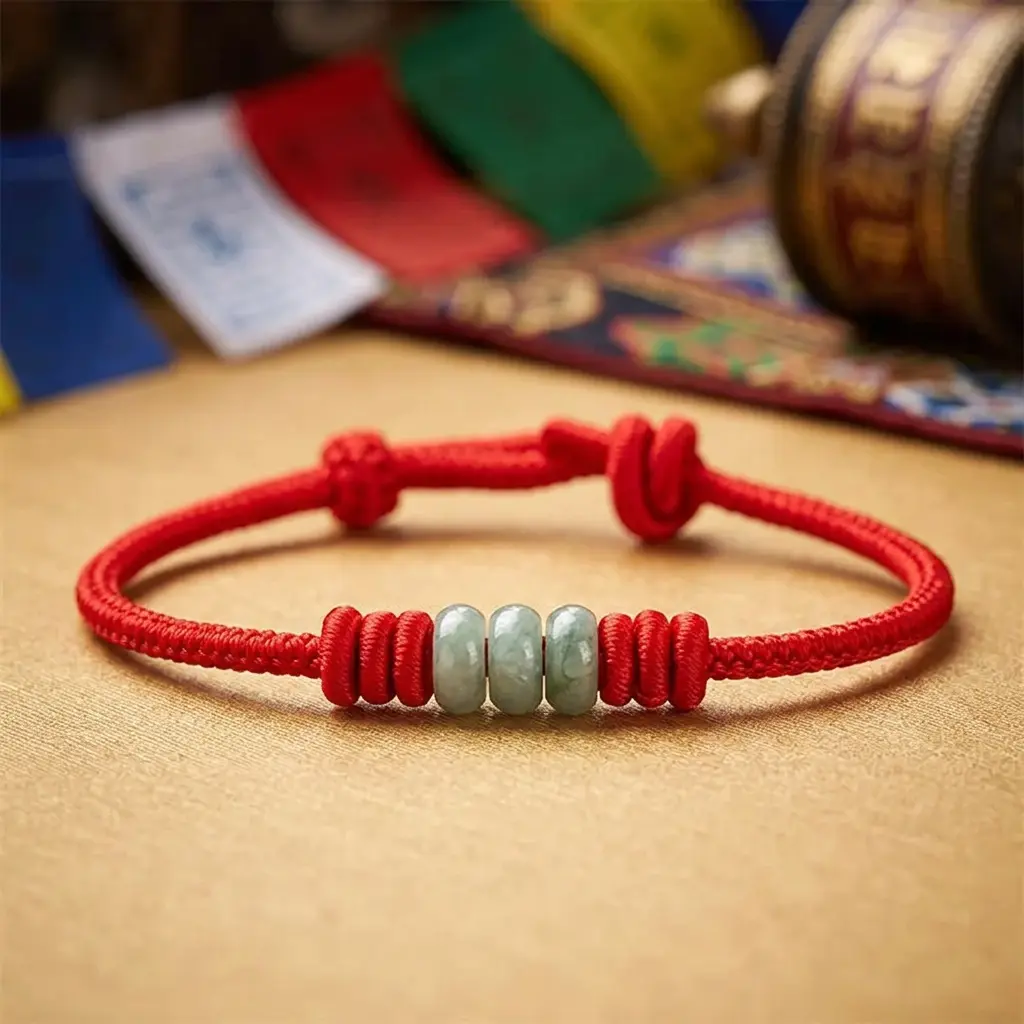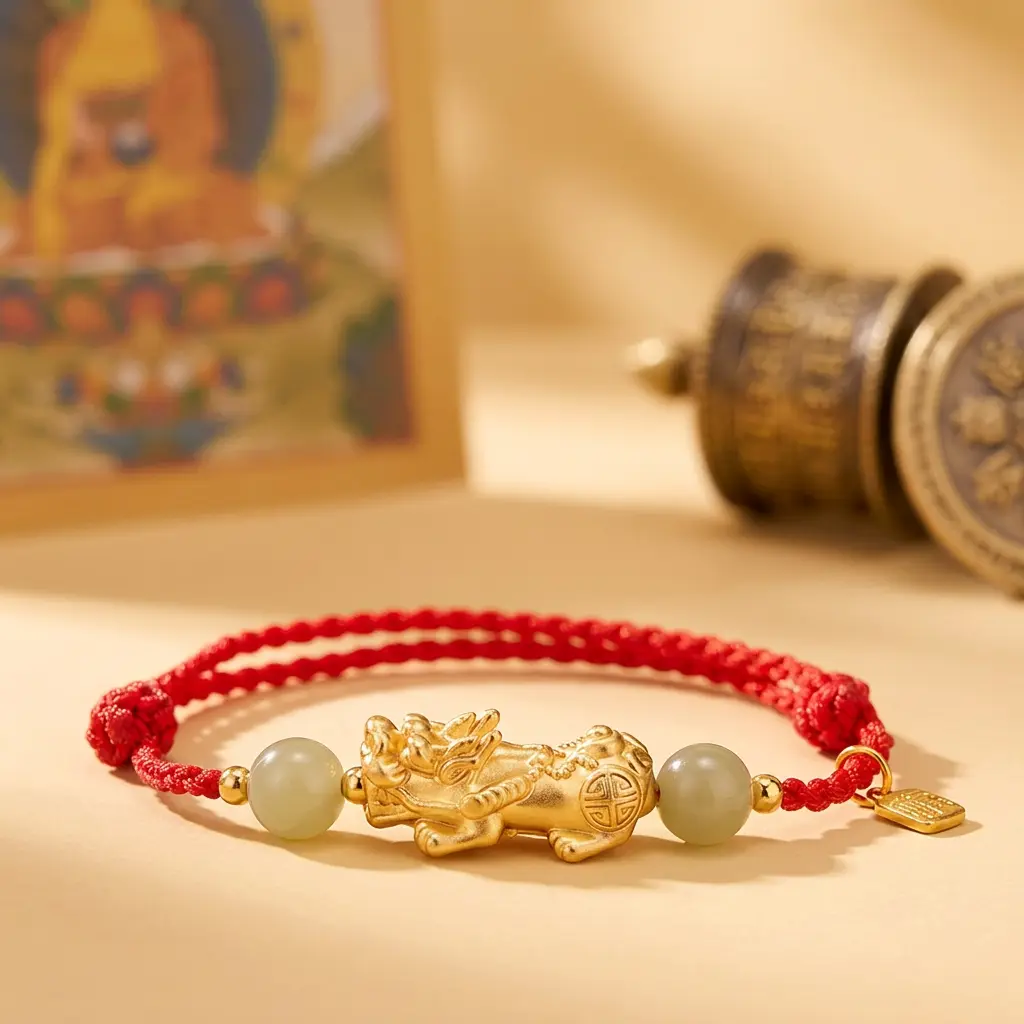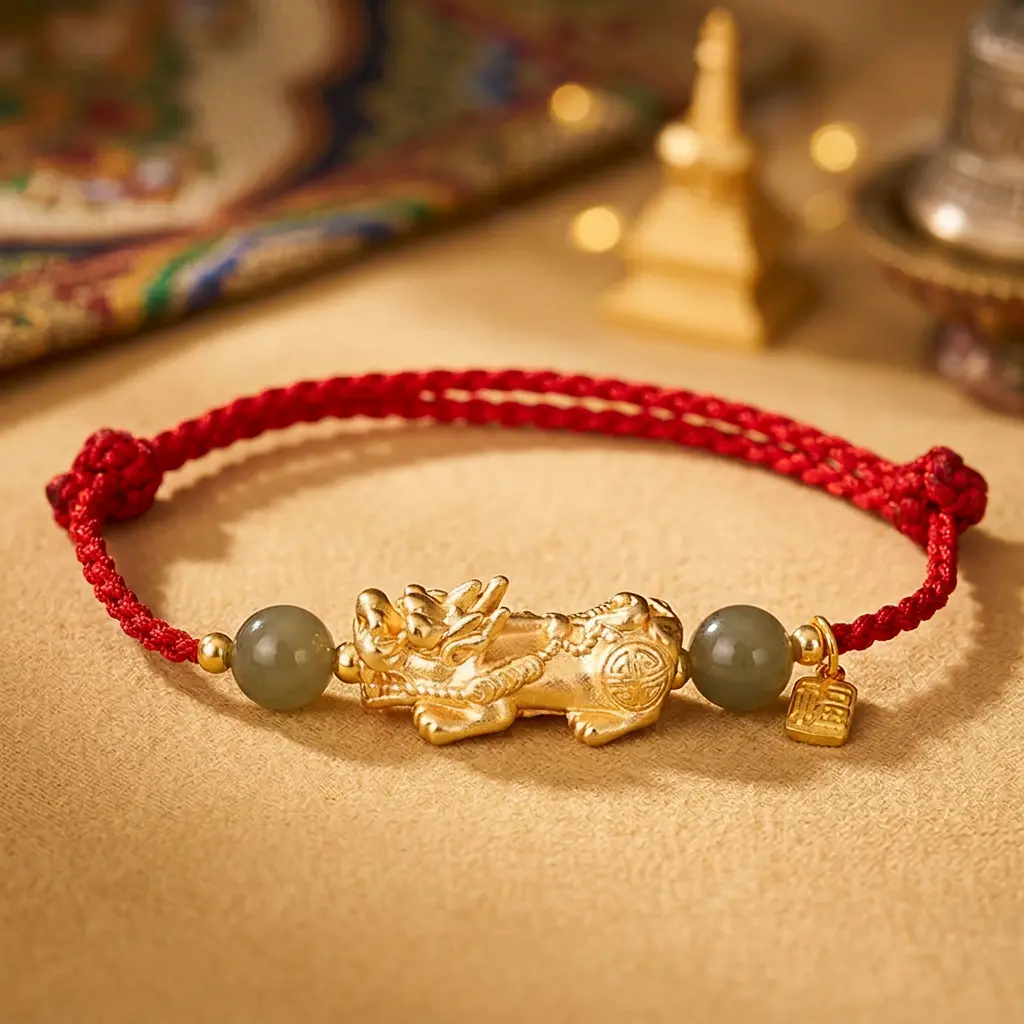


At PotalaStore, 10% of every sale goes directly to the Tibetan artisan communities and monastery partners who make our jewelry possible — not from profits, not from a marketing budget, but from every single order from day one. Here is exactly how it works and why we built the business this way.
Our founder, Yang Tso, spent years working alongside the communities at Sera Jhe Monastery and Kopan Monastery before PotalaStore opened. What she witnessed during that time made the answer obvious: selling authentic Tibetan spiritual jewelry without returning something meaningful to the artisans who create it — and the monasteries that bless it — simply wasn’t acceptable. This article explains the model we chose, who it supports, and why we believe it does more good than the “buy one, give one” programs that came before it.
Table of Contents
The 10% Promise: What Happens When You Shop at PotalaStore
When you place an order at PotalaStore, 10% of your gross sale total is automatically allocated to the Tibetan Artisan Community Fund — distributed quarterly to artisan cooperatives and our two monastery partners. This is calculated on gross sales, not net profits, which means the amount is predictable regardless of our operating costs.
Most brands that advertise “giving back” calculate their donation from profits. After manufacturing, shipping, and platform fees, retail profit margins can be thin — so “10% of profits” on a $60 order might mean $0.80 actually reaches a cause. Donating from gross sales removes that ambiguity. If you spend $60, $6 flows to the fund. Every time.
The funds are divided across three areas:
- Artisan wages above market rate — supporting the craftspeople who handcraft each mala, bracelet, and pendant
- Monastery operating costs — contributing to educational and welfare programs at Sera Jhe and Kopan
- Craft apprenticeship programs — helping young artisans learn traditional silversmithing, mala-stringing, and thangka-element work
There is no opt-in. No charity selection at checkout. No minimum order threshold before it kicks in. The model is structural, not promotional — which is why we talk about it as a mission, not a campaign.
Why Tibetan Artisan Communities Face an Urgent Preservation Challenge

There are approximately 120,000 Tibetan refugees living in exile communities across Nepal and India, concentrated in Kathmandu, Dharamsala, and Bylakuppe. Many are master craftspeople carrying knowledge that took generations to develop — and that knowledge is genuinely at risk of disappearing.
Traditional Tibetan crafts — hand-hammered silver inlay, authentic Dzi bead carving, mala bead stringing with hand-knotted cord, and metalwork for gau prayer boxes — represent centuries of accumulated technique. This knowledge lives in people, not books. When a master artisan retires without apprentices, the craft can die within a single generation.
The economic pressure is real. Mass-produced imitations — most manufactured far from Tibet — enter the market at a fraction of the cost of handcrafted authentic pieces. It becomes genuinely difficult for traditional artisans to charge prices that reflect their skill and time when consumers cannot easily distinguish authentic Tibetan craft from a factory replica.
We’ve seen this dynamic play out directly. When Yang Tso first visited Kopan Monastery in 2015, she met a silversmith who was seriously considering leaving the trade for more reliable work. By 2019 — after PotalaStore had been sourcing from his cooperative for three years and the community fund had been helping stabilize artisan incomes — he had taken on two apprentices. The craft has a future in his family now. That outcome was not inevitable. It required a financial model that made staying in the craft economically viable.
“Traditional Tibetan craftsmanship has survived political upheaval and displacement. The next threat is economic. A purchase can help address that — if the economics are structured correctly.”
Meet Our Monastery Partners: Sera Jhe and Kopan

PotalaStore maintains active partnerships with two of the most significant Tibetan Buddhist monastic institutions in exile: Sera Jhe Monastery in southern India and Kopan Monastery in Nepal.
Sera Jhe Monastery, located in Bylakuppe, Karnataka, India, is one of the three great Gelugpa monasteries re-established after 1959. Home to more than 5,000 resident monks, it is known for its rigorous dialectical debate tradition and its robust community welfare programs serving both the monastic population and the surrounding Tibetan exile settlement. The monastery’s craft workshops produce traditional ritual objects and prayer items that PotalaStore sources directly — ensuring that artisans receive fair compensation and that the spiritual provenance of each piece is unambiguous.
Kopan Monastery sits on a hillside above Kathmandu, Nepal, at the foot of the Himalayas. Founded in the early 1970s by Lama Yeshe and Lama Zopa Rinpoche, it has grown into a major international center for Tibetan Buddhist study, hosting students from over 40 countries annually. Its location in the Kathmandu Valley places it in the heart of one of the largest Tibetan exile artisan communities in the world.
Every piece of jewelry sold at PotalaStore undergoes a formal 3-day consecration puja — a ritual blessing ceremony conducted by resident monks at our partner monasteries. This is not a symbolic gesture. The puja is a structured sequence of prayers, offerings, and meditative recitations that traditionally imbues the object with protective and auspicious qualities. Yang Tso attended her first puja ceremony at Sera Jhe in 2014 and has participated in the winter ceremony every year since. The monks who perform this ritual are among the direct beneficiaries of the community fund your purchase supports.
💎 Every piece in our collection has been through a 3-day monastery blessing. Browse our monastery-blessed Tibetan jewelry →
Dana: The Buddhist Principle That Shapes Our Giving Model
Dana (Sanskrit: दान) is the Buddhist concept of generosity — considered one of the foundational practices on the path to liberation, and the first of the ten paramitas (perfections) in Theravada tradition. In Tibetan Buddhist practice, dana isn’t charity in the Western secular sense. It is a spiritual discipline that generates merit for both the giver and the recipient.
The act of giving with awareness and intention — knowing that your generosity supports living beings and the continuation of the dharma — creates positive karma that accumulates over time. This reframes what purchasing a mala or a Dzi bracelet from PotalaStore actually means.
You are not simply acquiring a beautiful object. You are participating in an exchange that carries spiritual and material consequence: supporting a monk’s education, sustaining an artisan’s livelihood, and contributing to the survival of a cultural tradition. When you know that 10% of your purchase is flowing back to the communities that made it possible, that purchase becomes an expression of dana — a generous act embedded in a commercial transaction.
We built the giving model around this principle precisely because it is native to the tradition we work within. Right Livelihood — the fifth element of the Buddhist Eightfold Path — means earning a living in a way that does not harm others and, where possible, actively benefits them. For PotalaStore, the community-loop donation model is our attempt to operate according to right livelihood: a business that sources from Tibetan artisans and ensures that every sale strengthens, rather than extracts from, the communities involved.
Most “ethical brand” frameworks talk about values alignment. The dana framework is more specific: it asks whether the full chain of exchange — producer, seller, buyer — contributes to the wellbeing of everyone involved. We believe it does.
🙏 Want to understand more about the tradition behind our pieces? Read Yang Tso’s story and how PotalaStore began →
How Our Community-Loop Model Compares to Common Give-Back Approaches
The “give back” category in retail has a credibility problem — and for good reason. After TOMS Shoes shifted away from its original one-for-one model in 2019, and after multiple studies questioned whether some give-back programs undermined local economies more than they helped, consumers are right to ask hard questions before taking brand claims at face value.
Here is how PotalaStore’s community-loop model compares directly:
| Model | Who Receives the Donation | Donation Source | Transparency |
|---|---|---|---|
| BOGO (Buy One, Give One) | Unrelated recipient community | Built into product cost | Often opaque; criticized for undercutting local producers |
| % of profits | Named third-party charity | Post-cost net profit | Variable — thin margins mean small actual donations |
| Flat $$ per order | Named charity | Fixed per transaction | Clear but typically small ($0.25–$2) |
| PotalaStore Community-Loop | Same artisans who made the product | 10% of gross sales | Consistent regardless of our operating costs |
The critical difference in a community-loop model: the donation returns to the same community that produced the product. The craftspeople whose work generated your purchase are the people supported by the giving. There is no disconnect between maker, seller, and beneficiary.
This also addresses the most credible critique of BOGO programs — that donating free goods to communities that already produce those goods can undercut local economies. When PotalaStore supports Tibetan artisans through the community fund, we are not flooding a market with free alternatives to their work. We are funding the conditions that make authentic traditional craft economically viable: fair wages, apprenticeship programs, and a stable customer base that understands what it is buying.
How Your Purchase Creates a Complete Circle of Cultural Preservation

The impact of PotalaStore’s giving model flows in a continuous loop — from your purchase, back to the community, and forward into the future of Tibetan craft.
- You purchase a piece of monastery-blessed Tibetan jewelry at PotalaStore.
- 10% of your purchase total is added to the quarterly community fund.
- The fund supports artisan wages above market rate, monastery operating costs at Sera Jhe and Kopan, and craft apprenticeship training.
- Stable income allows master artisans to take on apprentices, preserving silversmithing, mala-stringing, and Dzi carving techniques.
- The monks at our partner monasteries continue conducting the 3-day puja blessings that give each piece its spiritual integrity.
- The next generation of Tibetan craftspeople has a viable economic path — and the tradition continues.
Every time you wear a piece from PotalaStore, you are part of that circle. The turquoise and coral inlay on a traditional Tibetan bracelet represents a technique that survived political upheaval, forced displacement, and decades of cultural suppression. The silversmithing that produced your gau box pendant has been refined across hundreds of years and multiple generations of teachers and students. Your purchase helps ensure it does not fall to economic pressure as well.
In this model, conscious consumerism and cultural preservation become the same act. You are not making a charitable donation alongside a purchase — the purchase and the giving are one inseparable thing.
Shop with Intention. Give with Every Purchase.
Every piece in our collection carries a monastery blessing and supports Tibetan artisan communities through our 10% community-loop giving model.Explore Our Collection →
Frequently Asked Questions
Does the 10% actually reach the artisans directly, not just a third-party organization?
Yes. PotalaStore calculates 10% on gross sales — not net profits — and distributes the funds quarterly to artisan cooperatives and directly to our two monastery partners, Sera Jhe and Kopan. We work with communities Yang Tso has maintained personal relationships with since 2014, which means the fund flows to specific cooperatives we can identify by name, not through an intermediary organization with its own overhead. We maintain records of quarterly disbursements and are happy to share them on request.
Which monasteries does PotalaStore support, and what do they do with the funds?
We partner with Sera Jhe Monastery in Bylakuppe, Karnataka, India (home to over 5,000 monks) and Kopan Monastery in Kathmandu, Nepal. Funds contribute to the monasteries’ operating and educational expenses, including the stipends paid to the monks who conduct the 3-day consecration puja blessing ceremonies for our jewelry. Both monasteries also run community welfare programs serving the broader Tibetan exile population in their regions.
How is PotalaStore’s model different from buy-one-give-one (BOGO) programs like TOMS?
In a BOGO model, donated goods go to recipient communities that are typically unrelated to where the product was made — and critics have documented cases where donated goods undercut local producers in those communities. PotalaStore uses a community-loop model: the donation returns to the same artisan communities that produced the jewelry. The makers are the beneficiaries. There is no economic disconnect between production and giving.
What is dana, and why does it matter when shopping for Tibetan jewelry?
Dana is the Sanskrit term for generosity — the first of the Buddhist paramitas (spiritual perfections) and a foundational practice in Tibetan Buddhist tradition. When you buy from PotalaStore knowing that 10% supports the artisans and monasteries connected to your purchase, that transaction carries conscious intention. In Buddhist practice, giving with awareness generates merit for the giver. It transforms a commercial exchange into something that aligns with the spiritual values the jewelry itself represents.
Note: Descriptions of spiritual properties, merit, and the effects of dana in this article reflect traditional Tibetan Buddhist beliefs and practice. They are presented as cultural and philosophical context, not as scientific or medical claims.
📚 References
- Dana (Buddhism) — Generosity in Buddhist Tradition: Overview of dana as a foundational practice across Buddhist schools, including its role in Tibetan Vajrayana. Encyclopædia Britannica
- Sera Jhe Monastery, Bylakuppe: Background on the re-established Gelugpa monastic tradition and its educational programs in the Tibetan exile community in Karnataka, India. Sera Monastery Official Site (Readers may search the institution’s website for current information)
- Tibetan Refugee Communities in Nepal and India: Data on Tibetan exile populations and their settlement patterns, cultural preservation challenges, and livelihood conditions. UNHCR — see reports on Tibetan populations in South Asia.
- The One-for-One Business Model — Inside BOGO: Academic analysis of the BOGO model’s effectiveness, limitations, and unintended economic consequences. Stanford Social Innovation Review — Marquis & Park (2014). (Search SSIR.org for “inside the buy-one give-one model”)