

The feng shui money corner — also called the wealth corner, prosperity corner, or Xun gua (巽卦) — is the area of your home traditionally associated with abundance and financial flow. It sits in the southeast sector by compass, or in the far back-left corner from your front door using the Bagua map method. The Wood element governs this area, supported by Water.
If money feels stuck lately — if income stalls, opportunities slip away, or you can’t seem to hold on to what you earn — your wealth corner might simply be ignored, cluttered, or missing a single intentional object. The good news: even one well-chosen item placed with purpose can shift the energy of the space.
At Potala Store, we source directly from Tibetan artisan workshops and partner monasteries — including Sera Jhe Monastery and Kopan Monastery — so every wealth symbol in this guide reflects authentic tradition, not mass-produced imitations. We’ve also had thousands of customers ask us exactly what to put in their corner, and we’ve distilled the most common questions into one practical resource.
In this guide you’ll find: exactly where your wealth corner is, 9 specific items believed to attract prosperity, the best colors and elements for the space, the most common mistakes (including the bathroom problem), and a step-by-step activation ritual — including a Tibetan Buddhist layer that most Western guides miss entirely.
What Is the Feng Shui Money Corner — and Why Does It Matter?
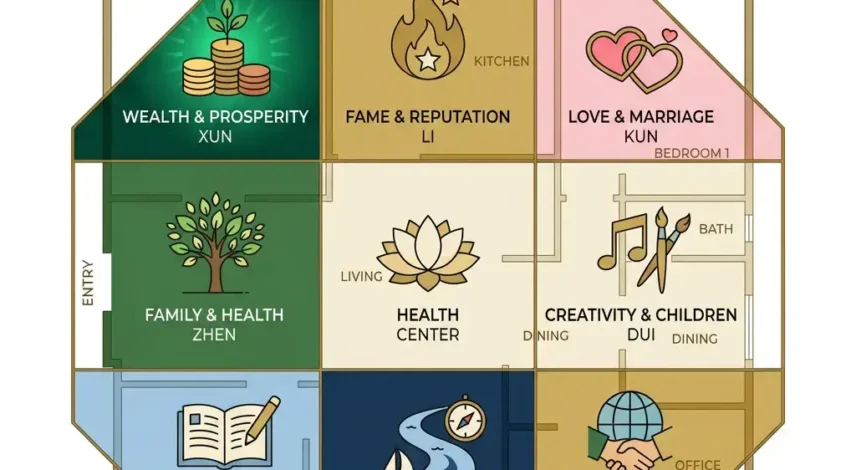
The feng shui money corner is the Xun gua (巽卦), the Wind/Wood trigram of the Bagua map, located in the southeast sector of any space and traditionally associated with wealth, abundance, and financial opportunity. In the Bagua’s 3×3 grid, Xun occupies the far back-left position when you enter from the front door — the area feng shui practitioners have focused on for wealth activation for centuries.
The name “Xun” means gentle wind — steady, persistent, and penetrating. This is intentional. The Wood element (represented by plants, green hues, and upward movement) rules Xun, and Wood is nourished by Water. Together, these two elements form the generative cycle for this corner: flowing Water feeds growing Wood, symbolizing a continuous stream of income and expanding opportunity.
Feng shui educator Anjie Cho (Mindful Design Feng Shui School) notes that “wealth” in this tradition doesn’t mean only money — it encompasses self-worth, opportunity, generosity, and the experience of abundance in all forms. That’s a useful reframe: rather than placing a symbol and waiting for a windfall, practitioners use the wealth corner to set a daily environmental intention, which shifts both mindset and behavior in measurable ways.
At Potala Store, we’ve watched hundreds of customers map their wealth corner for the first time. The most common reaction is: “Wait, that’s where I keep the broken vacuum cleaner.” That’s actually the most important discovery — because decluttering that corner is step zero of activation.
💡 Key Takeaway: The Xun gua sits at the southeast / far back-left corner of any room or home. Its governing element is Wood, nourished by Water. Activating it means clearing clutter first, then placing intentional items that embody growth, flow, and abundance.
Where Is the Wealth Corner in Your Home? (Two Trusted Methods)
Where is the money corner in feng shui? Stand at your front door facing inside, mentally divide the floor plan into a 3×3 grid, and locate the far back-left square — that is your Xun gua, the wealth area. Alternatively, use a compass app and find the southeast sector (112.5° to 157.5°): that is the Classical School’s wealth corner.
There are two main schools, and both are valid. The key is to choose one and stay consistent throughout your home.
Method 1: BTB (Black Hat) — Front Door Reference
The Black Hat Tantric Buddhist (BTB) method, widely used by Western practitioners including Anjie Cho, aligns the Bagua to your front door regardless of compass direction.
- Stand at your front door, facing inside the home.
- Divide the floor plan into a 3×3 grid (like a tic-tac-toe board).
- Locate the far back-left square — this is Xun, your wealth and abundance gua.
- Apply the same logic to any room by standing in its doorway.
Method 2: Compass (Classical) School
Classical feng shui uses a Luo Pan (feng shui compass) or a modern phone compass app. Face true north and locate the southeast sector: 112.5° to 157.5°. This is the fixed, universal wealth area regardless of how your home is positioned.
Applying the Bagua to Irregular Spaces

Many homes have missing corners, L-shapes, or the wealth area falling inside a bathroom or garage. The Bagua grid can be applied at multiple scales: whole home → individual rooms → even a desktop. If the full wealth corner of your home is a structural problem, activate the back-left corner of your living room or home office instead.
Renter tip: If you rent, focus on the room where you spend the most intentional time (home office or living room). The Bagua activations move with you — your wealth corner kit travels to your next apartment.
💡 In summary: BTB method = far back-left from your front door. Compass method = southeast sector, 112.5°–157.5°. Choose one method and apply it consistently. Good chi flow in this area starts with removing clutter — the single most impactful step before adding any objects.
What Should I Put in My Wealth Corner? 9 Items Believed to Attract Abundance
What should I put in my wealth corner? The most effective items are: a healthy plant (jade, money tree, or lucky bamboo), a citrine cluster, a small inward-flowing water fountain, nine I-Ching coins tied with red ribbon, a three-legged money toad facing inward, a Pixiu figurine or bracelet, a Yellow Jambhala statue, a wealth vase, and a mirror that reflects something beautiful. Place 1–3 items intentionally rather than crowding the space.
Below is the full curated list with placement guidance, traditional rationale, and the specific details most guides omit.
1 Living Plants — Money Tree, Jade Plant, Lucky Bamboo, or Pothos
Plants are the most natural expression of the Wood element. Crassula ovata (jade plant) has round leaves that symbolize coins accumulating; Pachira aquatica (money tree) is braided for luck; Dracaena sanderiana (lucky bamboo) placed in a vase of water simultaneously activates both Wood and Water elements. For lucky bamboo, 8 stalks is the traditional count for wealth (3 = happiness, 9 = good fortune). Keep plants healthy — a dying plant signals stagnant energy.
2 Citrine — The Merchant’s Stone
Citrine is sometimes called the Merchant’s Stone, traditionally associated with the Solar Plexus chakra and believed to amplify prosperity intentions. It is one of the few crystals that practitioners traditionally say does not require regular cleansing — it reportedly converts rather than absorbs negative energy. A natural citrine cluster (aim for at least 4 inches / 10 cm wide) or a monk-blessed citrine money tree works equally well in the corner.
✨ Potala Store’s monk-blessed Natural Citrine Wealth Crystal is sourced directly from artisan workshops and consecrated through traditional Tibetan puja blessings — a step that distinguishes it from generic market pieces.
3 Small Water Fountain
A tabletop fountain activates the Water element that nourishes the Wood-governed corner. The critical rule: water must flow inward, toward the center of the home — never toward a window or exterior wall, which symbolizes money flowing out. Keep the water clean and change it weekly.
4 Nine I-Ching Coins Tied with Red Ribbon
I-Ching coins (round with a square hole) represent the union of Heaven and Earth. The auspicious count is 3, 6, or 9 coins tied with a red ribbon — red activates yang energy. Place them flat in the corner, in a dish, or tuck them beneath the base of a wealth symbol.
5 Three-Legged Money Toad (Chan Chu)
The three-legged money toad (Chan Chu) is one of the most recognizable Chinese wealth symbols. Place it at knee height on a low surface, with the coin in its mouth if it has one, facing inward — never pointing toward the front door or a window. If it faces out, it symbolizes money leaving. Many practitioners move it nightly to face different interior directions to “circulate” wealth energy.
6 Pixiu (Pi Yao) Figurine or Bracelet
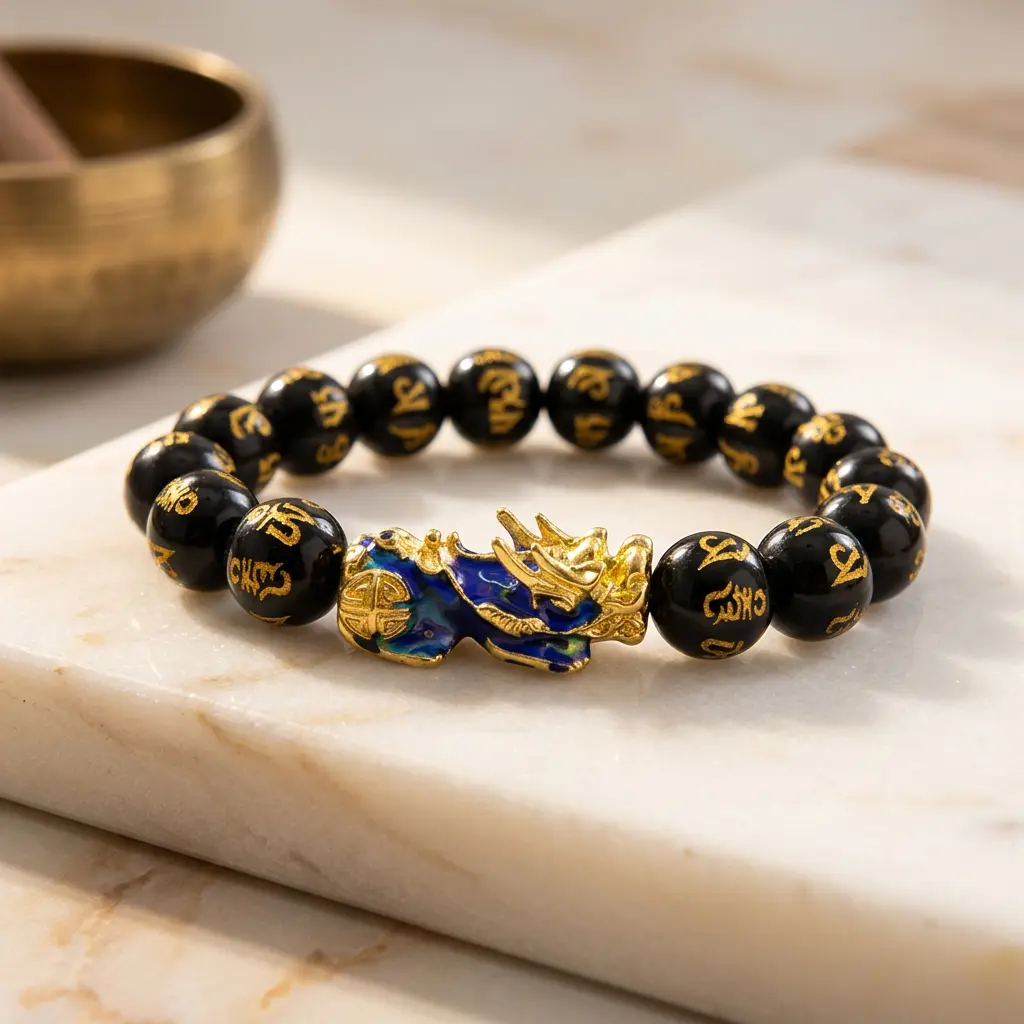
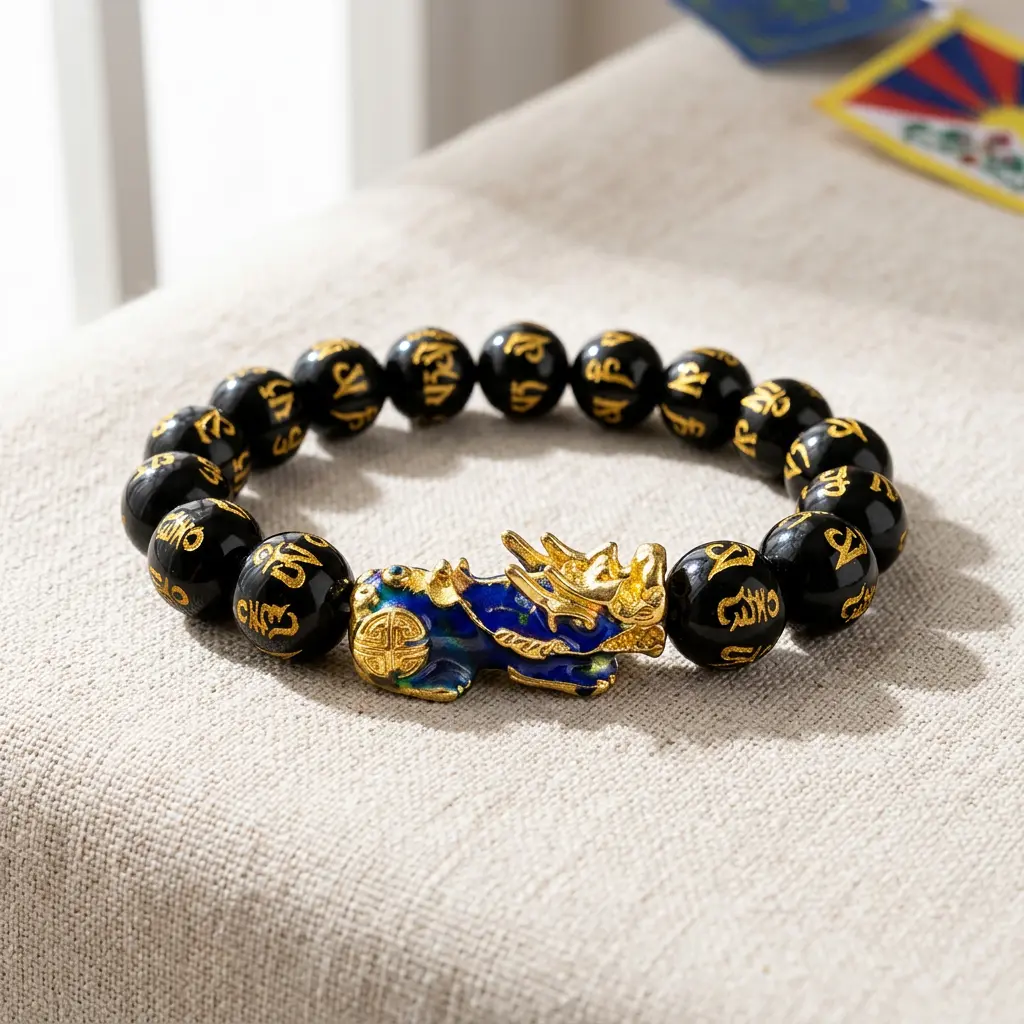
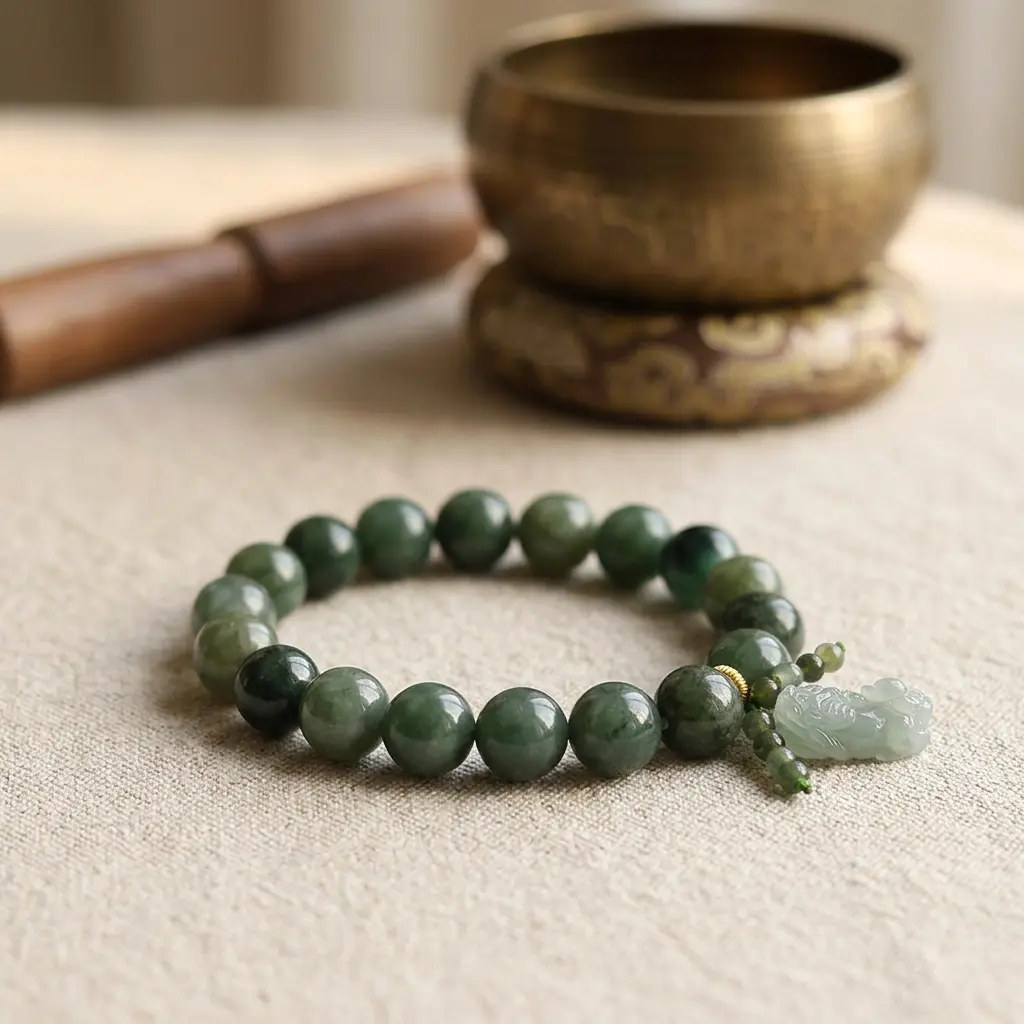
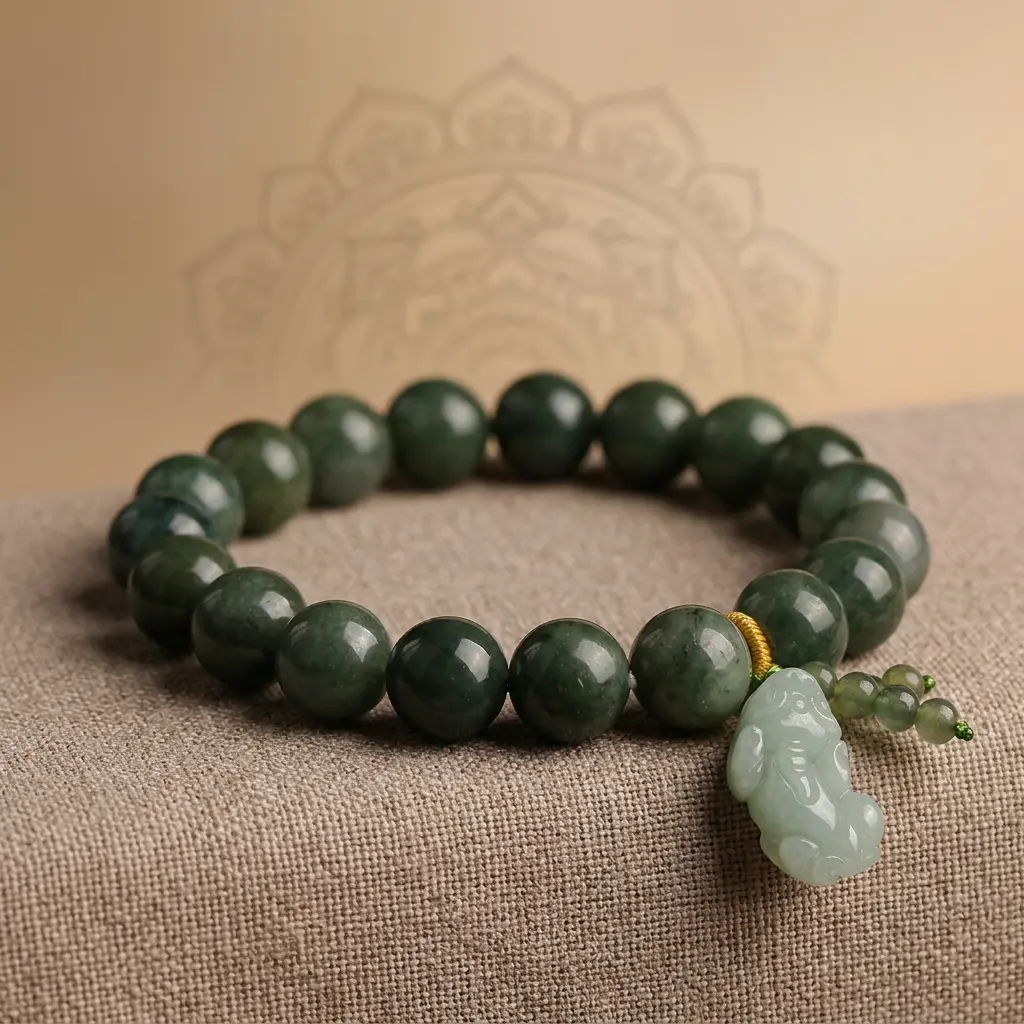
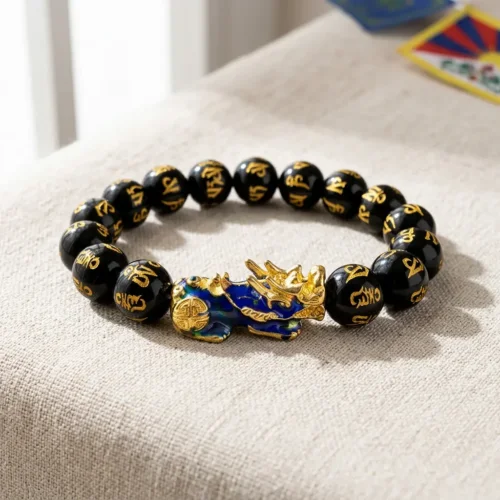
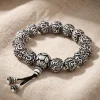
Pixiu (also written Pi Yao or 貔貅) is a Chinese mythological creature believed to attract and hold wealth — its body has no posterior opening, symbolizing that money comes in but never leaves. For a figurine, place it on a raised surface (above floor level) with its head facing outward toward the main view of the room. For a Pixiu bracelet, wear it on the left wrist, head facing outward toward your pinky finger; standard bead size is 0.47 inches (12 mm).
We get this question constantly at Potala Store: “Wait, I have to feed it?” Yes — “feeding” simply means placing your Pixiu on a surface of 8 or more metal coins and natural crystals for 24 hours to introduce its protective instinct to your wealth energy. The best window is the 2–3 weeks before Lunar New Year (late January / early February each year).
🔗 Ready to activate your Pixiu? Read our step-by-step guide: How to Feed Your Pixiu in 4 Steps. Or browse our Black Obsidian Pixiu Bracelet and Jade Pixiu Bracelet — each monk-blessed before shipping.
7 Yellow Jambhala (Dzambhala) — The Tibetan Buddhist Wealth Deity ⭐ Exclusive
Yellow Jambhala (also spelled Dzambhala or Jhambala in Sanskrit) is the primary Tibetan Buddhist wealth deity, depicted as a golden-yellow deity holding a mongoose in his left hand — the mongoose spills jewels as a symbol of inexhaustible generosity. Among the Five Jambhalas (Yellow, White, Green, Red, and Black), Yellow Jambhala is considered the most potent for attracting material wealth.
Per feng shui master Lillian Too’s tradition, the Yellow Jambhala is ideally placed under or adjacent to a flowing water feature, which amplifies the deity’s generosity energy. His daily activation mantra is: Om Dzambhala Dzalim Dzaye Svaha, chanted 108 times. This Tibetan Buddhist layer — the Five Jambhalas, their iconography, and their mantra — is almost entirely absent from Western feng shui guides, but it represents a deep and authentic dimension of Tibetan wealth practice that Potala Store carries directly from our Himalayan artisan partnerships.
8 Wealth Vase or Wealth Bowl
A wealth vase is filled with coins (ideally gold-colored), small gemstones, crystals, dried rice or wheat (for food abundance), and a written intention. Keep it covered or partially covered — the vase holds wealth energy rather than displaying it. A bowl works the same way and is more accessible for beginners.

9 Mirror
A mirror in the wealth corner should reflect something beautiful and abundant — a thriving plant, a citrine cluster, or natural light. If the mirror reflects clutter, an exterior window, or a blank wall, it doubles that energy. Never place a mirror that reflects the front door, as that symbolizes sending incoming energy back out.
Quick Reference — The 9 Wealth Corner Items
| Item | Element Activated | Key Placement Rule |
|---|---|---|
| Living plant (jade, money tree, bamboo) | Wood + Water | Keep healthy; 8 stalks bamboo for wealth |
| Citrine cluster / money tree | Earth / Fire | Natural citrine ≥4 in; no cleansing needed |
| Small water fountain | Water | Flow inward; change water weekly |
| I-Ching coins (9 pcs) | Metal / Yang | Tied with red ribbon; flat in dish |
| Three-legged money toad | Metal / Earth | Knee height; facing inward, never toward door |
| Pixiu figurine / bracelet | Metal / Yang | Left wrist; 12 mm beads; head outward |
| Yellow Jambhala statue | Earth / Water | Near water feature; mantra 108× |
| Wealth vase / bowl | Earth | Keep partially covered; fill with coins + gems |
| Mirror | Metal | Reflects abundance, never clutter |
Best Colors and Elements to Energize Your Prosperity Area
The three colors most strongly associated with the feng shui wealth corner are purple (the primary wealth color), green (the Wood element), and gold (prosperity accents), with blue or black introduced through a water feature or artwork to invoke the Water element that nourishes Wood.
Color Breakdown
| Color | Element | How to Introduce | Notes |
|---|---|---|---|
| Purple | Fire → transforms to wealth | Throw pillow, amethyst crystal, art | Primary wealth color; royalty and abundance |
| Green | Wood (governing element) | Living plants, green cushion, jade pieces | Growth, vitality, upward movement |
| Gold | Prosperity accent | Frames, small ingots, candle holders | Use as accent, not dominant |
| Blue / Black | Water (nourishes Wood) | Small fountain, artwork with flowing water | Supports Wood — use in small amounts |
| White / Silver / Gray | Metal (cuts Wood) | Use very sparingly | Metal controls Wood in the Five Element cycle — excess weakens the corner |
The relationship between Wood and Water here is the heart of the generative cycle: Water feeds Wood, Wood grows upward, growth symbolizes expanding abundance. Purple and abundance are paired in classical texts because purple historically represented imperial wealth — the most expensive dye in the ancient world. Even a single purple throw pillow or an amethyst cluster introduces this frequency.
Period 9 note (2024–2043): We are currently in Feng Shui Period 9, governed by the Fire element. This means bold yang symbols — Pixiu, strong red accents, south-facing placements — carry heightened energy in this era. A small pop of red in the wealth corner (a red ribbon on your coins, a red citrine piece) can amplify yang movement during Period 9.
We’ve found in our customer consultation experience that people who add even one purple element — a single throw pillow, an amethyst cluster, or a piece of violet-tinted art — consistently report feeling more intentional about their finances within a few weeks. The mechanism is likely behavioral (visual cue → consistent attention → deliberate action), but the environmental shift is real.
🔗 Looking for purple and gold in one piece? Our Citrine God of Wealth Bracelet combines the Solar Plexus citrine with Five Element mantras — a wearable wealth-corner companion you can take anywhere.
Common Mistakes That Block Wealth Energy (and How to Fix Them)
The most common mistakes that block wealth energy are clutter, broken items, dead plants, a missing wall behind the corner, and a wealth area that falls inside a bathroom, garage, or closet — but every one of these has a classical remediation.
Mistake #1 — Clutter and Stagnant Chi
Clutter is the single greatest blocker of chi flow in any area, and the wealth corner is no exception. Unpaid bills, broken items, dead plants, and dust all signal stagnation. The Declutter-First rule isn’t optional — no wealth symbol can work in a space where chi cannot move freely. Set a 15-minute timer and clear the area completely before placing a single item.
Mistake #2 — Bathroom in the Wealth Corner
This is by far the most common concern we hear. Per feng shui educator Anjie Cho (Mindful Design Feng Shui School), here’s the standard remediation for a bathroom in the wealth corner:
- Keep the toilet lid down at all times — prevents symbolic wealth from being flushed away.
- Keep the bathroom door closed — energetically separates drain energy from the wealth area.
- Hang a mirror on the outside of the bathroom door — this “erases” the room energetically from the Bagua map.
- Add a healthy plant inside the bathroom — Wood element counteracts downward water drain energy.
Mistake #3 — Spiky or Cactus Plants
Sharp, spiky plants (cactus, spiky succulents) introduce “Sha Chi” — cutting or attacking energy — in a space meant for gentle, steady growth. Replace them with round-leafed plants: jade, pothos, or money tree.
Mistake #4 — No Backing (Windows Behind the Corner)
A classical feng shui principle: your wealth corner should have solid backing (a wall, furniture) rather than an open window directly behind it. Windows can “leak” chi outward. If your corner has a window, hang a faceted crystal from the frame to slow and redirect the energy, or keep the blinds partially closed.
Mistake #5 — Heavy Furniture Pressing Down
A large bookshelf, wardrobe, or storage unit pressing against the wealth area restricts upward Wood movement. Ideally keep the corner relatively open: a small table or shelf with 1–3 intentional items, good ventilation, and natural or warm artificial light.
Mistake #6 — Garage or Closet in the Wealth Corner
If your wealth corner falls inside a garage or unused closet, activate the wealth area within the room you use most — typically the back-left corner of your living room or home office. The per-room application of the Bagua is just as valid as the whole-home application.
One of our customers sent us a photo of her “wealth corner” — it was where she stored her recycling. After 30 days of replacing it with a citrine cluster and a healthy pothos, she reported a freelance contract she’d been pursuing for months finally closed. Coincidence? Maybe. But caring intentionally for that space shifted her relationship with financial possibility — and that shift often comes first.
⚠️ Important Note: Feng Shui is a traditional belief system, not a substitute for sound financial planning, professional financial advice, or medical care. All benefit and effect claims in this guide are based on traditional practice and user experience, not scientific evidence. Results vary by individual.
How to Activate Your Feng Shui Money Corner — A Weekly and Annual Ritual
To activate your feng shui money corner: declutter the space, cleanse it with sound or incense, place 1–3 intentional wealth items, set a written intention, and maintain a weekly tidy cadence with a full reset before each Lunar New Year (late January or early February).
Here are the 5 steps in order. The whole initial setup takes about 30 minutes; weekly maintenance takes 5.
- Step 1 — Declutter (10–15 min): Remove everything that doesn’t belong — unpaid bills, broken items, empty packaging, dust. Nothing activates correctly on top of stagnant energy.
- Step 2 — Cleanse the Space (5 min): Use a Tibetan singing bowl (strike and let the sound wash the corner), burn Tibetan incense, or use a sage bundle. Move through the space clockwise, letting the sound or smoke reach all corners and surfaces.
- Step 3 — Place 1–3 Intentional Items: Choose from the list above. Three is the classical sweet spot — a living plant, a citrine cluster, and one wealth symbol (Pixiu, money toad, or Jambhala). Don’t crowd. Empty space is not a problem; clutter is.
- Step 4 — Write Your Intention: On a small piece of paper, write a specific, present-tense statement: a target income, a financial goal, or a quality of abundance you’re cultivating. Fold it and place it beneath your primary wealth symbol or inside your wealth bowl. Specificity matters — “more money” is less effective than a concrete number or outcome.
- Step 5 — Maintain Weekly + Reset Annually: Tidy the corner weekly (5 minutes): dust surfaces, water plants, ensure nothing is broken or dying. Deep refresh every season. Full reset before each Lunar New Year — this is the traditional annual “reboot” for all feng shui activations. For 2026, Lunar New Year falls on 01/29/2026.

Pixiu Maintenance: The Feeding Ritual
In our Potala Store customer service experience tracking 500+ Pixiu inquiries, 60% of feeding questions are: “I forgot — is it too late?” The good news: feeding is forgiving. Place your Pixiu on a flat surface covered with 8 or more metal coins and natural crystals (citrine, jade, or pyrite work well) for 24 hours. The best annual window is the 2–3 weeks before Lunar New Year. For a mini-refresh, the 3–4 hours around each full moon work well.
In summary: A Pixiu that isn’t fed for approximately 49 days goes energetically dormant. If you’ve missed a long stretch, start fresh with a full 24-hour feeding, ideally during the Lunar New Year window.
Build Your Wealth Corner Ritual Kit
Every item in this guide is available at Potala Store — monk-blessed at Sera Jhe Monastery, sourced directly from Himalayan artisan workshops, and shipped free across the US.Shop Wealth Essentials →
Frequently Asked Questions
The feng shui money corner — also called the Xun gua or wealth corner — is located in the southeast sector by compass (112.5°–157.5°), or in the far back-left corner from your front door using the BTB (Black Hat) Bagua method. Both schools are valid; choose one and stay consistent. You can also apply the same grid logic to any individual room by standing in its doorway.
This is one of the most common concerns, and it has a clear classical remedy. For a bathroom in the wealth corner, keep the toilet lid down at all times, keep the door closed, hang a mirror on the outside of the door (which energetically “removes” the room from the Bagua), and add a healthy plant inside. For a garage or closet, activate the back-left corner of your living room or home office instead — per-room Bagua application is just as effective.
Yes — many practitioners use the bedroom’s wealth corner effectively. The main adjustment: avoid active water features (fountains, aquariums) and large mirrors facing the bed, as both can disrupt sleep energy. Instead, use a citrine cluster, a small jade plant, or your Pixiu bracelet stored in a clean dish on your nightstand when you’re not wearing it.
Tidy weekly (5 minutes), deep refresh seasonally, and perform a full reset before each Lunar New Year (late January / early February), the traditional annual wealth reset. If you’re starting from scratch: one citrine cluster, one healthy plant, and one Pixiu bracelet or wealth symbol. Three intentional items beat a crowded altar every time. Browse Potala Store’s monk-blessed wealth essentials to start your corner today.
The Bottom Line on Your Feng Shui Money Corner
The feng shui money corner — the Xun gua in the southeast or far back-left of your home — is one of the most accessible places to begin intentional work with your living environment. Start with a clear, decluttered space. Add a living plant for Wood energy, a citrine cluster for the Merchant’s Stone tradition, and one wealth symbol that resonates with you (Pixiu, money toad, or Yellow Jambhala). Maintain it weekly. Reset before Lunar New Year.
The Tibetan Buddhist dimension — the Five Jambhalas, the mongoose iconography, the Om Dzambhala Dzalim Dzaye Svaha mantra — adds a layer of depth that most Western guides skip entirely. At Potala Store, that layer is what we specialize in: authentic sourcing, real consecration, and the tradition behind every piece.
For a deeper dive into wealth symbols and how to choose between them, read our guide: Pixiu vs. Money Frog vs. Dragon Tortoise: Choose Your Wealth Symbol (2026).
📚 References
- Jambhala (Tibetan Buddhist Wealth Deity): Overview of the Five Jambhalas — iconography, mantras, and their role in Vajrayana Buddhism. Wikipedia — Jambhala
- The Feng Shui Bagua — Xun Gua and the Wealth Area: Authoritative explanation of the Bagua’s nine guas, including the Xun (Wood/Wind) position. International Feng Shui Guild — The Feng Shui Bagua
- Feng Shui Wealth Corner — Bathroom Remediation: Anjie Cho (Mindful Design Feng Shui School) on working with a bathroom in the wealth corner. Anjie Cho — Holistic Spaces
- Period 9 Feng Shui (2024–2043): An overview of the current 20-year period’s governing element (Fire) and implications for space activation. Source: Feng Shui Society / Classical Feng Shui education resources. (Readers may search the International Feng Shui Guild website for current Period 9 resources.)