

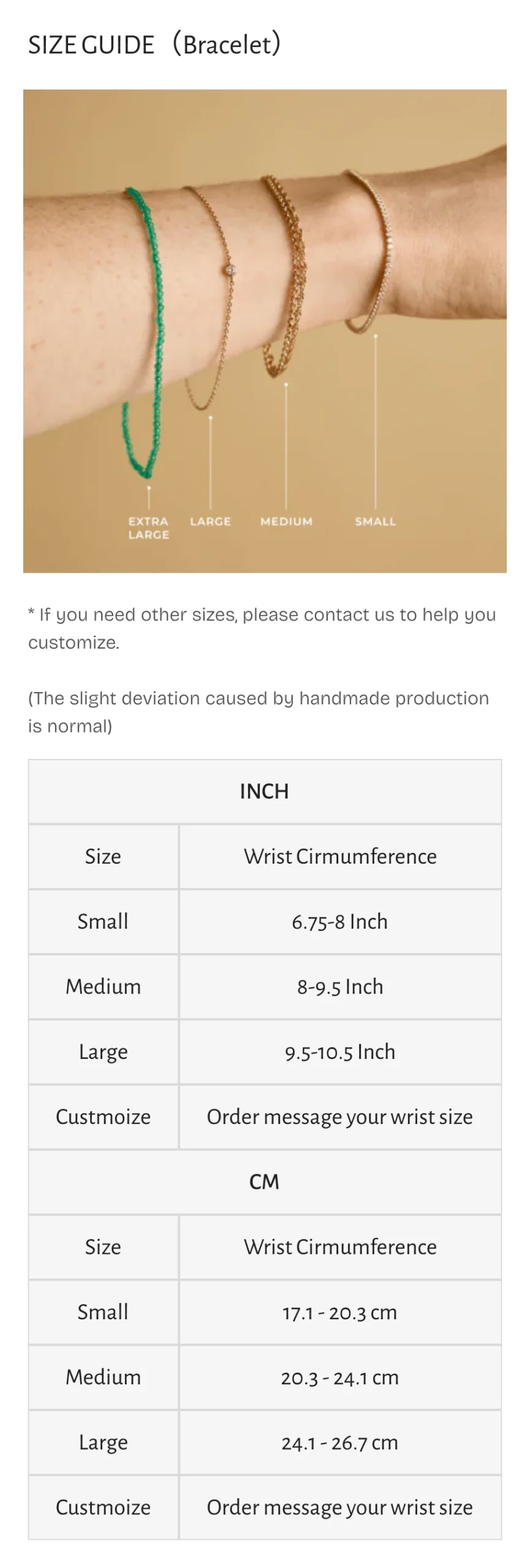
 Bracelet Size Guide Chart - Wrist Measurement in Inches & CM[/caption]
[caption id="attachment_17326" align="aligncenter" width="905"]
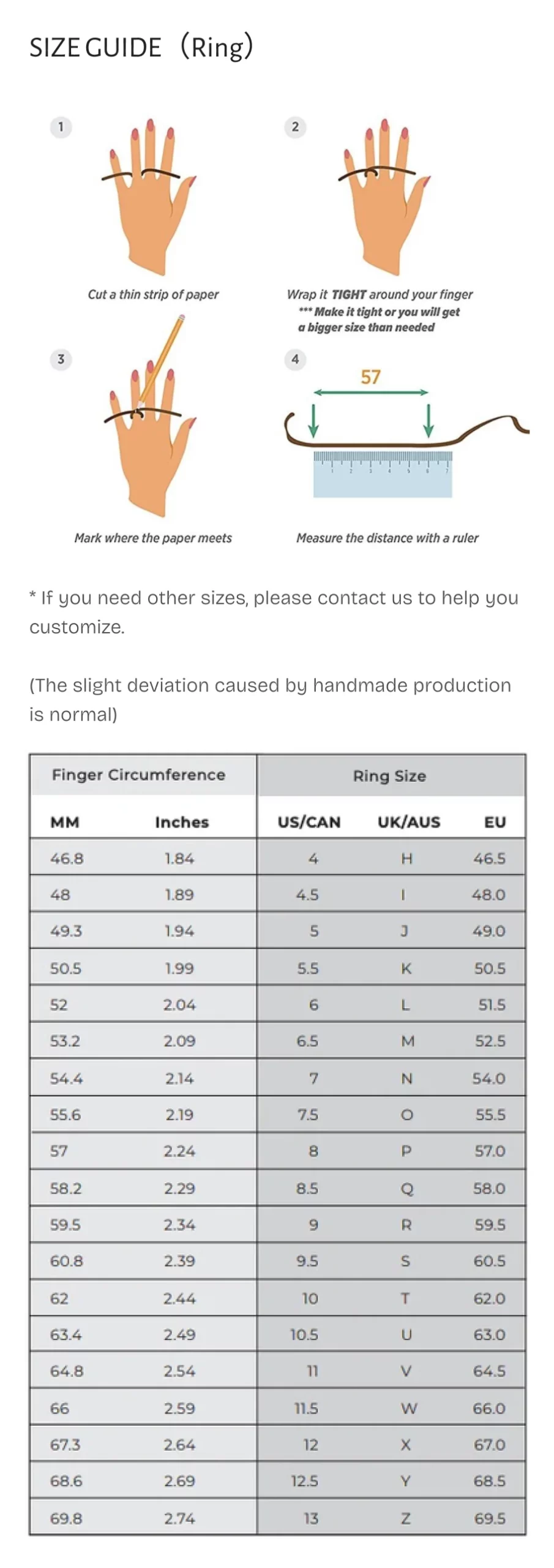 Ring Size Guide - How to Measure Finger Size at Home[/caption]
[caption id="attachment_17325" align="aligncenter" width="912"]
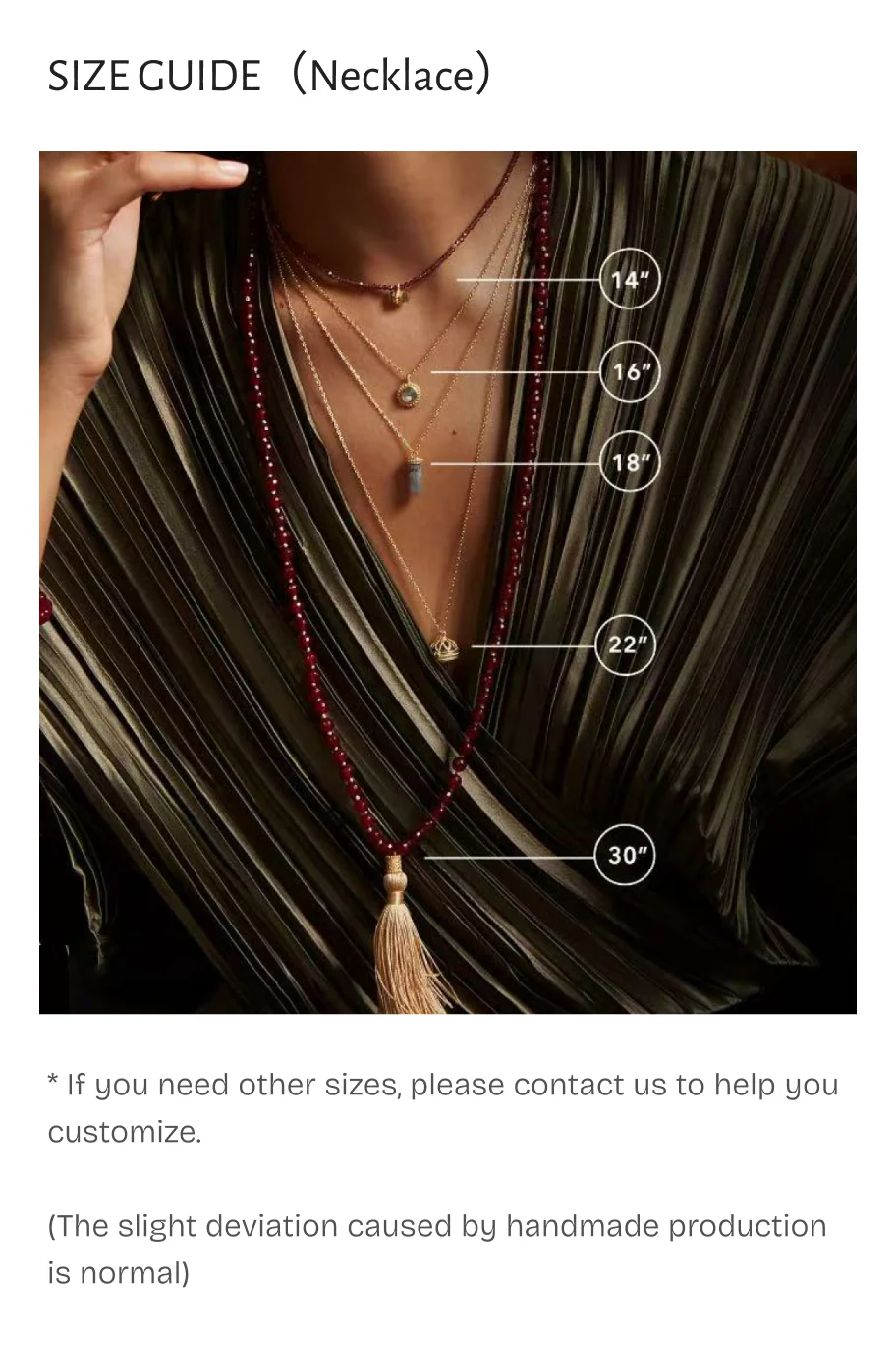 Necklace Length Size Guide Chart - 14 16 18 22 30[/caption]
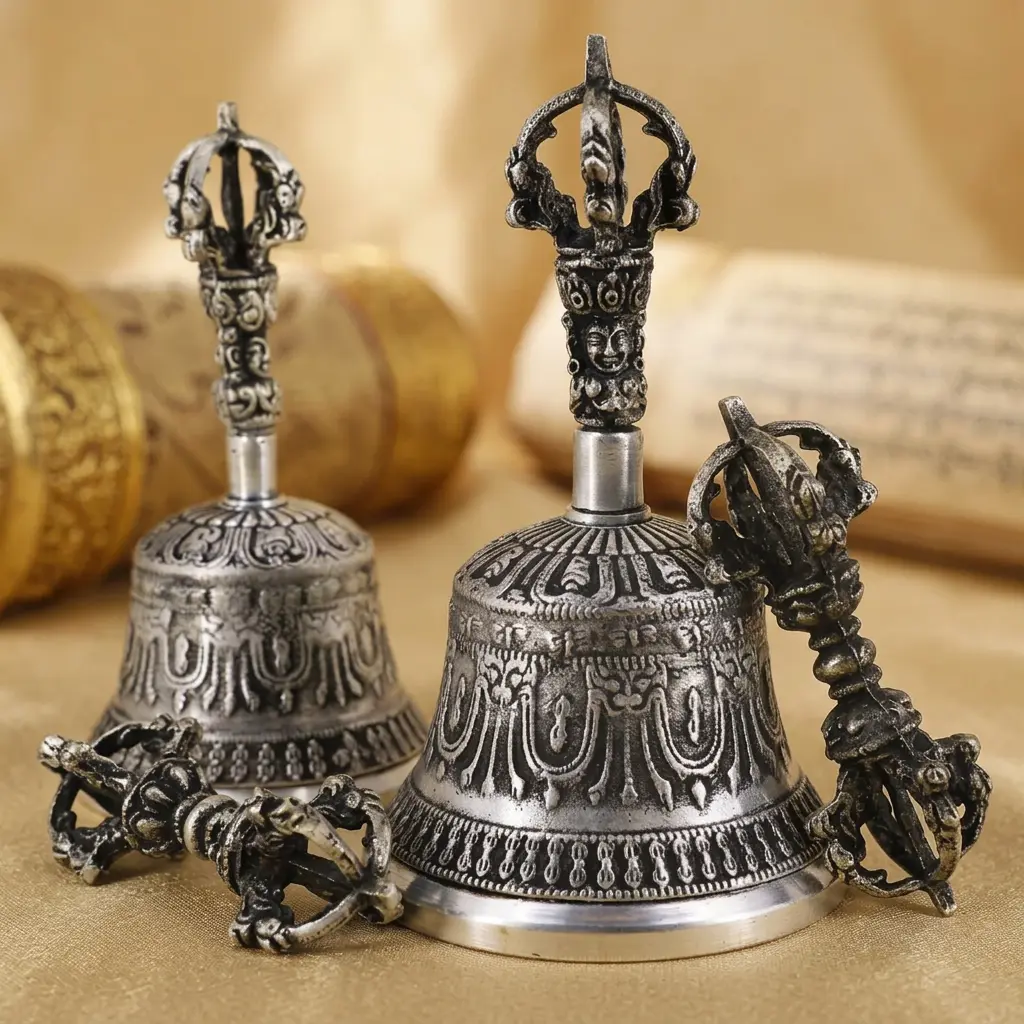
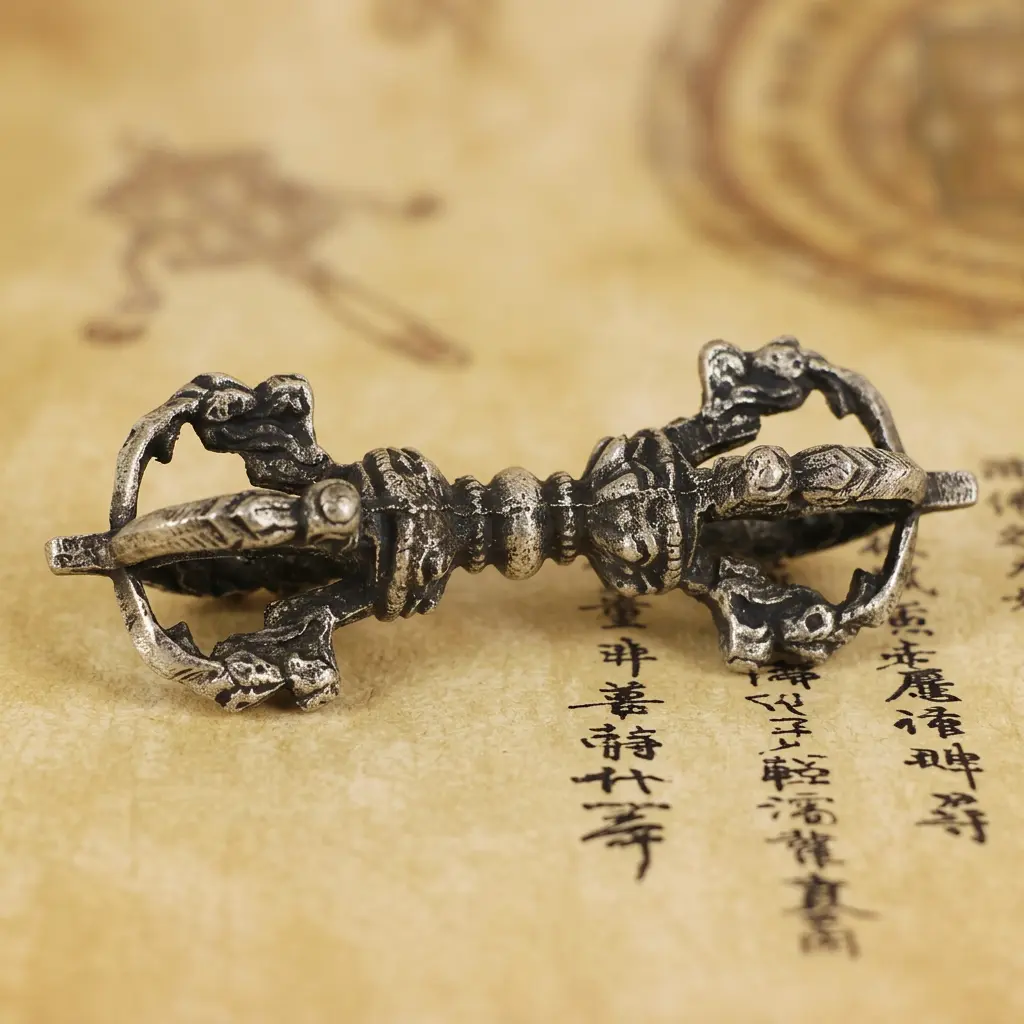
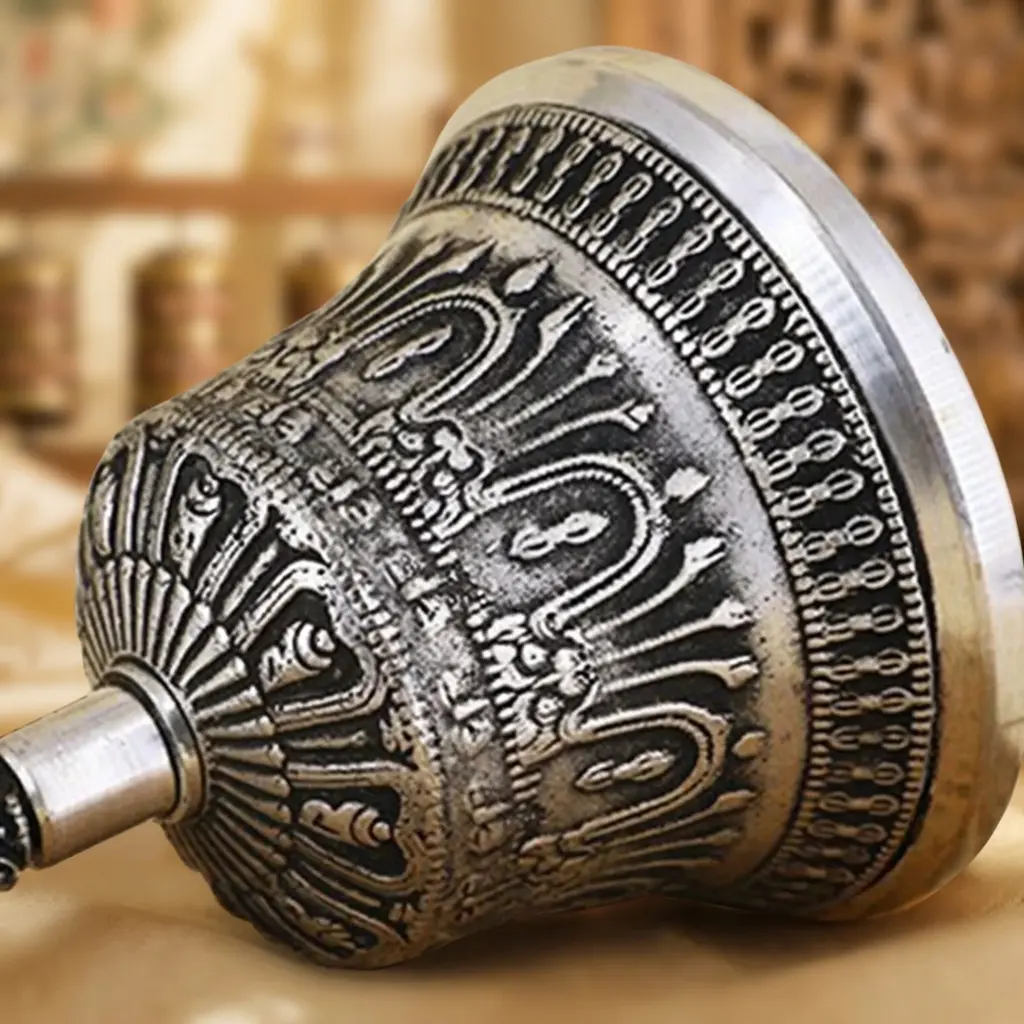
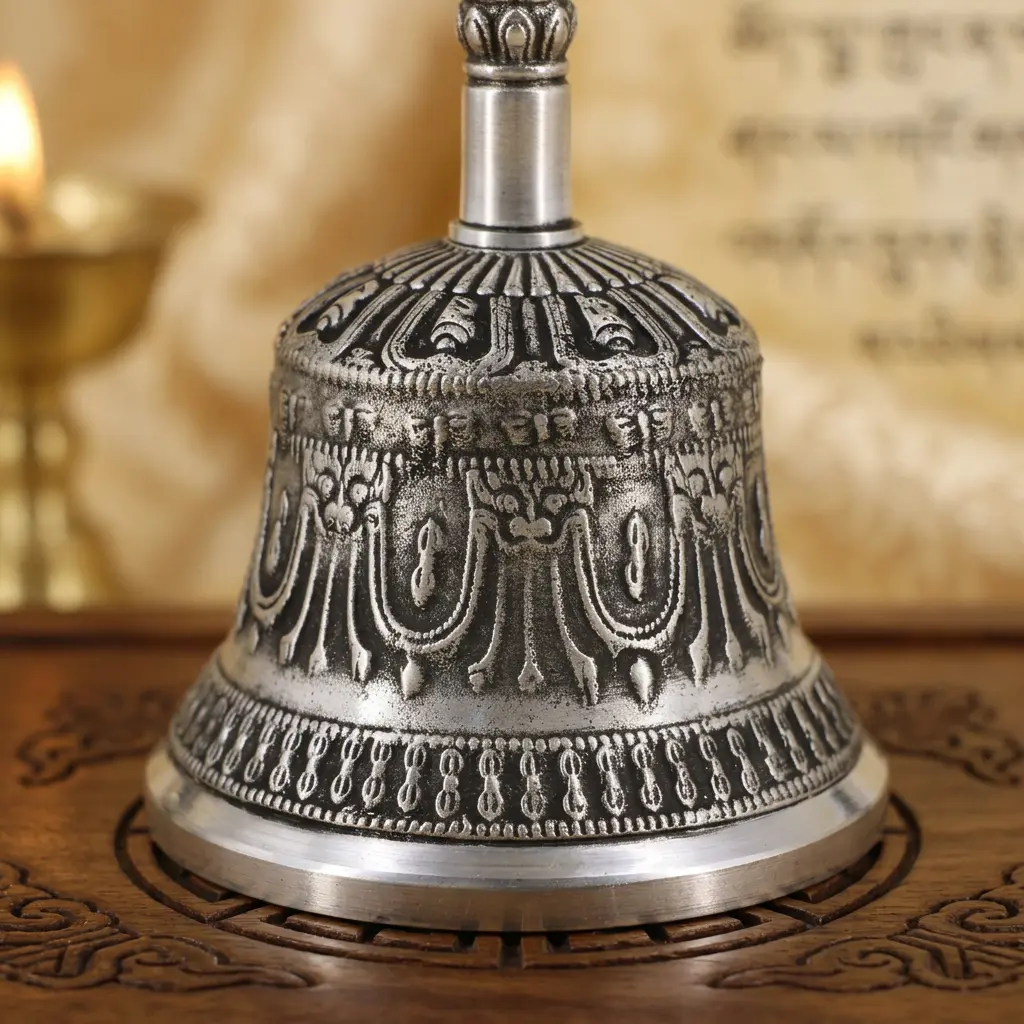
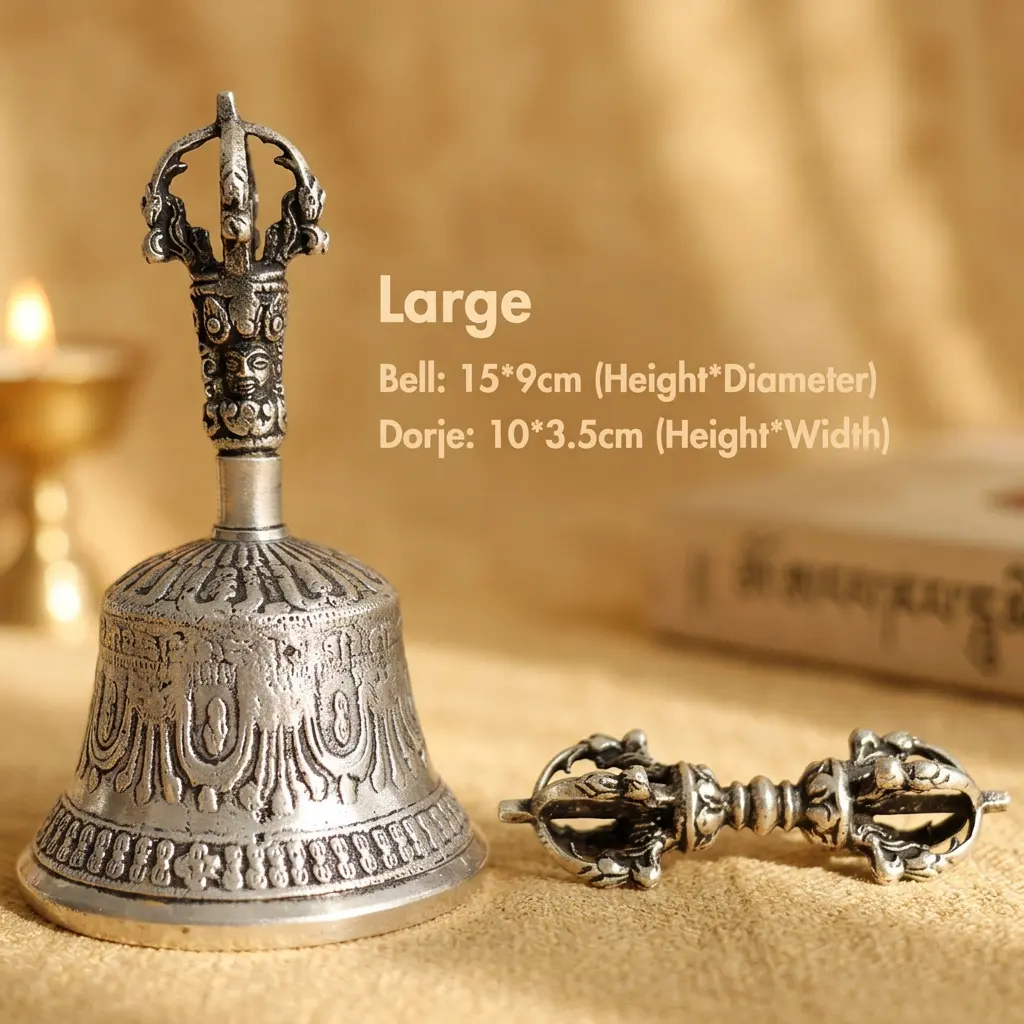
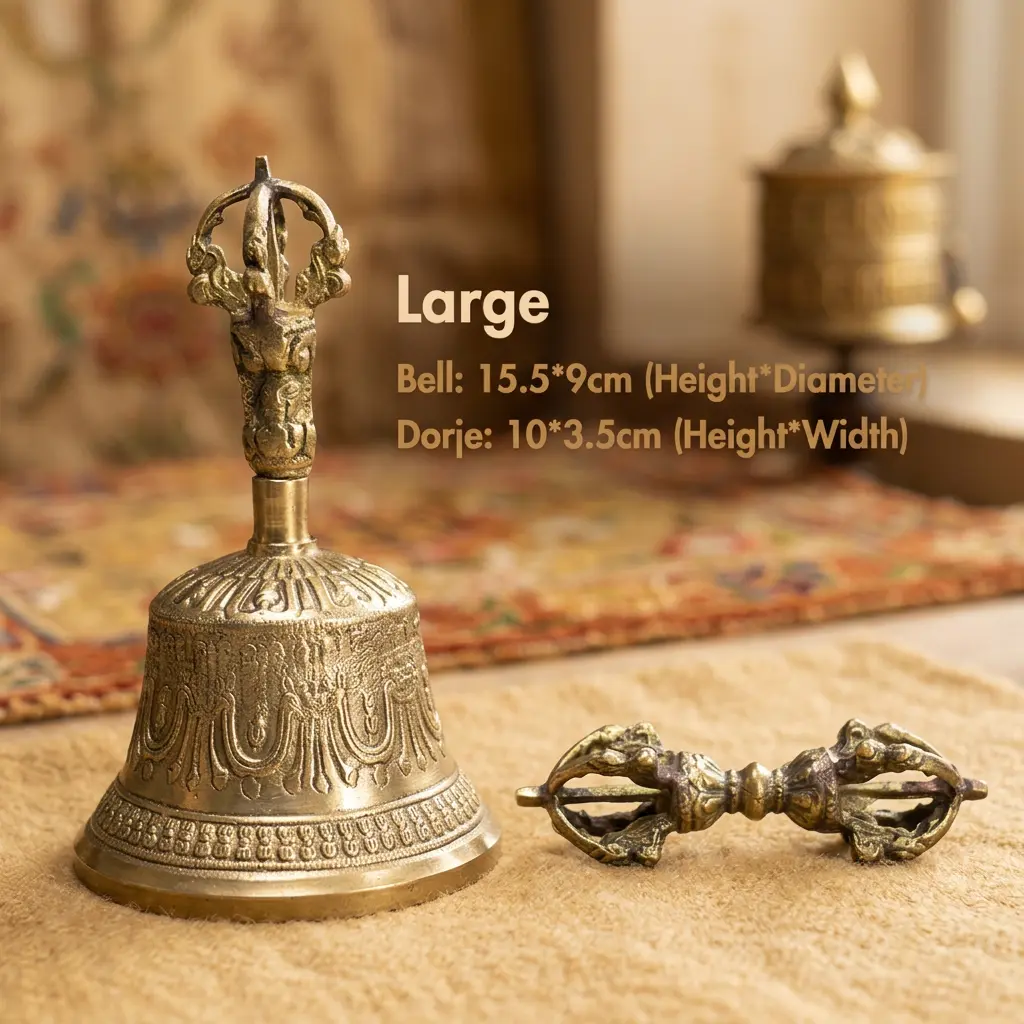
This Tibetan bell and dorje set from PotalaStore pairs a hand-finished copper meditation bell with a matching five-prong vajra, made by artisans in Nepal. Use it to open your practice, anchor your altar, or give a meaningful gift. It brings together the two ritual tools that Tibetan Buddhism treats as one object.
Key Highlights
- A matched pair: one bell (ghanta, or drilbu) and one five-prong dorje (vajra), made to be used together
- Handmade in Nepal from copper, with an antique finish and visible tool marks
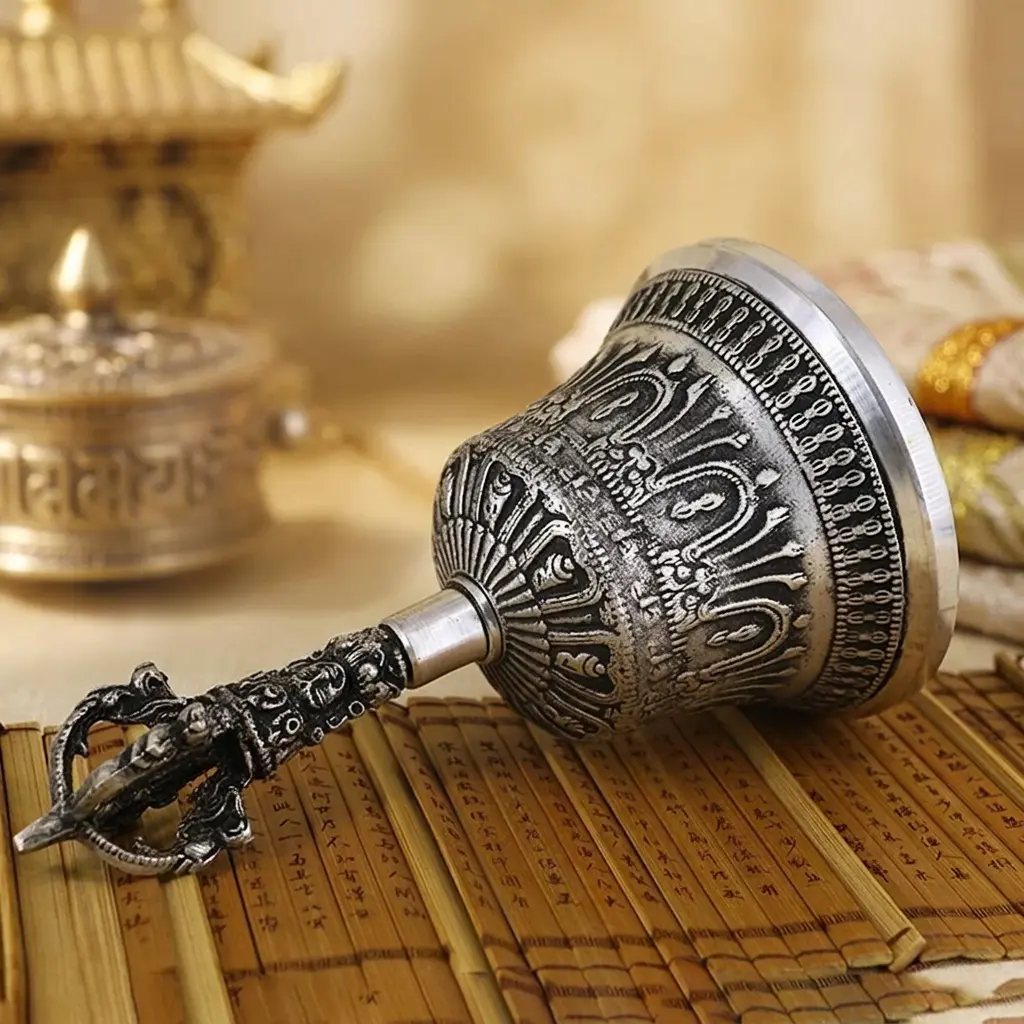
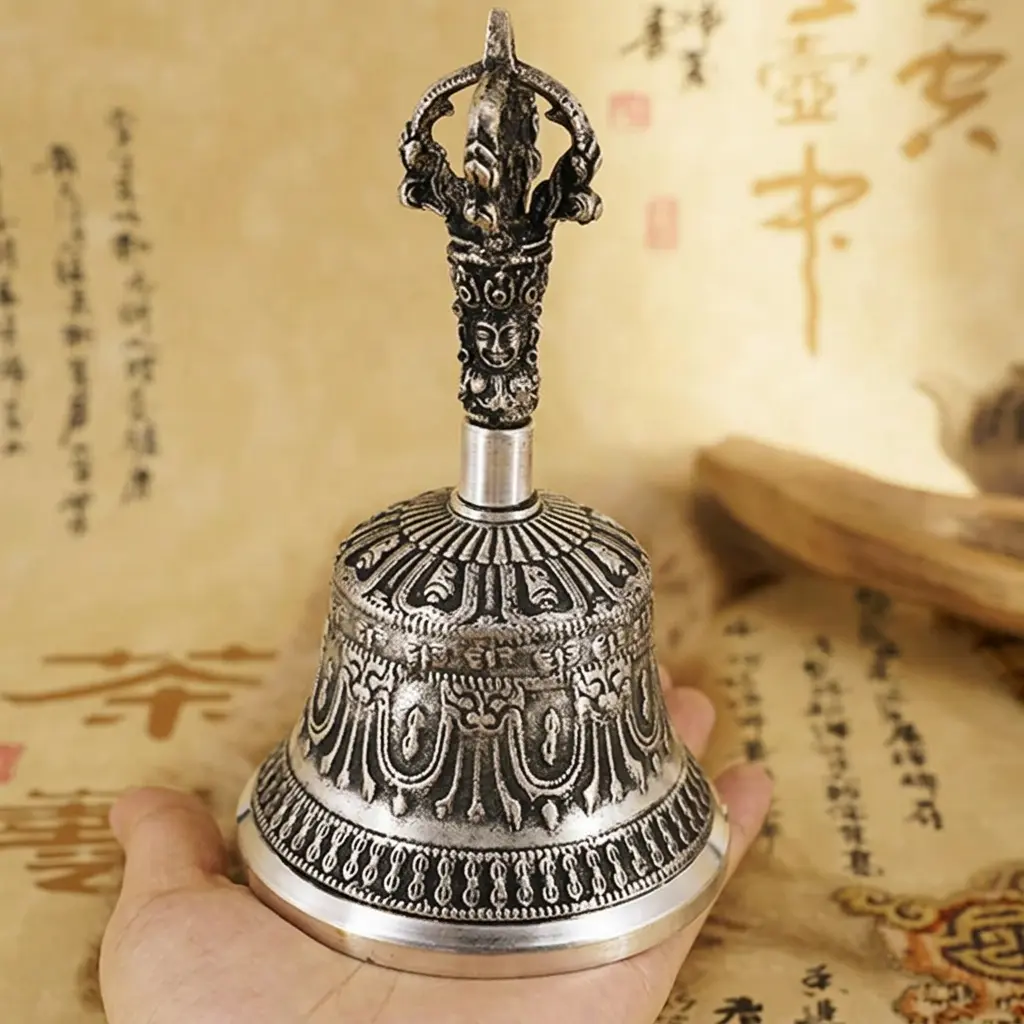
- Traditional iconography: half-vajra handle, a serene face, engraved lotus-petal bands
- A clear, pleasant tone for starting and ending meditation or chanting
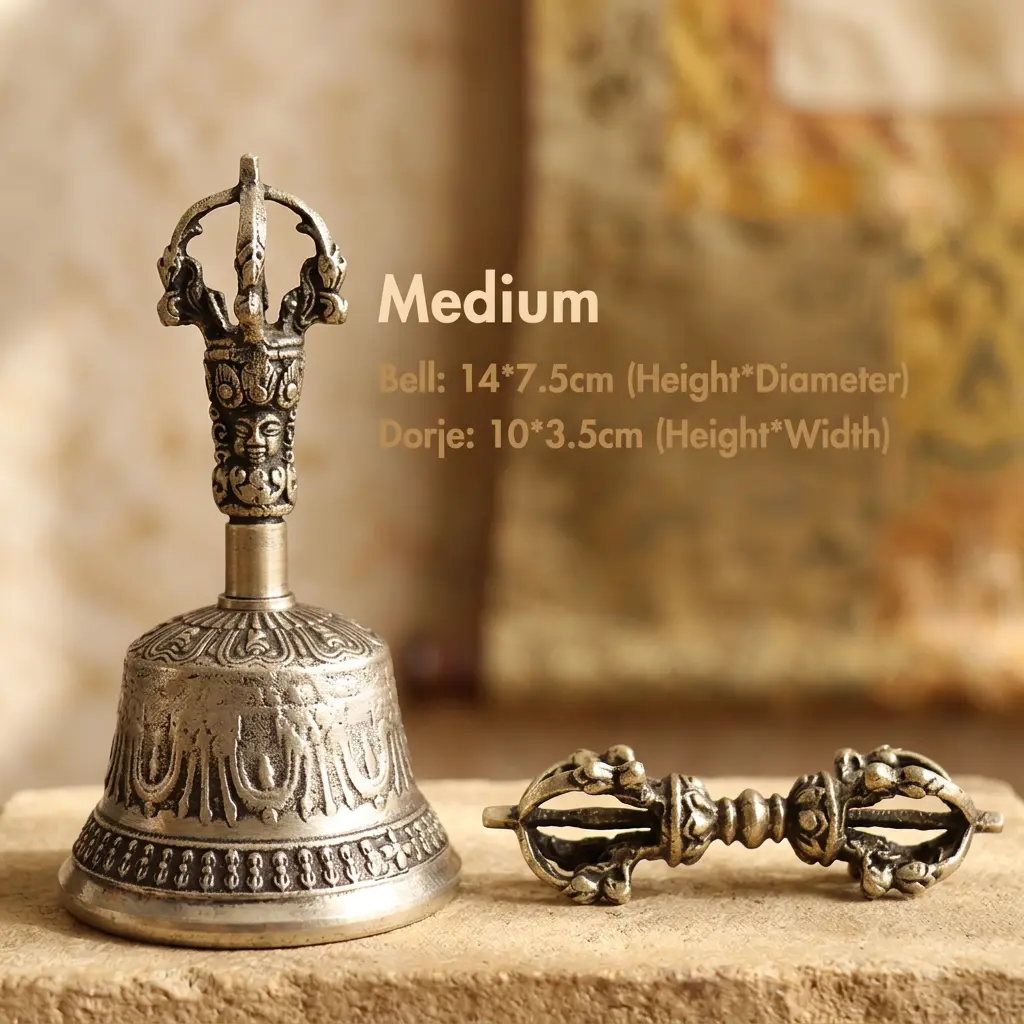
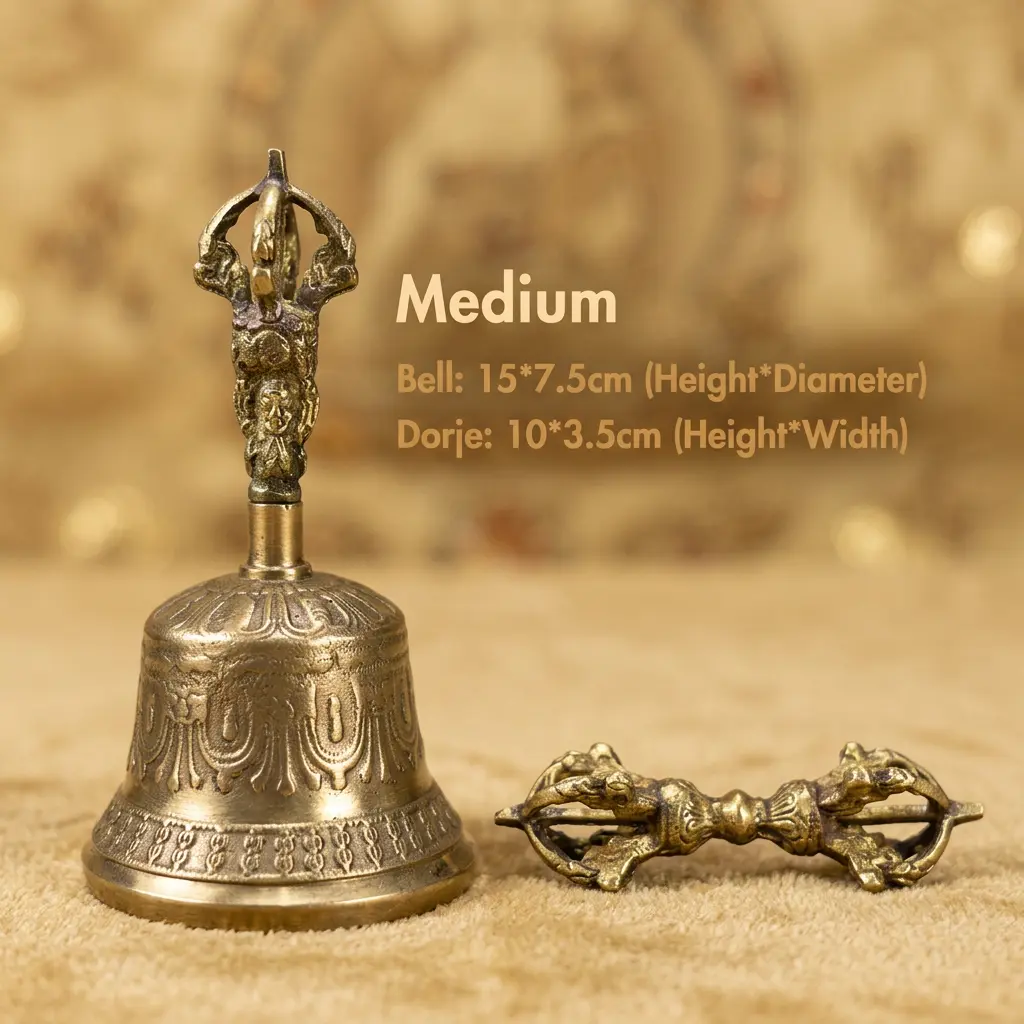
- Medium size: bell 14–15 cm tall, dorje 10 cm long, 430–445 g for the set
What Is a Tibetan Bell and Dorje?
If these objects are new to you, here is the short version. The bell and dorje are the central hand-held tools of Tibetan (Vajrayana) Buddhist practice. The Rubin Museum of Art calls them the most important ritual objects of Tibetan Buddhism. Practitioners use them to mark the start and end of chanting, to offer sound, and to clear the mind before meditation.
The Bell (Ghanta / Drilbu): Wisdom and Emptiness
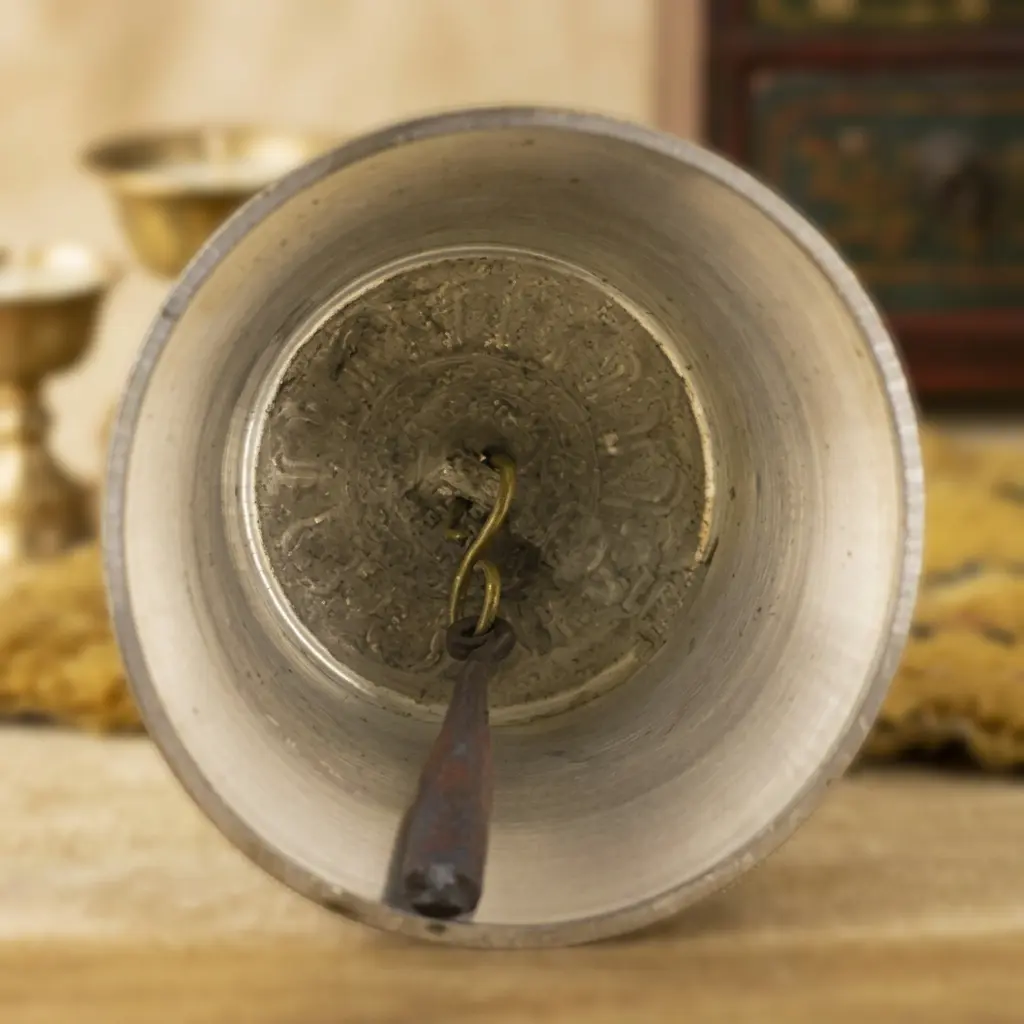
The bell stands for wisdom and is linked to the feminine principle. Its hollow body represents emptiness. Don’t read that as “nothing.” In Buddhist teaching, emptiness means open potential: because things have no fixed nature, they can change. The sound rises from the hollow and fades back into it. That is the whole idea, in one ring.
The Dorje (Vajra): Compassion, Method, Diamond and Thunderbolt
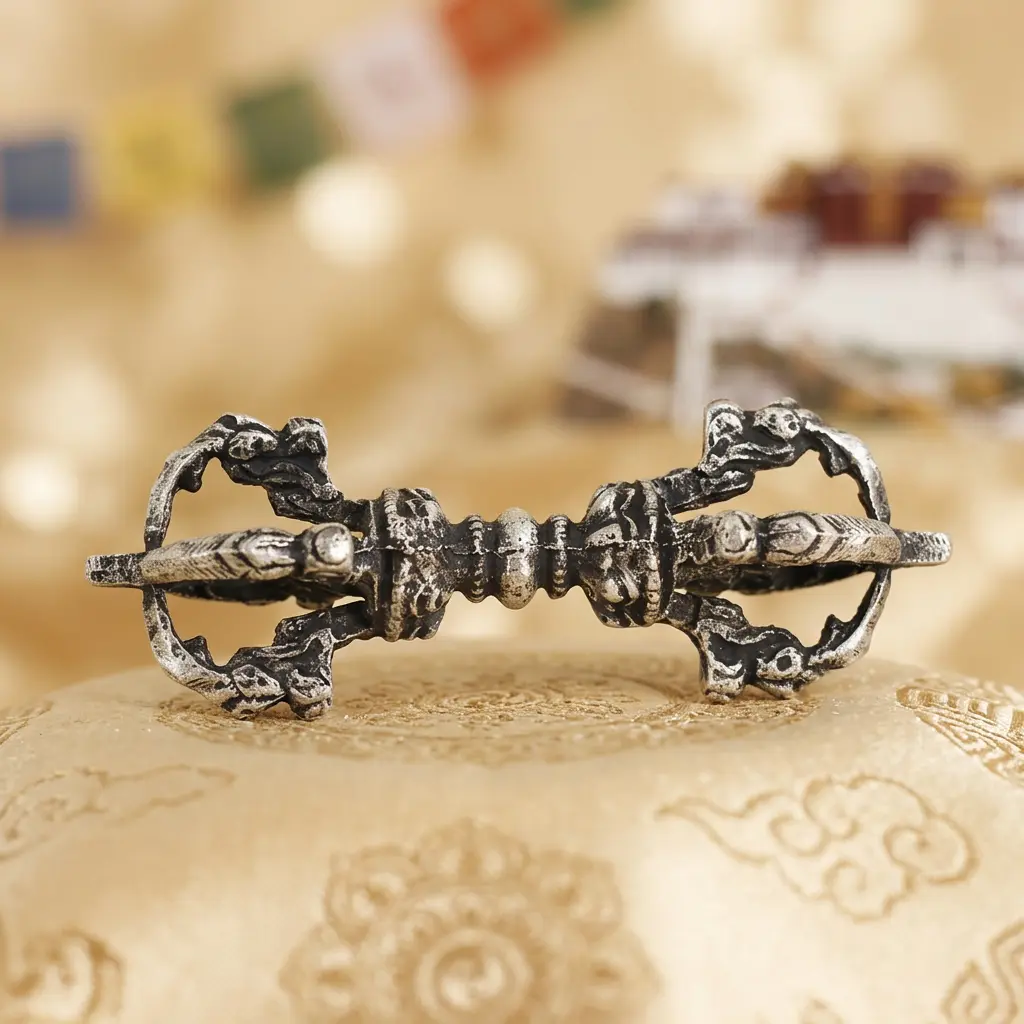
Dorje is the Tibetan word. Vajra is the Sanskrit one. They name the same object, and both point to two images: the diamond, which is indestructible, and the thunderbolt, an irresistible force that cuts through ignorance. The thunderbolt comes from Indra, the Vedic storm god, and the symbol is shared by Hindu, Buddhist and Jain traditions. In Tibetan Buddhism, the dorje stands for compassion in action, often called skillful means.
The bell gives you the view. The dorje gives you the action. You need both.
Why the Bell and Dorje Are Always Used Together
Wisdom without compassion turns cold. Compassion without wisdom loses its way. That is why the two are paired. The Metropolitan Museum of Art describes a Tibetan bell and dorje as regarded as one object, matched and used together.
By tradition, the dorje is held in the right hand and the bell in the left. You can ring this bell alone, of course. But keep the dorje beside it. This set is sized so both sit together comfortably on an altar.
The Symbolism Crafted Into This Set
Most listings stop at “Tibetan bell and dorje.” Here is what you are actually looking at:
- Five prongs. They stand for the five wisdoms and the five Buddhas. The center prong is the Buddha’s true wisdom. The four outer prongs curve inward to show that right understanding always returns to it. Himalayan Art Resources notes that this five-pronged form is used by the Sakya, Kagyu, Jonang and Gelug schools.
- Half-vajra handle. The bell’s handle repeats the dorje’s shape, so the bell carries the vajra within it.
- The face on the handle. It is commonly identified as Prajnaparamita, the Perfection of Wisdom.
- Engraved petal bands. Lotus-style patterns wrap the bell’s body. The lotus is a classic Buddhist image of purity rising from mud.
Handmade in Nepal: Copper Craftsmanship
Nepalese artisans make each set by hand using traditional methods. That is why it feels different from a machine-stamped souvenir. Here is what to expect:
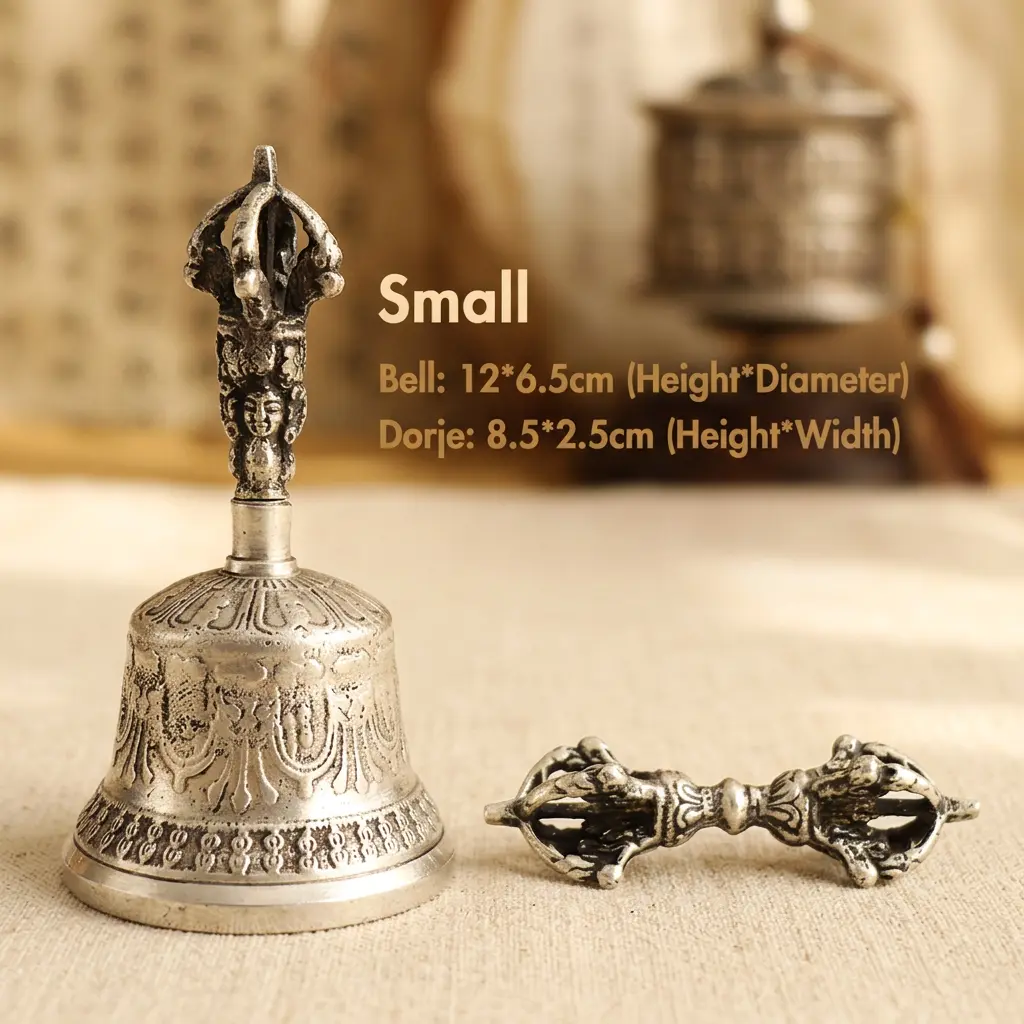
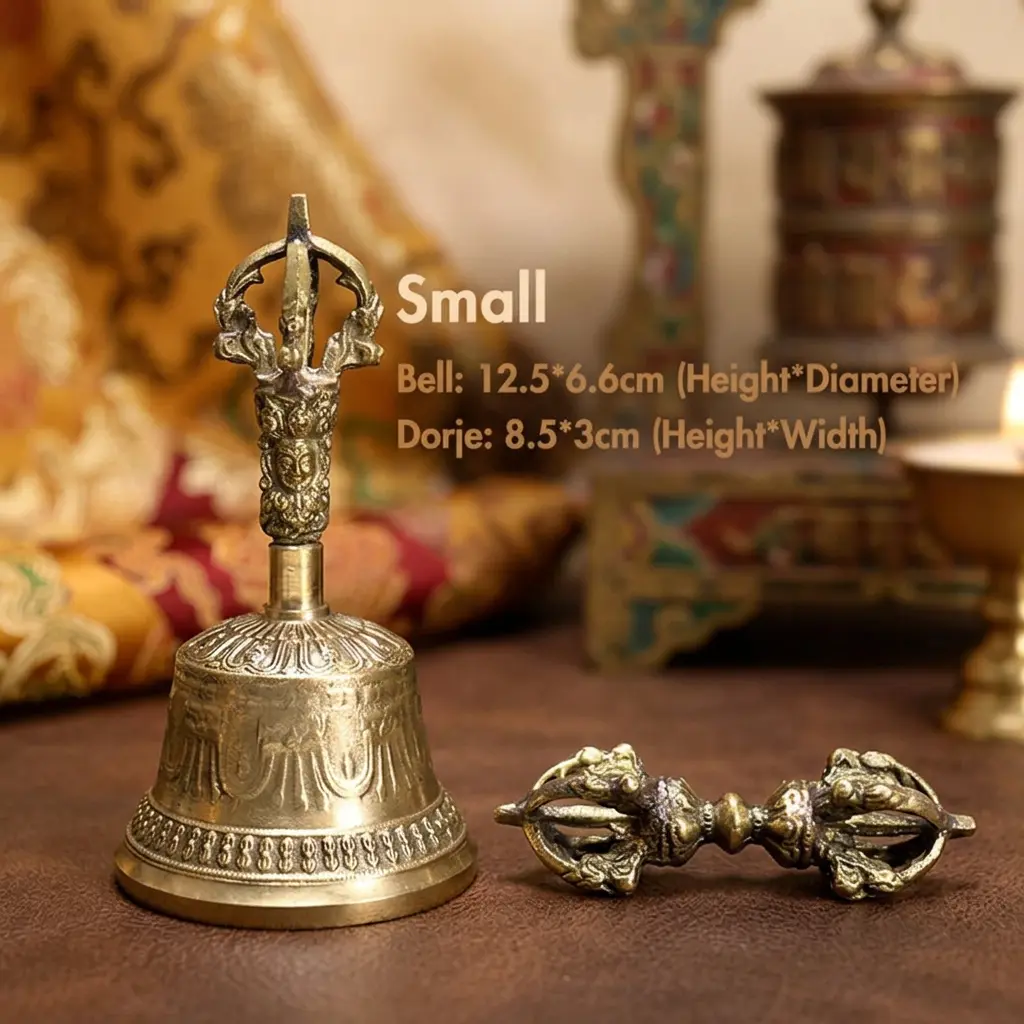
- Copper with an antique finish. Depending on the piece, the metal reads from silvery bronze to warm gold, as our two photos show.
- Small tool marks and color variation. No two sets are identical. These are signs of handwork, not defects.
- Black carbon residue. It may remain in the carvings. Wipe it off for a brighter look, or leave it for depth.
- Natural oxidation. Copper darkens with time and handling. Most owners love the character it adds.
A frank note on sound: copper rings softer than bell-metal bronze. Expect a clear, pleasant tone that suits opening and closing a session, not the long, sustained ring of a sound-bath bowl.
How to Use Your Bell and Dorje
How to Hold Them
Hold the dorje in your right hand and the bell in your left. This is the traditional placement, and it is the same across nearly every lineage.
How to Ring the Bell
- Sit comfortably and hold the bell by its handle in your left hand.
- Turn the mouth of the bell downward.
- Shake your wrist gently. Let the clapper do the work, and don’t force it.
- Ring slowly three times to open your session. Let the sound fade fully.
- Ring three times again to close.
Place It on Your Altar
Keep the bell upright with the dorje beside it, on a clean, raised surface. Never set either one on the floor. Treat them with the respect you would give any sacred object.
Specifications
| Includes | 1 meditation bell, 1 five-prong dorje (vajra) |
|---|---|
| Material | Copper, antique finish |
| Bell size (Medium) | Approx. 14–15 cm high × 7.5 cm diameter |
| Dorje size | Approx. 10 cm high × 3.5 cm wide |
| Set weight | 430–445 g |
| Origin | Handmade in Nepal |
| Best for | Altar, meditation, chanting, gifting |
Care for Your Copper Bell and Dorje
- Wipe with a soft, dry cloth after handling. Skin oils dull the finish.
- Skip harsh chemical cleaners. They can damage fine engraving.
- Store upright on a clean, dry surface, away from damp.
- Want a brighter shine? Test a mild copper cleaner on a hidden spot first, and know it removes the antique patina.
Pair It With Tibetan Jewelry
At PotalaStore, ritual objects and Tibetan jewelry share one symbolic language, and the dorje is one of its best-known signs. Wearing a mala or a Tibetan pendant while you practice keeps that symbol close to you. It also makes a thoughtful gift set.
Explore Tibetan jewelry at PotalaStore, or read our guide to choosing Buddhist ritual items if you are building an altar from scratch.
Frequently Asked Questions
What is a Tibetan bell and dorje used for?
They open and close meditation, chanting and ritual practice, offer sound, and symbolize wisdom (the bell) and compassion in action (the dorje). Many people also display them as altar objects.
Which hand holds the bell and which holds the dorje?
Hold the bell in your left hand and the dorje in your right hand.
What is the difference between a dorje and a vajra?
None. Dorje is the Tibetan word and vajra is the Sanskrit word for the same object.
Why does this dorje have five prongs?
Five prongs stand for the five wisdoms and five Buddhas. Himalayan Art Resources notes that the five-pronged form is used by the Sakya, Kagyu, Jonang and Gelug schools, while nine prongs is more common in the Nyingma tradition.
Can I use the bell without the dorje?
Yes, the bell rings on its own. Traditionally, though, the two are kept together as one pair.
Can non-Buddhists use this set?
Yes. Many people use it as a meditation aid or a respectful altar piece. Formal tantric ritual use is normally learned from a qualified teacher.
Is the black residue a defect?
No. It is carbon left from the traditional handcrafting process. Wipe it off with a soft, dry cloth, or leave it for an antique look.
Will the copper change color?
Yes. Copper oxidizes and darkens naturally over time. Dust it with a dry cloth to keep it clean, and avoid harsh cleaners.
Ready to bring it home? Add the Tibetan Bell and Dorje Set to your cart. Each set is handmade, so finish and size vary slightly (bell 14–15 cm). Have a question about size or finish? Contact PotalaStore before you order.



Reviews