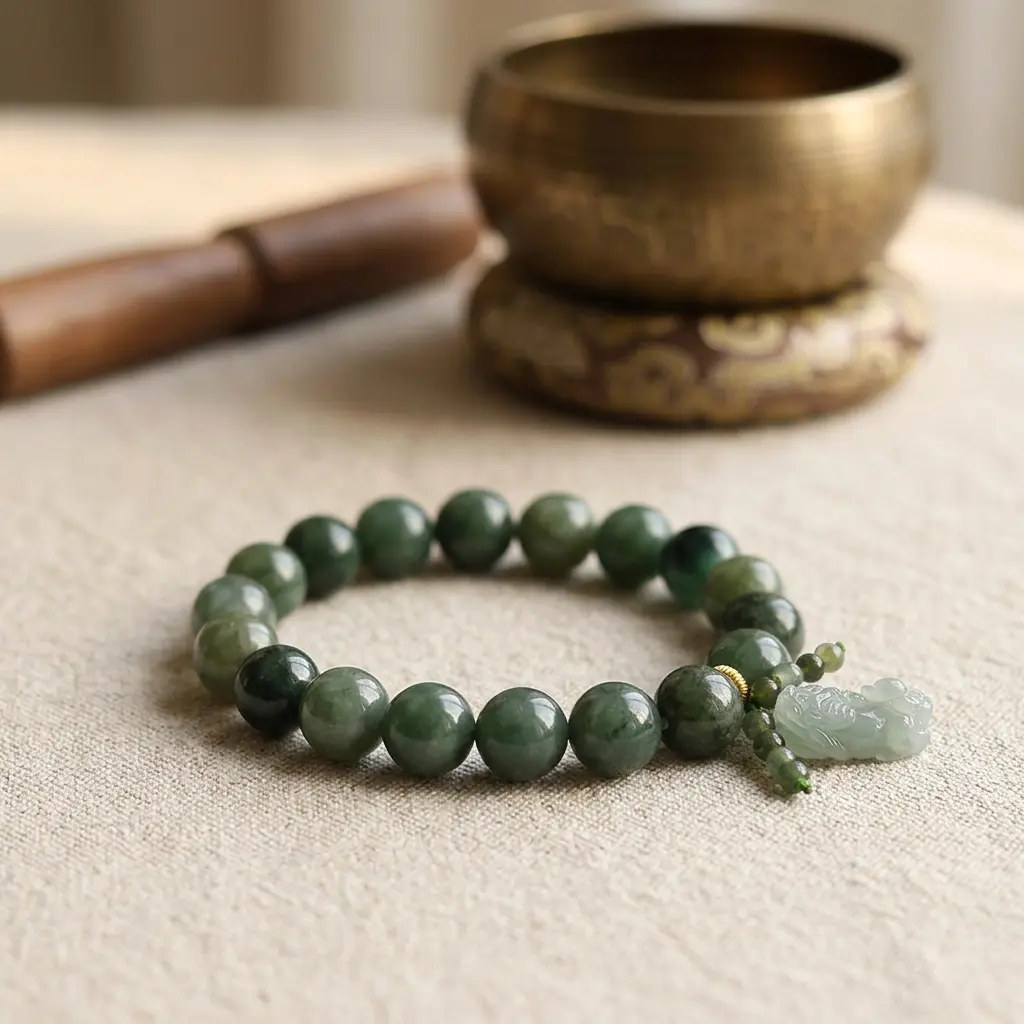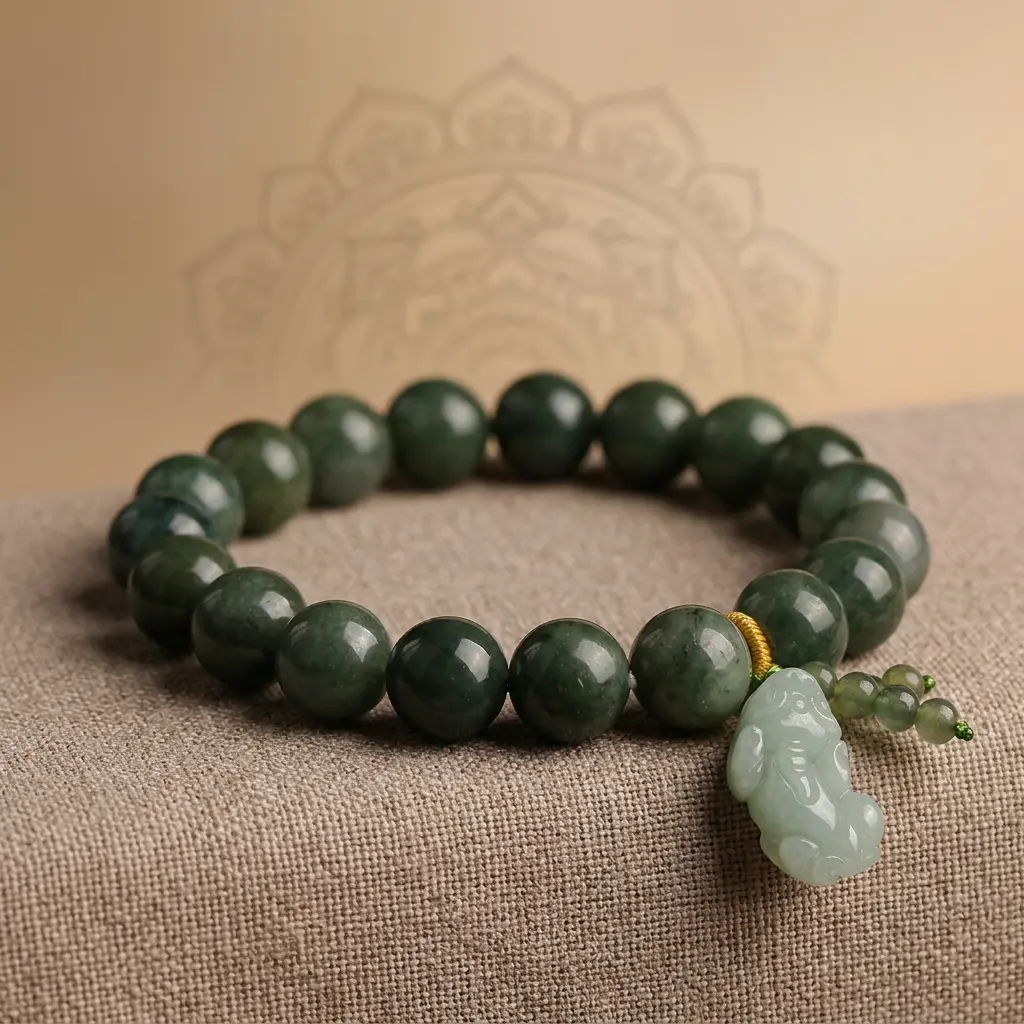

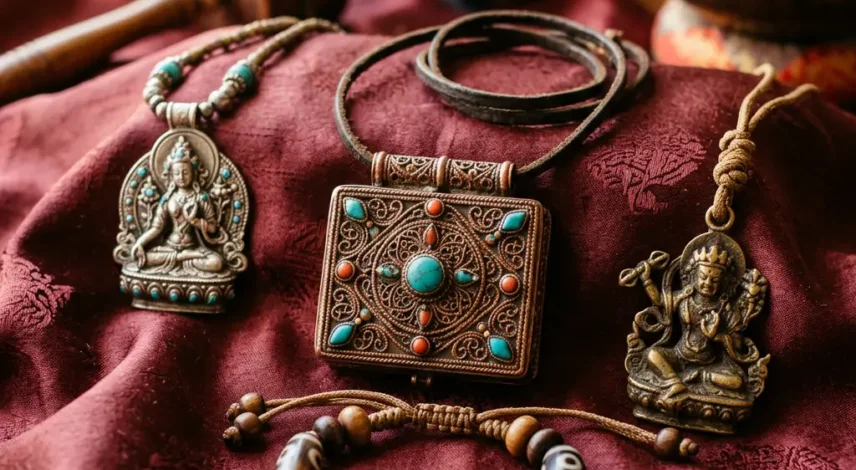

Buddhist amulets for protection are small consecrated objects—pendants, amulet boxes, mantra scrolls, dzi beads, or deity figurines—worn or carried to invoke the blessing of a buddha, bodhisattva, or dharma protector. In the Tibetan Vajrayana tradition, an amulet’s protective power is understood to be awakened through a formal consecration ritual called rab gnas, performed over three full days by a quorum of ordained monks. Without this ritual, the object is beautiful jewelry; with it, practitioners believe it becomes a living support for the wearer’s spiritual and physical well-being.
Most guides on Buddhist protection amulets focus almost entirely on Thai amulets—the famous Phra Somdej tablets, LP Thuad pendants, and Thai monk-blessed charms. That tradition is real and rich, but it tells only half the story. The Tibetan Vajrayana lineage carries a completely different body of protective objects, each linked to a specific deity and life purpose, and backed by some of the most rigorous consecration protocols in world Buddhism. At PotalaStore, our founder Yang Tso has partnered directly with Sera Jhe Monastery (Bylakuppe, India) and Kopan Monastery (Kathmandu, Nepal) to source amulets that have passed through formal rab gnas ceremonies—something no mass-produced item can replicate.
⚠️ Important Note: The protective and spiritual properties described in this article reflect traditional Tibetan and Theravada Buddhist beliefs and the reported experiences of practitioners. They are not scientific claims and should not replace professional medical or psychological advice. This content is for educational and cultural purposes.
Quick Glossary: Key Terms
Rab gnas (རབ་གནས།)Tibetan consecration ceremony lasting 3 full days; believed to invite the consciousness of the depicted deity into the object.Gau (གའུ།)A Tibetan metal amulet box worn as a pendant, filled with sacred contents including mantra scrolls and blessed substances.Sungkhor (སྲུང་འཁོར།)Literally “protection wheel”—a rolled mantra scroll sealed inside a metal cylinder, worn as a pendant.DharmapalaA Buddhist protector deity (e.g., Mahakala, Palden Lhamo) whose function is specifically to guard practitioners and remove obstacles.Dzi bead (གཟི།)A patterned stone bead of ancient origin, traditionally from Tibet, believed to carry protective and auspicious power.
What Are Buddhist Amulets for Protection?
A Buddhist protection amulet is a consecrated object whose power is rooted in the devotion, ritual, and merit accumulated through Buddhist practice—not in the object itself. This is a critical distinction. Unlike talismans in some folk traditions, Buddhist amulets are not considered intrinsically magical. The Tibetan teaching is that the object serves as a focal point for the practitioner’s faith, a daily reminder to generate compassion, and—in the Vajrayana view—a vessel for the blessings invoked during the rab gnas ceremony.
Three broad Buddhist traditions produce distinct protection amulets, each with different iconography, materials, and ritual methods:
| Tradition | Main Amulet Forms | Primary Material | Consecration Method |
|---|---|---|---|
| Tibetan Vajrayana | Gau box, Sungkhor, Dzi bead, Deity pendant, Thangka amulet | Copper, brass, silver; turquoise, coral, dzi stone | Rab gnas (3-day ritual) by ordained monks |
| Thai Theravada | Phra Somdej tablet, LP Thuad, Takrut scroll, Phra Pidta | Plaster, metal, bone, sacred herbs, temple ash | Puttapisek (empowerment ceremony by senior monks) |
| Japanese Mahayana | Omamori (fabric pouch), Ofuda (wooden tablet) | Brocade silk; cedar wood | Temple blessing by Shinto/Buddhist priest; renewed annually |
The majority of articles ranking for “Buddhist amulets for protection” discuss Thai amulets almost exclusively. This guide focuses on the Tibetan tradition because it remains the most under-documented in English and is the lineage PotalaStore works within directly.
7 Tibetan Protection Amulets: Deity, Purpose & Who They’re For

In Tibetan Buddhism, every protection amulet corresponds to a specific deity whose powers address a defined human need. Choosing the wrong one is not dangerous, but choosing intentionally—matching the deity to your actual circumstances—is considered far more effective.
| Amulet / Deity | Protection Focus | Best For | Common Form |
|---|---|---|---|
| Green Tara (Sgrol-ma) | Fear, danger, travel, rapid help in crises | Frequent travelers; anxiety; new beginnings | Sterling silver pendant; gau with Tara mantra scroll |
| White Tara | Longevity, healing, removing illness obstacles | Health concerns; older adults; recovery | White metal pendant; copper sungkhor |
| Avalokiteshvara (Chenrezig) | Compassion; general karmic protection; Om Mani mantra | Daily spiritual practice; emotional resilience | Mala beads; pendant with 6-syllable mantra |
| Vajrapani | Removing obstacles, enemies, and negative forces | Major life challenges; legal issues; career obstacles | Bronze pendant; gau box with Vajrapani mantra |
| Medicine Buddha (Sangye Menla) | Physical healing; mental clarity; disease prevention | Illness support; healthcare workers; mental health | Lapis lazuli pendant; sungkhor cylinder |
| Mahakala (Dharmapala) | Removing outer and inner obstacles; protecting practitioners | Advanced practitioners; protection of Dharma activity | Black metal pendant; gau with wrathful deity imagery |
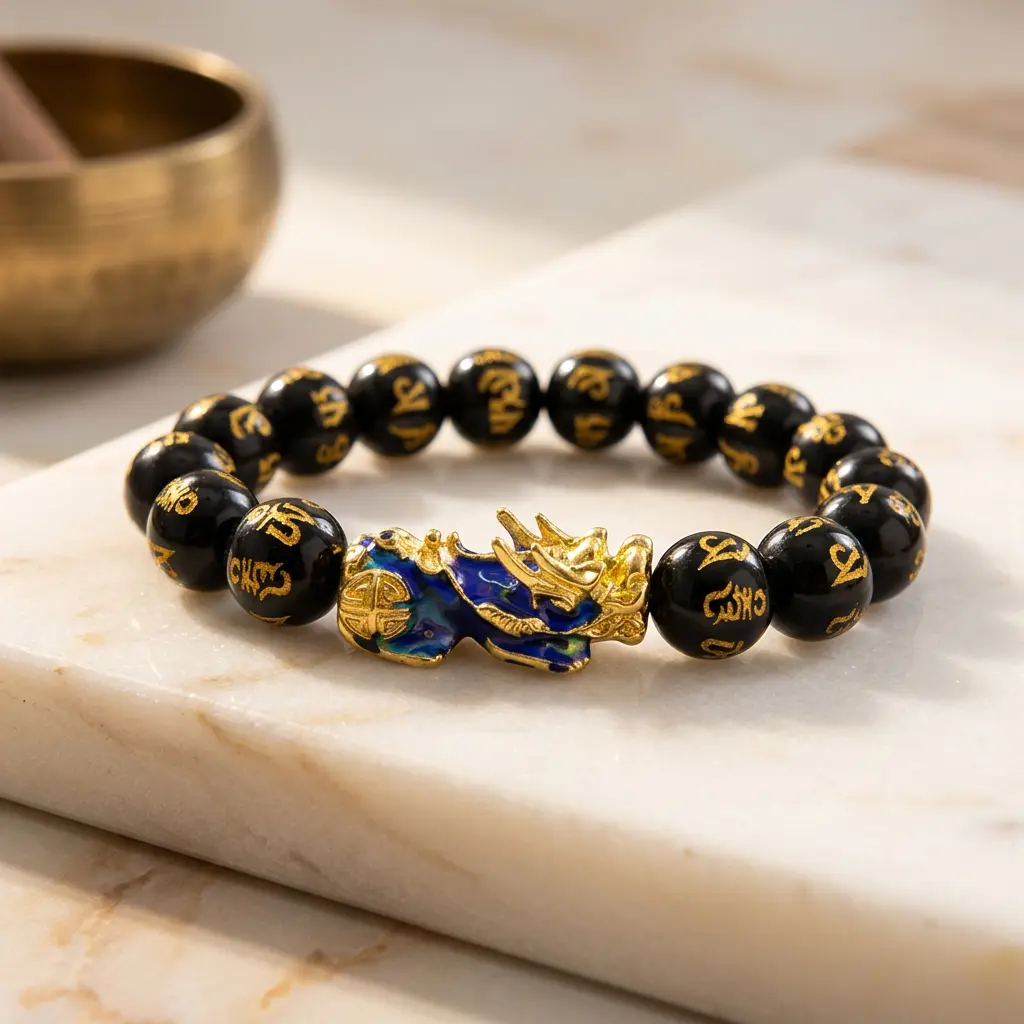
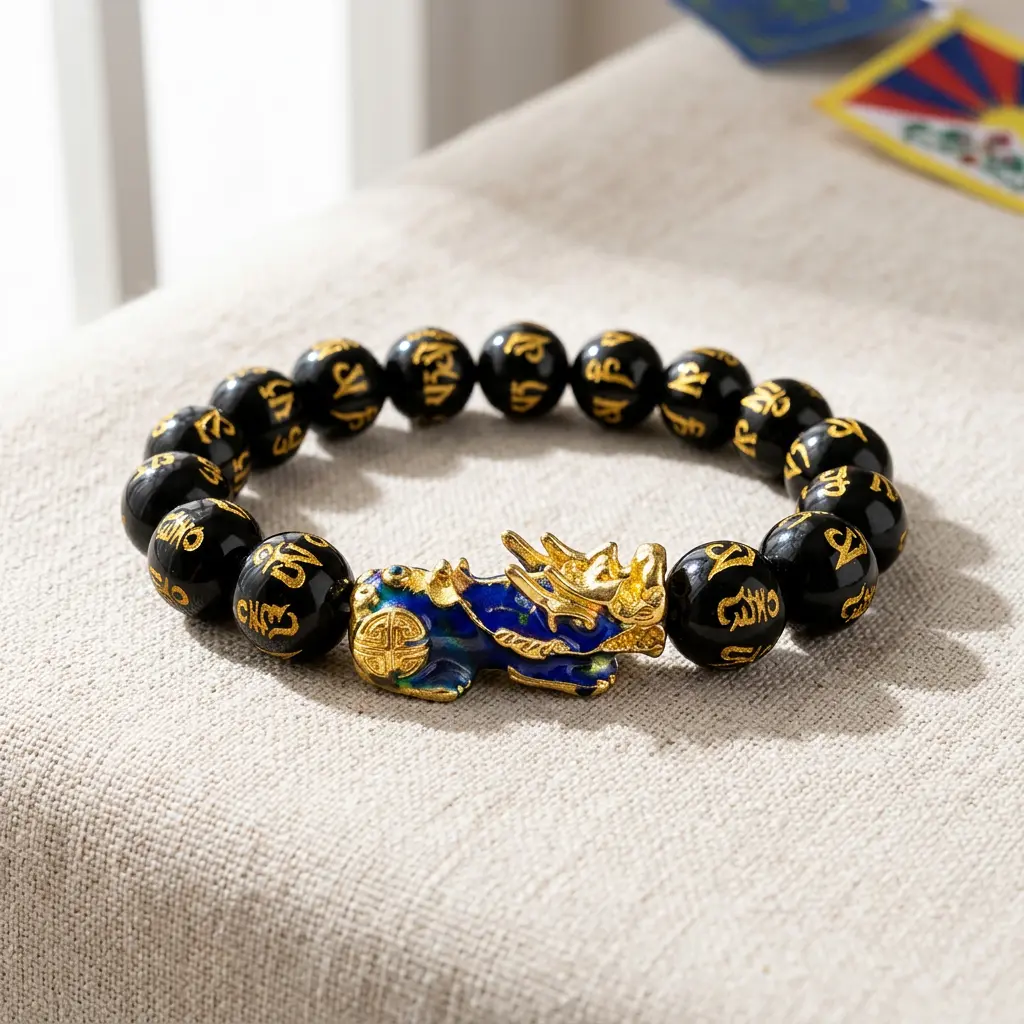
| Dzi Bead | General auspiciousness; warding off evil; fortune | Anyone; especially effective for general protection | Etched stone bead worn on wrist or neck |
One practical note from our experience: many customers first reach for the most visually striking amulet (often Mahakala, because of its dramatic iconography). In our conversations with Kopan Monastery monks, they consistently recommend that beginners start with Green Tara or Avalokiteshvara, whose mantras are simpler to recite and whose energy is considered more accessible for those new to Vajrayana practice.
Browse PotalaStore’s Tibetan protection jewelry collection—each piece sourced from monastery-partnered workshops and arriving with a blessing certificate.
What Does the Rab Gnas Ceremony Actually Do?

The rab gnas (pronounced “rab-nay”) is a 3-day Tibetan consecration ritual during which a minimum quorum of 12 ordained monks invites the wisdom-mind of the depicted deity to take residence in the object—transforming it, in the Vajrayana view, from a crafted artifact into a living support for practice. It is the single most important differentiator between a monastery-blessed amulet and a commercially produced piece.
The structure of the ceremony, as our founder Yang Tso witnessed during PotalaStore’s first Sera Jhe Monastery puja in 2014, unfolds in three stages across 72 continuous hours:
- Day 1 – Purification (Dag pa): The ritual space and all objects are purified through fire offering (homa), sacred water sprinkling, and mantra recitation. Each item is physically cleansed and placed on a designated altar.
- Day 2 – Invitation (Spyan dren): The lead lama and assembled monks recite the specific sadhana (liturgical text) of the deity over continuous hours, building the visualization of the deity’s form and inviting the deity’s consciousness into the prepared objects through mantra, mudra, and visualization practice.
- Day 3 – Dedication (bsNgo ba): The accumulated merit of the ceremony is dedicated to the benefit of all beings. Each object receives a final blessing touch from the presiding lama before being sealed and prepared for distribution.
Yang Tso recalls: “I had expected it to feel formal and distant. What I actually experienced at Sera Jhe was the opposite—the monks reciting for hours without a break, completely focused, the sound of drums and horns filling the courtyard. There is no way to replicate that with a quick blessing from a single monk, let alone with a wholesale warehouse.”
Sera Jhe Monastery (Bylakuppe, Karnataka, India) is one of the largest Gelugpa monastic universities in exile, housing over 3,800 monk students. Kopan Monastery (Kathmandu, Nepal) was founded in 1969 by Lama Thubten Yeshe and Lama Thubten Zopa Rinpoche and is the Himalayan hub of the Foundation for the Preservation of the Mahayana Tradition (FPMT). Both institutions perform rab gnas ceremonies several times per year.
Our 10% donation model means that every amulet purchase at PotalaStore directly supports the artisan communities and monastery programs that make these ceremonies possible.
Gau Boxes & Sungkhor: Inside Tibetan Amulet Cases
A gau box (གའུ།) is a Tibetan amulet container, typically made from copper or sterling silver, measuring 1.5 to 3 inches (3.8–7.6 cm) in diameter, worn as a pendant at the chest. What makes a gau powerful—in the traditional view—is not the outer casing but what is sealed inside.
Authentic gau boxes from monastery workshops contain a combination of:
- Mantra scrolls: Handwritten or woodblock-printed sacred text, often the mantra of the deity depicted on the exterior.
- Tsa tsa tablets: Small pressed clay tablets bearing the image of a deity, produced in monastery molds and blessed during large group pujas.
- Blessed substances (dutsi): Medicinal and sacred materials gathered from pilgrimage sites, mixed with monastery herbs and sealed clay.
- Relic fragments: In high-lineage gau boxes, small particles associated with recognized masters may be included.
A sungkhor (སྲུང་འཁོར།—literally “protection wheel”) works differently: a tightly rolled mantra scroll is sealed inside a slim metal cylinder, usually 1 to 2 inches long, that hangs from a cord or chain. The scroll is prepared by a lama who writes or stamps the specific mantra in a prescribed sequence—one mistake invalidates the protective function, according to traditional teaching—and the cylinder is sealed permanently. You never open a sungkhor.
Both forms are available in our Tibetan mala and necklace collection, alongside mala beads sourced from the same monastery-connected workshops.
How to Wear & Care for Your Amulet (Without Breaking Tradition)

Most Tibetan amulets are worn at the chest, ideally at or above the heart center, because this position is considered closest to the spiritual heart in Vajrayana anatomy. The following guidelines reflect what practitioners at Kopan Monastery advise for laypeople who are not yet deep in formal Vajrayana practice:
- Placement: Wear gau boxes and deity pendants on a cord or chain that keeps them at chest height. Sungkhor cylinders are traditionally worn around the neck or tied to the upper arm.
- Dzi beads: Can be worn on a wrist mala or as a standalone bracelet. Browse our Tibetan dzi bead collection for single-eye, nine-eye, and auspicious symbol varieties.
- Bathing and sleeping: Traditional texts recommend removing amulets before showering or bathing; sleeping with them is generally acceptable and even encouraged by some teachers. Avoid submerging metal amulets in water for extended periods.
- Respect for the object: Do not place your amulet directly on the floor, in a shoe, or in a back pocket. Keeping it at or above waist level is the standard guideline across Tibetan Buddhist communities.
- Cleaning: Wipe metal exteriors with a soft dry cloth. Avoid chemical cleaners. For copper and brass pieces that develop patina, a light buff with a dry cloth is sufficient; many practitioners prefer to let natural patina develop as a sign of use.
One common mistake we see: people treat their gau or sungkhor like decorative jewelry—taking it off when it doesn’t match an outfit, storing it in a drawer for weeks. The traditional view is that continuity of wearing strengthens the connection between the practitioner and the blessing. You don’t have to wear it 24 hours a day, but treating it as a meaningful daily practice object (rather than occasional jewelry) aligns more closely with its intended function.
Can Non-Buddhists Wear Buddhist Amulets?
Yes—wearing a Buddhist protection amulet as a non-Buddhist is widely accepted within Tibetan Buddhism, provided the amulet is treated with basic respect. This question comes up frequently in online Buddhist forums and on social media, and it deserves a direct answer rather than evasion.
The Tibetan Buddhist perspective is generous here: the compassion and blessing accumulated through the rab gnas ceremony is not restricted by the wearer’s religious affiliation. Green Tara’s vow to respond quickly to anyone calling on her is considered unconditional in traditional teaching. The senior monks at Kopan Monastery who bless items for PotalaStore understand that most buyers in the West are not practicing Vajrayana Buddhists—and they bless the items for the benefit of whoever receives them.
Three simple things are enough to show proper respect:
- Keep the amulet clean and at waist level or above.
- Do not use it as a costume piece or mock religious paraphernalia.
- Learn the basic meaning of the deity depicted—knowing that your Green Tara pendant represents the protector of those in fear is a small act of respect that deepens the object’s meaning.
Cultural appropriation is a real concern with spiritual objects, and the honest answer is: the problem is not wearing a Tibetan amulet, it is treating sacred objects as trend accessories without understanding or respect. Buying from brands that directly support Tibetan monastic communities—rather than mass manufacturers—is one practical way to ensure that your purchase benefits rather than harms the cultures these traditions come from.
Find Your Protection Amulet
Every amulet in our collection is sourced directly from Sera Jhe and Kopan Monastery-partnered workshops, passed through rab gnas consecration, and arrives with a blessing certificate. 10% of every sale goes directly to Tibetan artisan communities.Browse Protection Collection →
Frequently Asked Questions
There is no single “most powerful” amulet in Tibetan Buddhism—effectiveness is understood to depend on the match between the deity’s function and the wearer’s specific need, plus the sincerity of the rab gnas ceremony that blessed it. For general daily protection, Green Tara and Avalokiteshvara (Chenrezig) pendants are the most widely recommended by Tibetan teachers for practitioners of all levels. For removing serious obstacles, a consecrated Vajrapani gau is traditionally prescribed.
In the Tibetan Vajrayana tradition, the standard blessing method is the rab gnas ceremony: a 3-day ritual performed by a minimum quorum of 12 ordained monks, involving mantra recitation, visualization, fire offering, and the formal invitation of the deity’s wisdom-mind into the object. The process takes 72 continuous hours. Thai Theravada amulets go through a different ritual called puttapisek, typically performed by a senior monk or group of monks in a single extended session.
Traditional Tibetan Buddhist guidelines recommend removing amulets before bathing—both to protect the metal and because the bathroom is considered a ritually impure space in many lineages. Occasional contact with water will not “destroy” the blessing, but prolonged submerging of metal gau boxes or sungkhor cylinders can damage the outer casing and eventually the contents. Remove, rinse your hands, then put the amulet back.
In general usage, a talisman is created to attract something (luck, love, wealth), while an amulet is created to protect against something (harm, illness, negative energy). Most Tibetan protective objects are technically amulets in this sense—their function is primarily protective, invoking the specific powers of a dharmapala or compassionate deity to guard the wearer. That said, the same object (a Green Tara pendant, for example) may be used for both purposes, and the distinction is not strictly maintained within Buddhist practice.
📚 References
- Tibetan Buddhist Amulet Traditions: Scholarly overview of Tibetan consecration practices and amulet typology. Source: Rubin Museum of Art, Himalayan Art Resources — himalayaart.org
- Sera Jhe Monastery: Institutional overview, monk population, and puja programs. serajemonastery.org
- Kopan Monastery & FPMT: History, founding lineage (Lama Thubten Yeshe & Lama Zopa Rinpoche, 1969), and blessing programs. kopanmonastery.com
- Buddhist Prayer Objects — Encyclopaedia of Buddhism: Definition and cross-traditional context for consecration and ritual objects. Source: Brill’s Encyclopaedia of Buddhism, Vol. 1 (2015). Editors: Jonathan Silk et al.
Last updated: May 2026. This article will be reviewed and updated as our monastery partnerships and product range evolve.