

One rinse under the tap can dissolve a $40 selenite wand into a cloudy, pitted lump — and a week on a sunny windowsill can drain the color out of amethyst forever. Most crystal mistakes beginners make aren’t about “doing the ritual wrong.” They’re small care errors that quietly damage stones you paid good money for. The good news: every one of them is easy to avoid once you know the rule.
At Potala Store, we’ve packed, shipped, and handled tens of thousands of natural stones, and we see the same beginner crystal errors come back to us again and again — faded rose quartz, rusted pyrite, scratched moonstone. Below are the 10 most common ones, with the specific reason each happens and exactly what to do instead. If you’re brand new, start with our complete crystals for beginners starter guide, then come back here to protect what you buy.
The 10 Most Common Crystal Mistakes Beginners Make
The most common crystal mistakes for beginners are putting water-sensitive stones in water, charging color-sensitive stones in sunlight, and storing crystals jumbled together. Here’s the full list:
- Soaking every crystal in water — selenite, malachite, and pyrite are damaged or dissolved.
- Cleansing with salt or salt water — abrasive salt etches and dulls soft stones.
- Charging crystals in direct sunlight — UV permanently fades amethyst, rose quartz, and citrine.
- Storing crystals piled together — harder stones scratch and chip softer ones.
- Making crystal water with toxic stones — malachite and pyrite are genuinely unsafe to ingest.
- Buying fakes without checking — most “citrine” is heat-treated amethyst.
- Never cleansing a brand-new crystal — it has passed through many hands first.
- Buying too many crystals at once — a focused kit beats a cluttered shelf.
- Expecting instant, magical results — crystals support intention, not replace action.
- Ignoring your own intuition — the “rules” matter less than what resonates with you.
Why Water and Salt Quietly Destroy Soft Stones
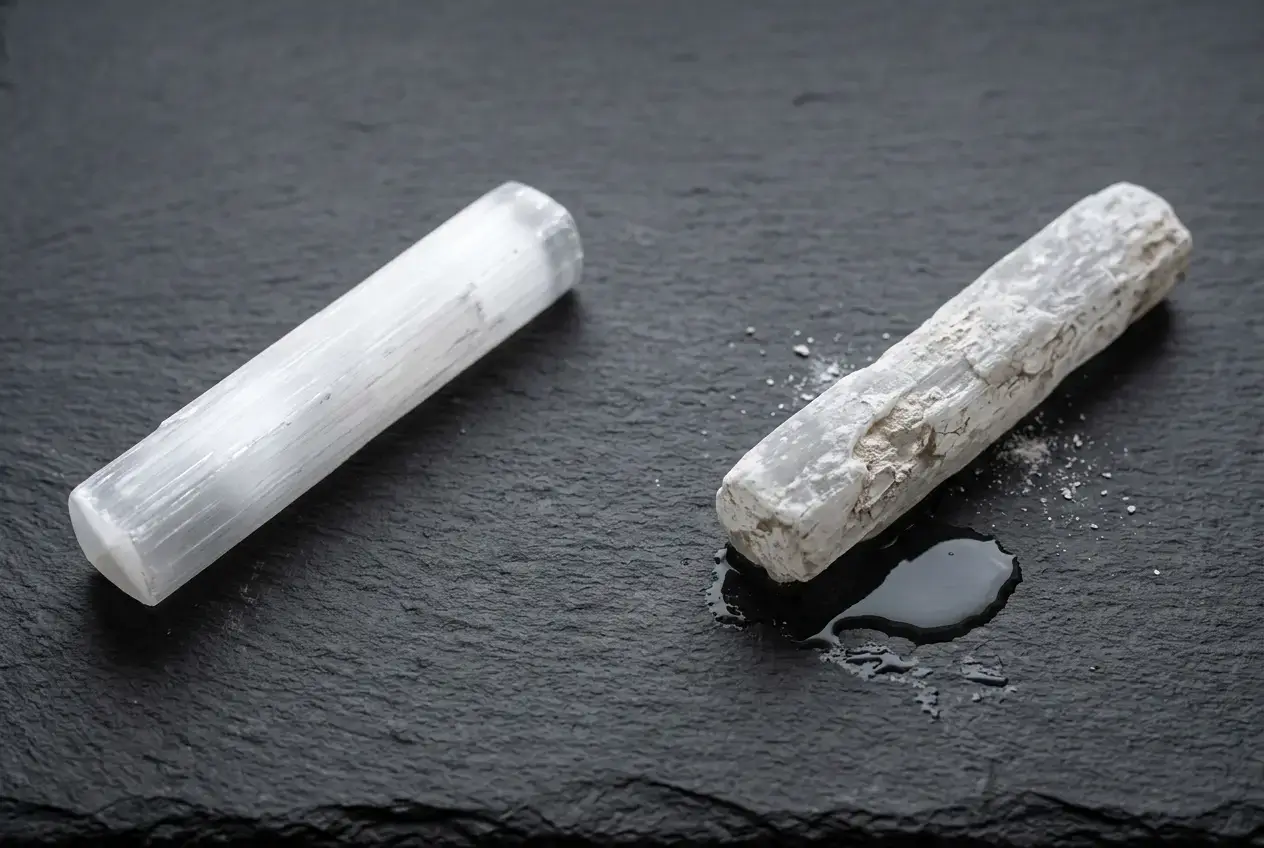
Water and salt damage any crystal that is soft, porous, or contains metal. The simplest safe-to-rinse rule we use: a stone needs to be at least 7 on the Mohs hardness scale, non-porous, and free of iron or copper. Selenite, a form of gypsum, sits at just Mohs 2 — soft enough to scratch with a fingernail — so a soak leaves it cloudy and crumbling. Pyrite (iron sulfide) rusts, and malachite (Mohs 3.5–4) leaches copper.
Salt is worse, because it’s both corrosive and abrasive. Dry salt beds and salt water etch calcite (Mohs 3), selenite, and lepidolite, dulling their shine for good. A frequent beginner mistake we still see weekly: someone reads “cleanse your crystals in salt water” online and applies it to every stone they own. Quartz-family stones — clear quartz, amethyst, rose quartz, citrine, tiger’s eye, all Mohs 7 — tolerate a quick rinse. Everything below that should stay dry. When you’re unsure whether a piece can get wet, our guide on whether you can shower with crystal bracelets walks through the three-part water-safe check.
How Sunlight Fades Your Favorite Stones
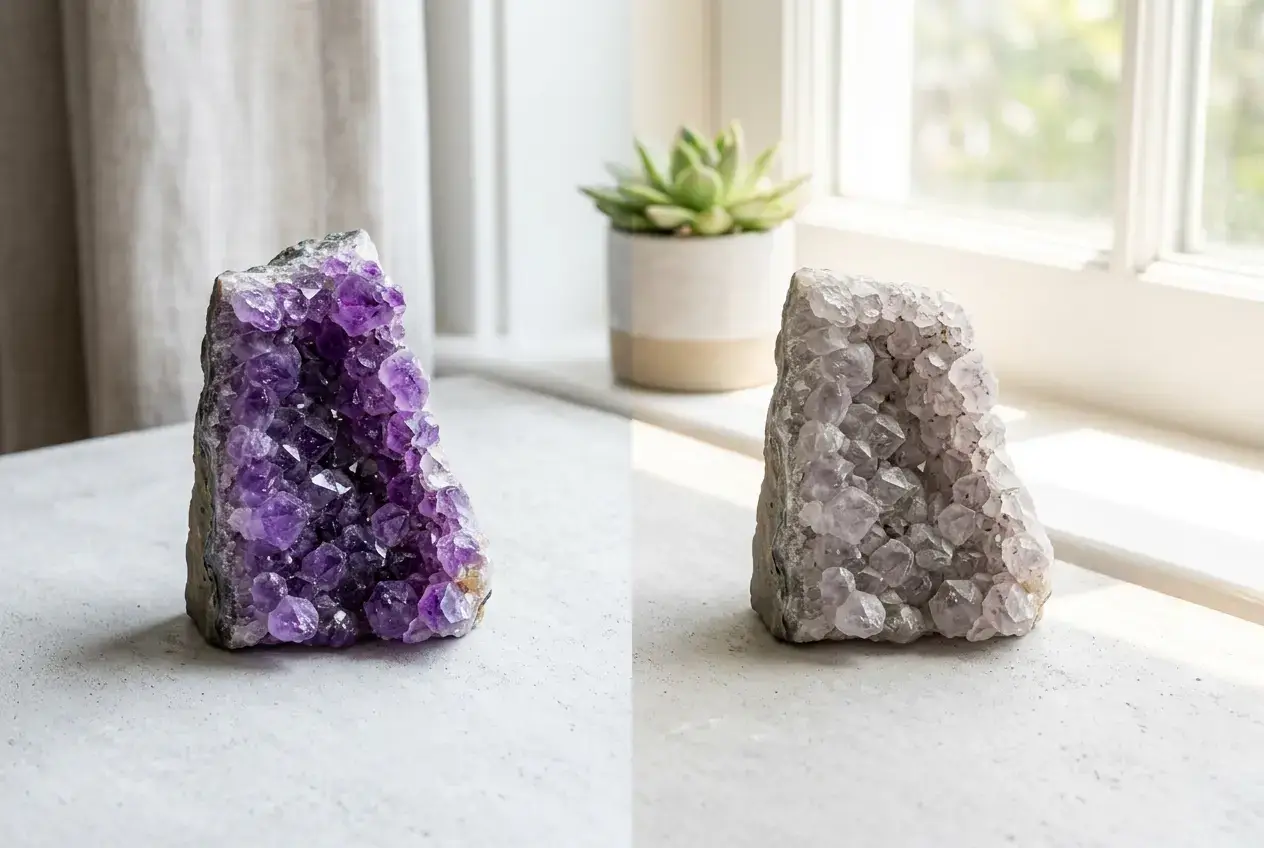
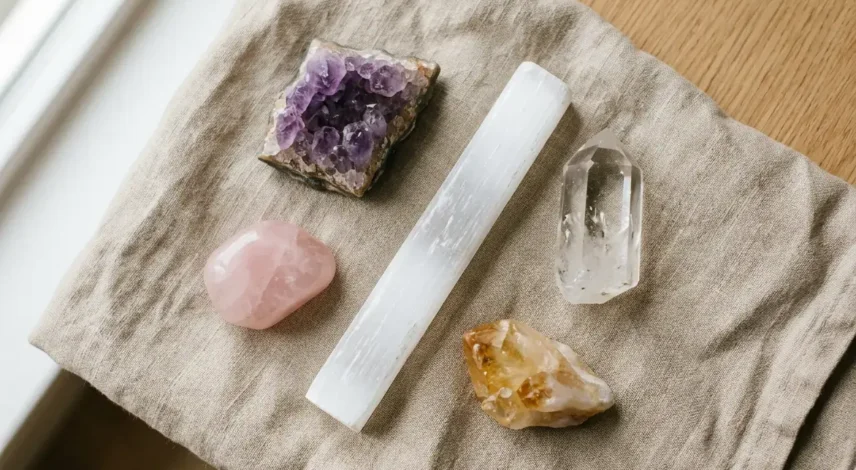
Direct sunlight permanently fades color-sensitive crystals within days to weeks, and the change can’t be reversed. Amethyst gets its violet color from iron (Fe³⁺) trapped in the quartz lattice; UV light alters those same color centers, which is why a faded amethyst never comes back. Amethyst, rose quartz, citrine, fluorite, aquamarine, kunzite, smoky quartz, and celestite are the worst offenders.
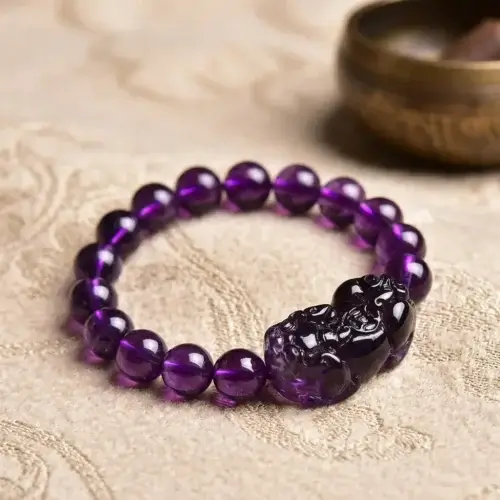
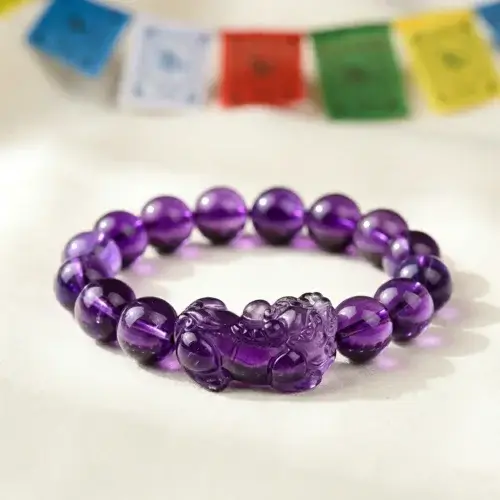
Here’s a mistake we made ourselves early on: we left a tray of rose quartz in a south-facing display window to “charge” it, and within about three weeks the pink had washed out to a dull gray-white. We now charge color-sensitive stones under moonlight instead — full-moon light carries almost no UV, so it freshens a stone’s energy without bleaching it. If you love a deep-purple amethyst, keep it out of the sun entirely. Our natural amethyst bracelet holds its color beautifully when you charge it in moonlight, not sunlight.
The Crystal Care Cheat-Sheet Most Guides Skip
Use this quick reference before you cleanse, charge, or store any stone. It’s the single table we wish every beginner had on day one.
| Crystal | Mohs Hardness | Water-Safe? | Sunlight-Safe? | Key Note |
|---|---|---|---|---|
| Clear Quartz | 7 | Yes (brief rinse) | Yes | The most beginner-friendly stone |
| Amethyst | 7 | Yes (brief rinse) | No — fades | Charge in moonlight only |
| Rose Quartz | 7 | Yes (brief rinse) | No — fades | Pink washes out in the sun |
| Citrine | 7 | Yes (brief rinse) | No — fades | Most “citrine” is heat-treated |
| Selenite | 2 | No — dissolves | Yes | Never let it get wet |
| Malachite | 3.5–4 | No — toxic | No | Contains copper; keep dry |
| Pyrite | 6–6.5 | No — rusts | Yes | Iron content oxidizes in water |
Notice the storage angle here too: clear quartz at Mohs 7 will scratch selenite (2), calcite (3), and fluorite (4) if you toss them in the same pouch. Wrap softer stones separately, or keep them in padded compartments — piling crystals together is the fastest way to chip an edge.
⚠ Important Note: Information about crystals’ spiritual and energy properties reflects traditional beliefs and personal experiences, not scientific evidence. The water, sunlight, and toxicity warnings here are based on mineralogy and gemology. Crystals are a meaningful ritual and wellness tool — not a substitute for professional medical care.
Toxic Crystals and the Fake-Citrine Trap
A handful of popular stones are genuinely unsafe in water or when ingested, so never make “crystal elixirs” by dropping them directly into your drinking water. Malachite (copper carbonate), pyrite (which can form sulfuric acid when wet), cinnabar (mercury), and galena (lead) all belong on the no-elixir list. Wash your hands after handling raw, broken specimens, and if you want crystal-infused water, use the indirect method: seal the stone in a glass container placed inside the water, never touching it.
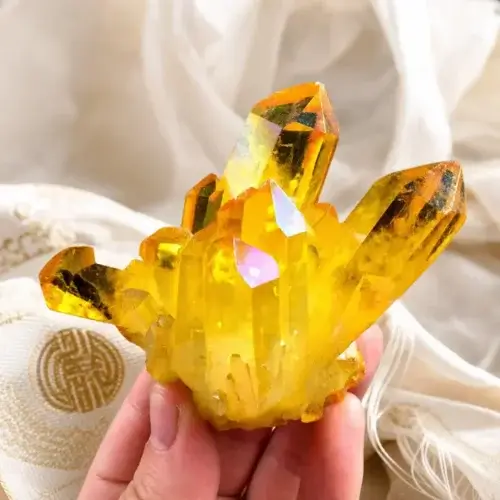
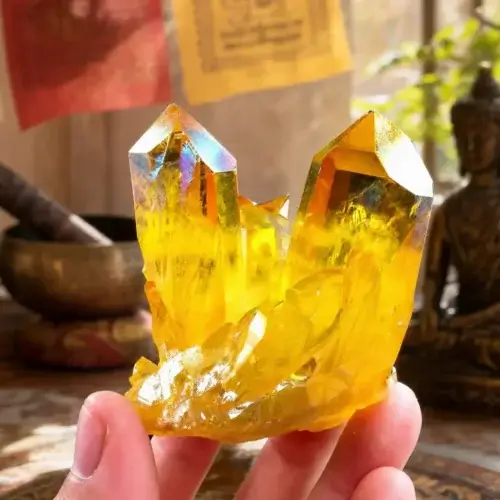
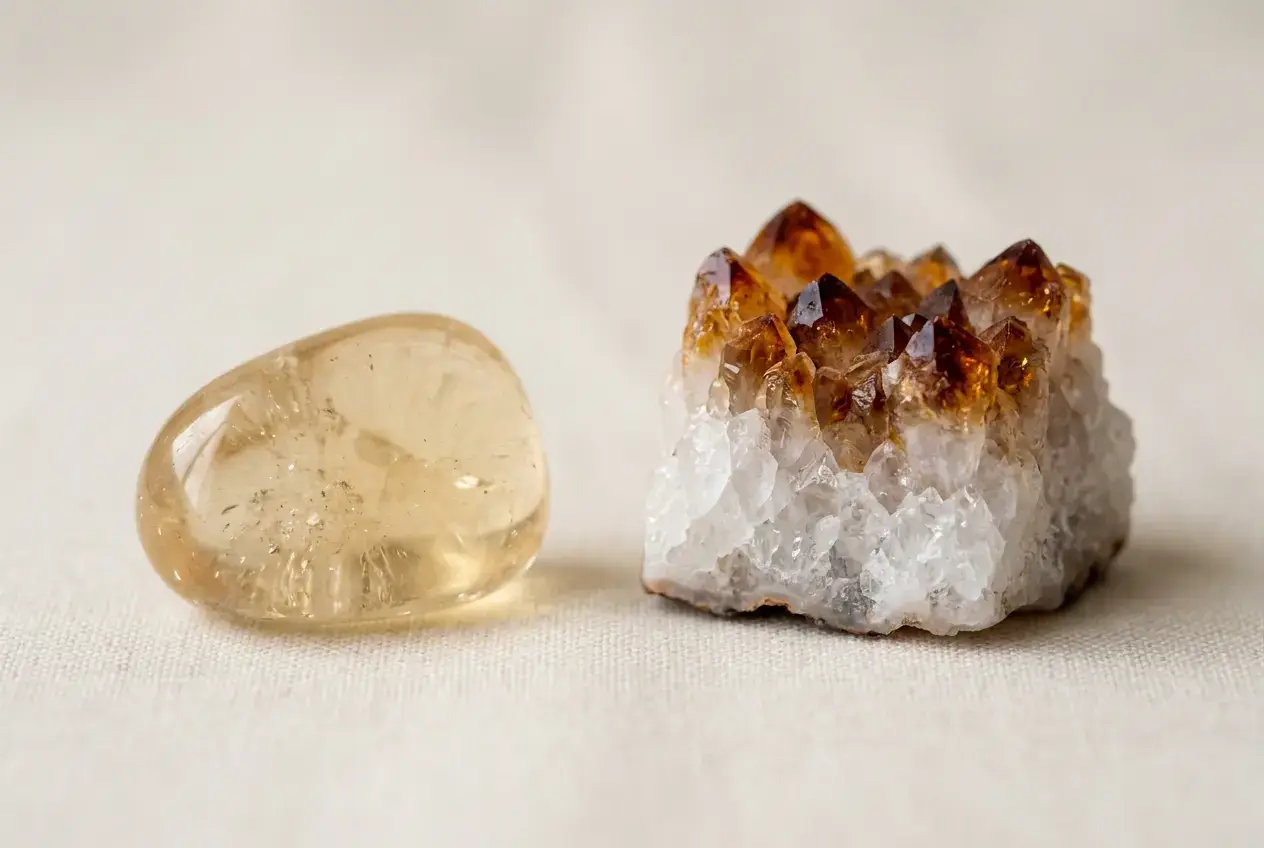
The other costly beginner mistake is buying treated stones sold as natural. Because true citrine is rare, most commercial citrine is amethyst baked above 440°C until it turns orange. The visual tell: natural citrine is a uniform pale honey or champagne color, while heat-treated pieces show a white or clear base with burnt-orange tips, often as geode chunks. A scratch test won’t help — both are quartz at Mohs 7 — so judge by color zoning instead. If you want the real thing, our monk-blessed natural citrine is the genuine, untreated stone.
Mindset Mistakes: Too Many Stones, Too Soon
The biggest non-care mistake beginners make is buying a dozen crystals before learning to work with one. Start with 1 to 3 stones that match a clear intention — calm, focus, protection — rather than a shelf of 30 you never actually use. A small, intentional kit builds a real connection; a cluttered collection just gathers dust.
Two related traps round out the list. First, expecting instant magic: crystals are best understood as focusing tools for your own intention, not a switch that fixes things overnight. Second, ignoring your intuition in favor of online “rules.” If a stone draws you in, that pull matters more than any chart. A balanced 7 chakra stones bracelet is a popular, low-pressure way to start with one focused piece instead of ten scattered ones.
💡 Quick win: Cleanse every new crystal before its first use. It has traveled through mining, sorting, shipping, and many hands to reach you. For water-safe stones a brief rinse works; for everything else, moonlight or sound cleansing is safe. Our guide on how often to cleanse a crystal bracelet covers the timing.
Frequently Asked Questions About Crystal Mistakes
Don’t soak water-sensitive stones, charge color-sensitive stones in sunlight, store crystals piled together, or make elixirs from toxic stones. The most damaging beginner crystal mistakes are care errors — selenite dissolves in water, and amethyst fades in the sun — not ritual errors.
Selenite (Mohs 2), malachite, pyrite, calcite, lepidolite, and most stones below Mohs 5 should never be soaked. Selenite dissolves, pyrite rusts, and malachite leaches copper. As a rule, only non-porous, iron- and copper-free stones at Mohs 7 or above are safe for a brief rinse.
Cleansing every crystal the same way — usually with water or salt — without checking the stone first. This single mistake damages more beginner collections than anything else, because soft and metal-bearing stones can’t tolerate the water and salt methods commonly recommended online.
Look at the color zoning. Natural citrine is a uniform pale honey or champagne shade, while heat-treated amethyst sold as citrine has a white or clear base with burnt-orange tips. A hardness test won’t work, since both are quartz at Mohs 7. To be safe, buy from a seller who states the stone is untreated.
Start Your Collection the Right Way
Skip the beginner mistakes. Explore Potala Store’s hand-selected natural crystals — genuine, untreated, and ready to cleanse the safe way.Shop Natural Crystals →
📚 References
- Mohs Hardness Scale: Reference values for mineral hardness used to assess scratch resistance and care. U.S. National Park Service
- Gemstone Education & Treatments: Authoritative reference on gemstone identification, treatments, and disclosure. Gemological Institute of America (GIA)
- Amethyst Color & Heat Treatment: Peer-reviewed study on how iron color centers and heat treatment affect amethyst and citrine color. Scientific Reports (Nature), 2020. nature.com
- Crystal Healing & the Placebo Effect: Overview of research on crystal healing, including the role of the placebo effect. Wikipedia: Crystal healing