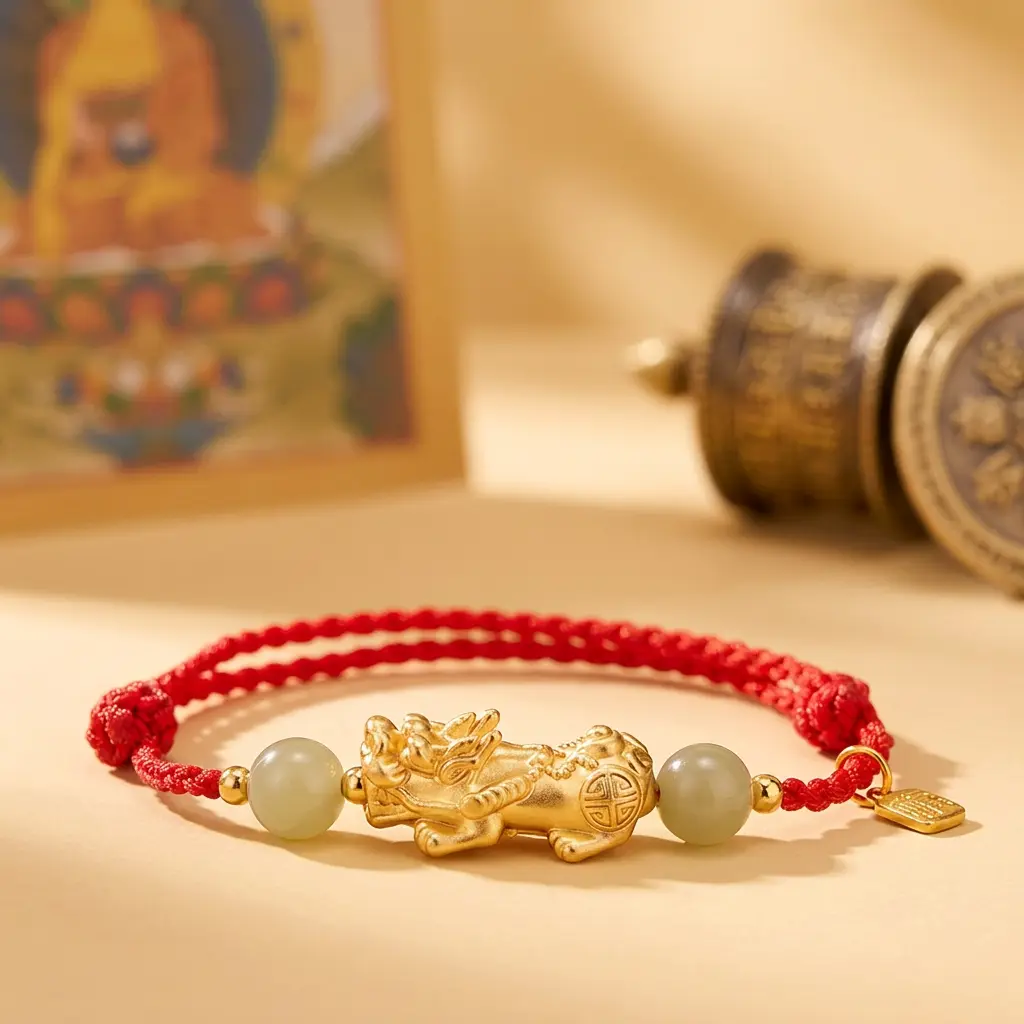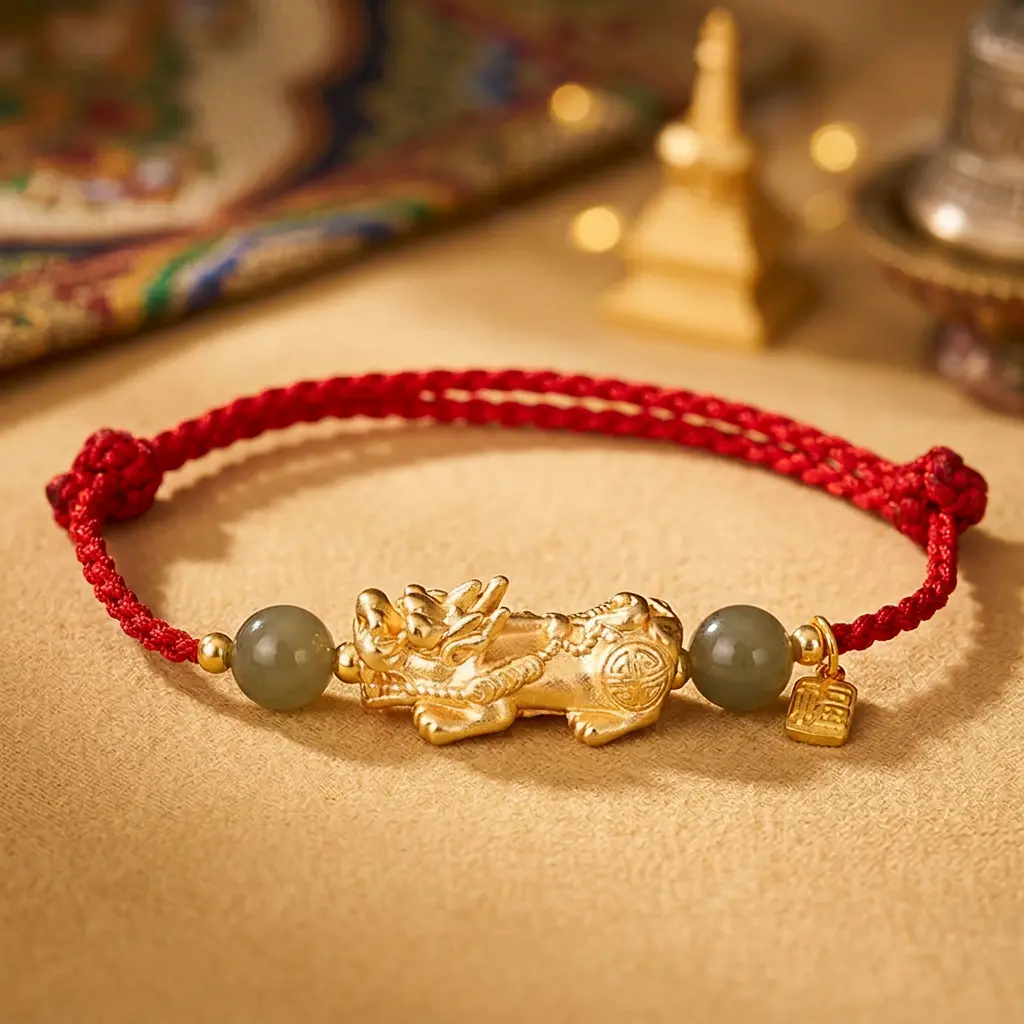

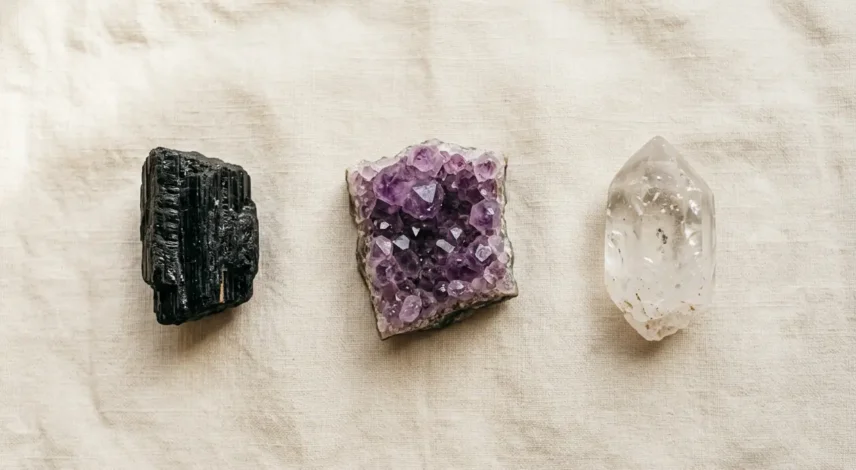

You don’t need 30 crystals to begin. You need three—Clear Quartz for clarity, Amethyst for calm, and Black Tourmaline for protection—plus a little context on how to actually use them. This 2026 guide gives you that, along with the honest truth about what healing crystals can and can’t do.
If you’ve fallen down a crystal rabbit hole on TikTok or Pinterest and felt more overwhelmed than inspired, you’re not alone. Most beginner guides hand you a list of 20 stones and leave you guessing. At Potala Store, we source our crystals through direct partnerships with the Sera Jhe and Kopan monasteries in the Himalayas, and after helping thousands of first-time buyers, we’ve learned what actually helps people start: fewer stones, clearer guidance, and no mystical hype. There’s no wrong way to begin.
⚠ A quick, honest note: Crystal practices are a complementary form of self-care, not a substitute for medical or mental-health treatment. The energy and healing properties described below are based on traditional beliefs and personal experience, not scientific proof. We’ll be upfront about that throughout.
Table of Contents
What Are Healing Crystals (and How Are They Supposed to Work)?
Healing crystals are natural minerals—most often quartz varieties—that people traditionally use as tools for focus, calm, and intention-setting. They’re believed (though not scientifically proven) to carry a steady vibrational energy that supports a mindful self-care practice. Think of a crystal less like medicine and more like a tuning fork for your intention: a physical object that helps you pause and refocus.
The traditional idea goes like this. Every crystal has a fixed internal structure called a crystal lattice, a repeating geometric pattern of atoms. Practitioners believe this orderly structure gives each stone a stable energy that can interact with your own. Many pair specific crystals with the body’s chakras—seven energy centers running from the base of the spine to the crown of the head—choosing a stone’s color to match the chakra they want to support.
You may also see crystals described as “piezoelectric,” meaning they generate a tiny electric charge under pressure. That part is real physics—the Curie brothers documented it in quartz in 1880, and it’s why quartz runs your watch. But there’s no evidence that this effect heals the body. It’s worth keeping the genuine science and the spiritual belief in separate boxes, which brings us to the question everyone quietly wonders about.
Do Crystals Actually Work? An Honest 2026 Answer
Here’s the honest answer: there’s no scientific evidence that crystals heal the body beyond a placebo effect—and that’s worth saying plainly. Christopher French, a psychologist at the University of London who studies these claims, put it bluntly in Live Science: there is no evidence that crystal healing works over and above the power of suggestion.
The research backs this up. In a 2025 randomized controlled study published in the journal CNS Spectrums, 138 adults used either a genuine rose quartz or a visually identical fake over a 14-day routine. The result: people felt less anxious only if they already believed—and it made no difference whether their stone was real or fake. The benefit came from the belief and the ritual, not the rock.
So why do so many people feel a difference?
Because rituals genuinely work—just not the way the marketing claims. When you hold a stone, pause, and set an intention for your day, you’re practicing a small moment of mindfulness. That pause is real, and the calm that follows is real. Believing in a steadier morning routine isn’t silly; it’s simply how rituals help us. We think crystals are best understood as beautiful prompts for that practice, not as treatments.
We’d rather you start with clear eyes than be sold a miracle. With that honesty in place, let’s get to the part you came for: which stones to actually buy.
Start With Just 3 Crystals (Not 30): The Beginner’s Starter Set
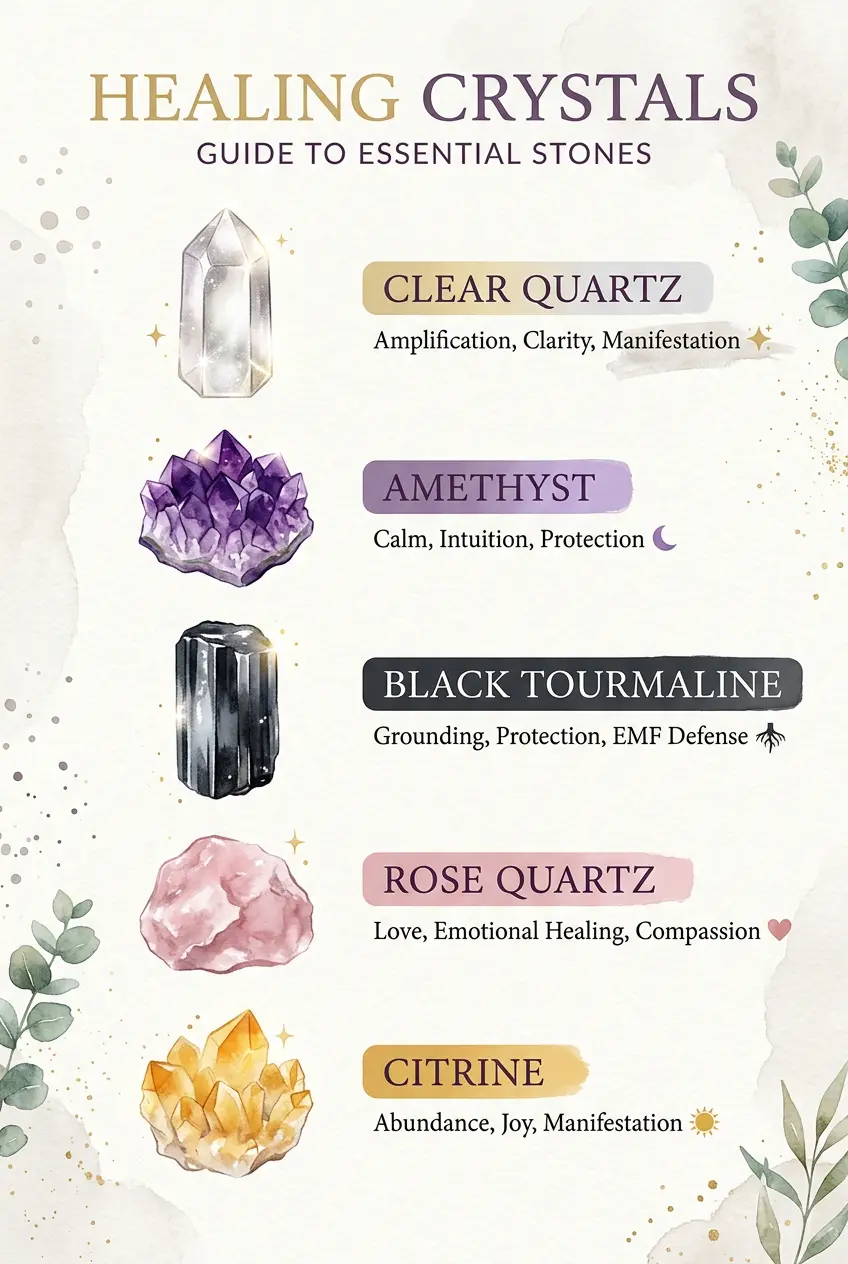
The three best crystals for beginners are Clear Quartz for clarity, Amethyst for calm, and Black Tourmaline for grounding and protection. Master these three before adding anything else. When we started recommending stones years ago, we watched newcomers buy a dozen crystals in one week and end up more confused, not less. Three is enough to build a real practice. If you’d rather choose by what you want to work on—better sleep, focus, confidence, or protection—our guide on which crystal to start with by your goal matches the right stone to each intention.
- Clear Quartz — nicknamed the “Master Healer,” it’s the most versatile starter stone. It’s believed to amplify both energy and intention, which is why so many beginners build around it.
- Amethyst — a purple quartz tied to the Crown Chakra. It’s traditionally used for calm, easing everyday stress, and supporting restful sleep.
- Black Tourmaline — the classic grounding stone. It’s believed to absorb negativity and create a sense of protection, making it a steadying anchor for the other two.
Once those three feel familiar, two stones are worth adding next. Rose Quartz, the gentle pink stone of the Heart Chakra, is traditionally used for self-love and compassion. And natural Citrine, the “Merchant’s Stone,” is associated with abundance and confidence. Here’s a quick reference for your first stones.
| Crystal | Traditional Intention | Chakra | Water-Safe? |
|---|---|---|---|
| Clear Quartz | Clarity & amplifying intention | All / Crown | Yes (brief) |
| Amethyst | Calm, stress relief, sleep | Crown | Brief only; fades in sun |
| Black Tourmaline | Grounding & protection | Root | Yes (brief) |
| Rose Quartz | Self-love & compassion | Heart | Brief only; fades in sun |
| Citrine (natural) | Abundance & confidence | Solar Plexus | Brief only; fades in sun |
This covers your first five stones; for a complete at-a-glance reference, our crystal meanings chart breaks down what each common stone is traditionally used for.
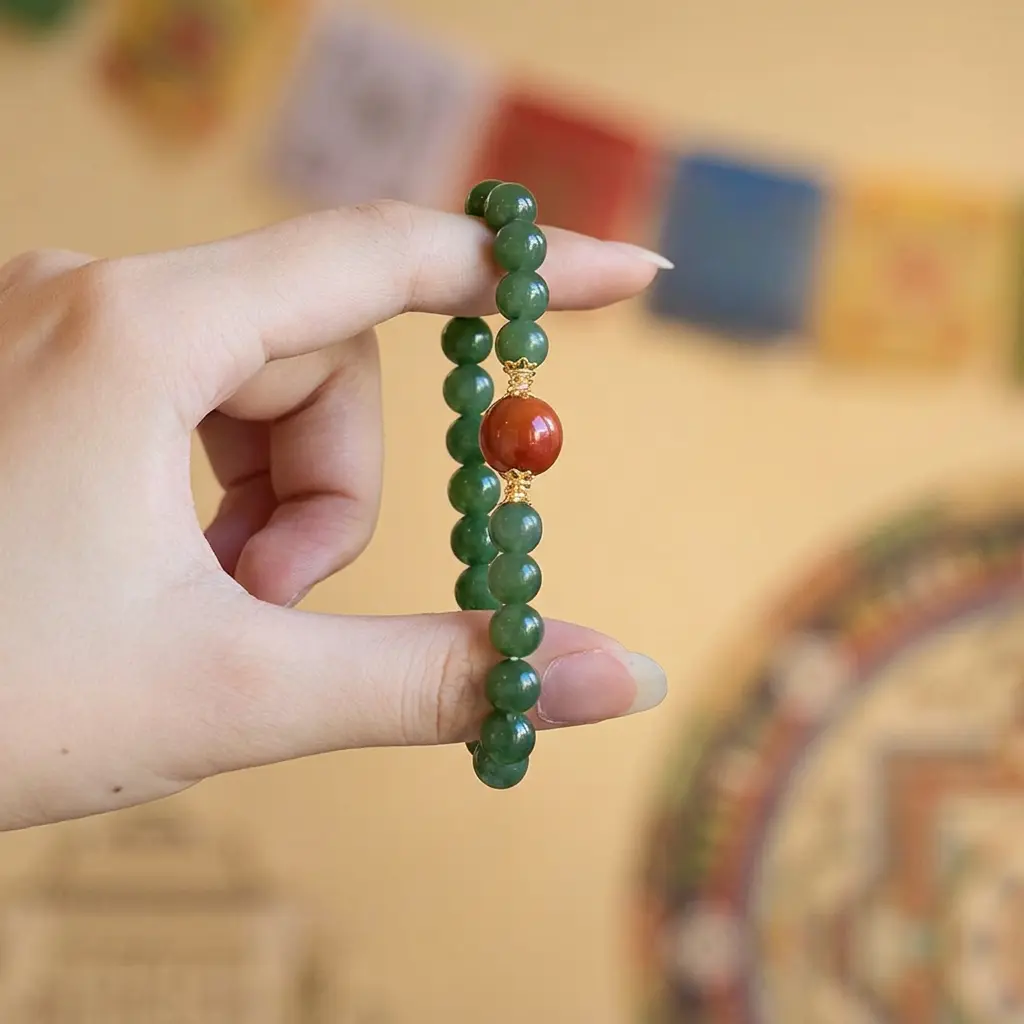
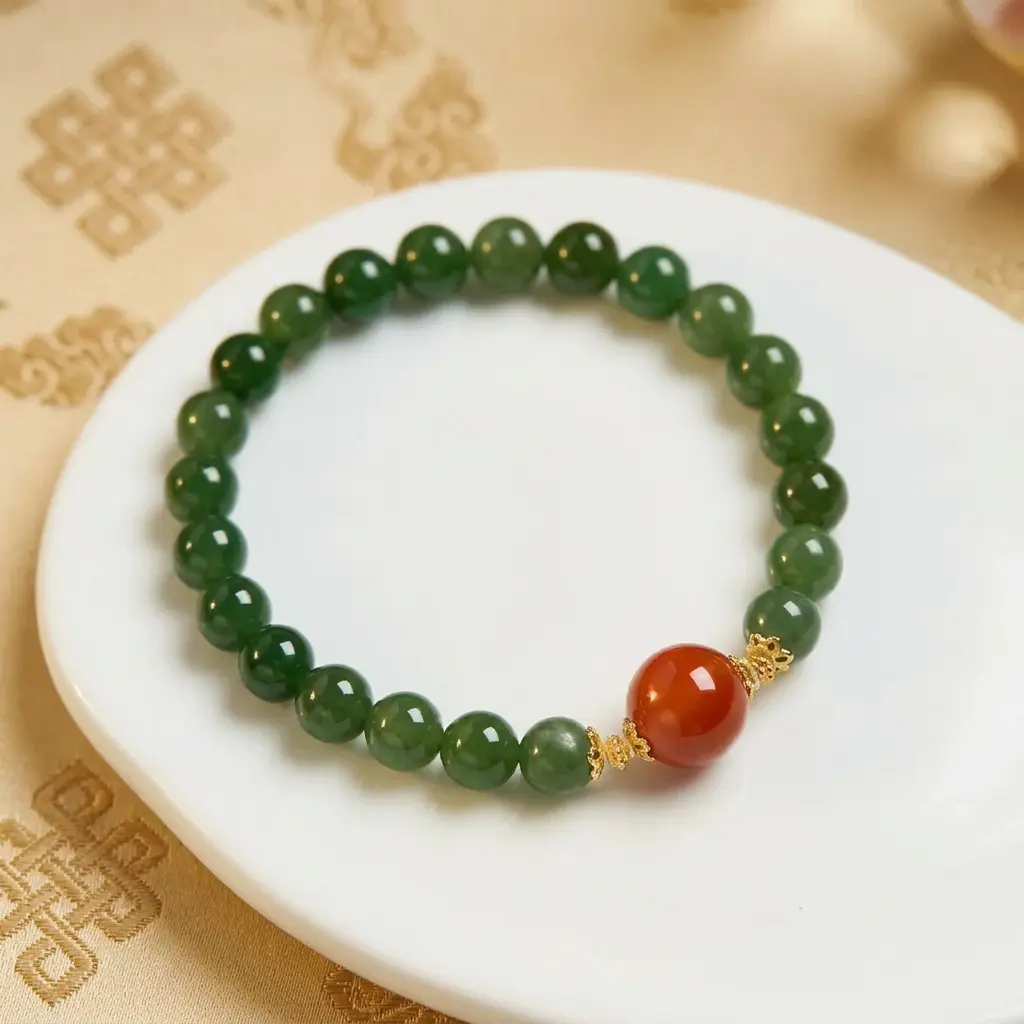
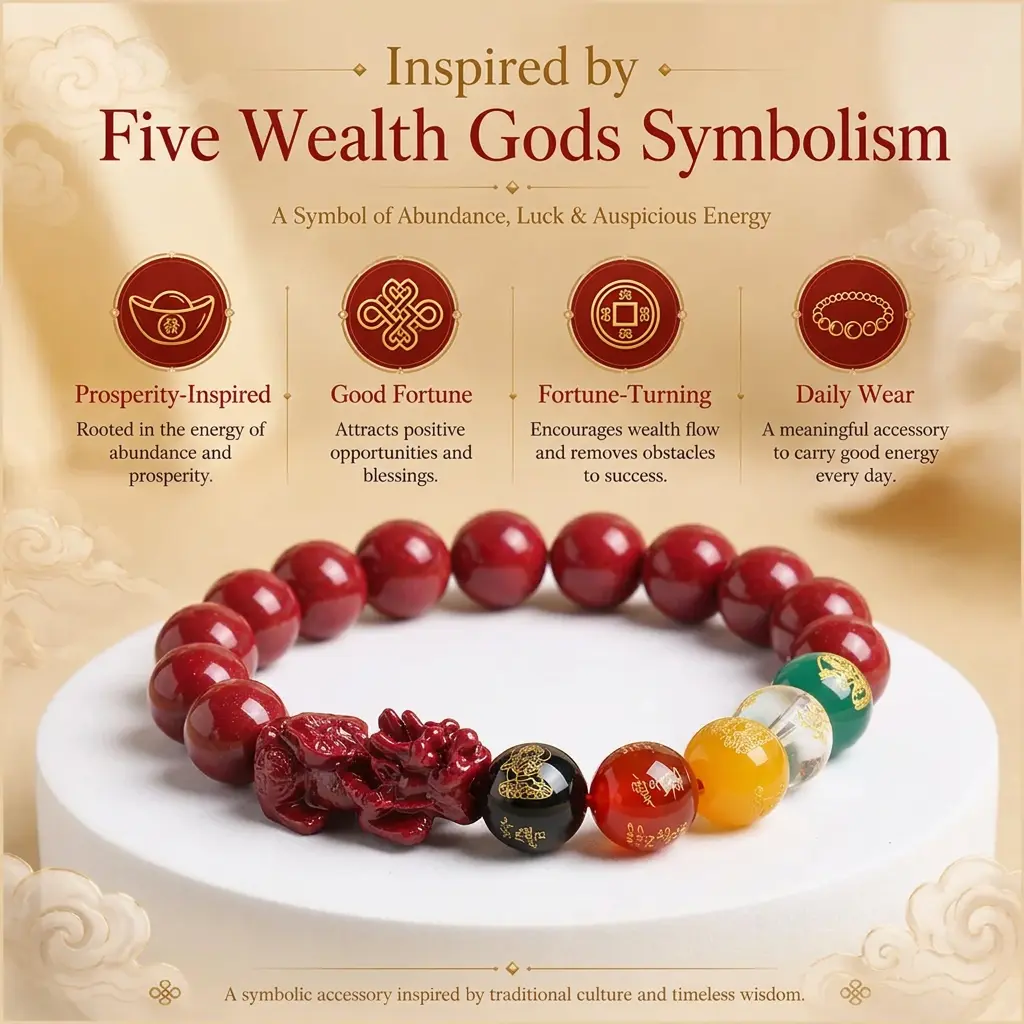
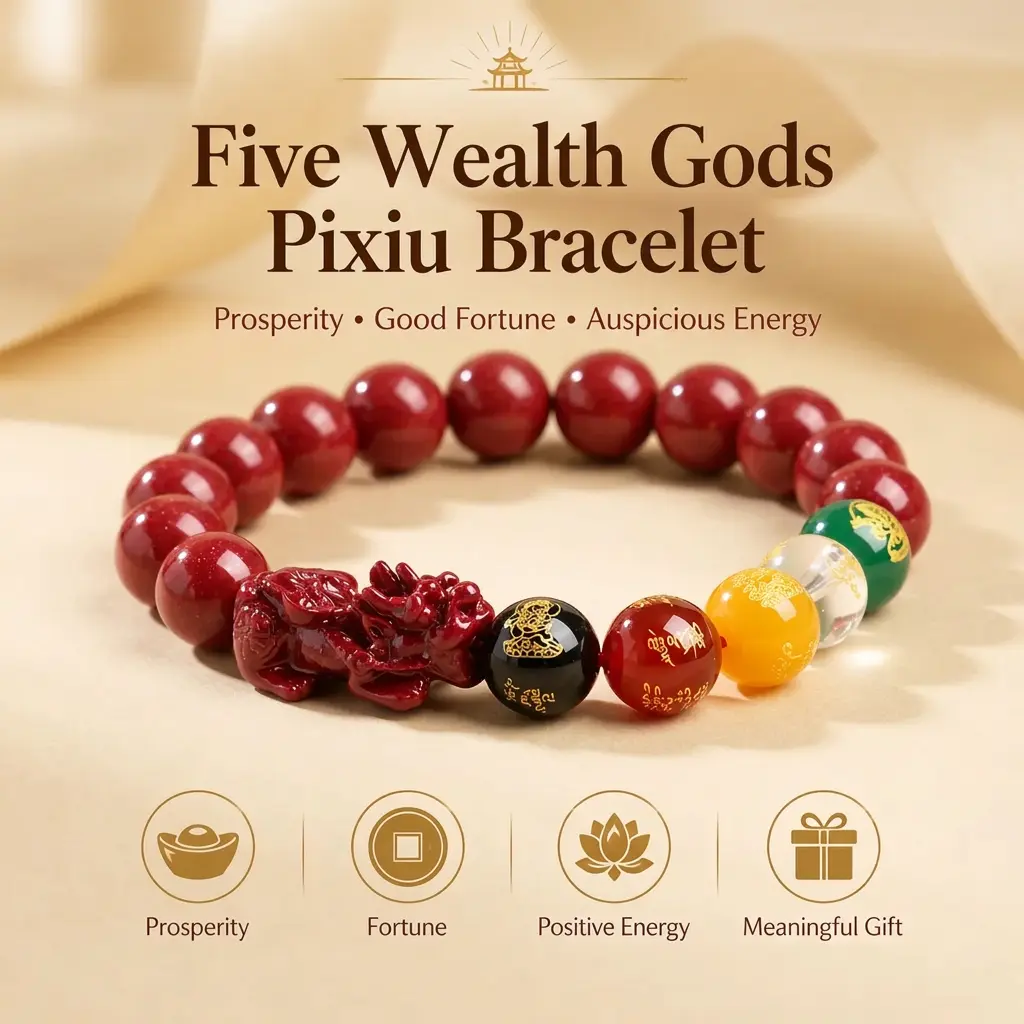
Beaded bracelets are the easiest format for beginners because you wear your intention all day—our crystal bracelets use an 8mm bead as the comfortable standard, with 10mm available for a bolder look. If you’d like a deeper breakdown of every stone’s meaning, see our expert guide to crystal bracelet properties. And if you’re not sure which stone fits your goal, our guide on which crystal bracelet is right for you walks you through it in about two minutes.
💡 Starting tip: A Clear Quartz bracelet paired with an Amethyst bracelet covers clarity and calm in one simple stack—a complete starting point you can wear daily.
How to Use Your Crystals (3 Simple Ways)
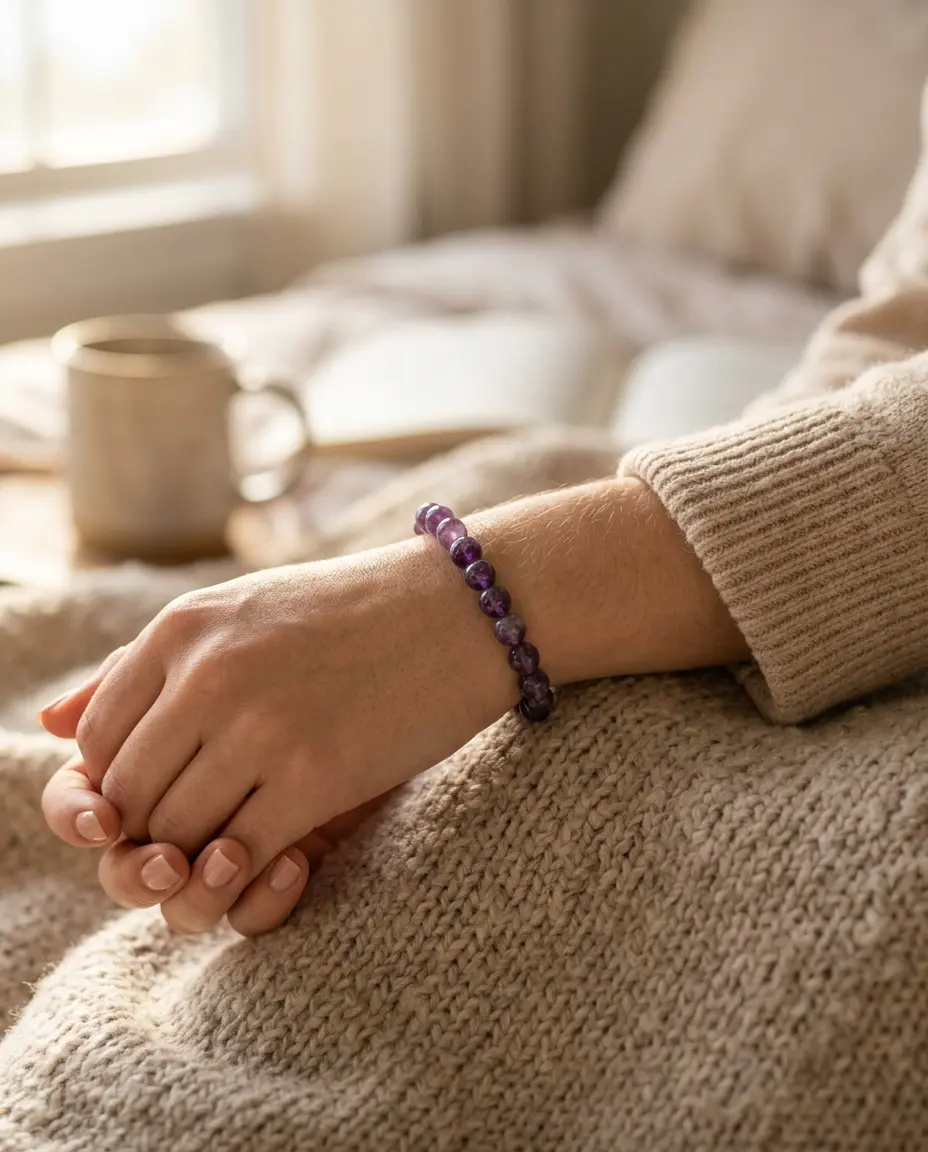
You don’t need a ritual handbook—there are three beginner-friendly ways to use any crystal: wear it, place it, or meditate with it. Pick whichever fits your day, and don’t overthink it.
- Wear it. A bracelet keeps your stone—and your intention—with you all day. This is the simplest entry point, which is why most beginners start here. If a bracelet is where you’ll begin, our walkthrough on how to choose your first crystal bracelet covers bead size, fit, and what to look for.
- Place it. Set a stone on your desk, nightstand, or anywhere you want a small visual cue to pause. Black Obsidian is a popular choice to keep near a workspace for a grounded feeling.
- Meditate with it. Hold the stone, take a few slow breaths, and silently state a simple intention—”I’d like to feel calmer today.” That’s it. The intention is the practice.
One small thing that trips up almost every beginner: which hand. In the tradition our partners at the Kopan monastery follow, you wear a stone on your left wrist to receive energy and your right wrist to send it out into the world. We’ll admit we had this backwards at first—most people instinctively do—so if you want to draw in calm or protection, the left wrist is your starting point.
How to Cleanse, Charge & Store Your Crystals (No Myths)
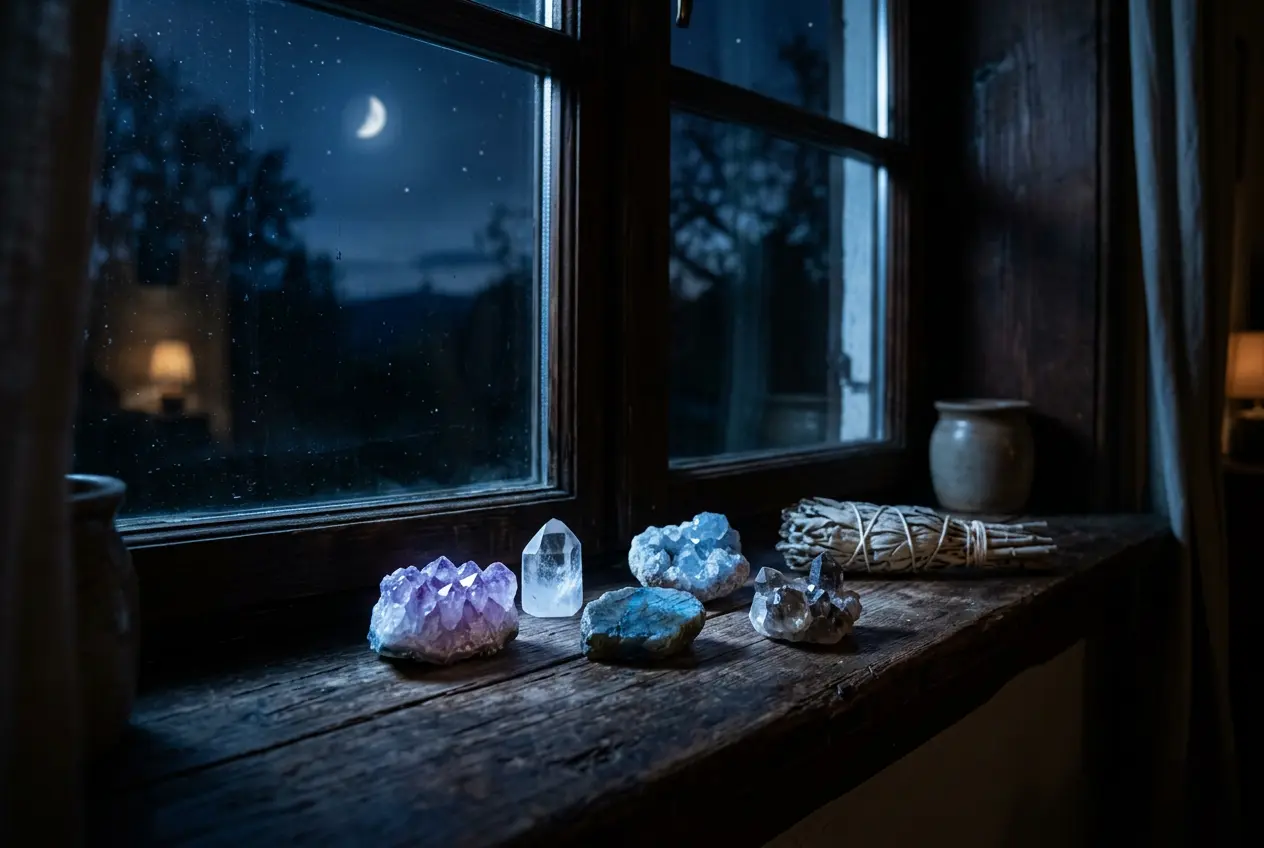
Cleansing your crystals simply means resetting them—and the single most important rule is knowing which stones should never touch water. Skip that step and you can permanently damage a stone, so this is the one place we ask you to slow down. For a step-by-step beginner walkthrough, our full guide to crystal care for beginners—cleansing, charging, and storing covers every method without the myths.
For routine care, three gentle methods work for nearly any crystal:
- Moonlight: leave stones on a windowsill overnight, especially around a full moon.
- Sound: pass a singing bowl or tuning fork near them for a minute or two.
- Smoke: move them through sage or palo santo smoke for about 30 seconds.
Crystals That Should Never Get Wet
This is material science, not superstition. Some stones are soft or chemically reactive, and water ruins them:
- Selenite is a form of gypsum at just 2.0 on the Mohs hardness scale—it’s water-soluble and will literally start to dissolve. Never rinse it.
- Malachite (Mohs 3.5–4) contains copper that leaches into water, which is likely toxic—never soak it and never drink water it has touched.
- Pyrite contains iron and will rust, and Lapis Lazuli is porous and fades.
A safe rule of thumb: if a stone scores under 5 on the Mohs scale, keep it away from water and use moonlight, sound, or smoke instead. (We learned this the hard way—rinsing a first pyrite piece left it dull and spotted within days.) For the full routine, including how often to recharge, see our complete guide to cleansing and charging spiritual jewelry.
7 Common Beginner Mistakes (and Easy Fixes)
Most beginner frustration comes down to a handful of fixable mistakes—here are the seven we see most.
- Buying too many at once. Start with three and add intentionally.
- Never cleansing a new stone. Reset it when you first bring it home.
- Expecting medical results. Crystals support a mindset; they don’t treat conditions.
- Getting the wrong stones wet. Check the Mohs rule above first.
- Skipping the intention. A stone without a paired intention is just decoration.
- Buying dyed fakes. Suspiciously cheap, unnaturally vivid stones are often colored glass or treated quartz—ask what the material actually is.
- Quitting after a day. A practice takes a few weeks to feel natural; many of our customers say it takes about three to four weeks to settle into a rhythm.
Want the complete rundown? We expand on these in our guide to the 10 crystal mistakes every beginner makes—with the easy fix for each one.
How We Source Our Crystals: The Monastery Difference
Not all crystals are created—or blessed—equally. At Potala Store, every piece is sourced through direct partnerships with the Sera Jhe and Kopan monasteries in the Himalayas, rather than bought anonymously through a wholesaler. That sourcing is the difference between a mass-produced bead and a stone with a traceable origin.
It also means many of our pieces pass through a traditional rab-gnas consecration—a blessing ritual performed by monks. Our founder witnessed a three-day Winter Solstice consecration firsthand in Lhasa, and we’re careful to describe what that is and isn’t: it’s a cultural and spiritual tradition, not a guarantee of any physical effect. We’d rather be precise than oversell.
Finally, sourcing matters for honesty about materials. Genuine natural stones vary in tone and have small inclusions; flawless, candy-bright “crystals” are often dyed or synthetic. We label our materials plainly—if something is colored quartz rather than natural citrine, we say so—because trust is the whole point.
Ready to Start Your Collection?
Begin with one monastery-sourced crystal bracelet—clarity, calm, or protection—and build your practice one intentional stone at a time.Shop Beginner Bracelets →
You really don’t need 30 crystals to feel the benefit of a daily ritual. Start with three healing stones, learn to use and care for them, and let your collection grow from there. Whether you’re drawn to a grounding 7-chakra hematite bracelet or a heart-centered Rose Quartz piece, the best first crystal is simply the one that helps you pause.
⚠ Important: Crystals are a complementary self-care tool, not a replacement for professional medical or mental-health care. If you’re managing a health condition, please consult a qualified provider.
Frequently Asked Questions
Start with three: Clear Quartz for clarity, Amethyst for calm, and Black Tourmaline for protection. They’re affordable, widely available, and cover the most common beginner goals. You can always expand later—see our essential starter collection for the next stones to add.
Honestly, just one to three. Building a connection with a few stones works better than collecting dozens. Most beginners feel far less overwhelmed starting small and adding new crystals intentionally over time.
There’s no scientific evidence that crystals heal beyond a placebo effect. A 2025 controlled study of 138 adults found that anxiety relief occurred only among believers, regardless of whether the crystal was real or a look-alike fake. That said, the rituals around them—pausing, setting an intention, practicing mindfulness—can genuinely support calm. Crystals are a complementary practice, not medical treatment.
Avoid water with Selenite (a soft gypsum at Mohs 2.0—it dissolves), Malachite (it contains copper that leaches into water, which is likely toxic), Pyrite (it rusts), and Lapis Lazuli. As a rule, skip water for any stone under Mohs 5, and cleanse those with moonlight, sound, or smoke instead. Our care guide covers each method.
Place it under moonlight overnight, pass it through sage or palo santo smoke for about 30 seconds, or use a singing bowl for a minute. Then set your intention by holding it and stating your goal. Cleanse new crystals when you first bring them home. Ready to begin? Shop beginner-friendly bracelets.
About Potala Store: We specialize in authentic spiritual jewelry sourced through direct partnerships with Himalayan monastery workshops. We aim to balance respect for tradition with honesty about what crystals are—beautiful tools for a mindful practice. Last updated: January 2026.
📚 References
- Crystal Healing & the Placebo Effect: Psychologist Christopher French (University of London) on the lack of evidence beyond suggestion. Live Science — “Crystal healing: Stone-cold facts about gemstone treatments”
- 2025 Randomized Controlled Study: Escolà-Gascón et al., “Placebo effects in alternative medical treatments for anxiety,” CNS Spectrums (2025); 138 adults, real vs. placebo crystals. Cambridge Core (CNS Spectrums)
- Mohs Hardness Scale: The standard mineral hardness scale (talc 1 to diamond 10) used to judge which stones are water-safe. U.S. National Park Service
- Do Healing Crystals Work? A consumer-health overview of the evidence and the role of placebo. Healthline
- Background & Definition: Overview of crystal healing as an alternative practice and its scientific standing. Wikipedia — “Crystal healing”