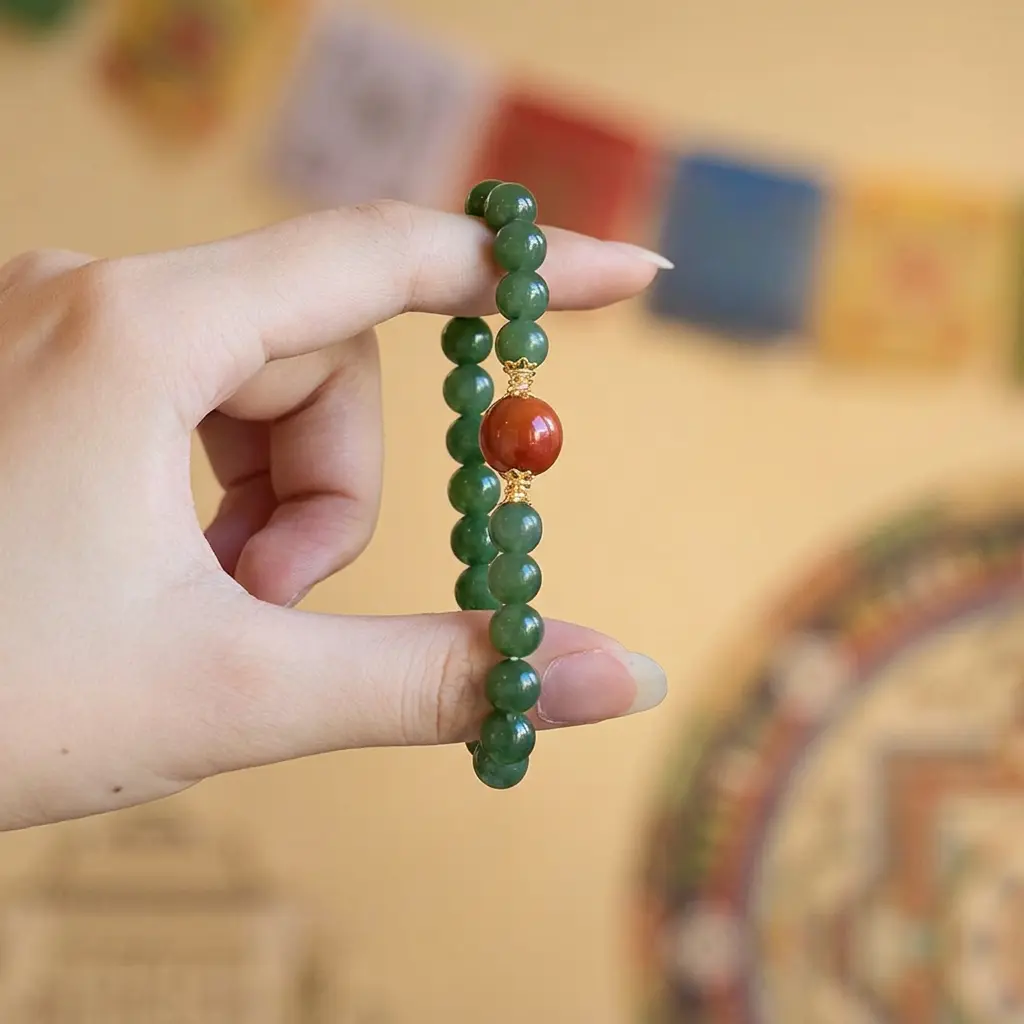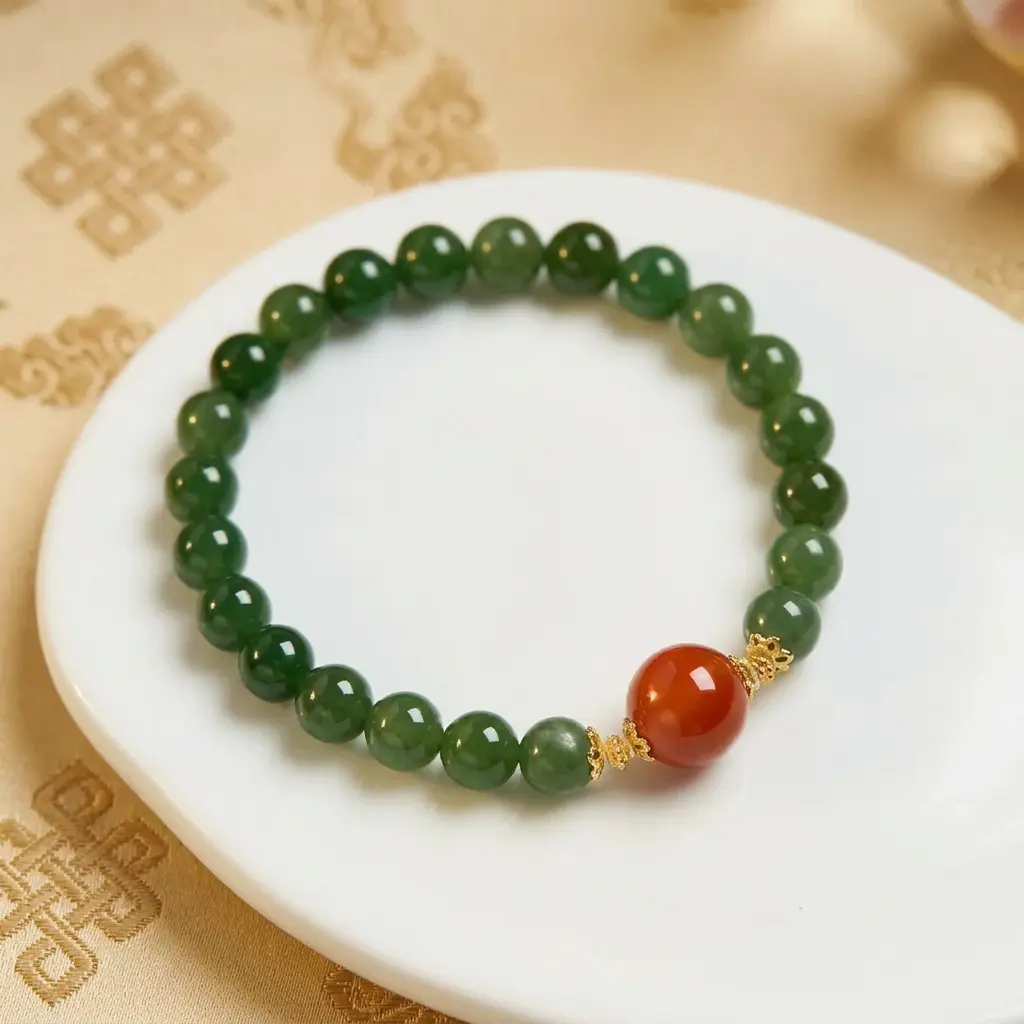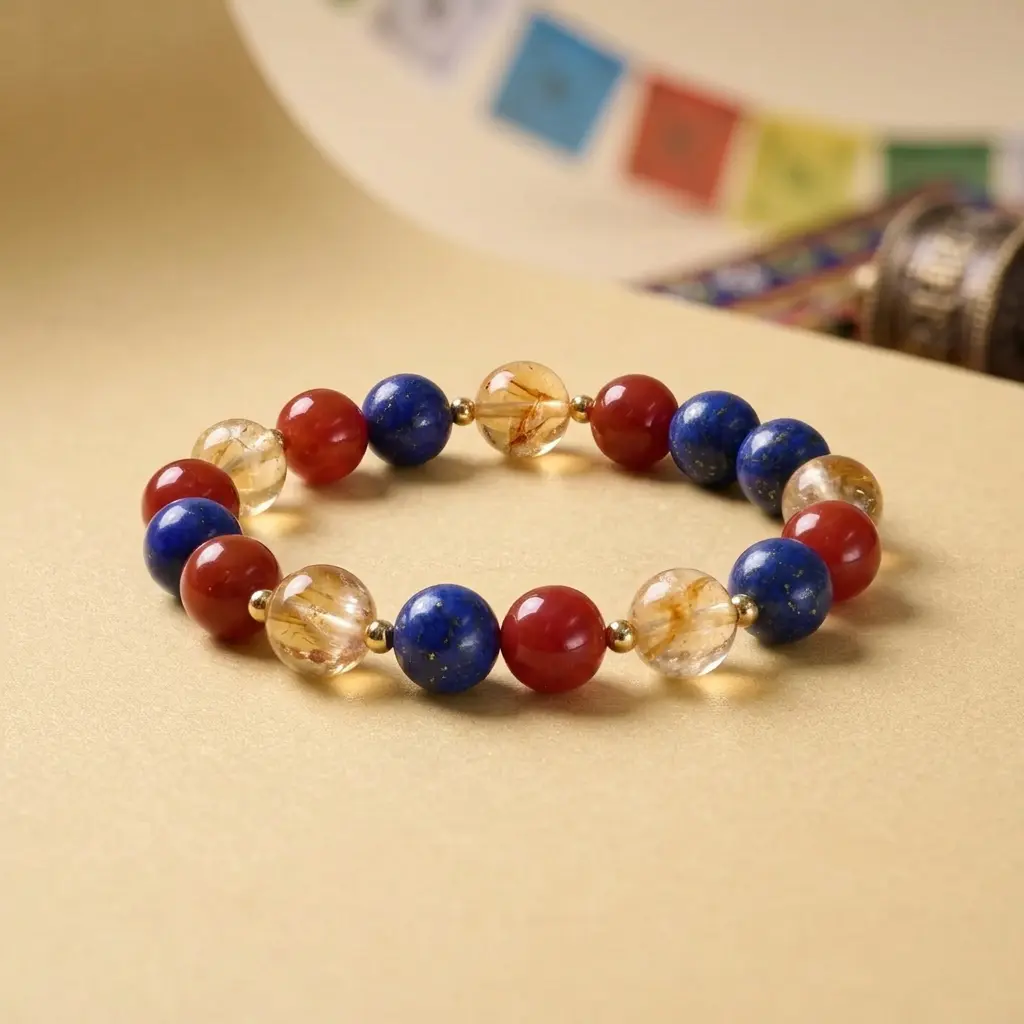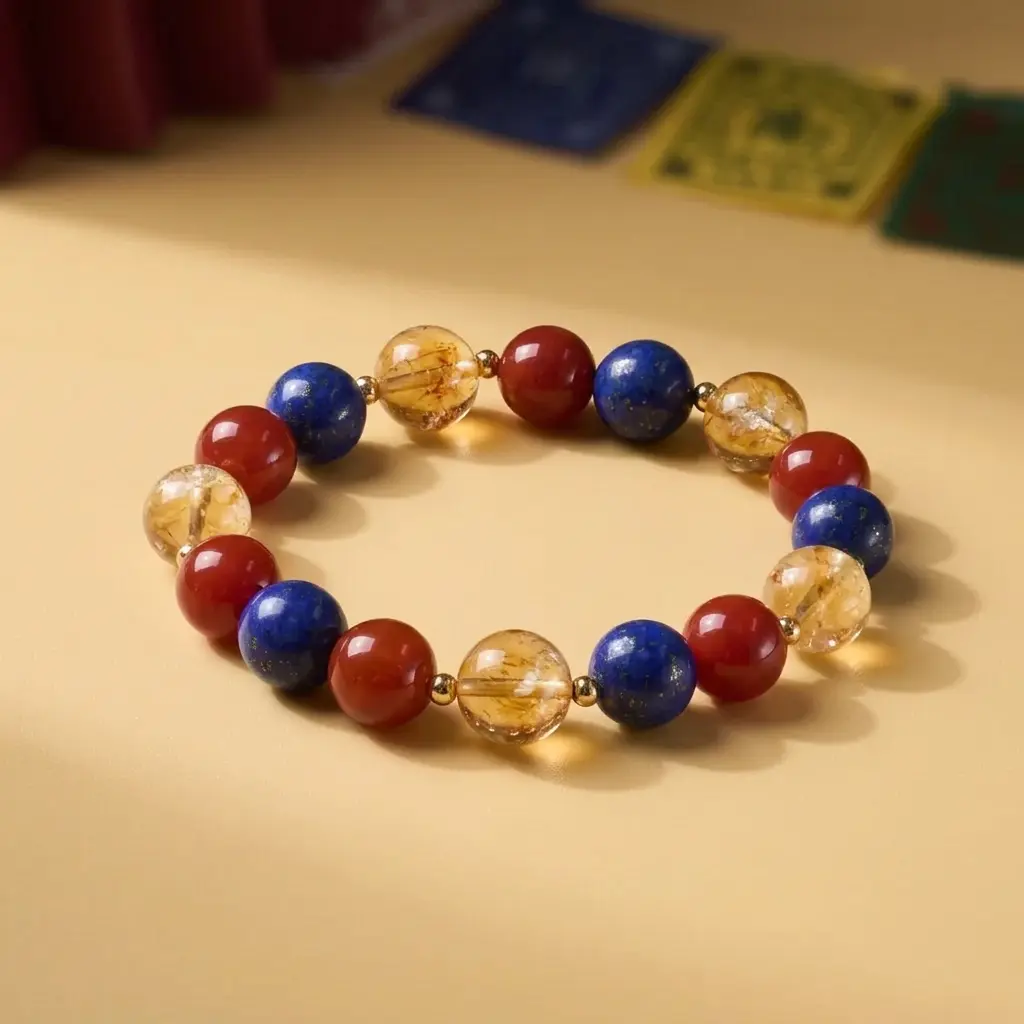

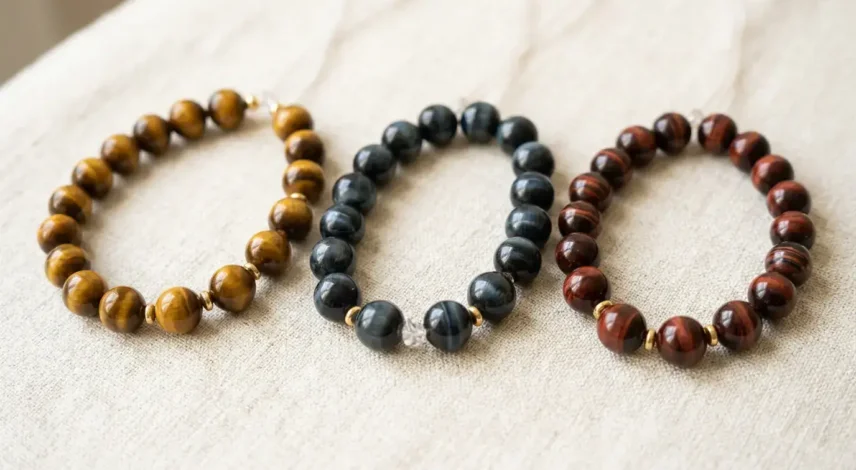

Still deciding between a blue, red, or gold tiger eye bracelet? Here’s the short answer: all three share the same core gifts—confidence, focus, grounding, and protection—but each color leans into one strength. Gold builds confidence and courage, blue brings calm and clear communication, and red fuels motivation and physical drive. The right color depends on what you actually want to shift in your life right now.
A tiger eye bracelet is a band of polished tiger’s eye, a golden-banded quartz variety prized for its shifting, cat-like shimmer. It’s traditionally worn for protection, willpower, and grounded focus. If you’ve ever stared at three near-identical beaded bracelets online and wondered whether that bright blue one was even real, you’re asking exactly the right question. At Potala Store, founder Yang Tso hand-selects every stone, and we source tiger eye directly from South Africa through monastery partnerships in Tibet—so color choice and authenticity are the two questions we field most. This guide settles both.
Table of Contents
What Are the Benefits of a Tiger Eye Bracelet?

A tiger eye bracelet is traditionally believed to boost confidence, sharpen focus, ground your energy, and shield you from negativity. These benefits come from centuries of crystal-healing tradition and the reports of everyday wearers—not from clinical studies. Here are the six most consistently reported:
- Confidence and courage: Tied to the Solar Plexus chakra (Manipura), the center of personal power—the reason confidence and courage show up together so often.
- Mental clarity and focus: Many wearers reach for it during big decisions, exams, or demanding work.
- Protection and grounding: Worn as a steadying anchor, tiger eye is said to keep you grounded and protected when pressure spikes.
- Prosperity and motivation: Often called a “stone of action,” favored by people in business and creative fields.
- Emotional balance: Believed to temper fear and self-doubt without dulling drive.
- Physical vitality: Traditionally linked to stamina and willpower.
On a factual level, tiger eye is a variety of quartz (silicon dioxide) with a Mohs hardness of about 6.5–7, durable enough for daily wear. Its signature shimmer—called chatoyancy, or the “cat’s eye” effect—forms as fibers of crocidolite are slowly replaced by quartz and stained by iron oxide over millions of years. For a deeper look at how this stacks up against another popular wealth stone, see our comparison of citrine and tiger eye for attracting wealth.
Blue vs Red vs Gold: A Quick Comparison
Match a color to your goal at a glance (scroll right on mobile):
| Attribute | Gold Tiger Eye | Blue Tiger Eye (Hawk’s Eye) | Red Tiger Eye (Dragon’s Eye) |
|---|---|---|---|
| Appearance | Honey-gold to brown bands | Blue-gray to deep indigo bands | Mahogany to brick-red with black |
| Core energy | Confidence, willpower, courage | Calm, clarity, communication | Motivation, passion, vitality |
| Chakra | Solar Plexus | Throat + Third Eye | Root |
| Best for | Decisions, public speaking, focus | Anxiety, negotiations, intuition | Low energy, drive, grounding |
| Zodiac affinity | Leo, Capricorn | Capricorn, Leo | Aries, Scorpio |
| Natural? | Almost always natural | Naturally rare (often dyed) | Usually heat-treated, still real |
The bottom line: choose gold to act with confidence, blue to think and communicate calmly, and red to get moving when you feel stuck.
Gold Tiger Eye: Confidence, Willpower & Personal Power
Gold tiger eye is the original and most recognized variety—the one most people picture when they hear “tiger’s eye.” Its warm, solar bands connect to the Solar Plexus chakra, which is why it’s the color most associated with confidence and courage. Walking into an interview, a pitch, or a hard conversation? This is the stone crystal practitioners reach for first.
It’s also the most versatile everyday piece. The neutral golden-brown pairs with anything, making it a favorite for both men and women. In Western astrology, golden tiger eye is most often recommended for Leo and Capricorn—Leo for its bold, self-expressive energy, and Capricorn for grounded, disciplined ambition.
Who Should Wear Gold Tiger Eye?
Choose gold if you want a daily confidence boost, steadier focus, or grounded decision-making. It’s a strong starter stone for anyone new to crystals because its energy is direct and easy to feel. Our own Gold Tiger Eye Bracelet – Power & Prosperity Talisman uses real, hand-selected golden tiger eye with genuine chatoyancy—a solid first pick if it’s your very first tiger eye piece.
Blue Tiger Eye (Hawk’s Eye): Calm, Clarity & Communication
Blue tiger eye is the cool-headed member of the family—also called Hawk’s Eye or Falcon’s Eye. Where gold fires you up, blue slows you down: it’s tied to the Throat and Third Eye chakras, so this calm blue stone is traditionally used for clear communication, reduced anxiety, and sharper intuition. Many wearers describe it as the stone that helps them think before they speak.
Geologically, blue tiger eye is the un-oxidized form of the same crocidolite-to-quartz process. Because the oxidation that turns the stone golden usually happens before the change finishes, naturally blue tiger eye is genuinely rarer than the gold variety—which matters a lot when you’re shopping. To understand its meaning and how to tell real from dyed, read our full guide on what makes blue tiger’s eye special.
Blue is the color to choose if anxiety, public speaking, or difficult conversations are your main concern. It’s especially popular with Capricorns working on patient, strategic goals. If that’s you, explore Potala Store’s Blue Tiger Eye Protection & Wealth bracelet, made with 100% natural Hawk’s Eye that’s never dyed.
💡 In our experience: When we first started sourcing blue tiger eye, we were surprised how much “blue tiger eye” online is actually dyed golden stone. Natural Hawk’s Eye has a softer, smoky blue—not the electric cobalt you often see in bargain listings.
Red Tiger Eye (Dragon’s Eye): Motivation & Grounding
Red tiger eye—nicknamed Dragon’s Eye—is the fire of the family. Its deep mahogany-and-black bands connect to the Root chakra (Muladhara), making it the go-to for grounding, physical vitality, and motivation. If you feel heavy, lethargic, or stuck on a long project, red is the variety meant to get you moving.
Here’s the honest part most sellers skip: the large majority of red tiger eye on the market is heat-treated, an accepted industry practice. In a kiln, the golden stone’s yellow-brown iron oxides (goethite and limonite) convert to red hematite, deepening the color. Natural red tiger eye does form through slow geological oxidation, but it’s uncommon. Crucially, heat-treated red tiger eye is still genuine quartz with the same hardness and authentic chatoyancy—the treatment just speeds up a color change nature could make on its own.
Red suits people chasing a goal that needs stamina—entrepreneurs, athletes, and creatives. Its strong grounding energy also makes it beginner-friendly.
Are These Stones Natural? Spotting Dyed vs Heat-Treated Tiger Eye

Gold tiger eye is almost always natural, red is usually heat-treated but still real quartz, and blue is the variety most often faked with dye. Because naturally blue Hawk’s Eye is rare, a large share of cheap “blue tiger eye” online is actually dyed gold stone. This is where most shoppers get burned, so here’s how to evaluate a bracelet before you buy:
- Check the chatoyancy: Real tiger eye shows a silky band of light that shifts as you tilt it. Flat, painted-looking color is a red flag.
- Look for variation: Natural beads differ slightly from bead to bead. Uniform, candy-bright color often signals dye.
- Feel the weight: Real stone feels cool and substantial, warming slowly in your hand.
- Inspect the fibers: Under direct light you can usually see fine parallel fibers.
- Demand source transparency: The single best protection is a seller who tells you whether a stone is natural, heat-treated, or dyed.
That transparency is exactly what we commit to. Every piece in Potala Store’s tiger eye bracelet collection is hand-selected for authentic chatoyancy and clearly described—our blue tiger eye is 100% natural and never dyed, and we disclose treatment on red varieties. Our stones trace back to South Africa’s Northern Cape, the source of most of the world’s tiger eye, and each bracelet is blessed through a traditional Tibetan consecration ritual before it ships.
How to Wear & Care for Your Tiger Eye Bracelet

Wear your tiger eye bracelet on your left wrist to draw in protective, grounding energy, or on your right wrist to project confidence and action outward. There’s no wrong answer—choose based on your intention. A few practical tips that apply to all three colors:
- Daily wear is fine. At a hardness of 6.5–7, tiger eye holds up to everyday use.
- Go easy on water. A quick rinse is okay; skip long soaks, which can dull the luster over time.
- Cleanse it gently. Moonlight overnight, brief morning sun (15–20 minutes), sage smoke, or a selenite plate all work. Limit direct sun on blue tiger eye, which can fade the color.
- Pick your bead size. 8mm is the standard, comfortable adult size; 6mm is subtle and stackable; 10mm makes a bolder statement.
Frequently Asked Questions
None is universally better—they serve different goals. Choose gold for confidence and focus, blue for calm and communication, and red for motivation and grounding. Many wearers end up owning more than one and switching based on what the day demands.
Naturally blue tiger eye (Hawk’s Eye) is real but rarer than the gold variety, so much of the inexpensive blue tiger eye sold online is dyed gold stone. Look for genuine chatoyancy, slight bead-to-bead variation, and a seller who confirms the stone is natural and not dyed.
Tiger eye is a stimulating, high-energy stone, so people who are naturally high-strung or very anxious sometimes find it intensifying rather than calming. In Vedic astrology a few signs are traditionally cautioned, while most Western practitioners consider it suitable for anyone. Trust how it makes you feel over the first week or two.
Wear it on your left wrist to absorb protective, grounding energy, and on your right wrist to project confidence and action outward. Both are valid—let your intention guide you.
⚠️ Important note: The spiritual and energy properties described here are based on cultural tradition and personal experience, not scientific evidence. This content is for educational purposes and should not replace professional medical, psychological, or financial advice.
Browse Potala Store’s hand-selected tiger eye bracelets—each piece is sourced for authentic chatoyancy, clearly described for treatment and origin, and ships across the US with free worldwide shipping.Shop Tiger Eye Bracelets →
📚 References
- Tiger’s Eye Geology & Formation: Mineral family, crocidolite pseudomorphism, and physical properties. Geology Science
- Tiger’s Eye Meaning & Varieties: Overview of gold, red, and blue varieties and their traditional uses. Crystal Vaults
- Identification & Sourcing: Geology, identification, and where tiger’s eye is found. RockHounding.org
- Gemstone Education: Quartz properties and gemstone treatment standards. Gemological Institute of America (GIA)