

Making moon water is easier than it looks, and you can do it tonight with a jar you already own. Moon water is water that has been left under the moonlight to absorb lunar energy, usually charged during a full moon and paired with an intention for cleansing or manifestation. That is the whole idea. You do not need special tools, a clear sky, or any experience to start.
Here is the short version. Fill a clean glass jar with drinkable water, set an intention, place it where moonlight can reach it overnight, then bring it in before sunrise. A full moon gives the strongest charge, but any moon phase works, and clouds do not stop it.
At Potala Store, we have packed, shipped, and handled tens of thousands of natural stones and crystals. That hands-on experience shapes the part most guides get wrong: which crystals are safe to put in your water, and which ones dissolve or turn cloudy by morning. Below, you will get the full step-by-step method, the water-safe crystals to use, how to make moon water when there is no full moon, and an honest answer on whether it is safe to drink.
A quick note: The spiritual and energy properties described here are based on tradition and personal practice, not scientific evidence. This guide is for educational purposes and is not medical advice.
Table of Contents
What Is Moon Water?
Moon water is plain water that has been charged under moonlight, most often during a full moon, with an intention set for cleansing, manifestation, or emotional reset. It is a simple ritual, not a chemical change. The water itself does not physically transform. What shifts is the focus and meaning you bring to it.
What Moon Water Is (and Isn’t)
In everyday practice, moon water is your drinking or spring water, charged by intention under the moon and believed to carry the moon’s calm, reflective energy. It is not the same as literal water on the Moon. In 2020, NASA’s SOFIA telescope detected water molecules in the Moon’s Clavius Crater at concentrations of 100 to 412 parts per million, which is a scientific finding about lunar soil. Ritual moon water is a different thing entirely, and it is not tied to any single religion. People across many traditions make it.
What Moon Water Is Traditionally Used For
Moon water is traditionally used for drinking, spiritual baths, watering plants, cleansing crystals, and light room sprays. Some people add a splash to tea or a bath. In Ayurveda, the moon’s energy is believed to be cooling and soothing, which is why moon water is often linked to calm and rest. These are traditional uses, not proven health treatments, so treat them as part of a mindful routine rather than a remedy.
What You’ll Need to Make Moon Water
All you really need is a clean glass jar and water. Tap water works if it is safe to drink, though spring or filtered water is a purer choice. Everything else on this list is optional.
- A glass jar with a lid: a clean mason jar or any lidded glass container.
- Drinkable water: tap, spring, distilled, or filtered.
- An intention: a word, a goal, or a short affirmation.
- Optional add-ins: water-safe crystals, dried herbs, or a candle for focus.
The Basic Supplies (Jar + Water)
Use a clear glass jar with a lid rather than plastic. Plastic can leach into the water over time, and glass keeps the ritual clean and simple. The lid matters too, since it keeps out bugs, dust, and debris while the jar sits out overnight. For the water, tap water is fine if it is safe to drink where you live. Spring or filtered water is purer, and distilled water is the most neutral option if you plan to drink it.
Optional Add-Ins (Crystals, Herbs, Intention)
Crystals are the most popular add-in, and we cover the safe ones in detail below. Dried herbs like lavender, rosemary, or mugwort are sometimes added for their associations, though water with herbs in it should be used within a day or two and not stored. Your intention is the one add-in that costs nothing. Setting a clear intention, often tied to manifestation or calm, is what turns a jar of water into moon water.
How to Make Moon Water: Step-by-Step
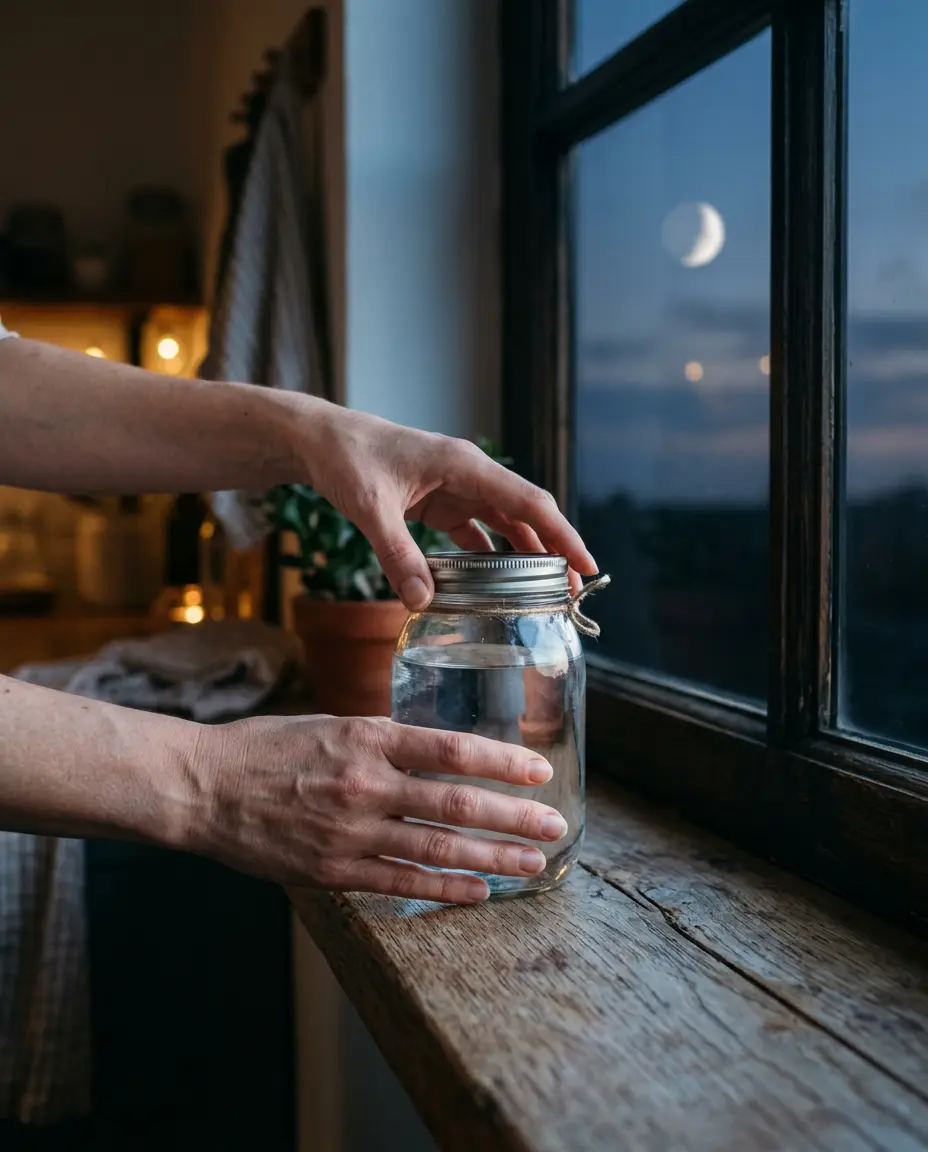
To make moon water, fill a clean glass jar with drinkable water, set a clear intention, and place it where moonlight can reach it overnight. Bring it in before sunrise, seal it, and store it somewhere cool and dark. A full moon is ideal, but any phase works.
Step-by-Step Instructions (6 Steps)
- Clean your jar. Wash and dry a glass jar so nothing interferes with the water.
- Fill it with water. Use drinkable tap, spring, or filtered water, leaving a little space at the top.
- Set your intention. Hold the jar and name what you want, whether calm, clarity, or manifestation.
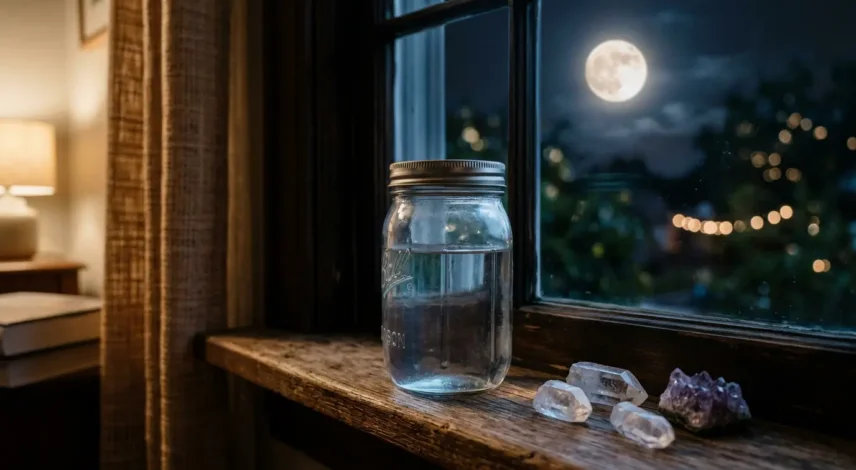
- Place it in the moonlight. Set the jar on a windowsill or outside where the moon can reach it, with the lid on.
- Leave it overnight. Let it charge from dusk to dawn, then bring it in before sunrise so daylight does not take over the charge.
- Seal and store it. Close the lid and keep the jar in a cool, dark place until you use it.
Don’t worry if you forget the jar until mid-morning. It happens to all of us, and the water is still fine to use. A full moon gives the strongest charge, so many people plan the ritual around it. If you want to refresh your stones on the same night, here is how to cleanse and charge your crystals in moonlight.
How Long Should You Charge Moon Water?
Charge moon water overnight, ideally from dusk to dawn, which is usually 8 to 12 hours. Bring the jar in before sunrise so the water finishes charging under moonlight rather than sun. If you miss the exact night of the full moon, you still have a window of about 72 hours around it, meaning the day before, the night of, and the day after all work well.
How to Make Moon Water With Crystals
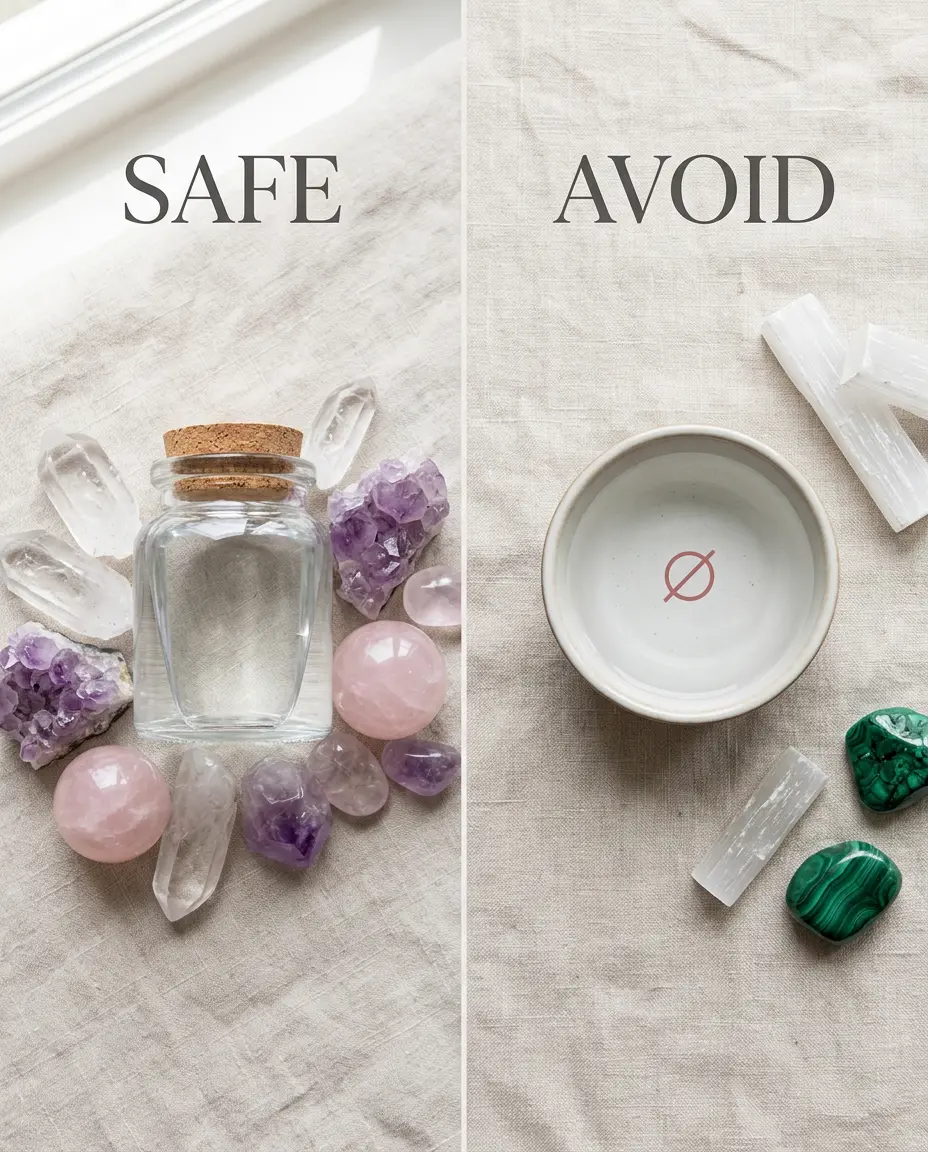
You can boost moon water with water-safe crystals like clear quartz, amethyst, and rose quartz, but keep soft or toxic stones such as selenite, malachite, and moonstone out of the water. The difference comes down to hardness and chemistry, not superstition. Here is a quick reference:
| Crystal | Water-Safe? | Mohs Hardness | Notes |
|---|---|---|---|
| Clear Quartz | Yes | 7 | Safe for a brief soak; a reliable all-purpose choice. |
| Rose Quartz | Yes | 7 | Safe in water; handle gently to avoid chips. |
| Amethyst | Yes | 7 | Safe in water; keep out of direct sun so the color does not fade. |
| Selenite | No | 2 | It is a form of gypsum. It dissolves and turns cloudy in water. |
| Malachite | No (toxic) | 3.5–4 | Contains copper. Not safe for water you plan to drink. |
| Moonstone | Use caution | 6–6.5 | Softer than quartz. Long soaking can scratch or dull it. |
Water-Safe Crystals to Use
The safest crystals for moon water are clear quartz, amethyst, and rose quartz, all of which sit at Mohs hardness 7. That hardness is the reason they hold up. Water-safe crystals like clear quartz can take a short soak without dissolving or pitting, so your stones last and you get to enjoy the ritual without worry. If you would rather keep a crystal near your jar without submerging it, an Amethyst Crystal Tree is a simple option. It sits beside the jar, adds amethyst’s calming presence to the space, and never touches the water, so a softer stone stays safe. New to crystals? Start with our guide to the 10 best healing crystals for beginners, then come back and pick your stone.
Crystals to Keep Out of the Water (and Why)
Keep selenite out of your moon water. Selenite is a form of gypsum at Mohs hardness 2, which is soft enough to scratch with a fingernail, and it partly dissolves on contact with water. At Potala Store, we have watched a single tap rinse turn a selenite wand into a cloudy, pitted lump overnight. Malachite is a separate problem, since it contains copper and is not safe for water you intend to drink. Moonstone is softer than quartz and can dull with long soaking. For any of these, set the stone on top of the lid or right beside the jar instead of in the water. Skipping this step is one of the most common crystal care mistakes beginners make.
How to Make Moon Water Without a Full Moon
No full moon tonight? You can make moon water during any moon phase, and clouds will not block it. The full moon is simply considered the most potent time, not the only time.
Using Other Moon Phases
Each phase carries its own association, so you can match the moon to your intention. A new moon suits fresh starts, a waning moon suits release, and a waxing moon suits growth. The full lunar cycle, known as the synodic month, runs 29.53 days, so a full moon comes around roughly once a month if you prefer to wait for it. One traditional exception is a lunar eclipse, which many practitioners avoid for making moon water and instead treat as a time to rest the practice.
When the Sky Is Cloudy or You Have No Yard
Clouds do not stop moon water, so an overcast night still works. The moon’s light and energy reach your jar whether or not you can see it clearly. If you live in an apartment with no outdoor space, a windowsill that faces the night sky is enough. It is completely normal to miss the exact night of the full moon or to work from a small city window. The ritual still counts, and consistency matters more than perfect conditions.
Is Moon Water Safe to Drink? Plus How to Store It
Moon water is generally safe to drink only if you made it with clean, drinkable water in a sanitized container, and did not add non-water-safe crystals or perishable herbs. When those conditions are met, moon water is just charged drinking water.
Is Moon Water Safe to Drink?
Drink moon water only when four things are true: you started with potable water, you used a clean glass jar, you added no toxic stones like malachite, and you added no perishable herbs. If you placed crystals directly in the water, use the water topically on your skin or for cleansing instead of drinking it. One honest limit is worth stating plainly. Moon water will not make unsafe water safe. If your tap water is not safe to drink on its own, the moonlight does not change that, so when in doubt, keep it for rituals rather than drinking.
How Long Does Moon Water Last & How to Store It
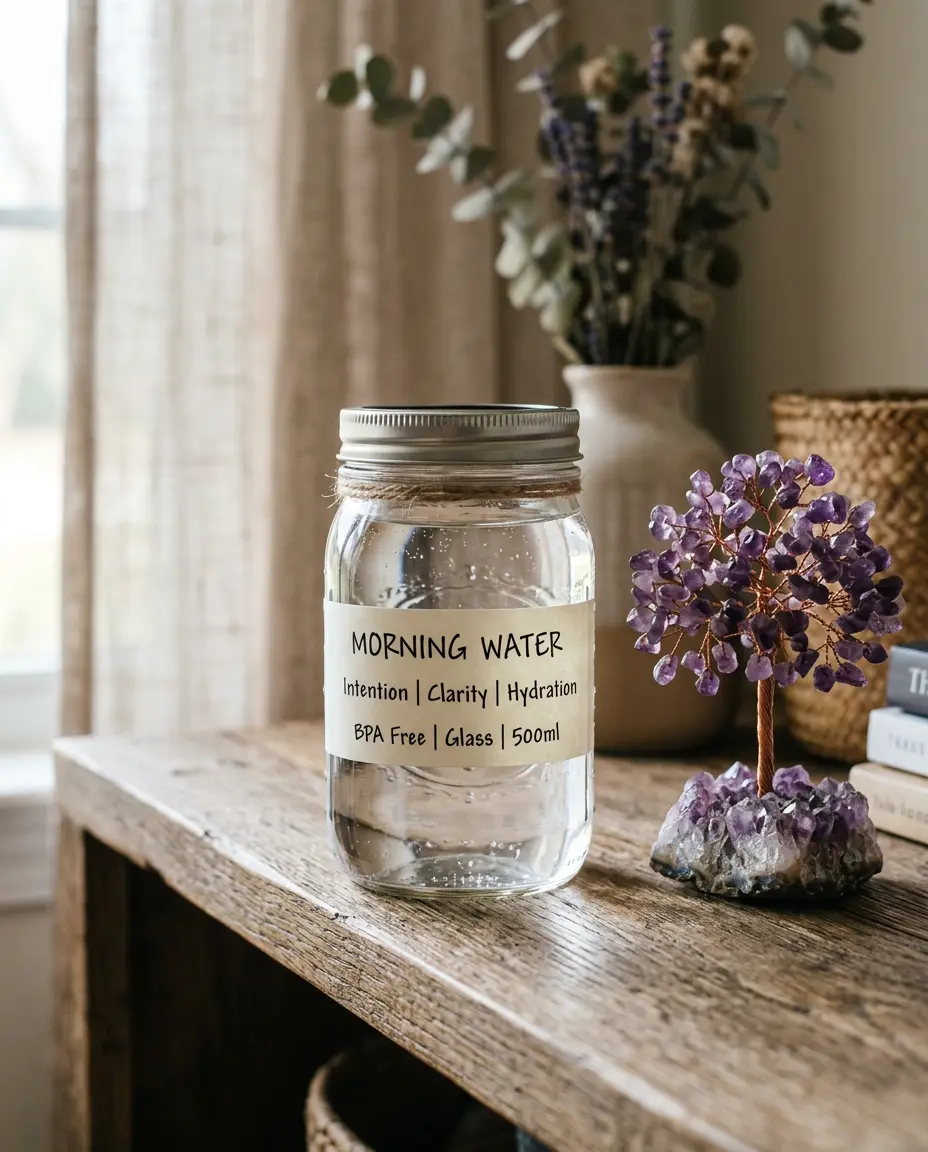
Plain moon water keeps for a few days at room temperature and up to 1 to 2 weeks refrigerated in a sealed glass jar. Store it in a cool, dark spot and keep it out of direct sunlight, which is the same guidance public health agencies give for home-stored drinking water. Label the jar with the date so you remember when you made it. Discard the water if it turns cloudy, smells off, or shows any floating particles. If you added herbs, use it within a day or two rather than storing it.
Tip: Many people like to cleanse their space before making moon water. A quick sound cleanse works well here. Explore Tibetan singing bowls and meditation essentials to set the mood for your ritual.
Frequently Asked Questions
Yes, if you made it with clean, drinkable water in a sanitized container and added no toxic crystals or perishable herbs. Refrigerate it and use it within a couple of weeks. When in doubt, use it on your skin or for cleansing instead of drinking it.
Plain moon water keeps a few days at room temperature and up to 1 to 2 weeks refrigerated in a sealed glass jar. Discard it if it turns cloudy, smells off, or grows anything.
No. The full moon is considered the most potent time, but you can make moon water during any phase, and clouds do not stop it. Many people work within the roughly 72-hour window around the full moon.
Water-safe options include clear quartz, amethyst, and rose quartz, all at Mohs hardness 7. Keep selenite, malachite, and moonstone out of the water and place them beside the jar instead.
Ready to Start Your Moon Water Ritual?
Set the mood with water-safe crystals, singing bowls, and meditation essentials, hand-selected and blessed at Potala Store.Shop Meditation Essentials
References
- Water on the Sunlit Moon: SOFIA’s detection of molecular water in Clavius Crater at 100 to 412 ppm. NASA
- Mineral Hardness (Gemstones): Mohs scale values for quartz, gypsum, and other minerals. U.S. Geological Survey (USGS)
- Mohs Hardness Scale: Definition and history of the mineral scratch-resistance scale. Encyclopaedia Britannica
- Storing Drinking Water Safely: Guidance on containers, cool storage, and rotating self-filled water. Centers for Disease Control and Prevention (CDC)