

Look closely at almost any Green Tara pendant and you will see her right foot stepping off the lotus. That one detail explains much of what Green Tara jewelry means. These pieces carry the image, mantra, or seed syllable of a female Buddha in Tibetan Buddhism, traditionally associated with swift, compassionate action.
This guide shows you how to read the symbols, tell Green Tara from White Tara, and choose a pendant you will actually wear. We checked each symbol against museum and encyclopedia sources, and we flag the places where sources disagree. To see current styles as you read, browse PotalaStore’s Tibetan thangka pendant styles.
Important note: This guide describes traditional Tibetan Buddhist beliefs for cultural and educational purposes. It is not medical, psychological, or financial advice, and it does not promise any spiritual outcome.
Table of Contents
What Is Green Tara Jewelry and Why Do People Wear It?
Green Tara jewelry is any pendant, necklace, ring, or bracelet that carries the image, mantra, or seed syllable of Green Tara, a female Buddha in Tibetan Buddhism traditionally associated with swift, compassionate action, worn as a daily reminder of courage and kindness rather than a guarantee of protection.
Her Sanskrit name is Shyamatara, and her Tibetan name is Sgrol-ljang. Britannica notes that some traditions treat her as the original Tara and as the consort of the Buddha Amoghasiddhi. In a popular account, a tear from Avalokiteshvara, the bodhisattva of compassion, became a lake, and a lotus opened to reveal her. She is central to Vajrayana practice across the Himalayan region.
Green Tara is one of several deities found on protective jewelry. For the wider picture, read our guide to Tibetan Buddhist protection amulets and their deities.
What Does the Name “Tara” Mean?
Tara is commonly translated as “she who saves.” The Sanskrit word is linked to the idea of crossing, so teachers often describe her as the one who helps beings cross over difficulty. Tibetans call her Dölma. Practitioners also address her as the Mother of Liberation, which is why many buyers choose her image as a gift for a mother or mentor.
Why Do Non-Practitioners Wear Green Tara Pendants?
Many people who buy these pendants are not formal practitioners. They wear her as a prompt to act with courage and kindness. Common moments include a new job, a recovery, a graduation, or Mother’s Day. The pendant works like a personal motto that you can see and touch. We cover respectful wear in the last section.
What Do Tara’s Posture, Color, and Lotus Symbolize on a Pendant?
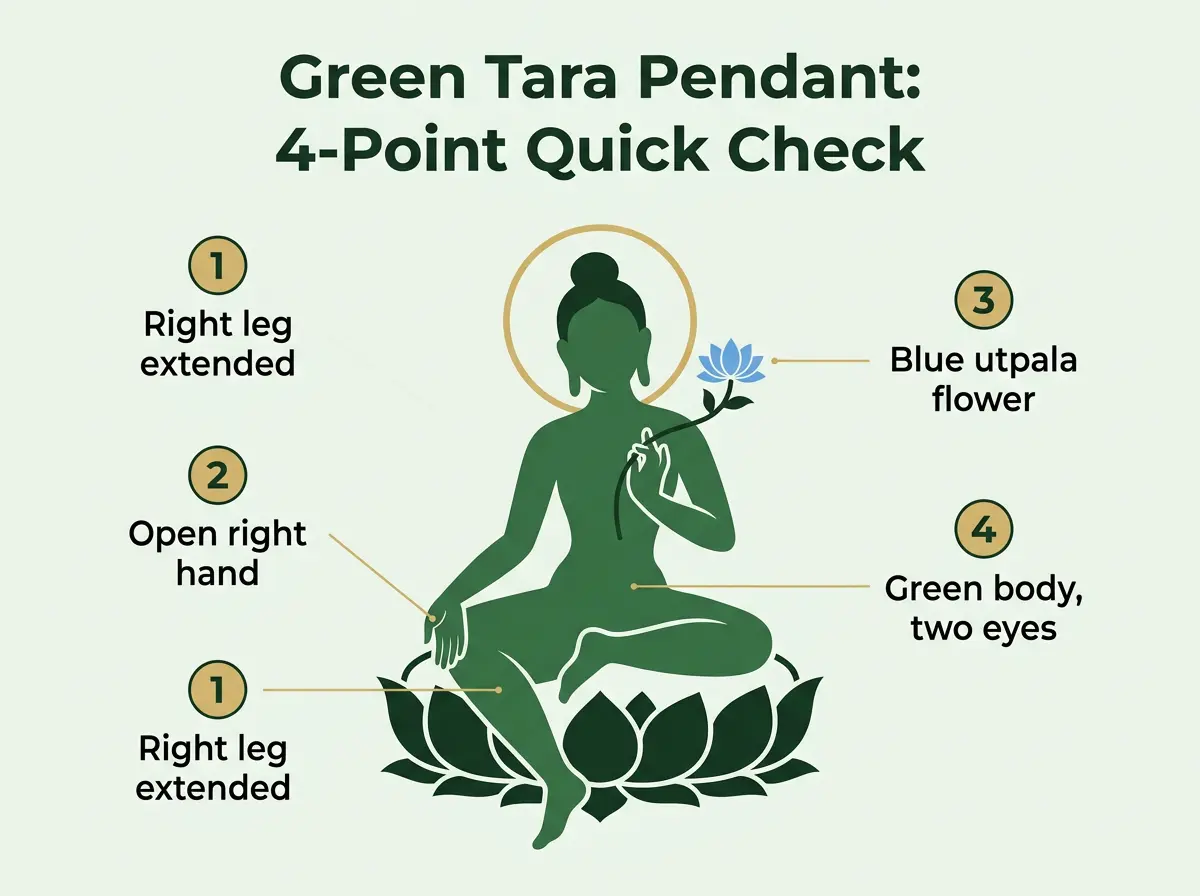
On a well-made Green Tara pendant, four details carry the meaning: her right leg extended off the lotus, her right hand open in a gesture of generosity, a blue utpala flower at her shoulder, and her green body color, traditionally linked with swift, enlightened activity.
- Right leg extended: poised to rise and help.
- Right hand open (varada mudra): a gesture of generosity.
- Blue utpala lotus: held by the left hand near the shoulder.
- Green body color: linked with swift, compassionate activity.
The Extended Right Leg: Readiness to Act
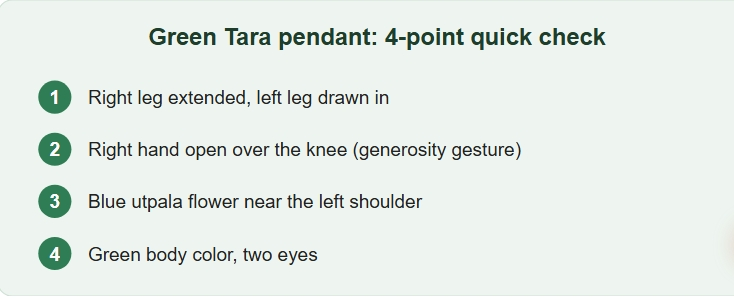
Green Tara sits with her right leg extended and her left leg drawn in. Himalayan Art Resources lists this posture as a defining trait of her green form. The Rubin Museum explains that the extended leg lets her rise at any moment to help her followers. The pose signals readiness to help, because it shows her poised for swift action rather than settled in stillness. On a pendant, look for the foot stepping off the lotus seat. It is the fastest single cue.
The Generosity Mudra and the Utpala Flower
Her right hand rests over the knee in the varada mudra, a gesture of generosity. Her left hand holds the stem of a utpala, a blue lotus, near the shoulder. At one to two inches tall, the flower often shrinks to a tiny bud. Some paintings also show the right hand differently. Treat the leg as your most reliable cue and the hand as supporting evidence.
Why Green? Color and the Activity Family
Green is traditionally linked with Amoghasiddhi, the Buddha associated with the activity family, which stands for carrying compassion into action. That link is why Green Tara is called the Tara of swift action. Lion’s Roar also lists eight fears tied to her tradition: pride, ignorance, anger, jealousy, wrong views, avarice, desire, and doubt. Many teachers read these as inner obstacles rather than outer dangers. For a wearer, the color works as a reminder to act, not as a promise that trouble will stay away.
How Is Green Tara Different from White Tara and the 21 Taras?
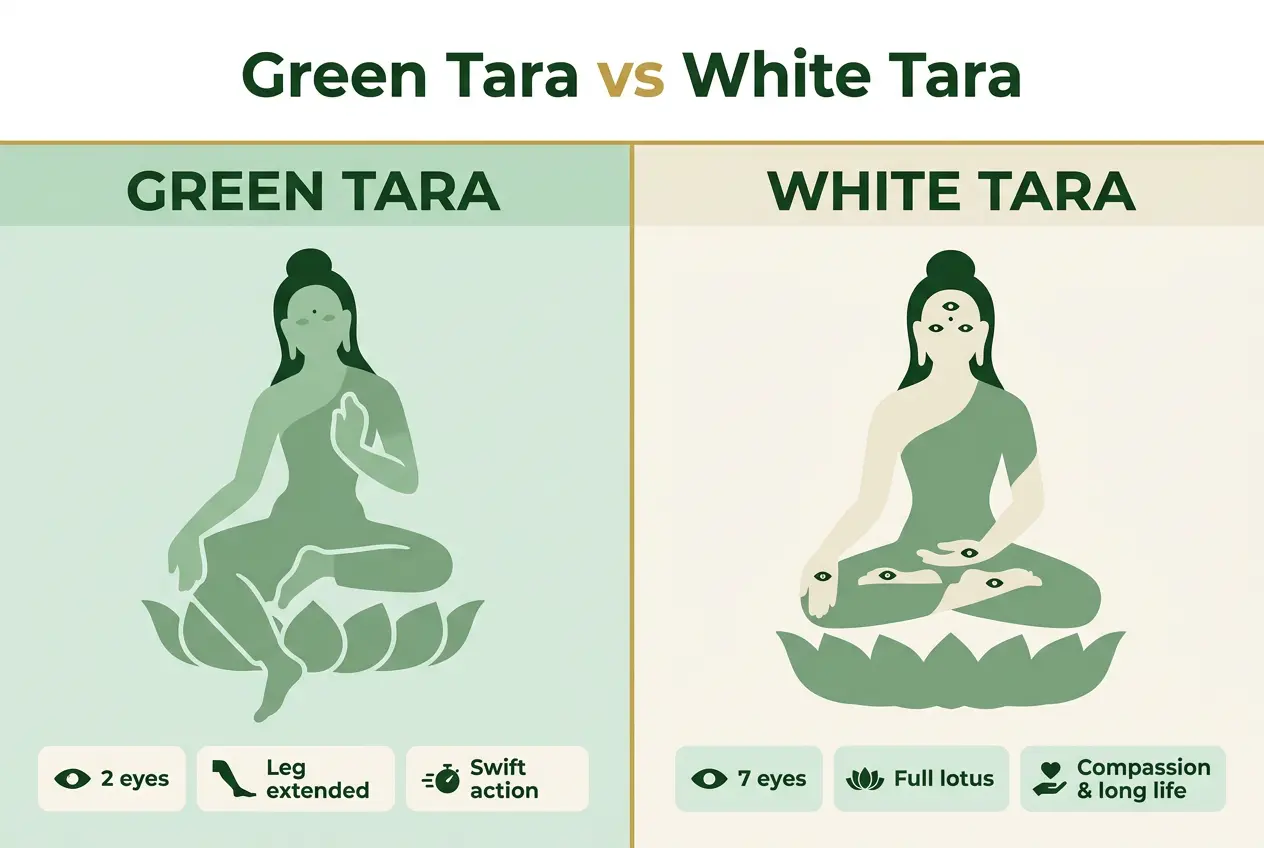
The fastest way to tell them apart is the eyes and legs: White Tara is shown with seven eyes, on her face, palms, and soles, and sits in full lotus, while Green Tara has two eyes and one leg extended, ready to step down and help.
Green Tara vs White Tara at a Glance
| Feature | Green Tara | White Tara |
|---|---|---|
| Body color | Green | White |
| Eyes | Two | Seven (face, palms, soles) |
| Seat | Right leg extended, left leg drawn in | Full lotus, legs crossed |
| Traditional association | Swift help and compassionate action | Compassion and long life |
| Quick pendant clue | Foot stepping off the lotus | Crossed legs, white body |
Where the 21 Taras Fit In
The 21 Taras are twenty-one forms of Tara, each with its own color and praise verse. They come from a text known as the Praises to the Twenty-One Taras, and the Indian master Atisha (982-1054) helped carry the practice to Tibet. Green Tara and White Tara are the best-known forms, but they are not the only ones.
Sources also differ on the royal wives linked to each form. Britannica pairs Green Tara with a Nepali princess and White Tara with a Chinese princess, and some texts reverse that pairing. Guanyin is a separate figure, the East Asian form of Avalokiteshvara. If a listing blends the names Green Tara and Guanyin, judge the piece by its image, not its title. Beginners mix these figures up often, and checking the legs and eyes takes ten seconds.
Which Format Fits Your Intention: Gau Box, Thangka, or Mantra Piece?
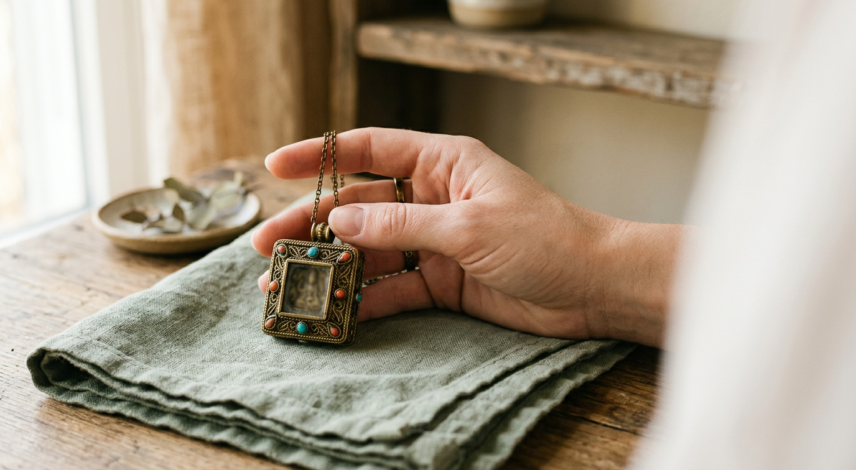
Choose the format by how you will use it: a gau box works as a wearable shrine, a hand-painted thangka pendant shows the most iconographic detail, and an engraved mantra or seed-syllable piece is the most discreet for everyday wear.
| Format | Best for | Typical materials | Price (as of 10/11/2026) |
|---|---|---|---|
| Gau (ga wu) box | A wearable shrine that opens | White copper, brass, silver; coral and turquoise accents | $68.95 for PotalaStore’s Ga Wu pendant |
| Thangka pendant | Most painted detail | Mineral pigments under glass, or a 3D painting in a leather box | $68.95 for PotalaStore’s 3D thangka pendant |
| Embossed metal pendant | Daily wear, sturdy | 925 sterling silver, brass | About $72-$80 in the pieces we compared |
| Mantra or seed-syllable piece | Office and everyday discretion | Silver or brass, engraved | Varies widely |
Marketplace listings for Green Tara pendants range from roughly $13 to well over $800, so price alone tells you little. Material, size, and image accuracy matter more.
Gau (Ga Wu) Box Pendants: A Wearable Shrine
A gau box (also spelled ga wu or ghau) is a small amulet case that traditionally holds a mantra scroll or other sacred contents. PotalaStore’s hand-painted Ga Wu box pendant in white copper pairs coral and turquoise accents with a thangka painted in mineral pigments behind glass. The glass protects the painting, so the image stays sharp with daily wear. The pendant measures 47 x 56.3 mm (about 1.85 x 2.22 in) and costs $68.95, down from $93.95. It comes in 14 deity styles and has a 60-day return window.
We would rather tell you this up front: the red finish on this piece is a sealed, cinnabar-colored decorative coating, not raw mineral cinnabar. Because the pendant comes in several deity designs, confirm the Green Tara option on the product page before you order.
Hand-Painted Thangka Pendants: Most Detail, Larger Size
A thangka pendant is a miniature version of a traditional Tibetan scroll painting. It shows the most iconographic detail, so it is the easiest format for checking the leg, hand, and flower. PotalaStore’s 3D thangka pendant uses a leather gawu box and an adjustable hand-woven cotton cord. The cord lets you change the length without buying a separate chain, and the page lists 16 deity styles at $68.95, down from $93.95. It holds a 4.33 out of 5 rating across three reviews, which is a small sample. One reviewer said it was “bigger than I had imagined,” so read the size notes before you buy.
Want the most visible detail? Compare the 3D hand-painted thangka pendant on an adjustable cord and check which deity styles are in stock.
Engraved Mantra and Seed-Syllable Pieces: Everyday Discretion
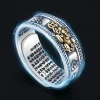
Engraved pieces keep the image small and put the focus on sound. The Green Tara mantra is Om Tare Tuttare Ture Soha, ten syllables in all, and her seed syllable is Tam. Both fit easily on a metal pendant, a ring, or a bangle that reads as simple jewelry at work. For more on how these pieces are made and worn, see our guide to Green Tara mantra jewelry and engraved mantra pieces.
How Do You Choose an Authentic Green Tara Pendant? (5 Checks)
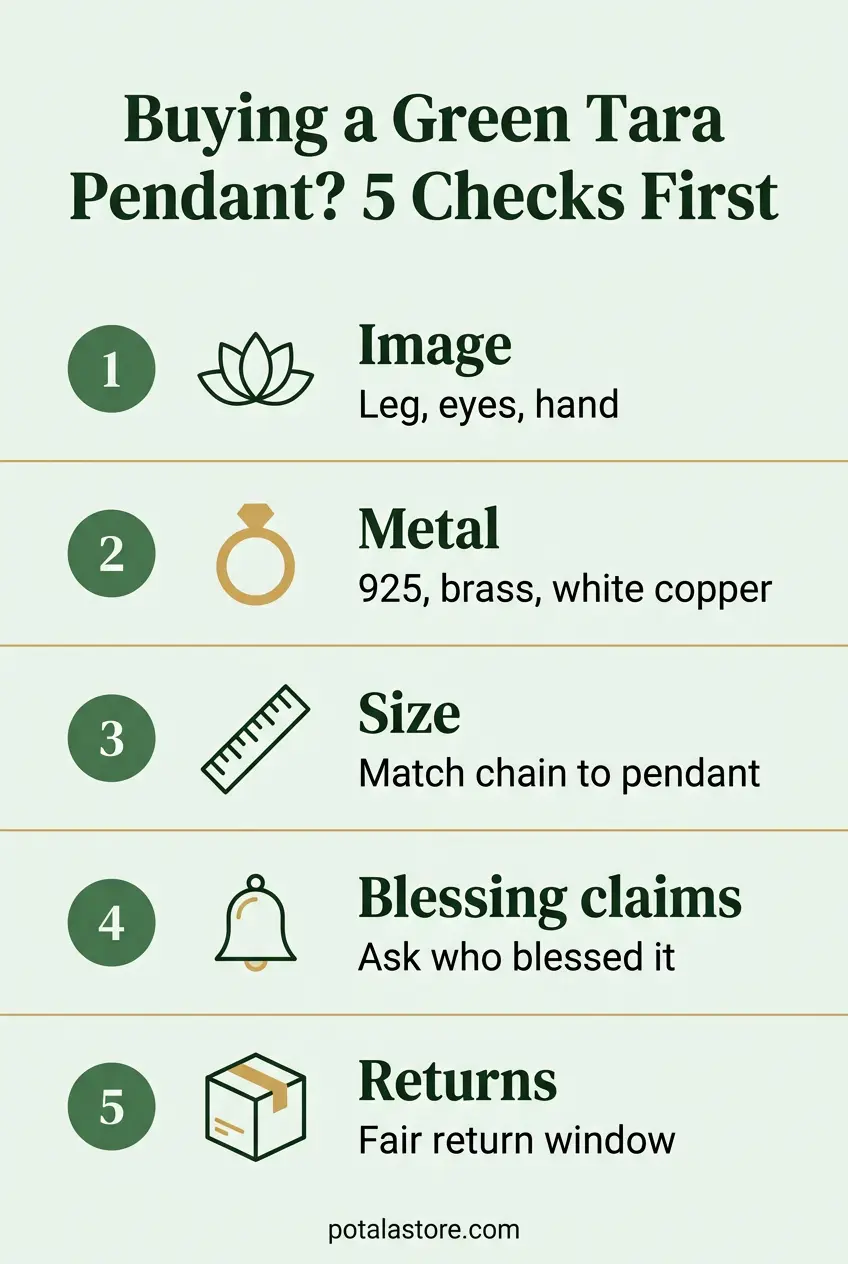
Run these five checks before you buy a Green Tara pendant:
- Iconography: right leg extended, two eyes, right hand in the generosity gesture.
- Metal: a stated alloy such as 925 sterling silver, brass, or white copper.
- Size: about 1 to 1.5 inches for daily wear, 2 inches or more for gau boxes and thangkas.
- “Blessed” claims: ask who performed the blessing and which ritual they used.
- Returns: a clear return window, such as PotalaStore’s 60 days.
Checks 1-2: Iconography and Metal
Start with the image. If the leg, eyes, and hand match the quick check above, the figure is Green Tara. Then read the metal description. The phrase “Tibetan silver” often means a base-metal alloy, not sterling silver. A seller who lists “925,” brass, or white copper is giving you something you can verify. If a listing names no metal at all, ask before you pay.
Check 3: Pendant Size and Chain Length (in Inches)
For most adults, a 16 to 20 inch chain places a pendant at or just below the collarbone. Larger pieces look better on longer cords. Use this table as a starting point:
| Pendant height | Suggested chain or cord length | Example |
|---|---|---|
| About 1 to 1.5 in | 16-18 in | Engraved or embossed metal pendant |
| About 1.5 to 2 in | 18-20 in | Smaller thangka pendant |
| About 2 in or more | 20-22 in, or an adjustable cord | Ga Wu box (about 1.85 x 2.22 in) |
Checks 4-5: “Blessed” Claims and Return Policy
In Tibetan Buddhism, an image is traditionally consecrated through a ritual called rab gnas (often written rabne), performed by qualified monks or lamas. Reiki is a Japanese practice and is a different thing. Ask any seller who did the blessing and how. Our Ga Wu pendant page suggests arranging rabne through a qualified teacher if consecration matters to you.
Then check the return window. A fair policy lets you compare the pendant with the photos in your hands. PotalaStore offers 60 days.
Giving one as a gift? You do not want to pick the wrong deity or offend someone. Add a short card explaining who Green Tara is, and make sure the recipient is comfortable wearing a religious image.
How Should You Wear and Care for a Sacred Pendant Respectfully?
Wear a Green Tara pendant above the waist, take it off for showers, swimming, and sleep, and store it somewhere clean, since small habits keep the metal in good shape and show respect for an image many people hold sacred.
Simple Etiquette for Non-Buddhists
Non-Buddhists can wear Tara imagery when they understand what it represents and treat it with care. Keep the pendant above the waist and away from the floor. Do not use it as a costume prop. If you want a more active practice, a 21-bead wrist mala for Green Tara mantra practice lets you count recitations. A pendant is a reminder, not a guarantee. What you do after you glance at it is the practice.
Everyday Care for Silver, Brass, and Copper
Wipe 925 sterling silver with a soft, dry cloth to slow tarnish. Treat brass and white copper gently, and keep perfume and lotion off the metal. Painted thangkas should stay dry, because water can damage the pigment. Store the pendant in a clean pouch or box when you are not wearing it.
Frequently Asked Questions
Yes. Many teachers and retailers say non-Buddhists can wear Tara imagery when they understand its meaning and treat it with care. Keep it above the waist and avoid using it as a fashion costume.
The Green Tara mantra is Om Tare Tuttare Ture Soha (Sanskrit Svaha), ten syllables in all. The Rubin Museum notes that Tibetan Buddhists across the Himalayan region widely know it. Many practitioners count recitations on a mala.
Traditionally, an image is consecrated through rab gnas by qualified monks or lamas. Whether that changes a piece for you is a matter of belief, not something we can measure. Ask the seller who blessed it and how, or request consecration from a qualified teacher.
A 16 to 20 inch chain places most pendants at or just below the collarbone. Larger gau box or thangka pendants, around 2 inches tall, usually sit better on 20 to 22 inch cords. Use the table in Check 3 above, then compare sizes on the product pages you like.
In summary, Green Tara jewelry carries the image or mantra of a compassionate, action-ready figure in Tibetan Buddhism. Choose by the four-point iconography check, a stated metal, the right size, honest blessing claims, and a fair return window. Then wear the piece respectfully and let it do what it was made to do: remind you to act with kindness.
Find a Green Tara pendant you will wear every day
PotalaStore’s Tibetan pendants come with a 60-day return window, so you can check the details in person.Browse PotalaStore’s Tibetan pendant necklaces
References
- Green Tara: Encyclopaedia Britannica entries on Green Tara and on Tara as a Buddhist goddess, used for names, origin accounts, and the White Tara comparison. Britannica: Green Tara and Britannica: Tara
- Green Tara Iconography: Museum-grade description of her posture, hand gesture, and color, plus context on the 21 Taras. Himalayan Art Resources
- Green Tara in Himalayan Art: Explains her extended leg and her mantra in the context of Tibetan painting. Rubin Museum of Art, Project Himalayan Art
- Who Is Tara? Teacher-written overview of Tara’s name and the eight fears. Lion’s Roar