
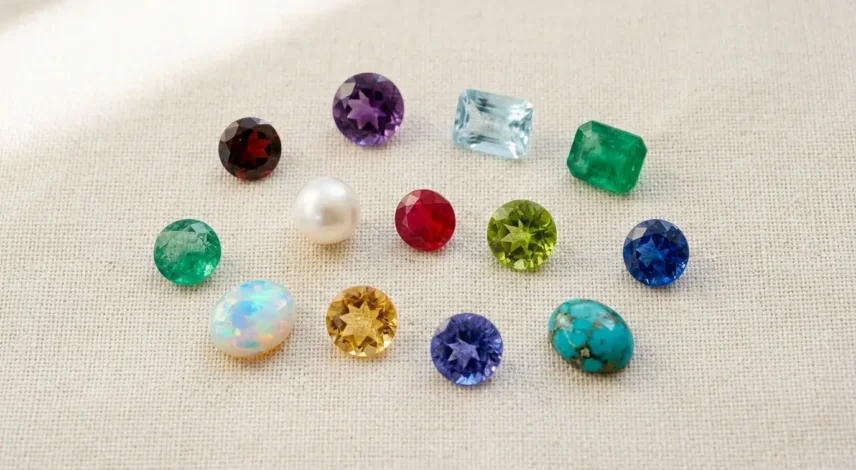

Two birthstones for a single month sounds like a mistake. It isn’t. Some months have two birthstones because three separate systems each assigned a stone to that month: the older traditional list, the modern list standardized in 1912, and gemstone associations tied to the zodiac. When a gem became too rare or too costly for most buyers, jewelers added a more affordable alternative, which left several months with more than one official stone.
At Potala Store, we’ve spent years sourcing sacred gemstones across Buddhist and Vedic traditions, and one pattern stands out: the stone someone is “supposed” to wear by the calendar often isn’t the one they reach for. Understanding why your birth month has options helps you pick the one that actually fits you, not just the one printed first on a chart.
This guide explains the real reason behind multiple birthstones, shows exactly which months have more than one, and helps you choose when you’re handed two. You’ll also see why modern and traditional charts disagree so often, and what an energy-based Eastern tradition adds that most Western guides leave out.
Quick answer: Multiple birthstones exist because three overlapping lists (traditional, modern, and zodiac) name stones for the same month, and because jewelers added affordable or newly discovered alternatives to rare, expensive gems. On the modern list, June, October, and November have two stones, August has three, and December has four.
Table of Contents
Why Do Some Months Have Two Birthstones?
Some months have two birthstones because several stone lists overlap at once. A gem’s rarity and affordability decided which stones made the cut, so when a rare gem stayed beyond most budgets, jewelers added a more affordable alternative for the same month. The result is a handful of months carrying more than one official gem, each with its own history and meaning.
Three forces created this. Different traditions named different stones, rare gems needed accessible substitutes, and newly discovered minerals were folded into the lists over time. Put together, they explain almost every “extra” birthstone you’ll find today.
The Three Systems That Overlap
Your birth month is defined by more than one list at the same time, and they don’t always agree. The traditional list is the oldest, with roots in the twelve stones of the breastplate of Aaron in the Book of Exodus, later tied to the zodiac and the calendar. The modern list was standardized much later for consistency. A separate set of zodiac stones is assigned by sun sign rather than by calendar month.
When two of these systems name different gems for one month, that month appears to “have two birthstones.” March is a clear case: the traditional list assigns bloodstone, while the modern list assigns aquamarine.
When a Stone Was Too Rare, Jewelers Added an Alternative
The most practical reason for a second stone is cost. As the Gemological Institute of America notes, some gems are simply too rare and expensive for most people, so alternatives were introduced to keep a beautiful option within reach. New finds also expanded the choices. Tanzanite, a blue-violet gem discovered in Tanzania in the 1960s, joined December’s lineup decades after the original list was set.
Changing consumer taste pushed the lists further. As shoppers wanted more colors, finishes, and price points, the trade added options so people could match a stone to their style instead of settling for a single assigned gem.
This is why the reasoning matters more than the label. A “second” birthstone is usually there to give you a real choice, not to confuse you.
How the Modern Gemstone List Was Standardized (1912 to 2016)

The modern birthstone list didn’t appear all at once. It was standardized in 1912 and revised several times over the following century, and each revision is a direct reason some months now show more than one stone.
The 1912 List That Started It All
In 1912, Jewelers of America (then the National Association of Jewelers) published the first standardized birthstone list for the United States. Before that, jewelers assigned stones inconsistently from region to region, which meant your birth month could carry different gems depending on where you shopped. The 1912 list gave the country a shared reference for the first time.
The 1952 Revision
The list didn’t stay fixed. In 1952, the Jewelry Industry Council revised it, adding and swapping stones to reflect changing tastes and supply. This revision is where several months formally gained a second modern option. Alexandrite was recognized for June, citrine for November, and tourmaline for October, sitting alongside the stones already in place.
Most guides skip this step, but it’s the hinge of the whole story. The reason your month may list two modern stones today usually traces back to a specific decision made in 1952, not to vague “tradition.” The 1952 update also set the pattern for everything that followed. Once the industry accepted that a single month could hold more than one modern stone, later additions like December’s tanzanite and August’s spinel had a clear precedent to build on.
Why Spinel Joined August in 2016
The list still changes. In July 2016, the American Gem Trade Association (AGTA) and Jewelers of America added spinel as an August birthstone, giving August a third official stone next to peridot and sardonyx. Spinel had been prized for centuries but overlooked on the birthstone charts, so its addition brought a durable, richly colored option to a month many felt was limited. It’s a good reminder that birthstone lists are living documents, not ancient fixed law.
Which Months Have More Than One Stone

Six months carry more than one birthstone across the modern and traditional lists. Here’s the full breakdown:
| Month | Birthstones | Why More Than One |
|---|---|---|
| March | Aquamarine, Bloodstone | Modern and traditional lists split |
| June | Pearl, Alexandrite, Moonstone | Alexandrite added as a rarer alternative |
| August | Peridot, Spinel, Sardonyx | Spinel added in 2016 |
| October | Opal, Tourmaline | Tourmaline is tougher for daily wear |
| November | Citrine, Topaz | Two warm, golden-toned options |
| December | Tanzanite, Turquoise, Zircon, Blue Topaz | Most options of any month |
Months With Two Birthstones
On the modern list, June, October, and November each have two stones. March joins them once you count its traditional stone, bloodstone, alongside its modern one, aquamarine. June’s rarest option is worth knowing: alexandrite shifts from green in daylight to red under incandescent light, a natural color change that makes it one of the most sought-after gems on any list.
Born in October or November? Our Scorpio birthstone guide for October and November breaks down topaz, citrine, and their alternatives in more depth.
Months With Three or Four
August has three stones (peridot, spinel, and sardonyx), while December has four (tanzanite, turquoise, zircon, and blue topaz), the most of any month. December’s variety comes from mixing an ancient stone (turquoise) with a modern discovery (tanzanite) and affordable, everyday choices (blue topaz and zircon). If your month sits in this group, you have real room to match a stone to your color and budget.
Modern vs. Traditional Charts: Why They Disagree

If two guides list different stones for your month, neither is wrong. They’re reading from different charts. The modern list and the traditional list often name different stones for the same month, which is exactly why you sometimes see two.
| Month | Traditional Stone | Modern Stone |
|---|---|---|
| March | Bloodstone | Aquamarine |
| August | Sardonyx | Peridot |
| November | Topaz | Citrine |
| December | Turquoise | Tanzanite / Blue Topaz |
What Changed Between the Two Charts
The traditional chart leaned on older, sometimes muted stones like bloodstone and sardonyx. The modern chart brought in brighter, more widely available gems that were easier to source and set. Durability played a part too. Aquamarine rates 7.5 to 8 on the Mohs hardness scale, hard enough for daily rings and bracelets, which made it a practical modern pick for March over the softer, opaque bloodstone. Availability mattered as much as looks. A stone jewelers could source in steady supply and reliable color made a better everyday birthstone than one that arrived rarely or unevenly, and that practicality shaped which gems the modern chart favored.
How to Choose When You Have Two Options
If your month has two stones, you’re not choosing wrong. Both are legitimate, and the “right” one is simply the one that suits how you’ll wear it. Weigh four things: durability for daily wear, the color you’ll actually enjoy, the meaning that resonates with you, and your budget.
March is a helpful example of a split worth understanding. See how we cover both sides in our guide to March’s bloodstone and aquamarine, which explains when each stone makes more sense.
The Spiritual Side of Your Birthstone: Choosing by Energy
Western lists sort stones by month. Eastern traditions ask a different question: which stone matches your energy? This adds a fourth lens on top of the three Western systems, and it’s the layer most birthstone guides leave out entirely.
Why Eastern Traditions Add Another Layer
In Vedic and Tibetan practice, a stone is traditionally paired with a person’s ruling planet and energetic needs, not only their calendar month. The same gem can be recommended to very different people for very different reasons, which is why a strict month-by-month chart tells only part of the story. These pairings come from long cultural traditions rather than scientific study, and they’re best understood as meaning and intention rather than medicine. Amethyst shows how this works. A Western chart files it under February, while Vedic and Tibetan practice may recommend it to almost anyone seeking calm and clearer focus, tied to the qualities of the stone rather than a birth date.
In our years sourcing stones for each birth month at Potala Store, we’ve noticed the same thing again and again. The stone someone connects with rarely lines up neatly with a single calendar rule, and the “why” behind a stone matters as much as the month attached to it.
Choosing a Stone by Energy, Not Just Your Birth Month
Instead of defaulting to the first stone on your month’s list, you can match a stone’s traditional energy to what you actually want, whether that’s calm, grounding, clarity, or protection. A natural garnet birthstone bracelet is a good example. Garnet is January’s stone, but it’s traditionally worn for grounding and steady energy by anyone drawn to that quality, regardless of their birth month. Read the tradition as an invitation, not a restriction.
Find the Birthstone That Fits You
Whether your month gives you one stone or four, the best choice is the one that feels like yours. Explore hand-selected pieces, ethically sourced and blessed in the Tibetan tradition.Browse Birthstone Healing Necklaces →
Frequently Asked Questions
No. Most months have a single modern birthstone. On the modern list, June, October, and November have two, August has three, and December has four. The remaining months carry just one official stone.
March pairs aquamarine with bloodstone. Aquamarine is the modern stone, a durable blue-green gem most people recognize today, while bloodstone is its older traditional stone. That split is why March often appears with two birthstones.
Alexandrite, one of June’s options, is widely considered the rarest. It’s prized for changing color from green in daylight to red under incandescent light. High-quality tanzanite is also rare, since it’s found in only one place on Earth.
Yes. Alongside monthly stones, each zodiac sign has traditional gem associations assigned by sun sign rather than calendar month. That’s another reason a single birthday can point to more than one stone, and it’s worth checking your sign as well as your month.
References
- Birthstones by Month: Official overview of modern and traditional birthstones and their history. Gemological Institute of America (GIA)
- Why Some Months Have More Than One Birthstone: GIA’s explanation of rarity, availability, and popularity behind multiple stones. Gemological Institute of America (GIA)
- Birthstone List and Standardization: Background on the modern U.S. birthstone list, co-published by the trade associations. Source: Jewelers of America (Readers may search the organization’s website for current birthstone resources.)
- 2016 Addition of Spinel: Announcement adding spinel as an August birthstone. Source: American Gem Trade Association (AGTA) (Readers may search the association’s website for the official release.)