

Yes, you can wear a birthstone that isn’t yours, and nothing bad will happen when you do. Birthstones are a personal preference and a form of self-expression, not a rule you can break. The modern U.S. birthstone list was adopted on August 12, 1912, at the American National Retail Jewelers’ Association convention in Kansas City, Missouri, by the body now known as Jewelers of America, mostly to help stores sell more jewelry. That history matters, because it tells you the “one stone per month” idea is a retail convention, not a law of nature.
At Potala Store, we work directly with Himalayan artisans and monastery workshops, including our partners at Sera Jhe, where practitioners have chosen gemstones by intention for centuries rather than by a calendar. That view shapes this guide. We will explain why so many people wear a birth month gemstone that isn’t theirs, where the superstitions come from, and how to pick a birthstone crystal that actually fits your life.
Here is the short version. If you love an amethyst but you were born in July, wear the amethyst. If a garnet speaks to you in August, wear the garnet. The superstition that says otherwise is younger than you might think, and there is no science behind it. Give yourself permission to choose the stone that feels right.
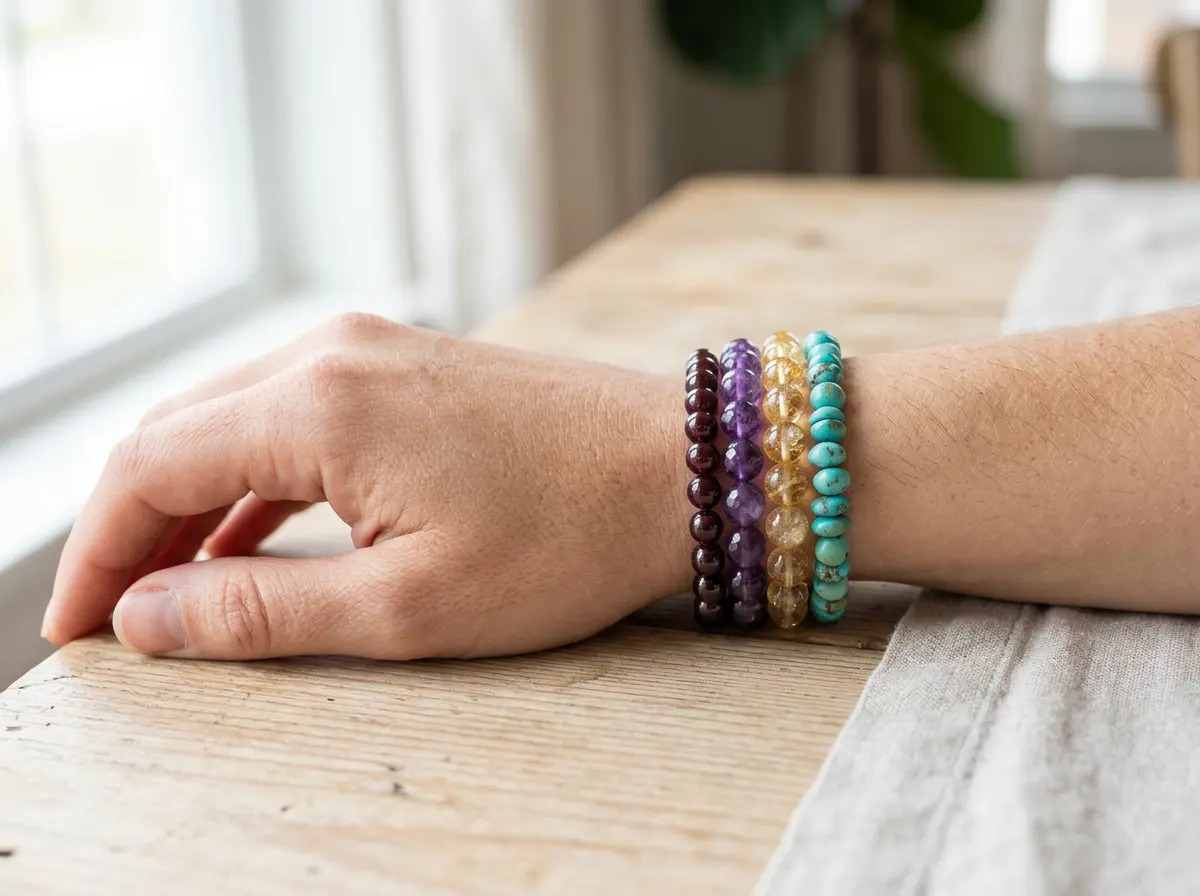
Table of Contents
Can You Wear a Birthstone That Isn’t Yours?
Yes, you can wear a birthstone that isn’t yours, because birthstones are a modern tradition rooted in personal meaning, not a binding rule. The system most Americans know was established in 1912 by the American National Retail Jewelers’ Association, now Jewelers of America, to standardize a marketing convention across the trade. Nothing about it requires you to wear only your birth month gemstone.
Think about how many people already do this without a second thought. Parents wear a child’s birthstone in a mother’s ring. Couples layer two birth months in one piece. Gift-givers pick a friend’s stone. A birthstone is a starting point for choosing jewelry, not a fence around it.
The tradition itself has shifted many times. December alone now carries turquoise, zircon, and tanzanite, and the list keeps growing as tastes change. If the official list can change, so can your personal choice.
Ready to explore stones by meaning instead of month? Keep reading, because the “how” is simpler than you think.
Is It Bad Luck to Wear the Wrong Birthstone?
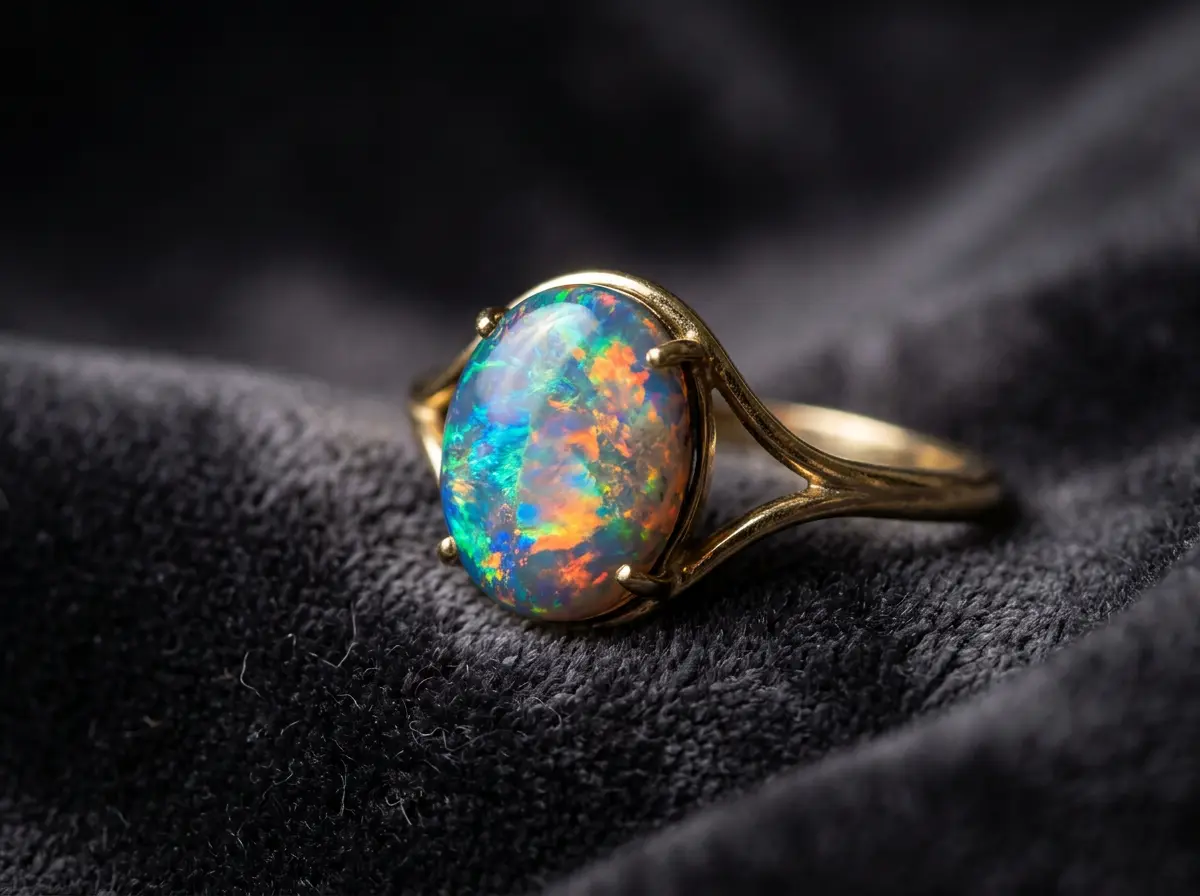
No, it is not bad luck to wear the wrong birthstone, and the most famous version of this superstition is a literary invention from 1829. The idea that opal brings misfortune traces to Sir Walter Scott’s novel Anne of Geierstein, published in 1829. In it, the opal worn by a character loses its color when touched by holy water, and she is soon reduced to “a small heap of ashes.” According to the American Gem Society, European opal sales dropped by about half in the year after the novel came out. The belief was fiction, not folk wisdom, and opal was actually prized for luck before Scott wrote his story.
That is the pattern with birthstone superstitions in general. The link between a wrong birthstone and bad luck has no scientific evidence behind it. Any change a person feels is traditionally attributed to the placebo effect, meaning the belief does the work, not the stone.
Here is a real example many people relate to. Say you were born in August, so your stone is peridot, a yellow-green color you have never liked. You are not doomed to wear it, and swapping it for a stone you love will not invite misfortune. Wearing opal in October, or any month, is perfectly safe.
If a stone worries you because of an old story, remember diamond is the April birthstone, and people of every month wear diamonds happily. The superstition falls apart the moment you look at it.
Why People Wear Gemstones Outside Their Birth Month
People wear gemstones outside their birth month mostly for personal preference and self-expression, and those two reasons cover the vast majority of choices. A stone’s color, its meaning, or a memory attached to it often matters more than the month printed on a chart. Jewelry is one of the clearest ways we show who we are, so it makes sense that people reach past the calendar.
Common reasons include:
- Personal preference. You simply love the color or feel of a stone, which is reason enough.
- Symbolism. Many pick a stone for what it traditionally represents, like amethyst for calm or garnet for strength.
- Family connection. A mother’s ring often carries the birthstones of children, not the wearer.
- Gifting. People choose a partner’s or friend’s stone to honor them.
- Milestones. A graduation, recovery, or new home can call for a stone that marks the moment.
If you want to see what each stone traditionally signals, our guide to what your birthstone says about you by month breaks down the meaning behind every birth month gemstone. It is a useful map when you are deciding which qualities you want to carry with you.
The takeaway is simple. You are allowed to choose a stone that reflects your story, not just your birthday.
How to Choose a Birthstone That Isn’t Yours (by Intention)
To choose a birthstone that isn’t yours, start with your intention, then check the stone’s durability, then trust your eye. This three-step method turns a random pick into a deliberate choice, and it draws on a tradition older than the 1912 list.
- Start with your intention. Ask what you want to support right now, such as calm, focus, protection, or confidence. In Tibetan practice, a stone is often held before it is chosen, meaning you sit with it and set an intention rather than grabbing whatever matches your month. This intention-based approach is our core recommendation.
- Check the durability with the Mohs scale. The Mohs scale rates a gem’s scratch resistance from 1 to 10. Per GIA’s Amethyst Care and Cleaning Guide, amethyst rates a 7 on the Mohs scale with good toughness, which makes it suitable for any jewelry type, rings included. Softer stones like opal, which rates 5.5 to 6.5, do better in pendants and earrings than in daily-wear rings.
- Trust your aesthetic and intuition. Once intention and durability check out, pick the stone that draws your eye. If it makes you want to wear it every day, that matters more than the calendar.
For everyday wear, an 8mm bead is the ideal size, comfortable and subtle for daily use. If you are new to beaded stones, our guide on how to choose your first crystal bracelet walks you through bead size, wrist fit, and forgiving starter stones.
This intention-first idea is also the heart of Western zodiac crystal practice, where your sign is a starting point rather than a limit. Our roundup of the best crystals for every zodiac sign shows how to match a stone to the qualities you want to grow.
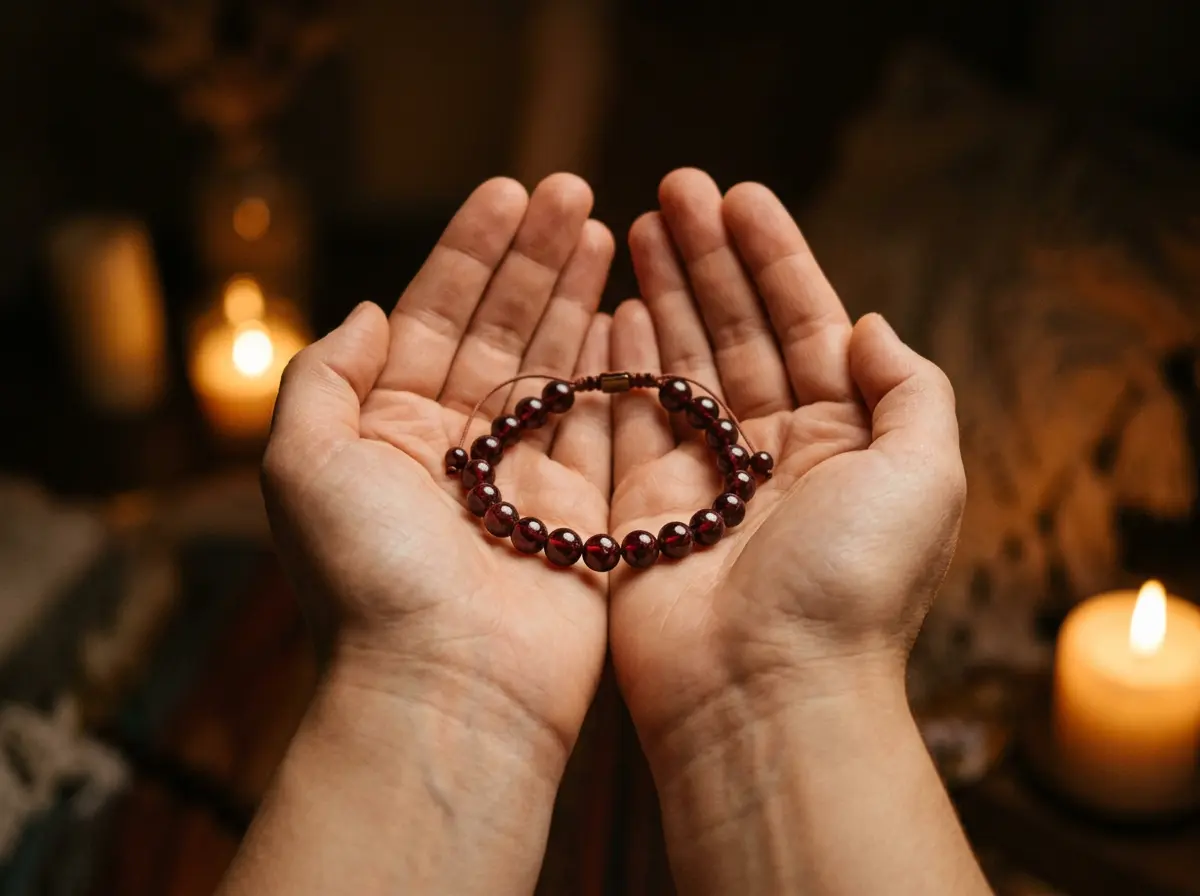
When you want a stone that is ready to wear with intention already set, our Natural Garnet healing bracelet is a strong pick. It uses genuine garnet on 8mm beads, comes blessed at our partner monastery, and fits on a unisex elastic cord. That means it stands up to daily wear, carries a set intention, and uses real untreated stone rather than dyed glass. You can wear a stone that truly resonates with you, free of any birth-month rule, and it also makes a safe, thoughtful birthday gift. To compare more options, browse our full range of healing crystal bracelets.
| Intention | Suggested stone | Traditional month | Mohs hardness | Best worn as |
|---|---|---|---|---|
| Strength and grounding | Garnet | January | 6.5–7.5 | Bracelet, ring |
| Calm and clarity | Amethyst | February | 7 | Ring, bracelet, pendant |
| Renewal and courage | Peridot | August | 6.5–7 | Pendant, earrings |
| Creativity and joy | Opal | October | 5.5–6.5 | Pendant, earrings |
⚠ Note: The spiritual and energy qualities described here reflect traditional beliefs and personal experience. They are not scientific or medical facts, and crystal jewelry is a complementary wellness accessory, not a treatment for any condition.
Can You Wear More Than One Birthstone at Once?
Yes, you can wear more than one birthstone at once, and layering or stacking several stones is common and meaningful. A mother’s ring is the classic example, holding a birthstone for each child. Stacking bracelets or layering necklaces lets you combine stones for different intentions, like calm plus protection.
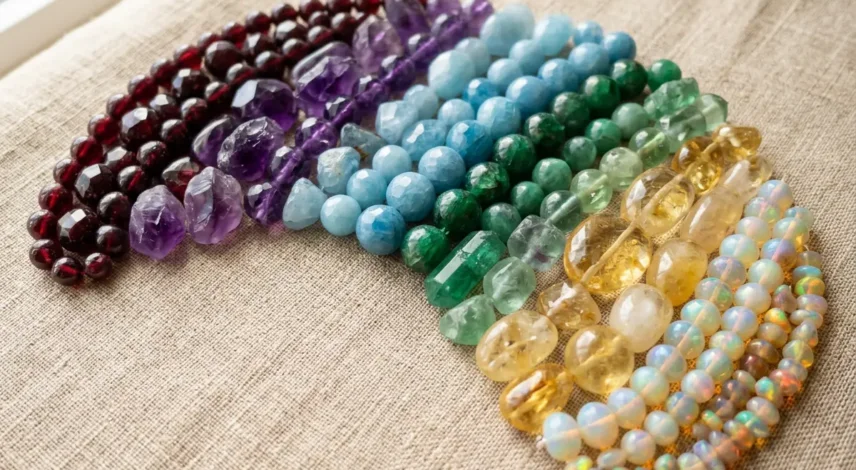
Some months even give you built-in variety. August offers peridot, spinel, and sardonyx, with spinel added as an official August birthstone in 2016 by the American Gem Trade Association and Jewelers of America, the third update to the list since 1912. December offers turquoise, zircon, and tanzanite, the last of which the American Gem Trade Association added in October 2002. You can mix these freely.
One practical tip. When you stack stones, watch out for a softer gem or soft metal rubbing against a harder one. A soft stone like opal can scratch against a harder neighbor over time, so give delicate pieces a little space or their own strand.
Frequently Asked Questions
No, it is not bad luck. This is a superstition, not a fact, and the opal version of it comes from an 1829 novel rather than any ancient tradition. Remember that diamond is April’s birthstone, yet people of every month wear diamonds without a second thought.
Practically nothing changes, because there is no scientific evidence that the “wrong” stone affects your luck. Any feeling you notice is traditionally attributed to the placebo effect. Many people simply feel more confident wearing a stone they love, which is a real and welcome benefit.
Yes, and layering or stacking two or more birthstones is common and often deeply personal. Just avoid letting a soft stone or soft metal grind against a harder one, since that can cause scratches over time.
Yes, you can wear any crystal you want. Your birthstone is a starting point, not a boundary, and many people choose stones by intention or by zodiac sign instead. Our guide to the best crystals for every zodiac sign is a good next step if you want to choose by your star sign.
Your Stone, Your Choice
You have full permission to wear the stone that speaks to you, whatever the calendar says. Start with your intention, check that the stone suits how you plan to wear it, and choose the piece you will actually reach for. That is how a birthstone becomes personal rather than prescribed.
Ready to Choose a Stone That’s Truly Yours?
Explore the PotalaStore collection of healing crystal bracelets and find a stone chosen for meaning, not just for the month you were born.Shop Crystal Bracelets →
📚 References
- Birthstone History: Confirms the 1912 standardization of the modern U.S. birthstone list by the trade body now known as Jewelers of America. Jewelers of America
- The Opal Superstition: Documents how the “unlucky opal” belief traces to Sir Walter Scott’s 1829 novel rather than genuine folklore. American Gem Society
- Amethyst Durability: GIA’s official guidance on amethyst’s Mohs hardness and suitability for everyday jewelry, including rings. GIA (Gemological Institute of America)
- Tibetan Gemstone Tradition: Peer-reviewed research on the role of gemstones as potent substances in Tibetan Sowa Rigpa practice. Gerke, B., HIMALAYA Journal (2019)