
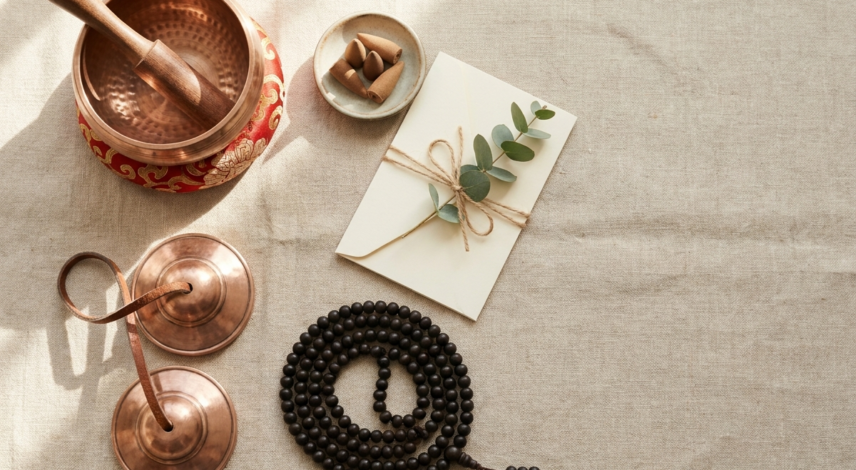

Your teacher already owns three mats. The best gifts for yoga teachers fit how they actually teach: a small Tibetan singing bowl or tingsha bells for teachers who close class with savasana, a 108-bead mala for meditation-focused instructors, and a specific handwritten note for everyone. Most students spend $15 to $50, and a pooled class gift can reach $100 or more.
A quick key: savasana is the final resting pose, a mala is a string of prayer beads, and tingsha are small Tibetan cymbals joined by a strap. Below are 10 ideas, grouped by where a teacher will use them: opening and closing class, wearing daily, setting up a home practice corner, or no purchase at all. Prices run from $0 to $70.
At Potala Store, we sell handmade Tibetan meditation tools, so several picks are ours. We mark them (ours), and we tell you where each one falls short. We checked every price and size against the live listing on 11/20/2026.
Already sure you want a sound tool? Start with our handmade Tibetan singing bowls from $40.95, then come back for the rest.
Table of Contents
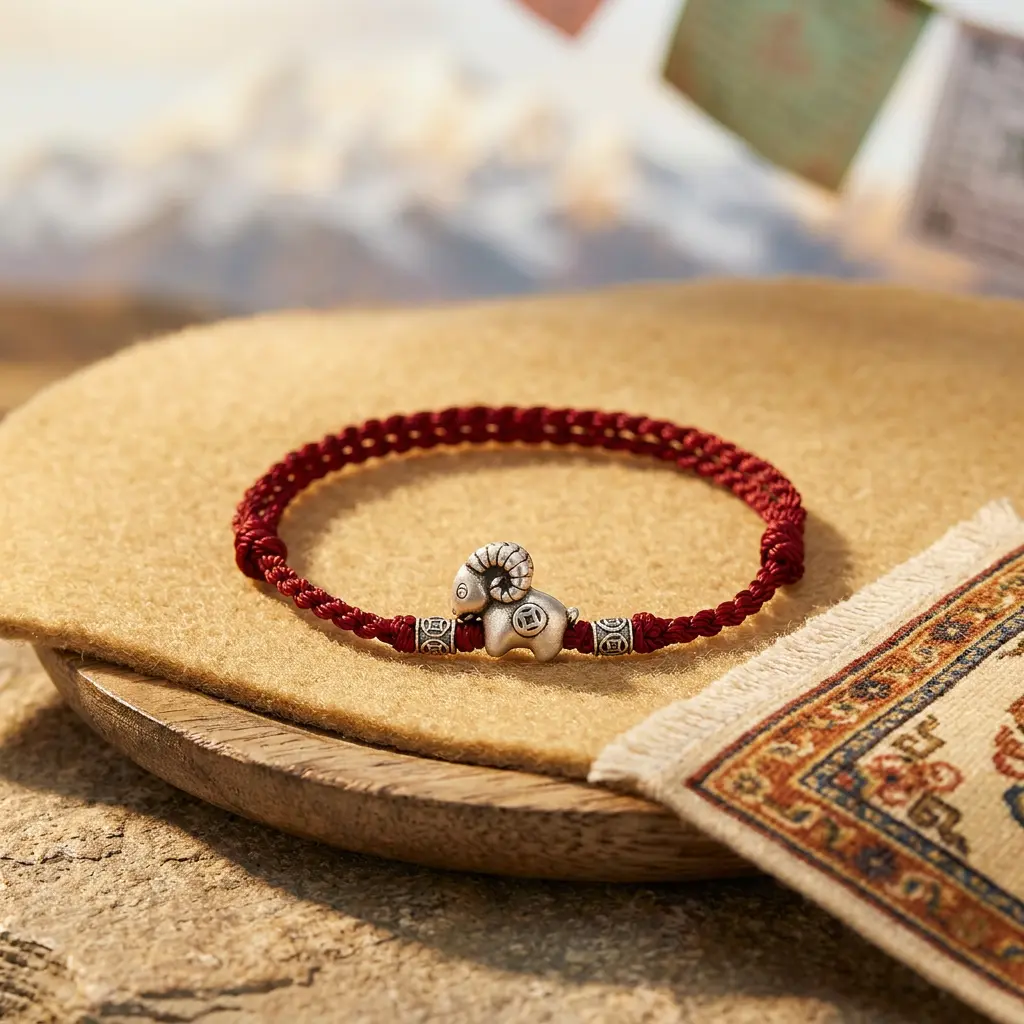
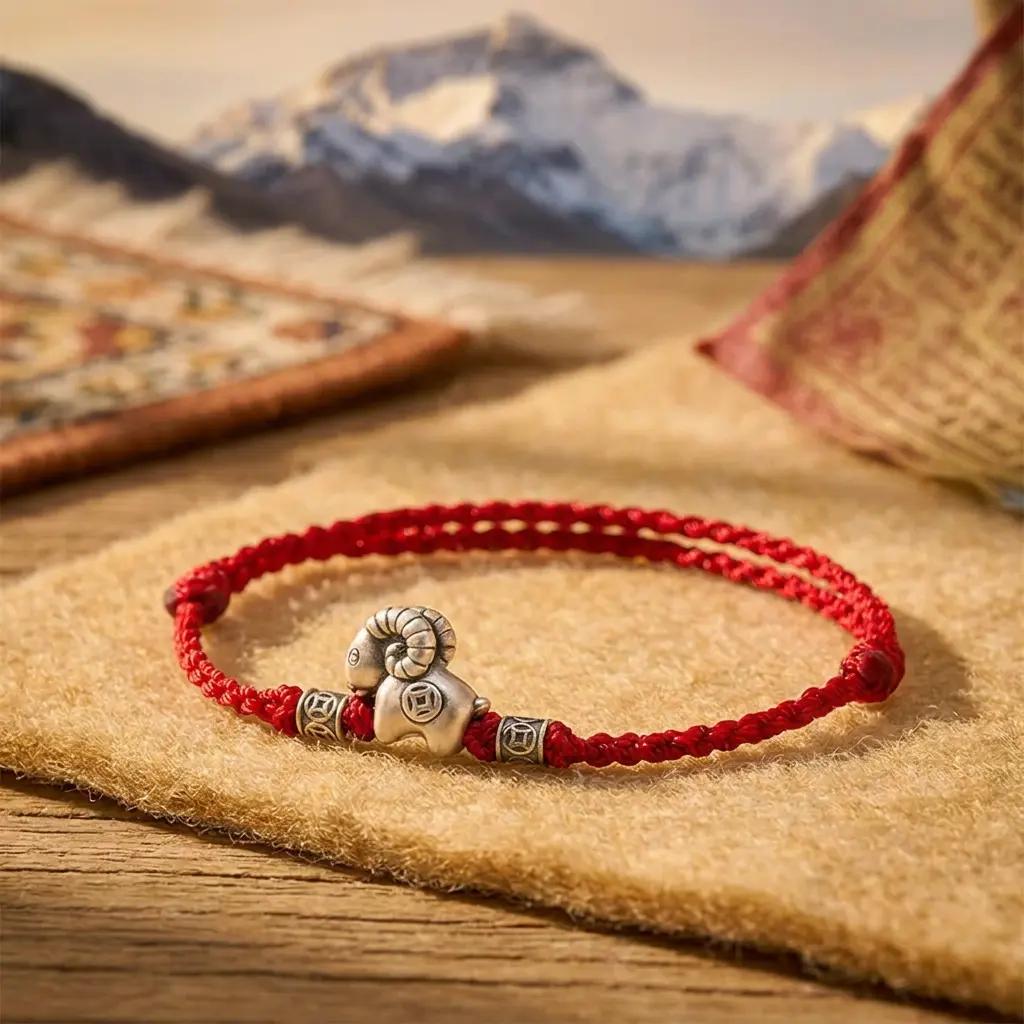
What Makes a Good Gift for a Yoga Teacher?
Five checks separate a thoughtful yoga teacher gift from a forgettable one:
- It matches how they teach. A restorative or yin teacher uses a sound tool more often than a power vinyasa teacher does.
- It fits in a yoga bag. Teachers carry everything between studios, so small beats bulky.
- It is not a mat, block or slogan T-shirt. We left mats off this list on purpose. Teachers choose their own gear.
- It fits your budget. Stay near $15 to $50, since a modest solo gift never feels awkward in front of other students.
- It respects the studio. Some studios are scent-free, and some limit what staff can accept, so ask before you buy incense or anything pricey.
Does the Gift Match How They Teach?
Match the gift to the class they lead. Teachers who end with a long savasana get the most from a singing bowl or tingsha. Restorative yoga and yin yoga teachers hold poses for minutes, so one clear sound can mark each transition. Meditation-focused instructors use a mala daily. Hot yoga teachers need gear that survives heat and sweat, so a handwritten note or a home-practice gift is the safer choice.
How Much Should You Spend on a Yoga Instructor Gift?
Most students spend $15 to $50 on a yoga instructor gift at the end of a session or during the holidays, and a class that pools money for a group gift can reach $100 or more. Café Après’s 10/26/2026 gift guide gives the same range. Under $50 reads as a thank-you, not an obligation. Keep a solo gift modest so it does not feel awkward in front of other students. For a group gift, one meaningful item beats five small ones.
All 10 Ideas at a Glance
| Idea | Price | Best for | Occasion |
|---|---|---|---|
| 1. Om Mani Padme Hum singing bowl (ours) | $40.95–$46.95 | Teachers who close with savasana | Holiday, end of session |
| 2. 8 cm copper singing bowl set (ours) | $69.95 | Teachers who travel between studios | Group gift, holiday |
| 3. Tingsha bells (ours) | $52.95–$62.50 | Meditation and breathwork cues | Holiday, teacher training graduation |
| 4. 108-bead wood mala bracelet (ours) | $25.95 | Meditation-focused teachers | Last-minute, end of session |
| 5. Knot bracelet (ours) | $28.95–$58.95 | Teachers who keep jewelry minimal | Holiday |
| 6. Backflow incense cones, 60-pack (ours) | $20.95 | Teachers who burn incense at home | Holiday |
| 7. Green sandstone Buddha statue (ours) | $42.95 | Teachers who meditate at home | Holiday, teacher training graduation |
| 8. Vajra altar mat (ours) | $48.95 | Teachers with a home practice corner | Holiday |
| 9. Handwritten note | $0 | Every teacher | Any time |
| 10. Workshop or class | Varies by workshop | Teachers who keep learning | Group gift, teacher training graduation |
Prices checked on potalastore.com on 11/20/2026. They can change, so confirm at checkout.
For gifts beyond yoga, browse our spiritual gift ideas for men, women, and couples.
Sound Tools for Opening and Closing Class
A singing bowl or a pair of tingsha is a gift a teacher uses in front of every class: one sound to open, one to close savasana. A Tibetan singing bowl is a hand-hammered metal bowl that rings when you strike it with a mallet. Tingsha make a shorter, higher chime, and a bowl rings lower and longer. Singing bowls are traditionally used to mark the start and end of meditation.
The research is early. In an observational study by Goldsby, Goldsby, McWalters and Mills (Goldsby et al., 2017), 62 adults reported less tension, anger, fatigue and depressed mood after a group sound meditation with singing bowls, gongs and bells (all P < .001). The study had no control group, and the session was a group event where participants lay down, not one small bowl at the end of class. A 2022 paper from the same research group, also on 62 participants, linked gains in spiritual well-being to lower tension and depression scores. Treat both as background, not proof.
⚠️ Important Note: The meanings and uses described for singing bowls, tingsha, mantras and symbols come from Tibetan Buddhist tradition and user experience, not medical evidence. Sound meditation is not a treatment for any condition. If your teacher is sensitive to loud sounds, choose a gentler gift.
1. Om Mani Padme Hum Singing Bowl, $40.95–$46.95 (ours)
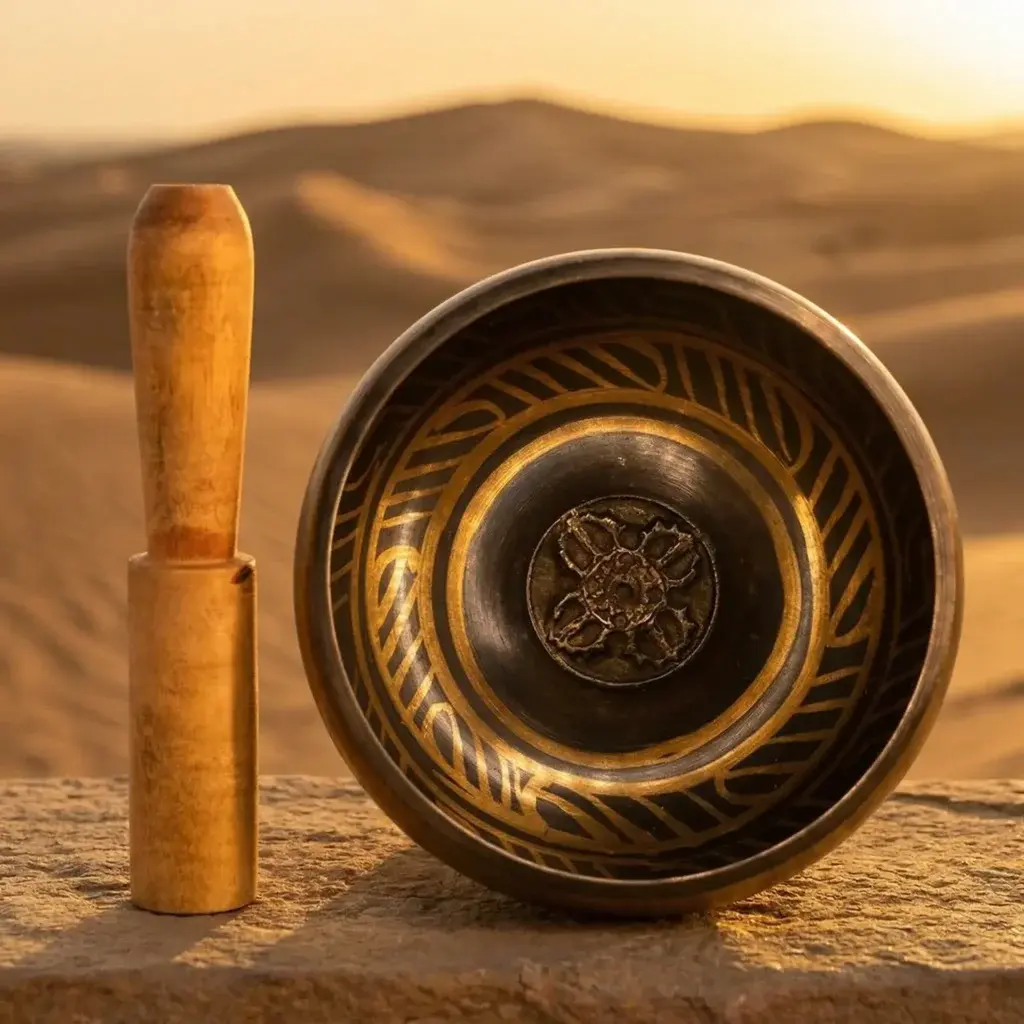
Best for: teachers who strike a bowl at the end of savasana. Choose this if you want a bowl under $50 with a mallet included.
This Tibetan singing bowl is copper, with the six-syllable mantra Om Mani Padme Hum engraved outside and a hand-etched pattern inside. Potala Store’s listings say its pieces are handmade in Tibet or Nepal. The bowl comes in three sizes: 3.1 in (8 cm) at 6.2 oz (175 g), 3.3 in (8.5 cm) at 7.6 oz (215 g), and 3.7 in (9.5 cm) at 10.6 oz (300 g). A dual-ended wooden mallet comes with every size, with a felt tip for soft strikes. You can add a brocade cushion ring that steadies the bowl. One strike lets a teacher close savasana without speaking, which keeps the quiet intact.
Limit: bowls this small ring bright and short, not deep. Pick one for a small room or a home class, not a large studio.
2. Handmade 8 cm Copper Singing Bowl Set, $69.95 (ours)
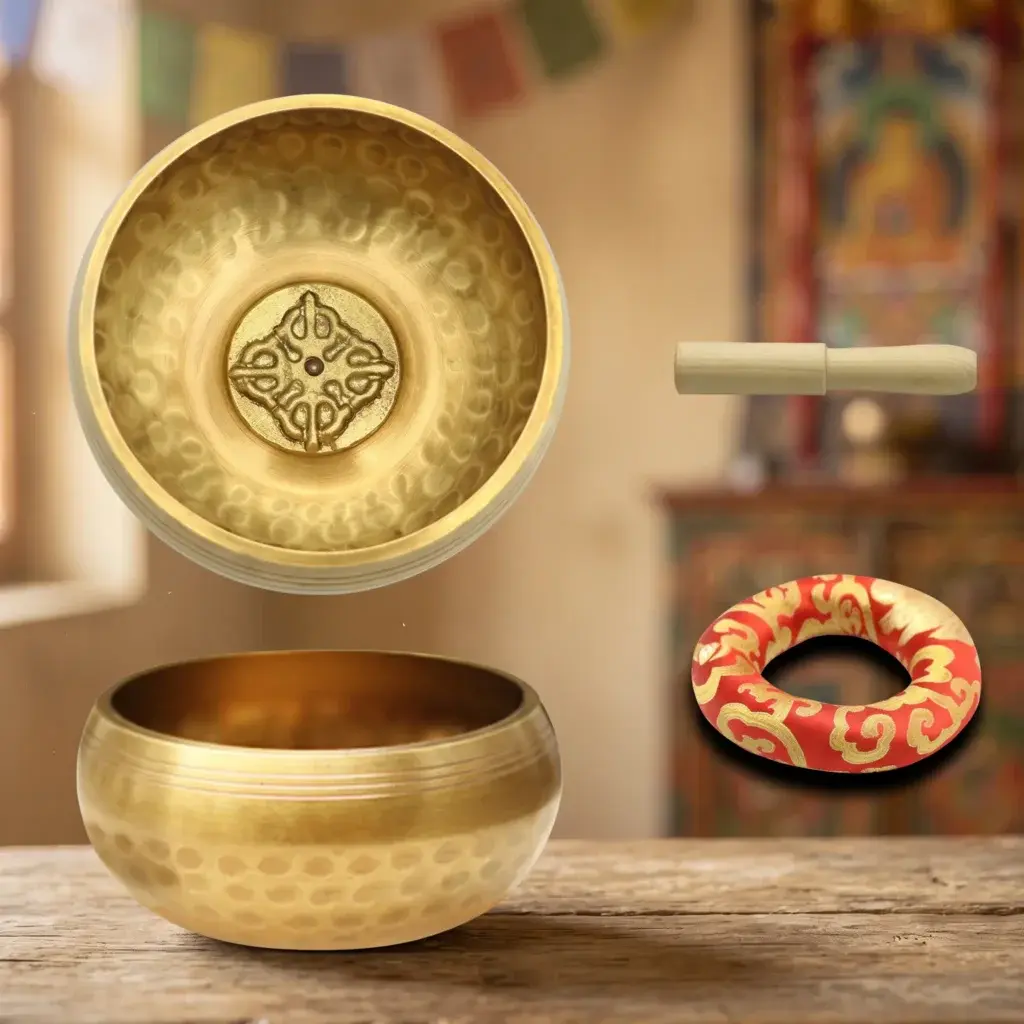
Best for: teachers who travel between studios and have little bag space. Many teachers work at several studios, as Café Après notes, so a gift that packs small gets used.
The handmade 8 cm copper bowl set holds one hammered copper bowl, 3.1 in (8 cm) wide and 1.6 in (4 cm) tall, at 9.5 oz (270 g). It also includes a wooden striker with one suede-wrapped end and a hand-sewn brocade cushion ring. The bowl is palm-sized and fits a yoga bag, so a teacher can strike it to start a breathing round or end a meditation at any studio.
Limit: small bowls ring brighter and shorter than large ones. Our own listing says to look at a 6 to 8 inch bowl for sound baths or group sessions. At $69.95, choose this one for portability, not volume.
3. Tibetan Tingsha Bells, $52.95–$62.50 (ours)
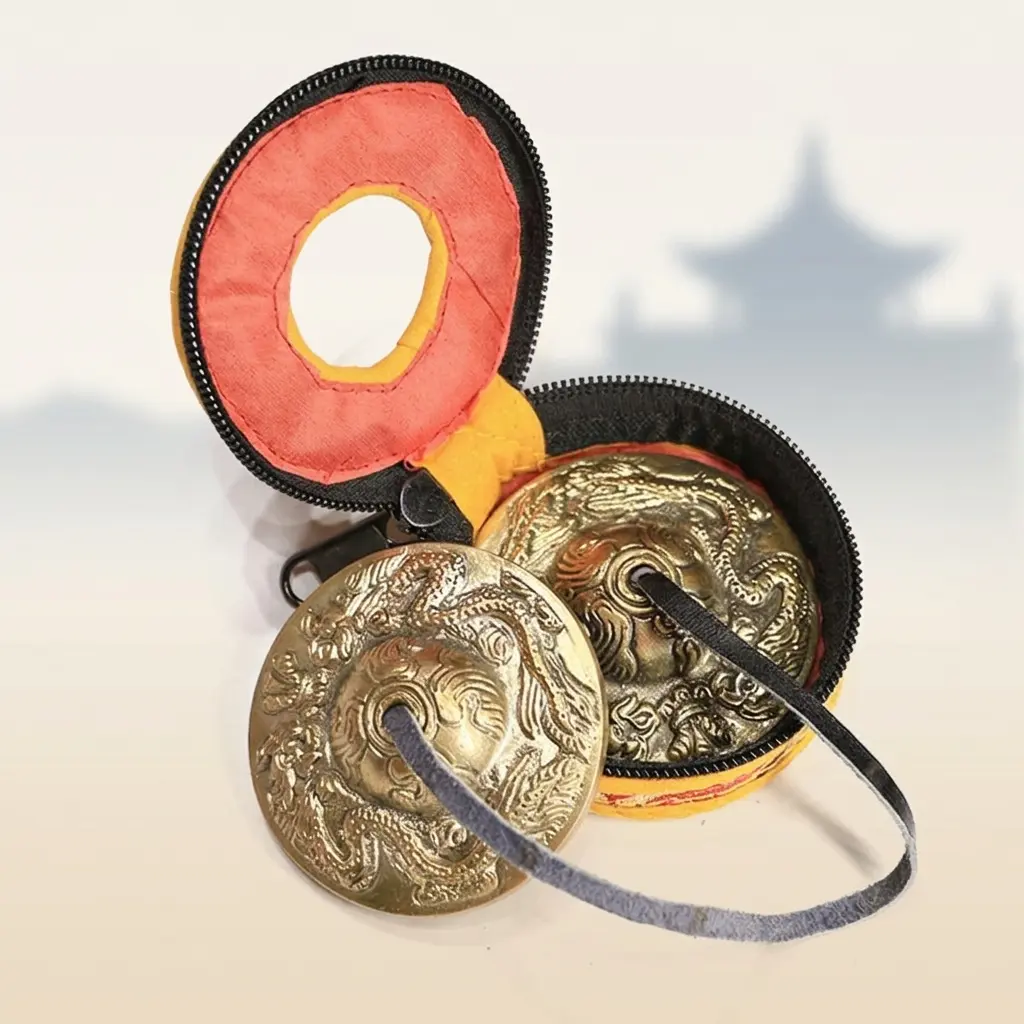
Best for: teachers who cue meditation or breathwork rounds. Choose this if the teacher counts breaths or times a sit by sound.
Tibetan tingsha bells for meditation timing are a pair of small cymbals on a leather strap. You strike the edges together for one short, high chime. We carry two designs: Om Mani Padme Hum with Eight Auspicious Symbols at $62.50, and Six True Words and Dragon in copper, with a carry bag at $52.95. The dragon pair is 2.6 in (6.5 cm) wide and 0.12 in (0.3 cm) thick, and the two bells weigh about 7 oz (200 g) together. Because the chime is short, a teacher can mark a breathwork round without reaching for a phone timer.
Limit: a tingsha has one pitch and a short ring. It will not replace a bowl for a long closing.
Not sure about size? Our guide on how to choose a Tibetan singing bowl covers five checks before you buy.
Mala and Bracelet Picks They Can Wear Daily
A 108-bead mala is the easiest meditation gift to get right: it costs under $30, fits any wrist, and is traditionally used to count mantras or breaths. The 108 beads are strung with one larger guru bead, which marks where a round starts and ends. In Tibetan Buddhist practice, you turn the mala around at the guru bead instead of crossing it.
One rule for teachers: wear it after class. A mala or bracelet with no clasp can slide or catch during inversions and hands-on adjustments. Anything that swings, dangles or snags is a poor fit while demonstrating poses, so suggest your teacher slip it off before class and put it on afterward.
4. 108-Bead Wood Mala Bracelet, $25.95 (ours)
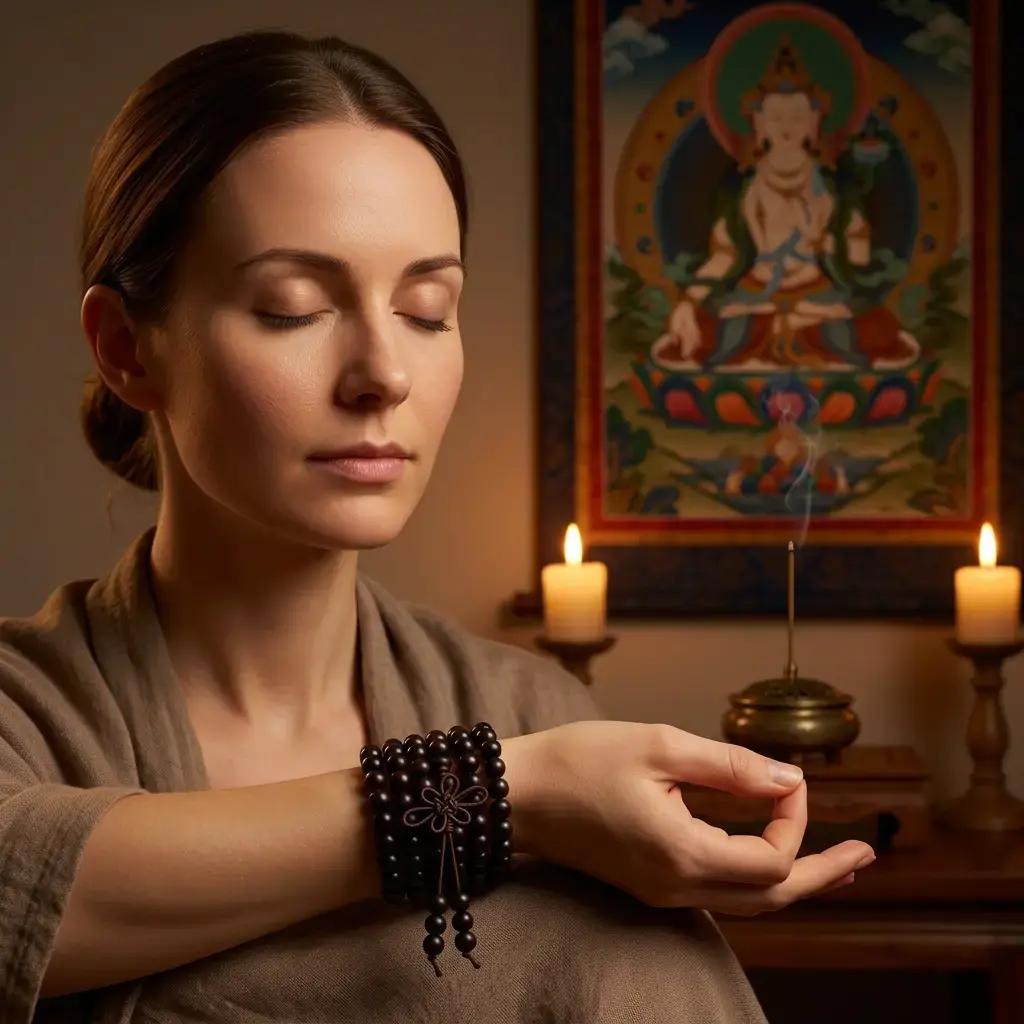
Best for: meditation-focused teachers. Choose this if you want one gift that works on the wrist and in meditation.
Our 108-bead wood mala bracelet (8 mm) has 108 beads plus one guru bead, each 0.31 in (8 mm) wide, on an elastic cord. It comes in rosewood, ebony, wenge or tiger skin wood, from reddish brown to deep black to striped. Wrapped four times, it sits on the wrist as a bracelet. Unwrapped, it works as a full mala for counting a round, and the listing gives its length as about 36 to 40 in (91 to 102 cm). Material matters for daily wear, so pick the wood by color and feel. At $25.95, it is light and simple to ship.
5. Handmade Tibetan Knot Bracelet, $28.95–$58.95 (ours)
Best for: teachers who keep jewelry minimal. Choose this if the teacher avoids anything that dangles.
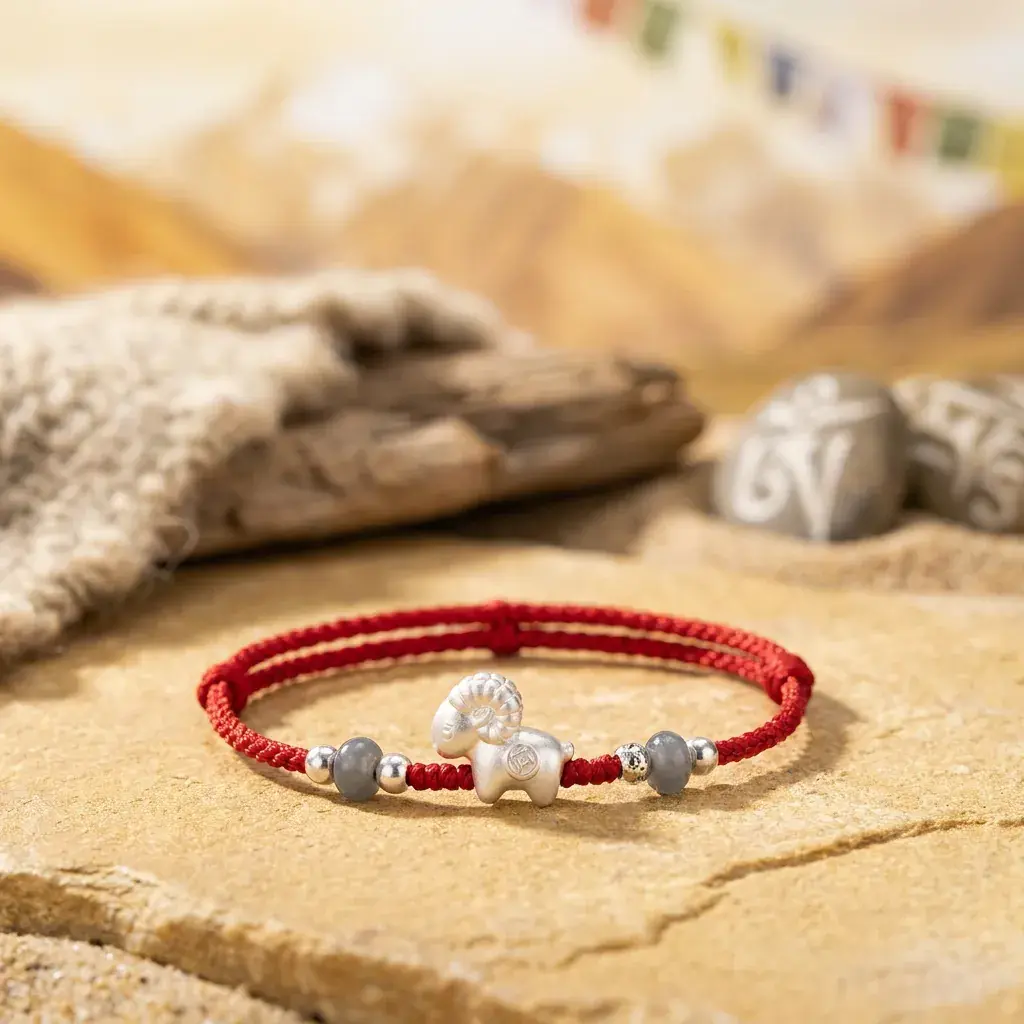
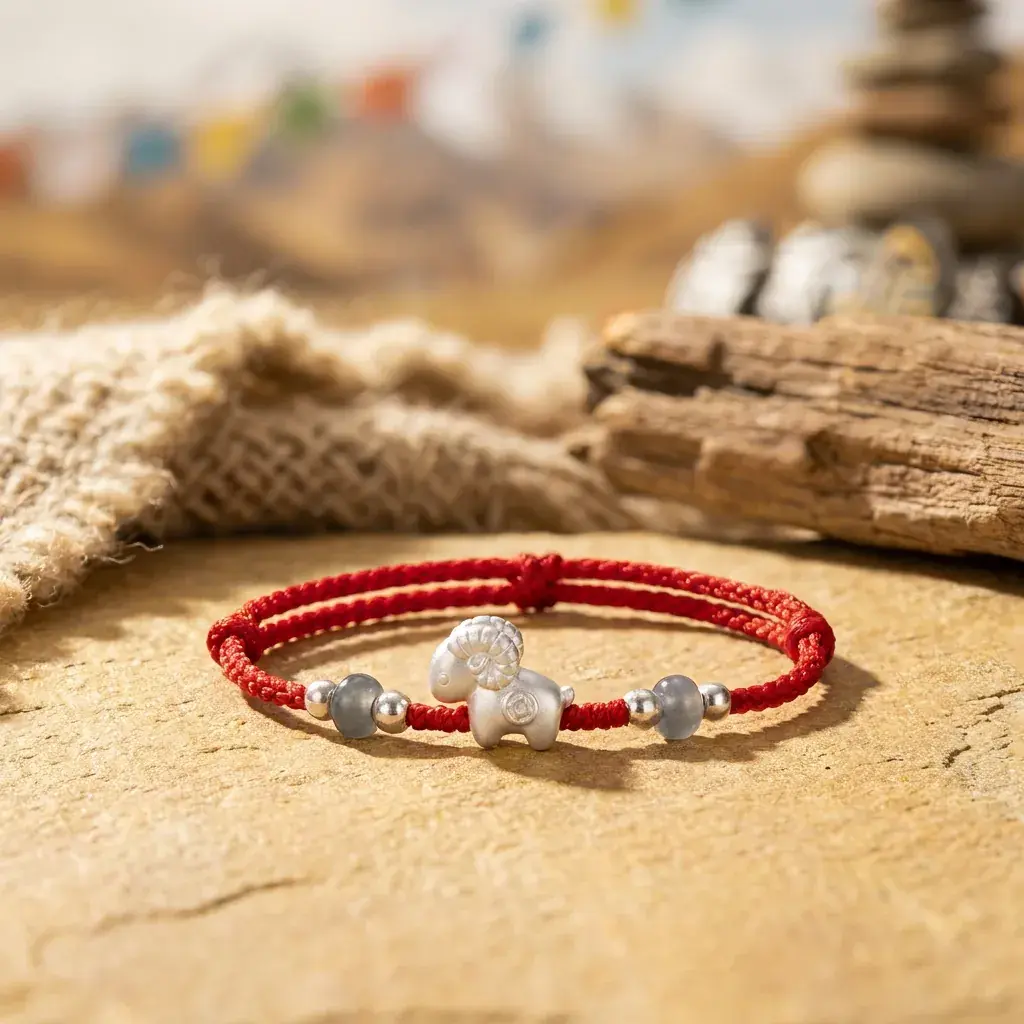
The Tibetan knot bracelet is a handmade knotted cord, priced from $28.95 to $58.95 depending on the variant. In Tibetan tradition, knotted cords are believed to carry good wishes. Pick a flat cord with no hanging pieces, since a snug cord is less likely to snag during adjustments.
Limit: it is a symbolic gift. If your teacher is not drawn to Tibetan Buddhist symbols, the handwritten note below is the better choice.
Ready to choose? See the 108-bead wood mala bracelet ($25.95), or read our Tibetan jewelry gift guide for spiritual seekers for more wearable picks.
Small Upgrades for Their Home Practice Space
Teachers spend their days holding space for others, so a small object for their own practice corner is a gift they rarely buy themselves. These Tibetan meditation tools for a home practice suit a corner as small as a shelf. If the teacher is building a corner from scratch, our seven-piece Tibetan meditation starter kit guide shows what to add first.
6. Tibetan Backflow Incense Cones, 60-Pack, $20.95 (ours)
Best for: teachers who already burn incense at home. Choose this if you want a holiday gift under $25 with some ceremony in it.
The 60-pack of Tibetan backflow incense cones includes 10 scents for $20.95, about $0.35 per cone. It is the lowest-priced product on this list. Backflow cones are made for a backflow burner, so check whether your teacher owns one.
Ask first: some studios are scent-free, and some teachers avoid incense at home too. If you cannot ask, choose the mala instead. Burn cones on a heatproof holder that catches ash, away from fabric and paper, and never leave them unattended.
7. Meditation Buddha Statue in Green Sandstone, $42.95 (ours)
Best for: teachers who meditate at home and welcome Buddhist imagery.
This handmade green sandstone Buddha statue sits in Dhyana mudra, the meditation gesture with both hands in the lap, right hand over the left, palms up (Brooklyn Museum). It measures 3.1 × 1.6 × 4.7 in (8 × 4 × 12 cm), small enough for a desk or shelf, and it costs $42.95. The listing offers a second pose at 7.5 × 5 × 12 cm, so choose the 8 × 4 × 12 cm figure if you want Dhyana mudra.
Limit: cultural respect matters here. Treat a statue as a sacred object, and keep it clean, raised and off the floor. If you are unsure your teacher welcomes Buddhist imagery, give the mala instead. Our guide to respectful ways to give Buddhist gifts explains more.
8. Tibetan Vajra Prayer Altar Mat, $48.95 (ours)
Best for: teachers who already keep a practice corner and want it to feel set apart.
The Tibetan vajra altar mat is a woven brocade-style cloth, 15.7 × 11 in (40 × 28 cm), with a gold vajra on a golden-yellow center. The vajra, called dorje in Tibetan, is a symbol of strength and clarity in Tibetan Buddhism. Set a small singing bowl or statue on it, and the corner reads as a place for practice. It costs $48.95. Spot-clean only.
Limit: it only works if the teacher already has a corner to put it in. If you are not sure, pick the mala.
Thank-You Gestures Money Can’t Buy
The gift most yoga teachers keep is a handwritten note that names one specific moment, such as the pose you finally got or the cue you still hear. Two or three honest sentences beat a long card, and the cost is the price of a card.
9. A Handwritten Note That Names One Moment
Start with the moment, then say what it changed. Here are three frames to borrow:
- “I held Warrior II for the first time last Tuesday, and your count got me there.”
- “Your cue to soften my jaw still shows up in my day.”
- “Your savasana is the part of my week I protect.”
Give it at the end of a session or during the holidays, and sign it with your name and the class you take.
10. A Workshop or Class They Don’t Have to Teach
A workshop puts a teacher on the student side of the room, and a class can pool money for one. For a teacher fresh from yoga teacher training graduation, the best gift can be showing up to their first class.
A workshop can also support their credential. Yoga Alliance asks each Registered Yoga Teacher to complete 75 hours of continuing education every three years: 45 hours of teaching and 30 hours of training in an approved category. A workshop from a qualified provider may count toward those 30 training hours, so ask the teacher or check Yoga Alliance’s current rules before you book.
Frequently Asked Questions About Gifts for Yoga Teachers
Yes. A modest gift or a sincere note at the end of a session or during the holidays is common and welcome. Some studios limit what staff can accept, so a quick check of the studio policy with the front desk avoids awkwardness.
Things they will use outside the studio and rarely buy for themselves: a small singing bowl, a mala, something for a home practice corner, or time as a student in someone else’s class. Props are a risky pick because teachers have strong preferences.
Yes, if it is for somewhere they spend money outside work, such as a café, a bookshop, or another studio’s workshop. Skip gift cards to the studio where they teach, because some teachers already practice there for free.
A handwritten card with one small item works best. The wood mala bracelet at $25.95 is light and easy to ship. Each listing shows 5 to 10 business days in transit to the US, plus 1 to 2 days to ship, so order by early December for Christmas and check Potala Store’s shipping page for current details. If you shop Black Friday (11/27/2026), choose by fit first and price second.
In summary, the best gifts for yoga teachers are small, specific and used after class: a sound tool for the savasana teacher, a mala for the meditation teacher, a home-practice piece for the teacher who gives all day, and a note that names one moment. Pick by how they teach, keep a solo gift near $15 to $50, and ask before you buy anything scented.
Pick one thing they will use after class.
Explore more spiritual gift ideas at Potala Store, from handmade singing bowls to 108-bead malas.
📚 References
- Singing bowl sound meditation and mood: Goldsby TL, Goldsby ME, McWalters M, Mills PJ. Effects of Singing Bowl Sound Meditation on Mood, Tension, and Well-being: An Observational Study. J Evid Based Complementary Altern Med. 2017;22(3):401-406. Observational study of 62 adults, no control group. PubMed Central
- Sound healing and spiritual well-being: Goldsby TL, Goldsby ME, McWalters M, Mills PJ. Sound Healing: Mood, Emotional, and Spiritual Well-Being Interrelationships. Religions. 2022;13(2):123. MDPI
- Continuing education for yoga teachers: Yoga Alliance requirements for Registered Yoga Teachers. Yoga Alliance
- Dhyana mudra: A museum guide to hand gestures in Buddhist art. Brooklyn Museum