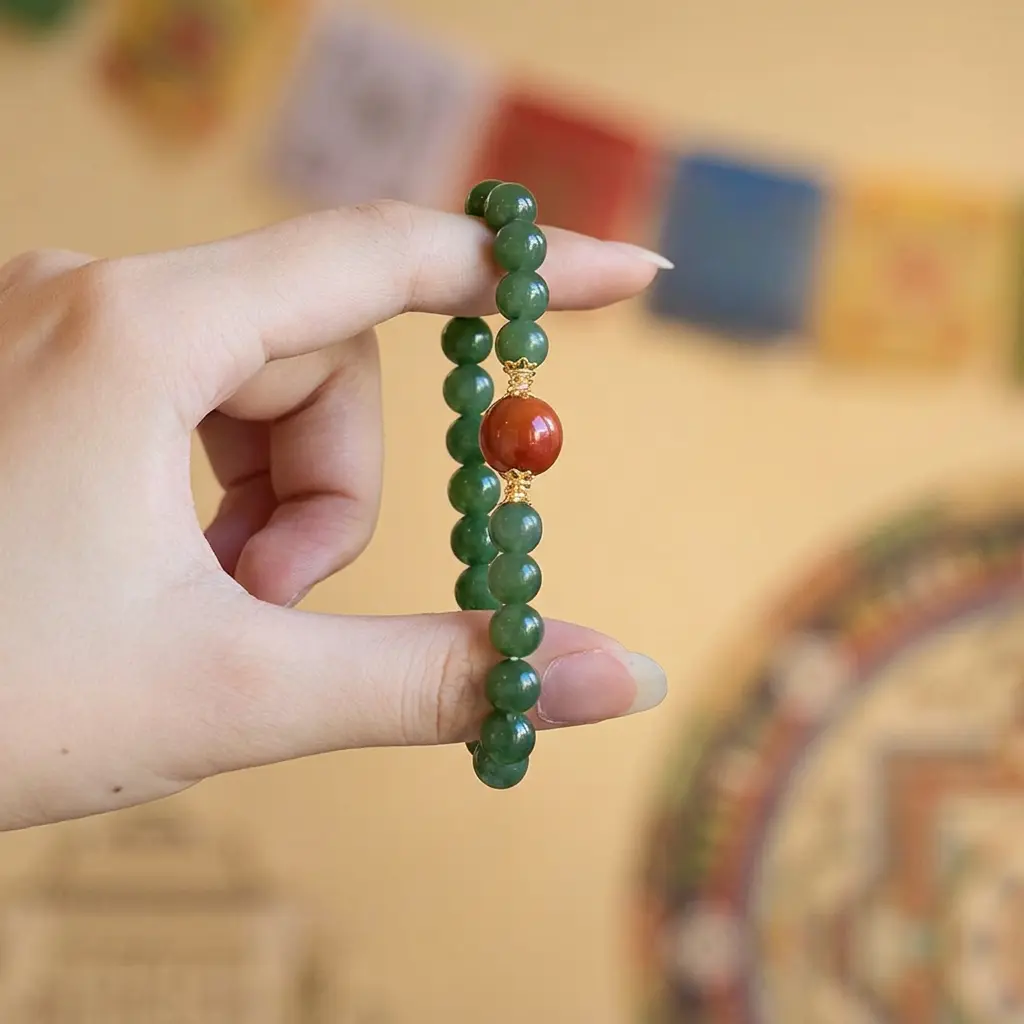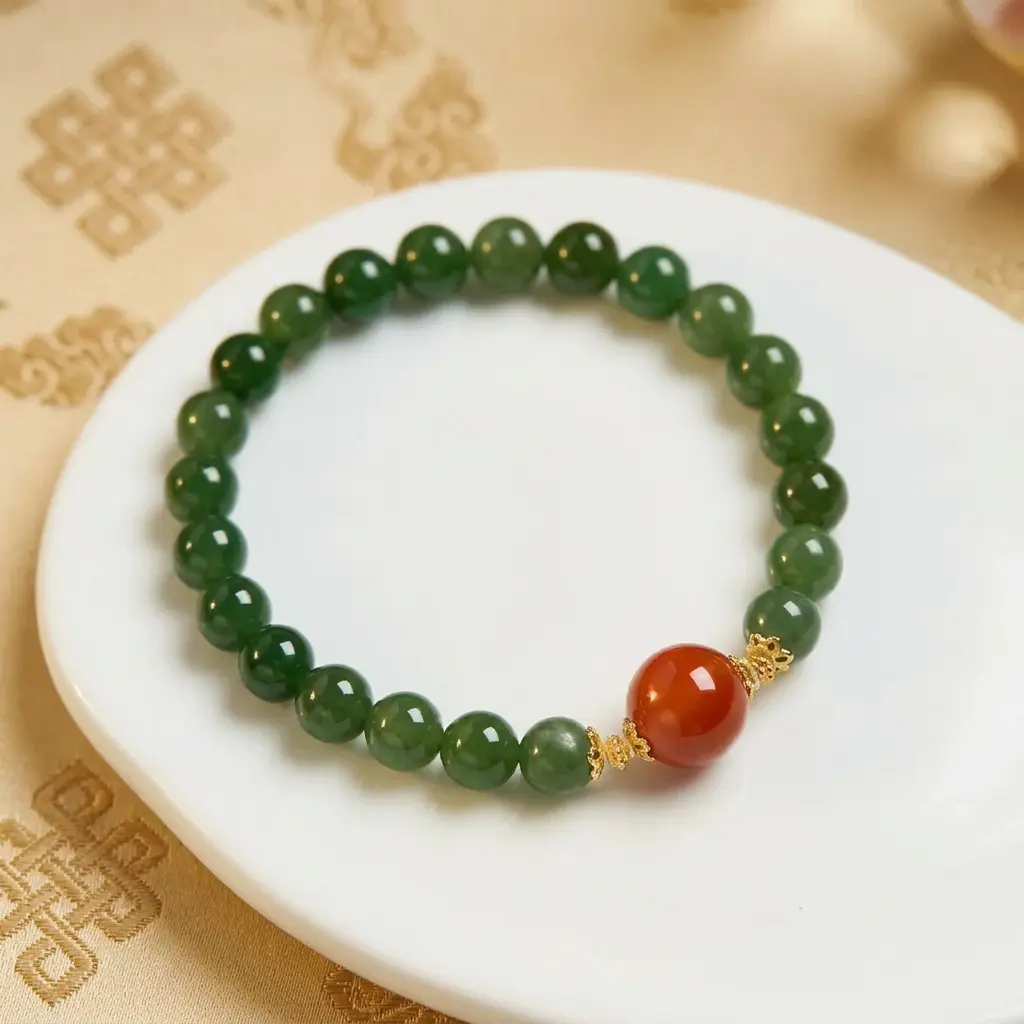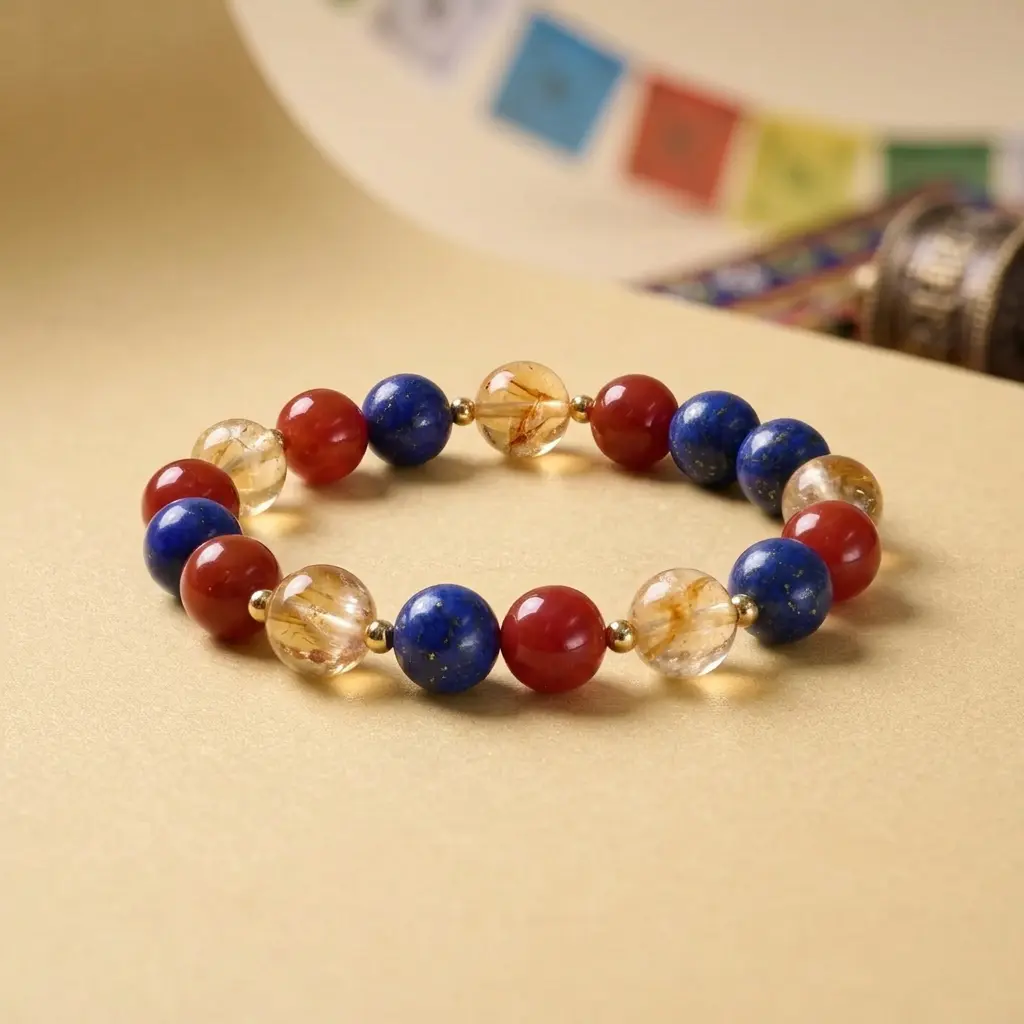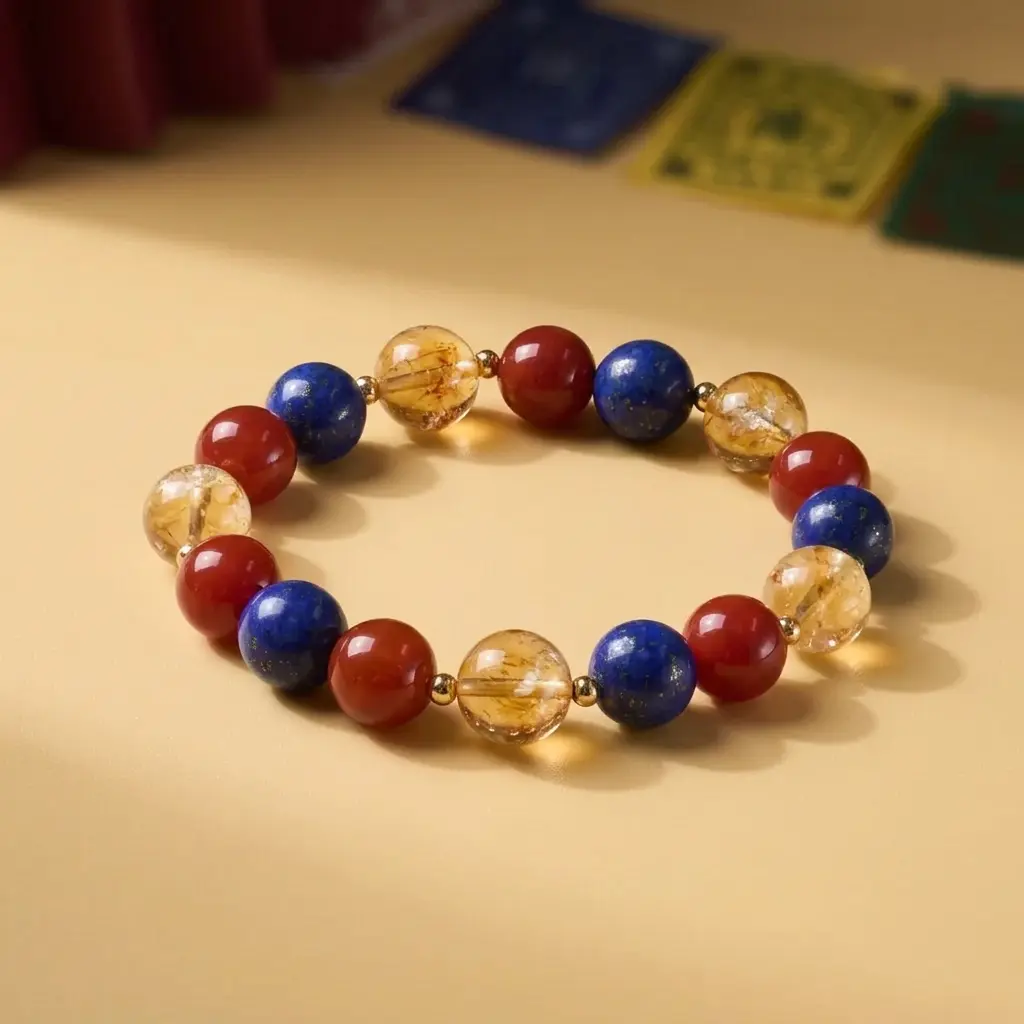

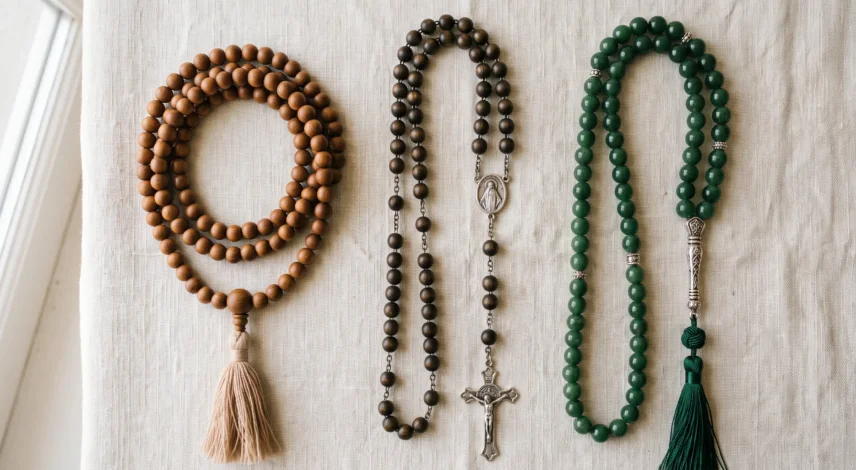

At a glance, a mala, a rosary, and a tasbih look like the same object: a loop of prayer beads you move through your fingers, one at a time. They are not interchangeable. The three differ in bead count (108 versus 59 versus 99), in the prayer each one carries (a mantra, the Hail Mary, or dhikr), and in how they are structured and held. At PotalaStore, we have made Tibetan malas with Himalayan workshops for over a decade, and we wrote this guide to compare all three with respect, so you can tell them apart and choose the right one for your own meditation or prayer practice.
Each of these strands belongs to a living faith with its own history. The point here is not to rank them, but to show what actually makes each one distinct, and to answer the question many people are quietly asking: can you use one if it did not come from your tradition?
Table of Contents
Mala vs Rosary vs Tasbih at a Glance
Here is how the three compare across the dimensions that actually set them apart:
| Dimension | Mala | Rosary | Tasbih |
|---|---|---|---|
| Tradition | Buddhism, Hinduism, yoga | Christianity (mainly Catholic) | Islam |
| Bead count | 108 + guru bead | 59 (five decades) | 99, or 33 counted three times |
| What you recite | A mantra (japa) | Hail Mary, Our Father | Dhikr, short remembrance phrases |
| Main purpose | Meditation and mantra counting | Structured prayer and reflection | Counting the remembrance of God |
| Key marker | Guru bead and tassel | Crucifix | Divider or marker beads |
| Common materials | Sandalwood, bodhi seed, rudraksha, gemstone | Olive wood, glass, metal | Wood, stone, resin |
| How it is held | Right hand, thumb, never crossing the guru bead | From the crucifix, through the decades | Thumb, one bead at a time |
| Also called | Japa mala, juzu | Rosary beads, chaplet | Misbaha, subhah |
Bead Count Compared: 108 vs 59 vs 99
The clearest difference is the number of beads. A mala carries 108 counting beads plus one guru bead. A standard Catholic rosary has 59 beads arranged in five decades. A tasbih holds 99 beads, or 33 beads told three times to reach 99. These counts are not decorative. Each one is tuned to the prayer it carries, which is the point we return to below.
What Each One Is Called Across Languages
The names shift by language and region, which is part of why people confuse them. A mala is also called a japa mala (Sanskrit for a recitation garland), and in Japanese Buddhism a related strand is a juzu. The rosary takes its name from the Latin rosarium, a rose garden. The tasbih appears as misbaha or subhah depending on the region, all naming the same Islamic counting strand.
The Mala: Buddhist and Hindu Prayer Beads
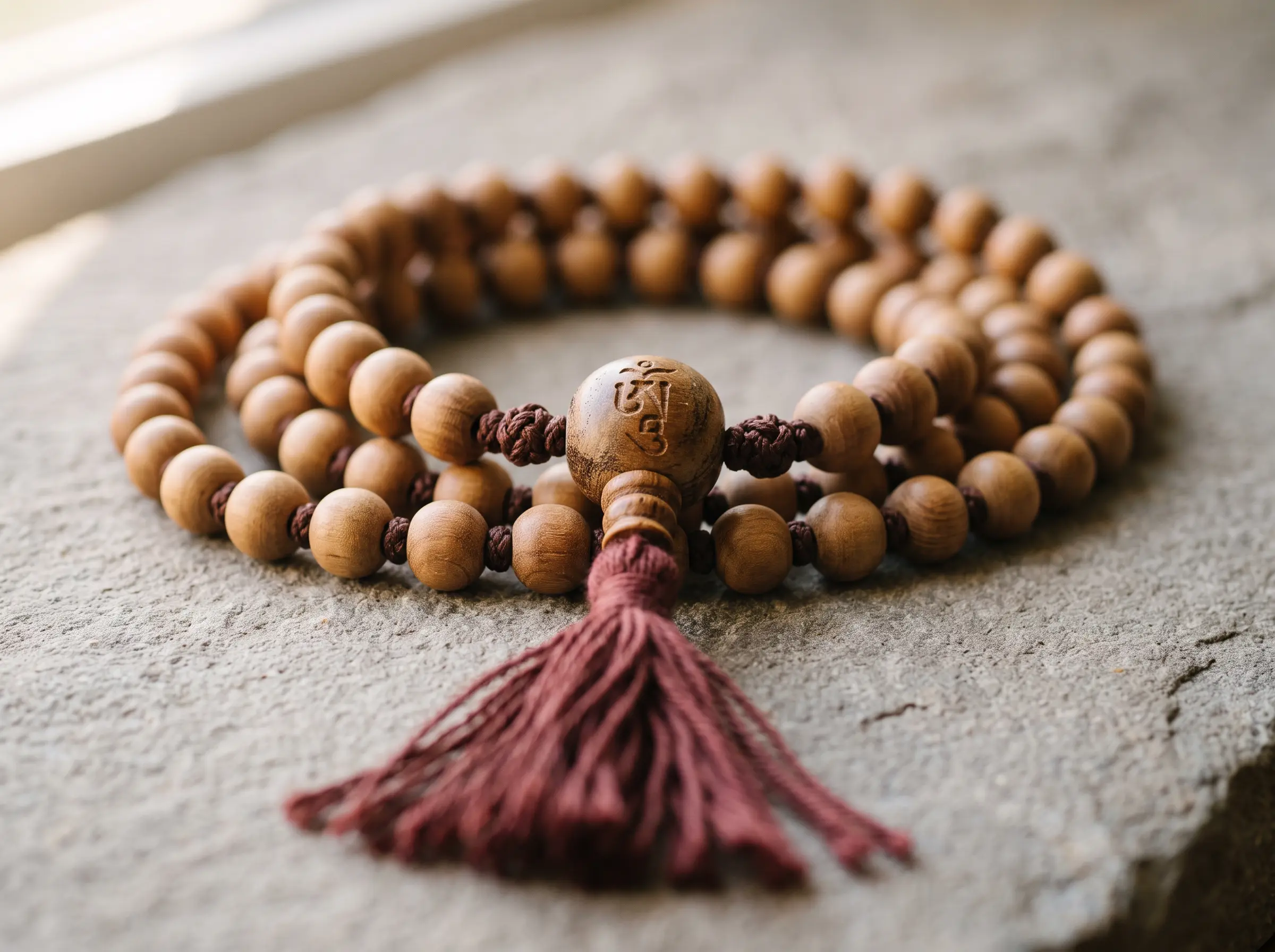
A mala is a loop of 108 beads used in Buddhist and Hindu practice to count mantra repetitions during meditation. A practitioner moves one bead per repetition, keeping the mind anchored to the sound of the mantra rather than to counting. Most malas are strung from sandalwood, bodhi seed, rudraksha, or gemstone, and each material carries its own association in practice.
Every mala has three working parts: the 108 counting beads, a larger guru bead, and a tassel. The guru bead marks the start and end of a cycle. You never cross it. When you reach it, you pause and reverse direction, a small gesture of respect for the teacher-student relationship. The tassel represents the lotus, a symbol of clarity rising from difficulty.
When we first started sourcing bodhi seed malas, we assumed heavier beads signaled better quality. The workshops in Kathmandu corrected us fast. What actually matters is even drilling and consistent density, because a poorly drilled bead wears through its knot and breaks the strand. That single detail changed how we test every batch. You can read more in our field notes from inside a Tibetan mala workshop.
For daily practice, an 8mm sandalwood mala is a common starting point, priced roughly $30 to $80 for a well-made strand. The natural scent settles many people into focus faster, which is why beginners tend to reach for it first. If you want to see full strands and wrist versions, browse our handcrafted Tibetan mala and necklace collection.
Why a Mala Has 108 Beads
The number 108 is widely tied to the 108 kleshas, the mental afflictions that Buddhist and Hindu practice works to release. It also has a practical function: 108 lets you complete 100 mantra repetitions with 8 beads spare, traditionally offered to all beings. We cover the layered meaning in our guide to why a mala has 108 beads.
The Guru Bead and Tassel, and Why You Never Cross the Guru Bead
The guru bead is the reference point of the whole strand. In practice you hold the mala in your right hand, draw each bead toward you with your thumb, and stop when you return to the guru bead. Reversing rather than crossing keeps the cycle intact and honors the source of the teaching. One full round equals 108 repetitions, which takes most people 10 to 20 minutes.
The Rosary: Christian Prayer Beads
A rosary is a Christian prayer tool of 59 beads, grouped into five decades and prayed from the crucifix through repeated Hail Marys and reflection on the mysteries. Unlike a mantra strand, the rosary organizes a sequence: the beads pace vocal prayers while the mind meditates on events from the life of Christ. It is most associated with Catholic devotion, though other Christian forms exist.
The crucifix anchors the rosary and marks where prayer begins. A single decade groups ten small beads for the Hail Mary, with a separated bead for the Our Father and a Glory Be between decades. The rhythm is structured on purpose, which is what makes the rosary feel steady and repeatable once the pattern is learned.
What the Decades and Crucifix Mean
Each decade carries one Our Father, ten Hail Marys, and a meditation on a specific mystery, so the 59 beads map a full prayer cycle rather than a free count. The crucifix is both the starting marker and the central symbol of the faith, which is why the rosary opens and closes there.
Anglican and Orthodox Variations
Not every Christian bead strand is a Catholic rosary. Anglican prayer beads use a lighter structure of 33 beads and suit flexible, personal devotion. Eastern Orthodox Christians often use a knotted prayer rope (chotki) for the Jesus Prayer instead of a beaded rosary. The purpose is shared, repeated prayer with attention, but the form and the words differ by tradition.
The Tasbih: Islamic Prayer Beads
A tasbih, also called misbaha or subhah, is an Islamic strand of 99 beads (or 33 counted three times) used to keep count during dhikr, the remembrance of God. Where a mantra strand supports meditation and a rosary structures a prayer cycle, the tasbih keeps an accurate count while a worshipper repeats short devotional phrases. Divider beads mark the sections so the count stays clear.
The 99 beads recall the 99 names of Allah, each name a reminder of an attribute of God. A 33-bead strand reaches the same total when told three times, which is why both counts are common. The materials range from wood to stone to resin, and the strand is usually simpler in symbolic layout than a rosary.
Why 99 Beads, or 33 Counted Three Times
The tasbih counts in a way that fits its prayer. 99 beads align with the 99 names, while 33 beads repeated three times reach 99 for phrases said in sets, such as SubhanAllah, Alhamdulillah, and Allahu Akbar after prayer. The divider beads separate each set so the practitioner never loses the count.
What Dhikr Means and How the Beads Keep Count
Dhikr is the practice of remembering God through repeated praise, and the tasbih keeps that remembrance on track bead by bead. The worshipper repeats a short phrase, advances one bead, and continues, letting the beads carry the count so the mind can stay on the words. The form is devotional, not meditative in the mantra sense.
Why the Bead Counts Differ: 108 vs 59 vs 99
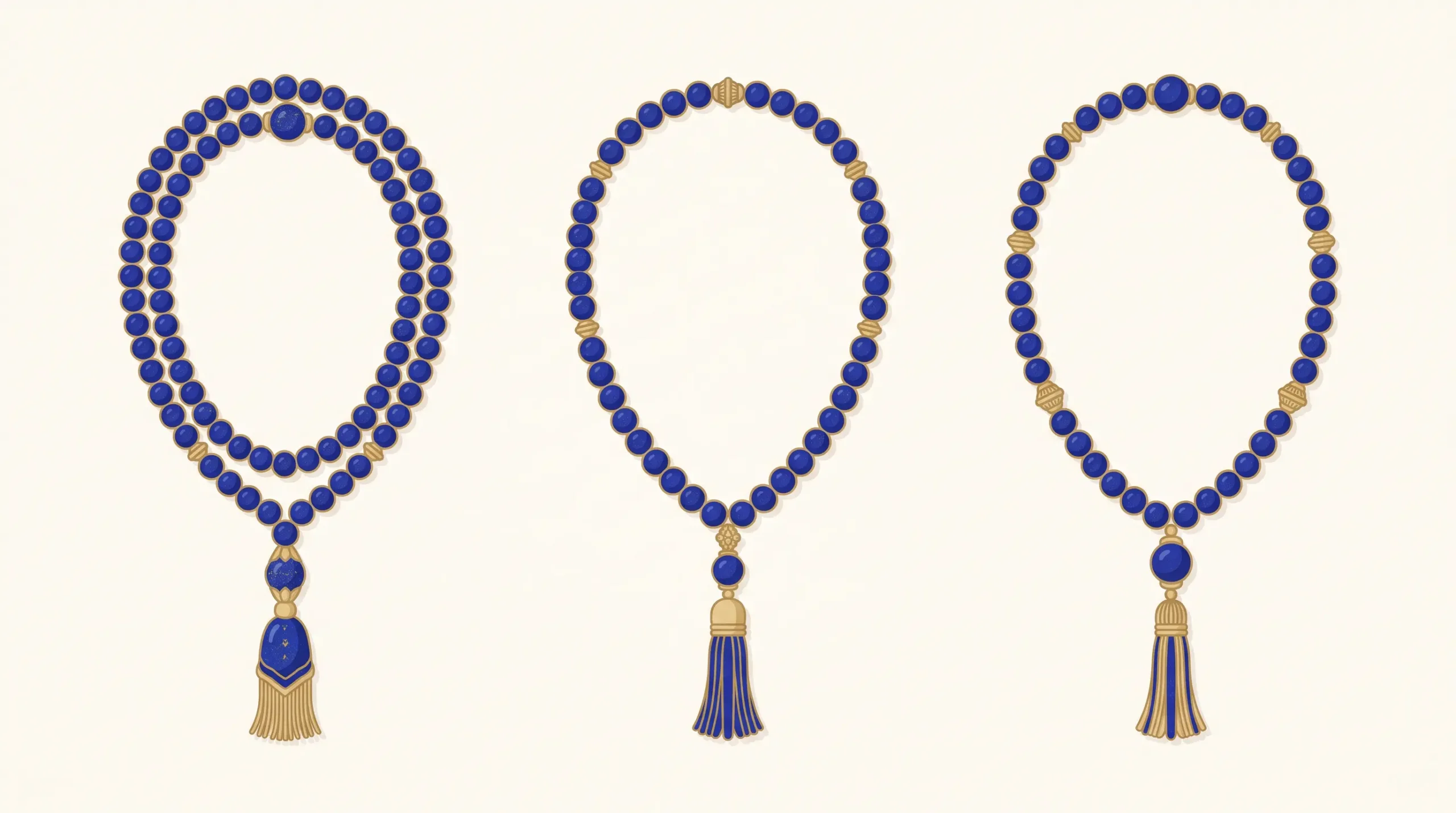
The bead counts are not arbitrary. Each number is calibrated to the prayer it carries. This is the layer most comparisons skip, and it is the clearest way to understand why the three strands are genuinely different tools rather than the same object in three styles. Form follows practice in each tradition.
How 108 Serves Mantra Repetition
108 beads let a practitioner count exactly 100 mantra repetitions and offer the remaining 8, which is why the number serves japa so cleanly. The count supports repetition without a fixed liturgy, so the mind can stay on a single sound. That open structure is what makes a mala suited to meditation rather than to a set sequence of prayers.
How 59 Serves the Decade Structure
The 59-bead rosary is built for the decade system, grouping ten Hail Marys with an Our Father five times over. The count maps a defined prayer sequence tied to the mysteries, so the beads pace a liturgy rather than a free repetition. That is the structural opposite of a mantra strand, even though both loops look similar in the hand.
Can You Use These Prayer Beads If They’re Not From Your Faith?
The short answer is yes, with respect. Prayer beads have crossed cultures for centuries, and how you use them matters more than whether you feel you qualify. Using a strand thoughtfully, with some understanding of where it comes from, is what respect looks like in practice. You do not need to earn the right to slow down and breathe.
A mala works well as a meditation and mindfulness tool for people of any background, and some Christians use one for repeated prayer such as the Jesus Prayer. A rosary and a tasbih sit closer to specific acts of worship, so borrowing them casually asks for more care and context. The honest line is simple: appreciation means using a tradition’s tool with understanding, while appropriation means treating it as decoration stripped of meaning.
Using a Mala as a Non-Buddhist
You can use a mala for meditation, breath counting, or intention-setting without claiming a religious identity you do not hold. Keep the practice sincere, learn what the guru bead and the count mean, and treat the strand as a tool rather than an accessory. We answer this fully, including the etiquette, in can anyone wear mala beads.
Appreciation vs Appropriation: Where the Line Is
The line is intention and understanding, not permission. Wearing a mala because you meditate with it is different from wearing sacred beads purely for a look. If you are unsure, learn the meaning first, buy from makers who source respectfully, and use the strand for its purpose. That approach keeps you on the side of appreciation across any of these three traditions.
Which Should You Choose?
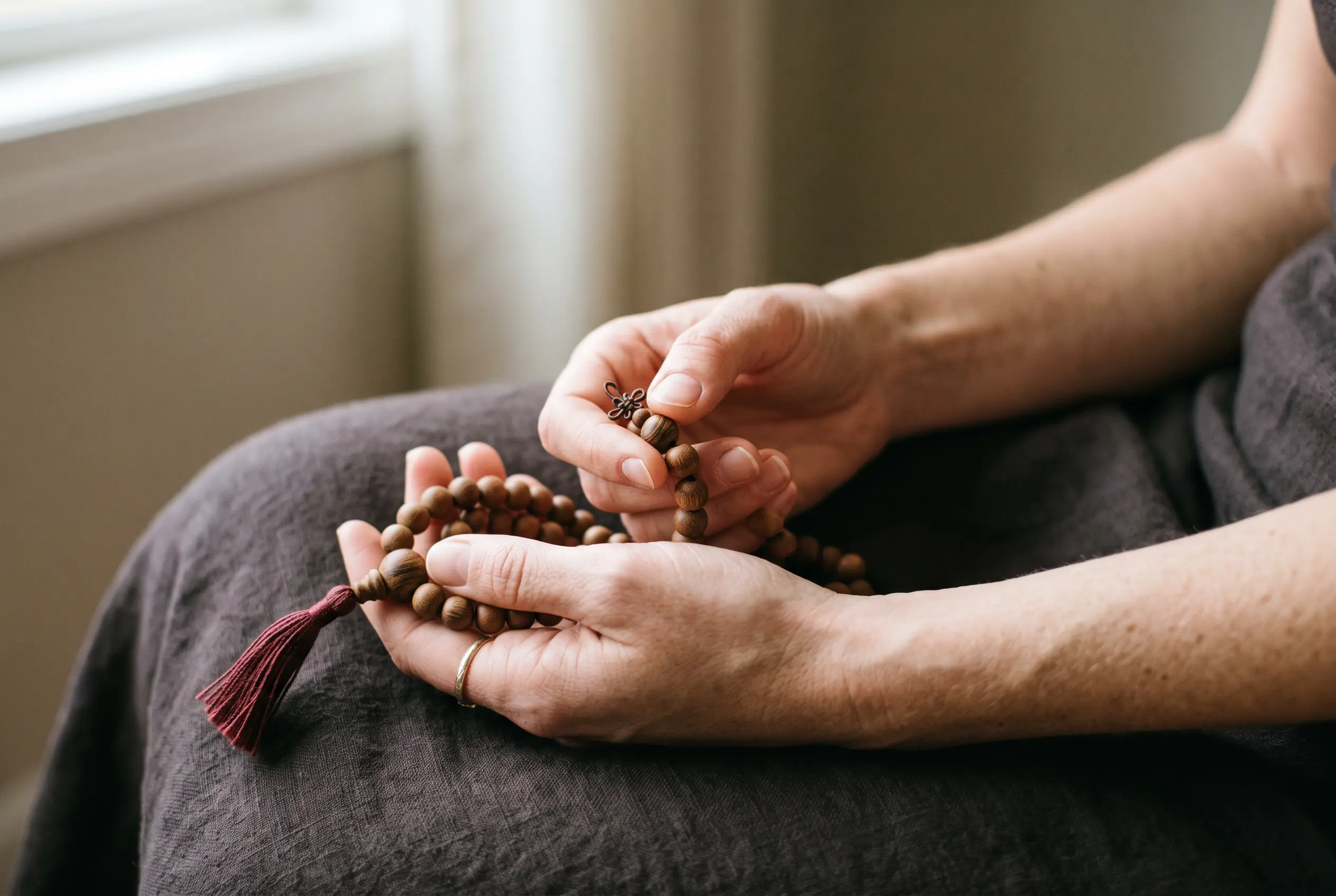
Choose by practice first: a mantra or meditation habit points to a mala, structured Christian prayer to a rosary, and dhikr to a tasbih. If your interest is meditation, mindfulness, or a meaningful gift, a mala is the most flexible of the three, and it is the one worth being picky about.
If Your Practice Is Meditation or Mantra
A mala fits meditation because its 108-bead count keeps your rhythm steady, so you stay with the mantra instead of tracking numbers in your head. Sandalwood carries a soft natural scent that helps you settle into focus faster, which makes each session easier to sustain. If you want the practice with you all day, a wrist mala of 27 beads slips onto the wrist and works as a quiet reminder between tasks. New to choosing one? Start with our guide on how to choose the right mala beads for your practice.
How to Judge Quality and Authenticity
A well-made mala shows a few reliable signs. Look for these before you buy:
- Hand-knotting between beads: if the string breaks, you lose one bead, not all 108, and counting feels smoother.
- Natural weight and small variation: genuine wood, seed, or stone feels substantial and slightly uneven, while plastic feels uniform and unnaturally light.
- Even drilling: clean, centered holes protect the knot and keep the strand from wearing through.
- Sensible price: real gemstone malas usually run $40 to $150 depending on the stone, so a $15 “gemstone” strand is likely glass or dyed resin.
A hand-knotted bodhi seed mala is a dependable first strand on all four counts, which is why we point beginners there most often.
Find a mala that fits your practice
Explore authentic, hand-knotted Tibetan malas, sourced with Himalayan workshops and made for daily meditation or a meaningful gift.Browse Tibetan Malas →
Frequently Asked Questions
No. A mala has 108 beads for counting mantras in Buddhist and Hindu practice, while a rosary has 59 beads for Christian prayer centered on the life of Christ. They look similar, but the bead count, the prayer, and the meaning are different.
108 is sacred across Buddhist and Hindu thought, often linked to the 108 kleshas to overcome. Structurally, 108 lets you count 100 mantra repetitions and offer the remaining 8 to all beings.
A tasbih usually has 99 beads, recalling the 99 names of Allah, or 33 beads counted three times to reach 99. Divider beads mark the sections during dhikr so the count stays clear.
Yes. Many people use a mala as a mindfulness and repetition tool regardless of faith, and some Christians use one for repeated prayer such as the Jesus Prayer. What matters is using it with understanding and respect.
The Bottom Line on Mala, Rosary, and Tasbih
All three are prayer beads, and all three answer the same human need for rhythm, focus, and steady attention. What separates them is real: 108 beads and a mantra for the mala, 59 beads and the decades for the rosary, 99 beads and dhikr for the tasbih. Once you can see those differences, choosing becomes simple. Match the strand to your practice, treat it with respect, and let it do its quiet work one bead at a time.
A note on these traditions: This guide describes three living faith practices in general terms. Details vary by lineage, region, and denomination, and the descriptions here are for educational and cultural understanding, not religious instruction. Meanings tied to symbolism and spiritual practice reflect tradition and personal belief rather than scientific claims.
📚 References
- The Rosary, structure and history: encyclopedic overview of Catholic rosary beads and their development. Encyclopaedia Britannica
- Subḥah (Islamic prayer beads): reference entry on the tasbih, its bead counts, and its use in dhikr. Encyclopaedia Britannica
- Praying the Rosary: official guidance on rosary prayers and the mysteries. The Holy See (Vatican)
- How to use mala beads: practical guidance on the 108-bead count and mantra technique in meditation. Yoga Journal
Written by the PotalaStore team. Last updated: August 2026. We update this guide as our understanding of these traditions and our sourcing practices develops.