
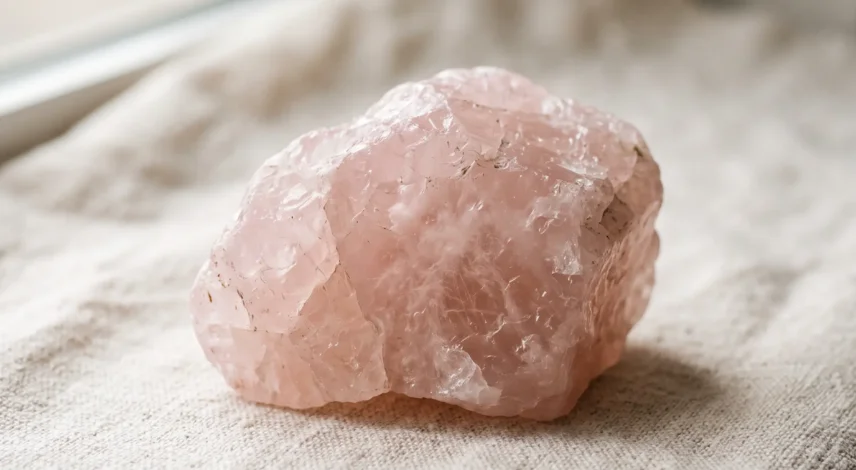

If any crystal has earned the title “the stone of love,” it’s rose quartz. This soft-pink variety of quartz is traditionally associated with unconditional love—the kind you give to others and, just as importantly, to yourself. It’s believed to open the heart chakra, inviting self-love, compassion, and gentle emotional healing into everyday life.
At PotalaStore, we’ve spent years sourcing rose quartz directly from Madagascar and pairing it with Tibetan Buddhist tradition, so we’ve seen firsthand how much meaning people attach to this stone—and how many myths surround it. This guide gives you the honest version: what rose quartz means, what it’s actually made of, what it’s believed to do, and how to use and care for it.
Table of Contents
What Is the Meaning of Rose Quartz?
Rose quartz is a pink variety of quartz known as the stone of unconditional love, believed to open the heart to romance, friendship, and self-acceptance. Its name comes simply from its color—a soft, rosy pink—but its meaning runs deeper than romance alone.
Across cultures, rose quartz has symbolized love and beauty for thousands of years. It was crafted into jewelry by the Assyrians as far back as 800–600 BC, and Roman and Egyptian societies prized it as a token of affection and youth. That long history is part of why the stone still carries such a strong association with the heart today.
One of the oldest legends ties the stone’s color to love directly. In Greek myth, the goddess Aphrodite is said to have stained white quartz pink with her own blood as she rushed through thorns to reach her wounded love, Adonis. The stone became a symbol of a love strong enough to bridge life and death. You don’t have to take the story literally to see why rose quartz has meant devotion for so long.
The love rose quartz represents isn’t only romantic. It covers three overlapping ideas:
- Self-love: compassion and acceptance toward yourself.
- Romantic love: attracting, deepening, or healing a partnership.
- Universal love: kindness and forgiveness toward everyone around you.
Because of these associations, rose quartz is also a traditional 5th wedding anniversary gemstone and a popular gift for Valentine’s Day and Mother’s Day. If you’re shopping for someone special, our roundup of crystal gifts for love and romance walks through the best options by relationship and personality.
The Pink Stone Behind the Symbolism: Mineral Properties and Quick Facts
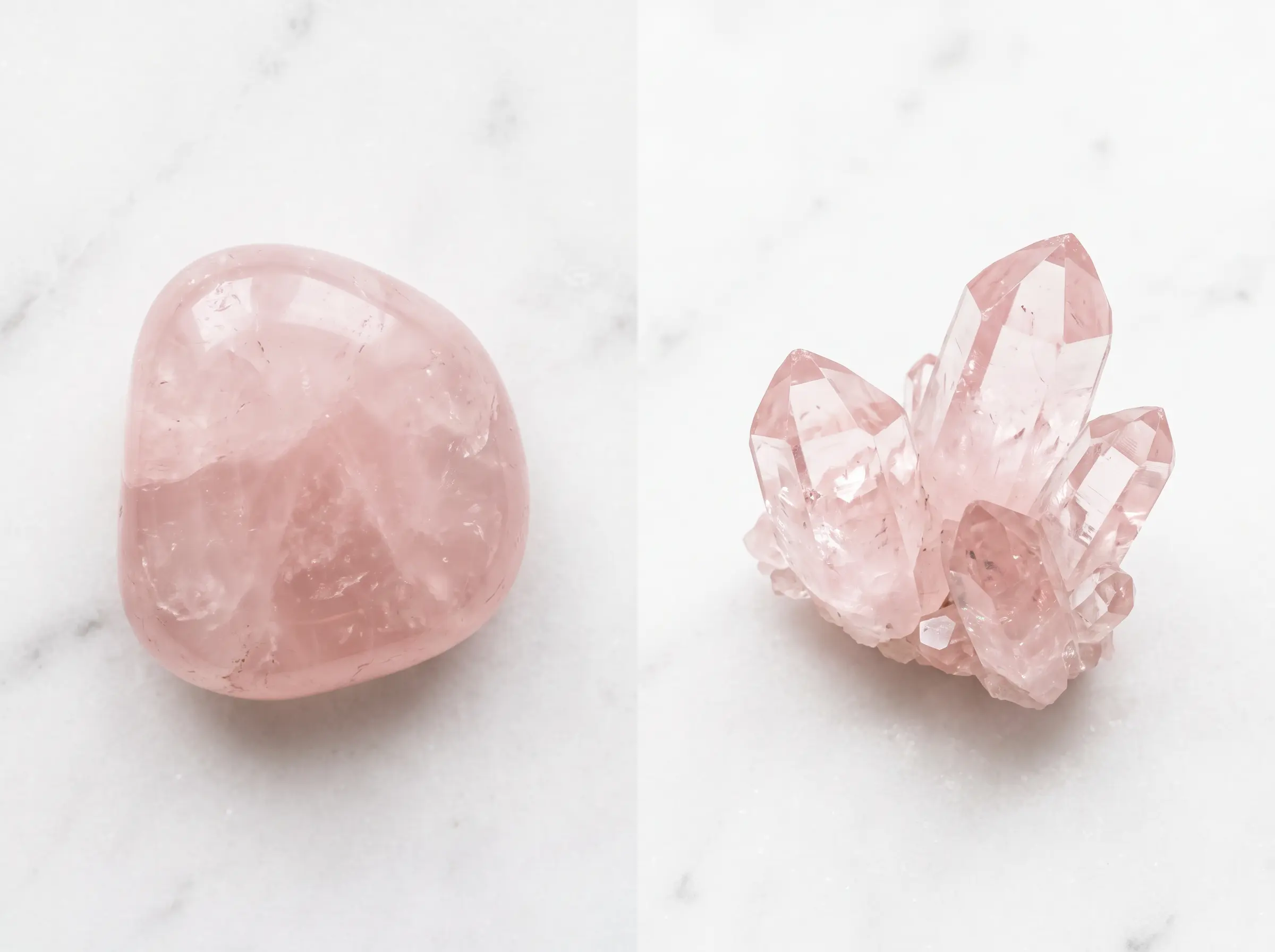
Rose quartz is a macrocrystalline form of quartz—silicon dioxide (SiO₂)—with a Mohs hardness of 7, hard enough for everyday jewelry. Understanding what the stone actually is helps you tell genuine rose quartz from dyed imitations.
| Property | Detail |
|---|---|
| Composition | Silicon dioxide (SiO₂) |
| Mohs Hardness | 7 |
| Color | Pale blush to deeper rose pink |
| Main Sources | Brazil, Madagascar, and South Dakota (Custer), USA |
| Chakra | Heart Chakra (Anahata) |
| Planet | Venus |
What Gives Rose Quartz Its Pink Color?
Its color comes from microscopic mineral fibers, not from titanium or iron alone as older sources often claim. According to the Gemological Institute of America (GIA), the pink hue is caused by tiny inclusions of aligned silicate fibers—generally similar, but not identical, to the mineral dumortierite. Research published in the journal American Mineralogist in 2001 measured these fibers at just 0.1–0.5 micrometers wide, with an iron-titanium interaction producing the color near a 500-nanometer wavelength. That’s why natural rose quartz is usually translucent and slightly cloudy rather than glassy and clear.
Rose Quartz vs. Pink Quartz
These two names get used interchangeably, but they aren’t quite the same stone. Here’s the quick comparison:
| Feature | Rose Quartz | Pink Quartz |
|---|---|---|
| Clarity | Translucent, cloudy | More transparent |
| Form | Large solid masses | Small distinct crystals |
| Rarity | Common | Rare |
| Color Stability | Stable over time | Can fade in prolonged sunlight |
💡 From our workshop: One thing we learned early—shoppers often expect a vivid, hot-pink stone. Genuine rose quartz is usually a soft, milky blush. If a “rose quartz” piece is a bright, uniform magenta with no cloudiness, it has often been dyed or is glass. A gentle, uneven pink is a good sign it’s the real thing.
What Is Rose Quartz Good For? Spiritual and Emotional Benefits
Rose quartz is best known for matters of the heart—it’s used to nurture self-love, ease heartbreak, and invite more compassion into your relationships. Many people keep it close during difficult emotional seasons. Its most commonly cited uses include:
- Deepening self-love: supporting self-worth and self-acceptance.
- Attracting love: opening the heart to new romantic connection.
- Healing heartbreak: soothing grief after a loss or breakup.
- Encouraging forgiveness: releasing resentment and old wounds.
In practice, most people don’t expect rose quartz to work like magic. They use it as a daily reminder—a small, physical cue to soften, to forgive, or to speak to themselves more kindly. That gentle, repeated intention is where much of the stone’s real value lives.
Rose Quartz and the Heart Chakra
Rose quartz is traditionally linked to the Heart Chakra (Anahata), the fourth energy center located at the center of the chest. In this tradition, a balanced heart chakra is associated with warmth, empathy, and healthy relationships. Practitioners believe that keeping rose quartz near the heart—worn as a pendant or bracelet—helps support that open, receptive quality of unconditional love throughout the day.
A Note on Compassion in Tibetan Buddhism
There’s a meaningful parallel we return to often at PotalaStore. Rose quartz’s traditional purpose echoes the Buddhist practice of metta, or loving-kindness, and the compassionate energy of Chenrezig, the bodhisattva of compassion. Both begin the same way: with warmth toward yourself, then extended outward without conditions. That framing—compassion that starts from within—is why we treat rose quartz as a stone of self-love first, and romance second.
Rose Quartz vs. Other Heart Crystals
Rose quartz is the gentlest of the “love” stones, which is why it’s the usual starting point. If you’re deciding between a few, here’s how it compares to other popular heart crystals:
| Crystal | Best For | Energy Style |
|---|---|---|
| Rose Quartz | Self-love, romance, gentle healing | Soft, nurturing |
| Rhodonite | Forgiveness, deep emotional wounds | Grounding, restorative |
| Green Aventurine | Confidence and luck in love | Optimistic, opening |
| Garnet | Passion, vitality, commitment | Warm, energizing |
The takeaway: choose rose quartz when you want warmth and self-compassion, and reach for a firmer stone like rhodonite or garnet when you need courage or grounding alongside love.
⚠️ Important Note: The information about rose quartz’s spiritual and emotional properties is based on traditional beliefs and personal experience, not scientific evidence. There’s no proof that crystals offer benefits beyond a placebo effect. Many people find rose quartz a meaningful part of self-care, but it should complement—not replace—professional medical or mental-health support.
Where to Wear and Place Your Love Stone
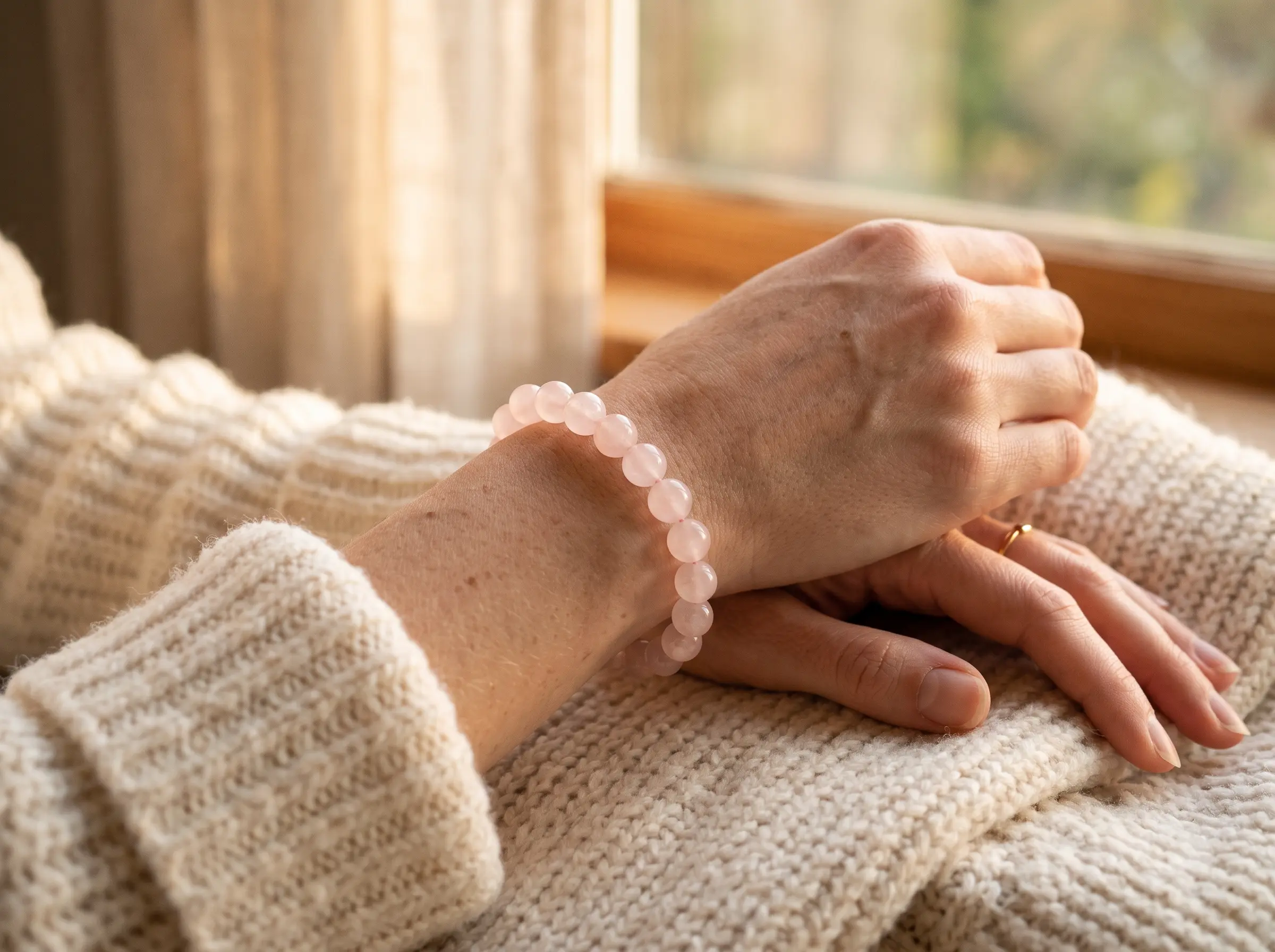
The simplest way to work with rose quartz is to keep it close—wear it as a bracelet so its energy stays in your field all day. Beyond jewelry, here’s where people most often place it:
- On your left wrist: the receiving side, traditionally used to absorb a stone’s calming, heart-opening energy.
- In the bedroom: on a nightstand or under a pillow to encourage restful, loving energy.
- In the southwest “love corner”: the area of the home associated with love and relationships in feng shui.
- In meditation: held in your palm while you focus on self-compassion or forgiveness.
Couples sometimes wear matching rose quartz pieces—one stone each—to keep a shared intention of love and patience close. It also layers well with other heart stones like strawberry quartz and rhodonite when you want to strengthen that gentle energy.
If you’re choosing your very first stone, our guide on how to choose a crystal bracelet by intention helps you match the right crystal to what you actually need right now.
How to Cleanse and Charge Your Crystal
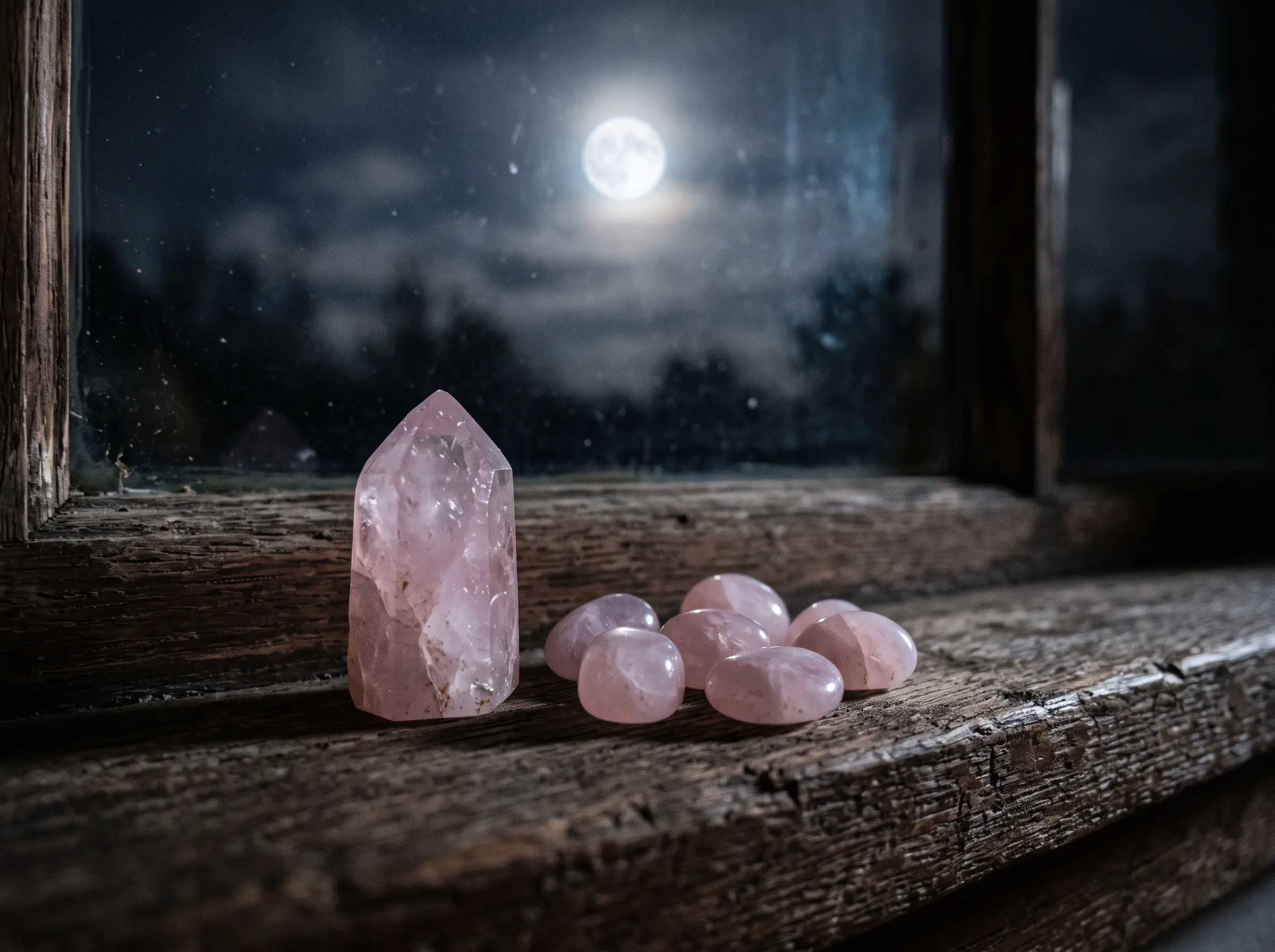
To cleanse rose quartz, hold it under lukewarm running water for a few seconds, then pat it dry—avoid long soaks and salt water. Because rose quartz is a 7 on the Mohs scale but can develop tiny internal fissures, gentle care keeps it looking its best. Here’s a simple routine:
- Rinse: hold under cool running water for about 30 seconds.
- Dry: pat with a soft cloth immediately—don’t leave it soaking.
- Charge: place it in overnight moonlight, ideally on a full moon.
- Avoid: salt water and prolonged direct sunlight, which can slowly dull the pink.
At PotalaStore, every stone we ship—including our rose quartz—has already been consecrated through a 3-day puja ceremony at Sera Jhe monastery, so your first cleanse is really about clearing travel energy and setting your own intention.
💡 Pro Tip: Rose quartz pairs beautifully with grounding stones. A grounding-to-heart combination like our Garnet & Strawberry Quartz bracelet bridges the root and heart chakras—steadying you while keeping your heart open.
Who Should Wear Rose Quartz, and Is It a Birthstone?
Anyone can wear rose quartz, but it’s especially connected to Taurus and Libra—both ruled by Venus, the planet of love. You don’t need a specific sign or occasion to benefit from it; the stone is most often chosen by people healing from heartbreak, building self-worth, or simply wanting more warmth in their relationships.
Rose Quartz Zodiac and Birthstone Connections
Rose quartz is not a traditional birthstone—garnet holds that spot for January. However, rose quartz is often cited as a secondary January stone and is strongly linked to Taurus and Libra through Venus. As a gift, it works year-round: a thoughtful choice for Valentine’s Day, a 5th anniversary, or as a gentle “thinking of you” gesture.
However you come to it, rose quartz endures as the stone of love because it points back to something simple: the relationship you have with yourself sets the tone for every other one. Wear it, place it by your bed, or hold it in quiet moments—let it be a soft reminder to lead with an open heart.
Ready to Keep Love Close?
Wear the stone of love every day. Our ethically sourced Rose Quartz Bracelet for Love & Healing is blessed at Sera Jhe monastery and shipped worldwide.Shop the Rose Quartz Bracelet →
Frequently Asked Questions
Rose quartz is translucent and cloudy, forms in large masses, and keeps its color over time. Pink quartz is rarer and more transparent, forms as small distinct crystals, and can slowly fade with prolonged sunlight. Both rank 7 on the Mohs scale.
A brief rinse under lukewarm running water is fine. Because rose quartz can develop internal fissures, avoid long soaks and salt water, and always pat it dry afterward.
Natural rose quartz has a soft, slightly uneven pink and feels cool to the touch. Glass or dyed imitations often show tiny air bubbles and an unnaturally uniform, vivid color.
Rose quartz is not a traditional birthstone—garnet is January’s—but it’s often listed as a secondary January stone and is linked to Taurus and Libra through the planet Venus.
📚 References
- Rose Quartz Description & Color Cause: Gemological standards on rose quartz identity, color origin, and history. Gemological Institute of America (GIA)
- Rose Quartz Healing Claims & Evidence: A balanced, medically reviewed look at what crystals can and can’t do. Healthline
- Quartz Mineralogy & Sources: Geological overview of quartz varieties, hardness, and where rose quartz is mined. Geology.com
- Origin of Color in Rose Quartz: Goreva, Ma & Rossman (2001), “Fibrous nanoinclusions in massive rose quartz,” American Mineralogist, Vol. 86. American Mineralogist