
The Legend of Nyenchen Tanglha: Tibet’s Mountain God of Protection and Fortune
 by Yang Tso
0 comments
by Yang Tso
0 comments
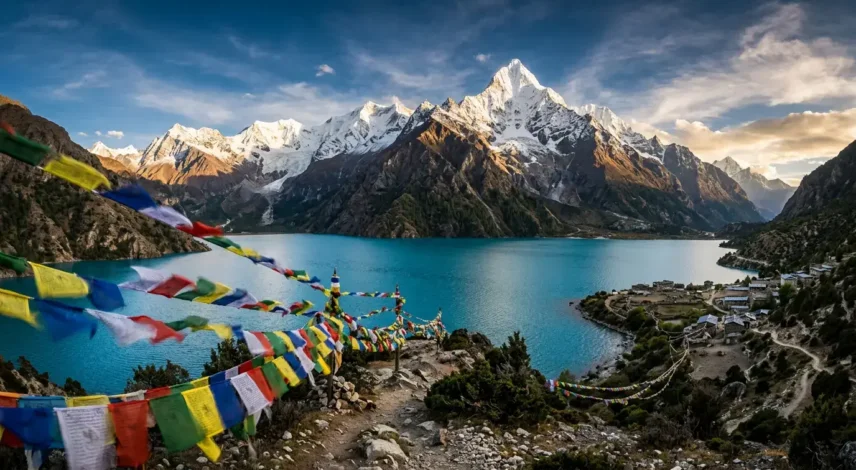
To trekkers, Nyenchen Tanglha is a 23,497-foot wall of snow rising above Namtso Lake. To Tibetans, he is someone: a white-robed rider who once ruled the hail, guarded hidden treasure, and swore an oath to protect the Dharma. Nyenchen Tanglha is the mountain god of northern Tibet, one of the four great mountain gods, and a worldly protector bound under oath by Padmasambhava.
At PotalaStore, this legend crosses our path often. Our founder was given the Tibetan name Yang Tso, meaning “ocean,” by an elderly Tibetan woman who said her voice carried the peace of mountain lakes. That is a small echo of the bond Tibetans describe between this mountain god and the lake beside him.
This guide traces how a feared hail god became a sworn guardian of fortune, how to recognize him in thangka paintings, and how you can honor the tradition respectfully today.
⚠️ A note on this article: This piece explores Tibetan cultural and religious history. Descriptions of protection, fortune, or blessings reflect traditional Tibetan beliefs, not scientific claims or guarantees.
Table of Contents
Who Is Nyenchen Tanglha? Tibet’s Mountain God at a Glance
Nyenchen Tanglha is both a mountain and a mountain god: a 23,497-foot peak above Namtso Lake in Damxung County, and the deity Tibetans believe dwells there. The same name refers to both, which is common for Tibet’s sacred peaks.
The mountain anchors a range stretching roughly 430 miles (700 km) across the Transhimalaya, with Damxung County sitting about two hours’ drive from Lhasa. That range, attribute, and value alone tell you why Tibetans gave this peak its own deity: nothing else nearby comes close to its scale.
What the Name “Gnyan Chen Thang Lha” Means
The Tibetan name combines gnyan, a class of powerful, easily angered mountain spirits, with chen (great) and thang lha, the god of the Tanglha plain. The name itself announces a mighty local power, not a distant heaven-dwelling god.
The Mountain Behind the Deity
Mount Nyenchen Tanglha reaches 23,497 feet (7,162 m), the highest summit in a range of about 430 miles (700 km). A Japanese expedition made the first recorded ascent on May 8, 1986, more than a thousand years after Tibetans first began worshipping the peak.
What Is the Legend of Nyenchen Tanglha? From Hail God to Oath-Bound Protector
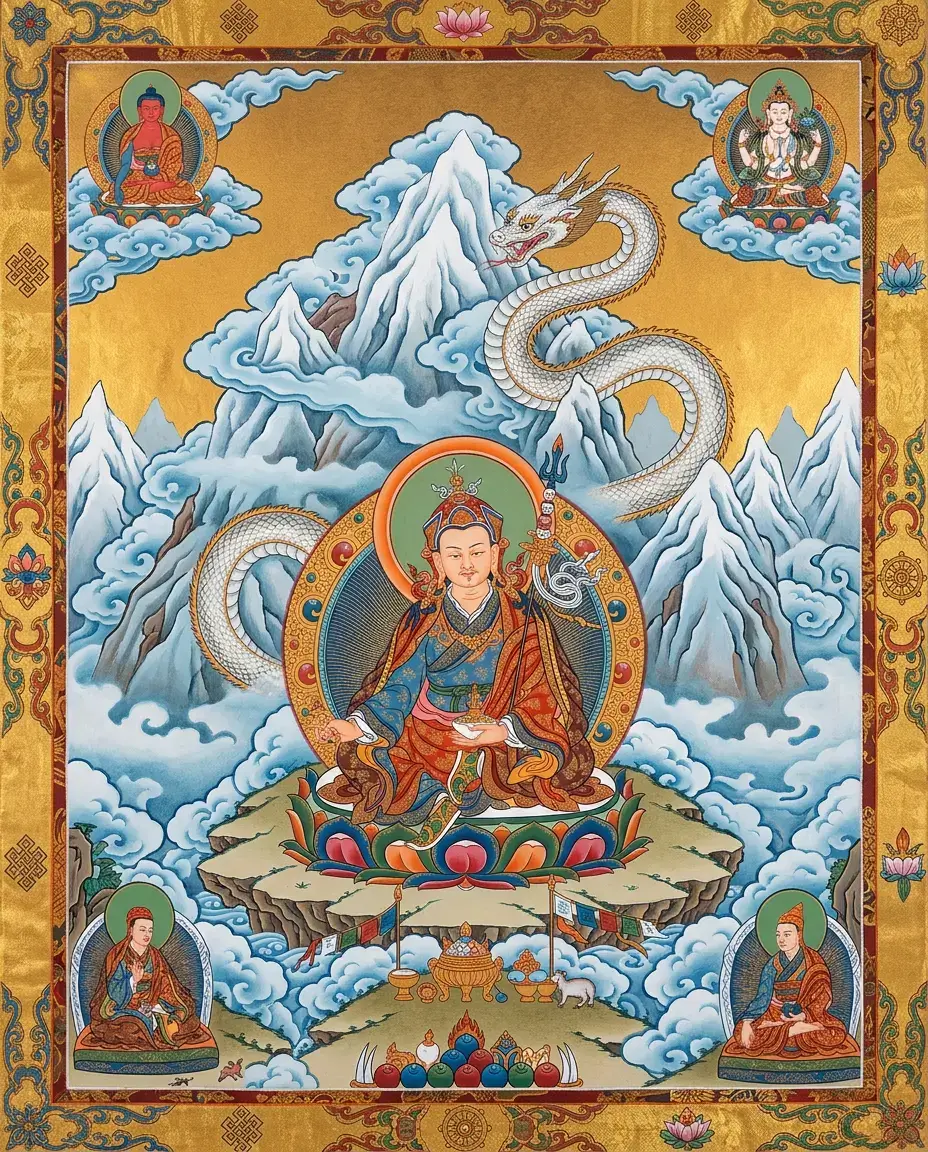
Tibetan ritual texts say Nyenchen Tanglha began as one of eighteen hail gods, feared for ruining harvests, and later became a guardian of treasure before Padmasambhava bound him under oath to protect the Dharma. That three-step shift explains why the title “Protection and Fortune” fits him so well.
Son of Ode Gungyal and the Single-Winged Jade Bird
A Tibetan prayer text names his father as the ancient mountain god Ode Gungyal and his mother as a single-winged jade bird. The text calls him chief of the gnyan spirits, ruling a valley a turquoise-green eagle keeps green even in winter. This lineage places him among Tibet’s four great mountain gods, not as a standalone local spirit.
From Hail God to Treasure Guardian: The Root of “Fortune”
Before any Buddhist connection, herders appeased Nyenchen Tanglha with incense because he controlled hail, a real threat to crops and animals. Later tradition recast him as a guardian of treasure, which is the direct root of the “fortune” half of his modern title. Protection from disaster and the safekeeping of wealth come from the same deity, which is unusual even among Tibet’s mountain gods.
The White Snake, the Oath, and a Secret Name
According to the Padma bka’ thang, Tanglha blocked Padmasambhava’s path as a giant white snake. Pinned by the master’s staff, he fled, then returned as a boy dressed in white, submitted, and vowed to protect the teachings. He received a secret name, Dorje Chog Rab Tsal, marking the moment a wild mountain spirit became a sworn oath-bound protector.
How Is the Guardian of Northern Tibet Depicted? Iconography and Symbols
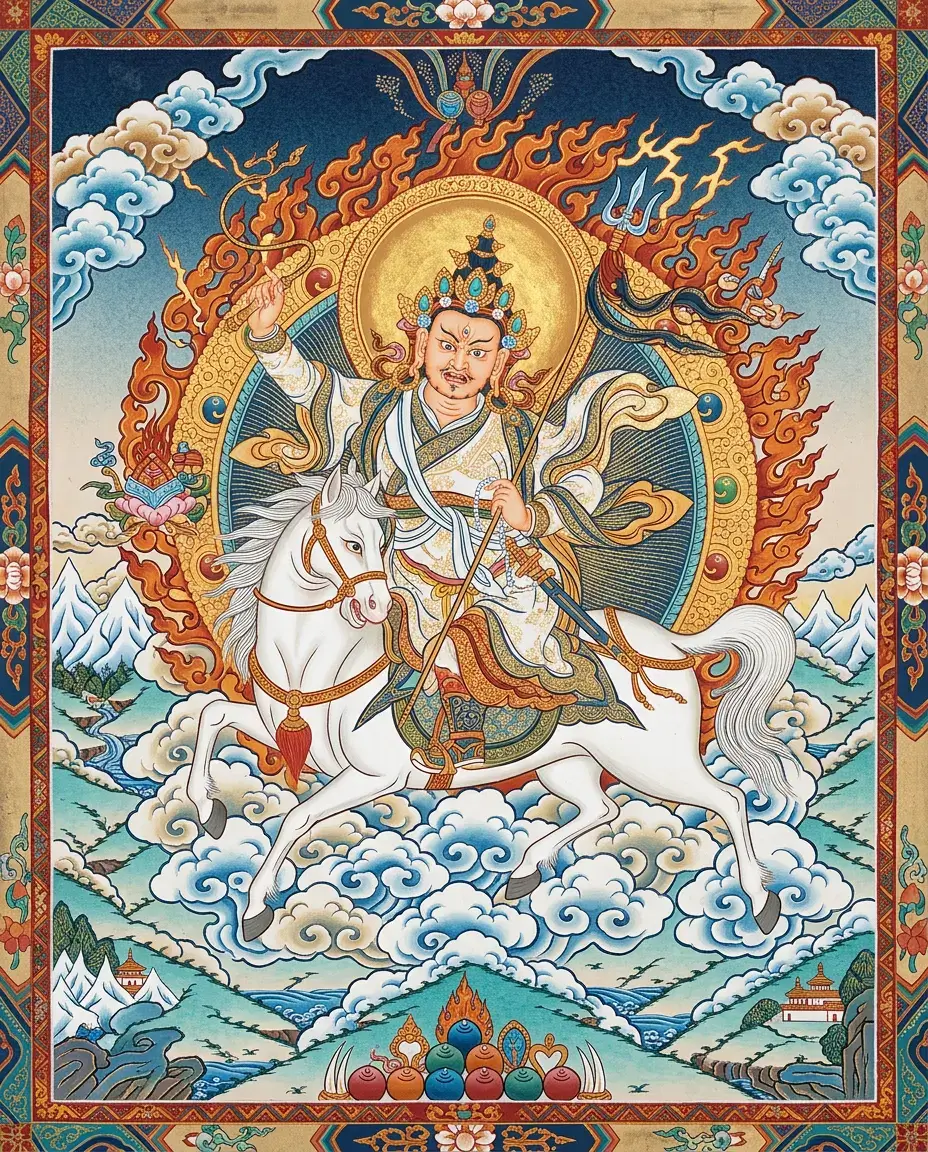
In thangka paintings, Nyenchen Tanglha usually appears as a white-clad warrior riding a white horse, holding a whip or cane and a crystal rosary. Four details repeat across almost every depiction:
- White horse with four white hooves: said to gallop across the three worlds, echoing the glaciers of his own mountain.
- Crystal rosary: a Buddhist counting tool, carried in his left hand as a sign of his protector vow.
- Whip or cane: the tool of a Changtang rider, tying the deity to the nomads who worship him.
- Turquoise topknots: five of them, borrowed from the celestial musician king Zurphud Ngapa, echoing turquoise’s role as Tibet’s most prized protective stone.
A 19th-century thangka in the Rubin Museum of Art (accession number P2000.5.3) shows this exact warrior figure, painted in mineral pigment on cotton and measuring 26.75 by 15.75 inches. Museum notes describe him as especially popular among Karma Kagyu and Gelug practitioners, two of the main Tibetan Buddhist traditions.
💡 Carry the tradition with you: if those details catch your eye, our hand-painted Tibetan thangka Buddha pendant draws on the same painted art form the Rubin Museum preserves, scaled down to something you can wear.
Why Is Namtso Lake Called Nyenchen Tanglha’s Consort?
Herders in northern Tibet believe the goddess of Namtso Lake is Nyenchen Tanglha’s wife, so the mountain and the lake are treated as a divine couple who guard the grasslands together. You will hear this described simply as “Father Tanglha, Mother Namtso.”
Father Tanglha and Mother Namtso
In this pairing, the mountain shelters and the lake nourishes. Both figures are believed to protect the nomadic communities whose herds graze in the valley between them, which is why offerings often go to both sites together rather than one alone.
The Year of the Sheep Kora and Why 2027 Matters
Pilgrims circle Namtso every year, but tradition holds that one circuit during the Tibetan Year of the Sheep carries far greater merit than usual, a custom traced back to the 12th-century Talung Kagyu founder Talung Thangpa Tashi Pal. The next Year of the Sheep begins with Losar, the Tibetan New Year, which falls on February 7, 2027 according to one widely cited calendar tradition, though other sources place the related Gyalpo Losar closer to March. If a 2027 trip to Namtso is on your calendar, that timing is worth checking against the lunar calendar your trip planner uses.
How Does the Tanglha Protector Compare to Other Tibetan Mountain Gods?
Nyenchen Tanglha is one of Tibet’s four great mountain gods, guarding the north, and sits within the wider “nine creator-gods” system at the root of Tibetan mountain worship. The table below places him next to the other three.
| Mountain God | Region Guarded | Classic Image | Signature Role |
|---|---|---|---|
| Yarlha Shampo | Yarlung Valley | White yak, later a man in white | Royal ancestor god of the early Tibetan kings |
| Nyenchen Tanglha | North (Changtang) | White rider on a white horse | Hail god turned treasure guardian and oath-bound protector |
| Amnye Machen | East (Amdo) | Armored rider with a gem-filled bowl | Linked to the birth of King Gesar in Tibetan epic tradition |
| Kula Khari | South | Warrior on a flying horse | Subdued when Padmasambhava gathered Tibet’s mountain gods |
Regional groupings vary slightly between sources; some texts place Nyenchen Tanglha and Yarlha Shampo as brothers rather than purely directional guardians.
The Four Great Mountain Gods and the Nine Creator-Gods
Pre-Buddhist Tibetan belief names four great mountain gods, each tied to a sacred peak, then adds five more to form the nine creator-gods. The ancient Ode Gungyal, Nyenchen Tanglha’s own father, is honored as the founding figure behind the whole group.
Worldly Protector vs. Enlightened Deity
Unlike enlightened figures such as Green Tara, Nyenchen Tanglha is classed as a worldly protector: a powerful local being who has sworn to serve Buddhism rather than a being already beyond worldly concerns. That distinction is why Tibetans approach him with offerings and respect, not as a path to liberation itself. To see how this fits the wider system of Tibetan protectors, our guide to Buddhist protection amulets and the dharma protectors behind them walks through the full picture, and our piece on the legend of reincarnated lamas and the tulku tradition explores a related strand of Tibetan Buddhist belief.
How Can You Honor the Mountain God’s Blessings Respectfully Today?

You don’t need to be Buddhist to honor this tradition: Tibetans traditionally show respect through prayer flags, small offerings at mountain-pass cairns, and incense, and visitors can follow the same spirit. A short checklist covers the essentials.
Prayer Flags, Cairns, and Incense Offerings
Across Tibet, mountain gods are honored at stone cairns called lhatse, where prayer flags are planted and juniper incense is burned. Strung prayer flags, printed with windhorse images, are believed to carry blessings outward on the wind as they weather and fade. If you want to understand the symbolism before choosing a set, our guide on what the five colors of Tibetan prayer flags mean breaks down each color and its meaning.
Turquoise and Thangka as Everyday Reminders
Turquoise, the stone in Tanglha’s own topknots and Tibet’s most cherished protective gem, offers a quieter way to keep the legend close. Our 108-bead red turquoise mala pairs this stone with the traditional 108-count structure used for mantra recitation, giving you a tactile daily reminder rather than a decorative object alone. None of this is framed as a magic charm. It works the same way a family heirloom does, as a steady reminder of protection, gratitude, and respect for the land.
Etiquette Checklist for Visitors and Collectors
- Walk clockwise: circle sacred sites and cairns in a clockwise direction, following local custom.
- Never discard old prayer flags in the trash: let them weather naturally or retire them respectfully, the same guidance covered in our five-color windhorse prayer flags care notes.
- Keep sacred objects above waist level: this includes malas, pendants, and prayer flags in storage.
- Learn the story behind what you wear: understanding the legend is itself a form of respect.
Bring a Piece of This Tradition Home
From windhorse prayer flags to turquoise malas, explore pieces that carry the same symbols Tibetans have used for generations to honor Nyenchen Tanglha and the mountains around him.Explore Tibetan Prayer Flags →
Frequently Asked Questions
Tibet has no single mountain god. Traditionally, every major peak has its own deity. Among them, Nyenchen Tanglha is one of the four great mountain gods and is often called the most famous, ruling northern Tibet from his peak above Namtso Lake.
Both, in a sense. He predates Buddhism as a native Tibetan mountain spirit, but Buddhist tradition holds that Padmasambhava bound him under oath. Today he is honored as a worldly protector, especially within Nyingma, Karma Kagyu, and Gelug circles.
The main summit reaches 23,497 feet (7,162 m), the highest peak in the Nyenchen Tanglha range in Damxung County, Tibet. A Japanese team made the first recorded ascent on May 8, 1986.
Yes. Tibetan Buddhist tradition generally welcomes respectful use by anyone, as long as the objects are treated with care and their meaning is understood. Start by reading what the five colors of Tibetan prayer flags mean, then browse our handmade Tibetan prayer flags collection.
📚 References
- The Mythology of Tibetan Mountain Gods: Xie Jisheng’s academic overview of Tibetan mountain god myths, including the Nyenchen Tanglha legend and its ritual texts. Oral Tradition, Vol. 16/2 (2001)
- Worldly Protector (Buddhist): Nyenchen Tanglha: Museum catalog entry describing the 19th-century thangka depicting this deity, with iconographic notes. Himalayan Art Resources, item no. 947
- Mountain God Kula Khari: Essay on Tibet’s four-directional mountain god system and Padmasambhava’s role in subduing them. Rubin Museum of Art, Project Himalayan Art
- Nyenchen Tanglha: Reference entry on this protector deity’s role within Tibetan Buddhist tradition. Rigpa Wiki
Written by Yang Tso for PotalaStore. This article covers cultural and religious history; it is not a substitute for professional or spiritual guidance. Source conflicts in mountain height and range length across public references are noted where they appear above.