
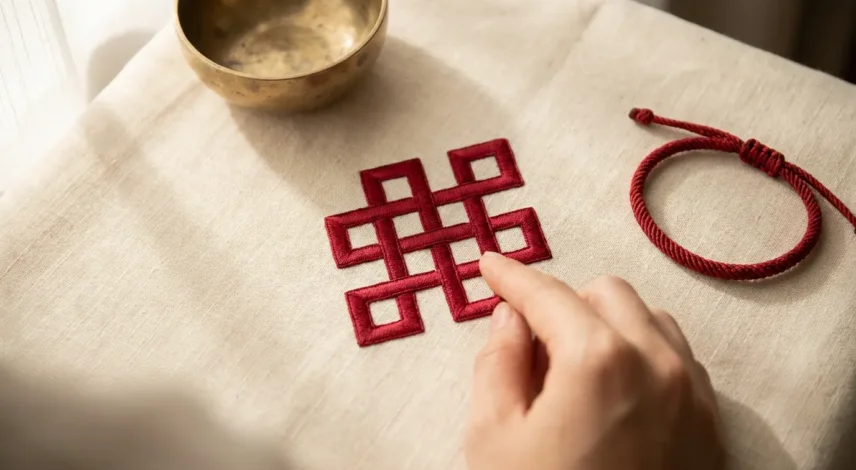

Trace any line of the endless knot with your finger and you never reach an end. That is the whole idea. In Tibetan Buddhism, the endless knot (shrivatsa) is one of the Eight Auspicious Symbols, and its closed, interlaced lines are traditionally understood as wisdom joined with compassion, and as the interdependence of all things.
Online, the same symbol gets called a love knot, a luck charm and a map of reincarnation. Some of those readings come from real traditions. Others come from marketing. This guide separates them, one source at a time.
We built it from named sources: the Tibetan Nuns Project, FPMT’s Mandala magazine, Himalayan Art Resources and The Metropolitan Museum of Art. At PotalaStore, we handle Tibetan symbols every day, so we tied each claim to a source you can check.
You will find five sourced meanings, a four-tradition comparison, the knot’s geometry, a checklist for spotting a genuine motif, and notes on giving or wearing one respectfully.
Table of Contents
What Is the Endless Knot in Buddhism?
In Tibetan Buddhism, the endless knot (Sanskrit: shrivatsa; Tibetan: palbeu) is one of the Eight Auspicious Symbols. Its interlaced lines have no beginning or end, and it is traditionally understood to express the union of wisdom and compassion and the interdependence of all things, rather than one fixed meaning.
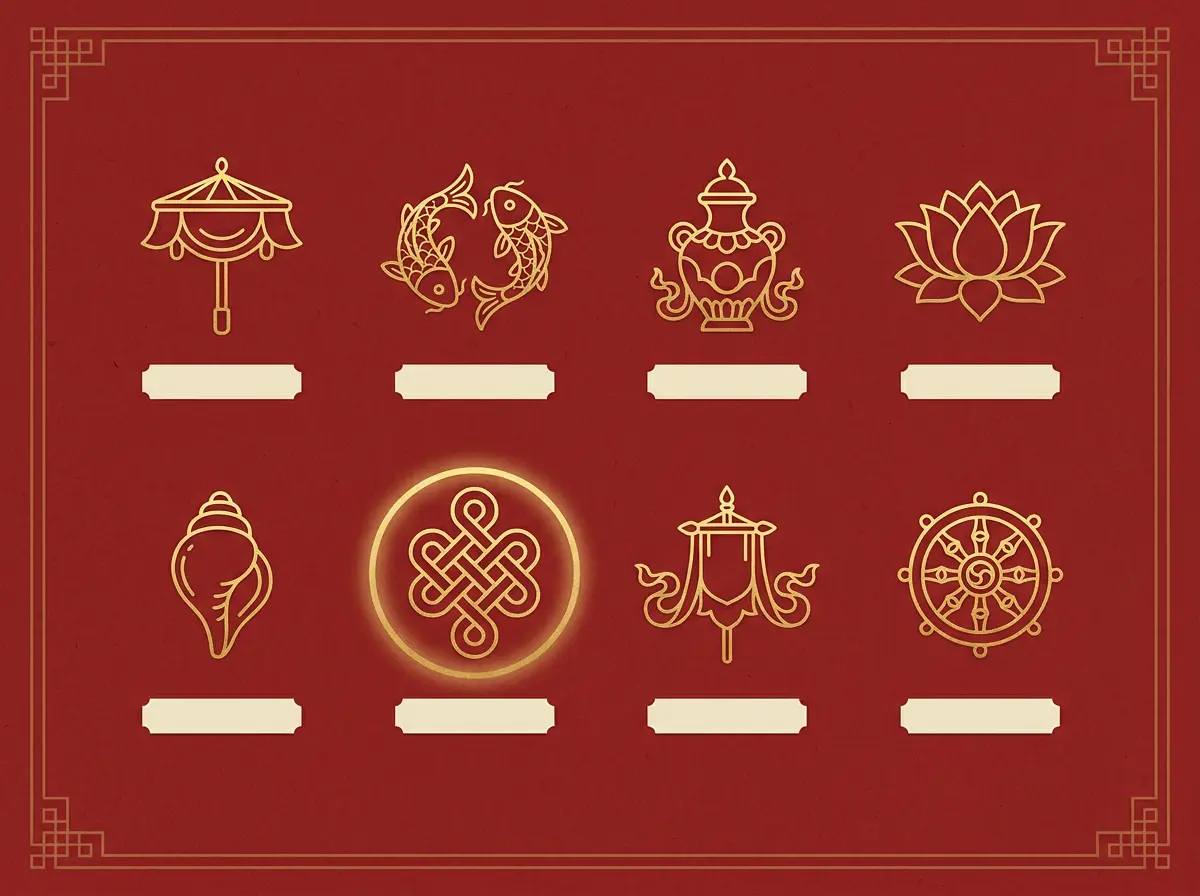
The Eight Auspicious Symbols (Ashtamangala, or tashi takgye in Tibetan) are eight emblems that Tibetan tradition describes as offerings the gods made to Shakyamuni Buddha at his enlightenment, a story summarized in Robert Beer’s reference handbook.
Lama Zopa Rinpoche taught on the eight signs in Bodhgaya on 02/04/2014, and FPMT published his explanation in Mandala in July 2014. He calls this symbol the “glorious peu” and credits the explanation to his root guru, Trijang Rinpoche. A footnote says Rinpoche left the Sanskrit term untranslated, and that the usual English name, unending knot, is not the literal meaning of the words.
Beyond the knot itself, you can read about the symbols, colors and materials behind a Tibetan bracelet, where the knot most often appears in everyday wear.
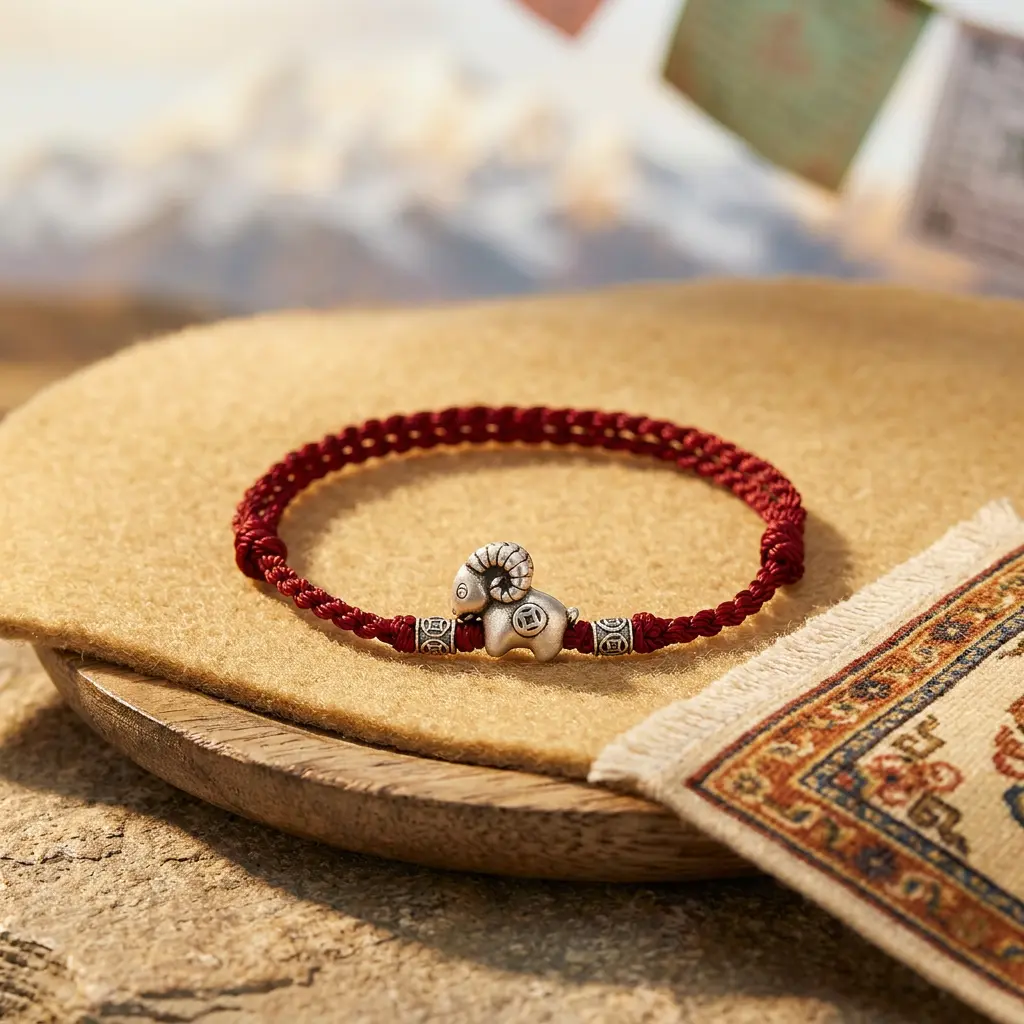
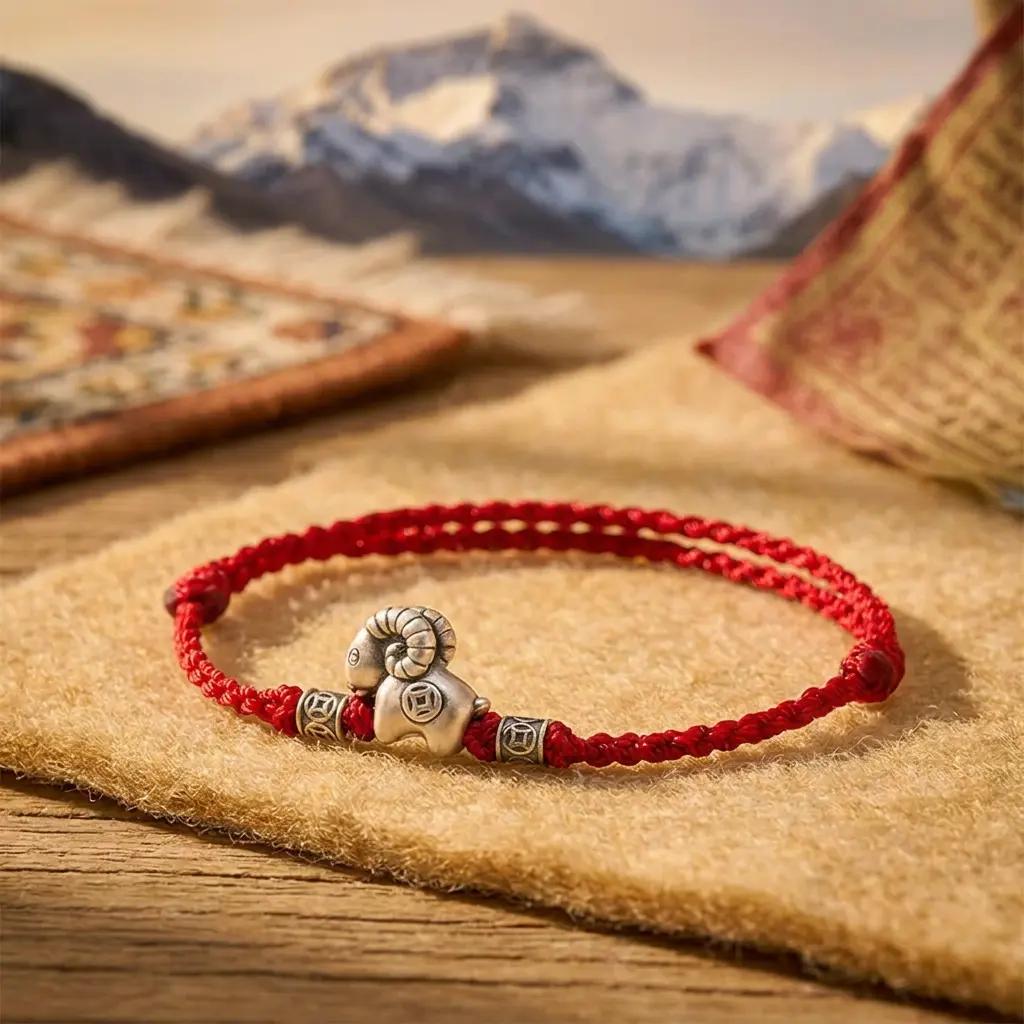
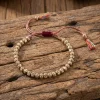
To see the emblem on a wearable piece, look at our handmade Tibetan rope bracelet tied with the endless knot design. It uses an adjustable rope, so you can size it to your wrist.
What Is the Endless Knot’s Name in Sanskrit and Tibetan?
The endless knot is called śrīvatsa (often spelled shrivatsa or srivatsa) in Sanskrit and dpal be’u, pronounced roughly “palbeu,” in Tibetan; Chinese calls it pánzhǎng jié, and Mongolian uses түмэн өлзий. English adds eternal knot, glorious knot and mystic knot. These are labels, not literal translations. The Tibetan Nuns Project writes the Tibetan name as palbeu, and the FPMT footnote points to the same gap between name and meaning.
Is the Endless Knot One of the Eight Auspicious Symbols?
Yes. The endless knot is one of the Eight Auspicious Symbols (Ashtamangala), alongside the parasol, golden fishes, treasure vase, lotus, conch, victory banner and wheel; Himalayan Art Resources lists it sixth as the “Glorious Endless Knot.” In the standard order, the eight are:
- Parasol
- Golden fishes
- Treasure vase
- Lotus
- Conch
- Endless knot
- Victory banner
- Wheel
The lotus has its own set of color meanings, covered in our guide to lotus flower meaning in Buddhism and its colors.
Five Teachings Woven Into the Eternal Knot
Buddhist teachers read the endless knot in several related ways rather than one: as the inseparable union of wisdom and compassion, the interdependence of all phenomena, the endless round of samsara, the web of cause and effect, and, in one Tibetan teaching, the joining of method with wisdom.
- Wisdom and compassion. The Tibetan Nuns Project links the knot to “the endless wisdom and compassion of the Buddha.”
- Interdependence. Rigpa Wiki describes it as the sign of interdependence.
- Samsara. A line with no exit pictures the cycle of birth, death and rebirth.
- Cause and effect. Strands that loop back on each other show how actions and results stay linked.
- Method and wisdom. In Lama Zopa Rinpoche’s teaching, the knot joins method with wisdom without contradiction.
Can the Endless Knot Represent the Union of Wisdom and Compassion?
Yes. In Tibetan Buddhist explanations, the knot’s interwoven strands are traditionally understood to show that wisdom and compassion cannot be separated, and Lama Zopa Rinpoche’s teaching adds that it joins method with wisdom, and emptiness with dependent arising, without contradiction. The Tibetan Nuns Project also ties the symbol to continuity, the unbroken flow of the mind from one moment to the next.
Interdependence and Dependent Origination
The crossings of the knot are commonly read as a picture of interdependence: in Buddhist dependent origination (pratītyasamutpāda), nothing arises on its own, and every strand of the design passes through, and depends on, the others. A cup of tea shows the idea. It depends on leaves, water, a kettle, a farmer and your own hands, and none of those causes stands alone.
Does the Endless Knot in Buddhism Represent Karma?
Often, yes, in a broad sense: because its lines loop back without end, the knot is used to picture samsara, the cycle of birth, death and rebirth, and the way actions and their results stay linked, which ReligionFacts describes as “a closed cycle of cause and effect.” Buddhist teachers commonly describe karma as intentional action and its results, not as a fixed fate. Read that way, the knot works as a reminder: today’s choices become tomorrow’s conditions.
Shrivatsa Across Traditions: Tibetan, Hindu, Jain and Chinese Readings Compared
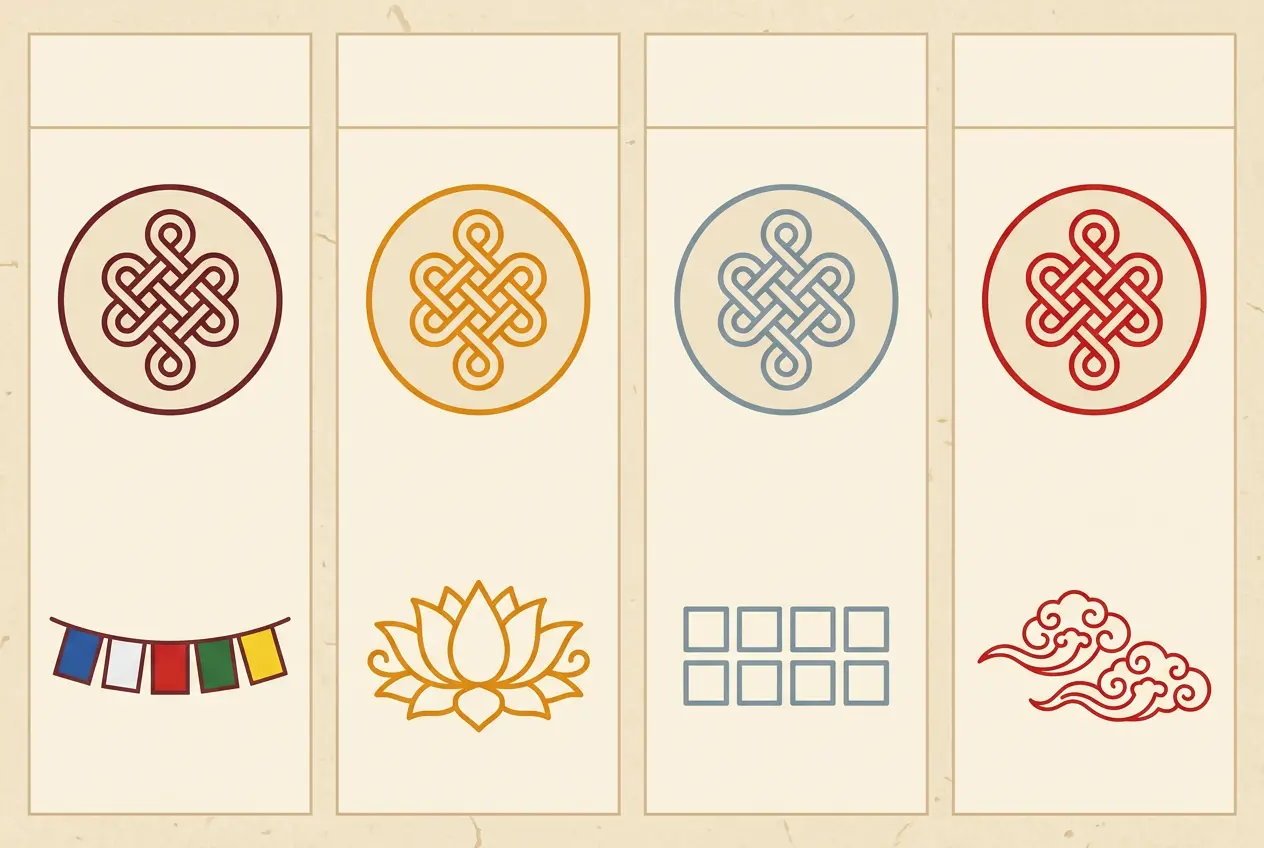
The same interlaced emblem carries different meanings depending on tradition: Tibetan Buddhism reads it as wisdom, compassion and interdependence; Hinduism knows Srivatsa as the mark on Vishnu’s chest where Lakshmi dwells; Śvetāmbara Jains count it among eight auspicious signs; and Chinese art uses it as a sign of longevity.
| Tradition | Name | Typical meaning | Where you see it |
|---|---|---|---|
| Tibetan Buddhism | śrīvatsa; dpal be’u (palbeu) | Union of wisdom and compassion; interdependence | Thangka, scarves, prayer flags, temple woodwork |
| Hinduism | Srivatsa | Mark on Vishnu’s chest where Lakshmi is said to reside | Images of Vishnu |
| Jainism (Śvetāmbara) | śrīvatsa | One of eight auspicious signs | Chests of the 24 Tirthankaras in images |
| Chinese tradition | pánzhǎng jié (盘长结) | Longevity | Qing-dynasty objects such as lacquerware; knotted crafts |
Two origin claims come up often. Wikipedia reports the motif on Indus Valley clay tablets from about 2500 BC, citing Robert Beer’s The Handbook of Tibetan Buddhist Symbols (Serindia, 2003, p. 11). ReligionFacts adds a conjecture that it may have evolved from an ancient naga symbol of two stylized snakes. Treat both as possibilities, not settled history.
Hindu and Jain Srivatsa: The Mark on Vishnu’s Chest
In Hinduism, Srivatsa means “beloved of Sri” and names the mark on Vishnu’s chest where his consort Lakshmi is said to reside, while in Jainism the śrīvatsa is one of eight auspicious signs found only in the Śvetāmbara sect and often marks the chests of the 24 Tirthankaras. Wikipedia, citing the Vishnu Purana, adds that Kalki, Vishnu’s future avatar, will bear the mark.
From Tibet to China and Mongolia: Pánzhǎng Jié and Beyond
The knot became a cultural marker wherever Tibetan Buddhism spread, from Mongolia, Tuva, Kalmykia and Buryatia to China, where the eight emblems appear on Qing-dynasty objects such as a carved lacquer box at The Met. That box (Met object ID 60903, Box with Landscape Scenes and Auspicious Emblems) is carved in red, green and black lacquer and dates from the 18th to early 19th century. The museum’s description lists an endless knot among the Eight Treasures in its cloud scrolls, and the lid carries the character 寿 (shòu), meaning longevity. At the time of writing, the museum’s record lists the box as not on view.
Is an Endless Knot the Same as a Celtic Knot?
No. Celtic knotwork comes from early medieval Insular art in Ireland and Britain, while the endless knot is a specific emblem of Indian and Tibetan Buddhist tradition; the two can look alike, but visual resemblance does not prove a shared origin or meaning.
The Geometry of a Knot With No Ends
The endless knot is a closed pattern of right-angled, interlaced lines that passes alternately over and under itself, and in mathematical knot theory its common form is topologically equivalent to the 7₄ knot, which has seven crossings even though the familiar drawing seems to show nine.
Knot theorists write the 7₄ knot as [313] in Conway notation. Wikipedia’s entry adds two limits: more complex versions of the symbol are not equivalent to 7₄, and non-interlaced drawings are not true knots at all. The pattern’s symmetry is often read as balance and harmony. That reading is traditional, not mathematical.
To see the knot tied in cord, read how Tibetan artisans tie the endless knot, Vajra knot and snake knot.
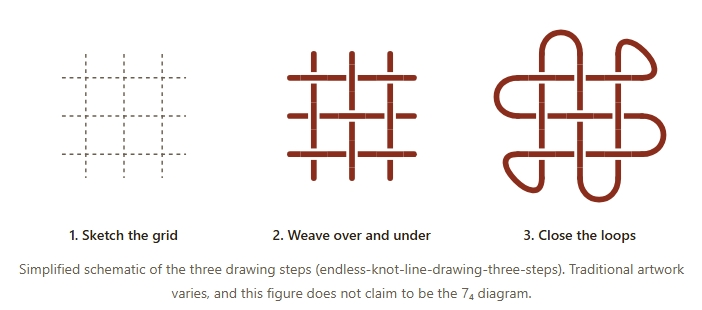
How to Trace and Draw the Endless Knot in Three Steps
To draw a basic endless knot, sketch a square grid, weave the lines so each crossing alternates over and under, and close the loops at the border so a single path returns to where it began. This takes about 5 minutes with a pencil, a ruler and paper.
- Sketch the grid. Draw three horizontal and three vertical lines, evenly spaced, so they cross at nine points.
- Weave. Walk along each line and alternate: over at one crossing, under at the next. Leave a small gap where a line goes under.
- Close the loops. Join the line ends around the border with rounded arcs. Trace the result with a finger: you should cover every line and finish where you began.
Is the Endless Knot the Same as the Infinity Symbol?
No. The infinity sign (∞) is a single figure-eight curve from mathematics, while the endless knot is an interlaced emblem with multiple over-and-under crossings, equivalent in its common form to the seven-crossing 7₄ knot, and carrying Buddhist rather than mathematical meaning.
How to Recognize a Genuine Knot Motif in Museums and Jewelry
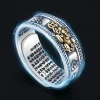
You will find the endless knot painted in thangka borders, printed on prayer flags and ceremonial scarves (khata), carved into temple woodwork, and woven into textiles; on jewelry, a genuine motif should visibly show the interlaced emblem itself, not just a cord that happens to be knotted.
Where You’ll See It: Thangka, Prayer Flags and Museum Collections
In Tibetan settings the knot appears on ceremonial scarves, buildings, prayer flags and handicrafts, according to the Tibetan Nuns Project, and in museum collections it often travels with the other auspicious emblems, as on a Qing-dynasty carved lacquer treasure box at The Met. That is a useful clue when you read an object: if the knot sits beside a lotus, conch or treasure vase, you are probably looking at a set of eight.
A 4-Point Checklist for Endless-Knot Jewelry
Before buying, check four things: the emblem is clearly visible, its loops close symmetrically, the listing states the material and how it was made, and the description separates traditional meaning from promises of luck or protection.
- Visible emblem. You can follow one line with your eye through the interlacing.
- Symmetric, closed loops. No loose ends, and the two halves mirror each other.
- Material and method stated. Look for words like braided rope or hand-knotted, plus the clasp type.
- Honest language. Some listings promise luck or protection; Buddhist sources do not.
On 11/13/2026, we checked our Handmade Tibetan Knot Bracelet with a braided rope and sliding-knot clasp against this list. The product page states the material and the clasp, and a sliding knot replaces hardware, so you can adjust it by hand and wear it daily. It is listed from $28.95 to $58.95 depending on option, and prices can change.
Giving an Endless Knot: The Custom of Auspicious Connection
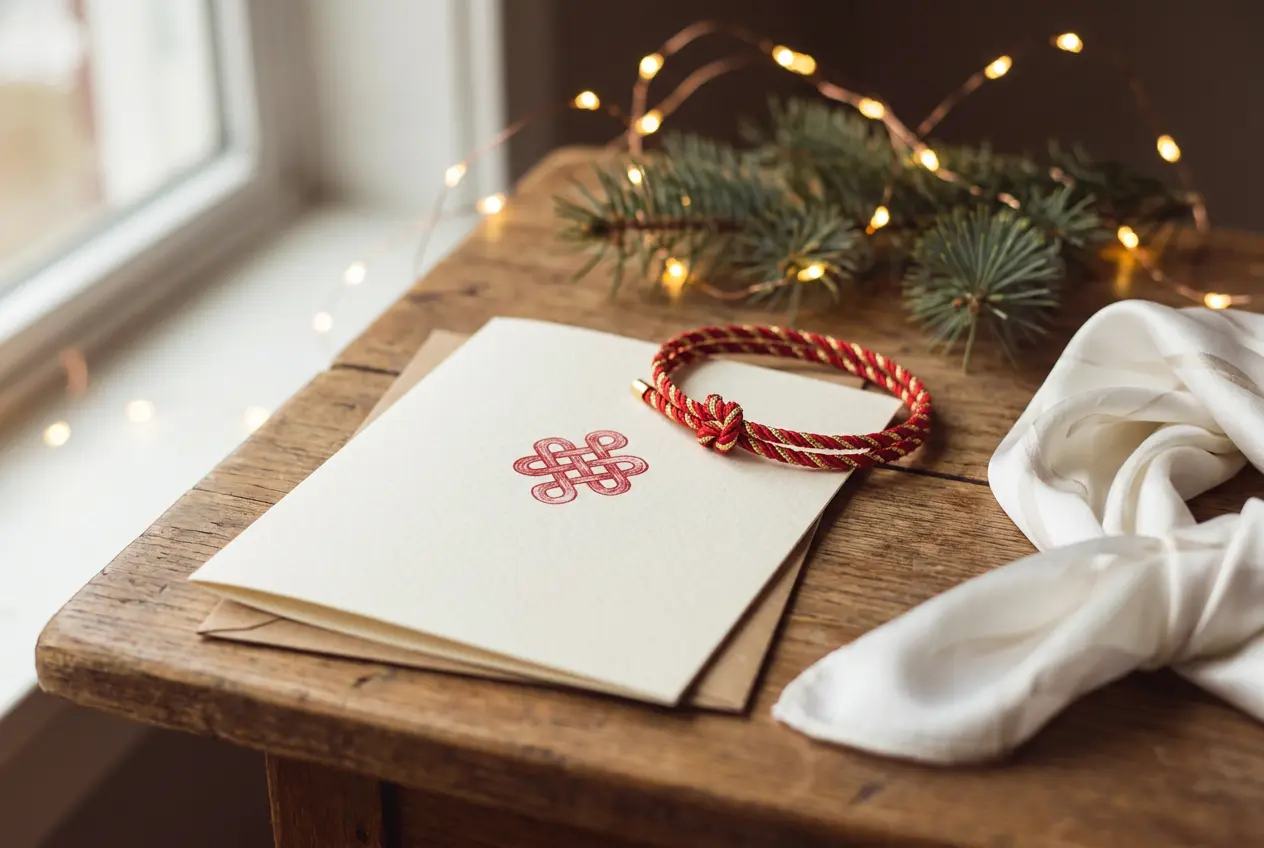
In Tibetan custom, putting the endless knot on a gift or card is meant to link giver and recipient in an auspicious bond, since the symbol shows how all things are connected, and it gently reminds both people that today’s actions shape tomorrow’s results.
Why Tibetans Place the Knot on Gifts and Cards
ReligionFacts explains the custom through interdependence: if everything is connected, a knot on a gift or card marks a good link between two people and nudges the recipient to remember that good outcomes grow from present causes. That makes the knot a natural fit for a season built around gratitude and connection. Between Thanksgiving and the end-of-year holidays, a card with a small knot drawn on it says more than a generic charm. A short note is enough: “May our connection stay unbroken, like the knot.”
Is It Respectful to Wear One If You’re Not Buddhist?
Generally, yes: the endless knot is widely shared as auspicious art rather than an object of worship, so wearing it is usually seen as respectful when you know what it means, keep it clean, and avoid presenting it as a guaranteed charm. If you worry about getting this wrong, that concern is reasonable, and asking the question is already a good start. Three habits help:
- Learn the meaning first. Know the five readings above, so you can explain the knot in a sentence.
- Treat it with care. Keep it clean, and store it somewhere tidy rather than on the floor, as many Tibetan Buddhists do with sacred items.
- Skip the guarantees. Describe it as a reminder, not a promise of luck or protection.
For a wider walk-through, see how to wear spiritual jewelry respectfully without being religious.
In summary, the endless knot is not one symbol with one meaning. Buddhist teachers read its closed pattern as wisdom joined with compassion, interdependence, samsara, cause and effect, and the union of method and wisdom, while other traditions read the same form differently. Knowing which reading comes from which source is the respectful way to wear it or give it.
Explore PotalaStore’s authentic Tibetan jewelry and spiritual items to find a piece that shows the knot clearly.
Cultural note: This guide explains traditional Buddhist, Hindu, Jain and Chinese readings of a symbol for educational purposes. It does not claim that wearing or giving the endless knot brings luck, protection or any other effect, and it is not a substitute for guidance from a qualified teacher of your tradition.
Version history: v1.0, 11/13/2026, first publication. If you spot an error, tell us through Contact Us and we will review and correct it.
Frequently Asked Questions
Not in its core Buddhist sense. Tibetan teachings link the knot to wisdom, compassion and interdependence, though one traditional gloss cited by Wikipedia describes “a curled noose emblematic of love.” Modern gift listings often say “eternal love”; treat that as a personal reading, not Buddhist doctrine.
It is called auspicious, meaning it is associated with favorable conditions, and it belongs to the Eight Auspicious Symbols. Buddhist sources present it as a reminder of how things connect, not as a charm that guarantees luck or protection.
In Chinese folk practice the “mystic knot” is hung for longevity and harmony. This is a folk custom separate from its Buddhist meaning, so this guide notes it without making claims about its effects.
Yes. It is widely worn on bracelets and pendants by Buddhists and non-Buddhists alike. Choose a piece where the emblem is clearly shown, and learn what it means first.
📚 References
- Eight Auspicious Symbols: Catalog listing that places the Glorious Endless Knot sixth among the eight. Himalayan Art Resources
- Box with Landscape Scenes and Auspicious Emblems: Museum record for a Qing-dynasty carved lacquer box with the Eight Treasures. The Metropolitan Museum of Art
- The Eight Auspicious Signs (July 2014): Lama Zopa Rinpoche’s explanation, including the footnote on the Sanskrit term. FPMT Mandala
- Eternal Knot Symbol: Overview of the palbeu and its link to wisdom and compassion. Tibetan Nuns Project
Supporting sources
- Endless Knot Symbol: Gift-and-card custom, naga conjecture and cause-and-effect reading. ReligionFacts
- Endless knot: Names, Indus Valley claim, Hindu and Jain usage. Wikipedia
- 7₄ knot: Knot-theory data, including crossing number and Conway notation. Wikipedia
- Bibliography: Robert Beer, The Handbook of Tibetan Buddhist Symbols (Serindia, 2003; Shambhala).
- Interdependence reading and “beloved of Sri” gloss: Source: Rigpa Wiki; Wisdom Library. (Readers may search each site for the entries on the endless knot and Shrivatsa.)