
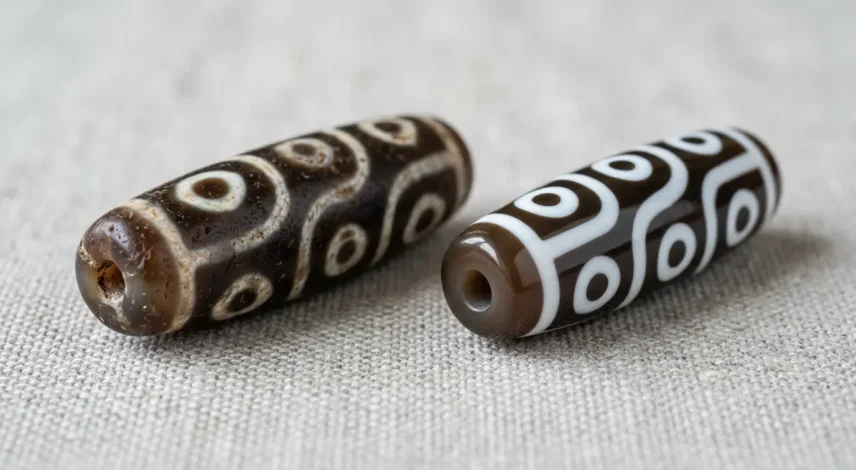

If you’re about to spend real money on a dzi bead—a Tibetan etched agate talisman traditionally worn for protection and luck—the worst outcome isn’t overpaying. It’s paying authentic prices for resin. Most fakes you’ll meet online aren’t even real stone, yet they’re sold beside genuine beads at nearly the same price.
Here’s the short answer before anything else: you can spot most fakes in under five minutes using three checks—material (real dzi are natural agate, Mohs 6.5–7), etching depth (the pattern penetrates the stone instead of sitting on the surface), and weathering (genuine age leaves irregular marks and a waxy patina, not a printed coating).
We’ve hand-picked dzi at workshops in Lhasa and Kathmandu, and after putting hundreds of beads through the same bench tests, we’ve learned that the seller matters as much as the bead. At Potala Store, we sell new, genuine agate dzi—not antiques we can’t authenticate—so this guide is written to help you buy smart, whether you buy from us or not. Let’s get into how to tell real from fake.
Table of Contents
What Is a Real Dzi Bead — and What Counts as Fake?
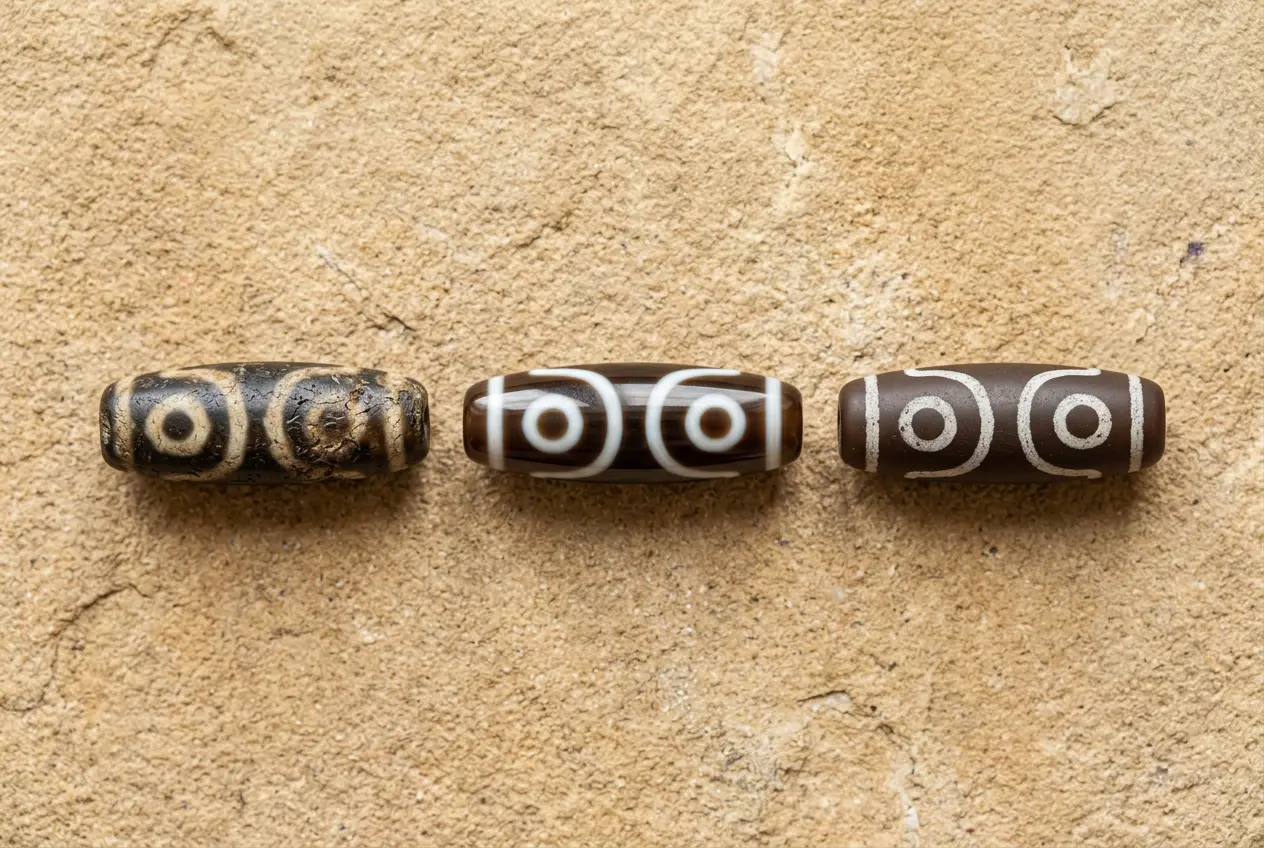
Before you can spot a fake, you need to know that “real” has three meanings in the dzi world, and confusing them is exactly how buyers get burned.
- Ancient dzi: Genuine antique beads, often centuries old, rare and extremely expensive. According to historical records, a single fine specimen can reach hundreds of thousands of dollars.
- New genuine dzi: Modern beads carved from real, authentic agate and etched by hand. These are “real” stone and real craft—just not old. Most quality pieces run about $80–$300 USD.
- Outright imitation: Resin, glass, plastic, or dyed bone with a surface-printed pattern. These aren’t dzi at all, even when sellers call them that.
The decisive factor across all three tiers is the stone itself. A genuine dzi is cut from agate, a banded form of chalcedony (silicon dioxide) that rates 6.5–7 on the Mohs hardness scale—noticeably harder than glass. The signature eye-and-line pattern is created by an alkaline dye etching process, where a soda-ash compound is applied and heat-set so the design soaks into the stone. On real beads, that etching reaches the inner core and cannot be scratched off; on fakes, the pattern is printed on top and lifts under a fingernail or a drop of acetone.
So a “new” agate dzi is still genuine—it’s real stone, etched the traditional way. That distinction matters, because honest sellers tell you which tier you’re buying. Anyone selling a $50 bead as a museum-grade antique is selling you a story, not a stone.
Real vs Fake Dzi Beads: The Side-by-Side Test
The fastest way to tell a real dzi bead from a fake is the material: genuine dzi are natural agate that feels cool, dense, and hard, while most fakes are resin or glass that feel light and warm up the instant you hold them. Use the table below as your field checklist.
| Test | Real (natural agate) | Fake (resin / glass / bone) |
|---|---|---|
| Material & weight | Cool to touch, dense, hard (Mohs 6.5–7) | Light, warms instantly, sometimes hollow |
| Tap test | Crisp, ringing “click” | Dull, plastic “thud” |
| Light through the stone | Milky, translucent edges with banding | Too clear (glass) or fully opaque (resin) |
| Etching | Penetrates the core, can’t be scratched off | Surface-printed or laser-marked, scratches off |
| Weathering marks | Irregular “fish-scale” lines, varying depth | Too uniform, or baked-on crackle |
| Drill hole | Hand-drilled, slightly uneven double cone | Machine-perfect, flawless cylinder |
| Price reality | New pieces typically $80–$300 USD | Often under $2 per bead, sold by the strand |
No single row is proof on its own. But when a bead is light, warm, perfectly drilled, and priced like a keychain, you already have your answer.
5 Hands-On Checks You Can Do Before You Buy
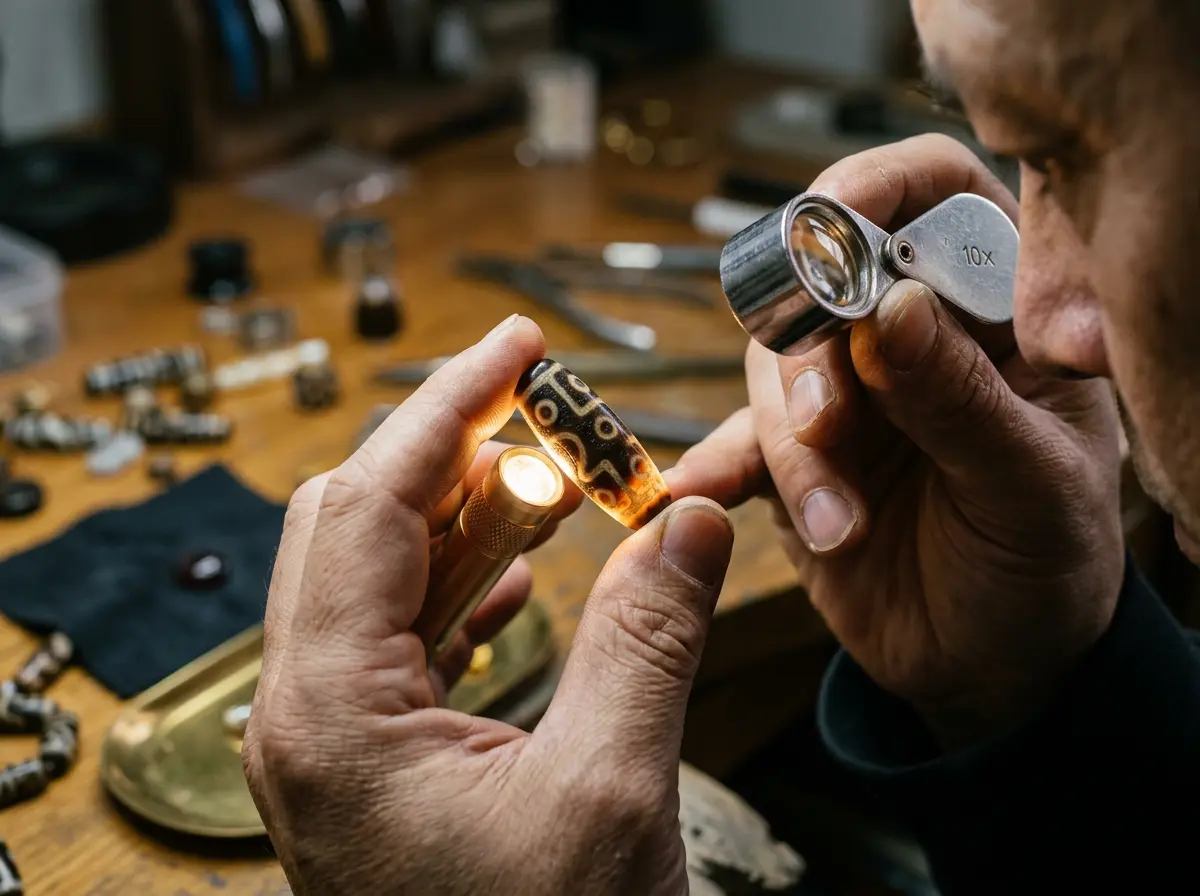
You don’t need a lab to filter out most fakes—just your hands, a flashlight, and a $10 jeweler’s loupe. Here are the five checks we run on every bead, in the order we run them:
- Temperature and weight: Genuine agate stays cool against your skin and feels dense for its size. A typical dzi measures about 1.6 in (41 mm) long, and real stone has a satisfying heft. Resin and glass warm up fast and feel light.
- The tap test: Gently click the bead against your teeth or another stone. Real agate gives a crisp, high “ring.” Plastic and bone give a flat, muffled sound.
- Hold it to the light: Shine a phone flashlight through the edge. Authentic agate glows with a milky translucence and faint internal banding. Glass looks glassy and even; resin blocks the light entirely.
- Loupe the etching depth: Under magnification, real etching has soft, slightly irregular edges that sink into the stone. Printed or laser-etched fakes show sharp, perfectly even lines that sit on the surface.
- Inspect the drill hole: Look at the bore. Traditional beads are hand-drilled from both ends, leaving a slightly off-center double cone. A flawless, mirror-smooth cylinder usually means modern machine production—a red flag on a bead sold as old.
One honest caveat from experience: the tap test fooled us early on. Some thick, well-made glass beads ring almost like agate, so we stopped treating sound as a verdict and started treating it as one vote among five. Run all five checks together, and you’ll catch the great majority of imitations.
💡 Field tip: Keep a loupe in your bag when bead shopping in person. If you’d rather skip the guesswork, browse pre-vetted authentic Tibetan dzi beads that have already passed these checks.
Reading an Older Bead: Weathering, Patina & Cinnabar
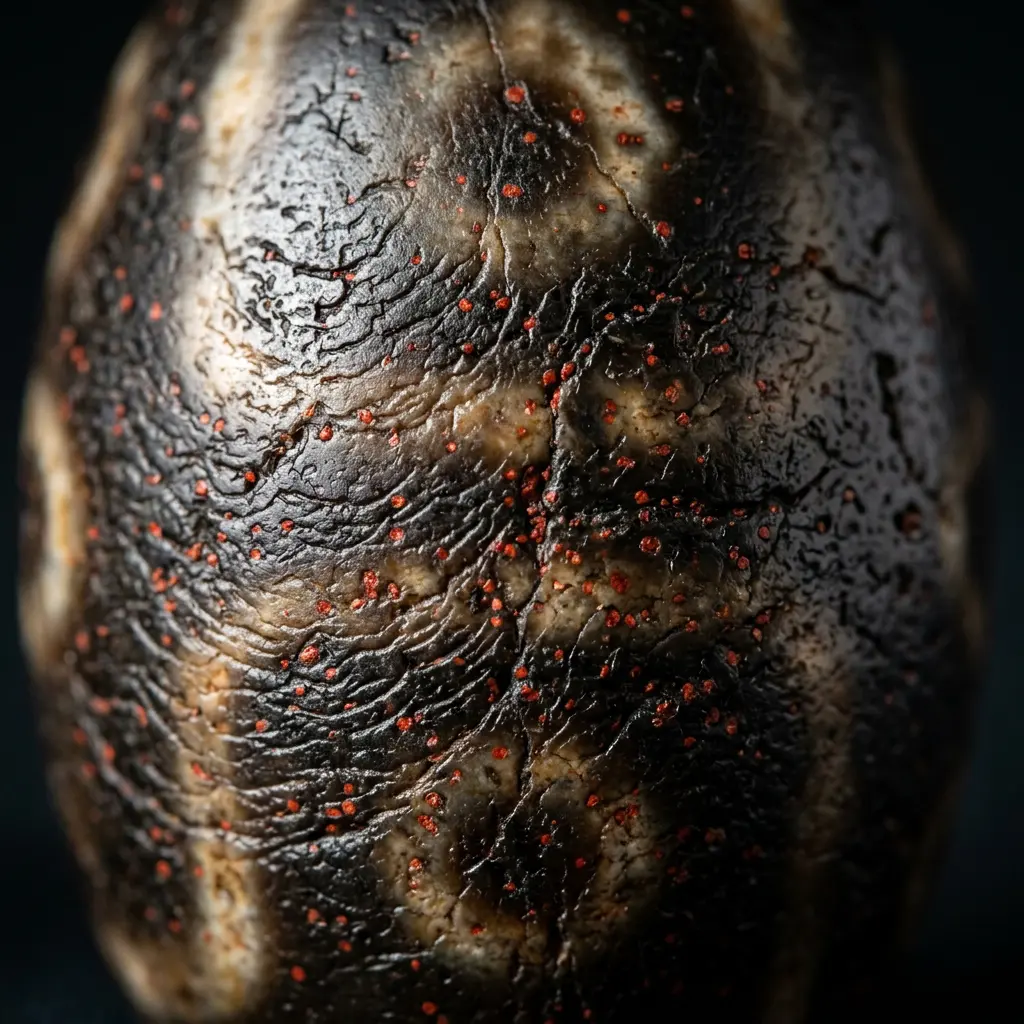
Age leaves a signature, not just scars. On a genuine older dzi, natural weathering and a waxy patina develop together—the surface earns irregular “fish-scale” or chicken-foot marks while taking on a soft, almost greasy luster from decades of handling. A bead that’s merely scratched up isn’t old; it’s damaged.
You may also see cinnabar dots—tiny rust-red “blood spots” that form inside the agate over time. On real beads they sit within the stone, vary in size, and scatter unevenly. On fakes they’re painted on, identical, and lined up too neatly.
Three myths trip up almost every new buyer, and we’ve watched all three play out at the bench:
- “Old-looking means old.” Not true. Beads are routinely tumbled, acid-treated, and artificially aged to look ancient. Distress is easy to fake; a coherent patina is hard.
- “Identical patterns mean a matched set.” Real hand-etched beads always vary slightly. Two beads that are pixel-perfect copies of each other were almost certainly molded.
- “A double-cone drill hole proves it’s antique.” It’s a clue, not a certificate. Modern makers replicate hand-drilling too.
The takeaway: weathering and patina should agree with each other and with the price. When a “200-year-old” bead has crisp edges and a flat finish, trust the stone over the story.
What a Lab Can (and Can’t) Prove — Plus the Price Reality
A lab can confirm what your dzi is made of—it cannot tell you how old it is. Any seller who claims a certificate proves a bead’s age is selling you confidence, not proof. This is a real investment, and we get why the fear of being fooled is so strong, so it’s worth knowing exactly what science can and can’t do here.
Materials research backs this up. A 2020 synchrotron study published in the journal Heritage analyzed a genuine dzi bead and confirmed the body is agate (silicon dioxide), with etched rings roughly 1 mm wide that contain regular copper hot spots along their edges—a chemical fingerprint of the traditional etching process. That kind of analysis can verify material and technique. It still can’t put a date on the bead, because chemistry doesn’t carry a timestamp.
Now the price reality. New, genuine agate dzi generally sell for $80–$300 USD, depending on size, pattern, and the number of “eyes.” Antique beads occupy a different universe entirely, with documented sales climbing into the hundreds of thousands. Here’s the honest part most sellers won’t tell you: mass-produced imitations can be found for less than $2 a bead and are often sold by the strand. So when the math doesn’t add up, the bead usually doesn’t either.
We learned this the hard way. Early on, we nearly bought a “rare nine-eye antique” priced at $69.95. Real nine-eye dzi—the so-called King of Dzi—are among the most prized beads in existence, and that price was a flashing warning sign. Under the loupe, the etching sat flat on the surface and scratched off with a thumbnail. Cheap is the tell. If a once-in-a-lifetime bead costs less than dinner, it isn’t one.
⚠️ A note on meaning and benefits: Dzi beads are traditionally believed to offer protection, luck, and positive energy. These beliefs come from cultural and spiritual tradition, not scientific evidence, and are shared here for educational purposes—not as medical, financial, or psychological advice.
Where to Buy Genuine Dzi Without Getting Burned
The single best fake-filter isn’t a test—it’s a seller who tells you exactly which tier you’re buying and takes the bead back if you have doubts. Before you pay, look for four things:
- Clear tier labeling: Does the listing say “new genuine agate” or vaguely imply “ancient” to justify the price?
- High-resolution real photos: Not stock images—actual macro shots of the etching, drill hole, and weathering.
- A real return policy: Honest sellers let you inspect the bead in hand and return it. Reputable specialists have offered no-questions returns for decades.
- Transparent sourcing: Can they tell you where and how the bead was made?
That last point is where we put our own standard on the line. Every dzi we list is hand-selected from agate workshops in Lhasa and Kathmandu—a practice our founder, Yang Tso, has done in person since 2015. We sell new, genuine beads and say so plainly; we don’t dress modern dzi up as priceless antiques. If you want to go deeper on symbolism before you choose, our guide to the nine-eye dzi bead’s meaning and benefits breaks down what each pattern represents, and our overview of Buddhist amulets for protection puts dzi in the wider context of protective talismans.
Shop Authentic Tibetan Dzi Beads
Hand-picked from Himalayan workshops, honestly labeled, and ready to pass every test in this guide.Browse the Dzi Collection →
Frequently Asked Questions
Check the material first. Real dzi are natural agate that feels cool and dense, with etching that penetrates the stone and can’t be scratched off. Fakes are usually resin or glass—light, warm to the touch, and surface-printed. Running the five hands-on checks above together gives you a reliable verdict.
Yes, but the range is enormous. New handcrafted agate dzi typically run about $80–$300 USD, while genuine antique beads have sold for hundreds of thousands. The key is matching the price to the tier you’re actually being sold—new versus ancient.
The nine-eye dzi is the most sought-after, often called the “King of all Dzi” for its completeness and protective symbolism. If you’re drawn to it, read our nine-eye dzi meaning guide before buying, since the rare patterns are also the most faked.
Tradition suggests the left wrist to receive protective energy and the right to project intention. Wear it against the skin for daily contact. You can explore more protection-focused pieces if that’s your main goal.
📚 References
- Material & Etching Analysis: Synchrotron XRD, XRF imaging, and µ-XANES study confirming dzi composition (agate) and copper hot spots in the etching. Heritage, MDPI (2020)
- Dzi Bead Overview & Value Range: Background on dzi history, types, and documented price ranges. Wikipedia: Dzi bead
- Traditional Etching Craft: Gemologist interview on why the dzi etching process is so sophisticated and hard to replicate. Source: Taiwan Panorama (Readers may search the publication’s archive for the current article.)
- Agate Gemological Properties: Hardness, composition, and identification standards for agate and chalcedony. Gemological Institute of America (GIA)