
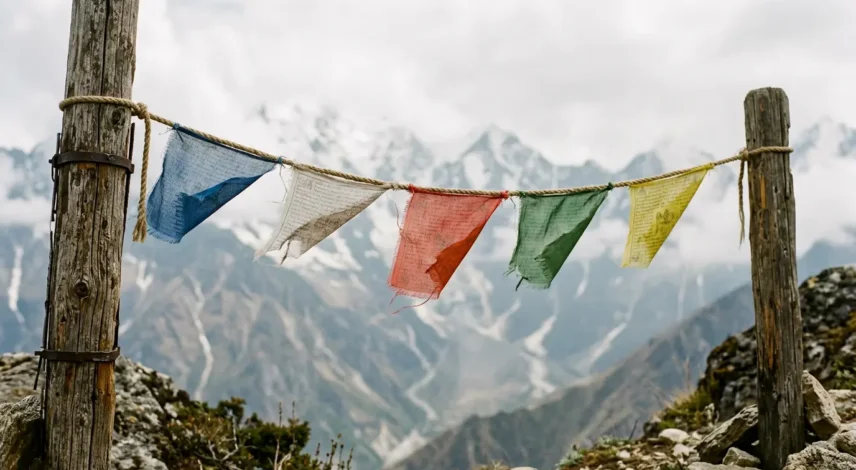

To dispose of old prayer flags respectfully, burn them in a small, contained fire so the smoke carries their blessings skyward — and never toss them in the trash or let them touch the ground. If your Tibetan prayer flags are synthetic or you can’t burn safely where you live, the respectful alternatives are to bury them or use textile recycling. That’s the short answer. Below, we’ll walk you through the full method, the safe step-by-step way to do it, and exactly what to do when burning isn’t an option.
If you’re reading this, you already care enough to do it right — and that intention matters more than any single technique. Faded, frayed Buddhist prayer flags can feel awkward to take down, because throwing away something sacred feels wrong. It should. At Potala Store, our founder Yang Tso has spent years working directly with monks at Sera Jhe and Kopan monasteries, and the same question comes up again and again: what am I actually supposed to do with the old ones? This guide answers that, honestly and completely.
⚠ A quick note: The spiritual meanings described here reflect traditional Tibetan Buddhist beliefs, not scientific claims. This content is for educational purposes. Please follow your local fire-safety rules and open-burn ordinances whenever you handle an open flame.
Table of Contents
Why Old Prayer Flags Deserve a Respectful Send-Off
Tibetan prayer flags are treated as sacred objects because they carry printed mantras and holy symbols, so tradition holds they should never be thrown in the garbage or allowed to touch the ground. Each flag is block-printed with prayers like Om Mani Padme Hum and the image of the Lung Ta, the wind horse that carries blessings on the breeze. Tossing that in a bin alongside coffee grounds isn’t just untidy — in the tradition, it’s disrespecting the sacred texts themselves.
There’s a practical reason the tradition is strict about this, too. A single string of flags can carry roughly 400 traditional mantras across its panels, each one a small prayer meant to keep working as long as the cloth lasts. Treating that cloth carelessly cuts the practice short before its time. When our team first started sourcing flags with monks at Sera Jhe, the lesson we heard most often wasn’t about how to hang them — it was about how to let them go with the same care you brought to putting them up.
Here’s the reassuring part: there’s no way to “fail” if your intention is respectful. The rules are simple and forgiving. You have four honest options, and we’ll compare them next so you can pick the one that fits your flags and your situation.
The Respectful Ways to Retire Prayer Flags (Your Options)
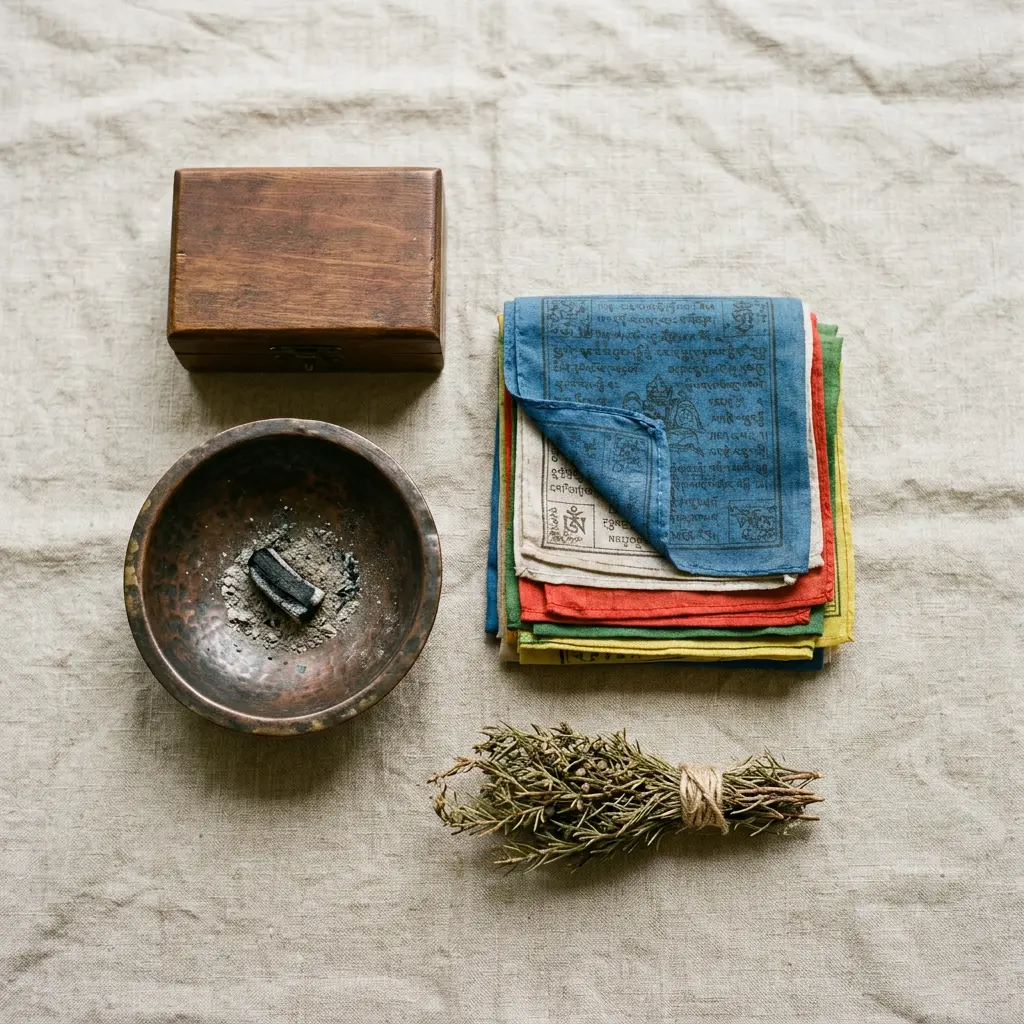
There are four respectful ways to retire old prayer flags: burn them, bury them, let them fade and disintegrate naturally, or — for synthetic flags — recycle them. Burning is the traditional and most widely recommended method, but it isn’t the only correct one. The right choice depends mostly on what your flags are made of and where you live.
| Method | Best For | Key Point |
|---|---|---|
| Burning | Cotton / natural-fiber flags | Traditional method; smoke carries the blessings upward |
| Burying | Synthetic flags; no-burn areas | Place in a clean spot, ideally in a small wooden box |
| Letting them fade | Flags still hanging outdoors | Natural disintegration is auspicious, not neglect |
| Textile recycling | Polyester / nylon flags | Avoids toxic fumes from open-burning synthetics |
Notice that the method follows the material. Cotton flags return cleanly to ash and are ideal for burning. Synthetic flags call for a different, safer approach — which is exactly where most online guides go quiet. We’ll cover both.
If this is your first time retiring a set, don’t overthink which option is “most correct.” People new to the practice often worry they’ll pick wrong, and that worry is understandable — but any of these four, done with care, honors the flags. What matters is that you choose consciously rather than defaulting to the trash can. Once you know your material and your local rules, the right method usually picks itself.
Are You Supposed to Burn Prayer Flags? (Step by Step)
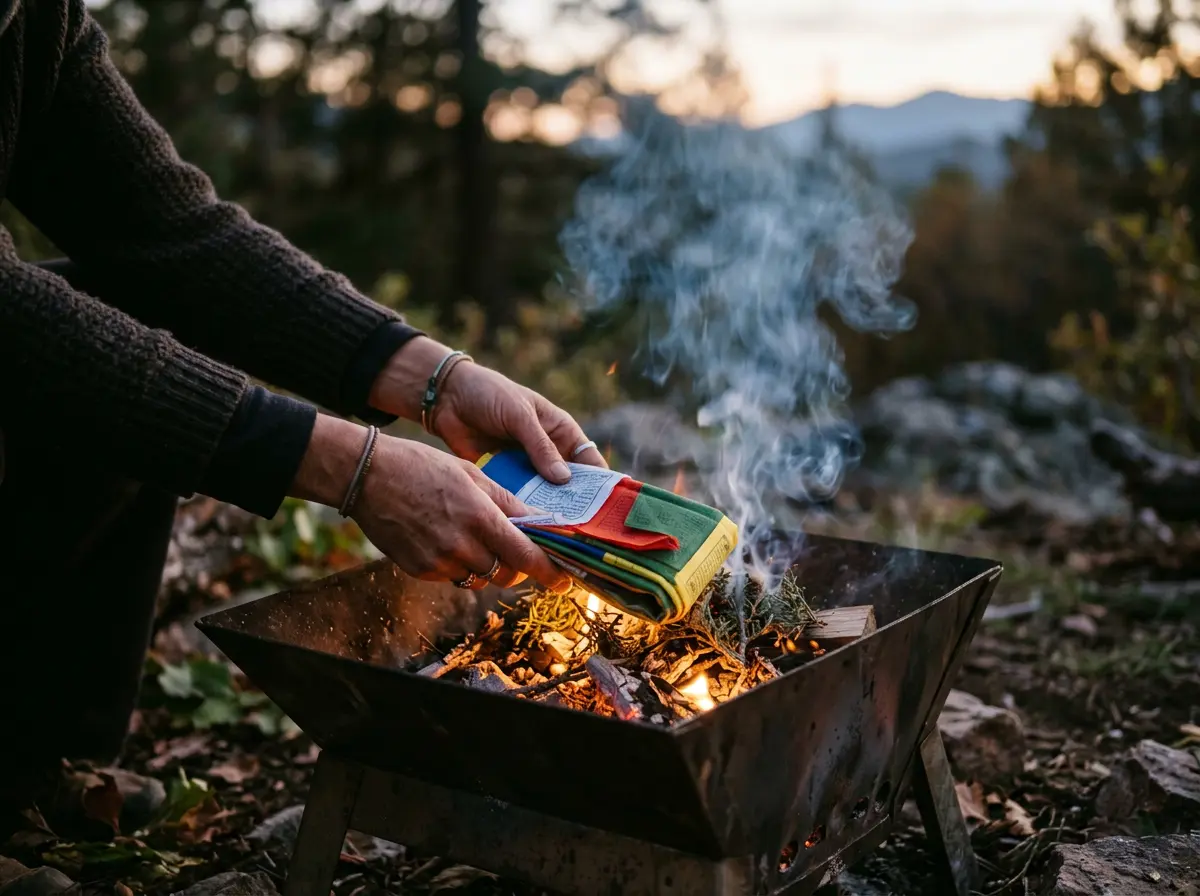
Yes — burning is the traditional way to dispose of old prayer flags, and doing it respectfully means using a small, contained fire, keeping the flags from touching the ground, and holding the compassionate intention with which they were made as the smoke rises. In Tibet, old flags are customarily taken down and burned with bunches of fragrant pine and juniper, often at Losar (Tibetan New Year). You can honor that same spirit in a backyard fire pit.
What you’ll need
- A contained fire source: a metal fire pit, chiminea, or fireproof bowl — not loose ground.
- A clear, non-flammable space: away from fences, dry brush, and low branches.
- Water or sand nearby: to fully extinguish the fire afterward.
- Optional: a small handful of pine or juniper, as done traditionally.
The respectful burning steps
- Choose a calm, windless day. Traditionally, a clear morning is preferred, and low wind keeps the fire controlled.
- Check your local open-burn rules first. Many U.S. counties restrict backyard burning — a 2-minute search of your city ordinance saves a fine.
- Keep the flags off the ground. Carry them folded, and place them straight into the flame rather than setting them down first.
- Add the flags to the fire. If you like, tuck in a little pine or juniper so the smoke is fragrant, the way it’s done at Losar.
- Pause and reflect. As they burn, recall the intentions the flags were hung with — peace and compassion for all beings.
- Let them burn fully to ash. Cotton flags reduce to clean ash in just a few minutes.
- Extinguish and scatter respectfully. Douse the ashes, then scatter or bury them somewhere clean rather than binning them.
💬 A short intention you can say: The Tibetan Nuns Project suggests that as you burn the flags, you “remember the intentions with which the prayer flags were made, blessed, and hung,” holding compassion for all sentient beings. We’ve found this small pause is what turns a chore into a meaningful send-off — it’s the part people tell us they’re glad they didn’t skip.
What to Do With Synthetic Flags or When You Can’t Burn
If your flags are synthetic — nylon or polyester — or you live where open burning is unsafe or banned, the respectful alternatives are to bury them in a clean spot or take them to textile recycling. This is the gap almost every other guide skips, and it matters more every year as cheaper synthetic flags flood the market and more cities restrict backyard fires.
Here’s the honest reason to think twice about burning synthetics: burning nylon can release hydrogen cyanide, and polyester gives off carbon monoxide and other harmful by-products, while synthetic-textile fires can produce dioxins. That’s not respectful to the sacred image or to your lungs. So for man-made fabrics, we steer people toward these options instead:
- Bury them respectfully. Place the folded flags in a clean spot — ideally inside a small wooden box — where no one will walk over them, and let them return to the earth.
- Use textile recycling (cotton especially). Natural-fiber flags can go to a fabric-recycling drop-off rather than landfill; this keeps the sacred cloth out of the trash stream.
- Leave them to weather naturally. Some practitioners simply place old flags at the base of a tree or in a clean, undisturbed place. This mirrors a real Tibetan practice: in the Solu Khumbu region, old flags are placed inside a cave or stupa “so nobody has to walk over them,” rather than burned at all.
The through-line is the same in every case: keep the flags off the ground, out of the ordinary trash, and handled with a moment of care. Climate and city rules are real constraints, and honoring the tradition doesn’t require pretending they aren’t.
Is It Bad Luck to Take Down Prayer Flags — and When Should You Replace Them?
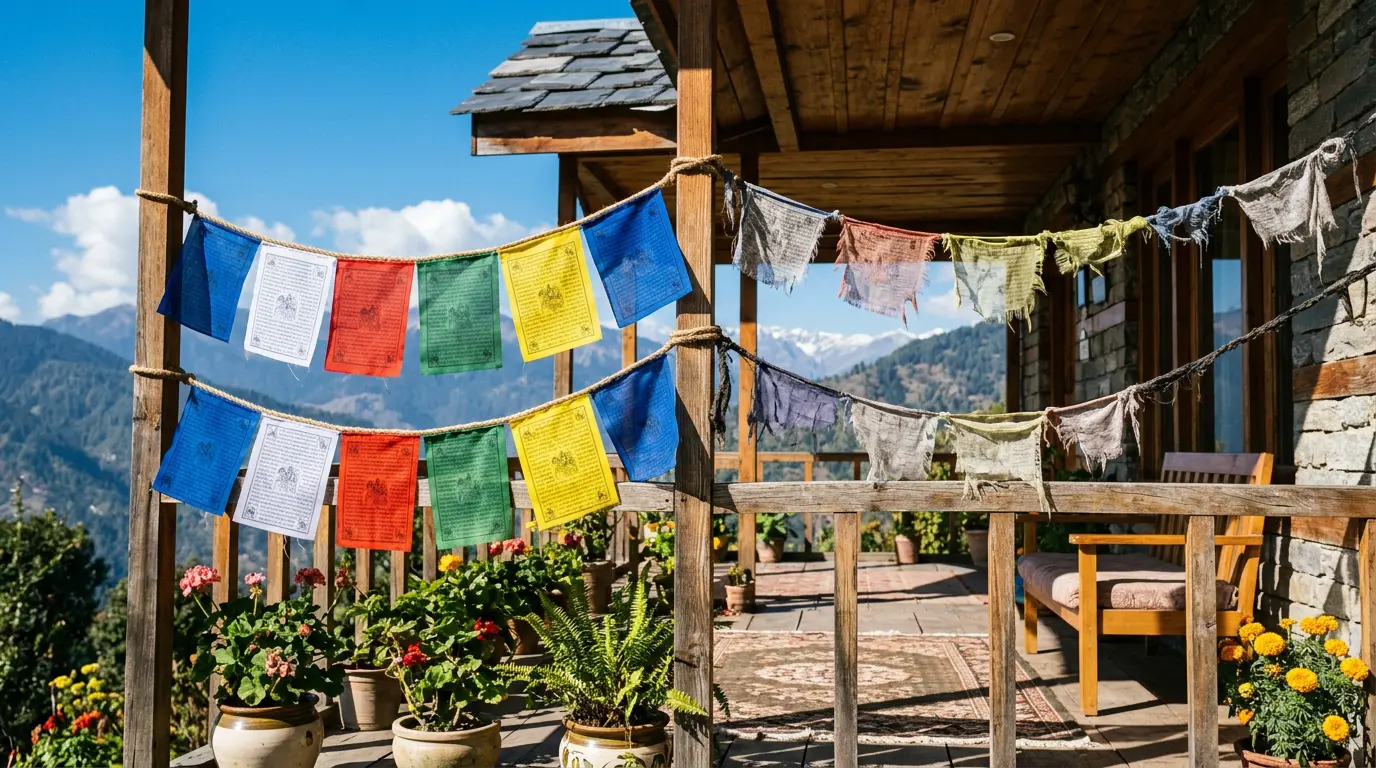
No, it is not bad luck to take down faded prayer flags. In Tibetan tradition, fading means the blessings have already been carried out into the world — it’s a sign the flags did their work, not that anything went wrong. Flags are customarily renewed at Losar (Tibetan New Year), or simply whenever the printed mantras have faded past legibility.
This is where the teaching of impermanence (anicca) becomes tangible: the natural fading and disintegration of the cloth is meant to remind us that all things pass, and that renewal follows release. Many practitioners hang new flags right alongside the weathered ones, letting the old and new overlap as a small ceremony of continuity rather than a clean-out. One gentle tradition worth keeping: don’t split up the five-color set before disposal — blue, white, red, green, and yellow belong together, in that order, right to the end.
When you’re ready to renew, choose a set made to honor the tradition. Our Tibetan prayer flags are block-printed with the Windhorse and classic mantras, and a standard outdoor string runs about 6–8 feet (1.8–2.4 m) — enough to drape a porch, balcony, or garden fence. If you’re gifting a set for a new home, our guide to spiritual housewarming gifts walks through how prayer flags pair with other blessings.
Common Mistakes to Avoid
The most common mistakes are tossing flags in the trash, letting them touch the ground, open-burning synthetic flags, and separating the five-color set before disposal. Each one is easy to avoid once you know it, so here’s the quick fix for each:
- Throwing them in the garbage. Burn, bury, recycle, or let them fade instead — the trash is the one option tradition rules out.
- Letting them touch the ground. Carry them folded and place them straight into the fire or the burial spot.
- Burning nylon or polyester in the open. Bury or recycle synthetics instead, to avoid the toxic fumes.
- Rushing it. The point isn’t speed. A 30-second pause to recall your original intention is the heart of the whole practice.
- Splitting the set. Keep the five colors together, in order, through to disposal.
The key takeaway: respectful disposal is less about perfect technique and more about attention. Get the intention right, keep the flags off the ground and out of the trash, and you’ve honored them properly.
Ready to Hang a Fresh Set?
When your old flags have carried their blessings out into the world, renew them with an authentic, block-printed Windhorse set — handmade by Himalayan artisans and shipped worldwide.Shop Tibetan Prayer Flags →
Frequently Asked Questions
No. Prayer flags carry sacred mantras, so tradition holds they shouldn’t be trashed or allowed to touch the ground. Burn them, bury them, recycle them, or let them fade naturally instead.
Not at all. Natural fading and disintegration is considered part of their purpose and a reminder of impermanence. Many people simply hang new flags alongside the old ones as they weather.
Avoid open-burning synthetics, since nylon can release hydrogen cyanide and polyester gives off carbon monoxide and other harmful by-products. Bury them in a clean spot, ideally in a wooden box, or use textile recycling.
Traditionally at Losar (Tibetan New Year), or whenever the printed text has faded past legibility. When you’re ready to renew, you can browse an authentic set in our prayer flag collection or read more on the meaning behind Buddhist symbols.
📚 References
- Prayer Flag Traditions & Respectful Disposal: Guidance on hanging and disposing of Tibetan prayer flags, including the burning tradition and the meaning of fading. Tibetan Nuns Project
- Prayer Flag History, Symbolism & Renewal: Overview of the Lung Ta, the five elements, the Four Dignities, and the tradition of burning old flags and renewing them at Losar. Wikipedia: Prayer Flag
- Cultural Context of Tibetan Prayer Flags: Scholarly reporting on the windhorse, mantras, and the origins of prayer flags across Tibetan and Bon traditions. HowStuffWorks
- Burning Holy Objects & Non-Burning Alternatives: Traditional teachings on disposing of sacred texts and old prayer flags, including the cave/stupa practice in Solu Khumbu. Lama Yeshe Wisdom Archive
At Potala Store, we source authentic prayer flags directly from Himalayan artisans and monastery partners. Whether you’re retiring an old set or hanging your first, we hope this guide helped you do it with the care it deserves.