

If you have ever looked at a Tibetan Wheel of Life painting and wondered what those six pie-slice sections actually mean, this guide gives you the full map. The six realms of existence are the six states into which beings are reborn within samsara — the endless cycle of birth, death, and rebirth in Buddhist cosmology. Understanding them changes how you read almost every piece of Tibetan sacred art you will ever see.
At Potala Store, we work directly with monks at Sera Jhe Monastery in Lhasa and Kopan Monastery in Nepal, where the Wheel of Life is painted on monastery walls and explained to newcomers before any other teaching. That relationship shapes how we present these realms here: not as a dry list, but the way a practitioner is actually taught to see them.
The short answer: the six realms of samsara are the god realm (deva), the demigod realm (asura), the human realm, the animal realm, the hungry ghost realm (preta), and the hell realm (naraka). Each is a form of rebirth driven by karma and a dominant mental poison. This guide walks through what each realm means, why the human realm is considered the most precious, how to read a Wheel of Life thangka, and the questions people most often ask.
Table of Contents
What Are the Six Realms of Existence in Buddhism?
The six realms of existence are the six possible states of rebirth within samsara, the Buddhist cycle of birth, death, and rebirth. They are traditionally divided into three higher realms — gods, demigods, and humans — and three lower realms — animals, hungry ghosts, and hell beings. Your realm of rebirth is shaped by karma, the cumulative moral weight of your past actions.
In Buddhist tradition, these six realms are not simply places you go after death. Many teachers, especially in Tibetan Buddhism, describe them as psychological states you can experience in a single lifetime — even in a single day. This dual reading, literal and psychological, is what makes the six realms of samsara one of the most enduring frameworks in Buddhist thought.
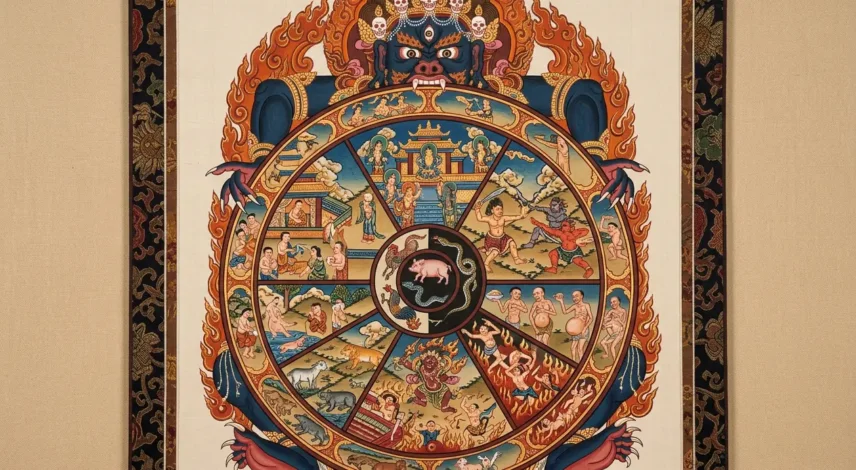
The realms are usually pictured together in the Bhavachakra, the Wheel of Life. This painting places the six realms in a ring around a central hub, showing how ignorance, attachment, and aversion — the three poisons — keep beings turning through them. We will map the whole wheel later in this guide.
⚠️ Important Note: The teachings on the six realms, karma, and rebirth described here reflect Buddhist tradition and its cosmology. They are presented for educational and cultural understanding. This is not religious instruction, and different Buddhist schools interpret these ideas in different ways.
The Six Realms of Samsara, Explained One by One
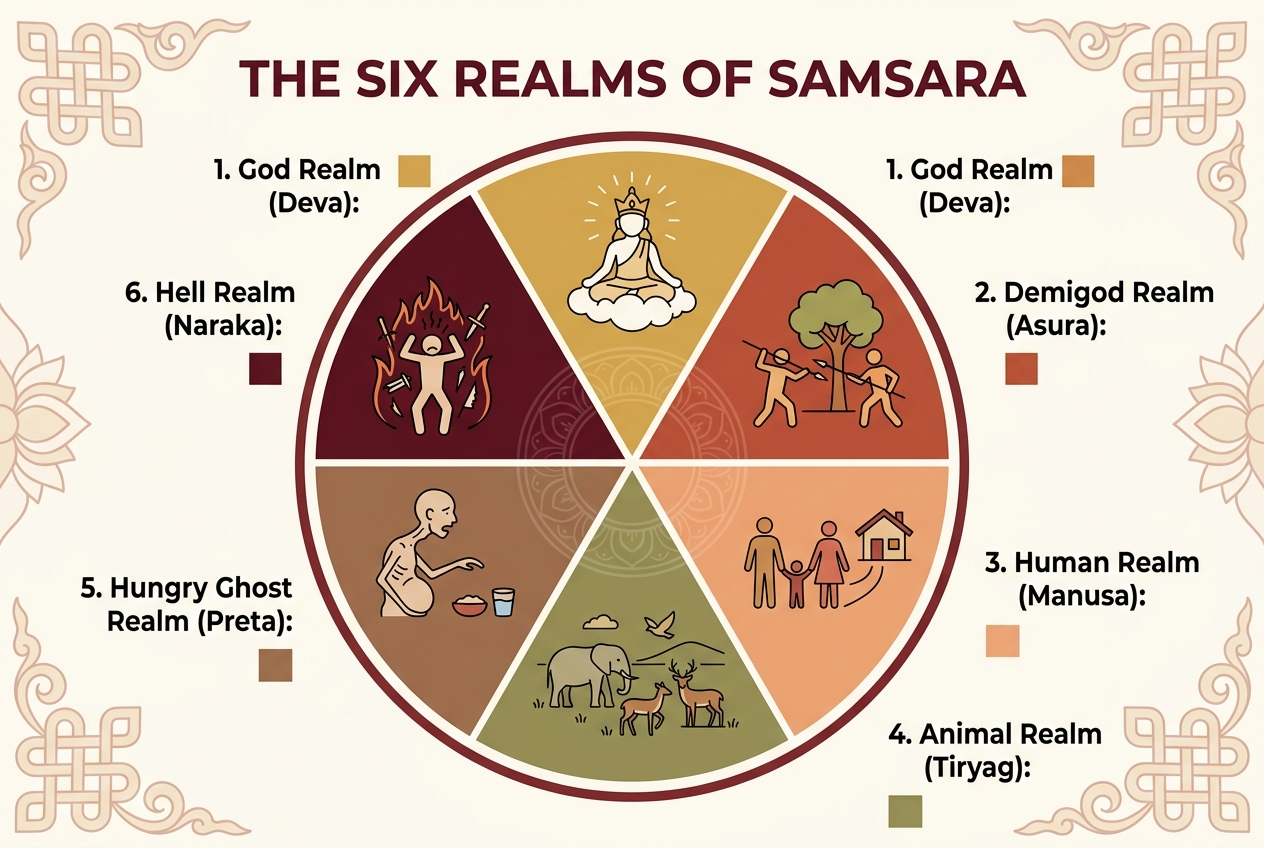
Here are the six realms of samsara, listed from the most fortunate rebirth to the most painful, with the mental poison and dominant experience traditionally linked to each:
| Realm | Sanskrit | Ruling Poison | Dominant Experience |
|---|---|---|---|
| God realm | Deva | Pride | Long-lasting pleasure and comfort, ending in a painful fall |
| Demigod realm | Asura | Jealousy | Constant rivalry and warfare over what the gods have |
| Human realm | Manuṣya | Desire | A balance of pleasure and suffering — the ideal ground for practice |
| Animal realm | Tiryagyoni | Ignorance | Instinct, fear, and servitude, with little freedom of choice |
| Hungry ghost realm | Preta | Greed | Insatiable craving that can never be satisfied |
| Hell realm | Naraka | Anger / hatred | Intense heat, cold, and torment lasting immense spans of time |
The Three Higher Realms: God, Demigod, and Human
The three higher realms are the more fortunate rebirths, but only one of them is genuinely useful for spiritual progress. In the god realm, beings enjoy immense pleasure and lifespans said to last thousands of years, yet that very comfort is a trap — gods rarely feel the urgency to practice, and their eventual fall is devastating. In the demigod realm, powerful beings are consumed by jealousy of the gods and wage endless conflict. The human realm sits in the middle, mixing joy and pain in a way that keeps motivation alive.
The Three Lower Realms: Animal, Hungry Ghost, and Hell
The three lower realms represent rebirths of increasing suffering. The animal realm is marked by ignorance, driven by instinct, hunger, and fear with almost no capacity for reflection. The hungry ghost realm is home to the preta, beings traditionally depicted with huge empty bellies and needle-thin throats — a vivid image of craving that can never be filled. The hell realm, or naraka, is described in Buddhist texts as a set of hot and cold hells where beings endure torment for karmically vast periods before eventually being reborn elsewhere. Importantly, no realm is permanent, not even hell.
How Karma Decides Your Realm of Rebirth
Karma is the force that determines which of the six realms a being is reborn into. In Buddhist teaching, every intentional action plants a seed; the ripening of those seeds shapes future rebirth. Generosity and compassion incline the mind toward higher realms, while the three poisons — ignorance, attachment, and aversion — pull it toward lower ones.
This is why the six realms and karma are always explained together. Wholesome actions accumulate merit that ripens as a more fortunate rebirth, and harmful actions do the opposite. The realms are not assigned by a judging deity; they are the natural consequences of the mind’s own conditioning, working through cause and effect across lifetimes.
At the center of the Wheel of Life sit three animals — a pig, a rooster, and a snake — representing ignorance, attachment, and aversion. They chase each other in a circle because these poisons feed one another, and together they keep the whole wheel of the six realms turning. The way out, in Buddhist tradition, is to weaken those poisons through ethical conduct, meditation, and wisdom.
The Endless Knot, one of Buddhism’s Eight Auspicious Symbols, carries this same idea of interconnected cause and effect. If you want to see how these teachings show up in wearable form, our guide to Tibetan bracelet meanings and symbols traces how samsara and karma are woven into everyday sacred jewelry.
How to Read a Wheel of Life Thangka
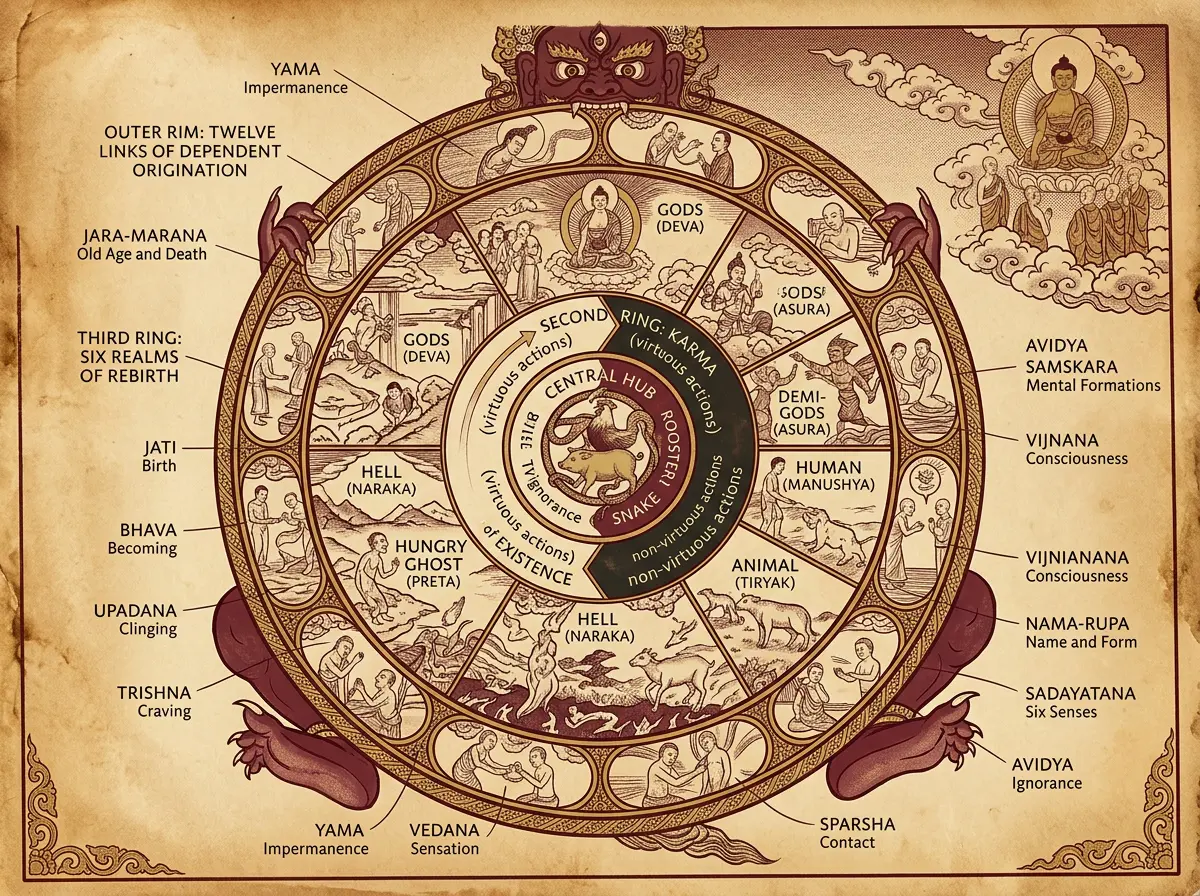
A Wheel of Life thangka is read from the center outward in four rings, with the six realms occupying the third ring. Once you know the layout, the whole painting turns from a confusing swirl of figures into a clear teaching diagram. Here is the order our monastery partners use when they explain it to first-time visitors.
- The hub (three poisons): The pig, rooster, and snake at the very center — ignorance, attachment, and aversion — the root causes that drive the entire cycle.
- The second ring (karma): Usually split into a light half and a dark half, showing beings ascending through good actions and descending through harmful ones.
- The third ring (the six realms): The six wedge-shaped sections, each depicting one realm — gods at the top, hell at the bottom, the other four arranged around the sides.
- The outer rim (twelve links): The twelve links of dependent origination, illustrating step by step how ignorance leads to birth, aging, and death.
- Yama and the Buddha: Yama, the lord of death, grips the whole wheel to show impermanence, while a small Buddha figure points outside the wheel toward liberation.
Here is a detail most quick summaries leave out. In many thangkas, including the ones our partner workshops paint, a small buddha appears inside each of the six realms. This is deliberate. It signals that awakening is possible from within any realm — a hungry ghost, an animal, even a hell being can eventually turn toward the path. When we first watched a Kopan artist add these six tiny figures by hand, he explained that leaving them out would change the entire meaning of the painting. That single iconographic choice is the difference between a picture of despair and a picture of hope.
💡 Bring the teaching into your space: A hand-painted Wheel of Life is one of the most detailed subjects in Tibetan art. Explore Potala Store’s collection of authentic thangka paintings, made with natural pigments and genuine 24k gold by Himalayan artisans.
Experiencing the Six Realms in a Single Day
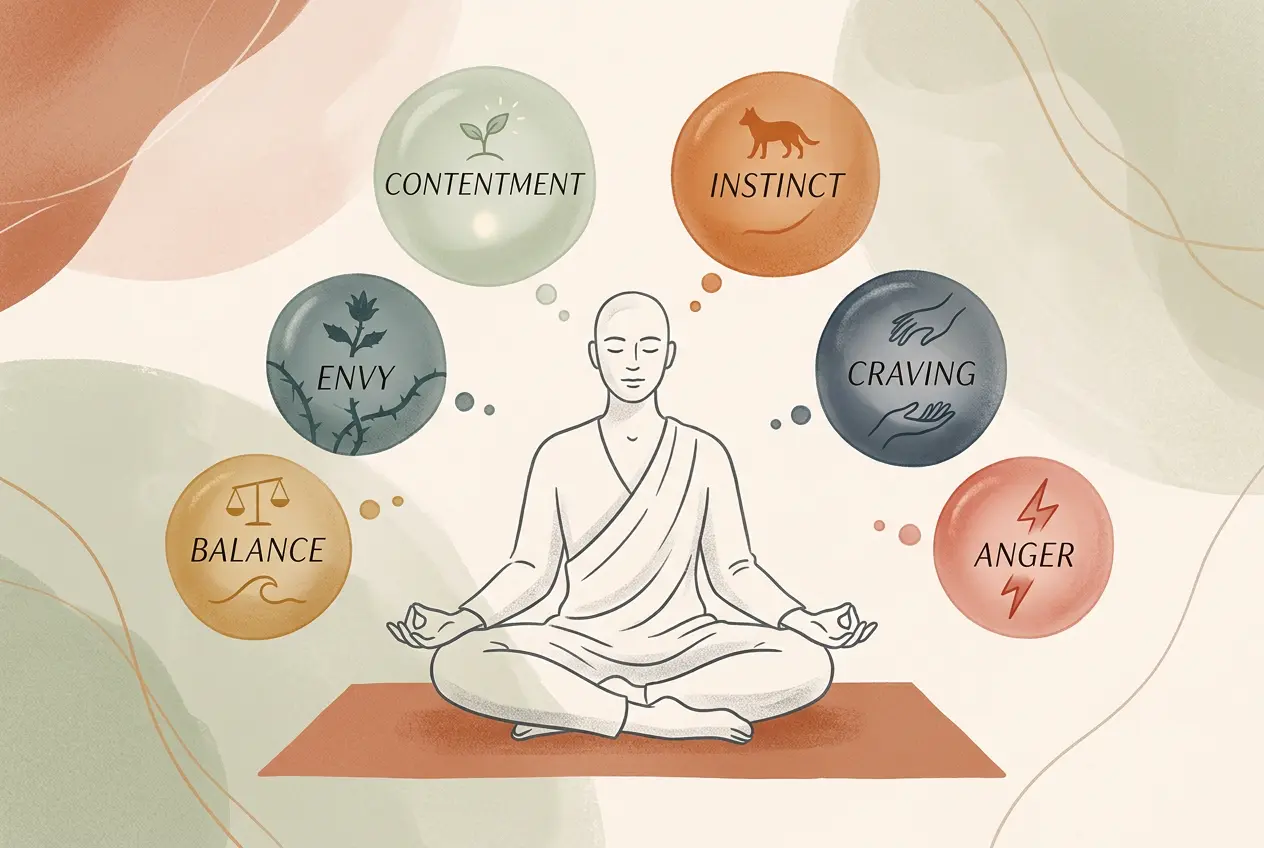
Many Tibetan teachers describe the six realms as mental states you move through daily, not only rebirths after death. This psychological reading is one of the most practical ways to work with the teaching, and it is where the six realms stop being abstract cosmology and start describing your own mind.
Seen this way, the god realm is the pleasant haze of a comfortable afternoon when nothing feels urgent. The demigod realm is competitive envy — scrolling through someone else’s highlight reel and burning to outdo them. The human realm is ordinary balanced awareness, capable of choice. The animal realm is acting purely on instinct or habit. The hungry ghost realm is craving that no amount of consumption satisfies. The hell realm is the grip of rage or panic that feels inescapable in the moment.
We find this framing especially useful for people new to Buddhist ideas. You do not have to accept a literal cosmology to notice that you cycle through all six states regularly. The teaching’s real invitation is the same either way: recognize which realm your mind is in, and remember that the human capacity for awareness is the doorway out. Practices like breath counting on a mala or set of prayer beads exist precisely to help you catch that shift and return to the balanced human ground.
Escaping Samsara: The Realms and the Path to Nirvana
Nirvana is the state beyond all six realms — the end of the cycle of rebirth itself. The point of understanding the six realms is not to secure a better rebirth and stop there, but to recognize that every realm, even the god realm, is still within samsara and still marked by impermanence and suffering.
This is why the human realm is called the most precious of the six. It offers a rare balance: enough suffering to motivate practice, and enough freedom and awareness to actually follow the path. Gods are too comfortable, hell beings too overwhelmed, animals too driven by instinct. Only humans reliably have both the will and the capacity to work toward liberation.
In Buddhist tradition, the way out is the same medicine that loosens the three poisons: ethical living, meditation, and the wisdom that sees through the illusion of a fixed, separate self. The small Buddha pointing beyond the Wheel of Life is the entire teaching in a single gesture — the cycle is real, but it is not the final word. If you would like a wider view of how these ideas fit together, our overview of whether Buddhism is a religion or a philosophy explores how rebirth and liberation are understood across the major traditions.
Frequently Asked Questions About the Six Realms
Buddhist traditions hold both views. Many texts describe the six realms as literal destinations of rebirth within samsara, while many Tibetan teachers also present them as psychological states experienced within a single lifetime. The two readings are not seen as contradictory but as complementary.
The human realm is traditionally considered the most precious, even above the god realm. Humans experience enough suffering to seek liberation and enough freedom to pursue it, making the human realm the ideal ground for spiritual practice.
Karma — the cumulative weight of your intentional actions — determines your realm of rebirth. Wholesome actions incline the mind toward the higher realms, while the three poisons of ignorance, attachment, and aversion pull it toward the lower ones. No external deity assigns the realms.
The six realms are most famously depicted in the Bhavachakra, or Wheel of Life, a thangka painting where they occupy the third ring around a central hub. Yama, the lord of death, holds the wheel, and a Buddha figure points beyond it toward nirvana.
Bring the Wheel of Life Home
Every one of Potala Store’s Wheel of Life thangkas is hand-painted by Himalayan artisans and traces the six realms exactly as the tradition teaches them — three poisons, six realms, twelve links, and the path beyond.Explore Thangka Paintings →
📚 References
- Bhavacakra (Wheel of Life): Scholarly overview of the six realms, the twelve links of dependent origination, and the symbolism of the Wheel of Life across Buddhist traditions. Wikipedia — Bhavacakra
- Saṃsāra in Buddhism: Reference entry on the cycle of rebirth, karma, and the realms of existence within Buddhist cosmology. Encyclopædia Britannica — Samsara
- The Six Realms and the Wheel of Life: Accessible teaching-based explanation of each realm as both a rebirth and a psychological state. Source: Lion’s Roar (Buddhist teaching publication) (Readers may search the publication’s site for current articles on the Wheel of Life.)