
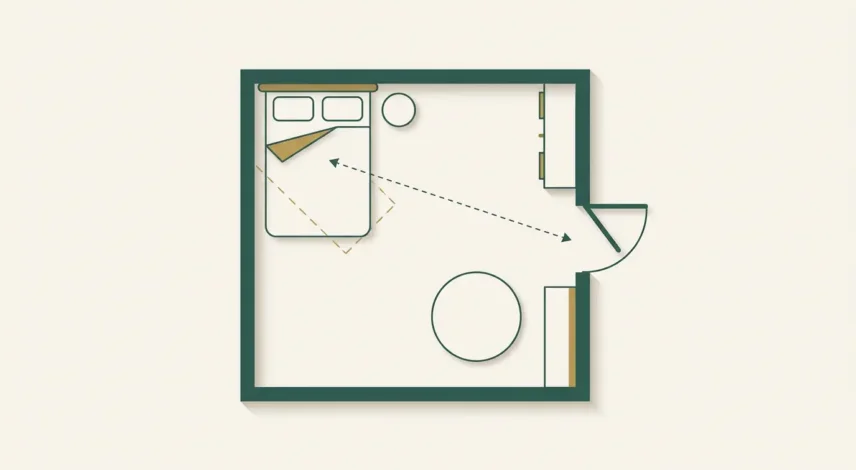

If you make only one feng shui change in your home, make it this one. The commanding position is the spot in a room where you can see the door without sitting directly in line with it, with a solid wall behind you. Place your bed and desk here and you cover the two areas feng shui cares about most: how well you sleep and how clearly you work.
At Potala Store, we source spiritual and feng shui pieces directly from Himalayan artisan workshops, and we’ve helped thousands of people set up their bedrooms and home offices. The same fix comes up again and again. People feel restless or distracted, move one piece of furniture, and notice the room calm down. This guide shows you exactly how to find the commanding position, place your bed and desk in it, avoid the layouts that backfire, and what to do when your room simply won’t cooperate.
⚠️ A quick note: The energy and well-being ideas below are based on traditional Chinese feng shui beliefs and practitioner experience, not on scientific proof. Treat this as a guide to a calming, intentional home—not as medical, sleep, or mental-health advice.
Table of Contents
01What Is the Commanding Position in Feng Shui?
The commanding position is the place in any room—diagonally across from the door, with a solid wall behind you—where you can see the entrance but are not directly in line with it. It applies above all to three pieces of furniture: your bed, your desk, and your stove.
Why those three? In feng shui, each one represents a core part of your life. The bed represents you and your health, the desk represents your career, and the stove represents your wealth and nourishment. Putting any of them in command means you face life from a place of security rather than surprise.
Why It’s Also Called the “Power Position”
You’ll hear practitioners call this the power position because of how it makes you feel: in control of your space rather than exposed to it. From the commanding spot you can see who enters, what’s happening, and where the energy is moving—without that information rushing straight at you.
What the Door Has to Do With It
The door is the “mouth of chi”—the opening through which qi (life energy, also written chi) flows into a room. Feng shui educator Anjie Cho, a registered architect and certified BTB feng shui consultant, describes the door as the portal through which energy enters your home and your life. The commanding position lets you receive that incoming energy without standing in its direct path, where it can feel like a constant, draining push.
02Why This Power Position Matters (Backed by Psychology)
The commanding position isn’t only tradition—it matches how our brains are wired to feel safe. When you can see the entrance to a room, your nervous system relaxes. When your back is exposed to a doorway you can’t see, part of your attention stays on guard.
Environmental psychology has a name for this: prospect-and-refuge theory. The British geographer Jay Appleton (1919–2015) introduced it in his 1975 book The Experience of Landscape. The idea is simple. People feel most at ease in spots that offer both prospect (a clear view of what’s coming) and refuge (a protected place to settle). A bed with its headboard against a solid wall and a clear line to the door delivers exactly that combination.
This is why a poorly placed bed can quietly wear on you. If you can’t see the door, your brain keeps a low-level watch even while you sleep, which can leave rest feeling shallow. Put the bed in command and that background vigilance has nothing to do, so you settle more deeply. The benefit is the same at a desk: facing the room, you stop bracing against the unseen and free up attention for the work in front of you.
03How to Find the Commanding Position in Any Room (3 Steps)
Stand in the doorway and run through three quick checks. The commanding position is wherever all three are true at once.
- See the door. From where you’ll sit or lie, you should have a clear view of the room’s entrance. No blind spots, no twisting around to check who’s there.
- Don’t line up with the door. Avoid sitting or sleeping in the door’s direct path. Aim for a diagonal—usually the far corner across from the entrance—so energy doesn’t rush straight at you.
- Keep a solid wall behind you. Your back should rest against a real wall, not a window, a door, or open space. The wall is your refuge; it gives you support and stability.
The far corner diagonally opposite the door usually satisfies all three. That open floor between you and the entrance has its own name in feng shui—the “bright hall” (明堂), the welcoming space where opportunity gathers before it reaches you. Keep it uncluttered.
04Where to Place Your Bed for a Clear View of the Door
Place your bed diagonally across from the bedroom door, with the headboard against a solid wall and the entrance in view while you lie down. Leave at least 2 feet (24 inches) of open space on both sides so energy—and you—can move freely.
A few details make the difference between a bed that supports rest and one that subtly works against it:
- The headboard belongs against a solid wall—never under a window or against a bathroom wall, both of which feel unstable behind your head.
- Matching nightstands on each side create balance. Equal space for two people supports a balanced relationship, too.
- Don’t float the bed in the middle of the room or push one side hard against a wall, which traps the person climbing over.
Avoid the “Coffin Position” (Feet Pointing at the Door)
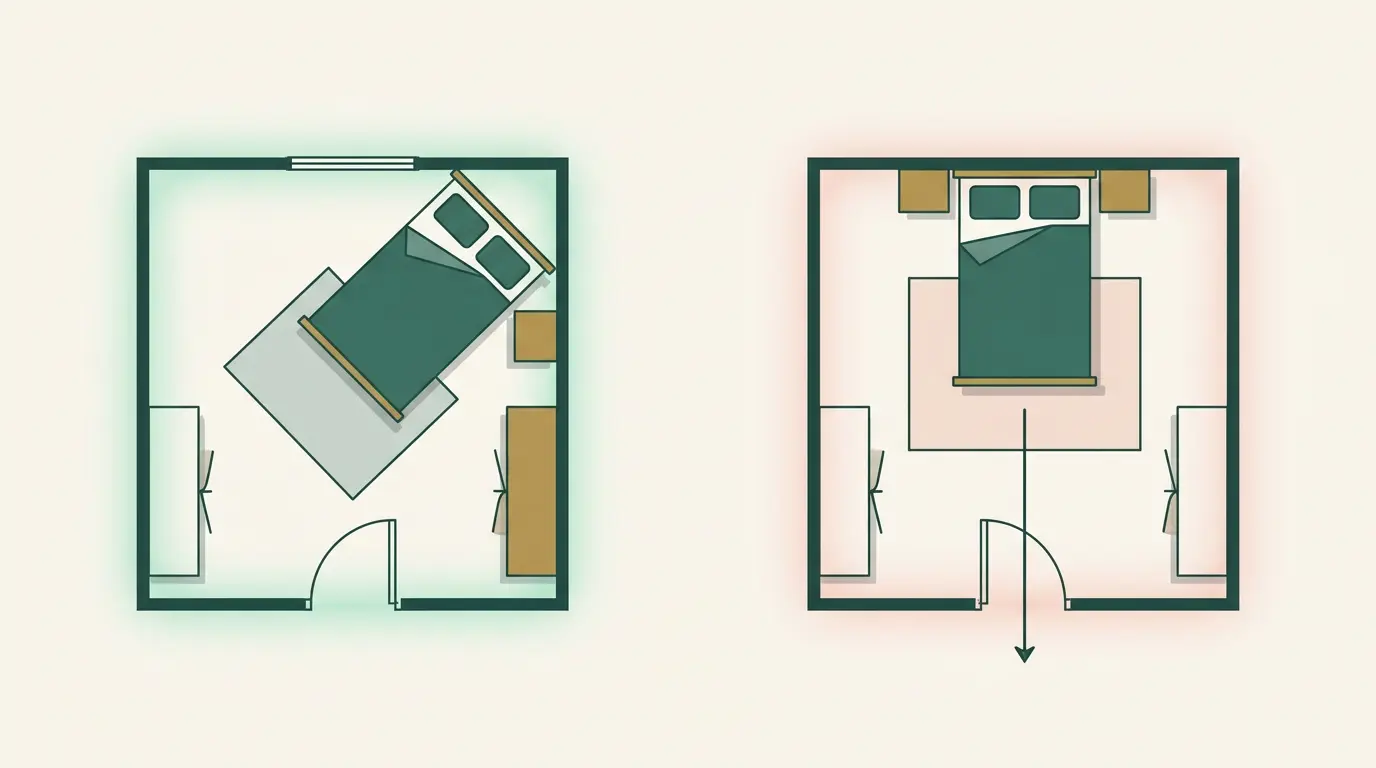
The one layout to avoid is the coffin position—also called the death position—where the foot of the bed points straight out the open door. Architect and Feng Shui Modern author Cliff Tan explains the discomfort plainly: when your bed faces the door, anyone who enters looks straight down the length of you, and the alignment leaves you feeling exposed rather than rested. The fix is to shift the bed off that direct line so you can still see the door at an angle.
For a full room-by-room walkthrough of bedroom layout, color, and 2026 energy shifts, see our feng shui bedroom guide for love, health, and sleep.
Suits this sectionWu Lou Bracelet for Health$48.95 (from $58.95)
In Chinese tradition the Wu Lou gourd is believed to absorb illness energy, which is why many people keep one near the bed. It’s a gentle, no-rules entry point if you’re new to feng shui. View the Wu Lou bracelet →
05Positioning Your Desk to Face the Room
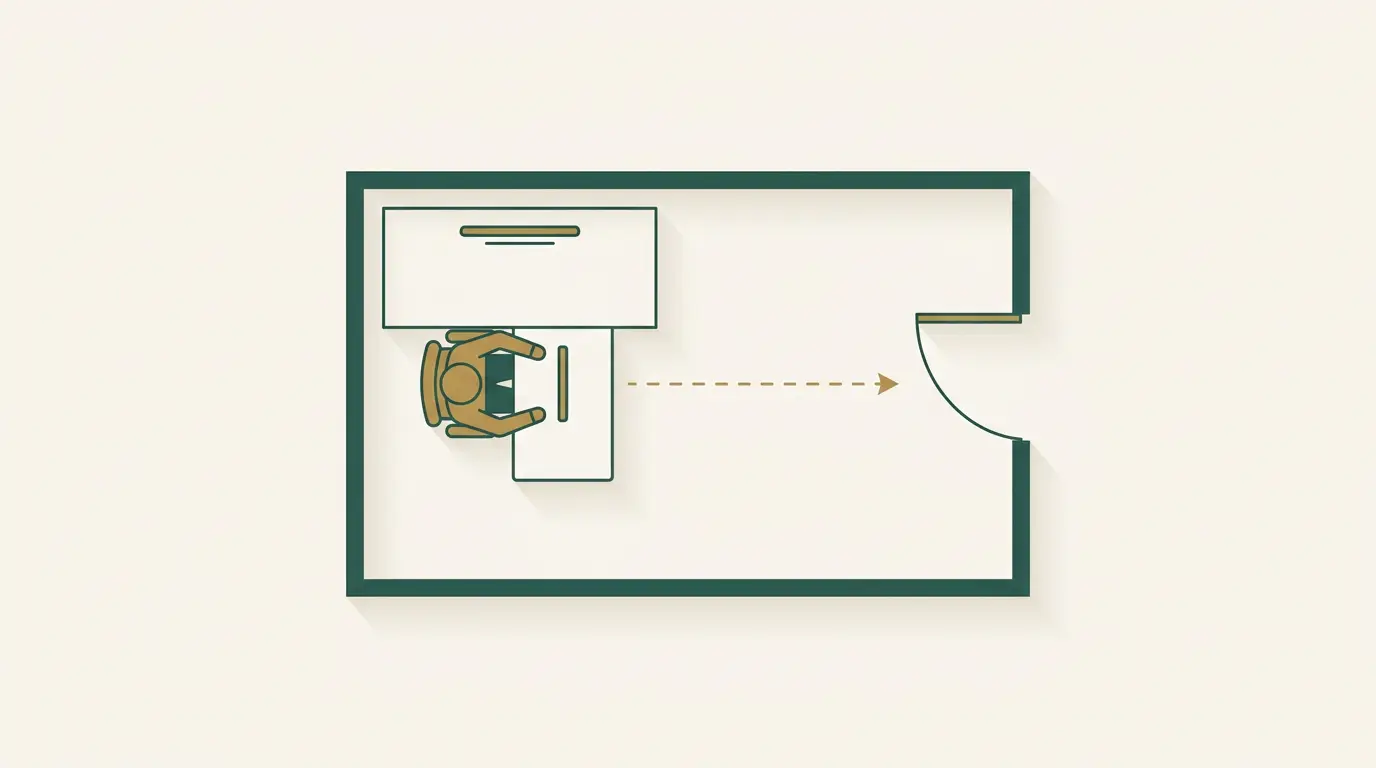
Set your desk so you face the door from across the room with a solid wall behind your chair—never with your back to the entrance. Sitting with your back exposed to the doorway keeps you on edge, which is the opposite of focus.
One more rule matters for desks: don’t push the desk up against a blank wall so you stare at it all day. That wall sits where your bright hall should be—the open space that, in feng shui, represents your view of incoming opportunity. Facing a wall symbolically blocks that view. Keep open space and, ideally, the door in front of you instead.
Can Your Bed and Desk Share One Room?
Here’s the conflict most guides skip: your bed and your desk both want the same commanding spot, and a room usually has only one. This is exactly why classical feng shui discourages putting a desk in the bedroom at all—rest energy and work energy compete, and you end up unable to fully switch off either one.
If a bedroom office is unavoidable, separate the two. A room divider, a bookshelf, or even a curtain creates a boundary between “sleep” and “work” zones, and you “close” the office when the day ends. Give the bed the true commanding position, and place the desk so it still faces into the room rather than into a corner. Our office feng shui guide for 2026 walks through desk placement, cubicles, and small-space setups in detail.
Suits this sectionBlack Obsidian Pixiu Bracelet — Fortune & Protection$43.95 (from $58.95)
Black obsidian is volcanic glass traditionally used to absorb negative energy, paired here with Pixiu, the classic feng shui symbol for attracting and guarding wealth—a fitting companion for a career-focused desk. View the Pixiu bracelet →
06What to Do When the Ideal Spot Isn’t Possible
If your layout won’t allow the commanding position, you can recover most of the benefit with a few simple adjustments. Perfect placement isn’t always possible—and that’s okay. Even one small change makes a real difference.
The Mirror Remedy
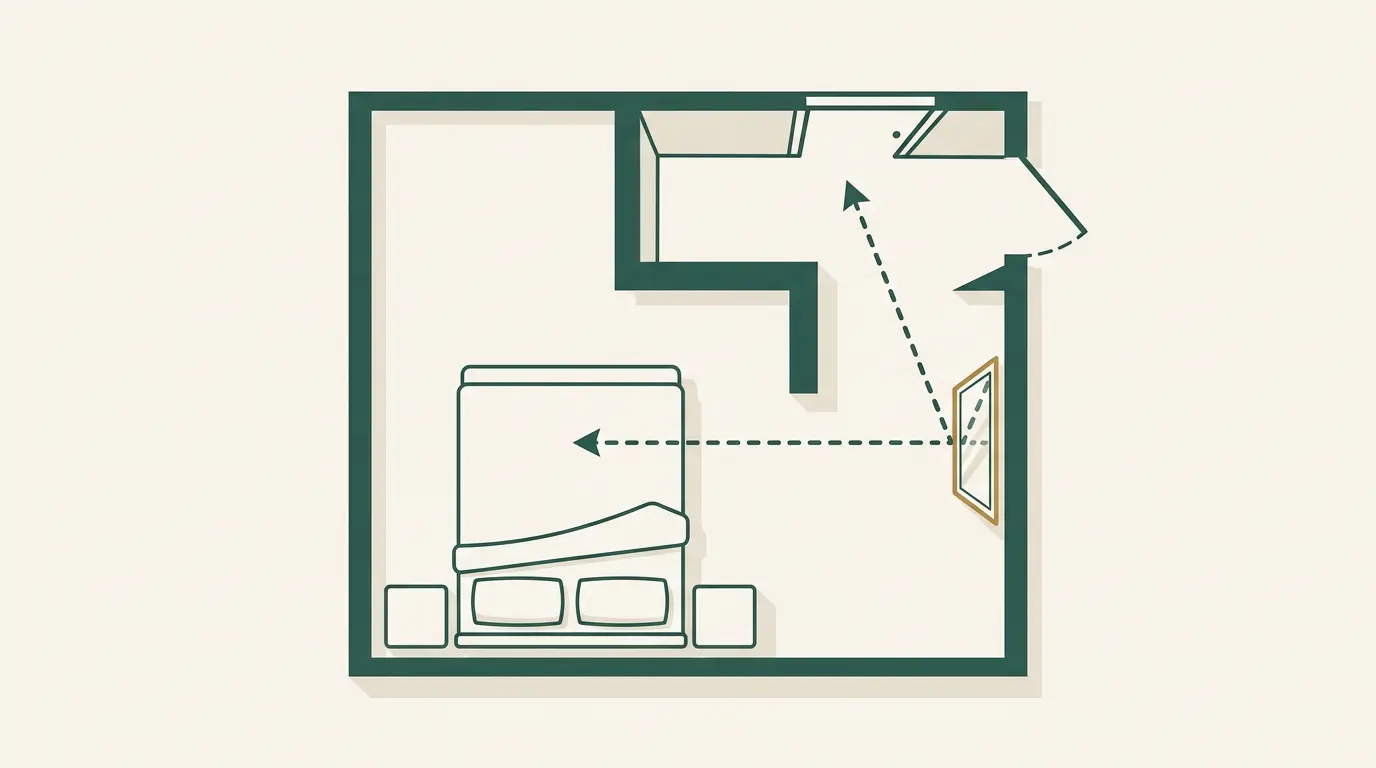
When you can’t see the door from your bed or desk, hang a mirror so its reflection shows the doorway. This gives you a symbolic—and practical—view of the entrance, which restores much of the sense of control. A small crystal or faceted ball hung between the bed and the door is another traditional cure to soften energy rushing along that line.
Renters, Small Spaces, and Cubicles
You don’t need to renovate to feel the shift. Work with what you can move:
- Renters: angle the bed or desk even a few degrees off the door’s direct line. Partial command beats none.
- Small rooms: a tall plant or shelf to one side can stand in for the missing solid wall behind you.
- Cubicles: a desk mirror that shows the aisle behind you covers the “exposed back” problem most office workers face.
Command Position vs. Your Kua Direction
People often ask which wins when the commanding position and their kua number (a personal “best direction” from compass-school feng shui) point different ways. In our experience the answer is consistent: the commanding position comes first. Where you place the bed so you feel safe and supported matters more than the exact compass direction your head points. Get the placement right, then fine-tune the direction only if the room still allows it. This is the rule most beginner guides get backwards—and the one worth remembering.
| Factor | Commanding Position ✓ | Coffin Position ✗ |
|---|---|---|
| View of the door | Clear, at a diagonal | Directly in line, head-on |
| Wall behind you | Solid wall, full support | Often a window or open space |
| How it feels | Calm, in control | Exposed, subtly on guard |
| Side clearance | 2+ feet on both sides | One side often blocked |
| Best for | Deep rest, steady focus | — |
The key takeaway: see the door, stay off its direct line, keep a solid wall behind you. Apply those three checks to your bed first, your desk second, and you’ve handled the most important layout decision in your home.
Build a calmer, more grounded space
Explore Potala Store’s feng shui pieces—from health and protection charms to wealth talismans—sourced from Himalayan artisans and blessed before they ship.Explore feng shui essentials →
FAQFrequently Asked Questions
It’s the placement—diagonal from the door, with a solid wall behind you and the door in view but not directly in line—that gives you the most security and control in a room. It applies mainly to your bed, desk, and stove.
Hang a mirror so you can see the door’s reflection from bed, or place a crystal between the bed and the door. Moving the bed is always best, but a remedy recovers much of the benefit when the room won’t allow it.
Yes. Most practitioners place the commanding position above your personal compass direction. Get the placement right first, then adjust your sleeping direction only if the layout still allows it.
They usually compete for the same commanding spot, so feng shui generally discourages a desk in the bedroom. If it’s unavoidable, separate them with a divider and keep both off the door’s direct line. Our bedroom guide covers this in more depth.
References
- Bed Placement & the Commanding Position: Practitioner guidance from registered architect and feng shui educator Anjie Cho. Source: MindBodyGreen / anjiecho.com (readers may search the author’s site for current articles)
- Professional Feng Shui Standards: Background on consultants, schools, and practice. International Feng Shui Guild (ifsguild.org)
- The “Death Position” & Modern Layouts: Cliff Tan, Feng Shui Modern (Bloomsbury, 2022). (see publisher listing for details)
- Prospect-and-Refuge Theory: Jay Appleton, The Experience of Landscape (John Wiley & Sons, 1975)—the environmental-psychology basis for why a clear view plus a protected back feels safe.