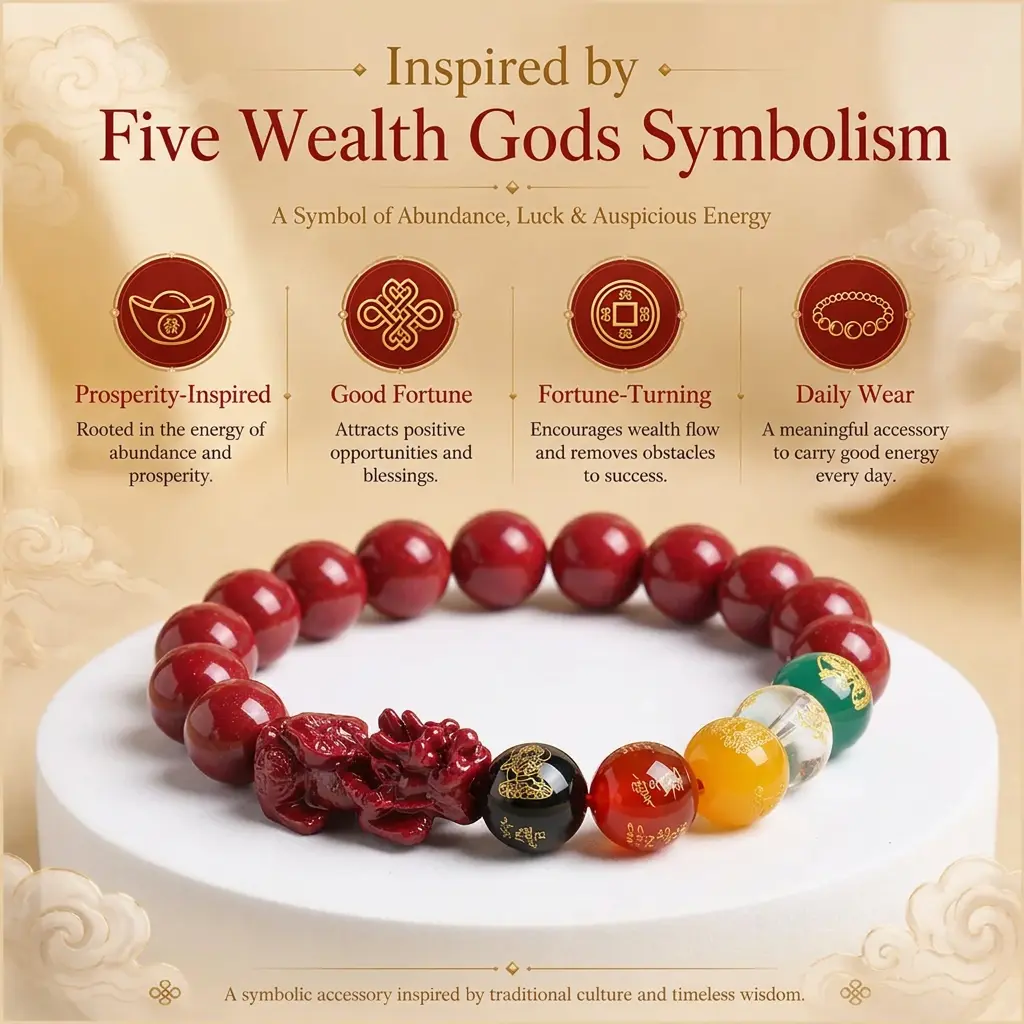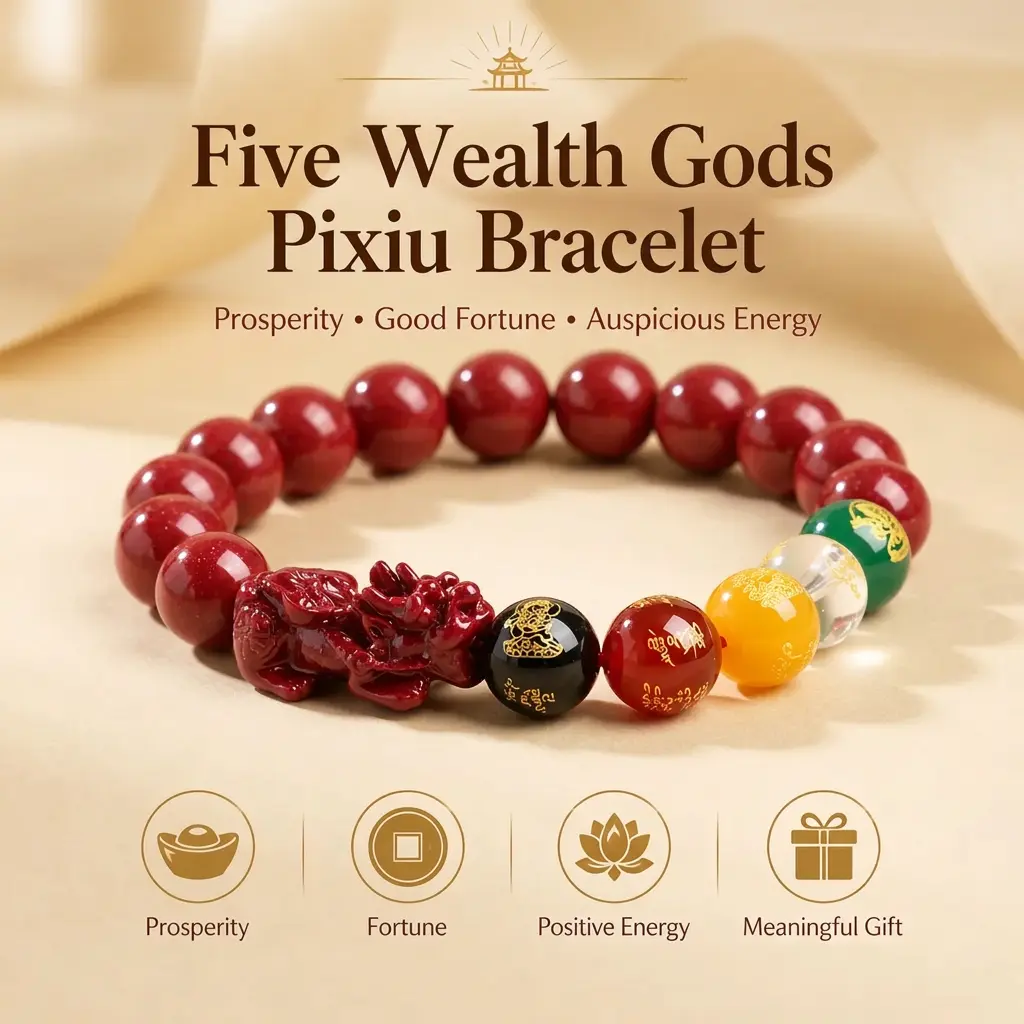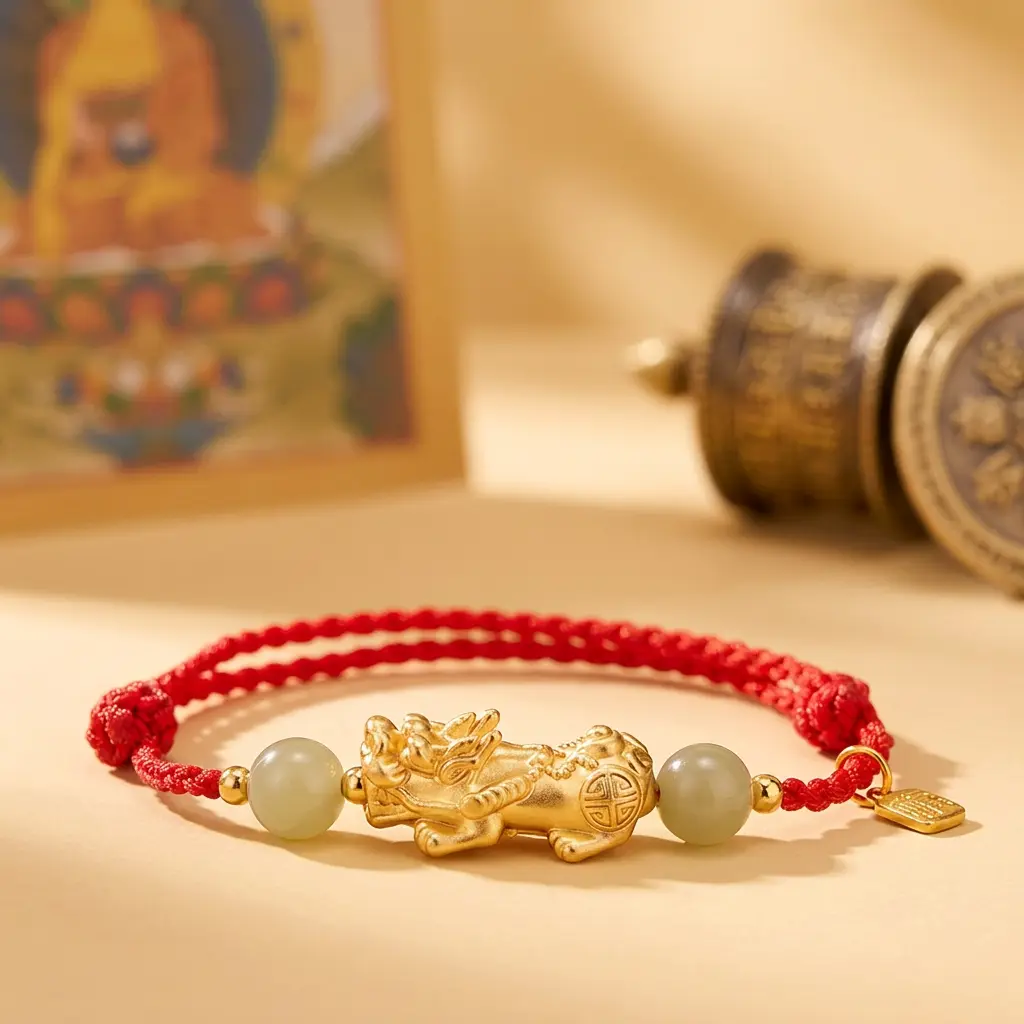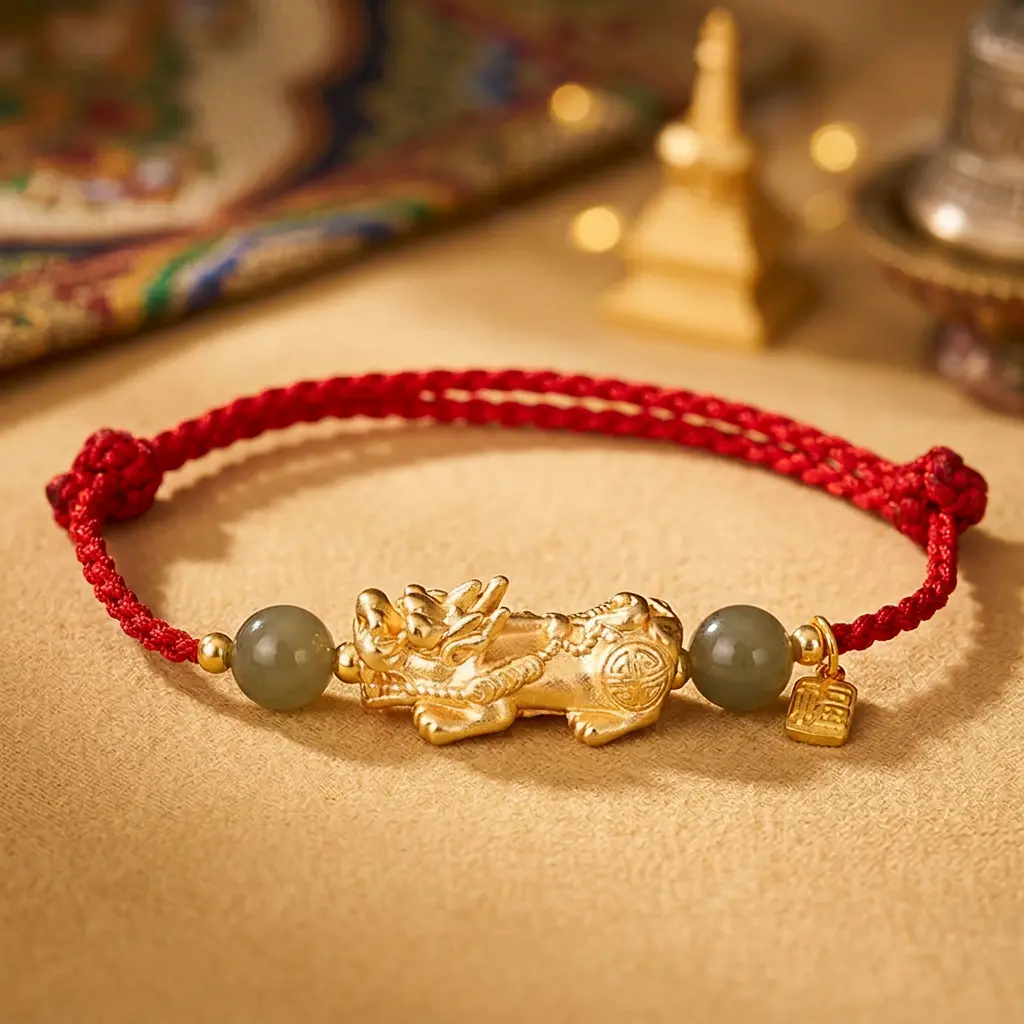

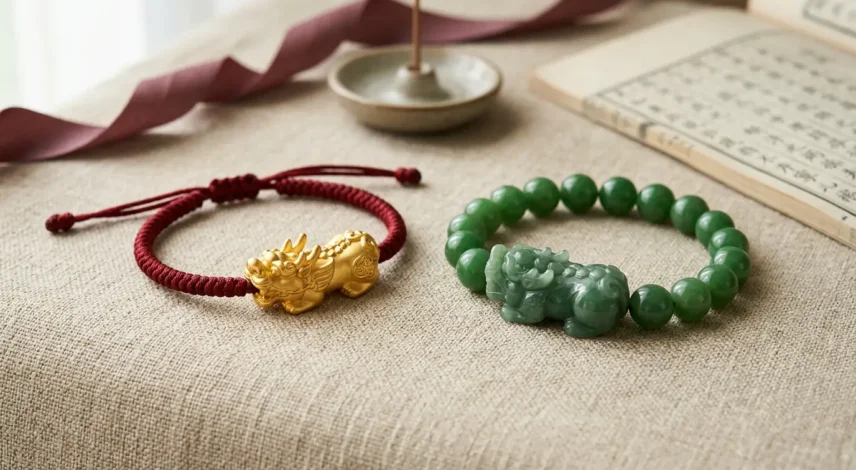

Still deciding between a male and female Pixiu? Here is the honest difference, and how to pick the one that fits your goal. A male Pixiu, known as Tianlu, is believed to draw wealth in, while a female Pixiu, known as Bixie, is believed to guard the wealth you already have. The quickest way to tell them apart is the horns: one horn means male, two horns mean female.
At PotalaStore, customers ask us this almost every day, usually right before their first purchase, so we wrote the clearest answer we could. This guide covers what each form does in feng shui tradition, how to identify one at a glance, which one suits your situation, and the simple wearing rules that keep either piece working for you. If you are instead weighing a single charm against a matched pair on one bracelet, that is a slightly different question, and we cover it in our guide on whether to wear a single or double Pixiu bracelet.
Important note: The wealth, protection, and energy properties described here come from feng shui tradition and long-standing cultural belief, not from scientific evidence. This article is for educational and cultural interest. Treat a Pixiu as a meaningful symbol and personal reminder, not as a substitute for financial, medical, or professional advice.
Table of Contents
Male vs Female Pixiu: The Key Differences at a Glance
The core difference is function: a male Pixiu (Tianlu) draws wealth in, while a female Pixiu (Bixie) keeps it from leaving. You identify them fastest by horn count, one horn for males and two for females. Body shape, head direction, and energy type all follow from that split.
| Attribute | Male Pixiu (Tianlu) | Female Pixiu (Bixie) |
|---|---|---|
| Chinese name | 天禄 (Tianlu), also 貔 (Pi) | 辟邪 (Bixie), also 貅 (Xiu) |
| Horn count | One horn | Two horns |
| Body build | Fuller, stronger | Slimmer, sleeker |
| Main role | Attracts and hunts wealth | Guards and preserves wealth |
| Head tilt (in a pair) | Leans left | Leans right |
| Energy type | Yang, active and outward | Yin, protective and inward |
The Two Names: Tianlu and Bixie
In classical Chinese, the male is called Tianlu (天禄) or Pi (貔), and the female is called Bixie (辟邪) or Xiu (貅). Put the two characters together and you get the familiar word Pixiu (貔貅). The names carry the meaning: Tianlu points to heavenly fortune coming in, and Bixie points to warding off harm and holding fortune safe.
The One-Line Rule
If you remember nothing else, remember this. One horn plus outward Yang energy is the male, working to bring money toward you. Two horns plus inward Yin energy is the female, working to keep that money in place. The rest of this guide simply builds on those two ideas.
How to Tell a Male Pixiu From a Female One
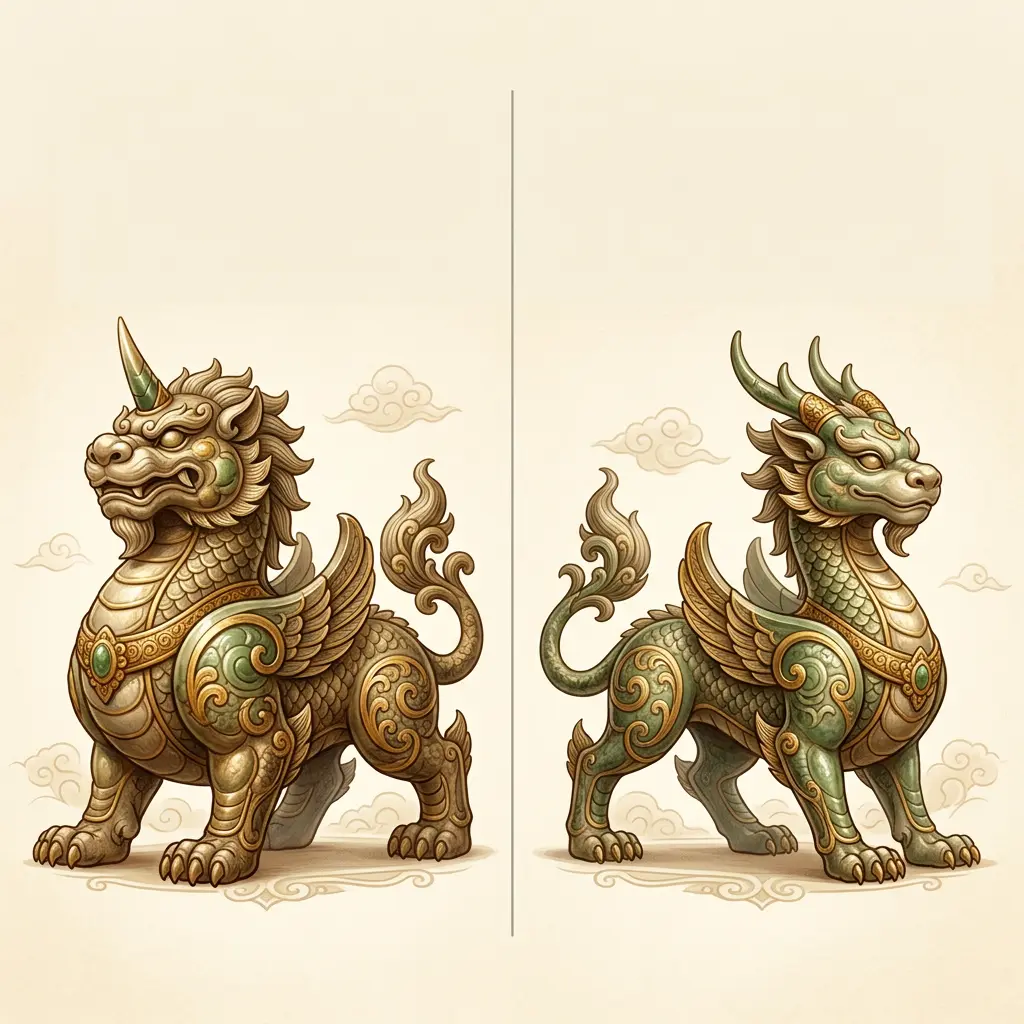
The fastest tell is the horns: one horn means male, two horns mean female. If the horns are hard to read, check the head direction and the body shape next. Here is the order we use when we inspect a piece:
- Count the horns: one horn points to the male (Tianlu), two horns point to the female (Bixie).
- Check the head tilt, only in a pair: with the tail facing you, the male head leans left and the female head leans right.
- Read the body build: the male tends to look fuller and stronger, the female slimmer and sleeker.
- Use context last: most single-charm bracelets are cast as the male form, so a lone charm is usually a Tianlu unless the maker states otherwise.
Count the Horns (One vs Two)
Horn count is the most reliable single signal because it does not depend on how the piece is arranged. A male Pixiu carries one horn on its head. A female Pixiu carries two. This distinction was taken seriously long ago: it was preserved in Han Dynasty tomb carvings dated to roughly 206 BC to 220 AD, where the two forms were sculpted with deliberate care.
Check the Head Direction, but Only in a Pair
Head direction only tells you the gender when you have a matched pair, and you need a reference point to read it. Face the creature’s tail, then look at which way the head leans. The male head leans left and the female head leans right. On a single piece with no partner, head direction is about wearing orientation, not gender, so do not rely on it by itself.
The Mistake Almost Everyone Makes
Here is the part most guides get wrong, and it is completely understandable. People treat “one horn” and “leans left” as two clues to the same answer, when they are really two separate identification systems. Horn count identifies a single Pixiu on its own. Head direction identifies gender only within a pair. We have watched shoppers stare at a lone left-leaning charm and conclude it must be male on that basis alone. Count the horns first. Save the head-direction rule for pieces that come as a set.
Meet the Male Pixiu (Tianlu): The Wealth Hunter
The male Pixiu (Tianlu) is the form associated with actively attracting wealth. Its energy is Yang, meaning it reaches outward to pull in money, opportunities, and lucky encounters from beyond your usual circle. Think of Tianlu as the one that goes out looking for fortune and brings it home.
Why Tianlu Is Tied to Attracting Wealth
The wealth link comes from the creature’s legend, in which Pixiu can take in treasure but never releases it. On the male, that appetite is expressed as outward, hunting energy. In feng shui tradition, Tianlu is placed or worn to attract wealth precisely because its Yang nature is believed to draw fortune toward its owner rather than sit still. That is why so many wealth bracelets feature the male form by default.
Who a Male Pixiu Suits Best
A male Pixiu fits people whose main goal is to earn more, not to lock down what they already have. It suits situations like these:
- Starting out: building income from a low base, where the priority is opportunity.
- Job hunting or seeking a promotion: when you want new doors to open.
- Launching a business: the early stage that runs on fresh leads and momentum.
- Feng shui beginners: a single, clear intention is easier to work with than a mixed one.
If that sounds like you, a single male charm is a natural first piece. Our Pixiu Fu red string bracelet ($66.95) pairs a male Tianlu with a traditional red cord, which is a common starting point for wealth-focused wear.
Meet the Female Pixiu (Bixie): The Wealth Guardian
The female Pixiu (Bixie) is the form associated with protecting and preserving wealth. Her energy is Yin, meaning it turns inward to hold on to what you already have and to block financial leaks. Where the male hunts, the female guards.
Why Bixie Is Tied to Protecting Wealth
Bixie shares the same treasure-keeping legend, but her role is defensive rather than acquisitive. In feng shui tradition, the female is believed to preserve wealth, acting like a treasury that keeps fortune from slipping away. Her name, which points to warding off harm, reflects that guarding purpose. Many people turn to a Bixie once they have assets worth protecting rather than only income to grow.
Who a Female Pixiu Suits Best
A female Pixiu fits people whose concern is keeping and protecting, not just earning. It tends to suit:
- Established professionals: those maintaining a position while growing savings.
- Investors and savers: anyone focused on protecting capital they have built.
- People who feel money leaks out: income arrives, yet it never seems to stay.
Because the female specializes in guarding, many practitioners choose to pair her with a male so that fortune is both drawn in and held. That paired setup is exactly the single-versus-double question, which we keep in its own guide so this one stays focused on the two genders.
The Myth Behind the Pair: Why There Are Two
In Chinese mythology, Pixiu was one of the Dragon King’s sons, a creature so fond of treasure that it was sealed to keep everything it consumed. That single trait, wealth that enters but never leaves, is the root of every belief attached to the Pixiu today. The division into male and female grew from this legend and from the deeper principle of Yin and Yang.
The Dragon King’s Son That Only Consumes Treasure
The story describes a winged creature with a dragon’s head, a lion’s body covered in scales, and a fierce expression. Because it could take in gold and silver yet never release them, it became the enduring symbol of wealth accumulation. Emperors of the Han Dynasty are said to have placed Pixiu figures as guardians of their treasuries, and the horn distinction between the two forms appears on tomb carvings from that period, roughly 206 BC to 220 AD.
How Pi and Xiu Became a Yin-Yang Pair
Folklore later split the creature into a male, Pi (貔), and a female, Xiu (貅). The pairing follows the Yin-Yang principle at the heart of Chinese thought. The male expresses Yang, active and outward, reaching for new fortune. The female expresses Yin, protective and inward, securing what has been gathered. Placed together, the two are believed to depend on and balance each other, forming a complete cycle of drawing wealth in and keeping it safe.
Which Should You Wear, and How
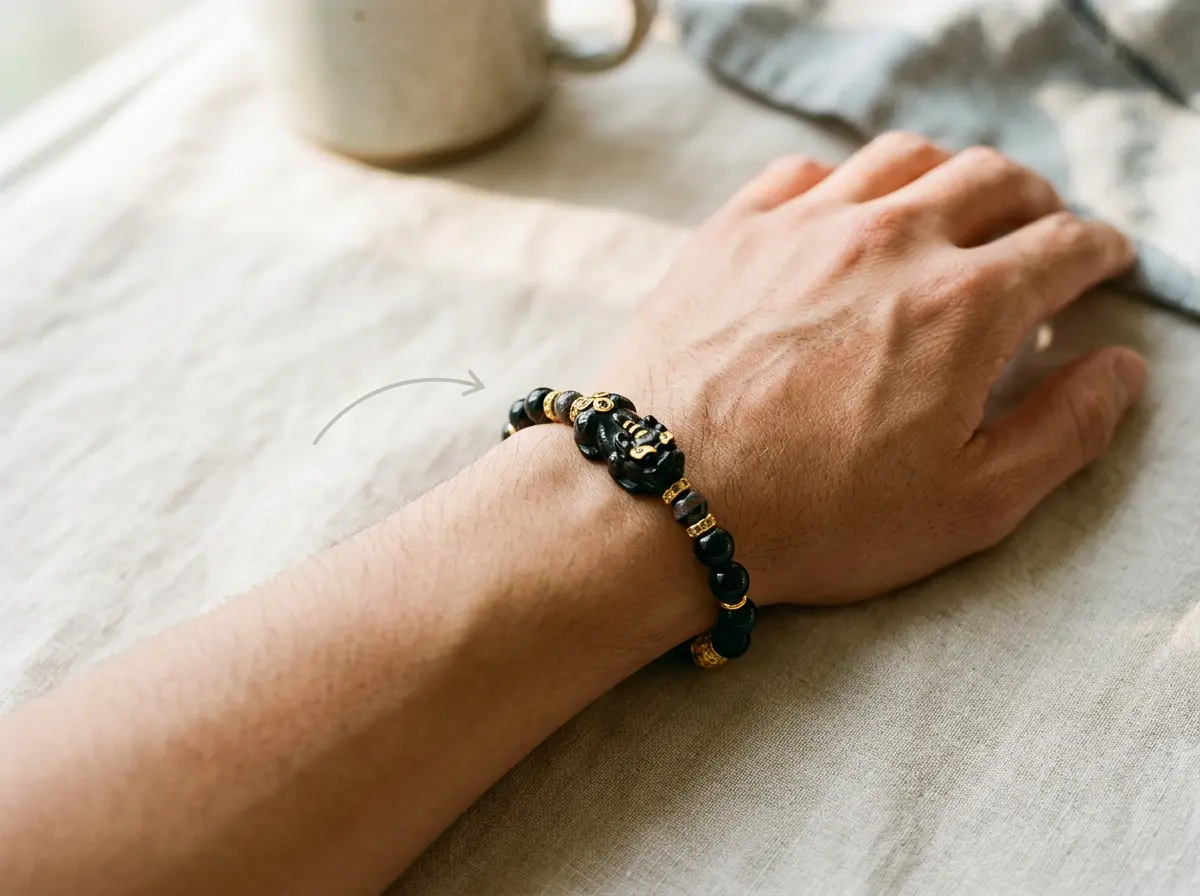
Choose by your goal: lean male if you want to earn more, lean female if you want to keep what you have, or wear a matched pair to do both. After you choose, the wearing rules are the same for either form. There is no wrong choice here, only the one that fits where you are right now.
Choose by Your Goal (Earn vs Keep)
The simplest way to decide is to name your priority, then match it to a form:
| Your priority | Better fit | Why |
|---|---|---|
| Earn and attract more | Male (Tianlu) | Outward Yang energy is believed to draw in new fortune |
| Protect and keep | Female (Bixie) | Inward Yin energy is believed to guard existing wealth |
| Both at once | A matched pair | One draws fortune in while the other holds it, see our single vs double guide |
If your goal is the “both” row, the practical decision becomes single versus double, and we walk through it in detail in our single vs double Pixiu bracelet comparison.
Which Hand and Which Direction
Wear a Pixiu bracelet on your left hand, with the head facing outward toward your little finger. In feng shui, the left hand is the receiving side, so placing the Pixiu there lets it channel incoming energy and wealth toward you, and the outward-facing head lets it “look” out for fortune. Traditionally the piece is first put on between 7 and 9 AM, a window sometimes called the hour of the dragon.
There is one common exception. A black obsidian Pixiu may be worn on the right hand, because obsidian is believed to expel negative energy outward rather than only draw energy in. Once your piece is on, you can learn the short activation ritual in our guide on how to activate your Pixiu bracelet.
A Quick Word on Materials
Gender sets the role, but material adds a second layer. Gold, brass, and silver connect to metal in feng shui and are favored for pure wealth attraction. Black obsidian adds protection and can be worn on either hand. Jade leans toward health and calm alongside fortune. If you prefer a ring to a bracelet, a piece like our Feng Shui Pixiu mantra ring ($39.95) carries the same symbolism in a subtler form. Whichever material you pick, keep the piece clean and avoid letting others handle it, so its connection stays with you.
The key takeaway: pick the form by your goal, then wear it correctly. Earn more points to the male Tianlu, keep more points to the female Bixie, and doing both points to a pair. Either way, left hand, head outward.
Where to Place Male and Female Pixiu at Home
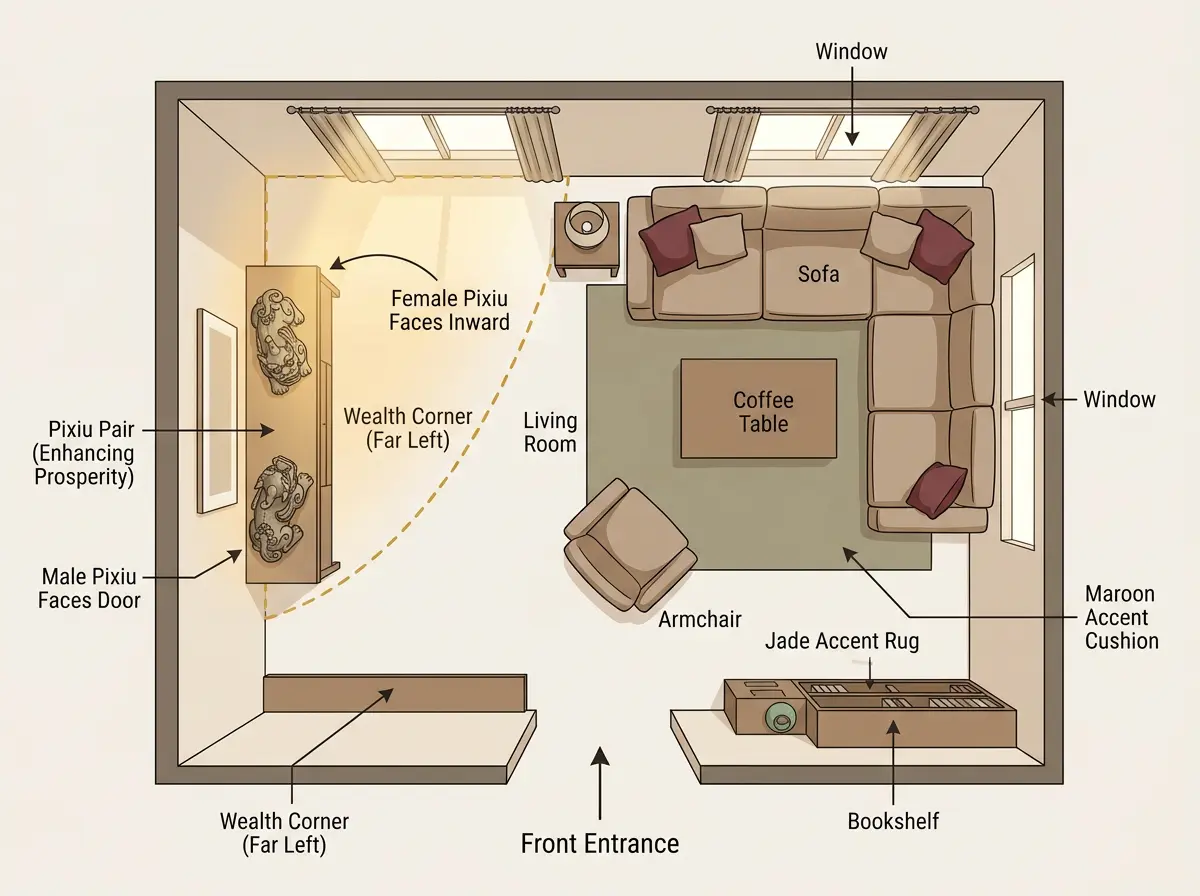
Place the male Pixiu facing the door to pull wealth in, and the female facing inward to keep it. If you display a pair, this pairing lets one invite fortune while the other guards it. For a single figure, the wealth corner is the classic spot.
In the Home Wealth Corner
Position a Pixiu in your home’s wealth corner, the far left area as you look in from the main entrance. Point the head toward a door or window so it can catch incoming opportunities. Living rooms, home offices, and entryways all work well. Bedrooms are usually avoided, since the creature’s active energy is thought to disturb rest.
On a Desk or in a Car
A Pixiu also travels well. On a work desk, face it toward the doorway to invite business luck. For the car or a bag, a compact charm keeps the symbol close while you are on the move. Our green jade Pixiu car charm ($45.95) is made for exactly that, carrying the wealth-and-protection meaning in a small hanging form.
Find the Pixiu That Fits Your Goal
Browse PotalaStore’s feng shui wealth pieces, from single male Tianlu bracelets to protective pairs, and choose the form that matches where you are on your journey.Shop Wealth Pixiu →
For the wider picture on wearing wealth jewelry the right way, see our complete guide to feng shui bracelets and how to wear them. And if you are shopping around, it helps to know how to spot a real vs fake Pixiu bracelet before you buy.
Frequently Asked Questions
Yes. A Pixiu’s gender describes the creature’s role, attracting wealth or guarding it, not the gender of the person wearing it. Choose the form by your goal rather than by your own gender. Anyone can wear either.
No. A single male Pixiu is the most common form and works on its own for attracting wealth. A pair simply adds the guarding role of the female. If you are weighing one against a pair, see our single vs double Pixiu bracelet guide.
For most materials, wear it on your left hand with the head facing outward. Black obsidian is the exception and can be worn on the right hand, since it is believed to expel negative energy rather than only draw it in.
The male (Tianlu) is the one tied to actively drawing wealth in. The female (Bixie) is tied to protecting it. So the answer depends on your aim: the male for earning more, the female for keeping more, and a pair for both.
📚 References
- Pixiu in Chinese Mythology: Overview of the creature’s origins, etymology, and cultural role, including Sinologist Axel Schuessler’s notes on the name. Wikipedia, Pixiu
- The Legend of Pixiu: Official cultural resource explaining the Pixiu legend, symbolism, and traditional household use. Visit Beijing (Beijing Municipal Bureau of Culture and Tourism)
- Pi Xiu in Folklore: Encyclopedia entry covering Pixiu as a wealth guardian, its physical description, and its place in Chinese tradition. Chinese Mythology Encyclopedia, Pi Xiu