
Tibetan Braiding Unpacked: From Knot Techniques to the Five-Element Color System
 by Yang Tso
0 comments
by Yang Tso
0 comments
A Tibetan braided bracelet is never random string art. Every knot and every color is a deliberate choice, shaped by centuries of monastic craft. If you want to understand both how these cords are tied and why their colors are arranged the way they are, this guide covers both halves in one place.
At PotalaStore, we work with artisans tied to Sera Jhe and Kopan Monasteries, and every cord we sell is consecrated in a traditional 3-day puja before it ships. That hands-on connection is where the details below come from.
Here is the short version. Tibetan braiding relies on a small family of symbolic knots, most often the Vajra, endless, and snake knots. These knots are usually worked in five sacred colors that stand for the five elements: earth, water, fire, air, and space. Learn the knots first, then the color system, and you can read almost any Tibetan cord at a glance.
Table of Contents
What Is Tibetan Braiding? The Craft Behind the Cord
Tibetan braiding is the monastic craft of hand-tying cord into a small set of symbolic knots, usually in the five sacred colors that represent earth, water, fire, air, and space. It grew out of devotional practice, not fashion, and the finished piece is treated as a blessed object rather than an ornament.
A Living Monastic Craft, Not Just Jewelry
Tibetan braiding began inside monasteries as a form of prayer. Monks and lay artisans tie cords while reciting mantras such as Om Mani Padme Hum, the six-syllable mantra of compassion. Each cord is meant to hold the focus of the person who tied it. That intention is the whole point, and it is what separates a hand-tied cord from a mass-produced bracelet.
Cord, Tension, and Intention: The Three Basics
The craft rests on three basics: cord, tension, and intention. Most bracelets use waxed cotton or nylon cord between 0.8 and 1.5 mm thick, which holds a knot’s shape without slipping. Even tension keeps every knot uniform along the strand. A sliding knot at the closure lets one cord fit many wrist sizes. None of this is complicated, yet each choice shapes how the finished bracelet looks and how long it lasts.
The Core Knot Techniques Behind Every Tibetan Bracelet
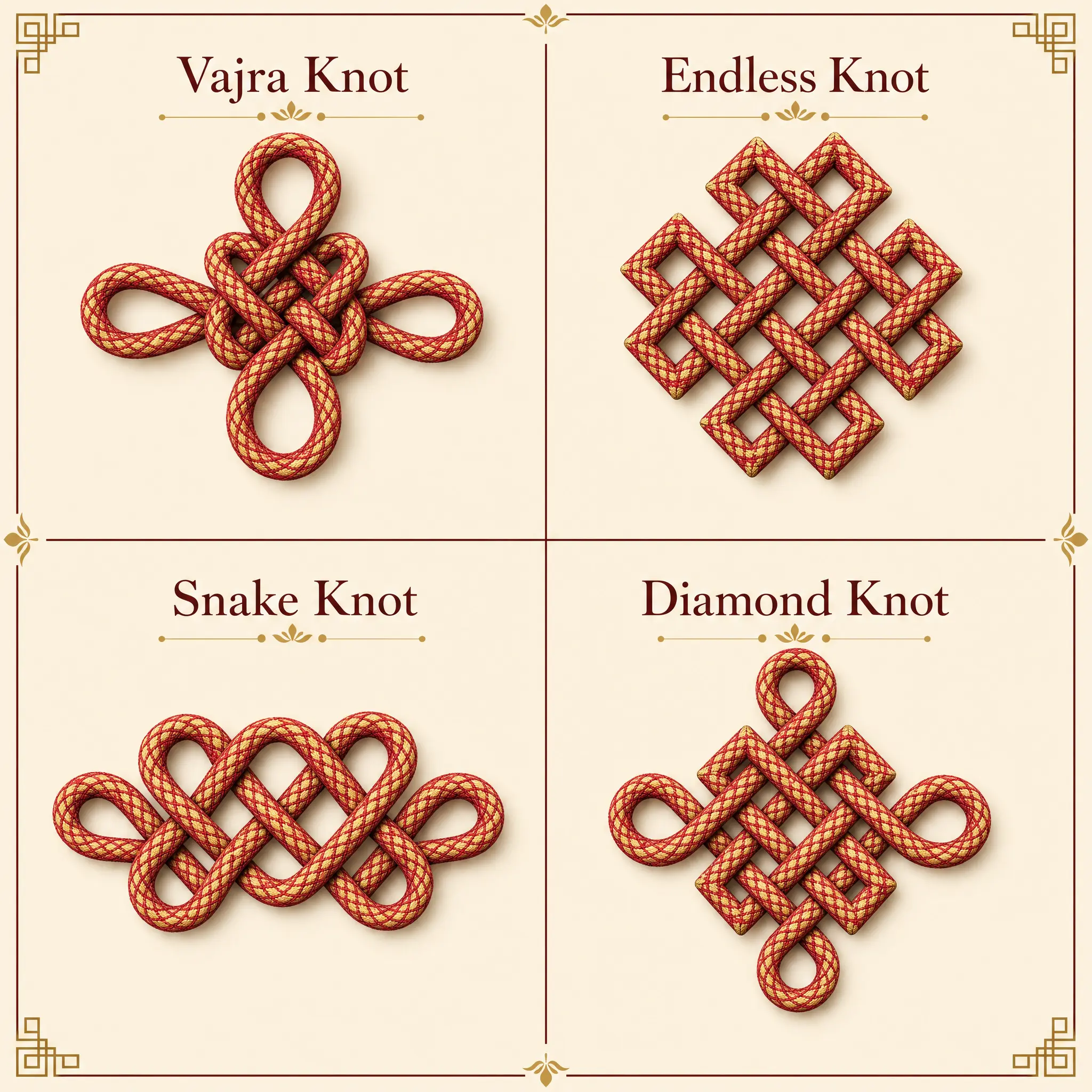
Most Tibetan bracelets rely on just four knots, and each one has a different job:
- Vajra knot (Jingang or King Kong knot): the classic red-string knot, tied for protection and worn as a daily talisman.
- Endless knot (mystic or eternal knot): one of the eight auspicious symbols (Ashtamangala), standing for continuity and the link between all things.
- Snake knot: an interlocking sennit that is slightly elastic, named for its “snake’s-skeleton” pattern, and the knot monks tie the fastest.
- Diamond or button knot: a compact knot used to finish cord ends and lock the closure.
The Vajra Knot (Jingang / King Kong Knot)
The Vajra knot is the knot most people picture when they think of a Tibetan cord. It carries strong associations with protection, which is why it anchors most red-string designs. The name borrows from the vajra, or dorje, the ritual thunderbolt of Tibetan Buddhism. For the deeper symbolism behind that emblem, read the meaning of the vajra (dorje) in Tibetan Buddhism. A five-color version of this knot is often tied in honor of the five Dhyani Buddhas.
The Endless Knot and the Snake Knot
Two more knots round out most designs: the endless knot and the snake knot. The endless knot has no start and no finish, so it reads as a symbol of interdependence and the unbroken flow of time. The snake knot is the practical workhorse. Its interlocking sennit gives the band a little stretch, and its neat, repeating pattern is why artisans reach for it when they want speed.
Diamond and Button Knots for Closures
The diamond knot, also called a button knot, does the quiet work of finishing a bracelet. Braiders tie it at the ends to lock the cord, then pair it with a sliding closure. It sits small and dense, shaped a little like a diamond, which is where the name comes from. Without a solid closure knot, even a beautiful bracelet loosens and frays.
Tibetan Buddhist Knot Lucky Rope Bracelet – Handmade Blessed Protection Bracelet
Price range: $28.95 through $58.95
Buy Now
Lucky Buddhist Monk Bracelet — Handmade Tibetan Knot Protection Bracelet
Original price was: $45.95.$35.95Current price is: $35.95.
Buy Now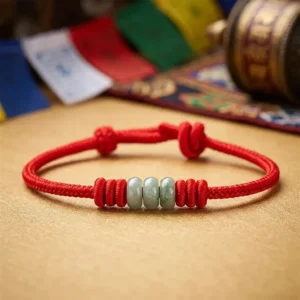
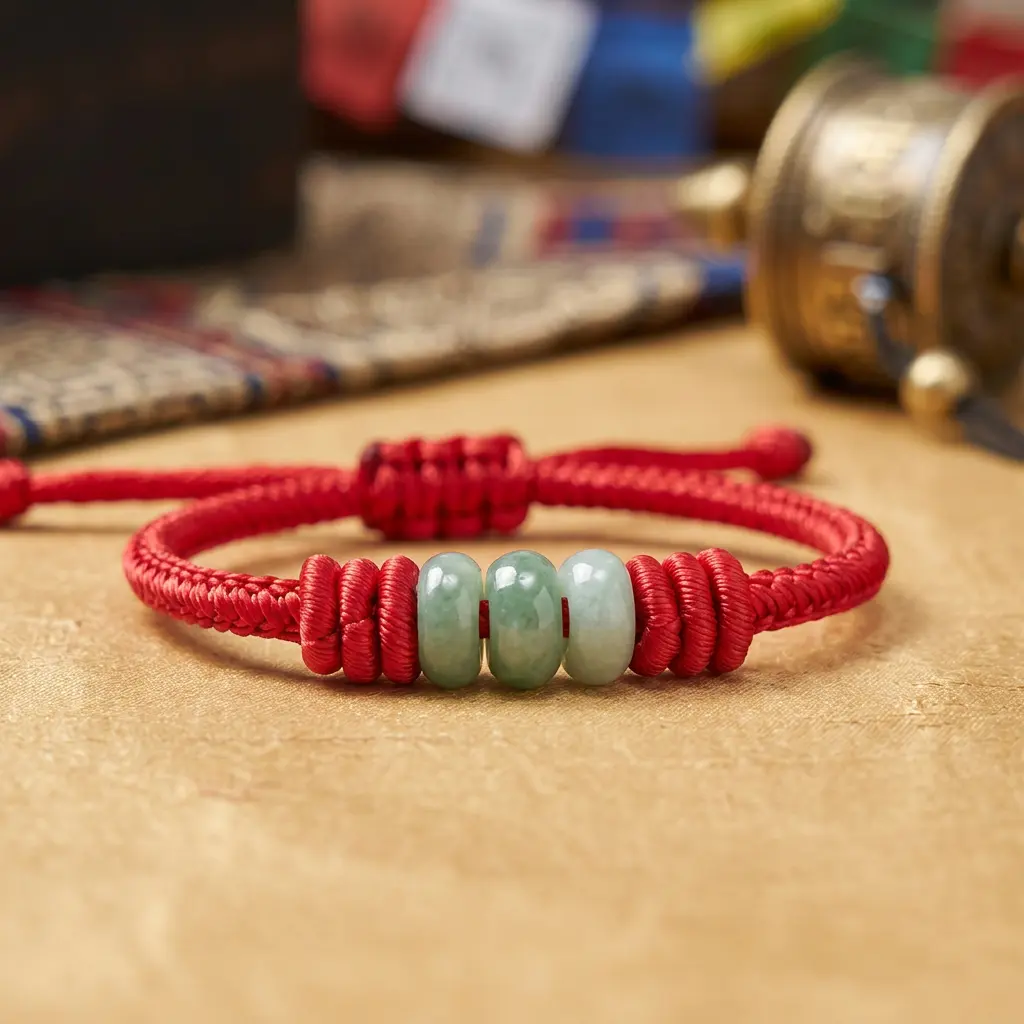
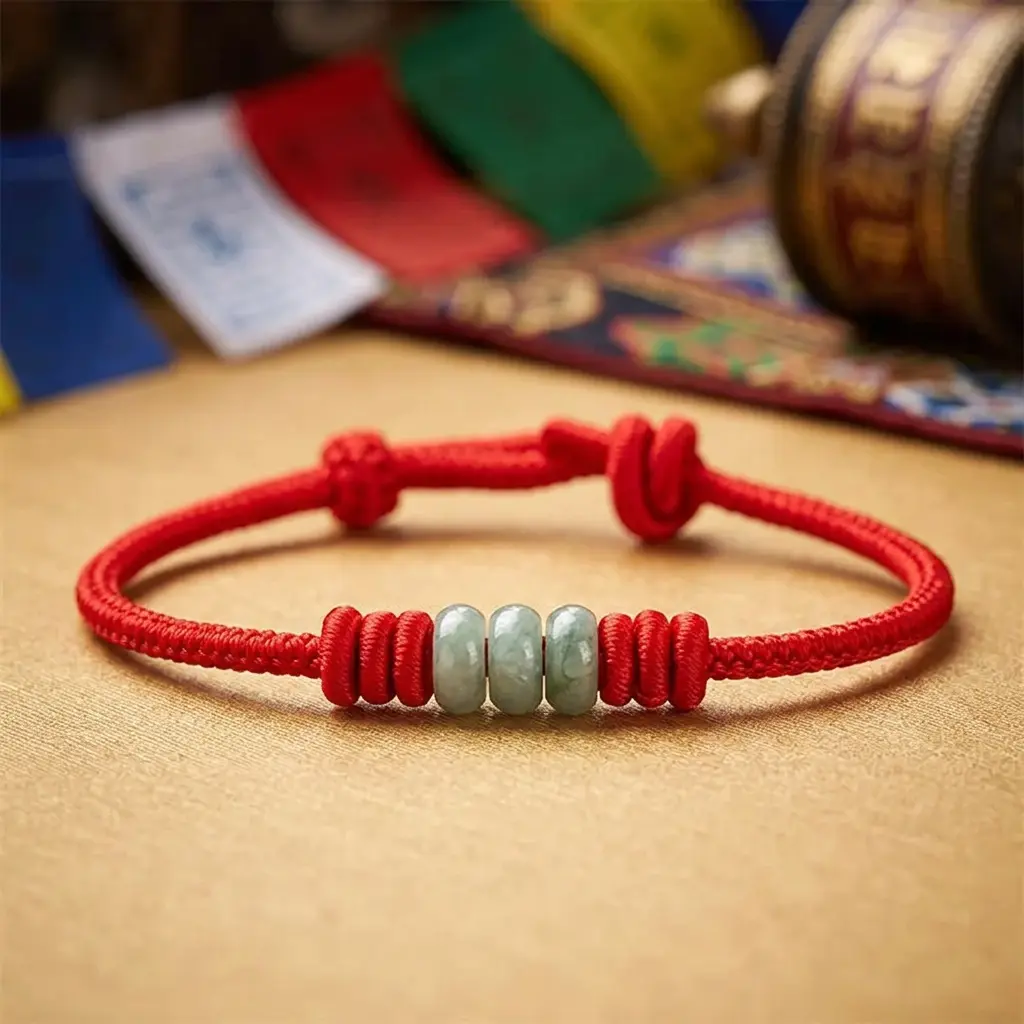
Handmade Red String Jade Bracelet
Original price was: $86.95.$76.95Current price is: $76.95.
Buy Now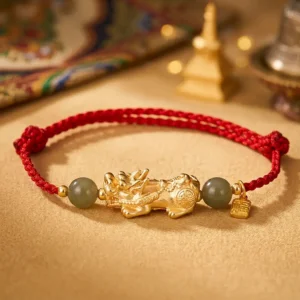
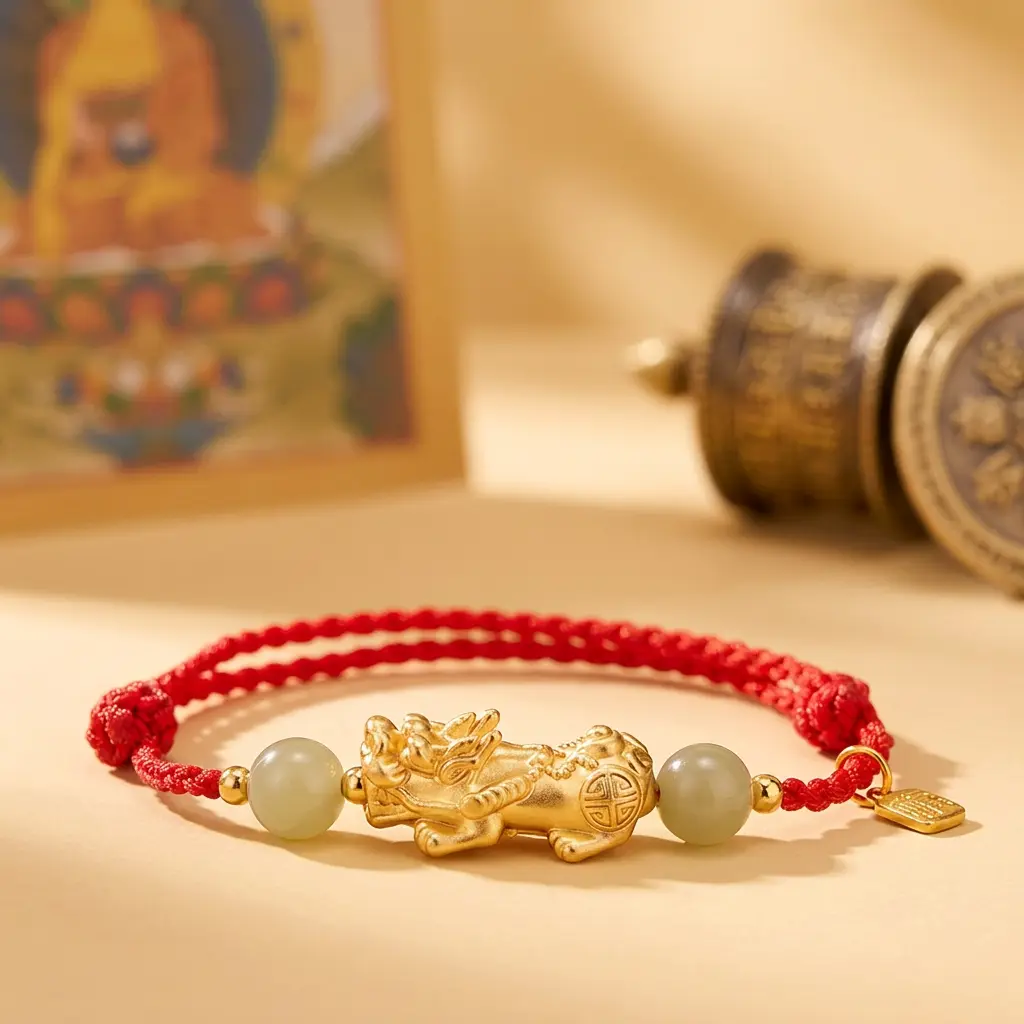
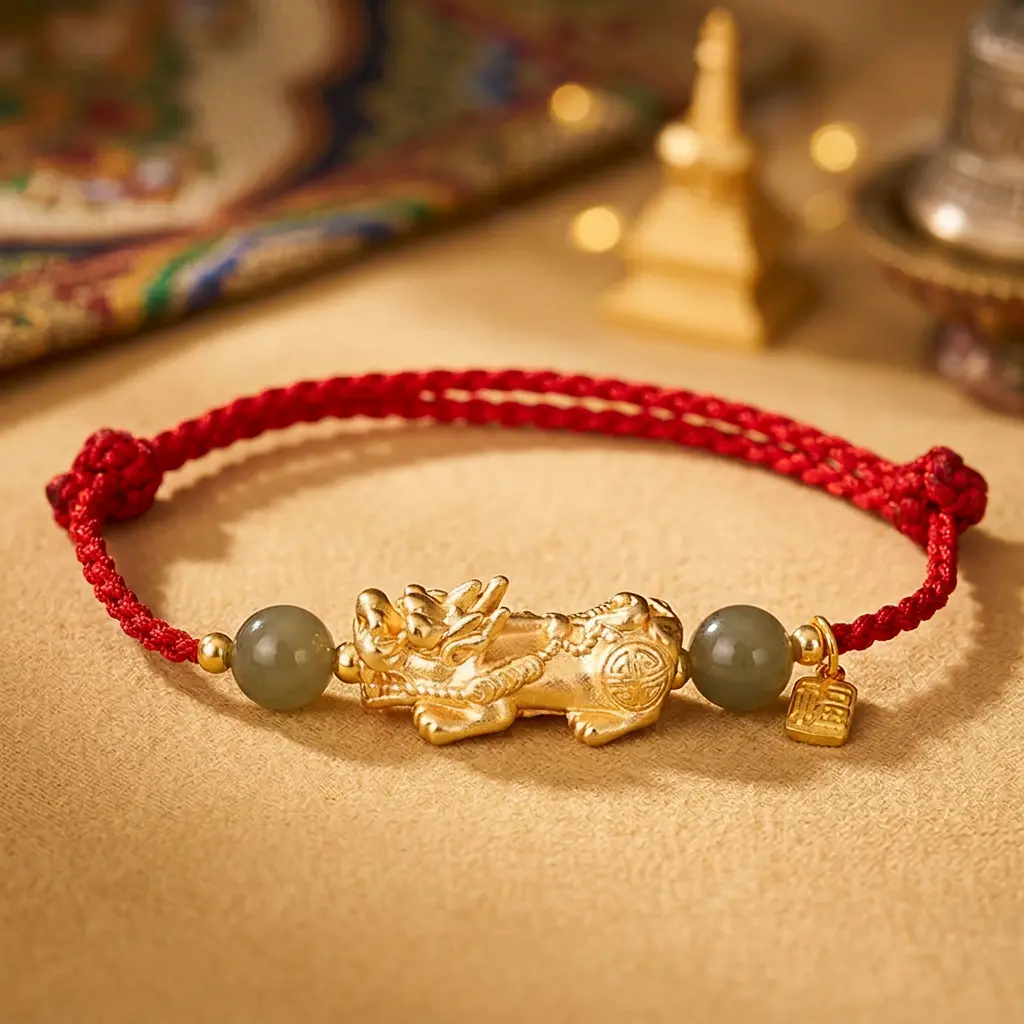
Pixiu Fu Red String Bracelet — Draw In Wealth, Wear Your Blessing
Original price was: $76.95.$66.95Current price is: $66.95.
Buy NowWeaving Your First Vajra Cord, Step by Step
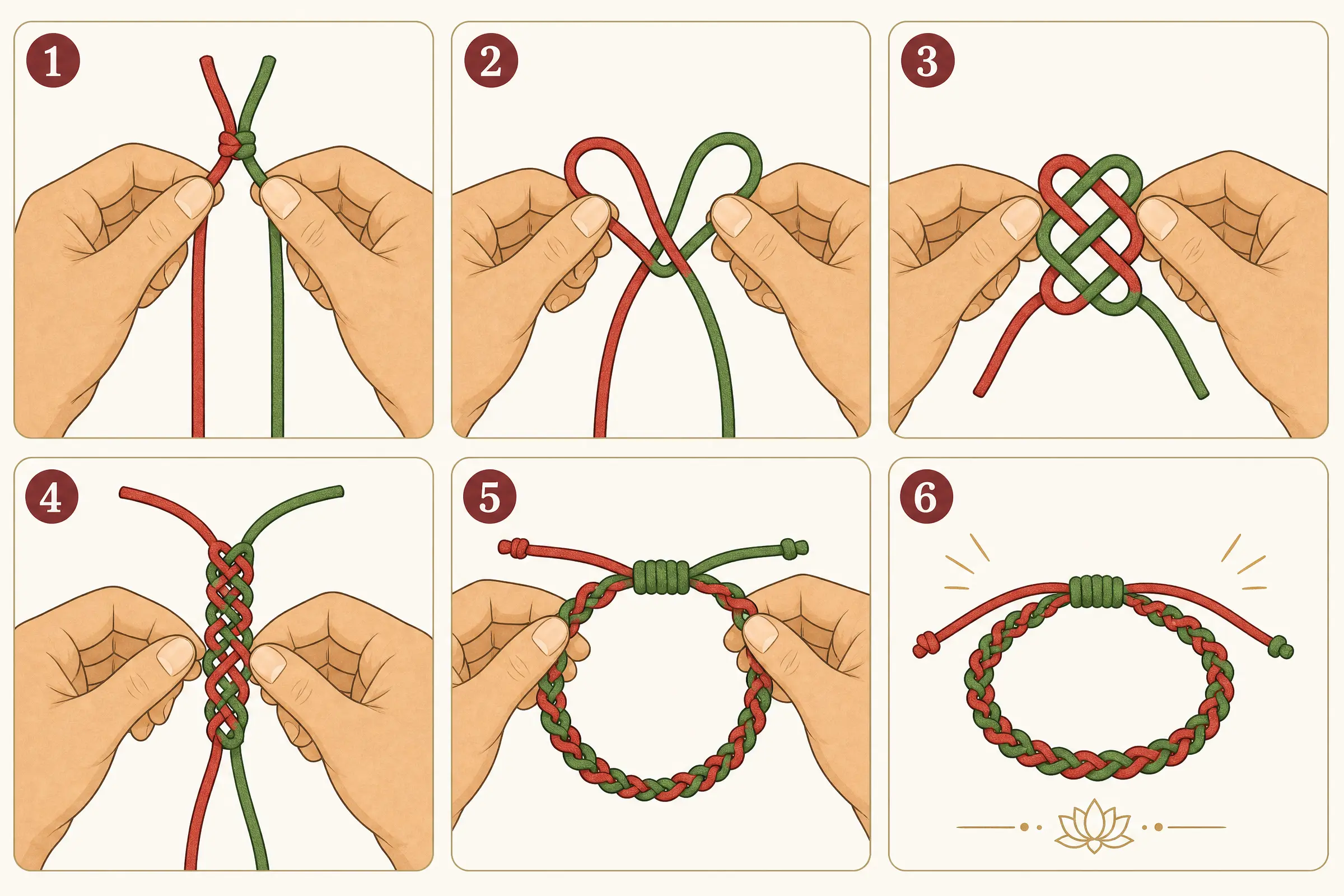
You can braid a basic Vajra cord in about 30 to 60 minutes using two lengths of waxed cord. Don’t worry about getting it perfect on the first try. The steps are simple once your hands learn the rhythm.
What You’ll Need
Start with two cords, each about 12 inches (30 cm) long, in a 0.8 to 1.5 mm thickness. Beginners usually find waxed cotton easier to control than slippery nylon. Pick two contrasting colors, like red and green, so you can watch the pattern form as you work.
The Core Steps
Here are the core steps for one cycle of the Vajra knot:
- Secure the cords: tie a simple starter knot to hold both cords together.
- Lay them flat: hold the knot with your thumb and spread the cords over your fingers.
- Wrap and loop: pass the right cord under both strands, then loop the left cord through from beneath.
- Pull even: tighten both cords until the knot sits snug and square.
- Repeat to length: repeat the cycle until the band reaches your wrist size.
- Finish the closure: add a sliding knot so the bracelet adjusts.
Common Beginner Mistakes
If your first few knots look loose or crooked, that is completely normal. In our own workshop sessions, the most common problem we see is cord that is too thin. Anything under 0.8 mm tends to slip and twist, which makes the pattern hard to read. Uneven tension is the other culprit. When we started, we retied the same inch of cord several times before it sat right, and that trial and error is simply part of learning. If you would rather skip the practice, our monastery-blessed Tibetan knot rope bracelet comes ready to wear.
The Five-Element Color System, Decoded
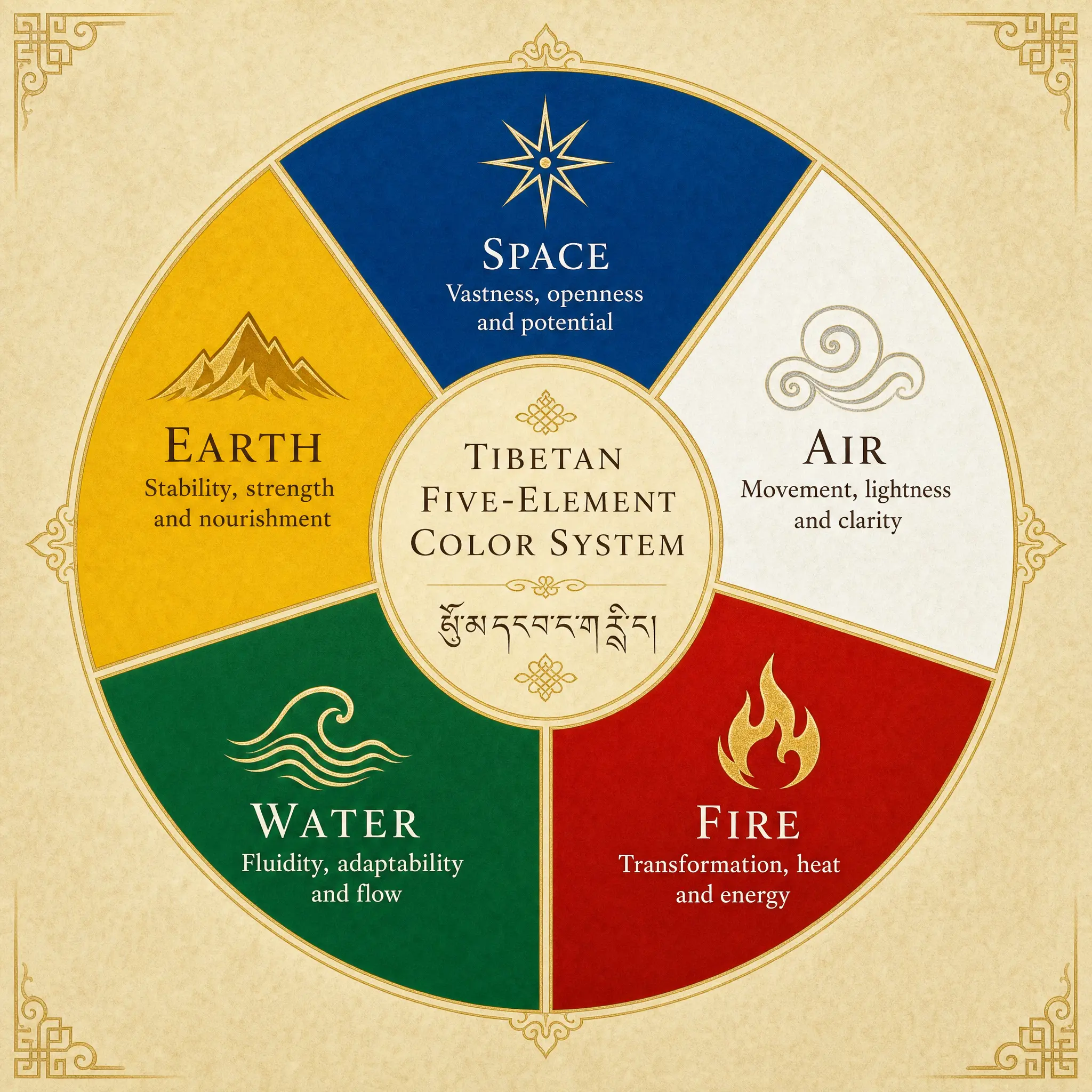
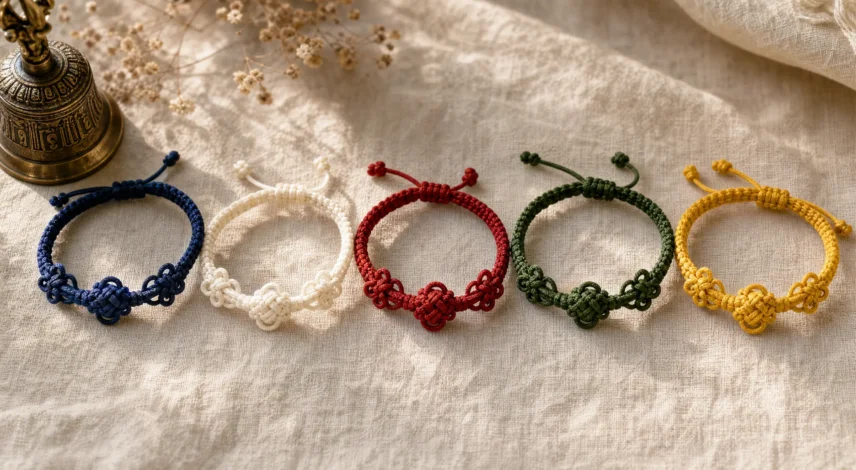
In Tibetan tradition, five colors stand for the five elements: blue for space, white for air, red for fire, green for water, and yellow for earth.
| Color | Element | Quality |
|---|---|---|
| Blue | Space | Openness, wisdom |
| White | Air / Wind | Purity, movement |
| Red | Fire | Energy, protection |
| Green | Water | Balance, healing |
| Yellow | Earth | Stability, grounding |
The Five Elements and Their Colors
These five colors map directly onto the five elements that Tibetan Buddhism inherited from Indian cosmology: earth, water, fire, air, and space. The same palette appears on Tibetan prayer flags, where the standard color order runs blue, white, red, green, then yellow from left to right. Seeing all five together is meant to represent balance across every element. For the full symbolism of each hue, read the complete meaning of Tibetan bracelet colors and symbols.
Why Some Sources Map the Colors Differently
You will find sources that assign the colors differently, and that is not an error. The prayer-flag tradition ties white to air and blue to space, while some Bon and regional texts swap them, linking white to water or green to space. The colors stay constant. The element each one points to shifts with the tradition. So when you compare two bracelets that follow different color logic, both can be authentic. For the flag version in detail, see the five colors of Tibetan prayer flags.
Matching a Strand to Your Intention
If you are not sure which color to choose, a five-color cord covers all five elements at once. The right pick depends on whether you want to focus on one intention or carry balance across all of them.
Single-Color vs Five-Color Cords
Choosing comes down to focus versus coverage. A single-color cord concentrates on one intention, so red suits anyone who wants protection, blue leans toward wisdom and calm, and green points to balance and healing. A five-color cord takes the opposite approach. Known as Pancha Varna, the five sacred colors together represent full-spectrum alignment across every element, which is why many people choose it when they cannot settle on just one.
Matching a Color to Your Goal
Match the strand to what you actually want from it. A five-color Pancha Varna bracelet works as an all-round choice, so you get balance and protection in a single piece without committing to one element. Its adjustable sliding knot fits roughly 6.7 to 10.2 inches (17 to 26 cm), so one size fits almost any wrist. That also makes it an easy gift. You don’t need to know the recipient’s beliefs. A five-color cord works as a respectful, all-purpose gift, and because each PotalaStore cord is consecrated in a 3-day puja, 10% of every sale supports the monasteries that keep the craft alive. Our handwoven five-color Pancha Varna knot bracelet is tied in all five sacred colors.
Looking After a Handwoven Bracelet
To keep the cord and colors intact, take your bracelet off before showering or swimming, and store it dry. A few simple habits keep a handwoven strand looking and feeling right for years.
Keeping the Cord and Colors Intact
Simple care goes a long way. Keep the cord away from water, lotions, and harsh chemicals, since these fade dye and weaken fibers. Wipe it with a soft, dry cloth if it needs cleaning. When you are not wearing it, store it in a small pouch instead of tossing it in a drawer. Traditionally, many wearers keep their bracelet on the left wrist, the side linked with receiving energy.
When a Bracelet Breaks or Fades
A broken cord is not bad luck in Tibetan tradition. Many practitioners read it as a sign the bracelet has done its work, whether by marking the end of a chapter or absorbing what came its way. The respectful response is to retire it, often by burning or burying it, then replace it if you wish. For the fuller cultural reading, see what it means when a Buddhist bracelet breaks.
A note on meaning: The spiritual and energy associations described here come from Tibetan Buddhist tradition and long-standing belief, not from scientific evidence. This guide is for cultural and educational purposes and is not a substitute for professional advice.
Frequently Asked Questions
Traditionally the left wrist, the “receiving” side, so it draws in protective energy. The right wrist is used to send intention outward. Either is fine if it feels right to you.
The five sacred colors map to the five elements: blue for space, white for air, red for fire, green for water, and yellow for earth. A five-color cord represents all of them at once.
Yes. A basic Vajra cord uses two lengths of waxed cord about 12 inches (30 cm) each and takes roughly 30 to 60 minutes. You cut, wrap, loop, tighten, repeat, then finish with a sliding knot.
In Tibetan tradition, a broken cord is seen as having done its job rather than as bad luck. Retire it respectfully by burning or burying it, and replace it if you wish.
Wear the Craft, Not Just the Color
Every strand is hand-tied by monastery artisans and consecrated before it ships. Find the knot and color that fit your intention.Shop Tibetan Bracelets →
References
- Eight Auspicious Symbols (Ashtamangala): Overview of the endless knot and the other Buddhist symbols of good fortune. Encyclopedia of Buddhism
- The Endless Knot: Origins and symbolism, citing Robert Beer, The Handbook of Tibetan Buddhist Symbols. Wikipedia
- The Five Elements: Reference entry on earth, water, fire, wind, and space in Tibetan Buddhism. Rigpa Wiki
- Tibetan Buddhism, Basic Components of Nature: Library guide to the five elements as building blocks of body, mind, and world. St. Louis County Library