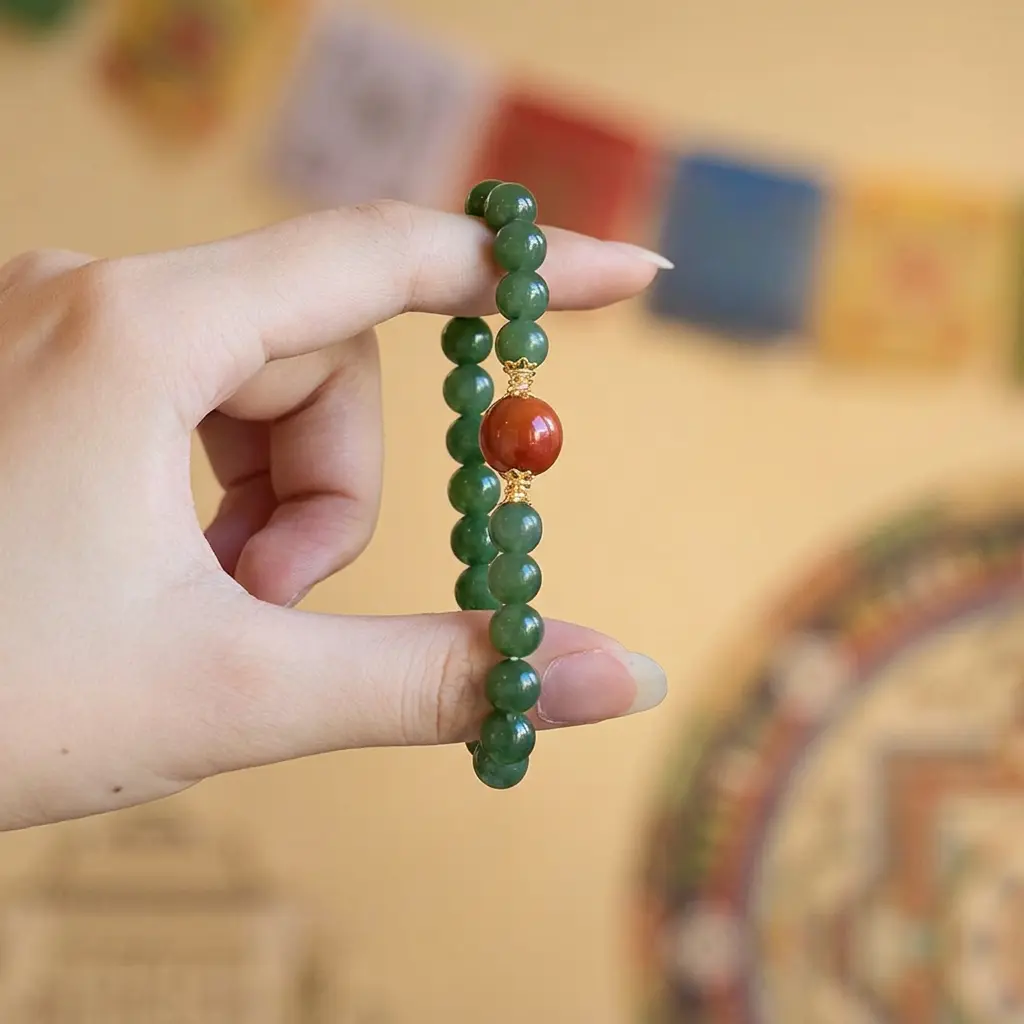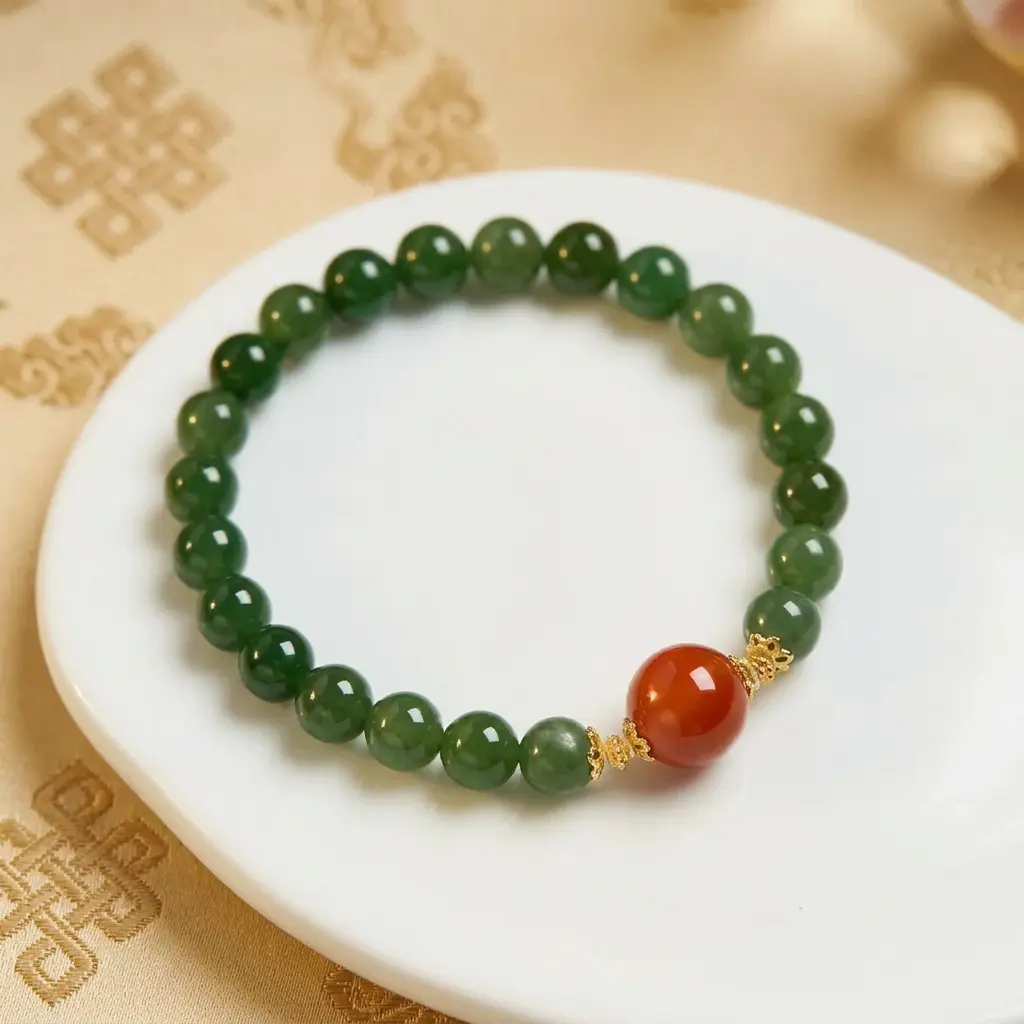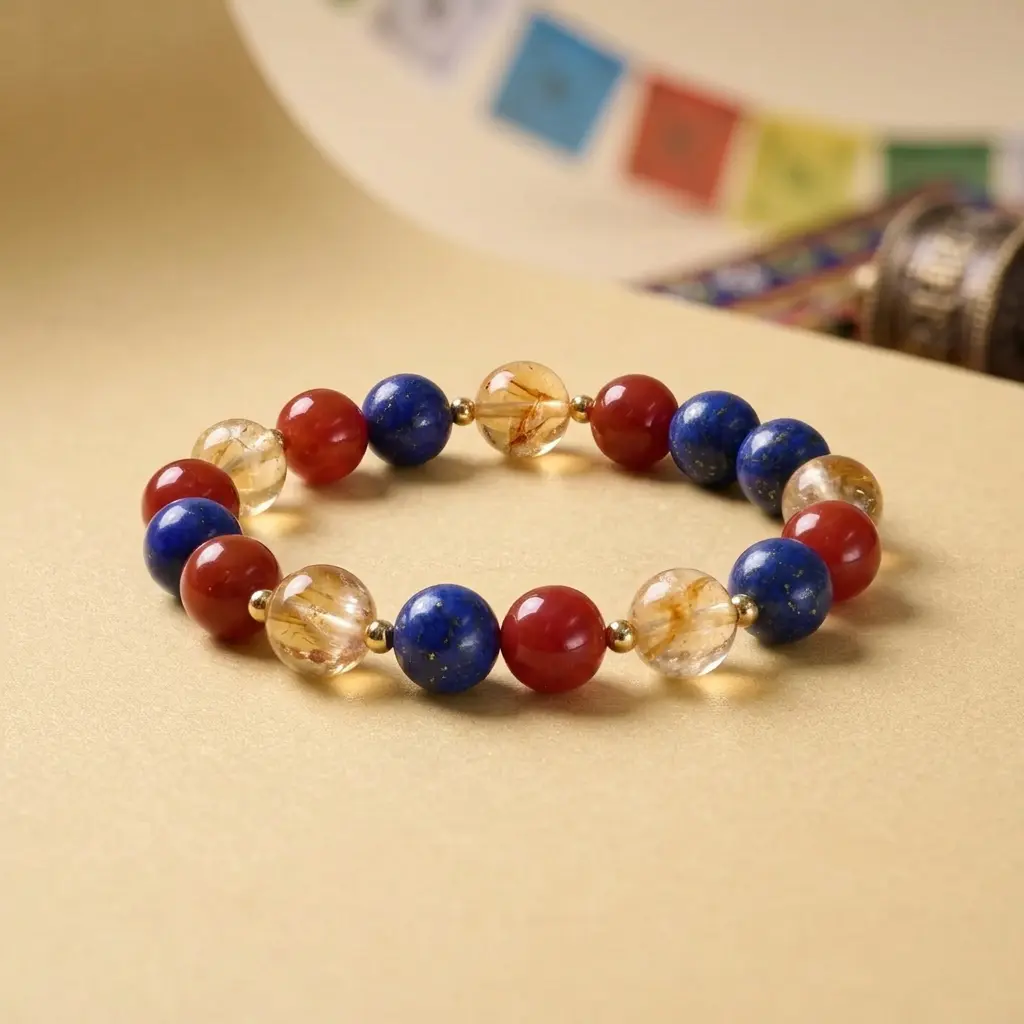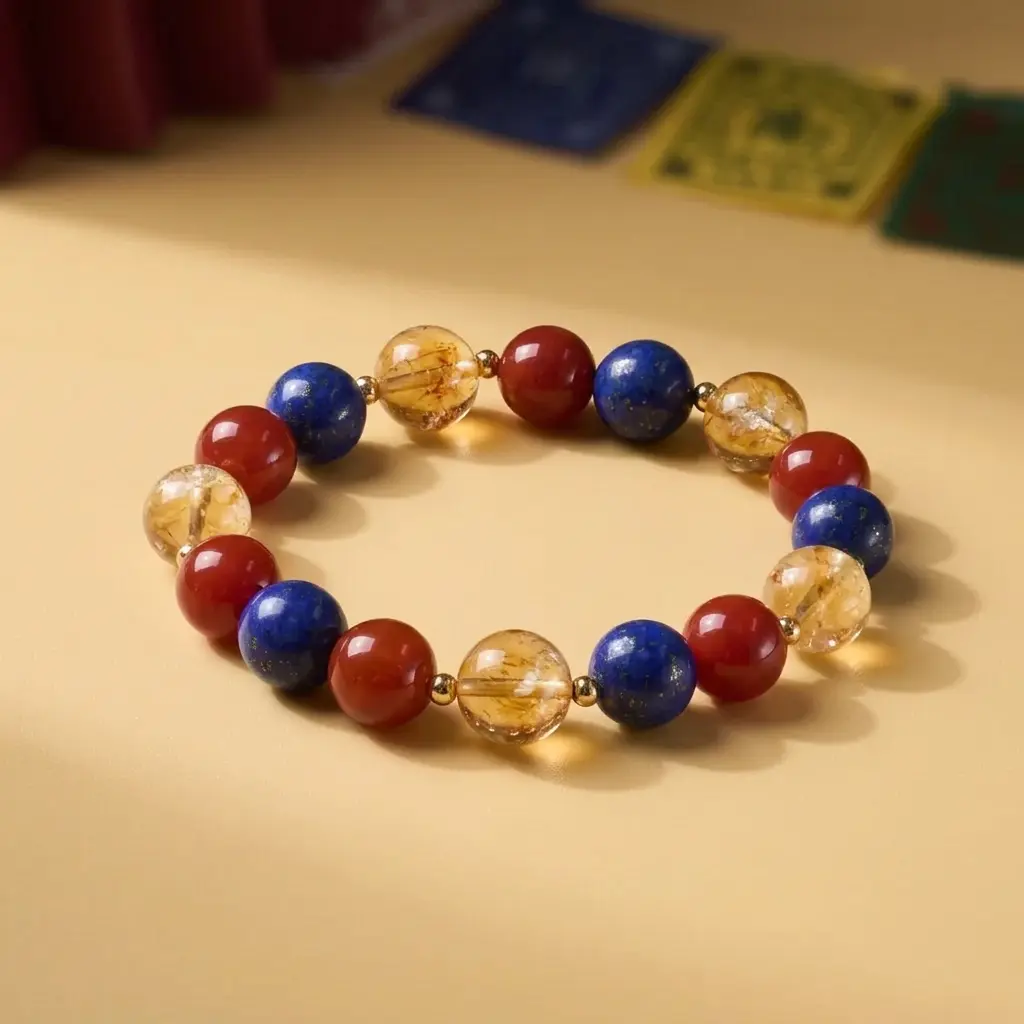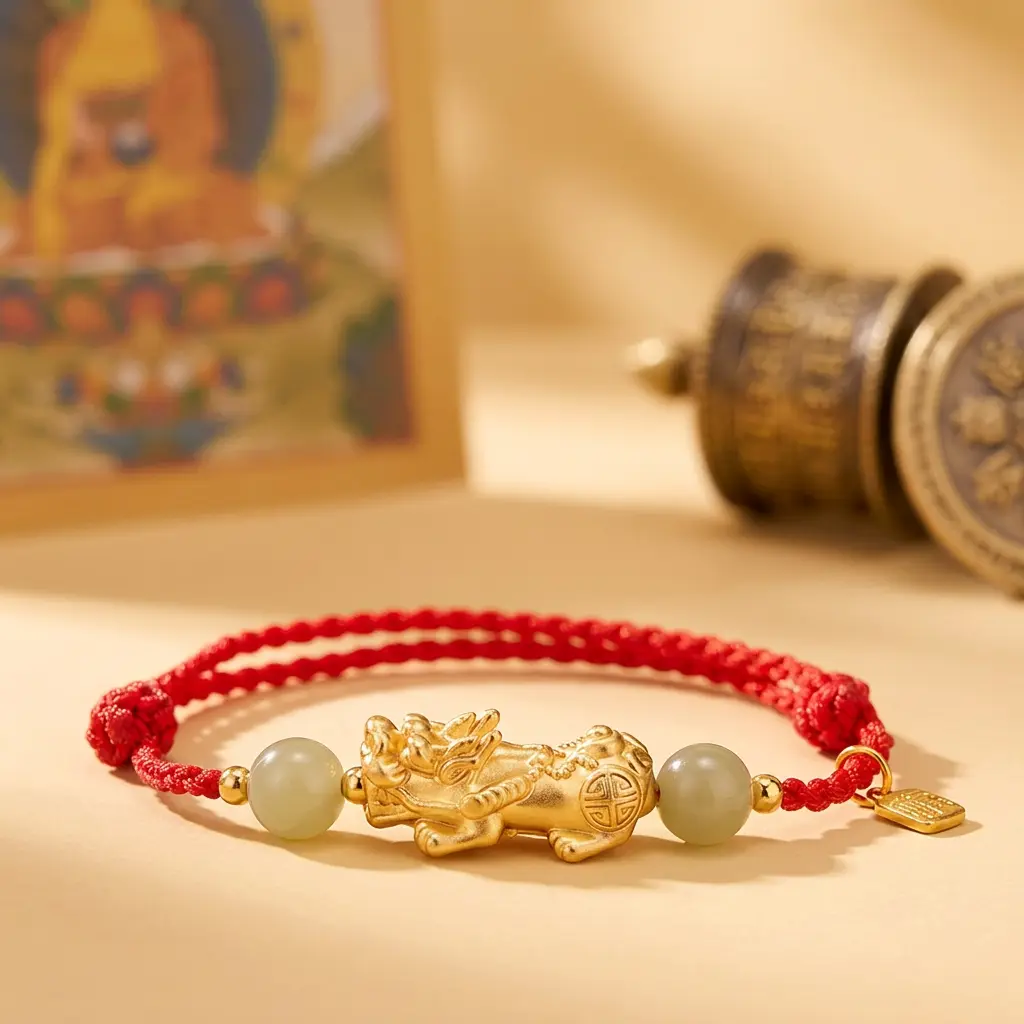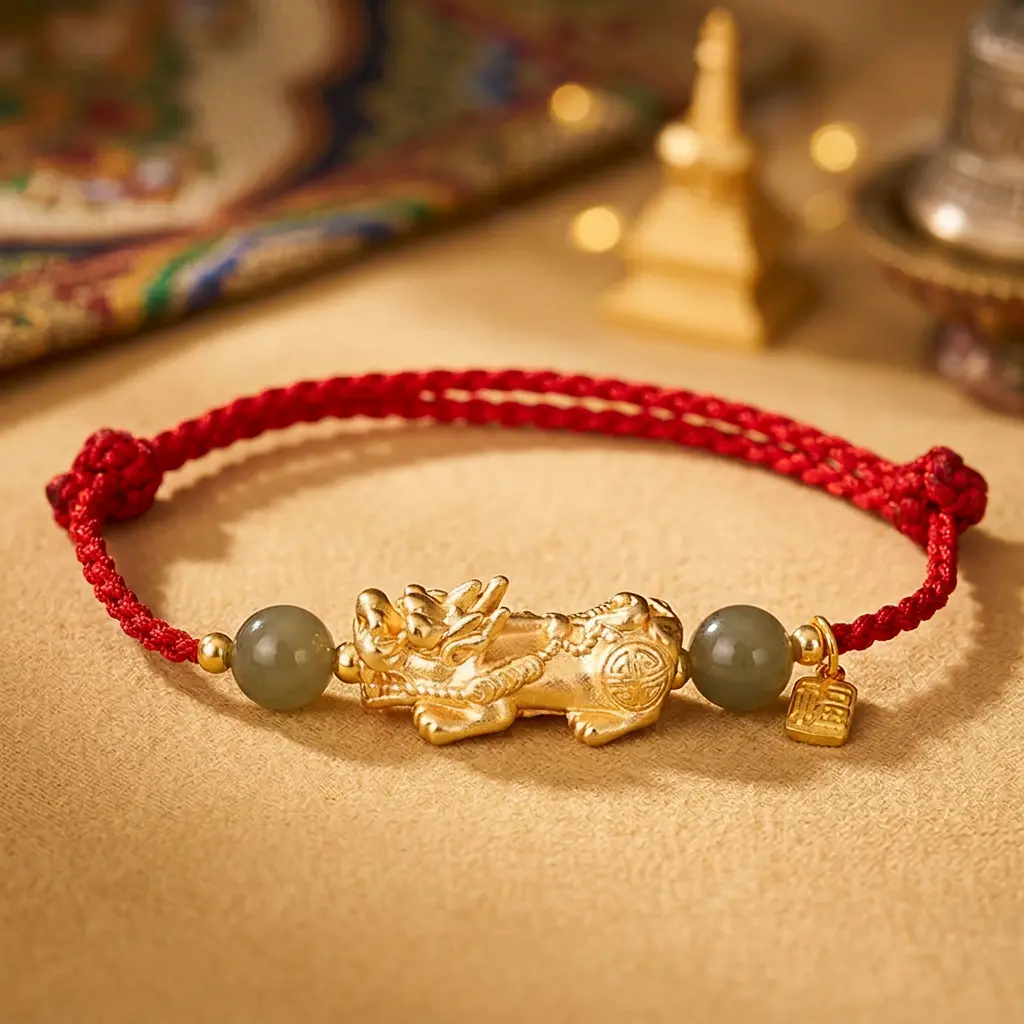


Spiritual jewelry is jewelry that carries a symbol or tool from a faith tradition, like mala beads or a knotted Tibetan bracelet. 22% of U.S. adults now call themselves spiritual but not religious, according to Pew Research Center’s 12/07/2023 survey of 11,201 adults, conducted July 31 to Aug. 6, 2023. If that’s you, a mala or knot bracelet can be a daily reminder, worn with respect, not borrowed as a costume. Many people wear this symbolic jewelry for mindfulness and intention, not worship.
Yes, you can wear spiritual jewelry without being religious. The Tibetan Nuns Project, which sells malas strung by Buddhist nuns, says plainly: “You don’t have to be a Buddhist to wear or use a mala.” What matters is knowing what the piece means, treating devotional objects with care, and buying from the communities that made them.
Below you’ll find 7 steps, a symbol table, and the mistakes to skip, under 8 minutes of reading. We’re PotalaStore, a small shop for handmade Tibetan jewelry. Our About page says our team speaks directly with artisan families in Tibet and Nepal, so respect is part of how we choose every piece.
Table of Contents
Can You Wear Spiritual Jewelry If You’re Not Religious?
Yes. You can wear spiritual jewelry without being religious, as long as you understand the symbol, treat sacred objects with care, and avoid claiming powers or an identity you don’t hold. The Tibetan Nuns Project, whose malas are strung by nuns at Dolma Ling Nunnery, says non-Buddhists can wear a mala as a reminder of their intention toward a calm mind and kindness to others. Problems usually start with careless use, not with who is wearing it.
If you’ve ever hesitated at the checkout because you weren’t sure it was “yours” to wear, that hesitation is a good sign. It means you already care about the people behind the symbol. That instinct is the foundation of everything in this guide.
What Does “Spiritual but Not Religious” Actually Mean?
Pew defines spiritual but not religious (SBNR) adults as people who see themselves as spiritual, or call spirituality very important, but don’t call themselves religious. In its 12/07/2023 survey of 11,201 adults, 22% of Americans fit that group. Pew’s larger Religious Landscape Study, published 02/26/2025, found a similar 21%.
SBNR Americans are also open to meaning in objects. 42% of SBNRs say crystals, jewels or stones can hold spiritual energies, compared with 24% of religious Americans (Pew, 12/07/2023). That openness is exactly why respect matters. A meaningful object deserves to be understood before it is worn.
Appreciation vs. Appropriation: The 3-Question Respect Test
Cultural appreciation means learning about a tradition and supporting the artisans who keep it alive. Cultural appropriation means taking a sacred element for style while ignoring, or profiting from, the people it belongs to. Before you buy or wear any piece, ask three questions:
- Do I know its origin? Can you name the tradition and what the symbol means there?
- Would a practitioner wince at this placement or context? Think of anklets, bathrooms and party costumes.
- Am I claiming powers or an identity I don’t hold? “It reminds me to slow down” is honest. “It makes me enlightened” is not.
Not everyone agrees the line is easy to walk. British yoga teacher Nadia Gilani, in The Yoga Manifesto (Pan Macmillan, 05/26/2022), counts wearing endless mala beads among the signs of appropriation in modern yoga. We take that critique seriously. One well-understood piece reads as appreciation, while a wrist full of trend beads can read as costume. For mala-specific rules, see our deeper guide to mala bead etiquette for non-Buddhists.
How to Wear Spiritual Jewelry Respectfully: 7 Steps
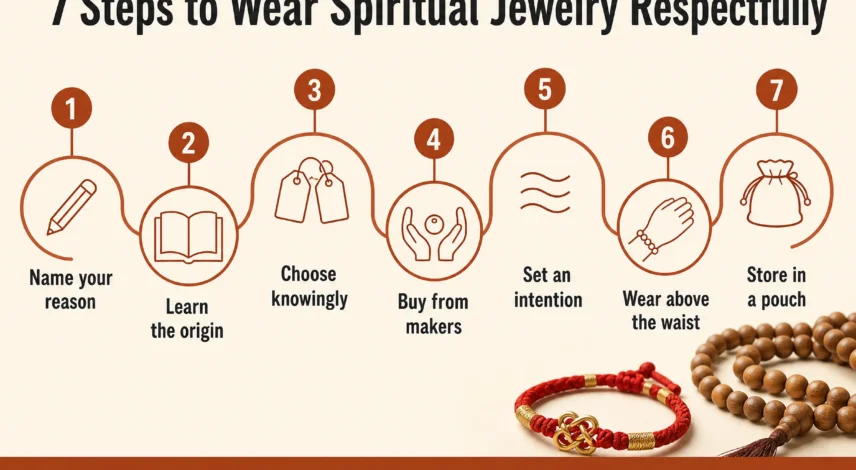
To wear spiritual jewelry without being religious, learn what the symbol means, choose pieces that welcome outsiders, and treat devotional objects with care. The seven steps below take about 20 minutes the first time, then become a 30-second daily habit that keeps your jewelry meaningful and respectful.
- Name your reason (2 minutes). Write one sentence on why you want this piece, such as focus, gratitude or grounding.
- Learn the symbol’s origin (10-15 minutes). Read one reputable source on its tradition and meaning.
- Choose an open symbol or a devotional object knowingly (5 minutes). Check the tier table in the next section.
- Buy from source communities (one-time). Ask who made it and where.
- Set a simple, secular intention before first wear (1-3 minutes). Hold the piece and say your reason once.
- Wear it above the waist and keep it off the floor (daily). Wrists, neck and a clean surface only.
- Remove it before showers, workouts and sleep; store it in a pouch (30 seconds). This protects the cord and the meaning.
Tools you need: your piece of jewelry, one reputable source on its tradition, a small cloth pouch, and a clean shelf or dish. Total time: about 20 minutes the first time, then about 30 seconds daily.
Steps 1-4: Choose With Knowledge
Step 1 keeps you honest. A clear reason, like “a reminder to breathe before meetings,” stops a purchase from becoming a costume. Step 2 takes one short read. A mala is a string of prayer beads, from the Sanskrit word for “garland,” used to count mantra repetitions.
Step 3 is where the tier table helps. Open symbols, like the endless knot, suit anyone. Devotional objects, like a deity pendant, ask more of you. Step 4 matters because the purchase itself is a choice. Handmade pieces from source communities send money back to the people who keep the craft alive.
Steps 5-7: Wear It With Care Every Day
Step 5 is how you set an intention without religious language. Hold the bracelet, take three slow breaths, and say one line. For example: “When I touch these beads, I’ll pause before I react.” That intention, paired with respect for the tradition, is what makes the piece yours to wear.
Steps 6 and 7 are about daily handling. The Tibetan Nuns Project calls malas sacred objects and advises keeping them off the ground; if one drops, it suggests touching it to the crown of your head and reciting Om Ah Hum three times. Many practitioners also keep them out of bathrooms. The Tibetan Nuns Project also advises against getting a mala wet, since water weakens the cord. Remove before shower, then store in a pouch overnight.
Open Symbols vs. Sacred Objects: A Symbol-by-Symbol Guide
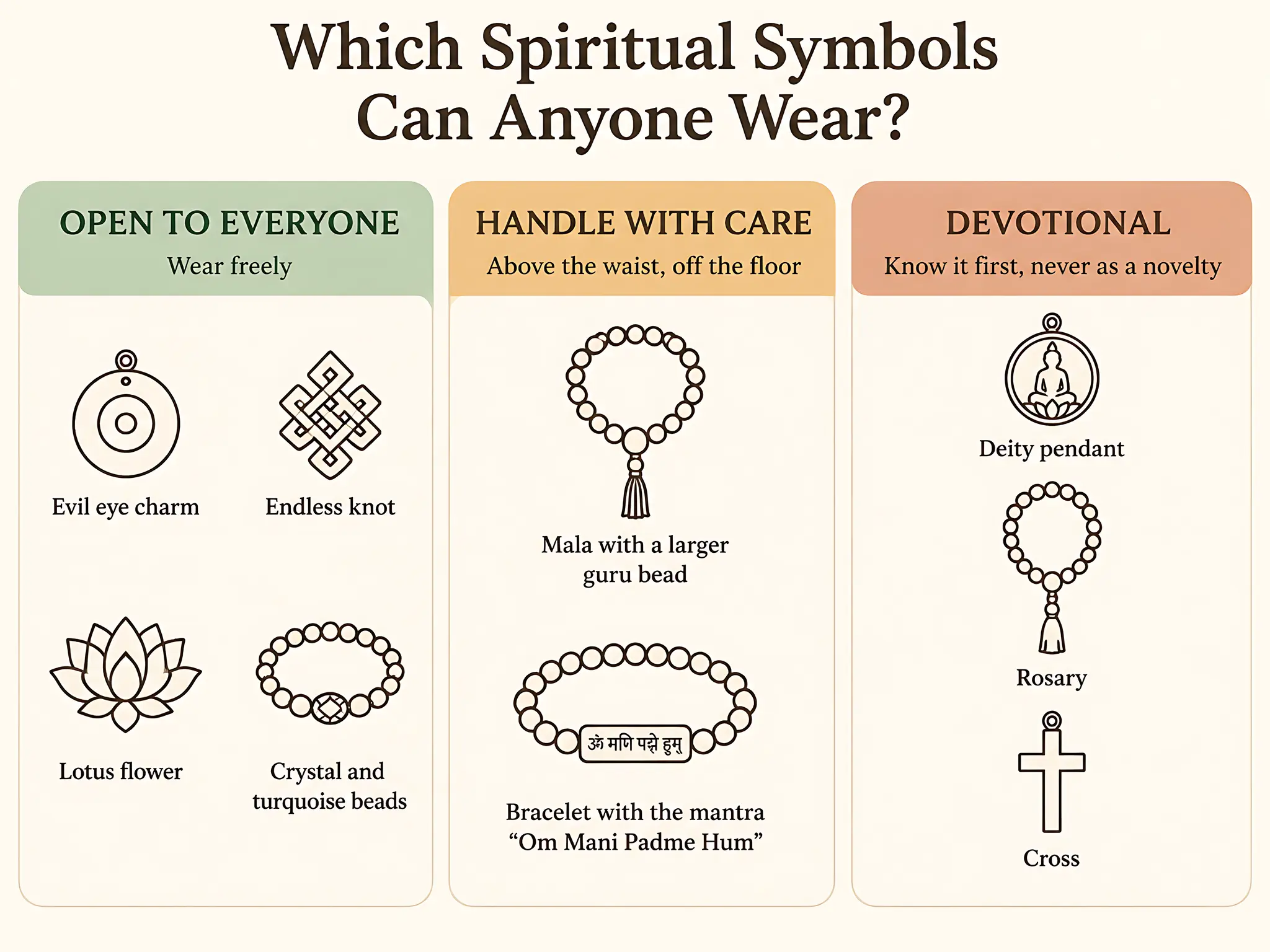
Spiritual symbols fall into three tiers: open symbols anyone can wear, objects to handle with care, and devotional items tied to active worship. The table below sorts the most common pieces by tier, explains why, and shows how to wear each one respectfully.
| Symbol | Tier | Why | How to wear it |
|---|---|---|---|
| Evil eye (nazar) | Open | A folk charm shared across many cultures, not one creed | Wear freely; learn its Mediterranean and Middle Eastern roots |
| Endless knot | Open | One of the eight auspicious symbols, widely shared as art | Everyday bracelets and pendants |
| Lotus | Open | A shared motif in Buddhist, Hindu and secular design | Any setting |
| Crystal or turquoise beads | Open | Natural stones; meaning is personal | Wear as jewelry; skip power claims |
| Mala with guru bead | Handle with care | A counting tool for mantra practice | Above the waist, off the floor, never crossed when counting |
| Om Mani Padme Hum pieces | Handle with care | Sacred mantra text | Keep clean and out of bathrooms |
| Deity pendants | Devotional | Images of figures people pray to | Only if you know who it depicts; never as a novelty |
| Rosary or cross | Devotional | Christian prayer tools | Follow the guidance of that faith community |
| Swastika (Buddhist or Hindu) | Devotional; avoid in U.S. context | Ancient auspicious sign in Asia, read as a hate symbol in the West | Do not wear in the U.S. |
Open-Access Symbols: Evil Eye, Endless Knot, Lotus, Crystals
Open symbols are the easiest place to start. The nazar is the blue-and-white evil eye charm used across Turkey, Greece and the Middle East. The endless knot is an interwoven design that, in Tibetan Buddhism, stands for the link between wisdom and compassion. Both appear on everyday items, not only altars.
Lotus motifs and crystal or turquoise beads work the same way. Wear them as reminders and decor. Just skip claims about what a stone “does.” Context still matters. TODAY reported on 07/09/2020 that Shein removed a $2.50 necklace it called a Buddhist swastika, and Shein apologized on Instagram on 07/10/2020, admitting it should have considered the symbol’s hurtful connotations. The original meaning didn’t help: in the U.S., most people read that shape as hate.
Devotional Objects: Malas, Mantra Pieces, Deity Pendants
Mala beads deserve the most care. A full mala has 108 beads plus 1 guru bead, the larger bead that marks the start and end of a round. The Tibetan Nuns Project explains that most practitioners don’t cross the guru bead, out of respect for their spiritual teachers; they reverse direction at the end of a round. The Tibetan Nuns Project notes that one round of 108 counts as 100 mantras in Tibetan practice.
Om Mani Padme Hum is a six-syllable mantra traditionally associated with Avalokiteshvara, the bodhisattva of compassion. You’ll see it carved on copper bangles and printed on silk cord bracelets. Deity pendants go one step further. If you can’t name the figure, wait until you can.
Please note: This article offers cultural and lifestyle guidance. It is not religious instruction or medical advice. Beliefs about spiritual jewelry are traditional and personal, not scientific claims.
Styling Mala Beads and Knot Bracelets as Everyday Accessories
Mala beads and knot bracelets style best as one or two quiet pieces: a single wrap, a short stack, or a layered necklace with neutral clothes. Match the format to your day. A wrist mala suits the office; a full mala can wrap or layer for weekends. Take both off for water and workouts.
Wrist Mala or Full 108-Bead Mala: Which Fits Your Day?
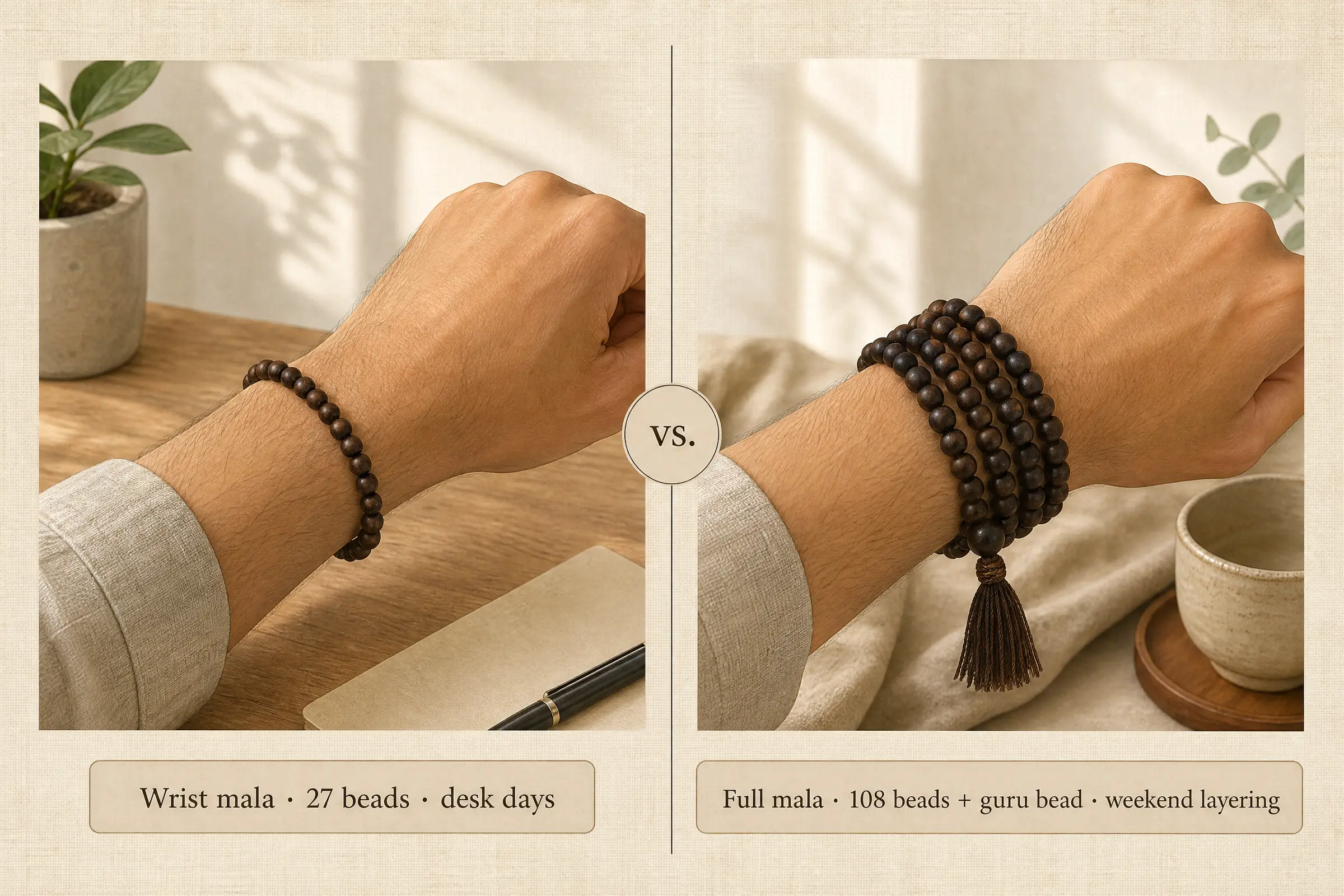
A wrist mala holds 18, 21, or 27 beads, so a 27-bead wrist mala equals a quarter round. A 108-bead mala with 6-8 mm beads wraps about 3-4 times on an average wrist. Our wrist mala vs. full 108-bead mala comparison covers sizing in detail.
| Feature | Wrist mala | Full 108-bead mala (8 mm) |
|---|---|---|
| Bead count | 18, 21, or 27 beads | 108 beads + 1 guru bead |
| How it wears | One loop on the wrist | About 3-4 wraps, or a necklace of about 36-40 in |
| Best for | Desk days, small stacks | Weekend layering, home practice |
How we’re testing this: our team plans a 7-day desk test with a four-wrap 8 mm wenge mala. We’ll log three things: whether beads catch on a laptop edge, how the elastic holds after daily on and off, and how often it gets touched as a focus cue. We’ll update this section with the results.
When to Wear It and When to Take It Off
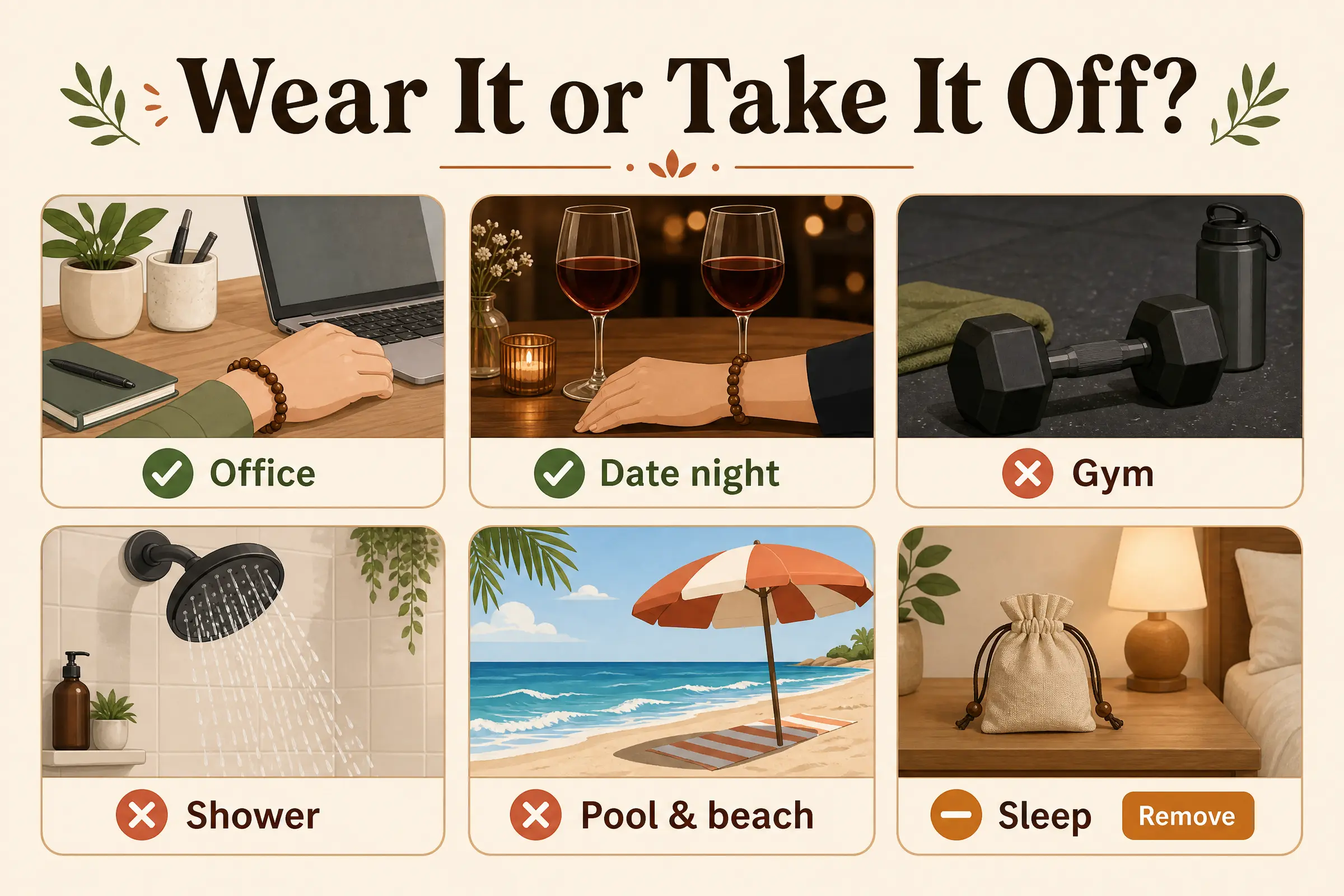
Use this quick matrix. It keeps wood beads intact and keeps sacred pieces out of places practitioners avoid.
| Situation | Wear it? | Why |
|---|---|---|
| Office | ✅ Yes | A quiet reminder to pause |
| Date night | ✅ Yes | Pairs with black, denim or camel |
| Gym | ❌ No | Sweat and strain weaken the cord |
| Shower | ❌ No | Water dulls wood and stretches elastic |
| Pool or beach | ❌ No | Chlorine and salt damage wood |
| Sleep | Remove | Store it in a pouch on a clean shelf |
Planning a 4th of July pool party or beach day? Take wood beads off first and leave them in their pouch. And if a Black Friday deal tempts you to buy ten bracelets at once, choose one you understand instead.
108 Mala Beads Bracelet Prayer Meditation Wood
$25.95 $33.95 (as of 10/07/2026)
- 108 beads, 8 mm (0.31 in), elastic cord: it wraps about 4 times as a bracelet or hangs about 36-40 in as a necklace, so one piece covers desk days and weekend layering.
- Four natural woods (Ebony, Rosewood, Tiger Skin, Wenge): neutral browns and blacks match denim, black and camel, so it reads as intentional, not costume.
- A guru bead and tassel: the traditional structure is intact, so you learn the real form before you wear it.
Compare finishes on the 8 mm natural wood 108 mala beads bracelet page.See the Wood Options
Common Mistakes Non-Religious Wearers Make (and Easy Fixes)
The most common mistakes are wearing sacred pieces below the waist, setting them on the floor, treating them as one-time costume props, and claiming powers for them. Each one has a simple fix. Everyone gets something wrong at first, our own team included. Here’s how to fix it without guilt.
Some practitioners find certain uses hurtful; here’s how to avoid them.
Placement and Handling Mistakes
- Wearing a mala as an anklet or belt. Fix: keep prayer beads on the wrist or neck.
- Setting it on the floor. Fix: use a dish, a shelf, or its pouch, even at a café table.
- Wearing it into the bathroom or shower. Fix: remove before shower and store in a pouch.
- Panic-buying in seasonal sales. Fix: buy one meaningful piece, then learn its story.
We’re a jewelry shop, not a monastery. When in doubt about a placement, ask a practitioner or a local temple; they know more than any store.
Mindset Mistakes: Costume Use and Power Claims
- Using a sacred symbol as a one-time prop. On 05/23/2021, Kim Kardashian posted photo-shoot images wearing Om-symbol earrings. In a statement on his website, Rajan Zed, president of the Universal Society of Hinduism, called wearing it as an accessory in a one-time commercial photo shoot disrespectful and asked for an apology. Fix: wear symbols you’ll keep, not ones you’ll use once.
- Claiming a piece will change your life. Fix: describe it honestly, as a reminder or focus cue.
- Buying a $5 copy of a sacred design. Fix: pay a fair price to the people who make it.
The bottom line is simple. Respect shows in small, repeated choices, not in one perfect purchase.
Why Where Your Jewelry Comes From Matters
Where your jewelry comes from matters because buying from source communities turns a purchase into appreciation: money reaches the artisans who keep the tradition alive, and you get the real story behind the symbol. Mass-produced copies send neither. Four questions help you tell the difference.
4 Questions to Ask Before You Buy
- Who made it, and where? Look for named regions, workshops or artisan groups.
- Is it handmade and ethically sourced? Ask how materials like wood, yak bone or copper are obtained.
- Does the seller explain the meaning? A good seller teaches the tradition, not only the trend.
- Are the claims modest? Be wary of sellers who promise guaranteed results.
How PotalaStore Sources and Explains Each Piece
PotalaStore says its team visits artisan workshops each year and speaks directly with artists, building a community network that supports livelihoods in Tibet and Nepal. That supports appreciation over appropriation, because money flows back to the communities behind the craft. Cultural appreciation only works when artisans benefit.
PotalaStore’s gift guide says every piece arrives with a printed cultural significance card. That way, you learn the origin before you wear it.
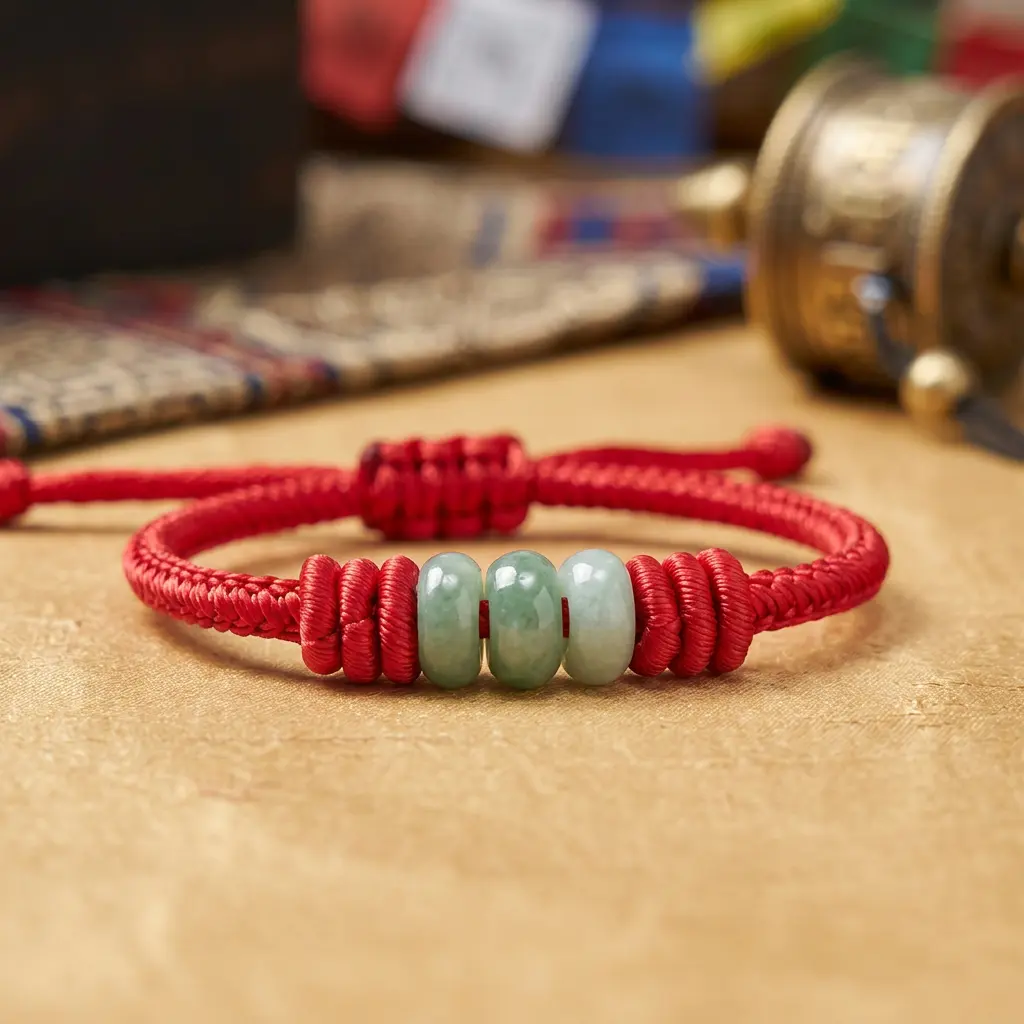
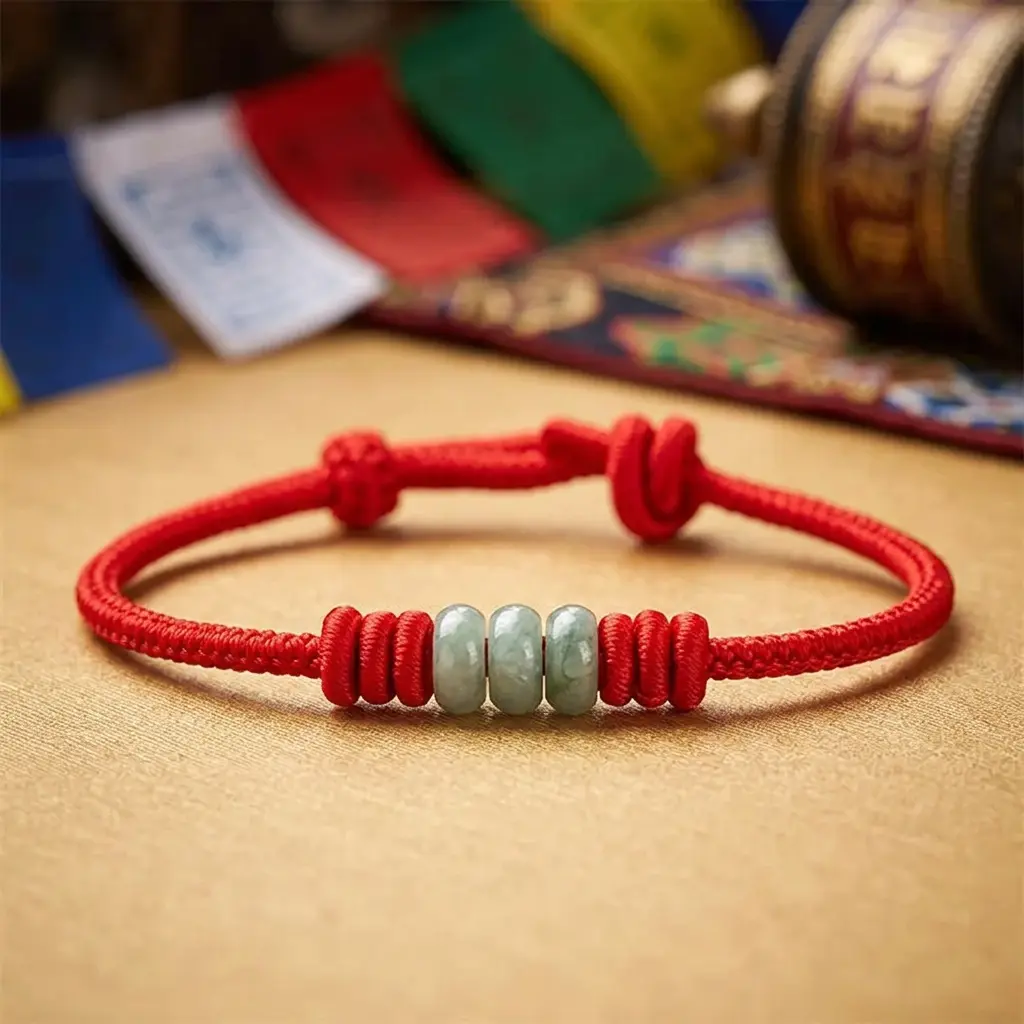
A good first piece is the Lucky Buddhist Monk Bracelet with five-color Tibetan knots ($35.95, was $45.95, as of 10/07/2026). PotalaStore says each knot is tied by hand while the artisan recites Om Mani Padme Hum. Red cord is traditionally associated with protection in Tibetan Buddhism; for you, it can simply be a reminder of compassion. You can browse more handmade Tibetan bracelets with the story behind each knot and bead.
Wear It With Knowledge: Your Next Step
To recap, wearing spiritual jewelry respectfully comes down to the 3-question test. Do you know its origin? Would a practitioner wince at the placement? Are you claiming powers or an identity you don’t hold? If your answers are yes, no, and no, you’re wearing it with respect.
The key takeaway is that respect, not religion, decides whether spiritual jewelry fits you. Start with one piece, learn its story, and let it remind you why you chose it.
Ready for a piece with a story? Explore knot and bead bracelets made in Tibetan tradition, each with a description of what its symbols mean.Browse Handmade Tibetan Bracelets
Frequently Asked Questions
It can be, if you treat them as a throwaway trend. Most teachers see a mala worn with understanding, above the waist and off the floor, as respectful. Critics such as yoga teacher Nadia Gilani see piles of mala beads as appropriation, so wear one, not ten.
Some yoga and wellness teachers favor the left wrist as the “receiving” side, but that is a custom, not a rule. The Tibetan Nuns Project’s guidance covers holding a mala, not wearing one: it advises counting with the mala in your left hand, moving clockwise from the guru bead. There’s no universal rule, so pick the wrist that doesn’t clash with your watch or dominant hand, and stay consistent.
No. In Tibetan Buddhist practice, choosing your own mala is normal. Some local folk beliefs prefer gifted pieces, but that view isn’t universal; read more in our guide to whether buying yourself a spiritual bracelet is bad luck.
Start with the guidance of your own tradition, since some faith communities welcome this and others don’t. If you’re comfortable, begin with a simple knot bracelet and read its story first, like the handmade Tibetan knot bracelet tied in five colors.
📚 References
- Pew Research Center, “Spirituality Among Americans” (12/07/2023). Source of the 22% SBNR share and the 42% vs. 24% belief in spiritual energy in objects.
- Pew Research Center, “How Americans see themselves spiritually, religiously” (02/26/2025). Religious Landscape Study finding that 21% of U.S. adults are spiritual but not religious.
- Tibetan Nuns Project, “How to Use and Choose a Tibetan Mala”. A nunnery-backed guide to mala structure, the guru bead, care, and wearing a mala as a non-Buddhist.
- Wikipedia, “Yoga and cultural appropriation”. Summarizes the debate, including Nadia Gilani’s critique of mala beads in The Yoga Manifesto (2022).