
Tibetan Buddhist Jewelry: Meaning, Symbols and How to Choose Authentic Pieces
 by Yang Tso
0 comments
Two Om pendants can look identical online, one priced at $12 and one at $120. The gap is rarely spiritual. It is usually the metal, the stone, and how honestly the seller labels both.
Tibetan Buddhist jewelry includes prayer beads (malas), amulet boxes, and silver, turquoise, coral, and dzi pieces that carry sacred symbols. Its meaning comes from three things: the symbol, the material, and how the piece is used in meditation or prayer. A piece is authentic when its label, metal, and stone are all honest.
At PotalaStore, we sell Tibetan prayer beads and pendants, so we see how often a label and a piece do not match. This guide shows you how to read the symbols, what each material traditionally means, and seven checks to run before you pay. We separate tradition from what you can verify, and we cite our sources at the end.
Want to see how a seller should label metals and stones? Browse PotalaStore’s Tibetan Buddhist jewelry collection while you read.
Table of Contents
What Is Tibetan Buddhist Jewelry?
Tibetan Buddhist jewelry is jewelry made and worn within the Tibetan Buddhist tradition, most often malas for counting mantras, ga’u amulet boxes for protection, and silver, turquoise, coral, or dzi pieces carrying sacred symbols. It is not one style. It is a set of objects with religious jobs, so the same pendant can mean different things to different wearers.
Three terms come up constantly. A mala is a string of prayer beads used to count mantra recitations. A ga’u is a small metal amulet box worn on the chest. A dzi is an agate bead with an etched pattern.
Prayer Tool, Protective Amulet, or Adornment?
Most Tibetan pieces fall into one of three roles, and the role changes what “authentic” means.
| Role | Typical piece | What it is for |
|---|---|---|
| Prayer tool | 108-bead mala, wrist mala | Counting mantra repetitions during meditation |
| Protective amulet | Ga’u box, dzi pendant | Traditionally worn for protection |
| Adornment | Turquoise and coral silver | Personal decoration and traditional family display |
A mala is judged by its structure. A ga’u is judged by its construction. A turquoise necklace is judged by its stone.
Where Is Tibetan Jewelry Made Today?
Much of today’s Tibetan Buddhist jewelry is made in Tibetan and Newar workshops in Lhasa, Kathmandu, and Dharamsala, alongside factories that copy the look. Regional styles also differ across Amdo, Kham, and Ladakh.
The Tibetan Nuns Project reports that malas from Dolma Ling Nunnery and Institute near Dharamsala are strung, knotted, and blessed by the nuns themselves. Origin is a useful clue, not a guarantee. A Kathmandu address does not prove a stone is natural.
How to Read Sacred Symbols on Himalayan Jewelry
Most symbols on Tibetan jewelry come from the Eight Auspicious Symbols (Ashtamangala) and a few ritual motifs, such as the vajra and the mantra Om Mani Padme Hum. Each traditionally stands for a quality of the Buddha’s teaching, not a magic effect.
The Eight Auspicious Symbols at a Glance

The Eight Auspicious Symbols are a traditional set of eight Buddhist emblems used on jewelry, textiles, and temple art.
| Symbol | Traditional meaning | Often seen on |
|---|---|---|
| Endless knot | Interdependence; wisdom joined with compassion | Knot bracelets, pendants |
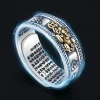
| Lotus | Purity of mind | Pendants, rings |
| Dharma wheel | The Buddha’s teaching in motion | Pendants, prayer-wheel charms |
| Conch shell | The teaching proclaimed far and wide | Silver charms |
| Parasol | Protection from harm | Silver charms, cuffs |
| Golden fish | Good fortune and freedom from fear | Silver charms, cuffs |
| Treasure vase | Abundance of spiritual treasure | Silver charms |
| Victory banner | Victory of the teaching over ignorance | Silver charms, carved cuffs |
If you are shopping for a bracelet, our guide to Tibetan bracelet meaning, symbols and materials goes deeper on knots and cords.
Om Mani Padme Hum and the Vajra (Dorje)
The six-syllable mantra Om Mani Padme Hum is associated with Avalokiteshvara, the bodhisattva of compassion. You will see it engraved on silver cuffs, ring bands, and prayer-wheel pendants.
The vajra, or dorje, traditionally stands for indestructibility, like a diamond or a thunderbolt. Our Om Mani Padme Hum vajra pendant ($42.95) combines both motifs.
A 3-Question Way to Read Any Piece
- What is the central symbol? Name it before you read any product copy.
- What is it made of? The material should match the symbol’s tradition, such as turquoise on a protective piece.
- Is there a mantra, a sutra, or a ga’u box? These show a ritual purpose, not only decoration.
A symbol alone proves nothing. Factories copy symbols as easily as workshops do, so the next two sections matter more.
Sacred Materials: Turquoise, Coral, Dzi and the 108-Bead Mala
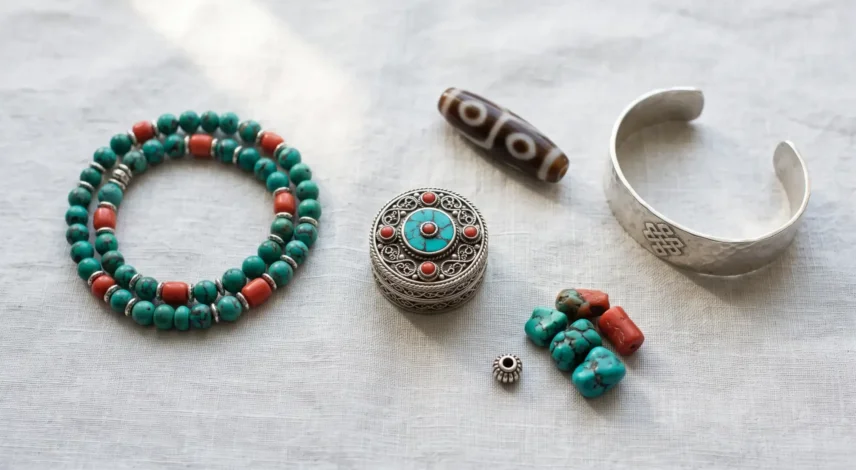
In Tibetan tradition, turquoise is linked to sky and protection, red coral to life force, and etched agate dzi beads to good fortune, while a full mala has 108 counting beads plus one guru bead.
- Turquoise: a blue-green stone traditionally worn for protection.
- Red coral: a red stone associated with life force.
- Dzi: etched agate beads, worn as protective amulets.
- Bodhi seed, amber, yak bone: common mala materials. Bone traditionally reminds the wearer of impermanence.
Turquoise and Red Coral: Sky and Life Force
Turquoise and red coral often appear together on necklaces, ga’u boxes, and guru beads, pairing the blue of sky with the red of life force. The pairing is traditional, and it is also easy to fake.
Dyed magnesite and compressed turquoise are sold as natural stone at low prices. Ask whether the stone is natural, stabilized, or compressed. A seller who knows the answer will tell you in one line.
Dzi Beads: Etched Agate with a Tibetan Name
A dzi is an agate bead with an etched pattern, and the Tibetan word gzi is usually glossed as shine or brightness. The pattern is etched into the stone, not painted on it. That detail matters when you inspect a bead with a loupe in the checklist below.
Why a Mala Has 108 Beads (Plus a Guru Bead)

A full Tibetan mala has 108 beads plus one guru bead, which marks the start and end of each round. The Tibetan Nuns Project links the 108 to the 108 volumes of the Kangyur, the collected words of Shakyamuni Buddha in Tibetan.
The fixed count lets you track rounds by touch, so your attention stays on the mantra instead of the number. A wrist mala is the shorter version for everyday wear.
To see this structure in a real piece, look at the Tibetan red turquoise 108-bead mala necklace, listed at $53.95 at the time of writing. Read the full listing for stone treatment details before you buy.
The Ga’u: A Wearable Shrine
A ga’u is a small metal amulet box that holds sacred contents. The Metropolitan Museum of Art’s Tibetan example, dated late 19th to early 20th century, notes such boxes held “written or printed texts that monks consecrated to protect the wearer.”
That is why a ga’u is treated as a container, not just a pendant. A hollow box that opens is the traditional form. A solid charm is a style reference.
Is Tibetan Silver Real Silver?
Not necessarily. “Tibetan silver” is a style label, not a purity standard. In the U.S., the FTC says a piece should not be called “sterling” unless it is at least 925/1,000 pure silver, so look for a “925” or “Sterling” mark, ideally next to a maker’s mark.
| Label | Silver content | What to expect |
|---|---|---|
| Sterling silver | At least 925/1,000 (92.5%) | Marked “925” or “Sterling,” with a maker’s mark |
| “Tibetan silver” | No fixed standard | Often a copper-based alloy; ask for the exact metal |
| Silver-plated | A thin silver layer over base metal | The layer wears through; ask about the base metal |
What U.S. Rules Say About “Silver” and “Sterling”
The FTC’s Jewelry Guides (16 CFR §23.5) allow “Sterling,” “Sterling Silver,” and “Ster.” only for metal that is at least 925/1,000 pure silver. The National Stamping Act (15 U.S.C. §297) adds that a quality mark such as 925 should come with a registered trademark, the maker’s mark, placed close beside it.
A “925” stamp with no maker’s mark nearby is a reason to ask questions. It is not proof of fraud, since many handmade imports are marked unevenly.
Nickel, Lead and Sensitive Skin
Nickel is the practical risk. In a North American study of 44,097 patch-tested patients from 1994 to 2014, 17.5% reacted to nickel, and the rate rose to 20.1% by 2013 to 2014. Those patients were referred for testing, so the figure overstates the general population.
If you have ever had a rash from a cheap ring, check the metal before you buy a “Tibetan silver” cuff, and ask a dermatologist about nickel testing. Wikipedia’s entry on Tibetan silver cites an X-ray fluorescence test in which six of seven online items were mostly copper, nickel, and zinc, and it says such alloys could contain lead or arsenic. “Nickel-free” on a listing should always come with a named metal.
How to Check a Hallmark in 30 Seconds
- Find the stamp: check the inside of a band or the back of a pendant.
- Magnify it: use a 10x loupe or a phone macro lens.
- Read it: look for “925” or “Sterling,” then a maker’s mark beside it.
- Ask: send the seller a photo and request the maker’s name.
How to Identify Authentic Pieces: A 7-Point Checklist

Authentic Tibetan jewelry is honestly labeled, made from the materials it claims, and shows hand work. Check these seven points before you pay.
- Metal mark: look for 925 or Sterling plus a maker’s mark. No mark means ask for the exact metal.
- Natural stone features: natural agate and turquoise show uneven color and natural inclusions. Resin usually feels lighter and warmer, and glass feels cold and uniform.
- Hand work: hand-hammered silver shows slight asymmetry and tool marks. Cast copies repeat identical detail.
- Dzi etching: under a 10x loupe, etched lines usually show depth and fine edges. Paint sits on the surface.
- Price sense: newly made natural agate dzi typically cost $80 to $300, while genuine antiques can pass $1,000. A “centuries-old” dzi at $40 is a red flag.
- Honest labels: good sellers separate new genuine pieces, antiques, and imitations, and they state provenance.
- Return and shipping terms: tracked shipping and a written return window let you get a second opinion from a local jeweler.
Material and Metal Checks You Can Do at Home
A strong magnet that clings to a “silver” piece points to an iron or steel core. A magnet that does not cling proves nothing, because copper and nickel-silver alloys are not magnetic either. Weigh the piece and compare it with similar-sized stone beads, since resin weighs noticeably less than agate.
No home test replaces a jeweler’s assay or X-ray fluorescence test. Treat these as filters, not proof. For dzi specifically, read our real vs fake dzi bead field guide.
Signs of Hand Craftsmanship
Hand-hammered surfaces carry small variations, and hand-strung malas show an individual knot between beads. Handmade does not mean genuine, and perfect symmetry does not mean fake, because good workshops also use molds for repeated motifs. Look for consistency of care, not roughness.
5 Questions to Ask Any Seller
- What metal is this, exactly, and is it nickel-free?
- Is the turquoise natural, stabilized, or compressed?
- Is the piece new or antique, and how do you know?
- Where and by whom was it made?
- What is your return policy if a jeweler disagrees?
We sell newly made natural agate dzi and we do not appraise antiques. If you need an antique valued, use a qualified appraiser.
Can Non-Buddhists Wear Tibetan Buddhist Jewelry? Choosing Respectfully
Yes. Many Tibetan teachers and sellers say non-Buddhists may wear these pieces, as long as you treat them as meaningful objects, not costumes. Learn what the symbol means, keep the piece off the floor, and wear it respectfully.
Simple Etiquette for Wearing Sacred Jewelry
Appreciation means learning the meaning and buying from makers who credit their source. Appropriation treats sacred objects as costume. Customs vary by teacher, but three habits are widely shared:
- Keep it off the ground. Place it on a clean shelf or cloth.
- Keep it out of the bathroom. Take it off first.
- Use a mala as a mala. If you wear one, remember it is a practice tool.
Match the Piece to Your Purpose and Budget
| Purpose | Good starting piece | Typical budget |
|---|---|---|
| Meditation practice | 108-bead mala | $40 to $80 |
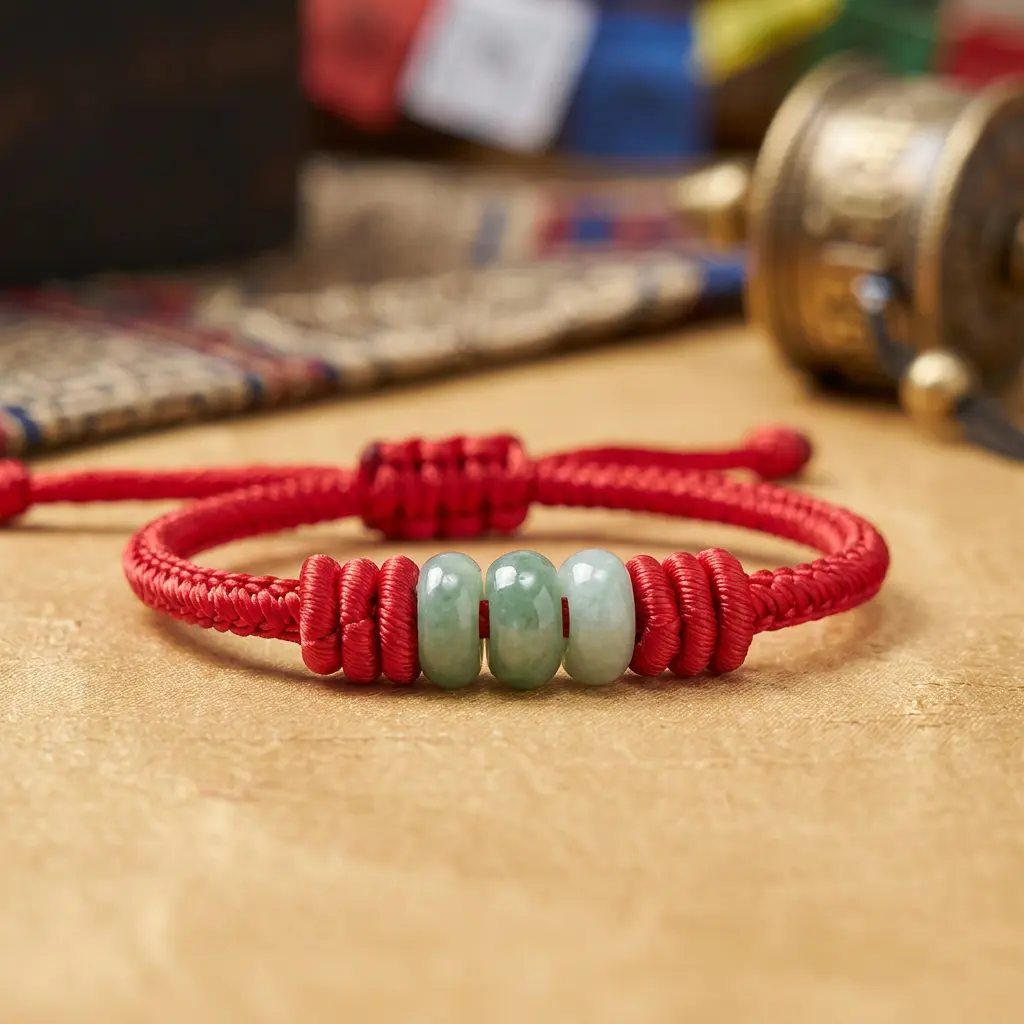
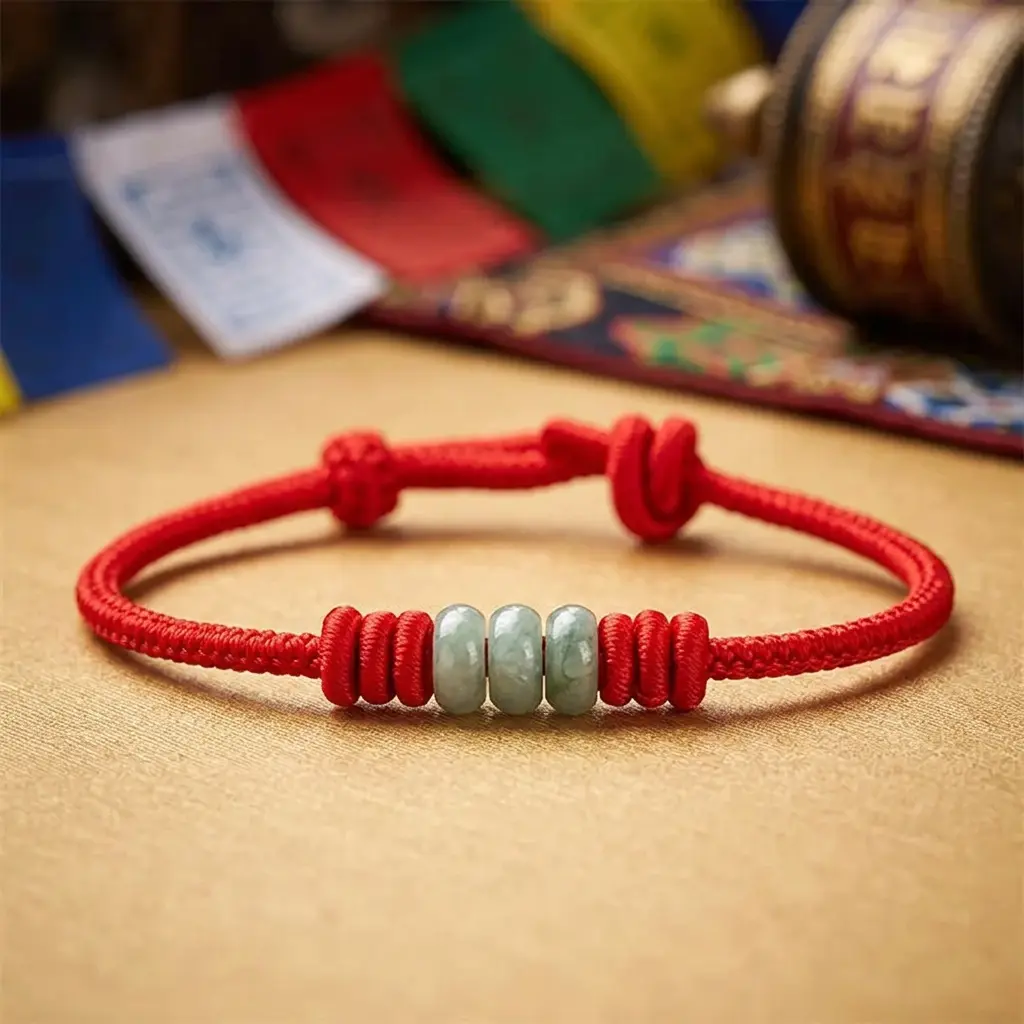
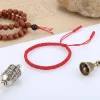
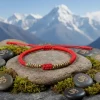
| Daily reminder | Knot bracelet (ours start at $28.95) | Under $40 |
| Holiday or graduation gift | Symbol pendant | $40 to $80 |
| Collecting | Natural agate dzi | $80 and up |
If you are unsure where to begin, our Tibetan Buddhist jewelry collection groups each piece by role, so you can pick a mala, bracelet, or pendant first. For gifts, a low-cost knot bracelet is a safe choice. If sizing worries you, look for an adjustable closure.
Important note: The spiritual meanings described here are traditional beliefs, not medical claims or guaranteed outcomes. No piece of jewelry can promise protection, health, or wealth. This guide is for educational purposes and does not replace advice from a physician or dermatologist.
In summary, Tibetan Buddhist jewelry means symbol plus material plus use. An authentic piece has an honest label, real materials, and visible hand work. Run the seven checks, ask the five questions, and keep tradition separate from proof.
Choose a piece you can verify
Every listing in our collection names its metal and stones, so you can compare what you read here against what you buy.Shop Tibetan Buddhist Jewelry
Frequently Asked Questions
In Tibetan tradition, the number and arrangement of “eyes” are believed to carry different blessings, and the nine-eye dzi is often called the most auspicious. Meanings vary by source and lineage, so treat any single list as tradition, not fact.
Many practitioners wear malas and blessing bracelets on the left wrist, but customs differ by teacher and region. Comfort and respectful handling matter more than the side.
In Tibetan Buddhism, these pieces are traditionally seen as reminders of practice and as carriers of blessings. No jewelry can guarantee protection, health, or wealth. Treat it as a reminder, not a remedy.
Keep turquoise and coral away from perfume, hot water, and harsh cleaners, and wipe sterling silver with a soft cloth. If you are choosing your first piece, start with our Tibetan Buddhist jewelry collection, where each listing names its metal and stones.
📚 References
- Tibetan amulet box (ga’u): Museum record for an amulet box of a noblewoman from Tibet, including the description of its consecrated contents. The Metropolitan Museum of Art, object 15.95.97
- Silver content rules: U.S. federal rule on when “sterling” and “silver” may be used in jewelry marketing. eCFR, 16 CFR §23.5
- Mala structure and the 108 beads: Explanation of the guru bead, the 108 count, and how Tibetan malas are made. Tibetan Nuns Project
- Nickel sensitivity data: North American Contact Dermatitis Group patch-test results, 1994 to 2014. PubMed, Warshaw et al.