

Saga Dawa is the fourth month of the Tibetan lunar calendar and the holiest stretch of the year in Tibetan Buddhism. It is widely known as the month of merit, because virtuous actions taken during these weeks are traditionally believed to carry far greater spiritual weight than at any other time. In 2026, it ran from 05/17/2026 through 06/15/2026, with its sacred full-moon day, Saga Dawa Duchen, falling on 05/31/2026.
Most explanations of this festival either stay abstract or focus only on travel to Tibet. This one stays practical. You will learn what the name means, the exact 2026 and 2027 dates, why the month is considered so powerful, and simple ways to observe it respectfully, even from home in the U.S. At Potala Store, our work centers on Tibetan artisans, and we return 10% of proceeds to the communities that craft these sacred objects. That connection is why we try to describe the tradition accurately rather than romanticize it.
A quick note: This article is cultural and educational background on a Tibetan Buddhist observance. Descriptions of merit and karmic results reflect traditional Buddhist teachings. They are shared with respect and are not scientific claims or promises of results. For religious guidance, please consult a qualified teacher.
Table of Contents
What Does “Saga Dawa” Mean?
The name Saga Dawa combines two Tibetan words. Dawa means month or moon, and Saga is traditionally linked to a bright star that appears during the fourth lunar month. In plain terms, Saga Dawa means the month of the Saga star, and it marks the fourth month in the Tibetan calendar. Some sources instead read Saga as a word tied to the number four, so you may see slightly different explanations of the name.
Why the Tibetan Calendar Makes the Date Move Each Year
The Tibetan calendar is lunisolar, which means it follows both the moon and the sun. Each month begins near a new moon, and an extra month is added every few years to keep the calendar aligned with the seasons. That is why Saga Dawa lands on different Western dates each year, usually somewhere across May and June.
“Month of Merit”: The Name That Explains the Whole Festival
Tibetans also call this period Bumgyur Dawa, which translates roughly as the month when merit is multiplied a hundred thousand times. That single phrase captures why the whole festival matters, and why practitioners pack it with good deeds. We look at those numbers, and where they come from, a little further down.
When Is Saga Dawa in 2026 and 2027?
In 2026, Saga Dawa ran from 05/17/2026 through 06/15/2026, and Saga Dawa Duchen, the holiest day, fell on 05/31/2026. In 2027, Duchen falls on Friday, 06/18/2027. Since we are writing this in September 2026, the 2026 observance has already passed, so use the 2027 dates to plan ahead.
Saga Dawa 2026: Key Dates at a Glance
| Event | Date (2026) |
|---|---|
| Month begins | 05/17/2026 |
| Saga Dawa Duchen (full moon) | 05/31/2026 |
| Month ends | 06/15/2026 |
Dates follow the Tibetan lunar calendar as published by the Tibetan Nuns Project and the FPMT.
Saga Dawa 2027 and Why the Date Shifts
In 2027, Saga Dawa Duchen falls on 06/18/2027. The date moves each year because the lunisolar calendar keeps realigning with the seasons. The year 2026 was also a Year of the Horse, part of a cycle that returns every 12 years. In Horse years, the merit of walking a kora (a clockwise pilgrimage circuit) around Mount Kailash is traditionally said to be multiplied 13 times, which is why these years draw larger crowds of pilgrims.
Why Is It Called the Month of Merit?
Saga Dawa is called the month of merit because, in the Tibetan Buddhist tradition, the karmic results of your actions are believed to be greatly multiplied during this month. In practice, this means acts of kindness, generosity, and prayer are seen as unusually powerful. It also means harmful actions carry more weight, so many practitioners take extra care to avoid them.
What “Merit” Means in Buddhism
Merit (in Sanskrit, puṇya) is the positive karmic result of wholesome actions. In Buddhist practice, merit is gathered mainly in three ways: giving (dana), ethical conduct (sila), and meditation (bhavana). During Saga Dawa, many people put special focus on the first, the Buddhist practice of dana, or generosity, whether through donations, feeding others, or supporting people in need.
How Much Is Merit “Multiplied”? An Honest Look at the Numbers
Here the sources disagree, and we want to be upfront about it. The traditional name Bumgyur Dawa points to merit being multiplied 100,000 times across the month. For Saga Dawa Duchen itself, the late Lama Zopa Rinpoche, citing the Vinaya text Treasure of Quotations and Logic, taught that results are multiplied 100 million times. Some FPMT materials prepared for 2026 cite an even higher figure of 300 million times. These numbers come from traditional teachings rather than measurement, so we present them as tradition, not as fact. What they all share is one clear message: during this month, your intention and your actions matter more. In our own experience working alongside Tibetan communities, the exact figure matters far less to practitioners than the invitation the month offers. It is seen as an especially auspicious time for purification, a chance to clear away old habits and begin again.
What Is Saga Dawa Duchen?
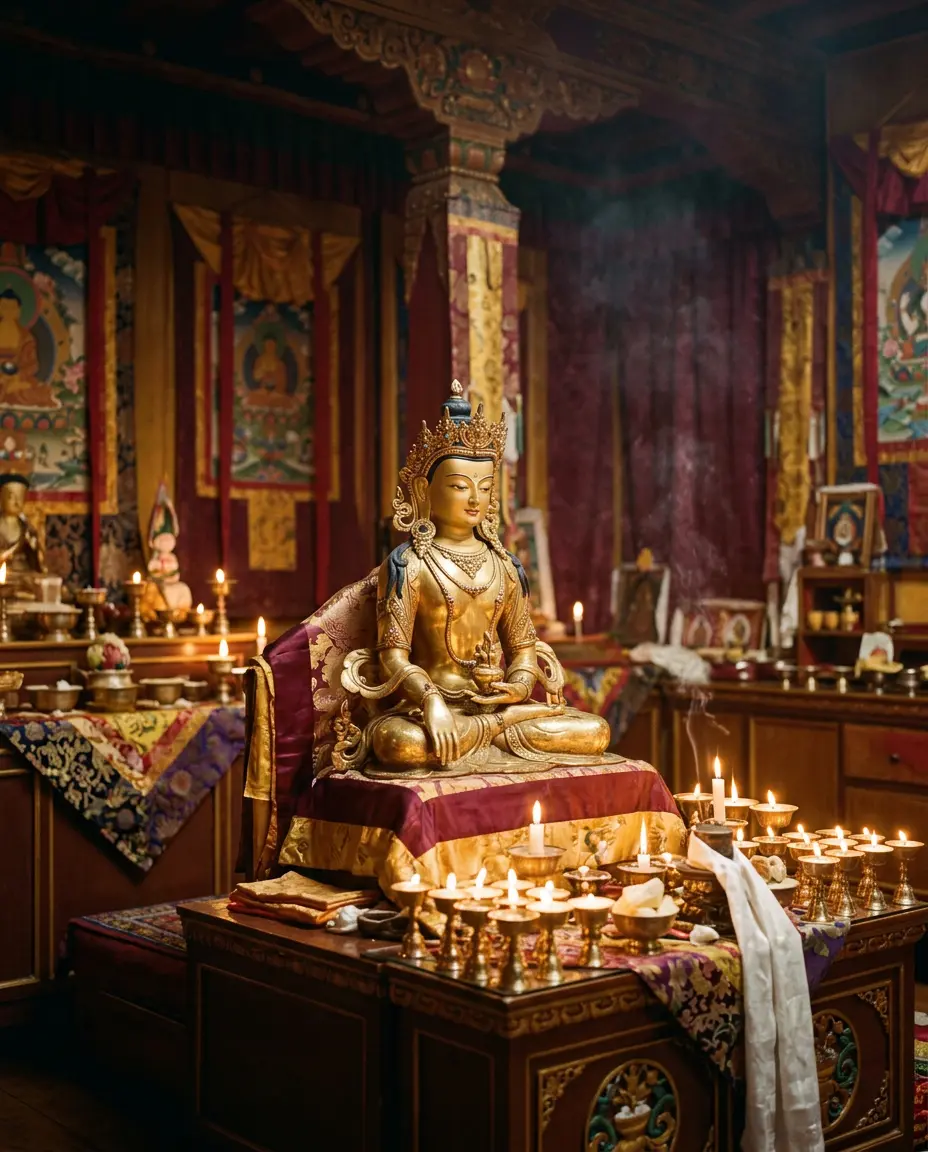
Saga Dawa Duchen is the full-moon 15th day of the month and the single holiest day in the Tibetan Buddhist year. The word Duchen means great occasion, and this one gathers the deepest meaning of the whole month into a single day.
The Day the Buddha Was Born, Enlightened, and Passed Away
Saga Dawa Duchen commemorates three events said to share this one date: the Buddha’s birth, his enlightenment, and his parinirvana (his passing into final nirvana). Tradition places these events in three locations. Siddhartha Gautama was born at Lumbini, reached enlightenment and became the Buddha, known as Shakyamuni, at Bodh Gaya, and died at Kushinagar. Because three of the most important moments in the Buddha’s life fall together, this day carries unusual weight.
Why Duchen Is the Holiest Day of the Tibetan Year
On Duchen, monasteries hold their most important prayers and ceremonies of the year. At Dolma Ling nunnery, for example, the nuns read the entire Kangyur, the collection of the Buddha’s recorded teachings across 108 volumes. Pilgrims also gather at sacred sites such as the Jokhang temple in Lhasa and the great Boudhanath stupa in Kathmandu. For lay practitioners, it is the day to give the most, pray the most, and avoid any harm.
How the Month of Merit Is Observed, and How to Mark It at Home
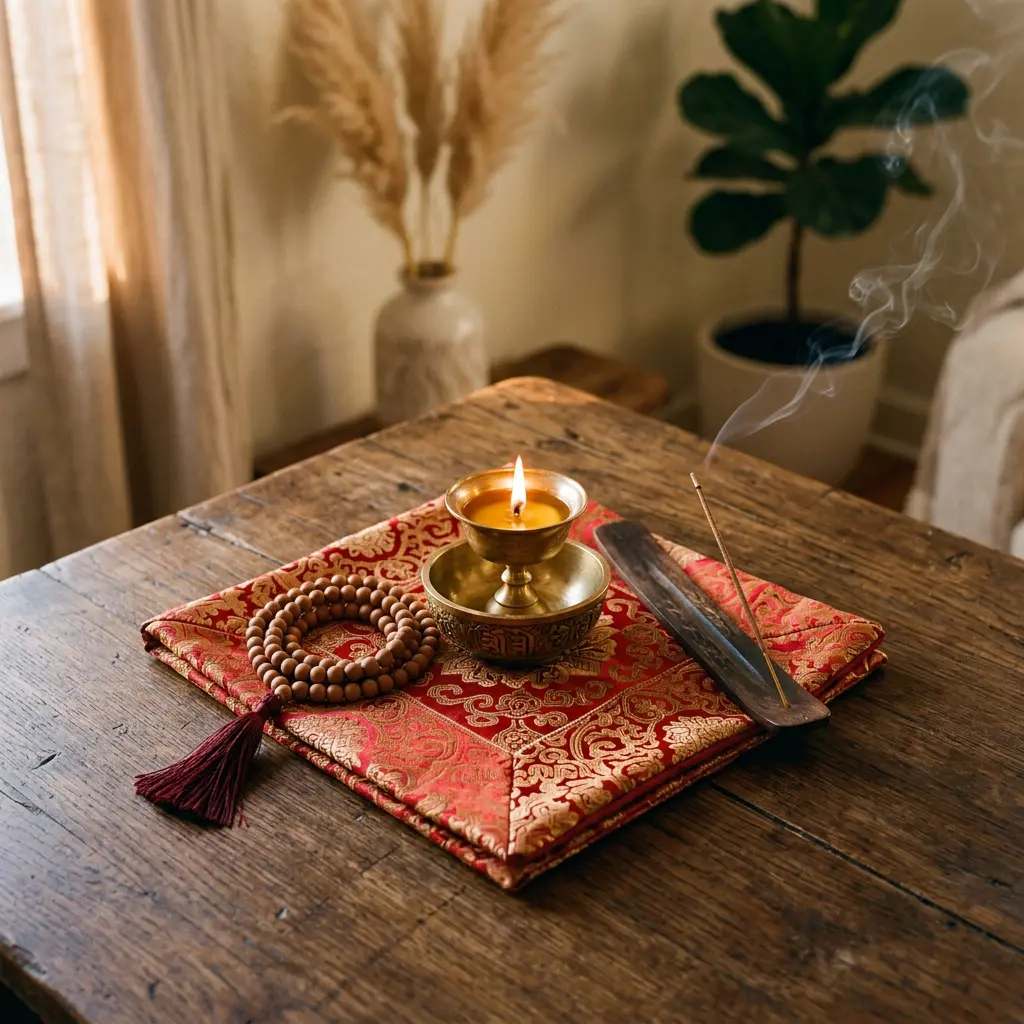
During Saga Dawa, practitioners focus on generosity, kindness, and prayer through a handful of well-loved traditional practices.
Traditional Practices During the Month of Merit

Common observances include:
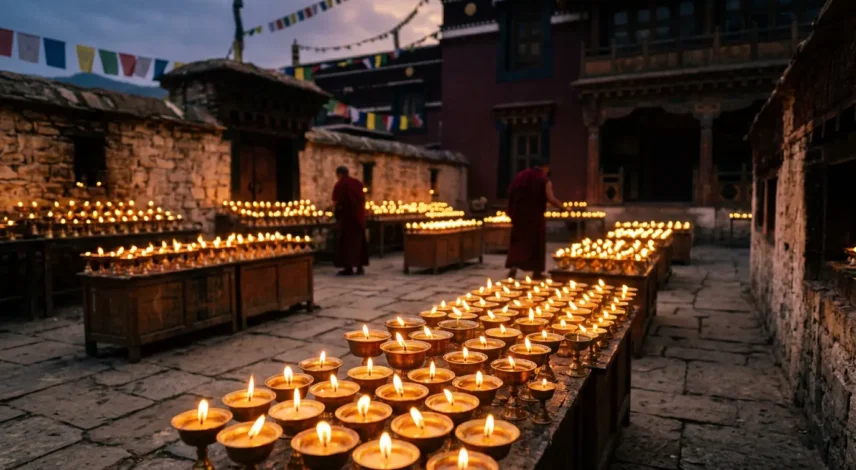
- Lighting butter lamps: offered as a symbol of wisdom dispelling ignorance.
- Walking a kora: circling a temple, stupa, or sacred mountain in a clockwise direction.
- Life release (tsethar): buying animals bound for slaughter and setting them free.
- Giving (dana): donating to monasteries, charities, and people in need.
- Eating vegetarian: many avoid meat on the full moon, and some for the whole month.
- Reciting mantras: especially Om Mani Padme Hum, the mantra of compassion.
- Making prostrations: bowing fully to the ground as an act of devotion and purification.
- Taking the Eight Mahayana Precepts: a set of one-day vows many keep on the full moon.
5 Simple Ways to Observe Saga Dawa at Home in the U.S.
You do not have to travel to Tibet, or even be Buddhist, to mark the month with respect. Here are five simple ways to begin:
- Light a lamp with intention. A butter lamp or a plain candle works, set with one kind wish.
- Recite a mantra. Try a round of Om Mani Padme Hum, using a mala to keep count.
- Give something. A donation, a shared meal, or a few hours volunteered all count.
- Eat vegetarian for a day. A simple, direct way to practice non-harm.
- Set an aspiration. Write one intention for the month, a little like a New Year’s resolution but centered on kindness.
Lighting a Butter Lamp: A Small Offering With Deep Meaning
A butter lamp is a traditional oil lamp whose flame stands for wisdom clearing away ignorance. Offering one is a quiet, grounding way to take part, even far from a monastery. If you want a small space at home, a simple set of Tibetan altar offering bowls and incense gives you a place to light your lamp and settle your attention. And to keep count while reciting, a traditional 108-bead Tibetan mala lets you track repetitions by feel, so your focus stays on the practice instead of the counting.
If you are putting together a few pieces for the month, Potala Store offers hand-selected altar items and malas, and returns 10% of every purchase to Tibetan artisan communities.
Saga Dawa vs. Vesak: What’s the Difference?
Saga Dawa and Vesak honor the same events in the Buddha’s life, but they follow different calendars and traditions. Saga Dawa is a month-long observance in Tibetan (Vajrayana) Buddhism, while Vesak is usually a single day in the Theravada world.
Same Events, Different Calendars
Both commemorate the Buddha’s birth, enlightenment, and passing. Because each tradition keeps its own calendar, the dates rarely line up. In 2027, for example, the international Vesak date is 05/20/2027, while Saga Dawa Duchen falls on 06/18/2027, nearly a month apart.
Quick Comparison Table
| Feature | Saga Dawa | Vesak |
|---|---|---|
| Tradition | Tibetan / Vajrayana | Theravada (and widely observed) |
| Duration | A full month | Usually one day |
| 2027 date | 06/18/2027 (Duchen) | 05/20/2027 (international) |
| Main focus | Making merit across the month | The Buddha’s birth, enlightenment, passing |
Frequently Asked Questions
Saga Dawa Duchen falls on 06/18/2027, the full-moon 15th day of the fourth Tibetan month. Because the Tibetan calendar is lunisolar, the exact Western date shifts every year.
Not exactly. Saga Dawa Duchen commemorates the Buddha’s birth, enlightenment, and parinirvana together, on one day. It overlaps in spirit with Vesak, but it follows the Tibetan calendar, so the date is usually different.
Yes. You do not have to be Buddhist to mark the month with respect. Lighting a lamp, giving to others, or reciting a mantra are all welcomed as sincere, mindful acts in the Tibetan Buddhist tradition.
Many people start simply. Light a lamp or candle with a kind intention, then set up a small, quiet space where you can pray, recite, or reflect for a few minutes each day.
The key takeaway: Saga Dawa is Tibetan Buddhism’s month of merit, when generosity, prayer, and mindful action are believed to carry extra weight, and Saga Dawa Duchen on 06/18/2027 is its sacred high point. You can honor it wherever you are, with a lamp, a mantra, or a simple act of kindness. If you would like authentic Tibetan Buddhist ritual objects to support your practice, Potala Store offers pieces made with and for Tibetan communities.
Important note: The information here about merit, karma, and spiritual practice is based on traditional Tibetan Buddhist beliefs, not scientific evidence. It is offered for cultural and educational purposes and is not a substitute for guidance from a qualified teacher.
📚 References
- Tibetan Buddhist holiday dates: Annual dates for Saga Dawa and Saga Dawa Duchen, including the 2026 and 2027 observances. Source: Tibetan Nuns Project, “Important Tibetan Buddhist Holidays.” (Readers can search the Tibetan Nuns Project website for the current holiday calendar.)
- Merit and Saga Dawa Duchen teachings: Explanation of the multiplication of karmic results during the month and on Duchen, drawn from the Vinaya text Treasure of Quotations and Logic. Source: FPMT (Foundation for the Preservation of the Mahayana Tradition). (Readers can search the FPMT website for its Saka Dawa resources.)
- Vesak background and dating: Overview of Vesak, its meaning, and how its date is set across Buddhist traditions. Encyclopaedia Britannica
- Vesak dates by tradition and year: Comparative dates for Vesak and related observances, useful for contrasting with Saga Dawa. Wikipedia: Vesak