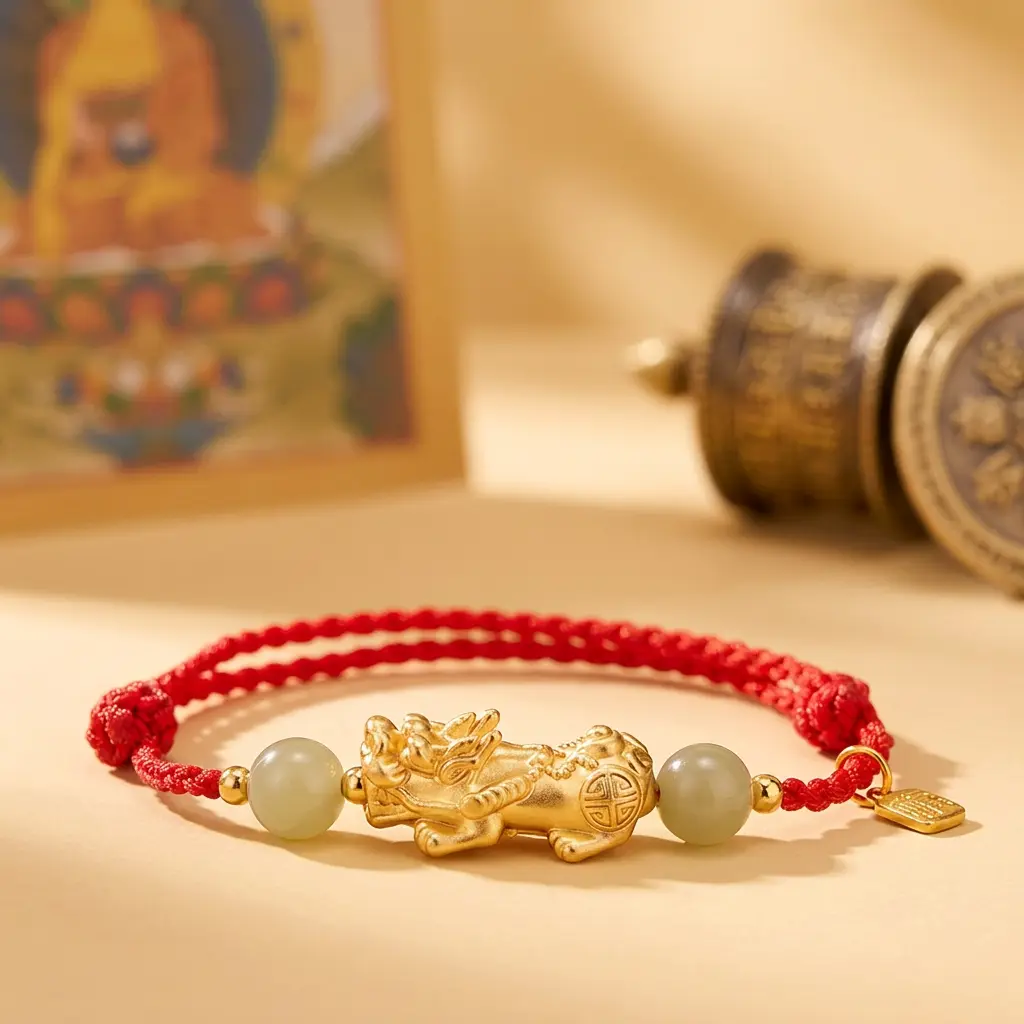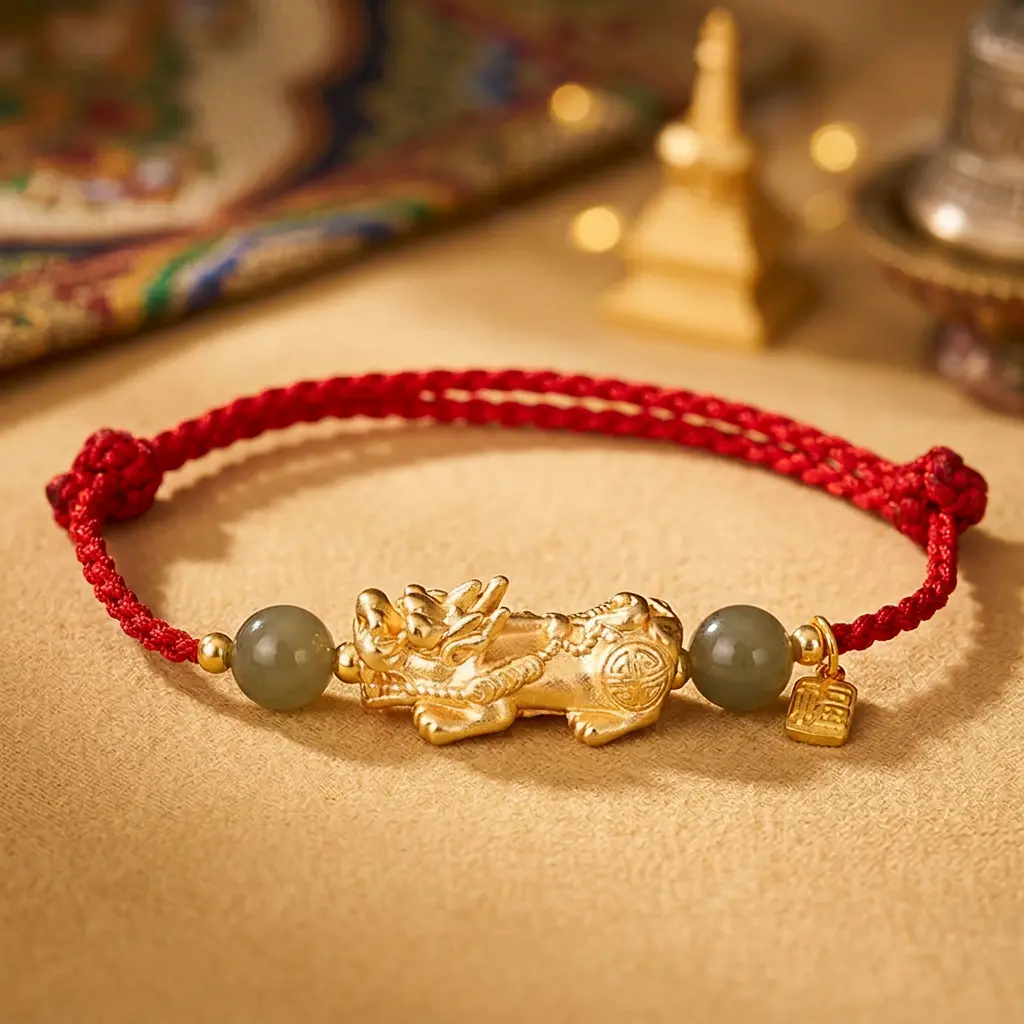

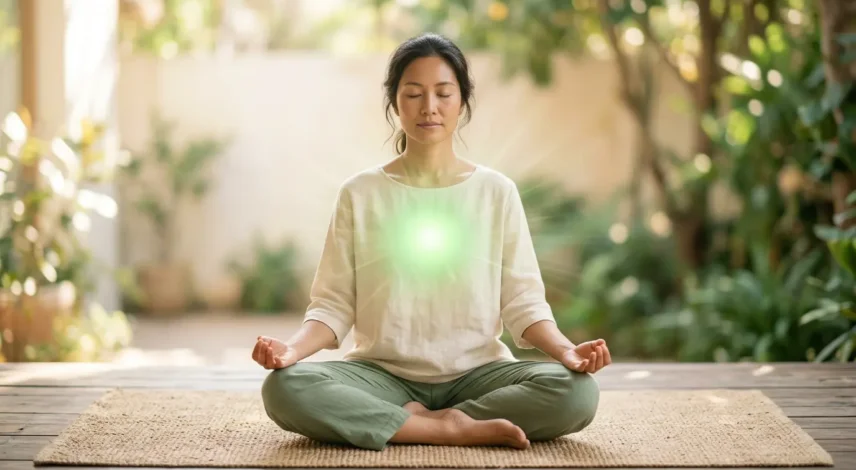

The heart chakra, or Anahata, is the fourth of your seven energy centers, and opening it starts with one small shift: leading with compassion, beginning with yourself. It sits at the center of the chest, carries the color green, and connects the lower chakras of the body to the higher chakras of the spirit.
Most people meet Anahata during a hard season, after a breakup, a loss, or a long stretch of putting everyone else first. That is exactly when the heart tends to close. The good news is that it reopens gently, with practices you can start today.
At PotalaStore, we work directly with Himalayan artisans who have made chakra jewelry and prayer beads for generations. That background shapes how we explain this: with respect for a tradition thousands of years old, and without the health promises you will find on some wellness sites. If you are new to the whole system, our complete guide to the seven chakras is a good place to start. Below, you will find what Anahata means, its color and symbol, the signs it is blocked, seven gentle ways to open it, and the green and pink stones that support it.
Table of Contents
What Is the Heart Chakra (Anahata)?
The heart chakra (Anahata) is the fourth of the seven chakras, located at the center of the chest, and it governs love, compassion, forgiveness, and connection. It shapes how freely you give and receive love, not only with other people, but also with yourself.
Anahata holds a special place in the system. As the fourth center, it bridges the three lower chakras of survival, creativity, and personal power with the three upper chakras of expression, intuition, and awareness. When it is balanced, you feel open yet grounded. You can connect deeply without losing yourself in the process.
What “Anahata” (Unstruck) Really Means
In Sanskrit, Anahata means “unstruck” or “unhurt.” The word points to a quiet inner space in the heart that stays whole even after grief, betrayal, or heartbreak. Beneath every wound, the capacity for love and forgiveness is still there. That idea is the heart of this chakra, and it is why so many practitioners return to Anahata when they are healing.
Where the Heart Chakra Sits in the Seven-Chakra System
The heart center rests between three chakras below it and three above it. Below sit the root, sacral, and solar plexus, which handle safety, emotion, and power. Above sit the throat, third eye, and crown, which handle expression, insight, and spiritual connection. This middle position is why Anahata is often called the bridge chakra. If grounding feels shaky, it often helps to steady the foundation first with the root chakra (Muladhara) guide before working upward.
The Anahata Symbol: Color, Element, and Meaning
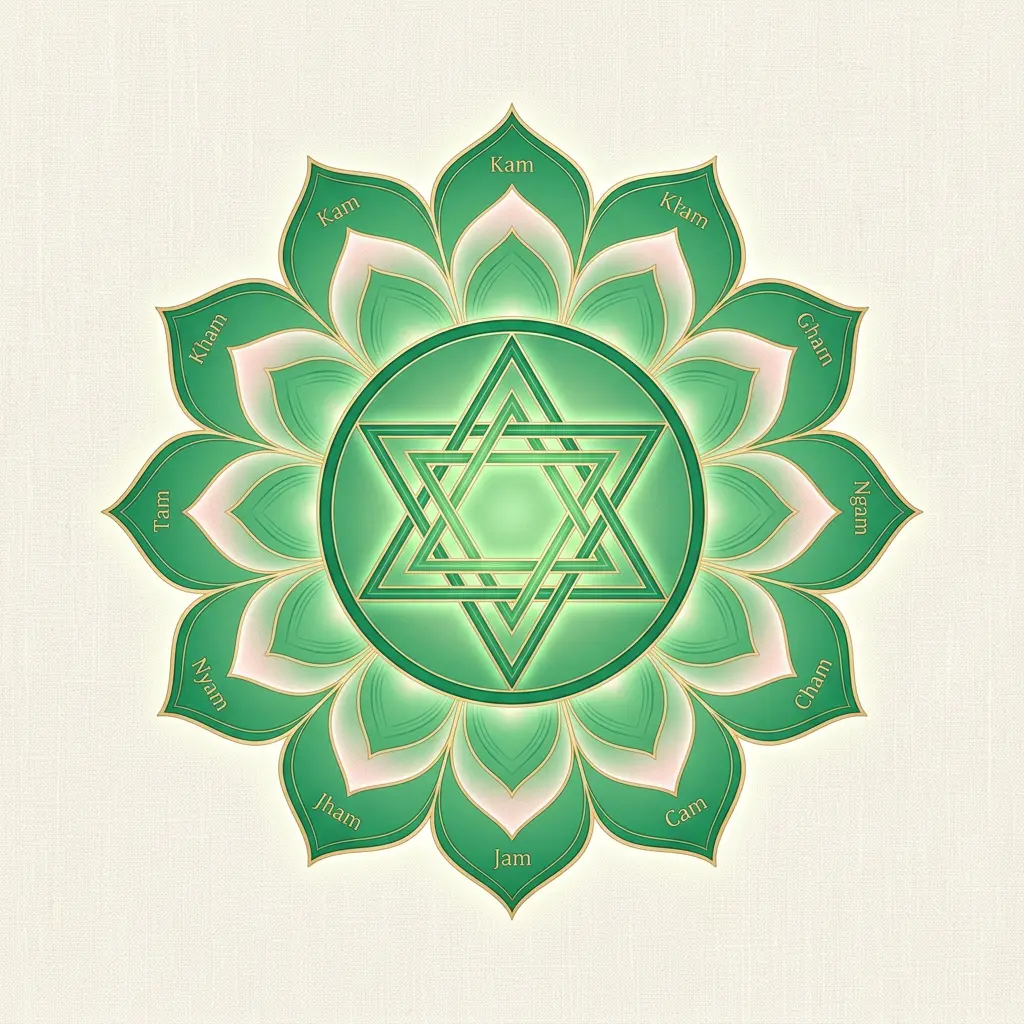
The heart chakra is symbolized by a twelve-petaled green lotus with two overlapping triangles, and its element is air. The color green carries most of its meaning: growth, renewal, and balance, the same green we see in nature restoring itself. In that green light, love and compassion flow the way plants thrive in a healthy garden.
Green and Pink: The Two Colors of the Heart Chakra
Green is the primary color of Anahata, and pink is its secondary color. Green speaks to healing, balance, and the steady give-and-take of a settled heart. Pink speaks to tenderness, nurturing, and unconditional love. Many people work with both: green to restore balance, pink to soften self-criticism. The twelve petals of the lotus stand for qualities such as love, joy, peace, kindness, and forgiveness.
Heart Chakra Properties at a Glance
| Sanskrit name | Anahata (अनाहत), “unstruck” |
|---|---|
| Position | Fourth of the seven chakras |
| Location | Center of the chest |
| Color | Green (primary), pink (secondary) |
| Element | Air (Vayu) |
| Seed mantra | YAM (यं) |
| Frequency | 639 Hz |
| Governs | Love, compassion, forgiveness, connection |
The seed mantra YAM creates a gentle vibration in the chest when chanted, and many practitioners pair it with the 639 Hz frequency during meditation. Because the element is air, the breath becomes one of the most direct tools for working with this center.
Signs Your Heart Center Is Blocked or Imbalanced
A blocked heart center usually shows up as trouble trusting or forgiving, emotional numbness, or a heaviness in the chest. Blockages tend to form as protection after hurt, not as a personal failing. Recognizing the pattern is the first step toward gently reopening. The signs fall into two familiar groups.
Emotional and Relationship Signs
When the heart chakra is underactive or closed, you may notice:
- Difficulty giving or receiving love, or discomfort with affection and compliments.
- Holding grudges and struggling to forgive yourself or others.
- Loneliness or detachment, even when you are surrounded by people.
- Harsh self-criticism and a quiet sense of being unworthy of care.
When it swings overactive, the pattern flips: losing yourself in relationships, people-pleasing at your own expense, giving until you feel depleted, or a fear of being alone. Both extremes point to the same fix, restoring balance between love for others and love for yourself. If this sounds familiar, it is not a flaw in you. The heart often closes to keep itself safe, and it can learn to open again.
Physical Signs (and When to See a Doctor)
Because Anahata connects to the heart, lungs, and upper body, an imbalance may also surface physically. Common signs include tightness or heaviness in the chest, shallow breathing, and tension across the upper back and shoulders. A closed, rounded posture often comes with it, as if the body is curling to protect the heart.
⚠️ Important note: While emotional stress can influence physical sensations, persistent chest pain, breathing difficulty, or any heart-related symptoms should always be checked by a healthcare professional. Heart chakra practices are supportive, not a replacement for medical care.
How to Open Anahata: 7 Gentle Practices
You can open the heart chakra through seven gentle practices done consistently and without force:
- Heart-opening yoga poses: hold gentle backbends like Camel or Bridge for 5 to 8 breaths to release chest tension.
- Chant the YAM mantra: repeat YAM aloud or silently for 5 to 10 minutes, feeling the vibration settle in the chest.
- Heart-centered breathing: place one hand on your chest and breathe slowly for 5 to 10 minutes, picturing green light spreading outward.
- Loving-kindness meditation: offer kindness to yourself first, then extend it to others, one circle at a time.
- Heart chakra affirmations: repeat phrases like “I am worthy of love” and “My heart is safe to open” each morning.
- Forgiveness practice: begin with self-forgiveness, and simply name your willingness to let a small resentment go.
- Green healing visualization: imagine a warm green glow at the chest expanding on each inhale and softening walls on each exhale.
You cannot rush this, and you do not need to. Even a few minutes a day is enough to begin. Pick one or two practices that feel approachable, and return to them often.
Heart-Opening Yoga Poses (Camel, Cobra, Bridge)
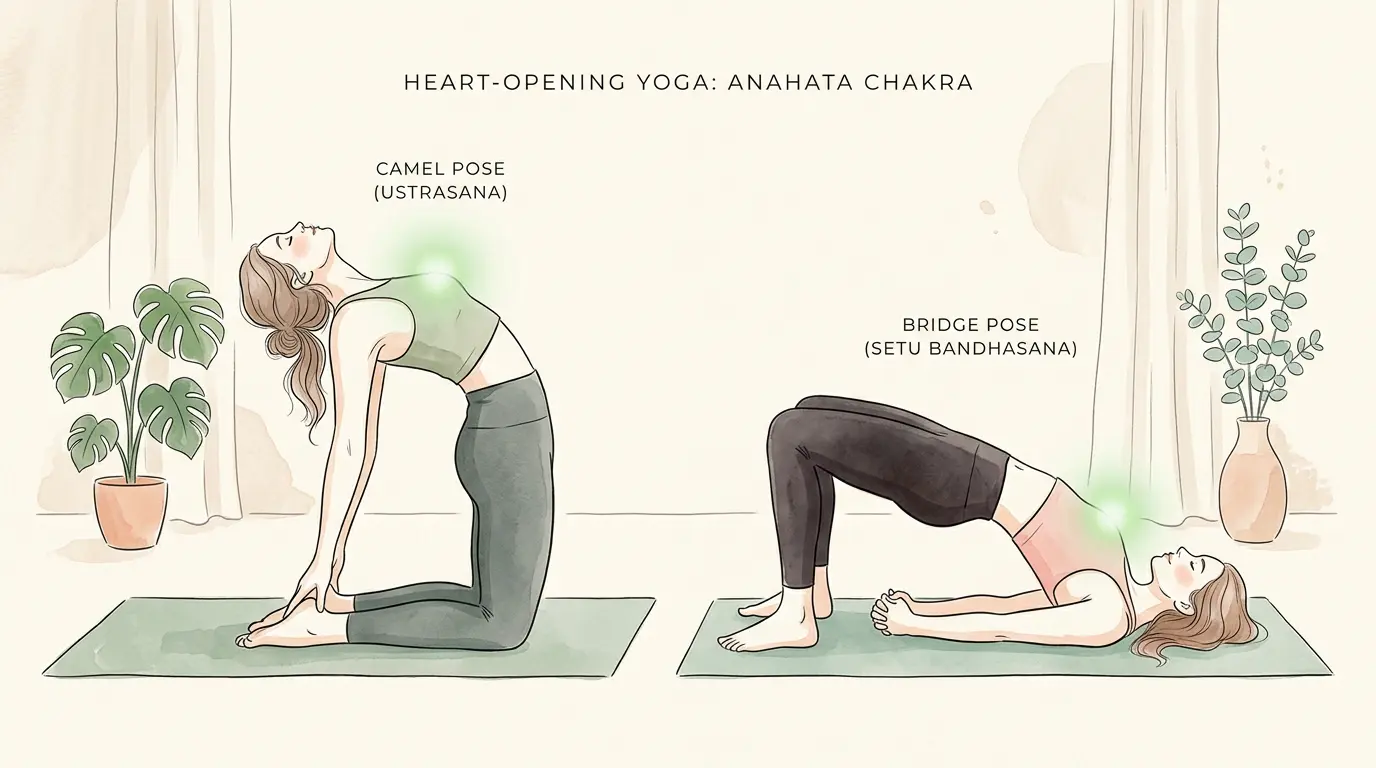
Heart-opening poses stretch the chest, shoulders, and upper spine, the exact places where protective tension gathers. Camel Pose (Ustrasana) expands the whole front body and releases held emotion. Cobra offers a gentler lift that builds trust in the body, and Bridge Pose is accessible for most beginners. Move slowly, and let the breath lead the stretch rather than forcing depth.
Chanting YAM and Heart-Centered Breathing
Since air is the element of Anahata, breath and sound reach it directly. Chanting YAM sends a soft vibration through the chest that supports openness and release. Pair it with slow, even breathing, and you give the heart space to soften. A singing bowl or gentle hum works the same way, tuning the center like an instrument.
Loving-Kindness Meditation and Affirmations
Loving-kindness meditation strengthens empathy by starting where it is hardest, with yourself. Begin with a simple line such as “May I be safe. May I be peaceful. May I be loved.” Then widen the circle to loved ones, neutral people, and eventually everyone. Affirmations work alongside it, gently rewiring old beliefs about worth and connection.
💡 A small tip: Many people like a physical anchor for these practices. Holding a green or pink stone at the chest during breathing can make the session easier to return to. More on choosing one below.
Heart Chakra Stones: Green and Pink Crystals
The best heart chakra stones fall into two families: green stones like green aventurine and jade, and pink stones like rose quartz and rhodonite. Each supports love and compassion in a slightly different way, which is why many people keep one of each. This is where our work with Himalayan artisans shapes what we recommend, since we handle these stones every day.
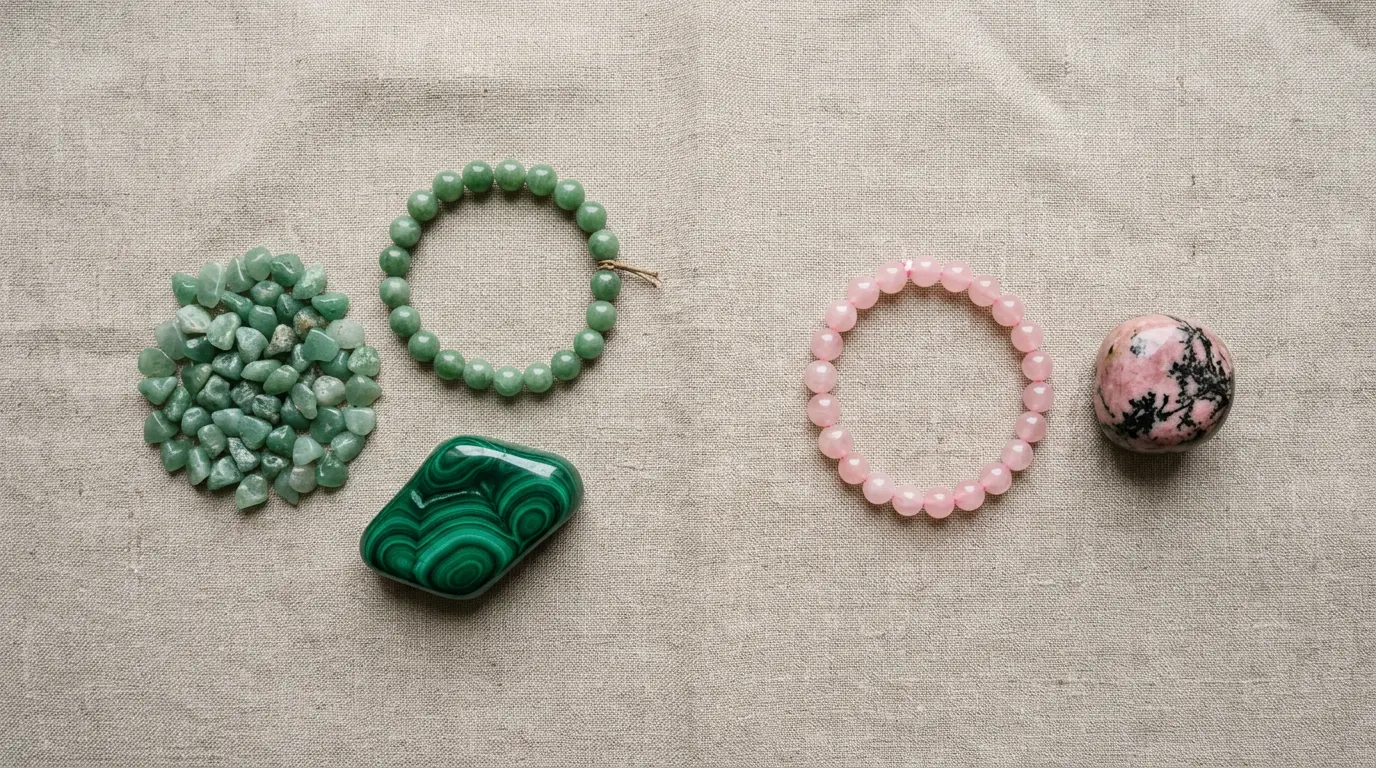
| Green stones | Pink stones | |
|---|---|---|
| Examples | Green aventurine, jade, malachite | Rose quartz, rhodonite |
| Best for | Openness, growth, emotional balance | Self-love, tenderness, emotional healing |
| Try it when | Welcoming new connections or a fresh start | Healing after hurt or rebuilding self-worth |
Green Heart Chakra Stones (Green Aventurine, Jade, Malachite)
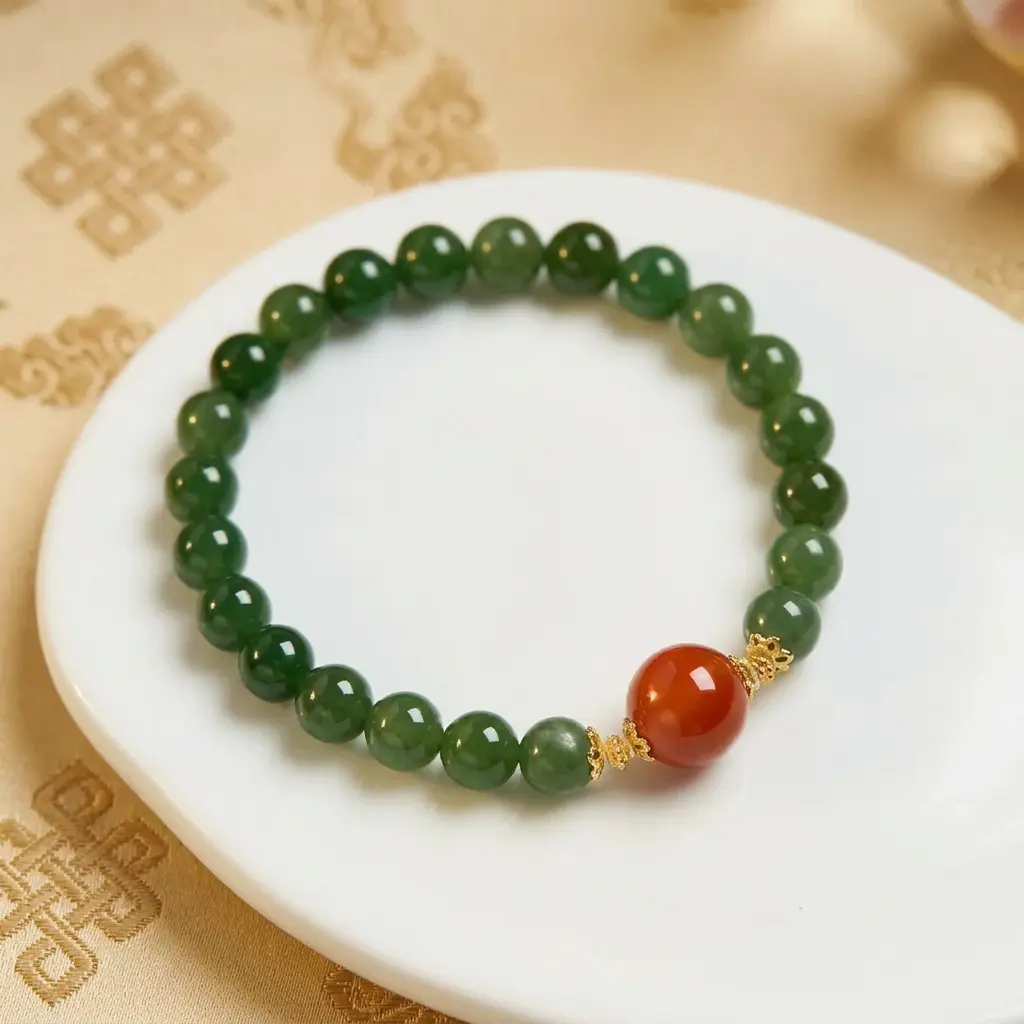
Green stones echo Anahata’s primary color and its themes of growth and balance. Green aventurine is a quartz tied to the heart chakra, and its quality is receptivity: staying open, optimistic, and ready to say yes. That openness is the practical benefit, because it helps you meet a new relationship or a new chapter with more ease instead of guarding your heart. Jade brings a steadier, grounding calm, and you can read more in our guide to green aventurine and its heart chakra resonance.
Pink Heart Chakra Stones (Rose Quartz, Rhodonite)
Pink stones speak to the softer, self-directed side of the heart. Rose quartz is the classic stone for opening the heart to self-love, and its real gift is where it points your attention. When self-criticism creeps in, it works as a quiet reminder that you are worthy of the same care you give others. Rhodonite, with its pink-and-black coloring, is prized for emotional healing and forgiveness, especially after conflict. You can go deeper in our guide to rose quartz, the stone of unconditional love.
How to Wear and Use Heart Chakra Stones
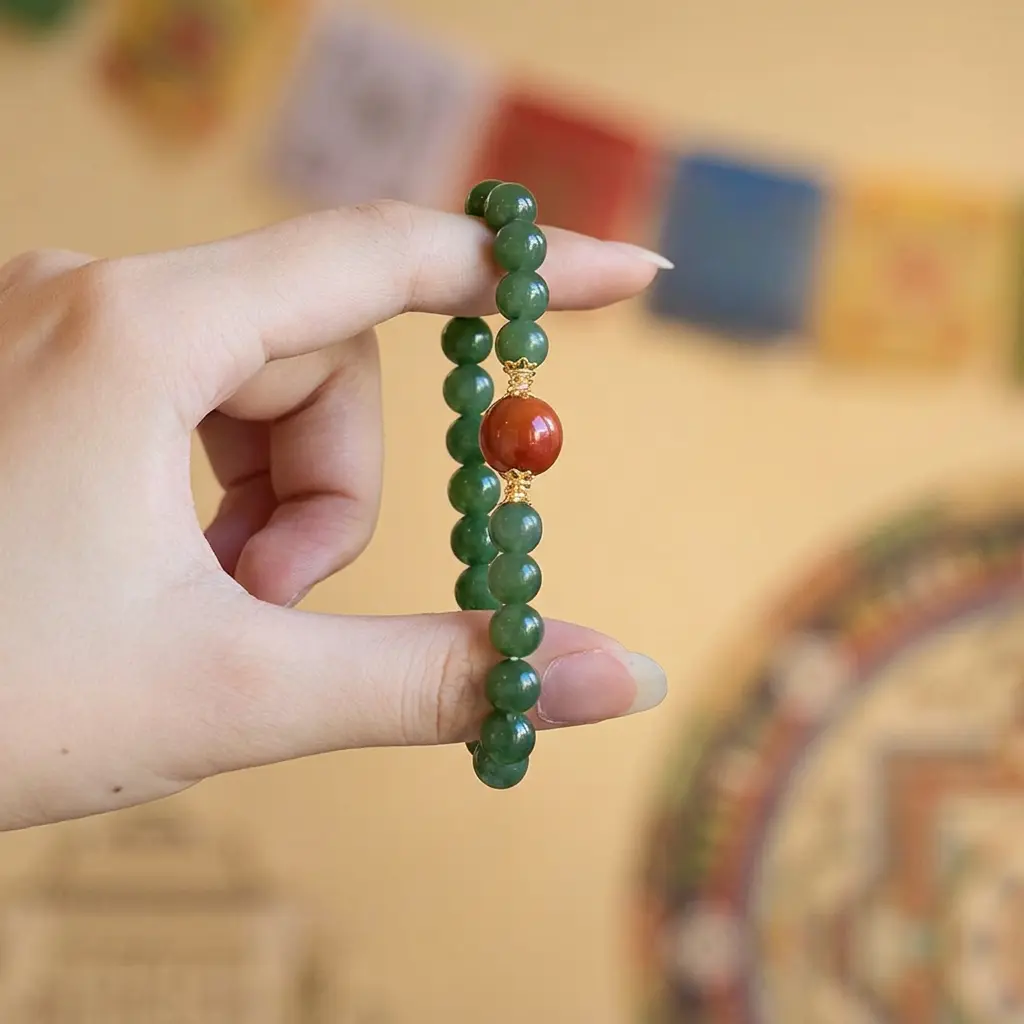
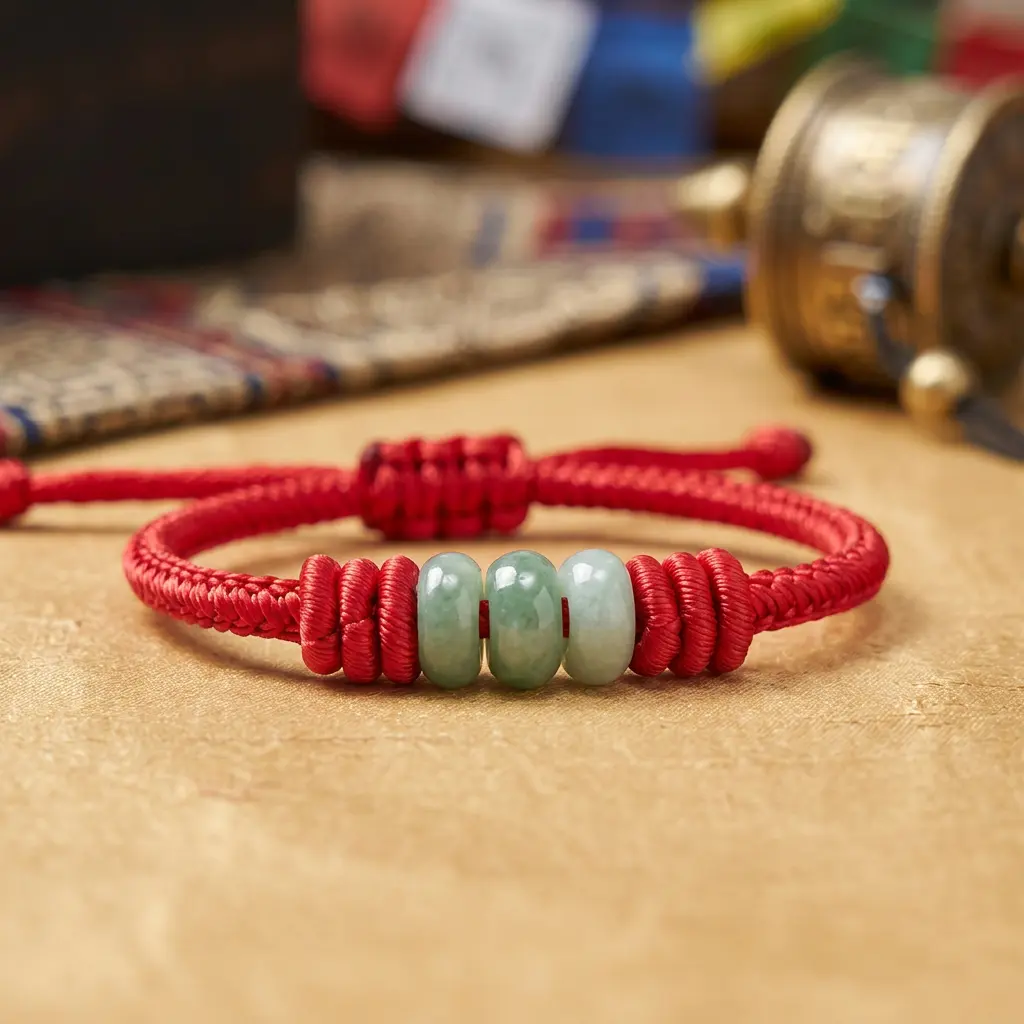
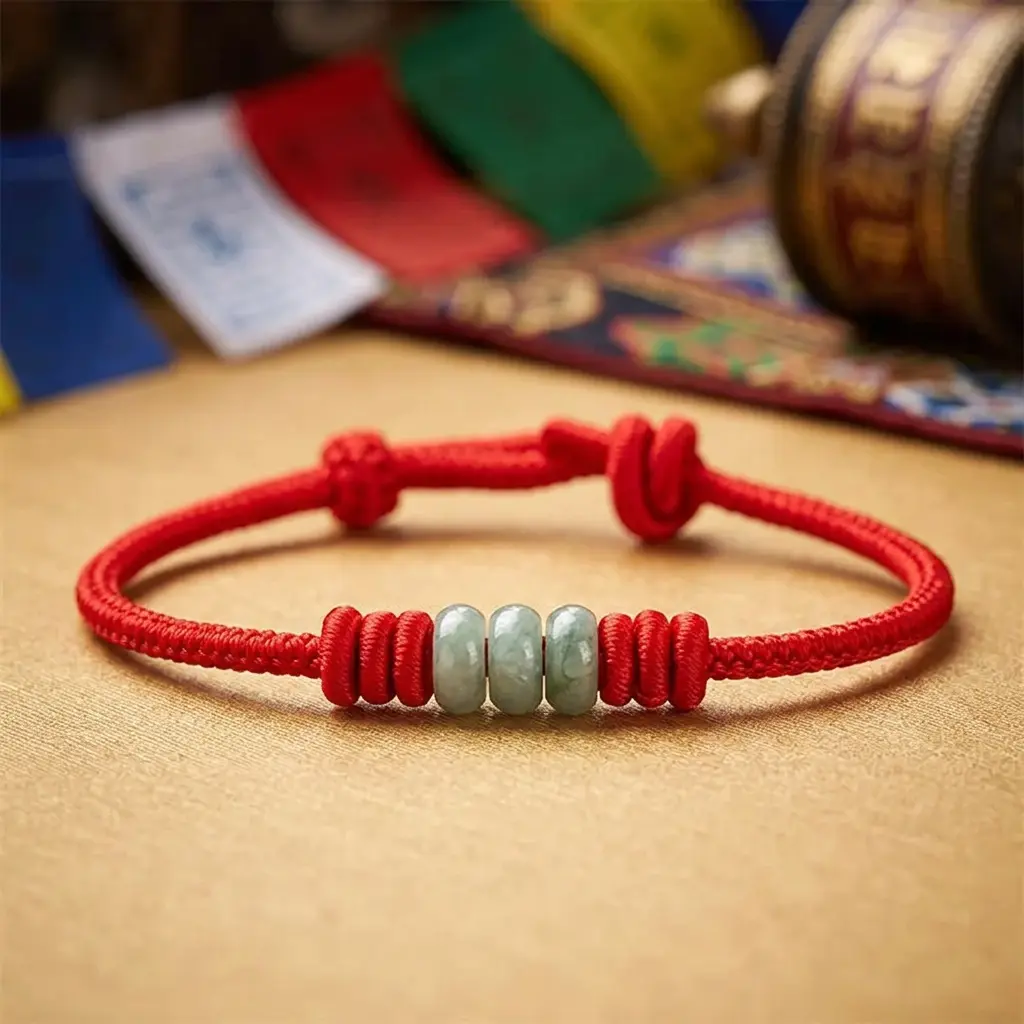
To keep a stone’s heart-chakra energy close, wear it on the left wrist, the receptive side in many traditions, so it draws energy toward you through the day. In our collection, each stone sits on an 8mm bead, the standard size in Tibetan practice, and is sourced from the Himalayan artisans we have worked with for years. A bracelet is a daily reminder to slow down and check in, not a remedy. If you are unsure about placement, our guide on which wrist to wear a crystal bracelet walks through it. You can also use a stone in meditation: lie down, rest it on the chest at the sternum, and breathe slowly for a few minutes.
For a piece chosen around love and the heart center, explore our heart-centered, love-intention pieces, each made to wear and stack.
Keeping Your Heart Open: Everyday Balance
Certain moments call for heart chakra work, and a few small, consistent habits keep Anahata open over time. You do not need special training or a long ritual. The heart responds best to steady, gentle attention rather than intensity.
When to Focus on Your Heart Chakra
Some seasons naturally draw you to this center. Heartbreak or the end of a close relationship often causes the heart to close as protection. Unprocessed grief, whether from a loss or a big life change, tends to settle in the chest. And when self-love feels hard, when receiving care feels uncomfortable, Anahata is usually asking for attention. None of these signs mean weakness. They point to a need for safety, so love can return on its own timing.
Small Daily Habits That Keep the Heart Open
Consistency does most of the work here. A short gratitude practice each evening softens emotional defenses, so try writing three things you appreciate, one about yourself. A few minutes of heart-centered breathing keeps the chest open. And a stone worn on the wrist or a moment of loving-kindness gives the day a gentle anchor. The takeaway is simple: five focused minutes a day does more than one long session once a month.
Bring an Open Heart Into Daily Life
A heart-centered bracelet keeps Anahata in focus, handcrafted by Himalayan artisans and shipped worldwide from PotalaStore.Shop Heart Chakra Bracelets →
Frequently Asked Questions
The heart chakra is primarily green, with pink as a secondary color. Green reflects healing, balance, and renewal, while pink reflects tenderness and unconditional love.
The seed (bija) mantra is YAM (यं). Chanting YAM creates a gentle vibration in the chest that supports emotional openness. Many practitioners pair it with the 639 Hz frequency.
Green stones such as green aventurine and jade, and pink stones such as rose quartz and rhodonite. Rose quartz is the classic choice for self-love. You can explore heart-centered options in our love collection.
Yes. Unprocessed grief is one of the most common causes of a blocked heart chakra. Gentle practices that make space for grief, rather than forcing it away, support healing over time.
📚 References
- Anahata in Yoga Practice: An introduction to the fourth chakra, its meaning, and heart-opening practice. Yoga Journal
- Chakra Locations and Signs: A medically reviewed overview of each chakra’s location and commonly cited symptoms. Healthline
- Heart-Brain Communication: Research on how the heart and brain communicate, and how emotions such as compassion affect heart rhythm. HeartMath Institute
- Anahata (Concept Overview): Encyclopedic background on the Sanskrit meaning, symbol, and traditions of the heart chakra. Wikipedia